
Can a Low-Temperature Boiler Be Replaced with a Condensing One
Can a Low-Temperature Boiler Be Replaced with a Condensing One?
If an older low-temperature, atmospheric, or turbo gas boiler is serving you at home and you're thinking about replacing it with a modern condensing model, the good news is: yes, you can - almost always. A condensing boiler can also make use of the heat that an older boiler simply releases through the chimney, commonly reaching an efficiency of up to 98 % (manufacturers sometimes state it as 105 – 109 % when converted relative to calorific value), while an atmospheric or low-temperature boiler ranges from 70 – 90 %, most often around 84 %. The difference in gas consumption is therefore noticeable from the very first heating season. However, the replacement isn't just about "unboxing a new boiler and hooking it up to the old gas line" - the way flue gases are vented changes, condensate drainage is added, and sometimes protection for the heating circuit needs to be added too. In this article, we'll go through what actually changes during a replacement, when you can leave the original radiators and pipework untouched, who is legally allowed to carry out the replacement, and which specific condensing boiler models are a suitable replacement.
What Changes During the Replacement
The biggest difference between an old and a new boiler isn't in output or controls, but in how the boiler "gets rid of" flue gases and what more it can do with them. It's exactly this difference - not simply the gas or electricity connection - that's why the replacement can't be done without professional work on the installation. When replacing a boiler, plan for these three adjustments:
Flue pipe and chimney. An atmospheric or low-temperature boiler vents flue gases at 110 – 150 °C through a masonry chimney - a high flue gas temperature is necessary for the chimney's draught to work naturally (without a fan). A condensing boiler works completely differently: it cools the flue gases to 20 – 50 °C in order to condense out and use the hidden heat. At such a low temperature, a masonry chimney wouldn't even create sufficient draught, and the condensing moisture would gradually damage it. That's why condensing boilers are standardly connected to a plastic concentric flue pipe (a pipe within a pipe - flue gases exit through the inner pipe, while combustion air is drawn in through the outer annulus), which is routed out through a wall or through the roof. This change - from a masonry chimney to a plastic concentric flue pipe - is, from a construction standpoint, the most common and usually the only necessary adjustment when switching to condensing technology. In many cases, the original chimney can simply be used as a shaft to pull the new plastic pipe through, which simplifies and cheapens the replacement. The route of the flue pipe (out through the perimeter wall, or vertically through the roof) is always designed by a technician on site - it depends on where the boiler is located in the house, where the nearest free facade or roof opening is, and what the manufacturer's requirements are for minimum distances from windows and neighboring properties.
Condensate drainage. Condensing the flue gases produces acidic condensate, which has to be safely drained into the sewer system. A low-temperature boiler never had to deal with anything like this, so a suitable connection is usually missing in the household. When installing a condensing boiler, condensate drainage is therefore connected via a trap resistant to an acidic environment - an ordinary waste trap could degrade over time due to corrosion. This is a cheap and quick part of the installation, but shouldn't be forgotten already at the planning stage (especially if the boiler is being moved to a different location than the original, or if there's no suitable drain nearby).
Heating circuit protection. Compared to an older atmospheric boiler, a condensing boiler has a considerably smaller and more sensitive plate exchanger with narrower channels. If a system that's been running for years contains sludge, rust, or deposits (common especially with older steel radiators or a system without water treatment), these contaminants can quickly clog or damage the new exchanger. That's why, when replacing an old boiler with a new one, it's recommended to add a filter, or rather a dirt separator, to the heating circuit, which catches mechanical impurities before they reach the boiler. The filter is usually installed directly on the return branch right before the boiler, so it catches contaminants coming from the rest of the system before they reach the exchanger. Another advantage is that it can be easily cleaned at any time without having to drain the whole system - making it part of routine annual maintenance rather than a one-off measure only done at replacement.
Can the Original Radiators/Pipework Be Used?
This is probably the question that discourages the most people from replacing their boiler - and mostly unnecessarily. Radiators and pipework generally don't need to be changed when switching to a condensing boiler. A condensing boiler can be connected to an existing heating system as long as it's in good technical condition - that is, without significant leaks, with functioning valves, and without heavy deposits in the pipes. Don't be misled by the idea that condensing technology only works with underfloor heating or large-surface emitters with low heating water temperature either - a condensing boiler can work effectively with classic radiators too, although it reaches its highest efficiency precisely at lower temperature gradients. The real benefit of condensation (i.e. using the hidden heat of the flue gases) shows up mainly when the return water temperature from the radiators is below approximately 55 °C, which, in a correctly sized system with classic radiators, easily happens for a large part of the heating season.
The only thing really worth checking before the replacement is the condition and tightness of the pipework (especially in a house several decades old) and whether the system is properly vented and free of major deposits - this is exactly what the aforementioned heating circuit filter is for. If the pipework shows frequent leaks or repeated water top-ups, it makes sense to address this first, regardless of the boiler type.
When planning a replacement, it's worth booking a site visit in advance, not just on the day of installation itself - a technician will assess the future flue pipe route, the availability of a condensate drain, and the overall condition of the pipework on site, and can therefore tell you in advance whether it will be a simple "like-for-like" replacement or whether minor construction work will also be needed. A site visit arranged in advance also shortens the time the household will be without heating and hot water.
Both the replacement and the inspection must be carried out by an authorized person.
Who May Carry Out the Replacement
Replacing a gas boiler isn't a DIY job. Connecting a condensing boiler to the gas supply, flue pipe, and heating system, as well as commissioning it, may only be carried out by an authorized technician - a heating appliance is a gas-fired appliance and requires professional installation followed by an inspection. The inspection report is also important for the manufacturer's warranty (manufacturers often won't honor the boiler warranty without professional installation and commissioning by an authorized service provider) and for household insurance. When choosing a technician, it's worth prioritizing a service partner with direct experience with the brand of the chosen boiler - especially when setting up weather-compensated control and heating curves, where the real difference between "merely working" and genuinely efficient operation becomes apparent. The technician's job also includes safely disconnecting and decommissioning the old boiler, checking the tightness of the new connection, and handing over the inspection report, which is good to keep together with the proof of purchase - both can come in handy for a potential warranty claim as well as when selling the property.
Recommended Models for Replacement
When choosing a replacement for an older low-temperature boiler, it's worth reaching for proven mid-to-upper-class condensing models that can handle a typical family home along with hot water preparation. Below are two recommended condensing replacements and a filter for protecting the heating circuit, which is worth installing at the same time as the new boiler.
|
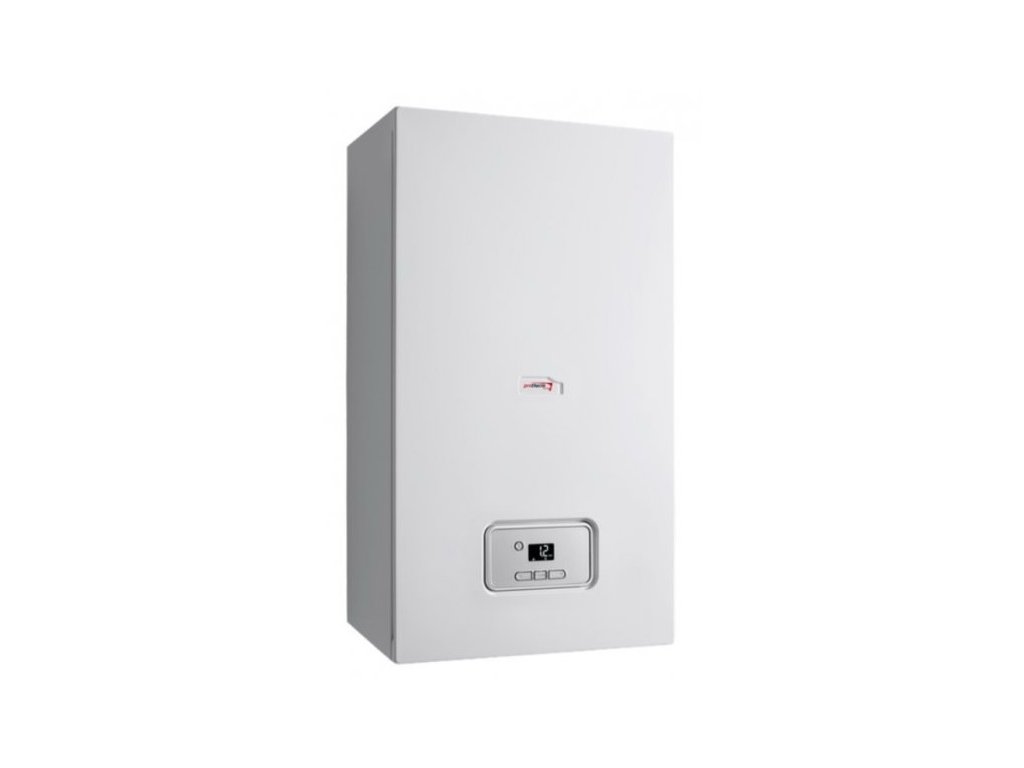
Protherm Gepard Condens 18/25 MKV - a compact condensing boiler with instantaneous hot water heating, suitable as a direct replacement for a low-temperature boiler in an apartment or family home without the need for major construction work. Price from €1,322.00. |

|
BOSCH Condens GC2300iW 22/25 C - a condensing boiler with a wide output modulation range, handling systems with a larger number of radiators and fluctuating heat demand throughout the heating season well. Price from €1,472.06. |

|
NANO HOT 3/4" - 1" 500 mcr Water Filter for Heating Systems - a brass filter/dirt separator that, when replacing an old boiler, protects the sensitive exchanger of the new condensing boiler from deposits and contaminants from the original system. Price from €65.50. |
Summary of the steps covered in the article below.
The answer depends on the sizing of the original radiators.
Two changes to plan for during the replacement.
Frequently Asked Questions
- Do I need to change the radiators when switching to a condensing boiler? In most cases, no. A condensing boiler can be connected to existing radiators and pipework if they're in good technical condition - it reaches its highest efficiency at lower heating water temperatures, but it also works reliably with classic radiators.
- Can a condensing boiler be connected to an old masonry chimney? Not directly - the flue gases have too low a temperature (20 – 50 °C) to create sufficient draught in a masonry chimney, and would gradually damage it with moisture over time. This is solved with a plastic concentric flue pipe, which is often pulled through the original chimney shaft.
- Why does a condensing boiler need condensate drainage when the old boiler didn't have anything like that? A condensing boiler gains part of its higher efficiency precisely from liquefying (condensing) the water vapor in the flue gases, which produces acidic condensate. It has to be drained into the sewer via a trap resistant to an acidic environment.
- How long does the boiler replacement itself take? If the original chimney is only used as a shaft for the new flue pipe and the pipework is in order, an authorized technician can usually complete a standard replacement, including connection and setup, within a single working day.
- Is a heating circuit filter worth it even in a seemingly clean system? Yes - deposits and fine impurities gradually build up in pipework and radiators even without visible symptoms, and the sensitive plate exchanger of a condensing boiler is far more susceptible to them than the more robust exchanger of an older atmospheric boiler.
- Do I need an inspection when replacing the boiler? Yes, only an authorized technician with the relevant inspection may carry out the gas connection and commissioning of a condensing boiler - it's also a condition for the manufacturer's warranty to be honored.