
Frequently Asked Questions about Low-Temperature Gas Boilers
Low-temperature (classic, atmospheric) gas boilers were the backbone of heating in Slovak households for decades. Since 2015, the European Union's Ecodesign Directive (ErP) has been in effect, which has practically ended their widespread sale in favour of more efficient condensing appliances. Nevertheless, hundreds of thousands of these boilers are still in operation, and their owners deal with the same questions every day – how much longer the boiler will last, what to do in case of a fault, whether a replacement unit can still be bought, and whether investing in a switch to a condensing model is worthwhile. In this article we have gathered and answered in detail the most common questions we receive about low-temperature gas boilers – divided into six clear thematic sections.
What Are Low-Temperature Boilers
Let's start by explaining the basic terms and differences, so it is clear what we are talking about throughout the article.
- What is a low-temperature gas boiler? It is a classic gas boiler that burns natural gas and transfers the heat from combustion to the heating water without using the heat contained in the water vapour of the flue gases. The efficiency of such a boiler is approximately 70–90%, most commonly around 84%. The flue gases leave the chimney still sufficiently hot, typically 110–150°C, so that water vapour does not condense inside it.
- Why are they also called atmospheric boilers? Most low-temperature boilers draw combustion air directly from the room in which the boiler is located (from the "atmosphere" of the boiler room), unlike closed turbo or condensing systems, which have their own air supply from outside. This is why you will find the terms atmospheric and low-temperature boiler used in catalogues for essentially the same type of appliance.
- What is the difference between a low-temperature and a condensing boiler? A condensing boiler additionally uses the latent heat of the water vapour in the flue gases – it cools them to 20–50°C, the vapour condenses, and the released heat is returned to the heating circuit. This allows it to reach an efficiency of up to 98% (mathematically 105–109% when calculated against calorific value), while a low-temperature boiler remains at 70–90%. You can find a detailed comparison of both types in the article What is the difference between a low-temperature and a condensing boiler.
- Why are low-temperature boilers no longer sold? Since 2015, the EU Ecodesign Directive (ErP) has set minimum energy efficiency requirements for heating appliances placed on the market. Classic atmospheric boilers generally do not meet these limits, which is why manufacturers gradually ended their production and large-scale distribution. We cover the causes and replacements in detail in the article Why low-temperature boilers are no longer sold and what to use instead.
- Does the ErP directive mean I have to replace my boiler immediately? No. The directive only concerns the placing of new appliances on the market, not the operation of boilers already installed. You can legally continue operating a functional low-temperature boiler as long as it passes safety inspections and is regularly serviced.
- Is a low-temperature boiler less safe than a condensing one? No, the safety of both types is comparable, provided the prescribed inspections and servicing are carried out. The difference lies primarily in combustion efficiency and the type of flue gas extraction required, not in the safety risks of the appliance itself.
The typical thought process of an owner of an older boiler.
Purchase and Availability
This section addresses what "buying a low-temperature boiler" really means today and whether it still makes sense.
- Can a low-temperature boiler still be bought? Yes, but the range is now minimal – most of the range has been discontinued due to the aforementioned ErP directive. At atria.sk, only the last two legacy Protherm Gepard models remain available, which we present below.
- Why does atria.sk still offer the Protherm Gepard if it is supposedly no longer sold? This is a clearance sale of the last stock units of a proven model, which can still legally be installed in existing systems, especially as a direct replacement in the event of a fault in an older boiler of the same type. Once these units are sold out, the model will not be restocked.
- Is it worth buying a new low-temperature boiler instead of a condensing one? In most cases, no – a condensing boiler has significantly higher efficiency and lower gas consumption in operation, so it pays off more in the long run. A low-temperature boiler makes sense mainly where neither the chimney nor the piping is ready for condensing technology and replacing the entire system would be disproportionately expensive.
- Where can I get spare parts when the boilers are no longer manufactured? Spare parts for common models (pumps, electrodes, seals, heat exchangers) are usually available for a long time after the boilers themselves are discontinued, as manufacturers maintain service support for years in advance. We recommend checking the availability of a specific part directly with the authorised service centre of the given brand.
- Can I buy a used low-temperature boiler? Technically yes, but we recommend caution – with a used boiler you don't know the actual condition of the heat exchanger or its service history. If you urgently need a cheap and quick replacement, a new unit, even a clearance-sale one with a warranty, is the safer choice.
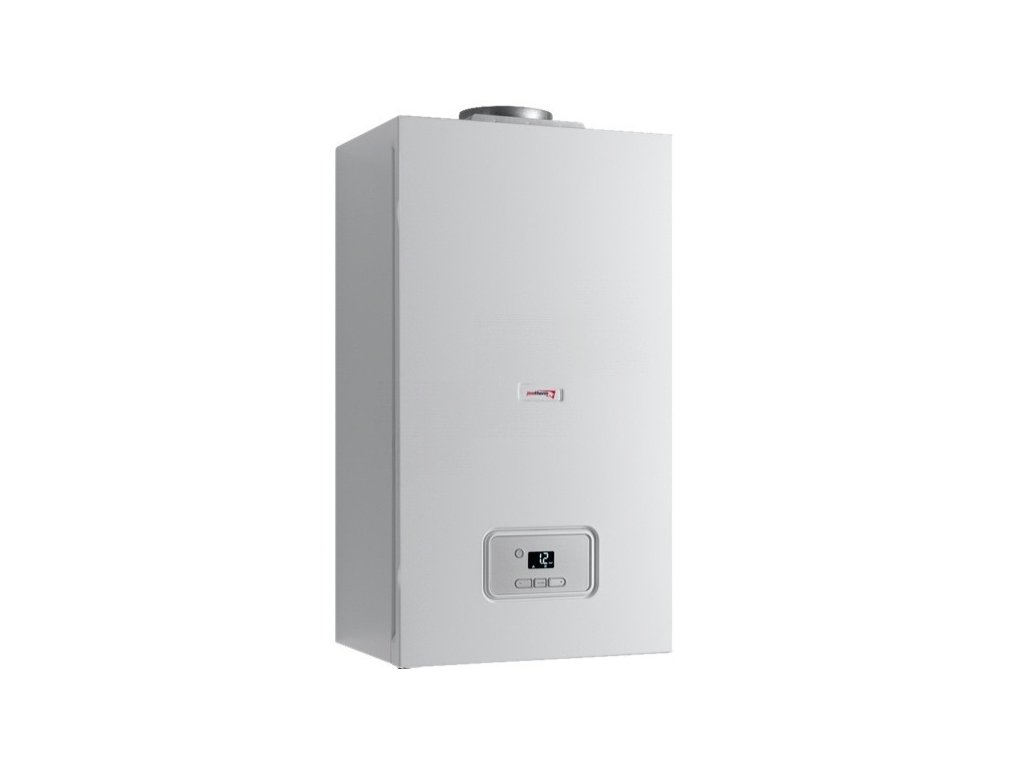
|
Protherm Gepard 18/24 MOV – a proven atmospheric low-temperature boiler, the last available units on clearance sale, suitable as a direct replacement for an older boiler of the same type. Price from €1,195.02. |
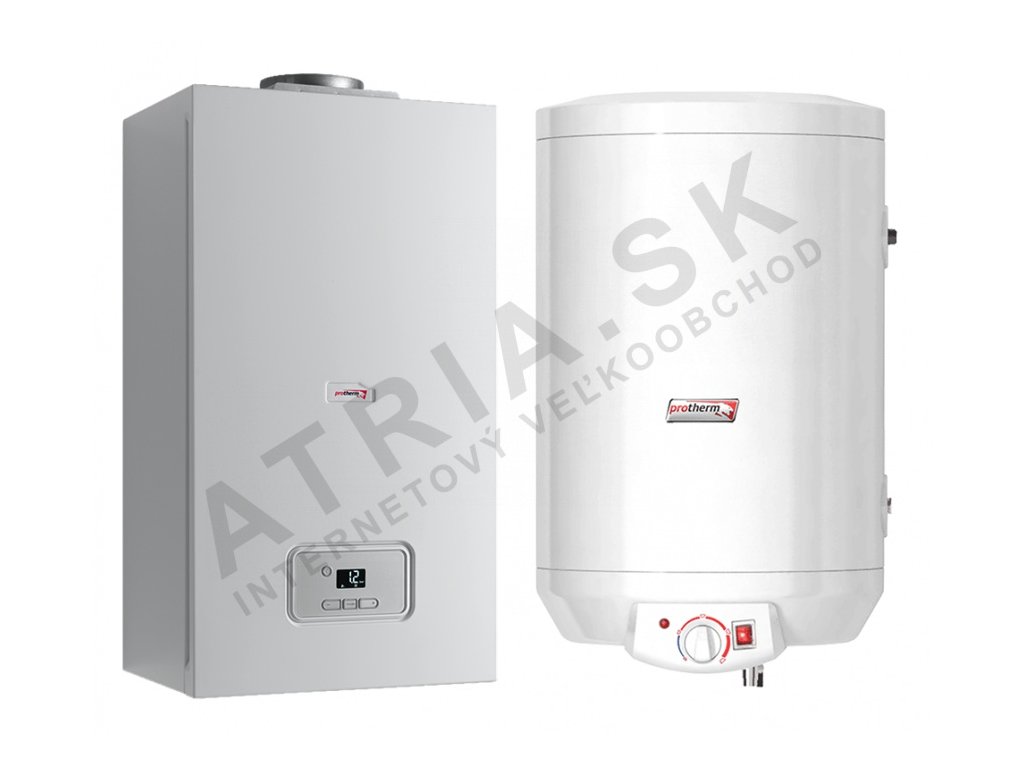
|
Protherm Gepard 18/24 MOV + WEL 75 ME - left – the same proven boiler supplemented with a 75-litre hot water tank in a left-hand version, a suitable solution for households with higher domestic hot water consumption. Price from €1,415.00. |
Installation and Setup
Low-temperature boilers have fundamentally different flue gas extraction requirements compared to condensing boilers, which is the most common source of misunderstanding during installation.
- What kind of chimney does a low-temperature boiler need? The classic atmospheric version needs a masonry chimney with natural draught that can safely remove hot flue gases at 110–150°C. The chimney must be properly sized and in good technical condition, otherwise there is a risk of insufficient draught and flue gases flowing back into the room. Details in the article What flue and chimney does a low-temperature boiler need.
- Can a low-temperature boiler be connected to a plastic flue? No, a plastic flue is intended exclusively for condensing boilers, which produce cool flue gases (20–50°C). The hot flue gases from a low-temperature boiler would thermally damage a plastic system, so a masonry chimney or a certified metal/ceramic system is always used.
- What is the turbo version of a low-temperature boiler? The turbo (closed/room-sealed) version draws combustion air from outside and removes flue gases through a concentric (twin-wall) system led directly through the facade, so it does not need a masonry chimney. It is particularly suitable where there is no chimney or it is not in good condition.
- Who is allowed to install a low-temperature boiler? Both the installation and the connection to the gas supply may only be carried out by an authorised person with the appropriate qualification for installing gas appliances. DIY installation is not only a safety risk, but usually also grounds for voiding the warranty.
- Is an inspection required after installation? Yes, after every installation and after any major intervention, a professional test of the gas appliance and a chimney inspection are required to confirm safe operation. Inspections are then repeated at regular intervals set by the manufacturer and applicable legislation.
- Can a low-temperature boiler be installed in a flat in a panel building? Yes, as long as the flat has a functional chimney flue or a turbo installation with an outlet through the facade is possible. In practice, however, an individual assessment of the chimney's condition and the consent of the building administrator are required.
Operation and Settings
Correctly set controls significantly affect both comfort and gas consumption throughout the entire heating season.
- What kind of control does a low-temperature boiler use? The basis is always a classic room thermostat, which switches the burner on and off according to the set room temperature. This is the simplest and most reliable control method, found in practically all models.
- Does a low-temperature boiler have weather-compensated (equithermal) control? Weather-compensated control (automatically adjusting the heating water temperature to the outdoor temperature) is only available on some models, it is not a standard feature across the whole category. If your boiler doesn't have it, a quality programmable room thermostat can partially replace the comfort and savings. We describe the setup procedure in detail in the article How to set up and control a low-temperature boiler.
- What is the optimal heating water temperature? It depends on the type of heating system and the outdoor temperature – in general, the lower the water temperature you need on the radiators/underfloor heating, the more economical the operation. The exact setting of heating curves and temperatures is always individual to the specific building, and we recommend consulting a service technician.
- Why does my boiler "puff" or burn noisily? The most common cause is a dirty burner or heat exchanger, an incorrect gas-to-air ratio, or a worn ignition electrode. This is a sign that it's time for a service inspection, not something to ignore.
- How much gas does a low-temperature boiler consume? The exact consumption depends on the boiler's output, the size and insulation of the building, and the set temperature, but due to lower efficiency (70–90% compared to up to 98% for condensing boilers), consumption at the same output is higher than with a modern condensing boiler. You can find an approximate savings calculation in the article How much can I save by switching to a condensing boiler.
- Can a low-temperature boiler be controlled via a mobile phone / smart thermostat? With older models, this is usually not a standard factory feature, as these appliances were designed primarily for a simple room thermostat. In some cases it is possible to add an external smart thermostat compatible with the classic two-wire connection, but suitability needs to be verified individually.
Servicing and Faults
Regular maintenance is key for low-temperature boilers – it extends their lifespan and reduces the risk of an unplanned fault during the heating season.
- How often should servicing be done? A regular annual service inspection before the start of the heating season is recommended, including checks of the burner, heat exchanger, seals, and combustion settings. Regular servicing is also a prerequisite for achieving the boiler's full lifespan.
- What is the lifespan of a low-temperature boiler? With regular annual servicing, the lifespan of a gas boiler is usually in the range of 15–20 years. Without servicing, the risk of faults and a shortened lifespan increases significantly. More details in the article How long does an old low-temperature boiler last and when should you replace it.
- What are the most common faults? Typical ones include a dirty or worn burner, a faulty ignition or ionisation electrode, a heat exchanger clogged with hard water or deposits, leaks, and circulation pump faults. You can find a complete overview and solutions in the article Most common faults in low-temperature boilers and how to solve them.
- Why does the boiler frequently shut off the flame (shut down the burner)? This is most often due to a dirty or worn ionisation electrode that incorrectly detects the presence of the flame, or a problem with the chimney draught. The solution is a professional check and cleaning or replacement of the electrode during a service inspection.
- What to do when the boiler doesn't ignite? Check that the gas supply is open and that the boiler has power, but leave any further intervention in the gas appliance strictly to a service technician. Repeated ignition failure is always a reason for professional intervention, not for DIY experimentation.
- Why is a water filter important? A filter captures mechanical impurities and deposits from the heating water before they reach the boiler's heat exchanger, significantly reducing the risk of it becoming clogged and damaged. It is a cheap and simple investment that can extend the lifespan of even the more expensive boiler components.
- Can spare parts still be found for old models? In most cases yes, especially for common consumable parts such as electrodes, seals, pumps, or valves – manufacturers usually maintain service support long after the boiler itself is discontinued. For very old or rare models, we recommend checking availability directly with an authorised service centre.

|
NANO HOT 3/4" - 1" 500 mcr – a brass water filter for heating systems, protects the boiler's heat exchanger from deposits and mechanical impurities, easy installation directly into the return pipe. Price from €65.50. |
Switching to a Condensing Boiler
For most households with an ageing low-temperature boiler, switching to a condensing model is the most economical solution in the long run.
- When is the right time to replace it? Signals usually include a boiler age approaching 15–20 years, frequent faults, increasing gas consumption, or unavailability of spare parts. There's no need to wait for the boiler to fail completely in the middle of the season – a planned replacement is always cheaper and less stressful than an emergency one.
- How much will I save by switching to a condensing boiler? Typical gas savings when switching from a low-temperature to a condensing boiler range from 15–30%, depending on the condition of the original boiler, the system settings, and the building's insulation. You can find a more precise estimate for your case in the article How much can I save by switching to a condensing boiler.
- Do I also need to change the chimney/flue? Yes, a condensing boiler requires different flue gas extraction than the masonry chimney used for a low-temperature boiler – a plastic flue is usually used, since the flue gases have a significantly lower temperature (20–50°C). This change needs to be factored in when planning the budget for the replacement.
- Do I need to replace the radiators when switching to a condensing boiler? Not necessarily, a condensing boiler also works with the original radiators, but to achieve maximum efficiency (and therefore maximum savings), it is beneficial for the heating system to operate with a lower heating water temperature. A service technician can best assess a specific recommendation for your system during a site visit.
- Which condensing boiler is a suitable replacement for the Protherm Gepard? As a direct and proven replacement, we recommend the Protherm Gepard Condens 18/25 MKV model from the same manufacturer, which retains a similar control philosophy while offering significantly higher efficiency. We present it in the table below.
- Is there a subsidy for replacing a boiler? State subsidy programmes currently focus mainly on renewable heat sources, such as heat pumps, not directly on gas condensing boilers. Before making a decision, we therefore recommend checking the current terms of available programmes directly with the subsidy provider.
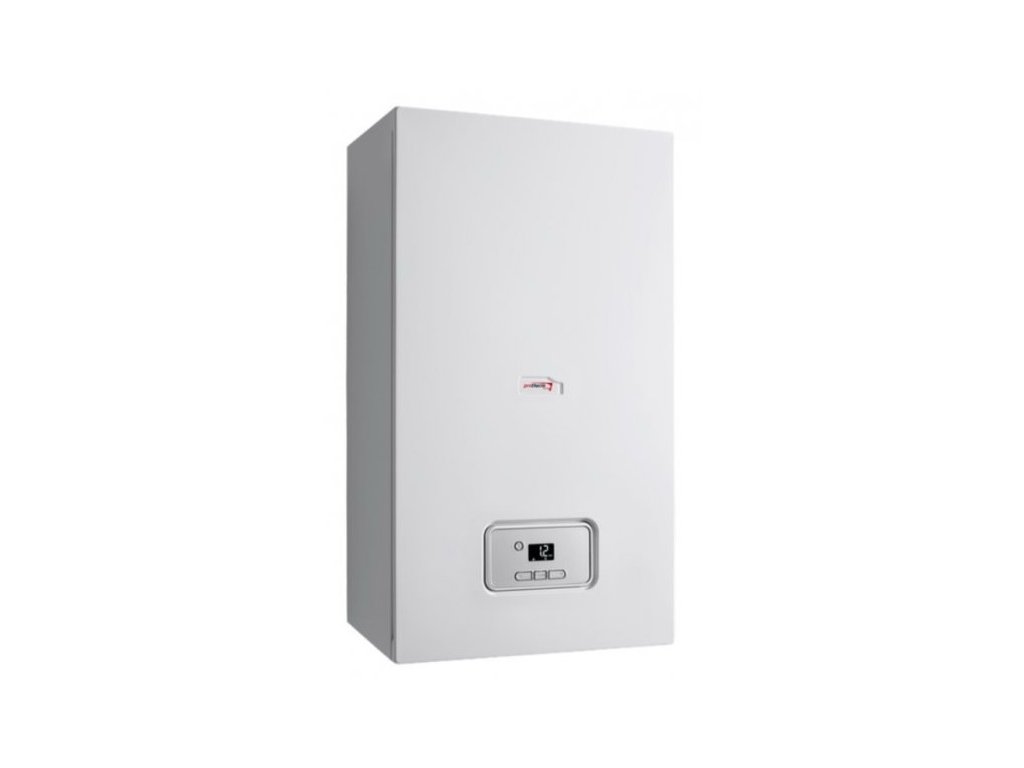
|
Protherm Gepard Condens 18/25 MKV – a modern condensing boiler, the recommended replacement for the low-temperature Protherm Gepard, with efficiency of up to 98% and significantly lower gas consumption compared to a classic atmospheric boiler. Price from €1,322.00. |
The first half of the six areas into which the FAQ is divided.
The second half of the six areas into which the FAQ is divided.
Links to more detailed topics in the Knowledge Centre.
Related Topics
- Why low-temperature boilers are no longer sold and what to use instead
- Can a low-temperature boiler be replaced with a condensing one
- Servicing, maintenance and spare parts for a low-temperature boiler
- What is the difference between a low-temperature and a condensing boiler
- How long does an old low-temperature boiler last and when should you replace it
- Most common faults in low-temperature boilers and how to solve them
- How to set up and control a low-temperature boiler
- How much can I save by switching to a condensing boiler
- What flue and chimney does a low-temperature boiler need