
What Is the Difference Between a Low-Temperature and a Condensing Boiler
What Is the Difference Between a Low-Temperature and a Condensing Boiler
If you're shopping for a new gas boiler today, you'll run into the word "condensing" in practically every listing. Low-temperature boilers (sometimes also called atmospheric or classic boilers) were commonly sold just a few years ago and are still in service in many Slovak households. The difference between the two types isn't just a marketing label - it comes down to a different physical principle of burning gas, which has a direct impact on efficiency, how the flue gases are vented, and how much you actually pay for heating. In this article, we'll explain how both types of boilers work, how they differ, and when it makes sense to consider replacing one with the other.
How a Low-Temperature (Classic) Boiler Works
A low-temperature boiler burns natural gas in the classic way - the flame heats an exchanger through which the heating water flows, and the hot flue gases then leave through the chimney. The boiler is set so that the temperature of the return water (i.e. the water coming back from the radiators to the boiler) never drops below a certain limit, usually around 55 °C. This limit isn't arbitrary - it's meant to prevent the water vapor contained in the flue gases from condensing directly inside the exchanger and the chimney. Condensate is acidic, and an ordinary steel or cast-iron exchanger, as well as a masonry chimney, aren't built to withstand it; the vapor would gradually damage them through corrosion.
That's exactly why flue gases from a low-temperature boiler always have to leave the unit hot enough - they typically leave at 110 to 150 °C. This is also the main reason for the lower efficiency: the heat "locked" in the hot flue gases and water vapor simply escapes unused through the chimney. The actual usable efficiency of such a boiler therefore ranges from 70 to 90%, and in practice you'll most often encounter a figure around 84%. So out of every 100% of the energy contained in the gas, the boiler converts roughly 84% into heat for heating, and the rest is lost.
Flue gas venting therefore has to be handled by a masonry or system chimney with sufficient heat resistance - either with natural draught (the flue gases rise up the chimney on their own thanks to their temperature and the pressure difference), or as a so-called turbo version with forced draught, where a fan actively pushes the flue gases out. In both cases, however, the chimney has to withstand high temperatures and must not allow condensate to form inside it, which is why an ordinary plastic flue pipe cannot be used.
The principle by which a condensing boiler gains extra heat.
How a Condensing Boiler Works
A condensing boiler uses the same fuel but with the opposite philosophy. Instead of avoiding condensation in the hot flue gases, it deliberately cools them enough that the water vapor they contain condenses back into liquid water - exactly like steam from a pot condensing on a cold lid. This phase change (vapor to water) releases additional heat, so-called condensation (latent) heat, which a low-temperature boiler simply lets escape unused through the chimney. A condensing boiler captures this extra heat in its exchanger and transfers it back into the heating water.
For this effect to happen at all, a condensing boiler has to cool the flue gases far more than a classic boiler - they typically leave at just 20 to 50 °C, almost room temperature. This allows it to use a substantially larger share of the energy in the gas. The physical maximum efficiency is stated as up to 98%, but you'll commonly find figures of 105-109% in manufacturers' technical datasheets. These aren't a mistake or a marketing trick - they arise because efficiency in this case is calculated relative to the so-called net calorific value of gas (heat without the vapor's condensation heat), while a condensing boiler actually gains the "extra" energy that this basic calculation standard doesn't account for at all. Put simply: a condensing boiler can produce noticeably more heat from the same amount of gas than a low-temperature boiler.
Since flue gases leave a condensing boiler already significantly cooled, a masonry chimney isn't needed to vent them - a lightweight plastic concentric flue pipe is sufficient (a pipe within a pipe, where the flue gases exit through the inner pipe and combustion air is drawn in through the outer annulus). Plastic easily withstands this low temperature, which simplifies and cheapens the installation, especially where the original masonry chimney doesn't need to be used at all.
Condensation does have its "price," however - the condensate produced is acidic, with a pH of roughly 3 to 5 (about as acidic as, say, fruit juice). This condensate has to be continuously drained from the boiler into the sewer system, usually via a trap and sometimes also through a neutralization tank, which partially reduces the acidity before the condensate goes into the drain. A low-temperature boiler doesn't produce any such condensate, so you don't need to deal with drainage or neutralization at all.
Comparison Table
The table below summarizes the main differences between the two boiler types in one place.
| Parameter | Low-temperature (classic) boiler | Condensing boiler |
|---|---|---|
| Efficiency | 70 – 90 %, typically around 84 % | up to 98 % (physical), 105 – 109 % in technical datasheets |
| Flue gas temperature | 110 – 150 °C | 20 – 50 °C |
| Flue gas venting type | masonry chimney - natural draught or turbo with forced draught | plastic concentric flue pipe |
| Condensate | not produced | yes, acidic (pH approx. 3 – 5), needs to be drained into the sewer |
| Purchase price | lower | higher |
| Operating costs | higher (more gas burned for the same heat) | lower thanks to higher efficiency |
In practice, this means a simple trade-off: a low-temperature boiler costs you less to buy but burns more gas for the same amount of heat. A condensing boiler "asks" for somewhat more money up front due to the higher initial investment, but the difference gradually pays itself back through lower gas bills. That's exactly why condensing boilers are sold almost exclusively today - the EU Ecodesign Regulation (the so-called ErP directive) has, since 2015, in practice restricted the sale of low-efficiency heating appliances, which includes the classic low-temperature boiler. Exceptions exist only for specific cases, for example where draining the condensate can't be arranged.
Example Boilers for Comparison
If you'd like to picture the difference using specific products, a good approach is to compare two boilers from the same manufacturer in a similar output class - one low-temperature, one condensing.
|
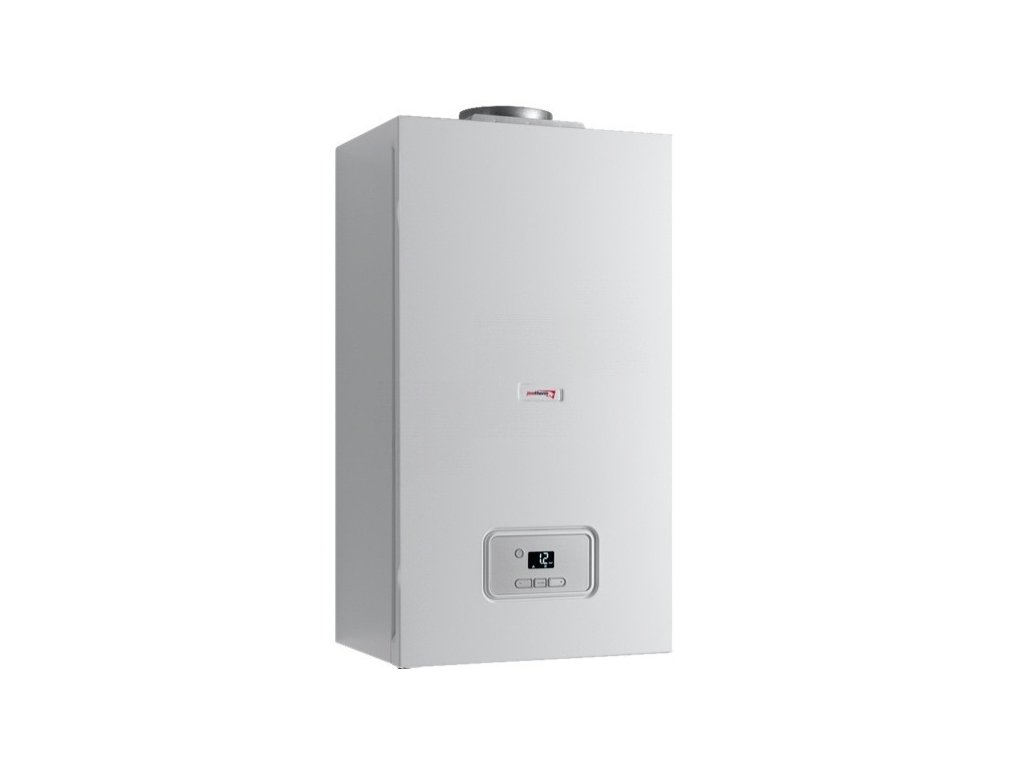
Protherm Gepard 18/24 MOV - a low-temperature (atmospheric) boiler, one of the few models still sold as an exception for specific installations despite tightened ecodesign requirements. Suitable mainly for buildings with an existing masonry chimney, where switching to condensing technology isn't technically possible. Price from €1,195.02. |
|
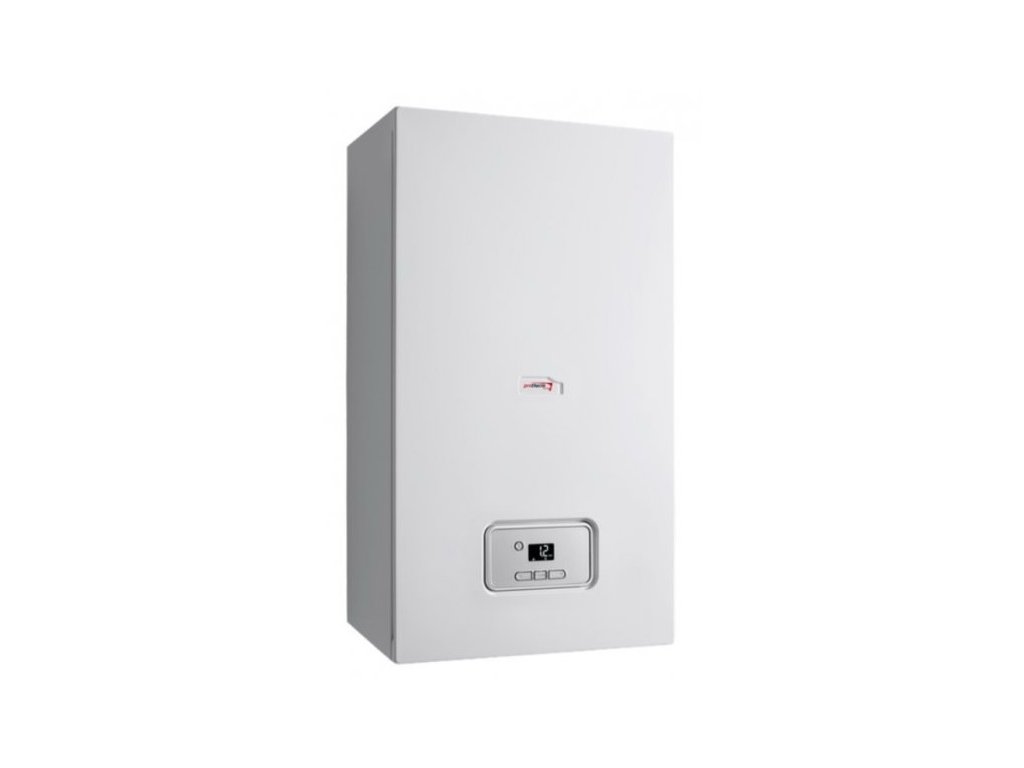
Protherm Gepard Condens 18/25 MKV - a condensing boiler from the same product line, comparable in output and purpose (apartments, family homes), but with significantly higher efficiency and lower operating gas consumption thanks to using the condensation heat of the flue gases. Price from €1,322.00. |
Figures from the comparison table further down in the article.
Two more differences from the comparison table.
Economic comparison from the table below.
Frequently Asked Questions
Is a condensing boiler always better?
In terms of efficiency and operating costs, yes - a condensing boiler almost always uses less gas for the same amount of heat. A low-temperature boiler is only justified in a narrow group of cases, for example where there's no way to drain condensate into the sewer, or where technical or heritage-preservation reasons require keeping the original masonry chimney untouched.
Can a condensing boiler be connected to radiators like a low-temperature boiler?
Yes. A condensing boiler works reliably with classic radiators too, but to make full use of its advantage (low flue gas temperature and condensation), it needs the return water temperature to be as low as possible - ideally below 50 – 55 °C. With a higher-temperature system (for example, older, oversized radiators set to 70/55 °C), the condensing effect is smaller, but the boiler still works and is still more efficient than a low-temperature equivalent. It benefits the most when combined with underfloor heating or larger low-temperature radiators.
Why do condensing boilers have a lower flue gas temperature?
Because it's a direct precondition for condensation to happen at all. Water vapor in the flue gases only condenses into water once the flue gases are cooled below the so-called dew point (for natural gas, roughly 55 – 57 °C). A condensing boiler therefore deliberately removes heat from the flue gases down to this point and below - that's exactly the source of its higher efficiency. A low-temperature boiler, by contrast, has to keep the flue gas temperature above this point so that condensation doesn't occur and damage the exchanger or the chimney.
Why can't a low-temperature boiler have return water that's too cold?
The flue gas temperature in the boiler is closely tied to the temperature of the water returning to it from the heating circuit. If the return water were too cold, it would also cool the flue gases below the dew point and cause unwanted condensation inside an exchanger that isn't built to handle it. That's why low-temperature boilers maintain a minimum return water temperature (typically around 55 °C) - which is actually where the name "low-temperature" comes from, referring to the lower limit of the operating temperature, not to it heating "insufficiently."
Is it worth additionally installing a low-temperature boiler instead of a condensing one?
Generally not. Because of current European ecodesign legislation, new low-temperature boilers are sold only in exceptional cases, and for most households a condensing boiler works out more favorably despite the higher upfront price - the price difference is usually recovered through lower gas consumption within a few heating seasons.
Does a condensing boiler always need a plastic flue pipe?
In the vast majority of cases, yes, since it's the simplest and cheapest solution matching the low flue gas temperature. In some installations, however, a condensing boiler is also connected to an existing masonry chimney that's fitted with a resistant plastic or stainless-steel liner designed specifically for low-temperature flue gases with condensate - this is common in renovations where the original chimney is kept for structural reasons.