
How Much Will I Save by Switching to a Condensing Boiler
How Much Will I Save by Switching to a Condensing Boiler
If your home is still heated by an old atmospheric or low-temperature boiler, the question "is it even worth replacing" can be answered fairly concretely. This isn't some exotic technology or experiment – condensing boilers have been on the market for almost three decades, and their real savings compared with older types are well documented. In this article we'll show where the savings physically come from, what range they typically fall into, what a simple model calculation looks like for an average Slovak household, and how long it typically takes for the investment in a new boiler to pay for itself.
The Difference in Efficiency – Where the Savings Come From
An old atmospheric or low-temperature boiler burns gas and simply discharges the hot flue gases through the chimney. Along with them, however, water vapour also escapes – vapour that is produced when natural gas is burned, and which carries a significant amount of heat, known as latent (condensation) heat. In a classic boiler this heat is never used; it simply escapes through the chimney. The efficiency of such older boilers therefore typically ranges from 70 to 90%, most often around 84%.
A condensing boiler does exactly what its name suggests – it cools the flue gases enough that the water vapour they contain condenses back into liquid, and the heat released is transferred into the heating circuit before the flue gases leave the boiler. This allows condensing technology to reach an efficiency of up to 98% relative to the so-called net calorific value of gas, and since technical literature and data sheets often also calculate it relative to the gross calorific value (which already includes the condensation heat), you'll also come across figures of 105 to 109%. This isn't an error or a marketing trick – just a different calculation method that genuinely reflects the fact that the boiler can use heat that would otherwise escape through the chimney.
It's precisely this difference between "heat that escapes" and "heat that is still used" that lies at the core of the entire saving. The bigger the gap between the efficiency of the old boiler and the new condensing boiler, the greater the potential saving on gas consumption.
How Much Will I Really Save, in Percent
In practice, when replacing an old non-condensing boiler with a condensing one, a gas saving in the range of 15 to 30% is most commonly quoted. This figure isn't arbitrary – it follows directly from the efficiency gap between the two technologies and from how the heating system is operated.
The exact saving for a specific household varies mainly according to three factors:
- Condition and age of the original boiler – the older and more worn the boiler, the lower its real efficiency (in neglected or undersized boilers it can even drop below the lower end of the 70% range mentioned above), and the greater the potential saving. With a very old or poorly set-up boiler, savings above 30% are therefore not uncommon.
- Heating water temperature – condensation (and therefore the saving) works most effectively when the temperature of the water returning to the boiler (return water) stays low, ideally below around 55 °C. If the heating system operates at high temperatures, part of the potential saving goes unused.
- Type of control – a boiler controlled by a simple on/off thermostat saves less than one connected to weather-compensating control, which continuously adjusts the heating water temperature to the outside temperature and thereby keeps the return water temperature as low (and therefore as efficient) as possible throughout the whole heating season.
It's important to view these figures as a real, verified range, not as a guaranteed promise – the exact saving for a specific house always depends on a combination of the factors above, so two neighbours with equally old boilers can see results differing by several percentage points.
The same illustrative example discussed in the text below.
Model Example
So the saving doesn't stay just an abstract percentage, let's look at a simple illustrative calculation. A typical insulated family house in Slovakia consumes roughly 1,000 to 1,800 m³ of natural gas per year for heating and domestic hot water. Let's take as a model case a house with consumption of 1,500 m³ per year, which has so far been heated by an older atmospheric boiler.
At a saving at the lower end of the typical range, i.e. 15%, annual consumption would drop from 1,500 m³ to approximately 1,275 m³. At a mid-range value of around 20%, consumption would fall to 1,200 m³. And at a saving at the upper end of the typical range, i.e. 30%, the house would consume only around 1,050 m³ a year.
In other words – in this model house, replacing the boiler would mean a saving of 225 to 450 m³ of gas per year, roughly a fifth to just under a third of current consumption. Since the price of gas changes over time, we deliberately don't provide a conversion to euros here – you can easily calculate the exact saving in euros yourself by multiplying the cubic metres saved by the current gas price in your contract. The principle, however, remains the same regardless of the current energy price: the higher the price of gas, the more noticeable the saving in money, but the percentage share of saved consumption doesn't change with the price of gas.
If the house also has low-temperature heating emitters – typically underfloor heating – or if the boiler is connected to weather-compensating control, the real saving usually shifts closer to the upper end of the range stated above, or can even exceed it. The reason is simple: underfloor heating operates with a low heating water temperature (often 30–40 °C), which is exactly the condition under which a condensing boiler reaches its highest efficiency. The combination of condensing boiler + underfloor heating, or condensing boiler + weather compensation, therefore represents, from a physical standpoint, the most efficient solution available for a typical family house.
How Quickly the Investment Pays Off
When deciding whether a replacement is worth it, you need to factor in not only the price of the boiler itself but also the associated installation costs. A condensing boiler requires condensate drainage and, as a rule, a different type of flue than the old atmospheric boiler had – most often a plastic (or plastic-aluminium) flue system resistant to condensate, since a classic masonry chimney isn't suitable for this purpose. Piping modifications or a gas appliance inspection may also be needed. These related costs together commonly add up to tens of percent on top of the price of the boiler itself, so it's good to factor them in in advance rather than discovering them only on the invoice from the installation company.
When replacing a significantly older, low-efficiency boiler with a condensing one, under normal heating intensity (a typical family house, full heating season), the payback period is generally on the order of a few years. The exact period is always individual and depends mainly on:
- the efficiency gap between the original and the new boiler (the older/worse the original boiler, the faster the payback),
- the current and future price of gas (a higher gas price means the investment pays off faster),
- the intensity and length of the heating season (a larger, less insulated house with a longer heating season achieves faster payback in absolute euros, since it saves more cubic metres),
- and whether the boiler replacement was combined with another change (e.g. switching to a low-temperature system) that further increases the saving.
Besides the purely financial payback, you should also add the benefits that are hard to express in euros – greater control comfort, quieter operation, a longer expected lifespan for the modern appliance, and the fact that low-temperature boilers have not been manufactured for years now, so service and spare parts for the old boiler will become increasingly harder to find over time.
Recommended Models
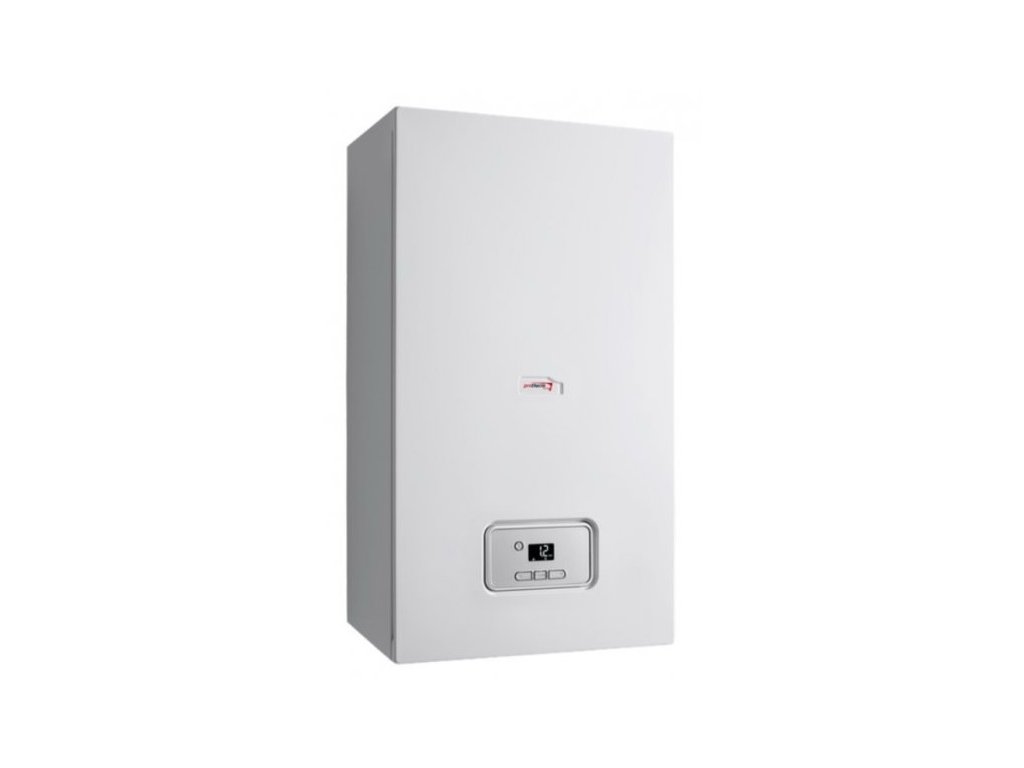
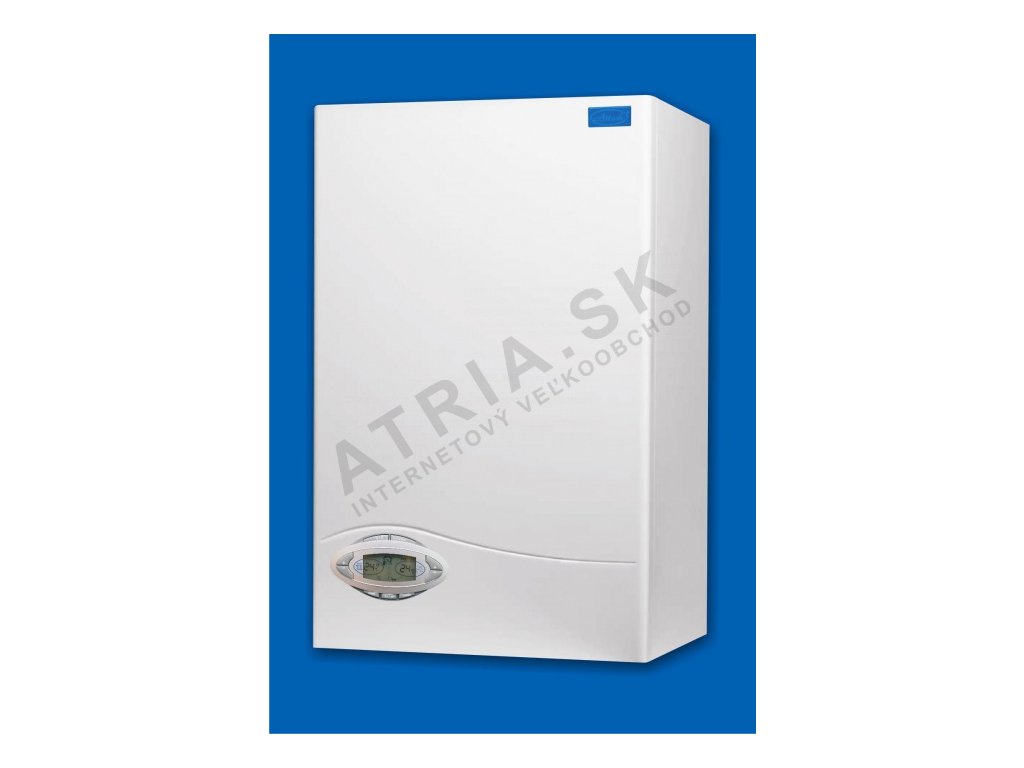
If you're considering a specific condensing boiler to compare price and parameters, here are two proven models from different output categories:
|
Protherm Gepard Condens 18/25 MKV – a compact condensing boiler suitable as a direct replacement for a typical atmospheric or low-temperature boiler in a small to medium-sized family house, combined mode for heating and hot water preparation. Price from €1,322.00. |
|
ATTACK CONDENSING 20 Premium – a more powerful condensing boiler with premium features, also suitable for larger houses or households with higher demands for hot water preparation. Price from €1,731.00. |
The savings range from the text above.
The three factors discussed in the article above.
The principle behind calculating the payback period.
Frequently Asked Questions
How many years until a new condensing boiler pays for itself?
When replacing a significantly older, low-efficiency boiler with a condensing one, the investment typically pays off within a few years under normal heating intensity. The exact period depends on the efficiency gap between the two boilers, the price of gas, and how much the house is actually heated – the older and worse the original boiler, the faster the payback.
Will I save even if I have radiators and not underfloor heating?
Yes. A condensing boiler brings savings even with classic radiators, since a radiator system too can largely operate at a lower heating water temperature than was historically used. The saving tends to be somewhat lower than with underfloor heating (where condensation is most effective), but it's still generally within the typical 15 to 30% range.
Is the saving guaranteed?
No, no manufacturer or seller can guarantee an exact saving percentage for a specific house – it's always a real, verified range, not a fixed promise. The actual saving depends on the condition of the original boiler, the heating water temperature, the type of control, and the household's heating habits.
Is it worth replacing a boiler that still works?
If an old low-temperature or atmospheric boiler still works but has already been through many heating seasons, it's worth considering replacement preventively rather than waiting for a breakdown – besides the gas saving, the risk of poorer spare-parts availability also gradually increases, since these older boiler types are no longer manufactured.
Do I also need to replace the chimney along with the boiler?
In most cases, yes – a condensing boiler produces condensate and requires a different type of flue gas discharge than the original atmospheric boiler had, most often a plastic flue system resistant to moisture. This cost needs to be factored in together with the price of the boiler as part of the overall investment.
Does the size of the house affect the amount of saving?
The percentage saving on gas consumption (15–30%) doesn't change significantly with the size of the house, since it stems from the efficiency gap between the boilers. The absolute saving in m³ of gas and in euros, however, is higher in larger or less insulated houses, which have higher total consumption and a longer heating season.