
Electric Boiler or Gas Condensing Boiler
Electric Boiler or Gas Condensing Boiler – How to Decide
If you're replacing an old heat source or planning heating for a new build, sooner or later you'll run into this question: an electric boiler, or a gas condensing boiler? Both technologies are among the most reliable and efficient solutions on the market today, but they work on completely different principles and suit different situations. The goal of this article isn't to declare one winner – there isn't one. The goal is to show you exactly the parameters that matter in practice, and help you choose the heat source that will actually be the most advantageous in your specific house, flat, or cabin.
You'll find both solutions in our range, and in this article we'll use specific models – the Protherm Ray 18KE and Attack Electric Excellent 8 electric boilers, and the Protherm Gepard Condens 18/25 MKV gas condensing boiler – to show you where they actually differ. If you're only looking at choosing an electric boiler without comparing it to gas, we also recommend the separate article How to Choose an Electric Boiler, where we cover output, control type, and other parameters in detail.
In practice, the decision between an electric and a gas condensing boiler most often comes down to three questions: Is natural gas even available in your area? How much heat do you actually use per year – a small cabin, or a large family house heated all year round? And do you have access to a discounted electricity tariff, for example via HDO (ripple control) or your own solar panels? The answers to these three questions will point you to the right choice far more reliably than any general "which boiler is better" advice. Below, we go through efficiency, real running costs, installation requirements, servicing and maintenance, the environmental angle, and two real-world examples.
Efficiency of both technologies
The first thing most people wonder about is efficiency – which boiler converts more of the input energy into heat in the home? The answer is surprising: both technologies have high efficiency, and the difference between them is negligible in practice.
An electric boiler works on the principle of resistive heating – electric energy passes through a heating element and is converted into heat with almost no loss. Efficiency here is around 99%, which is practically the physical ceiling of what's achievable. Electricity simply has nowhere to "escape" as flue gas, no chimney, no combustion losses – almost all the energy supplied is converted into heat in the heating circuit.
A gas condensing boiler works completely differently – it burns natural gas, and on top of that it can also recover the condensation heat contained in the water vapour in the flue gas, which in a classic (non-condensing) boiler would escape unused through the chimney. Thanks to this, condensing technology reaches an efficiency of up to 98% relative to the physical heat content of the fuel (technical data sheets sometimes also state 105–109%, because manufacturers calculate based on the gas's calorific value – a different way of expressing the same phenomenon, not an error or a marketing trick). In practice this means that a gas condensing boiler, too, is a remarkably efficient device today that wastes almost nothing.
The conclusion from this section is therefore simple but important: the difference between an electric and a gas condensing boiler isn't decided by the equipment's efficiency. Both types can convert almost the entire input energy into heat in the home. The real difference has to be found elsewhere – in the price of the energy itself that you feed into the boiler, and in the installation requirements. We cover both in the following sections.
Efficiency of converting input energy into heat for both technologies.
Running costs – where the real difference lies
If both technologies are almost equally efficient, why do so many homeowners with a gas connection still choose gas, and conversely why does nobody install a propane-butane gas boiler in a cabin without gas just for a "better" technology? The answer lies in the price per unit of energy, not in the equipment's efficiency.
The price of electricity per kilowatt-hour is, under most tariffs and for most of the time, higher than the price of heat obtained from natural gas, converted to the same number of kilowatt-hours. Since both boilers convert almost 100% of the input into heat, the resulting difference in heating cost in practice equals almost directly the difference in the price of the energy itself. So if a house uses, say, 15,000 kWh of heat a year for heating and hot water, that difference between the price of electricity and the price of gas for the same amount of kilowatt-hours gets multiplied by 15,000 – and that's already an amount you'll see on your bills every month.
It's important to add that this rule applies "under normal circumstances" – that is, at a standard electricity tariff without any discount. There is, however, a way to partly or even fully offset this disadvantage: combining an electric boiler with HDO (ripple control), i.e. a discounted night, or even day, electricity tariff. With a correctly set-up regime (for example heating a storage tank or underfloor heating overnight, when electricity is cheaper), the effective price per kilowatt-hour of heat from an electric boiler can come close to the price of gas, and under some tariffs even undercut it. If you'd like to go deeper into this topic, we cover it separately in the article How HDO (Ripple Control) Works With an Electric Boiler.
The second important factor is the current price level of energy in your area and with your supplier – both gas and electricity prices change over time, and sometimes the gap between them narrows or widens. That's why, for a real decision, we always recommend comparing the specific price of electricity (including distribution fees) and the specific price of gas from your own bills, not just general averages found online. You'll find a rough calculation of an electric boiler's annual running cost, along with tips on how to actually save, in the article How Much Does Running an Electric Boiler Cost and How to Save.
Summary of this section: if natural gas is available in your area and you don't have access to a favourable electricity tariff (HDO, solar with storage, and the like), a gas condensing boiler will usually work out cheaper to run for the same heat consumption. If gas isn't available, or you can access discounted electricity, the difference shrinks considerably or even disappears.
Servicing, maintenance, and total cost of ownership
When comparing the two technologies, it's worth looking not only at the price of energy, but also at what running them will cost you "around the edges" – that is, service inspections, spare parts, and the likelihood of faults. Here, too, electric and gas condensing boilers have a different profile.
An electric boiler has a simpler construction – it lacks a burner, a flue-gas fan, combustion sensors, and a flue-gas heat exchanger, exactly the parts that require the most frequent service attention on gas boilers. Thanks to this, the likelihood of a fault is lower, and regular servicing is usually simpler and cheaper – in many cases it's just a check of the heating elements, seals, and electronics. On the other hand, since it's an electrical device connected to a high-power electrical circuit, any fault in the house's wiring (for example inadequate protection) can also show up on the boiler itself, so it's important to have the wiring in good order before installation.
A gas condensing boiler, on the other hand, requires a regular annual service inspection (checking the burner, cleaning the heat exchanger, checking the tightness of joints and the combustion settings), which is recommended both by law and for warranty purposes, and in many cases is a condition of the manufacturer's warranty remaining valid. This inspection represents a regular annual cost that doesn't arise to the same extent with an electric boiler. In exchange, though, with proper care condensing technology can maintain high efficiency and reliable operation over its whole service life, which for quality brands is commonly 15 years or more – similar to electric boilers.
It's therefore worth including not just the price of the equipment itself and the energy, but also these regular service costs in the total cost of ownership (TCO), since over a longer horizon of 10–15 years they can affect the final comparison just as noticeably as the difference in energy price.
The environmental angle
Besides price and convenience, more and more households are also interested in the environmental impact of heating. Here, too, the answer is less clear-cut than it might seem at first glance. A gas condensing boiler burns fossil fuel directly at the point of use, meaning direct carbon dioxide emissions every time it heats – although the high efficiency of condensing technology minimises these emissions to the lowest level achievable by burning gas.
An electric boiler itself produces no direct emissions or flue gas during operation – its environmental footprint shifts to the source the electricity comes from. If the electricity in a given grid or from a given supplier comes largely from renewable sources or nuclear power, the overall carbon footprint of electric heating can be lower than burning gas. If, however, the electricity comes mostly from coal or gas power stations, the balance evens out or can even tip the other way. Households with their own solar installation have a clear advantage here – they can cover part of the electric boiler's consumption with genuinely emission-free power of their own making.
Installation requirements (chimney/flue vs. electrical wiring)
The second major area where the two boiler types differ fundamentally is what you need to have ready before the boiler can even be connected and started.
An electric boiler is simpler to install from this point of view. It needs no chimney or flue-gas outlet – simply because no flue gas is produced. It also doesn't need a gas connection, a gas equipment inspection, or a condensate drain into the sewer. All it needs is connecting to the water-based heating circuit and to the electrical grid. This makes it a popular choice wherever building a chimney is complicated (for example flats on higher floors with no existing chimney), or wherever you simply want to save on the investment in a chimney and flue. On the other hand, an electric boiler does require sufficiently sized wiring – at outputs of 12, 18, or 24 kW, this is a noticeable load on the home's electrical grid, so the breaker and supply capacity need to be checked before installation, and the installation must be carried out by, and inspected by, a qualified electrical inspection technician. In an older house with undersized wiring, this upgrade alone can be a non-negligible line item in the budget.
A gas condensing boiler has the opposite requirement profile. It needs a working gas connection (or one to be built, if the house doesn't yet have gas), a plastic flue for exhausting flue gas (typically concentric, routed out through the facade or roof), and a condensate drain into the sewer, since condensing the water vapour produces acidic condensate that needs to be drained away. These requirements mean higher demands on the installation itself, on service inspections of the gas equipment, and on regular inspections – but in exchange you get a technology that, where gas is available, usually works out cheaper to run, as we showed above.
In simplified terms: an electric boiler shifts most of the requirements onto the wiring and is simpler to physically install (no chimney), while a gas condensing boiler needs a more complex installation infrastructure (gas, flue, condensate), but usually offers lower running costs where gas is available.
Comparison at a glance
The following simple diagram summarises the key differences between the two technologies side by side.
Summary of the steps worth going through before buying.
When to choose an electric boiler
An electric boiler makes the most sense in situations where its simpler installation and independence from gas are a real advantage, or where you can offset the higher price of electricity with a favourable tariff. Specifically, this mainly covers these cases:
- A location without access to natural gas – cabins, cottages, family houses in villages that a gas pipeline was simply never run to, and building one would be disproportionately expensive or administratively complicated.
- Access to a discounted electricity tariff (HDO) – if you can use night-time or two-rate heating (for example combined with a storage tank or underfloor heating with greater thermal inertia), the difference in energy price shrinks significantly.
- A secondary or backup heat source – in buildings where the main source is, for example, a heat pump or a solid-fuel boiler, and the electric boiler serves as a simple top-up or backup element without needing to deal with a chimney.
- Flats and smaller spaces without an existing chimney – where building a chimney or a facade flue would be structurally complicated, expensive, or, in an apartment building, would necessarily require approval from the owners' association.
- Renovations under pressure to be simple and quick – if you need to replace a boiler quickly, without touching the facade or chimney, or without waiting for gas equipment inspections.
- Combination with a solar installation – if the house has its own solar panels (especially with battery storage), part of the electric boiler's consumption can be covered by your own generated electricity almost for free, which significantly improves running costs.
When choosing a specific output and model of electric boiler, we recommend going through the detailed guide How to Choose an Electric Boiler, where we explain how to correctly size the output based on the house's area and heat loss, what types of control (including mobile apps) are available today, and what to watch out for with the wiring.
When to choose a gas condensing boiler
A gas condensing boiler, on the other hand, is the natural choice wherever natural gas is available and you want to take advantage of its usually lower price per unit of heat compared with electricity. Typical situations:
- A house or flat with an existing gas connection – if the infrastructure is already in place (or you're simply replacing an older boiler with a new condensing one), the additional installation costs are minimal and running costs are usually lower than with an electric boiler without HDO.
- Higher expected heat consumption – larger houses with higher heat loss, where the price difference between gas and electricity is multiplied by a large volume of kilowatt-hours consumed and becomes a noticeable line item in the annual budget.
- A combination of heating and higher hot water consumption – households with more members, where the boiler also has to cover substantial hot water preparation, benefit from the lower price of gas over a larger consumption volume.
- Planned long-term operation with no plans to change the electricity tariff – if you don't expect to use HDO or solar and will be paying a standard (non-discounted) electricity tariff, a gas condensing boiler tends to be more cost-effective to run where gas is available.
- Buildings where a chimney/flue already exists – if the structural preparation for exhausting flue gas already exists (for example when replacing an old boiler with a new condensing one), the additional installation investment is lower and the payback is faster.
If you're considering a gas condensing boiler, it's also worth comparing the individual ranges and brands – differences in price, output ranges, and features can be considerable even within condensing technology itself.
Comparison of what needs to be prepared before installation.
A real-world example
To make the rules above more concrete, let's look at two illustrative scenarios we commonly come across in practice.
Scenario 1 – a cabin without a gas connection. Picture a holiday cabin in a mountain village that a gas pipeline was never run to, and building one would require kilometres of pipe across private land – financially and administratively unrealistic. The owner only uses the cabin at weekends, and during winter needs frost-protection heating so the pipework doesn't freeze, plus a fast ramp-up to a comfortable temperature on arrival. In this case, an electric boiler is practically the only sensible choice – no chimney, no complicated installation, with the option of switching on the frost-protection heating remotely via a mobile app while still on the way to the cabin (a feature offered, for example, by the Attack Electric Excellent 8 model). Since the cabin isn't heated continuously and the annual heat consumption is relatively low, the higher price of electricity per kilowatt-hour shows up in absolute terms as only a mild difference on the bills – tens, not hundreds, of euros a year. Investing in a gas connection would never pay itself back for this kind of use.
Scenario 2 – a family house with a gas connection and year-round heating. A different situation arises in a permanently occupied family house where a gas connection already exists (the house was originally heated by an older gas boiler) and the annual heat consumption for heating and hot water is in the range of 15,000–18,000 kWh. Here, the difference between the price of electricity and gas per unit of heat gets multiplied by a large consumption volume, and a gas condensing boiler (for example the Protherm Gepard Condens 18/25 MKV), when replacing an old inefficient boiler, brings a double saving – both the higher efficiency of condensing technology compared with the old unit, and the lower price of fuel compared with electricity. Since both the gas connection and the chimney (converted to a plastic flue) already exist in the house, the investment cost of the replacement is considerably lower than if the infrastructure had to be built from scratch – and the payback is faster.
These two examples show that the right answer to "electric or gas condensing boiler" doesn't depend on which technology is "better" in general, but on three specific things: whether gas is available in your area, your expected annual heat consumption, and whether you can access a discounted electricity tariff.
Recommended models
Below you'll find three specific models straight from our range – two electric boilers of different outputs and one gas condensing boiler for direct comparison.

|
Protherm Ray 18KE – an electric boiler with an 18 kW output, suitable as the main heat source for a mid-sized family house, as well as a reliable source where gas isn't available. Simple installation with no chimney, high efficiency close to 99%. Price from €1,001.73. |
|
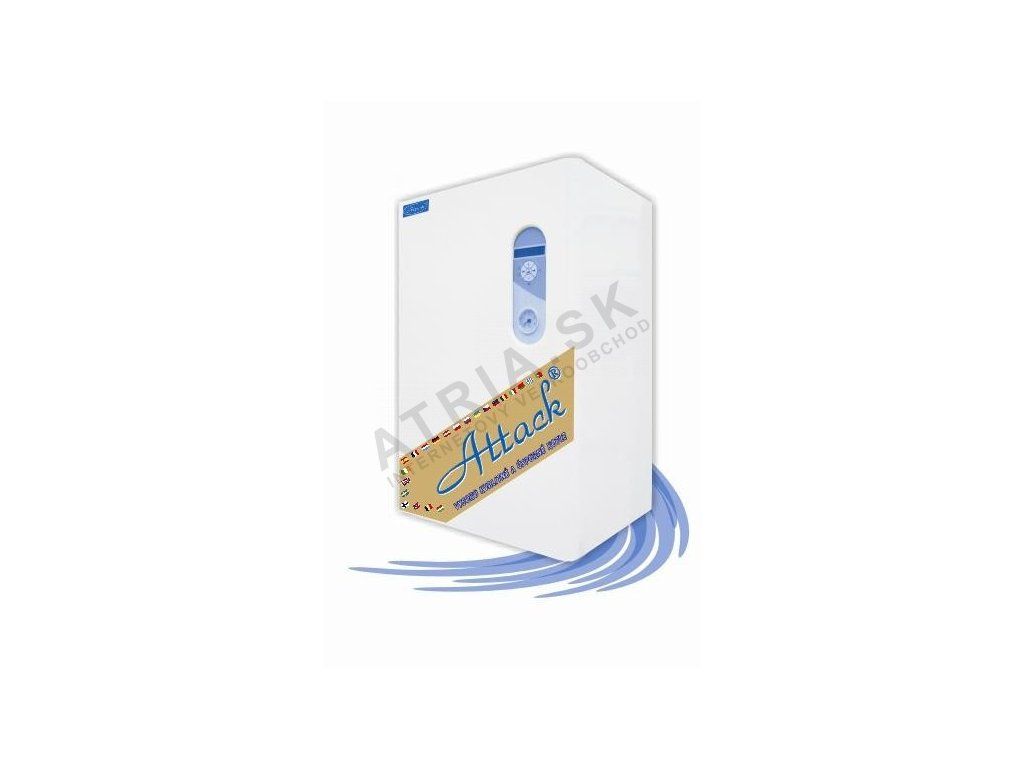
Attack Electric Excellent 8 (7.5 kW) – a compact electric boiler controlled via a mobile app, ideal for smaller spaces, cabins, or as a supplementary heat source. Being able to switch on frost-protection heating remotely from your phone is especially handy for holiday properties. Price from €1,018.00. |
|
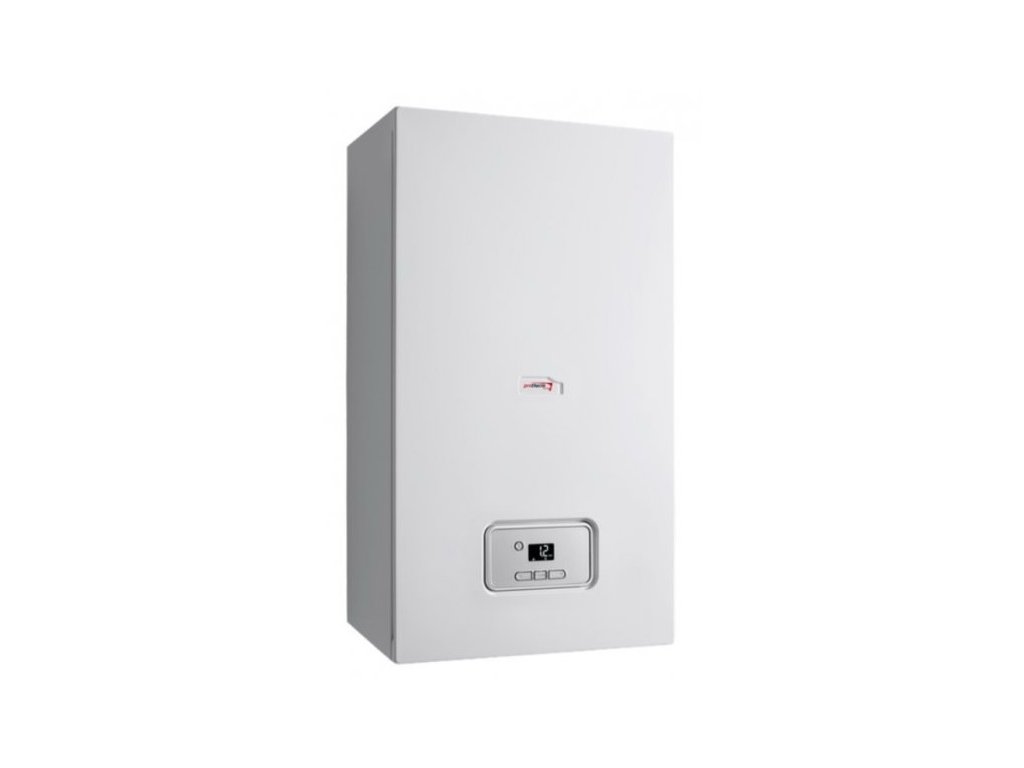
Protherm Gepard Condens 18/25 MKV – a gas condensing boiler with an 18/25 kW output, combined for both heating and hot water preparation. Suitable for houses with a gas connection and higher heat consumption, where the lower price of gas versus electricity really pays off. Price from €1,322.00. |

|
Buderus Logamax E213-4 – another electric alternative to a gas solution, with a built-in pressure expansion tank (7 l) and a multi-stage pump, which simplifies and reduces the cost of installation compared with buying these components separately. Price from €661.26. |
When choosing between individual gas condensing ranges and brands (Protherm, Vaillant, Viessmann, Buderus, and others), we also recommend our separate overview comparing their output ranges directly in the Condensing Boilers section. For electric boilers, we recommend the article Comparison of Electric Boiler Brands, where we compare Protherm, Attack, and other brands available at atria.sk by output, control, and price.
Frequently Asked Questions
Is an electric boiler more expensive to run than a gas one?
In most cases, yes, because the price of electricity per kilowatt-hour of heat is usually higher than the price of heat from natural gas. The difference, however, depends on the specific energy prices in your region and with your supplier, and can be significantly reduced by using a discounted HDO tariff or your own solar panels.
Is it worth having an electric boiler in a family house with a gas connection?
If the house already has a gas connection and the expected heat consumption is higher, it's usually worth sticking with a gas condensing boiler, since running costs work out lower. An electric boiler makes more sense in that case as a supplementary or backup source.
What output of electric boiler do I need for a family house?
The output primarily depends on the building's heat loss, which depends on its area, insulation, and local climate conditions. Typical family houses fall in the range of roughly 9 to 24 kW; you'll find the exact calculation and recommendations in the article How to Choose an Electric Boiler.
Can an electric boiler be combined with solar panels?
Yes, and it's one of the most effective combinations in terms of running costs – part of the boiler's consumption can be covered by your own generated electricity, especially if the solar installation also has battery storage, which lets you use the generated energy even outside sunny hours.
Does an electric boiler need an inspection?
Yes, although it doesn't need a gas equipment or chimney inspection, it does need a proper electrical equipment inspection and sufficiently sized wiring, which should be checked by an inspection technician before installation and then regularly afterwards.
Is a gas condensing boiler suitable for a cabin without permanent occupancy?
If the cabin doesn't have a gas connection built, building one afterwards is usually financially and administratively disadvantageous for a relatively low heat consumption. In that case, an electric boiler, which needs neither a chimney nor a gas connection, is usually the more advantageous choice.
Which boiler type lasts longer – electric or gas condensing?
With proper maintenance and regular servicing, both boiler types have a comparable service life of roughly 15 years or more. An electric boiler has a simpler construction with fewer moving and mechanically stressed parts (no burner, flue-gas fan, or flue-gas heat exchanger), while a gas condensing boiler maintains high efficiency long-term with regular servicing and cleaning of the heat exchanger.
Can an electric and a gas condensing boiler be combined in one house?
Yes, a so-called bivalent solution is common practice – for example a gas condensing boiler as the main source and a smaller electric boiler or electric heating element as a backup or supplementary source in case of a gas outage, a service shutdown, or as a supplement to a heat pump during the coldest days. Such a solution increases heating reliability without forcing you to commit to just one technology.
Related topics
- How to choose an electric boiler
- How much does running an electric boiler cost and how to save
- How HDO (ripple control) works with an electric boiler
- Comparison of electric boiler brands
Have a question about choosing a boiler?
Can't decide, or dealing with a specific situation in your household? Write to us – we're happy to help.