
Frequently Asked Questions about Electric Boilers and Convectors
What Is an Electric Boiler and Convector Heater
Both an electric boiler and an electric convector heater are solutions most often chosen where there is no gas connection, where the house is meant to serve only as a supplementary or backup heat source, or where the owner simply wants quick and easy heating without a complex network of pipes and without burning any fuel. In this article we have summarized the most frequently asked questions we receive from customers about electric heating – from the basic differences, through choosing the right output, electrical wiring and off-peak tariff switching, installation, operating costs, all the way to service and common faults. If you are looking for a more in-depth answer on a specific sub-topic, you will find links to nine separate detailed guides at the end of the article.
- What exactly is an electric boiler? An electric boiler is a heat source that converts electrical energy into heat using heating elements (electric coils) inside the boiler and transfers it to the heating water. This water then flows to the radiators or underfloor heating throughout the whole house or apartment, exactly as with a gas or other type of boiler. The efficiency of converting electricity into heat in an electric boiler is approximately 99%, meaning almost all the energy supplied is actually converted into heat with minimal losses.
- What is the difference between an electric boiler and an electric convector heater? A convector heater is a standalone heating unit intended for a single room – it heats the air directly where it is installed and is not connected to any heating water distribution system. An electric boiler, on the other hand, is a central heat source for the entire house or apartment, which heats water and distributes it through pipes to the radiators or underfloor heating in all connected rooms at once. These are therefore two different concepts, even though both work on the same principle of converting electricity into heat.
- When is an electric boiler worthwhile instead of another heat source? An electric boiler makes the most sense where gas is not available, as a supplementary or backup source alongside another heating system, or in combination with an off-peak (HDO) tariff and a well-insulated house, where operating costs are not prohibitive. A typical real-world example is a cabin or recreational house outside a municipality with gas supply, where running a gas connection would be more expensive than paying for electricity long-term, especially if the property is not used year-round at full capacity.
- Can an electric boiler be combined with existing heating? Yes, it is commonly used as a backup or bivalent source alongside a heat pump or solid-fuel boiler – on freezing days or if the main source fails, it takes over the heating, or it can top up the water in a storage tank. A typical real-world example is a house with a wood-burning fireplace as the main heat source, where the electric boiler only bridges periods when the owner is not lighting the fireplace, for example during the day at work or overnight.
- Is electric heating more expensive than gas heating? The price of electricity per unit of heat is usually higher than the price of gas, but with a dual-tariff rate (HDO), good insulation and a sensibly chosen output, operating costs can be kept at an acceptable level, especially if the house does not need full heating year-round. A more detailed cost comparison with a gas condensing boiler, including situations where it makes sense to choose one source or the other, is covered in a separate article linked at the end.
- Do I need a chimney with an electric boiler? No, an electric boiler doesn't burn anything, so it doesn't need a chimney, combustion air supply, or flue gas outlet. It only needs to be connected to the heating system (radiators or underfloor heating) and to the electrical grid, which greatly simplifies installation, especially in apartments, recreational properties, and older houses without a chimney.

|
Protherm Ray 14KE – a 14 kW electric boiler, suitable as a central heat source for a small to medium-sized house or apartment, or as a backup source alongside another type of heating. Price from €961.00. |
|
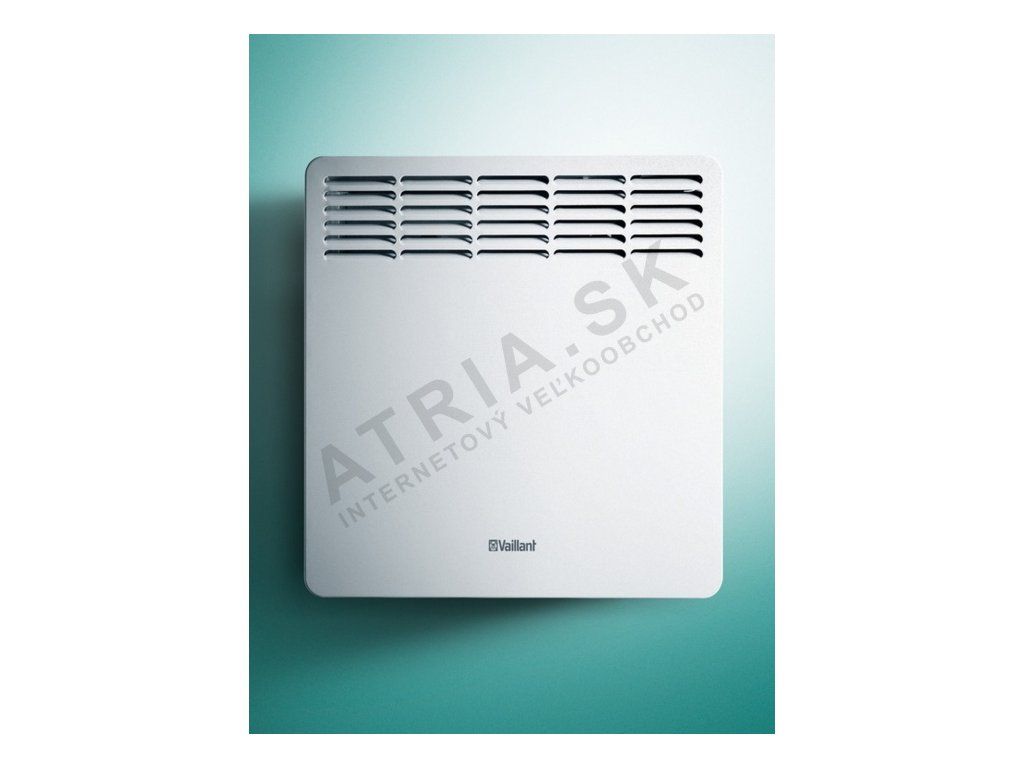
Vaillant eloMENT VER 150 – an electric convector heater for standalone heating of a single room, with no need to connect to the house's heating system, suitable for warming up a room, workshop, or recreational space. Price from €155.80. |
Basic distinction between the two solutions.
Choosing the Output
- How do I find out what output my electric boiler needs? The output is derived from the heat loss of the house or apartment, which depends on the quality of the building envelope's insulation, the size of glazed areas, ceiling height, and the climate zone in which the property is located. As a rough guide, you can go by floor area and insulation condition, but we recommend leaving the exact calculation to a designer or experienced installer, so the boiler is neither undersized nor unnecessarily oversized.
- What happens if I choose too weak a boiler? An undersized boiler cannot heat the house to the required temperature on freezing days, runs practically continuously at full output, and the system never properly reaches a comfortable temperature throughout the property. In a larger house or one with poorer insulation, this is most noticeable during longer cold spells, when heat loss is at its highest.
- And what about an oversized boiler? An unnecessarily high output means higher purchase costs and greater demands on the electrical installation, for example a stronger circuit breaker or even the need for a three-phase connection, while only part of the boiler's output is ever actually used. A smaller model, such as the Thermona THERM EL 8, can easily suffice in a smaller or well-insulated apartment where a more powerful boiler would never be fully utilized.
- What output do commonly available electric boilers have? The model range spans from smaller units around 6–9 kW suitable for apartments and smaller insulated houses, through medium outputs of roughly 12–15 kW, up to larger models above 15 kW intended for family houses with higher heat loss. An example of a medium output is the Protherm Ray 14KE with an output of 14 kW, which covers the needs of most typical medium-sized family houses.
- Does having underfloor heating or radiators affect the choice of output? It doesn't directly change the boiler's output, since that is derived primarily from the building's heat loss, but the type of heating system affects the temperature of the heating water and thus the overall operating efficiency. Underfloor heating operates with a lower water temperature than radiators, which is generally more favourable for an electric source in terms of comfort and even heat distribution in the room.
- Does the brand matter, or are electric boilers mostly similar? The principle of heating with an electric coil is similar across all brands; the differences lie more in the quality of the controls, features, build quality and price of the specific model. It is therefore worth comparing specific models, for example the Buderus Logamax E213-4 or the Thermona THERM EL 8, based on output, price and what you expect from the boiler – you'll find a detailed comparison of several brands in a separate article linked at the end.

|
Buderus Logamax E213-4 – an electric boiler from a well-established brand, suitable as a central or backup heat source for a smaller or medium-sized house or apartment. Price from €661.26. |
Electrical Installation and Off-Peak Tariff (HDO)
- Is an electric boiler a standard or a special-category electrical appliance? An electric boiler falls into the category of special/restricted electrical equipment, meaning its installation may only be carried out by a person with the relevant professional electrotechnical qualification. Once installation is complete, an inspection of the electrical equipment is also required, confirming that the wiring is safe and complies with applicable regulations.
- Do I need a separate circuit breaker for the electric boiler? Yes, the electric boiler must have its own correctly sized circuit breaker, separate from other household appliances. The breaker's rating is determined by an electrician based on the specific boiler's output and the type of connection, i.e. whether it is a single-phase or three-phase connection.
- When do I need a three-phase connection? Larger electric boiler models, typically from around 12–15 kW output upward, commonly require a three-phase connection, since a single-phase circuit would be overloaded at that output. When choosing a more powerful boiler, it is therefore necessary to check in advance whether the house has, or can have, a three-phase supply installed, before placing the order.
- What is HDO and how does it relate to an electric boiler? HDO, or ripple control (mass remote switching), is a system by which the electricity distributor remotely switches between the high tariff (VT) and the low, discounted tariff (NT) according to a predetermined schedule. An electric boiler connected via HDO can thus do a larger share of its heating precisely during the low-tariff periods, which significantly reduces the cost of electric heating compared to a standard single-tariff rate.
- How does HDO switching work in practice? The signal from the distributor is received by an HDO receiver, which then switches the boiler circuit on or off via a contactor depending on which tariff is currently active. You'll find a simplified wiring diagram below – from the electrical grid through the dual-tariff meter, the HDO receiver and the contactor, right to the boiler itself.
- Do I need a special electricity meter because of HDO? Yes, to use the dual-tariff rate you need a dual-tariff (two-rate) electricity meter, which can measure consumption separately in the high and low tariffs. Installation and the actual change of tariff are arranged directly with your distributor or electricity supplier; the electrician then connects the boiler to this circuit.
- Does HDO also affect regular household electrical appliances, or just the boiler? It depends on the specific wiring – in many households only the boiler, or possibly also a water heater, is connected to the HDO circuit, while the rest of the household runs on the regular rate without restriction. The exact wiring and the scope of circuits to be switched is determined by the electrician when designing the installation, according to the effect you expect from HDO.

|
Thermona THERM EL 8 – a lower-output electric boiler, suitable for apartments and well-insulated smaller houses, where a more powerful model would remain unused all year round. Price from €709.53. |
Summary of the steps from selection to commissioning.
Installation
- Who is allowed to install an electric boiler? As a special-category electrical appliance, an electric boiler may only be installed by a person with the relevant professional electrotechnical qualification. Installation is always followed by a mandatory inspection of the electrical equipment, confirming the wiring as safe and fit for operation.
- How long does it take to install an electric boiler? For a simple replacement of a previous electric boiler in the same location, it is usually a matter of a few hours' work, including connecting to the existing circuit. For a first-time installation, including modifying the electrical wiring or setting up an HDO circuit, it can take longer, and you should also allow time for the subsequent inspection.
- What needs to be prepared before installation? Besides the boiler itself, you need a suitably sized circuit breaker, possibly a three-phase connection for higher outputs, a functioning heating system (radiators or underfloor heating), and, if you want the discounted tariff, the option of setting up an HDO circuit with a dual-tariff meter. We recommend discussing these points with an electrician and installer before ordering a specific model.
- Can a customer install an electric convector heater themselves? A standalone portable or wall-mounted convector heater connected via a regular 230 V socket can usually be connected even by a layperson, since it does not involve a fixed connection to the wiring the way a boiler does. For a fixed connection of a convector heater directly to the electrical installation, for example with some built-in models like the Vaillant eloMENT VER 150, it is again advisable to leave the work to a qualified electrician.
- Does the heating system also need to be addressed during installation, or just the electrics? With an electric boiler, in addition to the electrical connection, you also need to connect the heating water circuit – the flow and return to the radiators or underfloor heating, as well as possibly an expansion vessel and safety devices, similar to other types of boilers. It is therefore a combination of electrical and heating engineering work, so installation is usually handled through cooperation between both trades, or by a single company covering both activities.
Operation and Costs
- How much does running an electric boiler actually cost? Costs depend primarily on the house's heat loss, the comfort level set, the current price of electricity from your supplier, and whether you use the discounted HDO tariff. In general, a well-insulated house with a sensibly sized boiler and an HDO tariff set up can keep costs at an acceptable level; you'll find a more precise calculation for a specific household in a separate article on operating costs.
- How can I reduce the cost of electric heating? The biggest impact comes from a combination of the HDO tariff, i.e. heating mainly during the low-tariff period, good insulation of the house, and a correctly sized boiler output without unnecessary losses. A room thermostat or weather-compensated control can also help, switching the boiler on precisely as needed rather than running it needlessly throughout the day.
- Is there a cost difference between a convector heater and a central electric boiler? A convector heater only heats a single room, so for occasionally warming up one room, for example a garage, workshop, or guest room over a weekend, it can be more cost-effective than starting up an entire boiler and heating system just for one room. Conversely, when heating the whole house, a central boiler with distribution to radiators or underfloor heating is more efficient and comfortable, since it can evenly supply heat to all connected rooms.
- What is the lifespan of an electric boiler? With regular maintenance and normal operation, the lifespan of an electric boiler is roughly in the range of 15–20 years, similar to other types of boilers. The actual lifespan also depends on the quality of the water in the heating system and on whether recommended service inspections are carried out at regular intervals.
- Is an electric boiler worthwhile even without the HDO tariff? It can also be operated on a standard, single-tariff rate, but without the discounted low tariff, costs will generally be higher, since heating does not preferentially happen during the cheaper hours of the day. If you plan to use an electric boiler as your main or a significant supplementary heat source, it is worth considering setting up the HDO tariff already at the time of installation, not afterwards.
- Is it worth adding a room thermostat to an electric boiler? Yes, a room thermostat or weather-compensated control helps regulate the temperature more precisely according to the room's actual needs or the outdoor temperature, and limits unnecessary overheating, which is directly reflected in operating costs. It is a simple addition worth considering for any type of boiler, electric ones included.
|
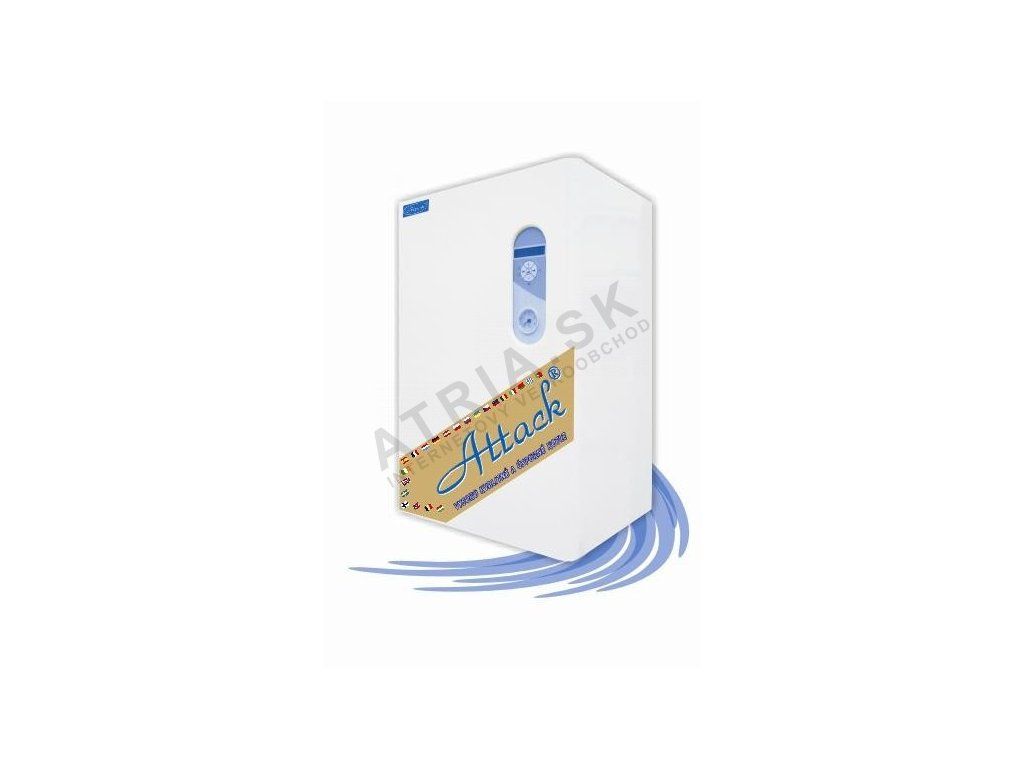
Attack Electric Excellent 8 – a 7.5 kW electric boiler from a Slovak manufacturer, suitable as a reliable central or backup heat source for a smaller house or apartment. Price from €1,018.00. |
Distinction between the two types of professional intervention.
Service and Faults
- What are the most common faults in electric boilers? The most common include a tripped circuit breaker, a fault in the heating stage (the heating element or its control), low pressure in the system, and problems with HDO switching or the contactor. Most of these have fairly clearly distinguishable symptoms, so you can quickly determine whether it's something the owner can handle themselves or whether an electrician or service technician is needed.
- The boiler isn't heating and the circuit breaker has tripped – what should I do? Check whether the breaker actually tripped because of the boiler, and try switching it back on. If the breaker trips repeatedly, it is usually a fault inside the boiler, for example a short circuit in the heating stage, or an undersized breaker, and in that case you need to call an electrician or service technician rather than just resetting the breaker indefinitely.
- What does low pressure in the system mean, and do I need to call a service technician because of it? Low pressure in the radiator or underfloor heating circuit is a common and uncomplicated matter that most owners can resolve themselves – simply top up the system with water to the prescribed value and, if necessary, bleed the radiators. If pressure is repeatedly lost at short intervals, it is a sign of a leak somewhere in the system, which does require a professional inspection by a service technician.
- The boiler is running but not reaching the set temperature – what could be the cause? The cause is usually poorly set or damaged controls, a partial fault in the heating stage where the boiler heats at only part of its output, an output that is undersized relative to the house's actual heat loss, or a problem with HDO switching, where the boiler only runs within a limited time window. Only a service technician can reliably determine the exact cause during an on-site inspection.
- When is a fault a matter for an electrician and when for regular boiler service? Problems with the contactor, HDO receiver, circuit breaker, or the electrical wiring itself belong in the hands of an electrician with the relevant professional qualification, while faults in the heating stage, controls, or routine maintenance fall under boiler service. If the cause is unclear, the safest option is to contact an authorised service provider, who can diagnose the fault and, if necessary, also recommend an electrician.
- Can most service interventions be resolved without replacing the whole boiler? Yes, the vast majority of common faults – a tripped breaker, low pressure, a problem with the contactor or a control component – are resolved by replacing a specific part or reconfiguring settings, not by replacing the whole boiler. Replacing the entire unit is mainly considered for an older boiler at the end of its service life, i.e. after 15–20 years of operation, or in the case of a genuinely extensive fault in the heating element.
Related Topics
- How to Choose an Electric Boiler
- What Output Electric Boiler Do I Need
- Electric Boiler or Gas Condensing Boiler
- How HDO (Off-Peak Switching) Works with an Electric Boiler
- How Much Does It Cost to Run an Electric Boiler and How to Save
- Electric Convector Heater or Electric Boiler
- Most Common Electric Boiler Faults and How to Fix Them
- What Circuit Breaker and Electrical Wiring Does an Electric Boiler Need
- Comparison of Electric Boiler Brands
Have a Question About Choosing a Boiler?
Can't decide, or dealing with a specific situation in your household? Write to us – we're happy to help.