
How Much Does It Cost to Run an Electric Boiler and How to Save
How Much Does It Cost to Run an Electric Boiler and How to Save
An electric boiler is a popular heating solution especially where there is no gas connection, where a heat pump is technically or financially out of reach, or where the owner is looking for a simple, quiet, maintenance-free solution without combustion and without having to deal with a chimney or flue inspections. The question that sooner or later comes up is almost always the same: how much will such operation actually cost, and can anything be done about it? The answer isn't a single number, but the sum of several variables – the amount of energy consumed, the price of electricity, the tariff you're on, and how well the house and the heating system itself are set up and maintained.
In this article we'll break down what the cost of electric heating consists of, which five measures have the biggest real impact on the final amount, and use a model example to show how the individual savings add up to one result. Since the price of electricity changes over time and varies by supplier and region, we won't work with a specific rate in cents per kilowatt-hour – instead, we'll use the price per kWh as a variable that you plug into the calculation yourself based on your own current bill. The calculation principle we'll show remains the same regardless of the current market price of electricity.
What the Cost of Electric Heating Consists Of
The basic formula is simple: heating cost = electrical energy consumed (kWh) × price of electricity per kWh. For an electric boiler, this equation is clearer than for most other heat sources, because the efficiency of converting electrical energy into heat is approximately 99%. Practically all the electricity the boiler draws from the grid is converted into heat delivered to the heating water – no flue gases, no chimney, no heat escaping through a flue, as is the case with combustion heat sources. Losses are minimal and occur practically only at the surface of the boiler, or possibly in piping outside the heated space.
Cost = kWh consumed × price per kilowatt-hour.
This leads to an important, but often overlooked, conclusion: with electric heating, there's no point looking for savings in "boiler efficiency" – it's already close to the theoretical maximum and can't really be improved further. The room for savings lies elsewhere – in how many kilowatt-hours the boiler has to consume per year, and at what price you buy those kilowatt-hours. The amount of energy consumed is determined primarily by the building's heat loss (how much heat the house loses through walls, roof, windows, and ventilation during the heating season), the required indoor temperature, the length and intensity of the heating season in the given location, and how efficiently the heating system distributes and delivers heat to individual rooms.
The price per kWh, on the other hand, is influenced by the type of tariff agreed with your electricity supplier, or whether you have access to a dual-tariff rate with HDO (ripple/off-peak switching), which distinguishes between a high (VT) and a low (NT) tariff depending on the time of day. It's precisely the combination of "fewer kWh consumed" and "cheaper kWh purchased" that gives the owner of an electric boiler real levers they can pull – and the rest of this article is about exactly that pair.
For completeness, it's worth mentioning the alternative: if your location has a gas connection, it's worth comparing operating costs with a gas condensing boiler, which works on a different principle (gas combustion, a different fuel price structure, and different efficiency dynamics throughout the year). Electric heating has the advantage of simplicity, a low upfront investment, and zero requirements for a chimney, but which source ends up cheaper in a specific house is decided primarily by local availability and the current price of each energy source.
5 Ways to Reduce the Cost of Electric Heating
The following five measures work independently of each other and their effects can be combined – in the model example below, you'll see that together they can reduce annual costs by tens of percent compared with an uninsulated house with no controls at all.
Summary of the measures discussed in the text above.
1. Using HDO – shifting consumption to the cheaper tariff. A dual-tariff rate with ripple/off-peak switching splits the day into high (VT) and low (NT) tariff bands. An electric boiler can shift a large part of its consumption into the cheaper hours – either directly (the boiler runs mainly during the low-tariff period and only tops up missing heat outside it), or indirectly through heat storage in the heating water, in the floor structure, or in a hot water tank, which "draw down" during the more expensive hours from what was accumulated more cheaply. The exact time bands and the difference between rates vary by distribution network and specific supplier, so it's worth checking your own contract or reading the detailed guide How HDO (Off-Peak Switching) Works with an Electric Boiler. In general, though, the larger the share of annual consumption you manage to shift into the low tariff, the lower the average price you actually pay per kilowatt-hour.
2. Good building insulation. This measure doesn't affect the price, but directly affects the number of kilowatt-hours the house needs in the first place. Insulated walls, quality windows, sealed gaps, and an insulated roof or top-floor ceiling reduce the building's heat loss, and therefore the amount of heat (and electricity) the boiler must supply to maintain the required indoor temperature. The effect of insulation is cumulative and long-term – while controls (HDO, thermostat) mainly affect the price or the time distribution of consumption, insulation reduces the actual volume of heat demand for years to come, regardless of which heat source you're currently using. That's exactly why it's worth considering before choosing or replacing a boiler – investment in the building envelope pays off in every subsequent heating season.
3. A room or weekly thermostat with night or absence setback. Not every hour of the day requires the same indoor temperature. At night, when occupants are under the covers, or during the day when the house is empty (work, school), the temperature can be lowered by a few degrees without any loss of comfort – and when it ramps back up, the system will manage to catch up before anyone gets home or wakes up. A quality room or weekly programmable thermostat automates this: set it once, and you don't have to think about it again, with setback applied precisely according to the household's actual rhythm. The difference between "always the same temperature 24 hours a day" and "a lower temperature when nobody notices" is one of the simplest, yet most effective interventions you can make without any construction investment at all.
4. Regular maintenance of the heating system. Even though the electric heating process itself is almost lossless, the rest of the heating circuit – radiators, underfloor heating, pipework, circulation pump – has its own efficiency in delivering heat to the room. Un-bled radiators (an air pocket in the upper part of the unit) have a smaller effectively heated surface, and thus worse output at the same water temperature – the system then has to run longer or at a higher temperature to achieve the same comfort as before. Similarly, deposits and sludge in the system (typically in older piping or with harder water) restrict flow and reduce heat transfer from the radiator surface into the air. Regularly bleeding radiators at the start of and during the heating season, keeping the system free of deposits, and a functioning circulation pump keep the heating circuit in the state it was originally designed for – that is, without needlessly "paying extra" in energy to compensate for losses caused by neglected maintenance.
5. Correctly sized boiler output. An oversized boiler (unnecessarily high output relative to the house's actual heat loss) often works in short, frequent on/off cycles instead of a smooth, longer run at lower output. Frequent cycling means more switching losses, less stable indoor temperature (larger swings around the desired value), and unnecessary wear on components. Conversely, an undersized boiler can't cover heat loss on the coldest days, and the system is constantly "chasing" the desired temperature without ever really reaching it. Correctly sizing the output according to the actual heat loss of the specific house – not according to a guess of "just to be sure it's enough" – is therefore the fifth pillar of economical operation. If you're not sure what output your house needs, you'll find a detailed procedure in the article What Output Electric Boiler Do I Need.
Bonus: smart control and remote monitoring. Modern electric boilers with mobile app connectivity – for example the Attack Electric Excellent 8 – let you monitor and adjust operation remotely. In practice, this means you can check whether the system is running on schedule, adjust the temperature before arriving home instead of letting the boiler run at full output all day unnecessarily, or notice unusually high consumption before it fully shows up on your bill. The precise PID regulation used by this model also keeps the heating water temperature more stable and with smaller fluctuations than simple two-point (on/off) control, ultimately reducing unnecessary consumption spikes.
How the Measures Add Up – An Illustrative Comparison
The following chart shows how the individual measures from the previous chapter can accumulate in the model example in the next chapter. This is an illustrative, simplified representation – the real effect varies from house to house and depends on the specific conditions of each household.
Illustrative representation based on the model example in the following chapter. Percentages represent the share relative to costs with no savings measures at all (100%).
Model Calculation Example
To get an idea of how the individual measures show up on a real bill, let's illustrate this with a simplified model example of a family house with a living area of approximately 120 m². We'll denote the price of electricity with the symbol C (price per 1 kWh in the high tariff) – plug in your own current rate from your bill; the calculation principle shown here stays the same regardless of what the price of electricity is right now.
Starting point (no savings measures): an older, averagely insulated family house with an annual heat demand (heating and partly water heating) of approximately 16,000 kWh, the boiler running with no setback control, no HDO, on a flat, single-tariff rate. Annual cost = 16,000 × C.
Step 1 – insulation. Let's assume that insulating the external walls, replacing some windows, and adding roof insulation reduces the house's heat loss by roughly a fifth. Annual heat demand drops from 16,000 kWh to approximately 12,800 kWh. Cost at the same price C = 12,800 × C, a decrease of about 20% compared with the starting point – without any change to the tariff or controls, just thanks to lower building heat loss.
Step 2 – weekly thermostat with night setback. Introducing a programmable thermostat that slightly lowers the temperature at night and when the house is empty brings a further reduction in consumption – in this model example let's estimate it at roughly 10% of the current, already-insulated consumption. Heat demand thus drops from 12,800 kWh to approximately 11,500 kWh. Cost = 11,500 × C, which compared with the starting point represents a drop to approximately 72% of the original costs.
Step 3 – HDO. Finally, let's assume that 60% of annual consumption can be shifted to the cheaper low tariff (NT) thanks to HDO and off-peak heat storage, with the remaining 40% staying in the high tariff (VT). If the low tariff were – purely for illustration in this calculation – say 30% cheaper than the high tariff (the actual difference depends on your specific supplier and distribution rate; check your own contract), the consumption breakdown looks like this:
| Tariff | Share of Consumption | Amount | Price per kWh |
| High (VT) | 40% | 4,600 kWh | C |
| Low (NT) | 60% | 6,900 kWh | ≈ 0.7 × C |
Cost = 4,600 × C + 6,900 × 0.7 × C = 4,600 × C + 4,830 × C = 9,430 × C. Compared with the starting point (16,000 × C), this result represents a drop to approximately 59% of the original costs – i.e. savings of around 41%, achieved by combining three independent measures: insulation, setback, and HDO. None of them alone would produce this result – it's the sum of all three that makes the difference.
It's important to stress that this is a simplified model example with illustrative input values (percentage savings from insulation, setback, and the HDO tariff ratio). Real figures will vary from house to house depending on the building's condition, the local climate, household behaviour, and the specific price offer from your energy supplier. However, the calculation principle – multiplying actual consumption by the actual price per kWh, measure by measure – remains the same, and you can easily plug your own numbers straight from your bill into your own situation.
A second practical example concerns the fifth measure – correct boiler output. If a house has a heat loss of, say, 6 kW at the design outdoor temperature, but a 12 kW boiler is installed "just to be safe," this boiler will spend a large part of the heating season (outside the coldest days) running at a fraction of its output in short on/off cycles instead of a longer, smooth run. The result isn't just somewhat higher consumption, but also a less even indoor temperature and faster wear on switching components. A correctly sized boiler (closer to 6–7 kW in this case) can achieve the same comfort with fewer cycles and steadier operation, which shows up on the bill over the course of the whole heating season.
It's also worth noting which combination of measures gives the best result in terms of cost over the long term. In general, the most advantageous variant of electric heating is the simultaneous use of an electric boiler, active use of HDO, and a well-insulated house with a low-temperature heating system, such as underfloor heating. A low-temperature system works with a lower heating water temperature than conventional radiators, which reduces losses in the piping while also making better use of the floor structure's heat storage capacity – heat "stored" during the cheaper night rate is gradually released into the room during the day, even when the boiler isn't running.
The same model example discussed in the text above.
Recommended Products for Savings
When choosing or upgrading electric heating, it's worth looking for products that directly support some of the five measures described above – especially remote control and precise regulation (the HDO and setback points) or the option of zonal supplementary heating (an addition to correctly sizing the output).
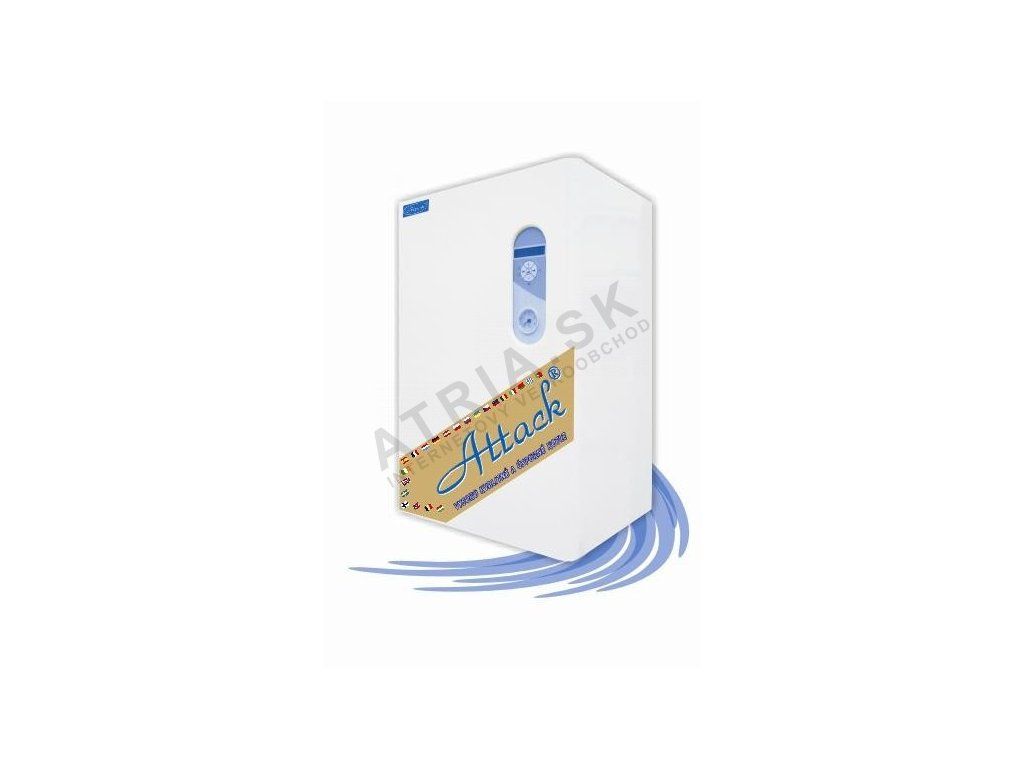
|
Attack Electric Excellent 8 (7.5 kW) – an electric boiler with mobile app control and precise PID regulation that limits unnecessary consumption swings. Lets you monitor and adjust operation remotely, which helps you combine heating with HDO and night setback more effectively. Price from €1,018.00. |

|
Protherm Ray 14KE – a reliable electric boiler for smaller and medium-sized households, simple to operate with low space requirements. A good choice if you're looking for an affordable solution to combine with correctly sized output and regular system maintenance. Price from €961.00. |
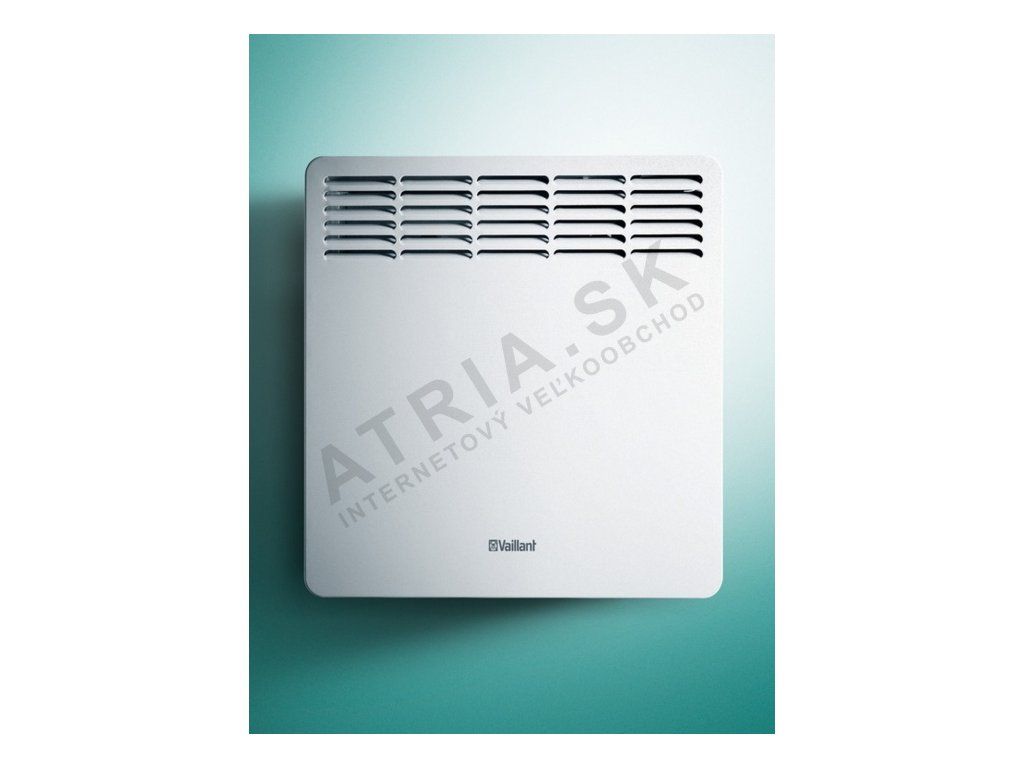
|
Vaillant eloMENT VER 150 – an electric convector heater suitable as supplementary or zonal heating for individual rooms, for example a bathroom or an occasionally used room that doesn't need to be heated to the same temperature as the rest of the house. Helps reduce costs by heating exactly where and when it's needed. You can find more about the differences between a convector heater and a boiler in the article Electric Convector Heater or Electric Boiler. Price from €155.80. |

|
Buderus Logamax E213-4 – has a built-in pressure expansion vessel and a multi-stage pump directly in the boiler body, so you save on buying and installing these components separately – a lower upfront investment that is also partly reflected in the total cost of ownership. Price from €661.26. |
Frequently Asked Questions
Is electric heating more expensive than gas?
There's no single clear-cut answer – it depends on the price of electricity and gas in your area, the house's heat loss, and how actively you use the measures described above (HDO, insulation, setback). An electric boiler has the advantage of nearly 99% efficiency and simplicity, while a gas condensing boiler has a different fuel pricing mechanism. You'll find a detailed comparison of both solutions in the article Electric Boiler or Gas Condensing Boiler.
How exactly does HDO affect the electricity bill?
HDO (ripple/off-peak switching) splits the day into high- and low-tariff bands. If you manage to shift as much as possible of the electric boiler's consumption into the cheaper hours – directly or through heat storage – the average price you actually pay per kilowatt-hour goes down, even though the total amount of energy consumed stays the same. The exact principle and the technical setup options are described in the article How HDO (Off-Peak Switching) Works with an Electric Boiler.
How much electricity does an electric boiler consume per year?
There's no universal figure, because consumption directly corresponds to the specific building's heat loss, the required indoor temperature, and the length of the heating season in the given location – not to the boiler itself, whose efficiency is practically the same across all electric boilers (around 99%). As a rough guide, you can start from the house's annual heat demand (kWh/year), which a designer or energy audit can estimate, and then multiply it by the price of electricity per kWh, as shown in the model example above.
Can electric heating be combined with underfloor heating?
Yes, and this combination is among the most advantageous – a low-temperature system such as underfloor heating works with a lower heating water temperature than conventional radiators, which reduces heat losses in the piping while also making better use of the floor structure's heat storage capacity in combination with HDO.
How can I reduce costs without a major investment in construction work?
Even without changes to the building envelope, it helps to set up a weekly thermostat with night and absence setback, regularly bleed radiators and check the system for deposits, actively use HDO, and possibly check whether you have an unnecessarily oversized boiler at home that cycles more often than necessary. These measures are generally cheaper and quicker to implement than insulating the building.
Is an electric boiler with mobile app control worth it?
Yes, especially if you want to actively control operation and make use of HDO or setback without having to be physically at the boiler. A model like the Attack Electric Excellent 8 lets you monitor and adjust the temperature remotely and, thanks to precise PID regulation, limits unnecessary consumption swings compared with simple two-point control.
How often does an electric boiler and the heating system need maintenance?
Radiators should be bled at the start of the heating season and checked periodically if gurgling or cold spots at the top of the unit appear. The overall condition of the system (deposits, circulation pump function, tightness) is best checked during a regular annual service – neglected maintenance reduces the efficiency of heat delivery to rooms, so the system consumes more energy to achieve the same comfort.
Related Topics
- How HDO (Off-Peak Switching) Works with an Electric Boiler
- Electric Boiler or Gas Condensing Boiler
- Electric Convector Heater or Electric Boiler
- What Output Electric Boiler Do I Need
Have a Question About Choosing a Boiler?
Can't decide, or dealing with a specific situation in your household? Write to us – we're happy to help.