
How HDO (Ripple Control) Works with an Electric Boiler
How HDO (Ripple Control) Works with an Electric Boiler
If you're considering an electric boiler or already have one at home, sooner or later you'll come across the abbreviation HDO – ripple control (hromadné diaľkové ovládanie). It's one of the most important, yet least explained, concepts in the whole topic of electric heating. Most people know that "HDO makes electricity cheaper", but have no idea how it actually works, what needs to be arranged for a boiler to actually use it, and why, without it, running an electric boiler can end up considerably more expensive than originally planned. In this article we'll explain HDO both technically and practically – from the principle of the signal, through wiring the contactor, to why it also pays to address heat storage if you want to get the most out of the low tariff.
What exactly is HDO and how does it work
HDO (ripple control) is a system that lets the electricity distributor remotely control selected appliances at thousands of customers at once – typically direct electric heating, domestic hot water heating, storage heaters, heat pumps, and similar "controlled" appliances. The signal reaches the household either directly through the electrical grid (as a specially coded pulse superimposed on the normal voltage), or in some locations via a radio signal received by a separate antenna. Either way, the principle is the same: the distributor's central dispatching centre "tells" the meter and HDO receiver, at precisely set times, that it is switching between the high (normal) and low (discounted) tariff.
It's important to understand that HDO isn't a one-off "day/night" switch. The actual low-tariff schedule usually consists of several blocks spread across the day and night – typically a longer night block plus one or two shorter blocks during the day (for example around midday or in the afternoon). Every electricity distributor sets its own exact schedule, it varies between regions, and it commonly changes seasonally too (different in winter, different in summer), so there is no single universal "from–to" that applies everywhere, forever. Anyone who wants to know the exact hours for their own connection will find them in their distributor's contract terms or directly on their invoice/customer portal.
To give you a better idea of what such a schedule can look like in practice, here is an illustrative timeline of a day. This is a simplified model example – in reality always check your distributor's current schedule, which may also change during the year.
The chart shows the essence of it: the low tariff isn't just "night", but several separate windows over 24 hours. An electric boiler that can work with HDO tries to concentrate as much of its consumption as possible into exactly those green blocks – and that's the whole economics of electric heating in a nutshell. A boiler without an HDO circuit would have to run at the full, high tariff whenever heat is needed during the day, which significantly increases running costs.
Simplified principle of controlling an electric boiler via HDO.
How HDO is wired to an electric boiler
For an electric boiler to actually make use of HDO, it isn't enough to simply sign up for a two-rate or multi-rate tariff with your electricity distributor (although that is a necessary first step). You also need a separate HDO receiver – a device that receives the control signal from the distributor and, based on it, closes or opens an electrical circuit. This receiver is usually installed directly by the distributor or their contracted electrician when the two-rate connection is set up, since it's a device that communicates directly with the distribution network.
The actual switching of the boiler is then handled by a contactor or relay wired between the HDO receiver and the boiler's power stages. When the receiver signals the low tariff, the contactor supplies power to the boiler's heating element and it's allowed to run at full output. When it switches to the high tariff, the contactor breaks (or limits) the circuit and the boiler stops drawing power from the grid, or runs only in a limited mode if the given model allows it.
In practice, manufacturers take two approaches to this:
1. Boilers with built-in contactors for HDO. Some ranges of electric boilers (for example Thermona THERM EL) already have the contactors for switching individual power stages built directly into the boiler. You simply connect them to the output of the HDO receiver and the system works without any further external components – this simplifies installation and reduces the number of parts that could fail over time.
2. Boilers fitted with an external controller. Other models (for example Protherm Ray) don't handle HDO switching directly at the factory, but can be fitted with an external three-phase controller. Besides the actual switching according to the HDO signal, such a controller usually also monitors the load on the circuit breaker – if the boiler running together with other appliances in the household threatens to exceed the breaker's rated value, the controller automatically disconnects one or more of the boiler's power stages to prevent the breaker from tripping. This feature is especially useful for boilers with a higher maximum input, where frequent trips would otherwise be likely when running alongside another large appliance (for example a cooker, water heater, or EV charger).
The choice between these two approaches should be part of the heating system design right from the selection of a specific boiler – it's worth discussing with your electrician as well as with the boiler supplier, who knows exactly what the given model supports out of the box and what needs to be added.
Why heat storage matters
Since HDO concentrates the boiler's running time into relatively short time windows (especially the night block, which tends to be the longest), a logical question arises: what happens to the heat in the household during the long stretches of the high tariff, when the boiler isn't supposed to run at full output? The answer is the thermal inertia of the system – the ability of the heating system or building to hold on to heat already produced, even without the source supplying further energy right at that moment.
In practice, this inertia is addressed in two ways, which can also be combined:
Storage tank. During the night (and possibly midday) low-tariff block, the electric boiler heats a larger volume of water in a storage tank to a higher temperature than is normally needed for heating itself. This reserve of hot water is then gradually "drawn down" into the heating circuit during the day, even when the boiler isn't allowed to run at full output, or at all, because of the high tariff. The larger and better insulated the tank, the longer it can cover the heat demand outside the low tariff.
Inertia of the building and heating system itself. A more massive structure (thicker walls, a concrete core, underfloor heating with a large heat-storing layer of screed) itself acts as a large "heat store" – once a floor or wall has been heated up it cools down slowly and keeps releasing heat into the room for hours after the source has stopped supplying energy. That's exactly why electric boilers combine so well with underfloor heating – the low temperature of the heating water and the large heat-exchange area mean a slower rise and a slower drop in temperature, which directly supports intermittent running according to HDO.
Conversely, a system with small radiators, no storage tank, and in a lightweight building with little thermal inertia will be far more sensitive to the boiler limiting or interrupting output during the high tariff – rooms can cool down faster than the next low-tariff block arrives. That's why it's worth addressing heat storage already at the system design stage, not only afterwards, once it turns out that the household is cold during the day despite the boiler having run at full output overnight.
Which boilers already have HDO built in
When choosing an electric boiler, it's worth checking in advance whether the given model already has contactors for HDO built in, or whether it needs to be fitted with an external controller – both approaches work reliably, they just have different installation requirements. Below are three specific models from the atria.sk range that support HDO.

|
Thermona THERM EL 8 – an electric boiler with built-in contactors for safely switching the individual phases, ready to be connected straight to an HDO signal without needing an external controller. Suitable as a direct heat source for a system with a storage tank or underfloor heating. Price from €709.53. |

|
Protherm Ray 14KE – a more powerful electric boiler that can be fitted with an external three-phase controller supporting HDO switching along with protection against exceeding the circuit breaker's current – the controller automatically disconnects power stages if overload threatens. A good choice for households with higher installed output and several appliances running at once. Price from €961.00. |

|
Buderus Logamax E213-4 – a compact electric boiler from Buderus, which is typically wired into a two-rate HDO circuit via a contactor controlled by an external or distributor-supplied HDO receiver. A good choice for smaller and medium-sized buildings with underfloor heating or a storage tank. Price from €661.26. |
|
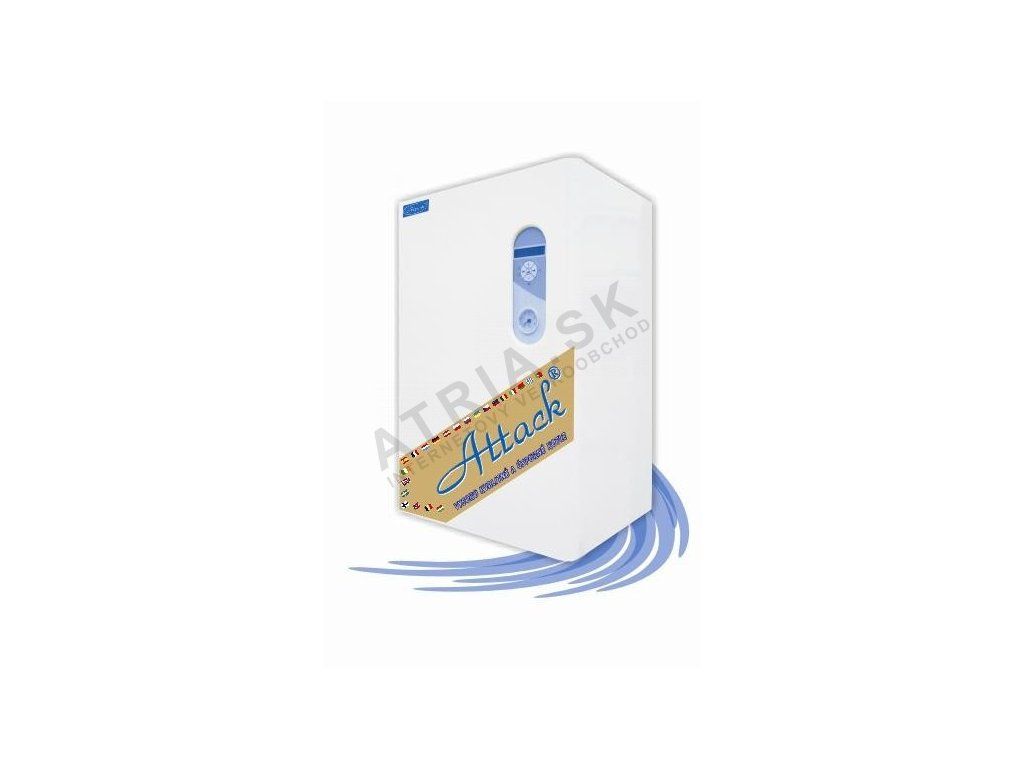
Attack Electric Excellent 8 (7.5 kW) – a boiler controlled directly through a mobile app, so you can check when it's actually running and whether its operation stays within the low-tariff windows, even when you're not at home. A practical way to check how well the HDO wiring works in real operation. Price from €1,018.00. |
Basic components needed for a working HDO setup.
A real-world example
Example 1 – a family house with underfloor heating and a storage tank. Picture a typical newly built family house where the owner chose an electric boiler instead of gas, because no gas connection reached the plot and installing one would have been disproportionately expensive. The boiler is connected to a system with a storage tank and underfloor heating in every room. The electrician set up a two-rate tariff with an HDO receiver during installation, and the boiler has built-in contactors, so no additional external controller was needed.
During the night low-tariff block (the longest one in the whole schedule), the boiler runs at full output and heats the water in the storage tank to a higher temperature than the normal operating temperature of the heating circuit. This heat reserve is then gradually "drawn down" into the underfloor heating during the day, even when the boiler isn't allowed to run at full output, or at all, because of the high tariff. Thanks to the slow thermal inertia of the underfloor system and a sufficiently large storage tank, the house maintains a comfortable temperature even during the long daytime stretch of the high tariff, when the boiler runs only in a limited way or not at all. The short midday low-tariff block is used as an extra "top-up", especially in colder months.
The result is that the large majority of the electricity consumption for heating actually takes place during the low tariff – meaning at a more favourable price than they would pay if the boiler ran regardless of the tariff, whenever heat was needed during the day. The exact difference in running costs depends on the distributor's current price list and on the split of consumption between the low and high tariff, but the principle is always the same: the more consumption that can be shifted into the green blocks from the chart above, the lower the final heating bill.
Example 2 – a renovated flat with radiators and no storage tank. The second, more instructive scenario concerns a flat after a partial renovation, where the owner replaced an old direct electric heating system with an electric boiler connected to conventional radiators, but without a storage tank – there simply wasn't room for one in the flat. The HDO circuit was set up the same way as in the first case, but since both the radiators and the flat itself have considerably lower thermal inertia than a massive building with underfloor heating, the room temperature noticeably dropped during the longer stretches of the high tariff – especially on freezing days, when the flat's heat losses were higher.
This is a typical situation where it's worth adding a fix: either a smaller storage tank/cylinder that fits even in limited space, or (if the layout allows) switching to low-temperature heating surfaces with a larger area and therefore greater inertia of their own. The lesson is clear – HDO on its own reduces electricity costs, but comfort and the real efficiency of the savings depend on whether the system has enough heat "reserve" to bridge the periods of the high tariff. That's exactly why this topic should always be addressed together, not separately: when designing an electric boiler system, you need to think from the start not just about the HDO connection, but also about how heat is retained in the system between the individual low-tariff blocks.
Both examples show that simply connecting the boiler to HDO is only half the solution. The other, equally important half is a well thought-out design of the heating system as a whole – the size of the storage tank, the type of heating elements, the building's thermal insulation properties, and correctly sizing the boiler's output relative to the available low-tariff blocks.
Comparison of the two real-world scenarios described above.
Frequently Asked Questions
What does HDO stand for?
HDO stands for ripple control (hromadné diaľkové ovládanie) – a system that lets the electricity distributor remotely switch selected appliances (including electric boilers) between the high and low tariff according to a pre-set schedule.
Do I always need HDO with an electric boiler?
A boiler also works without HDO, but in that case it runs at the full, high tariff whenever heat is needed. HDO lets you shift most of the consumption into the discounted low tariff, significantly reducing running costs – which is exactly why HDO is considered one of the main prerequisites for economically viable electric heating.
How do I find out the exact low- and high-tariff schedule for my connection?
The exact schedule is set exclusively by the electricity distributor in your region, and you'll find it in the contract terms of the two-rate/multi-rate tariff or directly in the distributor's customer portal. The schedule can vary by region and by season (different in winter, different in summer), so it's worth checking it directly with the distributor rather than relying on general examples.
Do I also need a storage tank with an HDO boiler?
It isn't a requirement for HDO itself to work, but without enough thermal inertia (a storage tank, a massive building, or underfloor heating with a large heat-storing layer) the household temperature can drop during the longer high-tariff blocks. Heat storage is therefore clearly recommended in most cases if you want to get the maximum savings out of HDO without losing comfort.
What's the difference between a boiler with a built-in contactor and one with an external HDO controller?
Boilers with built-in contactors (for example Thermona THERM EL) already have the switching elements needed for HDO from the factory, so you simply connect them straight to the HDO receiver. Other models (for example Protherm Ray) can be fitted with an external controller for the HDO function, which often also monitors the circuit breaker's load and automatically disconnects part of the boiler's output if overload risk arises.
Can HDO also be added later to an already installed boiler?
Yes, in most cases it can – it requires setting up a two-rate or multi-rate tariff with the distributor, installing an HDO receiver, and connecting it to a contactor or external controller at the boiler. It's recommended to consult both an electrician and the supplier of the specific boiler model, since the wiring method varies slightly depending on whether the boiler supports HDO directly or needs an external add-on.
Why doesn't HDO work as a simple "cheaper at night, more expensive during the day"?
Because distributors commonly split the low tariff into several blocks across the day and night – typically a longer night block plus one or more shorter blocks during the day. The exact layout of the blocks varies by distributor and also changes seasonally, so the simplified idea of "just night" doesn't match the reality of most schedules.
Do I save automatically thanks to HDO, or do I have to arrange it myself?
Not automatically – simply setting up a two-rate tariff and an HDO receiver only gives you access to the cheaper hours; the real savings only come from whether the boiler (possibly combined with a storage tank) can actually shift most of its consumption into those blocks. If the house doesn't have enough thermal inertia or storage and the boiler runs evenly regardless of the tariff, part of the consumption will still happen during the high tariff and the savings will only be partial. It therefore pays to address, right when setting up HDO, how to "shift" as much heating as possible into the low tariff.
Related topics
- How much does running an electric boiler cost and how to save
- How to choose an electric boiler
- What circuit breaker and wiring does an electric boiler need
- Comparison of electric boiler brands
Have a question about choosing a boiler?
Can't decide, or dealing with a specific situation in your household? Write to us – we're happy to help.