
Electric Convector or Electric Boiler
Electric Convector or Electric Boiler? How to Decide Between Two Completely Different Solutions
If you're figuring out electric heating for a house, apartment, cottage, or just one problematic room, you'll very quickly run into two terms that sound similar but actually describe two completely different systems: the electric convector and the electric boiler. Both use electricity as their energy source, both can heat a room or an entire house, but the operating principle, installation method, demands on the electrical wiring, running costs, and even how the solution fits into everyday life differ fundamentally. While an electric convector is a standalone unit that you hang on the wall (or set on legs) and simply plug into a socket, an electric boiler is a central heat source that supplies heat to radiators or underfloor heating throughout the whole apartment or house via hot-water piping – exactly as a gas boiler would, just without the gas and the chimney. In this article we'll go through in detail how both solutions work, who they suit, whether they can be combined, and at the end we'll show two real-life examples – a cottage and a family house – where the difference between the two approaches is easiest to see. The aim of this article is to help you decide without having to buy and try first – we describe the differences practically, using concrete situations, with links to real products and figures.
How an electric convector works
An electric convector is a simple yet well thought-out device. Inside it has a heating coil or ceramic element through which air flows by natural convection – cold air is drawn in through the lower openings of the unit, heated by the heating element, and the warm, lighter air rises back into the room through the upper openings. This creates a slow but continuous cycle that gradually heats the whole space without needing a fan (some models have an additional quiet fan just for a faster heat-up after switching on, then switch to a silent convection mode). That's precisely why convectors are mostly completely silent devices, suitable even for a bedroom.
From an installation point of view, a convector is an extremely simple solution. It needs no plumbing or heating piping, no radiators, heat exchangers or circulation pump – all it needs is a power supply. Most apartment-sized models with an output of 500 to 1500 W get by with a standard 230 V socket; more powerful models up to 2,000–2,500 W (typically for larger living rooms) we already recommend connecting to a separate protected circuit to avoid overloading the shared socket branch. An electrician can complete wall mounting in a few hours, with no demolition, no interference with the floor or walls beyond fixing the brackets and possibly running a separate circuit from the distribution board. In cottages and cabins we also often see free-standing convectors on castors that don't need to be fixed to the wall at all – you simply move them to the room where you need heat right now.
Every convector has its own built-in thermostat, so it regulates the room completely independently of the other rooms. More modern models (for example the Vaillant eloMENT series) have an electronic display, a weekly program, remote control via an app or connection to a smart home system, an open-window function (the unit automatically lowers its output when it detects a sudden temperature drop caused by ventilation), and a settings memory. This lets you, for instance, program the cottage to "warm itself up" an hour before you arrive, without having to do anything physically on site.
An important feature of convectors is also that they can be bought gradually, room by room, exactly according to current need and budget. You don't have to tackle the whole house right at the start – it's enough to heat the room you need right now and add another one later. This makes convectors a popular solution especially where the investment is spread out over time, or where it's not yet known in advance which spaces will actually be used long-term.
How an electric boiler (central system) works
An electric boiler works on a fundamentally different principle – it is a central heat source for the whole building. Inside the boiler is a heating element (a power coil or a set of heating cartridges) that heats water in a closed heating circuit. The circulation pump, which is part of the boiler, then pushes the heated water into the piping throughout the house – to the radiators, or to the underfloor heating manifold. The cooled water returns to the boiler, where it is heated again, and the cycle repeats. So it's exactly the same principle you know from a gas boiler, only the heat source isn't burning gas but electrical energy.
That's precisely why an electric boiler needs a complete hydraulic system: water piping, radiators or underfloor heating, an expansion vessel, a circulation pump (usually built directly into the boiler), and, in the case of underfloor heating, also a manifold. If this piping already exists in the house (for example after a decommissioned solid-fuel boiler or an old, unreliable gas boiler), installing an electric boiler is a fairly straightforward replacement – the boiler is connected to the existing system and to the power supply. If the piping doesn't exist yet, you need to plan for a significantly larger scope of work (piping, radiators, possibly wet or dry underfloor heating), similar to any other central heating system.
The second fundamental difference compared to a convector is the demand on the electrical installation. Electric boilers commonly come in output ranges of 6, 9, 12, 15, 18, 24 kW and more, depending on the size and heat loss of the building. Boilers from roughly 9 kW upward are typically connected to a three-phase supply (3× 400 V), which means the house needs a sufficiently sized circuit breaker and main supply – in older buildings this sometimes also requires an upgrade of the connection from the electricity distributor. This needs to be thought through before purchase, ideally together with an electrician, who can verify the reserve on the main breaker and recommend a suitable tariff (many households with an electric boiler switch to a dual tariff to take advantage of cheaper night-time electricity for heat accumulation, for example into underfloor heating or a storage tank).
Control of an electric boiler is centralized – the boiler works to a shared heating curve (weather-compensated control based on outdoor temperature) or to a set heating water temperature, which is distributed throughout the whole house. This doesn't mean it can't be regulated room by room – this is commonly handled with thermostatic radiator valves or room thermostats for underfloor heating, which add local control on top of the boiler's central setting. The difference compared to convectors is that the baseline (heating water temperature, operating curve) is shared for the whole house, and local control only fine-tunes individual rooms around this shared baseline.
Basic distinction based on the extent of the heated area.
When to choose convectors
Convectors are the natural choice in these situations:
- Supplementary or top-up heating for one to two rooms – for example a room that's colder than the rest of the house, a converted garage, a studio, an attic office, or a room used only occasionally.
- Cottages and cabins with occasional stays – where it makes no sense to heat the whole building for one weekend, but you need a quick heat-up only in the rooms you're currently using.
- Apartments with electric heating and no central piping – typically older prefab and brick apartments where radiator piping was never installed and electricity is the only realistically available option.
- Extensions and renovations without touching the existing piping – if you're adding a room, an attic, or an extension and don't want to extend the whole house's heating system just for one room.
- Fast heat-up for a limited time – a convector heats the air in a room noticeably faster than an entire water-based radiator system can warm up, which you'll appreciate especially with occasional use.
- Lower initial investment and simple installation – with no need for a plumber, a heating specialist, or demolition work, which cuts both the time and cost of installation.
- Independent room-by-room control – in rooms you're not currently using (a child's room during the day, a guest room), you simply turn down or switch off that particular convector without it affecting the rest of the house, giving you a real energy saving.
When to choose a central electric boiler
An electric boiler makes sense especially when:
- You need a main heat source for the whole house or apartment, not just a supplementary solution for one or two rooms.
- Radiators or underfloor heating already exist or are planned in the house – the boiler simply supplies this existing or planned piping with heat.
- Gas is not available in the area – in many new builds as well as renovations outside gas-connected areas, an electric boiler is the most common alternative to solid fuel or a heat pump.
- You're replacing an old, unreliable, or inefficient heat source (an old solid-fuel boiler, a redundant electric boiler for central heating) and want to keep the existing water system without major construction work.
- You prefer one central point of heating control for the whole house – one boiler, one heating curve, possibly also domestic hot water preparation, instead of managing a number of separate units.
- The house is occupied year-round, so it pays off to invest in a complete heating system that will run long-term and regularly, not just occasionally.
An electric boiler generally pays off the most where the house is well insulated (lower heat loss means lower consumption, and thus more reasonable running costs despite the higher price of electricity compared to gas), and where a more favorable electricity tariff can be used (a dual tariff, or a combination with a photovoltaic power plant and heat accumulation during the day, when your own electricity is "free").
A worthwhile process to go through before choosing a solution.
Can it be combined?
Yes – and in practice it's more common than you'd expect. An electric boiler and electric convectors aren't mutually competing, mutually exclusive solutions, but rather complementary tools that can be put together exactly according to the needs of a particular house.
A typical example: a house has a central electric boiler connected to radiators in all living rooms, but the owner later sets up a workshop in the garage, a studio in the attic, or a sauna in the basement – spaces that the original heating system doesn't cover and where extending the water piping would be costly and impractical. It's precisely these "new" or marginally used spaces that suit a standalone electric convector, which can be added at any later point without touching the existing system.
The opposite direction is also common: a house heated mainly by convectors might have an electric towel-rail radiator in the bathroom, or conversely, a central system may be built up over time in the main living area, while the convectors remain as a backup, quickly available heat source for colder days or as a supplement in less frequently used rooms.
When combining both solutions in one house, there's only one extra thing to think through – the overall reserve on the main electrical breaker. While a standalone convector gets by with a few hundred watts up to a maximum of 2.5 kW, an electric boiler requires anywhere from a few to several dozen kilowatts. If you're planning both systems at once (for example a boiler for main heating plus two or three convectors in supplementary spaces), it's worth discussing this total load with an electrician before purchase, to avoid exceeding the main breaker's capacity when all the appliances in the house are running at the same time.
Real-life example
Scenario 1 – a cottage with occasional stays. Imagine a cottage that's actually used roughly every second weekend throughout the year and for about three to four consecutive weeks in summer. The owners spent a long time weighing whether to install full central heating with a boiler and radiators in the cottage, but ultimately decided otherwise – the main reason being that with occasional stays, they would have had to heat up the entire water system on every arrival, including rooms that aren't used at all during that particular weekend (for example a loft guest room). Instead, they installed standalone Wi-Fi-controlled electric convectors in three key rooms – the living room, bedroom, and bathroom. On the way to the cottage, they use the app to set the convectors to switch on about an hour in advance, so by the time they arrive the living room and bedroom are already pleasantly warm, while the guest room, which isn't used that weekend, stays off and the owners don't pay to heat it unnecessarily. The investment was low, installation took one afternoon with no demolition work at all, and since then the cottage has been heated exactly according to which rooms are actually in use at any given moment.
Scenario 2 – a year-round family house with no gas connection. Another example: a family house with a floor area of around 120 m², occupied year-round, in a location with no available gas connection. The house originally had an old solid-fuel boiler connected to radiators in all the rooms and to underfloor heating in the bathroom – a functional but inconvenient system requiring regular refuelling and cleaning. During renovation, the owners chose an electric boiler as a direct replacement, connected to the existing radiators and underfloor heating without needing to change the piping itself. At the same time, as part of the renovation they insulated and put into use the former garage as a workshop – a space that was never connected to the original heating system, and extending the piping there would be disproportionately costly given that the workshop is used only a few hours a week. The solution was a single standalone electric convector directly in the workshop, switched on only when the owner is actually working in the space. The result is a house where the central boiler covers year-round, regular heating of the main living areas, and the convector handles a marginally used space without unnecessary costs for keeping it permanently running.
Both scenarios show the same logic: a central system pays off where heating is regular, covers the whole area, and is long-term, while standalone convectors excel wherever the need for heat is intermittent, limited to one or two rooms, or where extending the water piping would be disproportionately costly relative to the actual use of the space.
Recommended products
Below you'll find specific models of both types of heating – electric convectors as well as an electric boiler for a central system – with approximate prices, so you can get an idea of the differences in initial investment.
Electric convectors
|
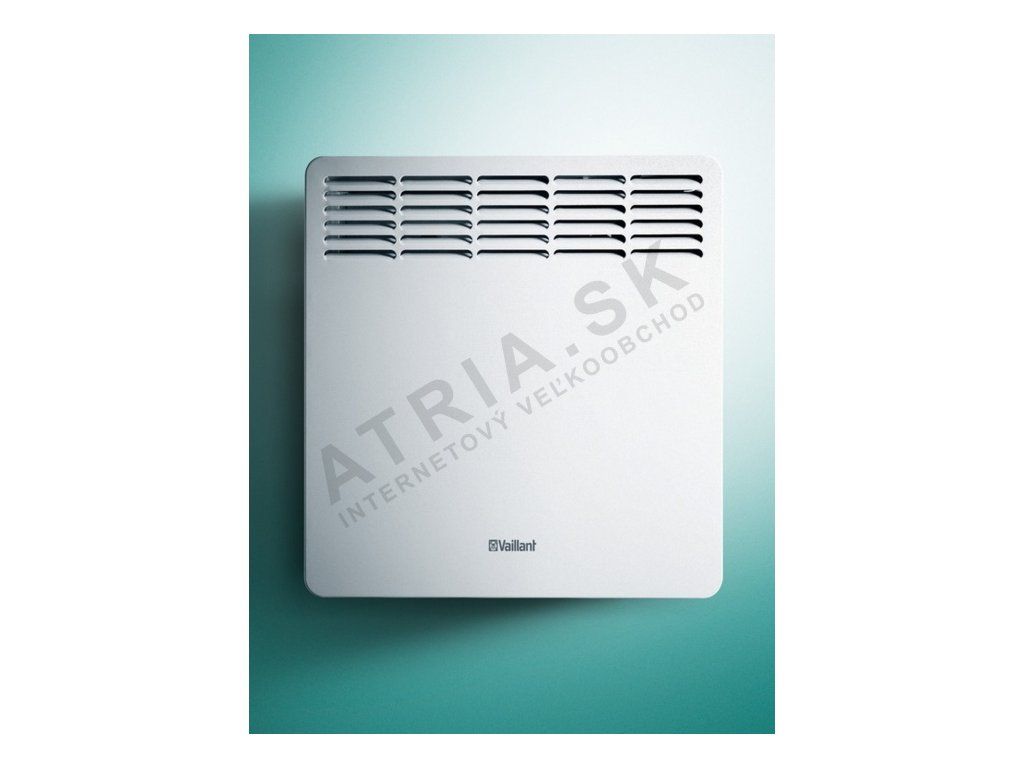
Vaillant eloMENT VER 150 – a quality electric convector from an established brand with electronic control, a weekly program and an open-window detection function. Suitable as supplementary heating for an average living room, simple wall mounting with no interference with the heating system. Price from €155.80. |

|
Q-TERMO T171500 – an affordable electric convector with its own thermostat, suitable as a quick solution for a cottage, cabin, or supplementary heating of one room without any need for building work. Price from €128.65. |
Electric boiler – central system

|
Buderus Logamax E213-4 – an electric boiler intended as a central heat source for the whole house or apartment, connecting to radiators or underfloor heating. Suitable as a replacement for an old solid-fuel boiler or where gas is not available. Price from €661.26. |

|
Protherm Ray 14KE – a second example of a central electric boiler, this time with a higher output of 14 kW, suitable for a medium to larger family house, where a network of standalone convectors in every room would be more costly and less convenient than a single central source with piping. Price from €961.00. |
The price difference between a single convector and a central boiler is logical – you're not buying the boiler instead of a convector for one room, but instead of the entire heating system for the whole house. When comparing the initial investment, it's therefore always necessary to compare like with like: the price of one convector for one room versus the price of the boiler plus all the necessary radiators or underfloor heating for the whole building, not just the boiler alone.
Visual comparison of both systems
The following diagram simplifies the difference between a house heated by standalone convectors in individual rooms (left) and a house with a central electric boiler and piping to radiators (right).
Practical examples of which solution suits which situation.
Frequently Asked Questions
Is an electric convector more expensive to run than an electric boiler?
It depends on how much space you actually heat. For heating one or two rooms, a convector usually works out cheaper, because you only pay for heat where you actually need it, and don't need to keep an extensive water system running. For heating an entire house, the situation is reversed – distributing heat across multiple rooms with standalone convectors is less efficient in terms of operation and number of appliances than a single central boiler connected to radiators or underfloor heating.
Can electric convectors heat an entire apartment?
Yes, technically yes – you just need to place a sufficiently powerful convector in each room. In an apartment this is a common solution especially where radiator piping was never installed. You just need to check in advance with an electrician whether the apartment's main breaker has sufficient reserve for all the convectors running at the same time during the coldest days.
Does an electric boiler need a chimney?
No. Unlike a gas boiler or a solid-fuel boiler, an electric boiler doesn't burn anything, so it needs no chimney or flue gas venting. It only needs a power supply with sufficient capacity and a connection to the heating water system (radiators or underfloor heating).
How big an electrical breaker do I need for an electric boiler?
It depends on the output of the specific boiler. Smaller models (up to roughly 6–9 kW) can often work on a single-phase connection, while more powerful boilers (from roughly 9 kW upward) are typically connected to a three-phase supply of 3× 400 V. We always recommend verifying the exact breaker rating with an electrician according to the specific boiler model and the state of the electrical installation in the house.
Is it worth combining convectors and a central boiler in one house?
Yes, this is a common and practical combination – the central boiler covers the main, regularly heated spaces, while the convector supplements a space that's used only occasionally, or where extending the water piping would be disproportionately costly (for example an additionally set-up workshop, studio, or attic room).
Is an electric convector safe for a bathroom?
Yes, provided it's a model with an appropriate protection rating (IP) intended for a damp environment, and it's installed in accordance with the safe zone from a bath or shower according to applicable standards. When choosing a specific model for a bathroom, we recommend checking the IP rating and recommended placement with your retailer or electrician.
How long does an electric boiler last compared to a convector?
Both types of devices are, under normal operation and maintenance, long-term reliable solutions with a lifespan counted in many years of operation. An electric boiler, as a central heat source, usually undergoes a regular annual inspection/service (similar to a gas boiler), while a simple convector with no moving mechanical parts (apart from a possible fan) needs minimal maintenance, in practice mostly just occasionally wiping dust off the grilles.
Related topics
- How to choose an electric boiler
- How much an electric boiler costs to run and how to save
- Electric boiler or gas condensing boiler
- Frequently asked questions about electric boilers and convectors
Have a question about choosing a boiler?
Can't decide, or dealing with a specific situation in your household? Write to us – we're happy to advise.