
50 Most Frequently Asked Questions about Condensing Boilers
A condensing boiler is now the standard for gas heating – it combines high efficiency, quiet operation and a long service life, but many questions arise when choosing, installing and running one day to day. In this comprehensive overview we have gathered the 50 most common questions our customers ask us and answered them clearly, without unnecessary technical jargon. If you need more detail on a particular topic later, you'll find links to detailed standalone articles at the end.
The recommended approach for browsing the 50 questions below.
Choice and Purchase
- What is the difference between a classic and a condensing boiler? A classic boiler releases hot flue gases out through the chimney, taking part of the energy with them, while a condensing boiler instead cools the flue gases enough that the water vapour they contain condenses, releasing additional heat that is used for heating. This allows a condensing boiler to reach an efficiency of around 105 – 109% relative to the calorific value of the gas, while a classic boiler is around 85 – 90%. In practice, the difference in gas consumption is most noticeable at lower heating water temperatures, typically with underfloor heating or oversized radiators.
- What fuel do condensing boilers use? Most condensing boilers in Slovakia are gas-fired – they burn natural gas from the public network, or propane-butane from a pressure cylinder where a gas pipeline is not available. When buying, always check whether the specific model is designed for natural gas (G20) or whether the nozzles need to be adapted for propane. There are also condensing boilers for heating oil, but these are a significant minority in the market.
- How do I calculate the boiler output I need? As a rough guide, output is determined by the heat loss of the house, which depends on insulation, size and location – a typical insulated family house up to 150 m² will manage with a boiler of around 12 – 24 kW. The exact calculation should be based on a thermal-technical assessment of the building, not just the floor area, because a poorly insulated older house may need considerably higher output. If the boiler also provides instantaneous hot water preparation, you need to allow for a higher peak output than would be sufficient for heating alone.
- What is the difference between a turbo and an atmospheric boiler? A turbo (room-sealed) boiler draws combustion air from outside through a concentric pipe and removes flue gases through the same system using a fan, so it doesn't need a classic chimney or air supply from the room. An atmospheric boiler, on the other hand, draws air directly from the space where it is installed and removes flue gases by the natural draught of the chimney. The vast majority of today's condensing boilers are the turbo type, because it is safer, doesn't depend on the condition of the chimney, and allows installation practically anywhere, including flats.
- What are the ways of preparing domestic hot water? A boiler can prepare DHW instantaneously (the water is heated directly on demand, the boiler has no tank of its own) or using a built-in or external tank, in which the water is pre-heated and ready for immediate use. The instantaneous method is cheaper and more compact, but may offer less comfort with multiple simultaneous draw-offs (for example two bathrooms). A tank-based solution is more suitable for larger households with higher hot water consumption.
|
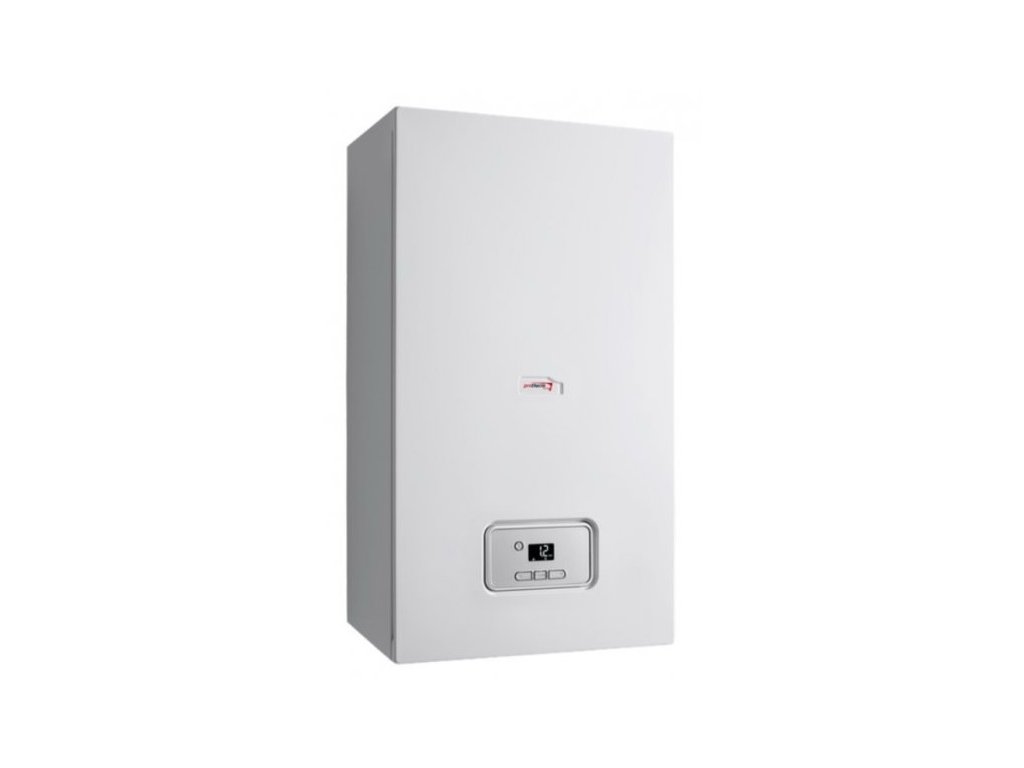
Protherm Gepard Condens 18/25 MKV – a typical mid-range condensing boiler, suitable for both a standard family house and a flat. Price from €1,322.00. |
- Which condensing boiler brands are the most reliable? On the Slovak market, the best-selling and long-proven brands include, for example, Protherm, Vaillant, Viessmann, Buderus, Junkers/Bosch or Attack – they all manufacture boilers of a similar quality class, with differences mainly in price, design, service availability and specific features. When choosing, it's also worth considering the service network the manufacturer has in your region. You can find a detailed comparison of individual brands in a separate article.
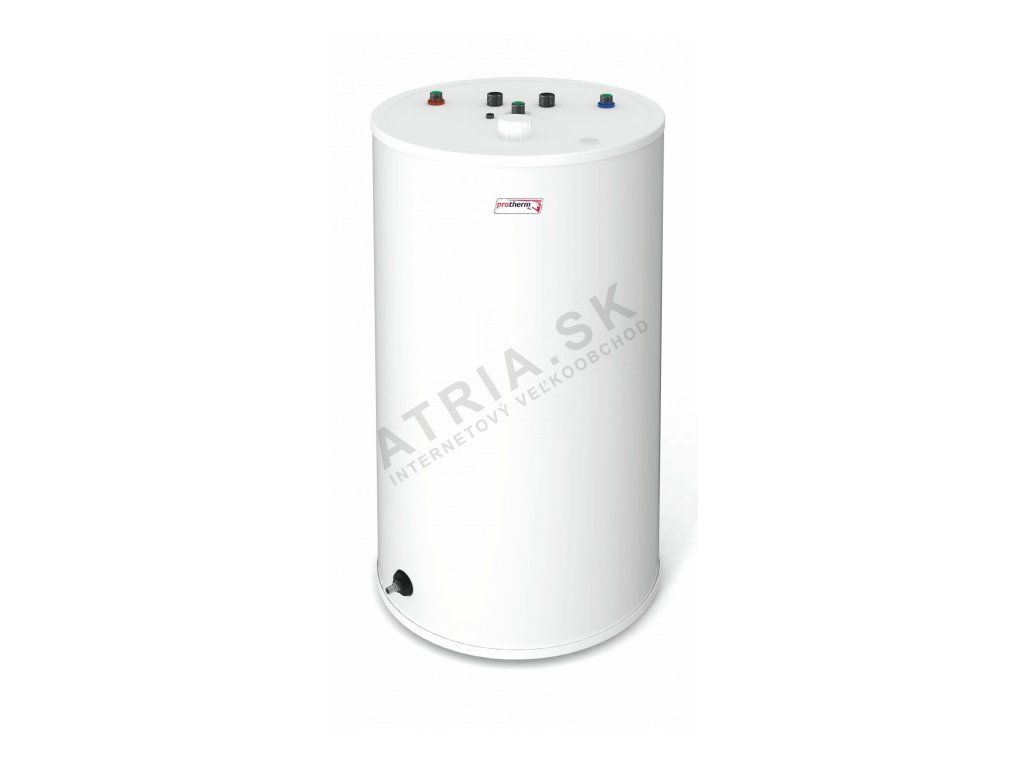
- Is it better to buy a boiler with a built-in tank, or a separate one? A compact boiler with a built-in tank saves space and is easier to install, which you'll appreciate especially in smaller spaces such as flats or utility rooms. A separate standalone tank is worthwhile for higher hot water consumption, or when you plan to add, for example, solar heating in the future, as it can be easily connected into the system.
|
Protherm FE 200 BM – stationary tank – a standalone 200-litre hot water tank for connecting to a boiler, suitable for a larger household with higher DHW consumption. Price from €822.66. |
- What kind of boiler is suitable for a flat, and what for a family house? For a flat, a compact boiler with lower output (typically up to 24 kW) and instantaneous or small tank-based DHW preparation is usually chosen, since both space and water consumption are limited. For a family house, the boiler is chosen according to the actual heat loss and size of the household, often with a larger tank, or in a cascade configuration for very large buildings.
- Is boiler noise level an important parameter when choosing? Yes, especially if the boiler will be located in a flat close to living rooms or in a thin-walled kitchen unit – modern condensing boilers are generally quiet (usually around 35 – 45 dB during operation), but there are differences between models and output stages. When choosing a boiler for a noise-sensitive space, it's good to check the noise parameters directly in the technical data sheet of the specific model.
- What should I watch out for when choosing a specific model? Besides output and brand, consider the DHW preparation method, the boiler's dimensions relative to the space, the availability of spare parts and service in your area, and whether the boiler supports output modulation (smoothly adjusting output to demand, which saves gas). It's not worth choosing based on the lowest price alone – a quality mid-range boiler will pay for itself over its lifetime through lower consumption and fewer faults.
Installation and Setup
- Can I install the boiler myself? By law, the installation of a gas condensing boiler must be carried out by a company or technician with the appropriate authorisation for installing gas appliances; DIY installation is neither legal nor safe. After installation, an inspection and commissioning by an authorised technician are also required, without which the manufacturer may refuse to honour the warranty.
- Is a gas inspection required after installation? Yes, after every installation or replacement of a gas appliance, the law requires a professional inspection and test of the gas equipment, carried out by an inspection technician with a valid certificate. The inspection report also serves as documentation for the insurance company and proof that the equipment meets safety standards.
- How does condensate drainage work? Condensation of the flue gases produces acidic condensate water, which must be drained through a plastic pipe into the sewer or drain – it must not simply be discharged onto the ground or into rainwater. The amount of condensate depends on the boiler's output and operating hours, typically a few litres per day at higher heating output.
- What is a neutralisation box and when is it mandatory? A neutralisation box neutralises the acidity of the condensate before it is discharged into the sewer and is required mainly for higher boiler outputs, for cascades, or under local regulations of the sewer operator. For common domestic boilers with lower output, it is in most cases not required, but the installation company will always confirm the specific requirement according to local regulations.
- Why is a filter/dirt separator needed on the heating circuit? A filter or dirt separator catches impurities, rust and deposits circulating in the heating water before they reach the boiler's sensitive heat exchanger, where they could cause clogging and faults. It is installed on the return pipe before the boiler, and cleaning it regularly extends the boiler's lifespan and maintains its efficiency.

|
NANO HOT 3/4" - 1" 500 mcr water filter for heating systems, brass – a brass filter/dirt separator that protects the boiler's heat exchanger from impurities in the heating circuit. Price from €65.50. |
- What pressure should be in the system? The typical operating pressure of a heating system in a family house is around 1 – 2 bar (the exact value is determined by the designer according to the building's height); a drop below approximately 0.8 – 1 bar is usually signalled by the boiler with an error message and requires topping up the water. Regularly checking the pressure on the boiler's gauge is a simple task that even a layperson can manage.
- Can a condensing boiler be connected to an old chimney? Most modern condensing boilers are the turbo type and remove flue gases through their own concentric pipe via the facade or roof, so they don't need the original masonry chimney for this – in many cases the old chimney can only be used as a shaft to route the new plastic flue through. If you wanted to use the original chimney directly, it must be suitable for removing condensing flue gases (resistant to condensate), which a chimney sweep or the installation company will assess.
- How long does boiler installation take? A standard boiler-for-boiler replacement in the same location, keeping the existing piping, usually takes one working day. If a new flue needs to be routed through the roof or facade, the piping needs modifying, or it's a completely new installation, the installation can take several days.
- What else is included in the installation besides the boiler itself? Installation usually also includes a flue gas extraction kit, mounting and connection materials, a filter/dirt separator, possibly an expansion vessel if the original one doesn't suit the new boiler, and setting up the controls. These items are often billed separately in installation companies' price quotes, so it's worth asking for a "turnkey" quote including all accessories.
- Do the pipes need to be replaced when replacing the boiler? If the existing pipes and radiators are in good technical condition and of adequate diameter, they usually don't need to be replaced, and the condensing boiler can be connected to the original system. Exceptions are very old, clogged or undersized pipes, or a switch to a different heating system (for example adding underfloor heating), where modifying the pipes is necessary – this will be assessed by the installation company during a site visit.
Operation and Settings
- What is weather-compensated (equithermal) control and is it worth it? Weather-compensated control using an outdoor temperature sensor automatically adjusts the heating water temperature to the current outdoor temperature – the colder it is outside, the more the boiler heats the water, and vice versa. This means the heating adjusts itself without constant manual intervention, reducing temperature fluctuations in rooms and usually also lowering gas consumption, so in the vast majority of cases this investment is worthwhile.
- What heating water temperature should I set? With radiators, a heating water temperature of around 55 – 70°C is commonly used, depending on outdoor frost and radiator sizing; with underfloor heating the values are considerably lower, typically around 30 – 40°C. The lower the heating water temperature, the higher the condensation efficiency and the lower the gas consumption, so it's worth setting the lowest temperature at which you can still maintain comfort in the rooms.

|
Vaillant VRT 50 – a weather-compensating room thermostat that regulates the heating water temperature according to the outdoor temperature. Price from €71.64. |
- What temperature should I set for DHW, and what is legionella? The typical operating temperature of domestic hot water is around 45 – 55°C, which is comfortable and energy-sensible. However, legionella bacteria can multiply in standing water at 20 – 45°C, so in tank-based systems it is recommended to briefly heat the water to 60°C or more on a regular basis (for example once a week) to kill any bacteria present – many boilers have an automatic function for this.
- Does a condensing boiler work well with underfloor heating? Yes, underfloor heating is an ideal combination for a condensing boiler, because it operates with a low heating water temperature (around 30 – 40°C), at which the boiler achieves the highest possible condensation efficiency. In practice, this combination brings the greatest gas savings compared to a classic boiler.
- Does a condensing boiler work well with radiators? Yes, a condensing boiler also works reliably with standard radiators and is still more economical than a classic boiler, although condensation efficiency is somewhat lower because radiators need a higher heating water temperature than underfloor heating. If the radiators are suitably oversized (larger surface areas, lower operating temperatures), it's possible to get closer to savings similar to underfloor heating even with a radiator system.
- What happens during a power outage? A condensing boiler needs electricity to operate (control electronics, circulation pump, fan), so it stops working completely during a power outage, unlike some old atmospheric boilers, which could function even without electricity. When power is restored, the boiler will typically automatically restart with its original settings.
- Can the boiler be controlled via wifi/mobile? Most current models from leading brands support internet connection via a wifi module (original or purchased separately) and control via the manufacturer's mobile app, where you can change the temperature and remotely monitor operation and any error messages. With older boilers or cheaper models, always check the presence and compatibility of the wifi module in the technical specification.

|
Emos P5623 – WiFi thermostat – if the boiler doesn't have its own wifi module, or you don't want to buy one directly from the boiler manufacturer, a standalone WiFi room thermostat connected to the boiler's standard two-wire input can add remote control retroactively. Price from €122.75. |
- How do I set the boiler to summer/winter mode? Summer mode turns off the heating function and the boiler only prepares domestic hot water, which saves gas and wear during the period when you don't need heating. Switching between summer and winter mode is usually a single button or a menu item on the control panel; you'll find the exact procedure in the manual for your specific model.
- Why is the boiler "gurgling" or making noises? Bubbling or gurgling is most often caused by air in the system or low water pressure; the solution is to bleed the radiators and top up the water to the correct pressure. If the noises persist even after bleeding, it could be deposits in the heat exchanger or a fault with the circulation pump, in which case it's appropriate to call a service technician.
- How often should water be topped up in the system? A closed heating system should be sealed and the pressure should remain stable; an occasional slight drop in pressure (for example once every few months) is normal and just needs topping up. However, if you have to top up water often and in larger amounts, it's a sign of a leak in the system that needs to be found and fixed – frequently adding fresh water also accelerates limescale buildup in the heat exchanger.
Servicing and Faults
- How often should the boiler be serviced? Both manufacturers and legislation recommend a regular annual service inspection of a condensing boiler, during which the burner and heat exchanger are cleaned and seals, flue gases and settings are checked. Regular servicing is also usually a condition for keeping the extended warranty valid, which many manufacturers offer.
- What warranty applies to condensing boilers? The basic statutory warranty is 24 months, but many manufacturers offer an extended warranty (typically several years), provided the boiler is installed by an authorised company and then serviced annually. The exact terms of the extended warranty vary by brand and specific model, so it's worth registering the boiler according to the manufacturer's instructions right after installation.
- What is the lifespan of a condensing boiler? With regular servicing and good-quality water in the system, the lifespan of a condensing boiler is typically around 15 – 20 years, with some quality models lasting even longer. The lifespan is most shortened by neglected servicing, dirty heating water without a filter, and frequent pressure fluctuations or water top-ups. The heat exchanger is the component that wears the most of all – its damage from deposits or corrosion is the most common reason why repairing an ageing boiler is no longer worthwhile and it works out cheaper to buy a new one.
- What are the most common faults? The most common ones include low system pressure, a clogged filter/dirt separator, an ignition or flame fault, a circulation pump fault, and a heat exchanger clogged with deposits. Most of these faults are signalled by a specific error code directly on the boiler's display, which significantly helps and speeds up diagnosis for a service technician.
- What to do in case of a gas leak? If you suspect a gas leak (characteristic smell), immediately close the main gas shut-off valve, ventilate the space, do not switch any electrical appliances or lights on or off, and under no circumstances try to fix the fault yourself. Call the gas emergency service or the fire brigade (150) immediately – safety always comes first here, leave the intervention strictly to professionals.
- Is a service contract worth it? A service contract guarantees regular annual servicing from a vetted company, often priority call-outs in case of a fault, and sometimes discounted spare part prices, which is a convenient and safe solution especially for less technically skilled owners. If you'd rather arrange servicing yourself as needed, a contract isn't necessary – the main thing is not to skip the regular annual inspection.
- What does an error code on the display mean? Each manufacturer uses its own error code designation (for example a combination of a letter and a number) that precisely identifies the type of fault – you'll find a list of codes in the boiler's manual or on the manufacturer's website. For common codes (for example low pressure), you can help yourself; for more complex faults, the code will at least help a service technician diagnose the problem more quickly before arriving.
- How often should the filter be cleaned/replaced? The mesh of the filter/dirt separator on the heating circuit should be checked and cleaned as needed once a year during the regular service, sometimes sooner in the first year after installing a new system, as it can catch residual impurities from the installation. The filter body itself is not replaced, only cleaned by removing and rinsing the cartridge.
- When should the anode/tank be replaced? The magnesium anode in the hot water tank protects the vessel from corrosion and should be checked and replaced as needed approximately once every 1 – 2 years; the exact interval depends on water quality. The tank itself is only replaced in case of a leak or perforation, which is most often a consequence of a neglected anode or very hard water.
- What to do when the boiler isn't heating or DHW isn't working? First check the system pressure, whether an error message is showing on the display, and whether the gas supply is open; you can resolve many simple faults (low pressure, forgotten summer mode) yourself following the manual. If the problem persists or you smell gas, do not intervene in the boiler yourself and call authorised service.
Price and Savings
- How much does a condensing boiler cost? Prices for condensing boilers on the Slovak market generally range from roughly €700 – 800 for basic compact lower-output models up to €2,000 and more for more powerful or better-equipped models with a tank. For example, the mid-range Protherm Gepard Condens 18/25 MKV boiler sells for €1,322.00, which illustrates well the price level of a typical boiler for a family house.
- How much does a condensing boiler save compared to an older one? Compared to an old classic (non-condensing) boiler, switching to a condensing model can bring gas savings on the order of 15 – 30%, and even more in extreme cases with a very old and poorly sized boiler. The exact savings depend on the original condition of the boiler, the heating water temperature, and the control method.
- What is the gas consumption of a condensing boiler? Gas consumption depends primarily on the house's heat loss, the heating water temperature, and the control method, not just on the boiler itself – a typical insulated family house consumes on the order of 1,000 – 1,800 m³ of natural gas per year for heating and DHW. Output modulation and weather-compensated control can further reduce consumption by preventing the boiler from running unnecessarily at full output.
- Are there subsidies for replacing a boiler? Various subsidy programmes for replacing heating sources are periodically opened in Slovakia, but the conditions and availability change, so it's always good to check the current offer directly with the relevant state agency or your local municipality before buying a boiler. Some subsidies are also tied to combination with other measures, such as insulation. It is also commonly required that the installation be carried out and documented by an authorised company before submitting the application, or exactly according to the procedure of the given call – so it's better not to risk buying a boiler "on your own" without first verifying the conditions, if you're counting on a subsidy.
- Is it worth replacing an old gas boiler with a condensing one? In most cases, yes – besides gas savings, you also gain higher comfort (more precise control, quieter operation, fewer faults) and usually better safety, since old boilers tend to be both physically and technologically worn out. The payback period of the investment depends on the age and condition of the original boiler, gas prices, and heating intensity, and is typically on the order of a few years.
- What other costs are there besides the boiler itself? In addition to the boiler's price, you need to add the installation, materials for flue gas extraction and connection, possible piping modifications, gas inspection, and in some cases a neutralisation box or replacement of the expansion vessel. The total cost of a complete boiler replacement including installation is therefore usually higher than the price of the equipment alone, roughly by tens of percent on top of the boiler's price.
- How quickly will the investment pay off? When replacing a significantly older, inefficient boiler with a condensing one, the investment usually pays for itself within a few years thanks to lower gas consumption; the exact period depends on the difference in efficiency, gas prices, and the specific household's heating intensity. Combined with weather-compensated control and a low-temperature system (such as underfloor heating), the payback is usually even faster.
- Is a condensing boiler more expensive to service? Servicing a condensing boiler is in principle similar to a classic boiler; the price of the annual inspection varies more by region and service company than by boiler type. Condensing boilers additionally have a condensate neutralisation component and a more sensitive heat exchanger, which can slightly increase the cost of any spare parts, but with regular servicing, faults of this type occur rarely.
- Does the boiler's output affect operating costs? Yes, a significantly oversized boiler (unnecessarily high output relative to the house's needs) often operates outside the optimal modulation range, which can slightly increase consumption and shorten lifespan due to more frequent cycling on and off. That's why correctly calculating the output when choosing a boiler is important not only for comfort, but also for operating costs.
- Is a cheaper or more expensive model worth it? A cheaper boiler means a lower initial investment, but often also a lower component class, which can result in a higher fault rate or shorter lifespan. A mid-range or higher-class boiler from a proven brand is usually worth more over its period of use thanks to lower consumption, longer lifespan and fewer faults, even though the initial price is higher.
The five areas into which these 50 questions are divided.
The typical order in which customers encounter these topics in practice.
Links to more detailed topics in the Knowledge Centre.
Related Topics
- How to choose a condensing boiler
- What output condensing boiler do I need
- Common mistakes in choosing and installation
- Underfloor heating and condensing boiler
- Radiators and condensing boiler
- Gas consumption and heating savings
- Thermostat and weather-compensated boiler control
- How long does a condensing boiler last – servicing and maintenance
- Comparison of condensing boiler brands
- How much a condensing boiler saves compared to an old one
- Most common faults and how to solve them
- What temperature to set on the boiler
- Is it worth replacing an old boiler