
How Much a Condensing Boiler Saves Compared to an Old Boiler
Replacing an old boiler with a condensing one is among the measures that show up most clearly in a household's heating costs – and it's also a topic surrounded by all kinds of numbers. Some promise savings of half, others talk about just a few percent. The truth lies somewhere in between and, above all, is highly individual. In this article, we'll explain why a condensing boiler saves money at all, what the actual savings depend on, and we'll show an approximate way of calculating both savings and payback – without promising you a single magic number that we can't guarantee for any specific house.
Why a Condensing Boiler Saves Money at All – the Principle in a Nutshell
For the savings to make sense, you need to understand exactly where they come from. When natural gas is burned, water vapour is produced in addition to heat (a product of burning the hydrogen contained in the gas). This vapour carries so-called condensation heat – heat that is released the moment the vapour condenses back into water, similar to how a cold window fogs up while cooking.
A conventional (atmospheric or turbo) boiler simply releases this vapour out through the chimney – and along with it, the energy hidden within it. That's why ordinary old boilers have a real operating efficiency of roughly 88–92% relative to the calorific value of the gas.
A condensing boiler is designed to do exactly the opposite – it deliberately cools the flue gases enough that the water vapour they contain condenses directly inside the boiler's heat exchanger, and the released heat is then used to further heat the heating water. Thanks to this, it can reach an efficiency of 105–109% relative to calorific value (a figure above 100% isn't an error – it's simply a different way of calculating, common with condensing technology, since it's measured against a different reference value of the fuel's energy).
The difference between these two figures – roughly 15 to 20 percentage points of efficiency – is the basis from which the potential savings are derived. However, it isn't the only factor that ultimately determines how much you'll actually save on your annual gas bill. We'll break that down in the next section.
Approximate range of operating efficiency relative to the calorific value of gas. Specific values depend on the model, settings and heating system – these are not guaranteed figures for every house.
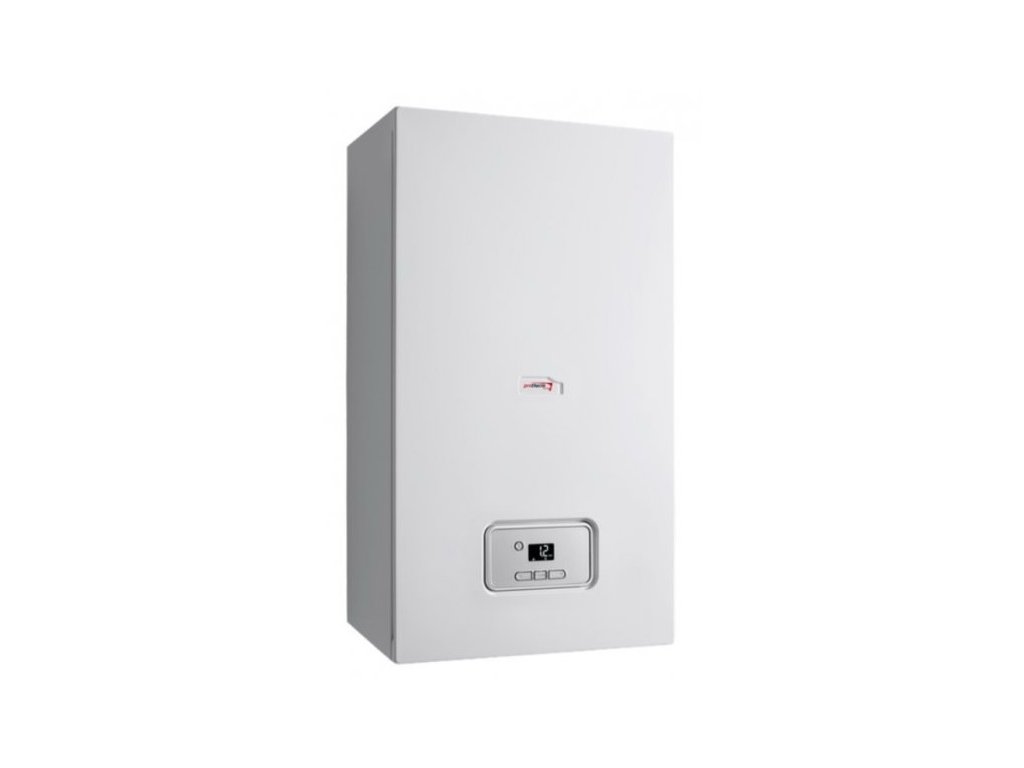
Example of a modern condensing boiler that reaches efficiency at the upper end of the range shown above:
|
Protherm Gepard Condens 18/25 MKV – a compact condensing boiler suitable as a typical replacement for an older atmospheric boiler in a flat or a family home. Price from €1,322.00. |
What Determines How Much You'll Actually Save
The percentage difference in efficiency is only the theoretical ceiling. The actual savings on your gas bill vary in practice from house to house, sometimes quite significantly. Here are the main factors that influence it.
Age and Condition of the Original Boiler
This is by far the strongest factor. If you're replacing a boiler that's 20 years old or more, or one that's fouled, poorly set up, or lacking regular servicing, its real efficiency may be even lower than the aforementioned 88–92% (old boilers typically lose efficiency due to deposits in the heat exchanger and poorer combustion control as well). In such a case, the difference compared to a new condensing boiler tends to be greater, and thus the potential savings higher. Conversely, if you're replacing a relatively young, well-maintained turbo boiler, the difference will usually be smaller.
Type of Heat Emitters
Condensation (i.e. the "extra" heat from the vapour) is released most efficiently in the heat exchanger when the return water (coming back from the heating circuit) returns to the boiler as cool as possible – ideally below approximately 55°C. That's precisely why:
- Underfloor heating, which works with low heating water temperatures (typically 30–40°C), allows the boiler to condense throughout practically the whole heating season – savings here tend to be higher. More details in the article Underfloor Heating and a Condensing Boiler.
- Radiators, especially older ones that are oversized or, conversely, undersized, often require higher heating water temperatures (60°C and above), leaving less room for condensation – the boiler still saves compared to the old one, but the effect may be more modest. More in the article Radiators and a Condensing Boiler.
Weather-Compensated (Equithermal) Control
A condensing boiler can only make full use of its potential when it operates at the lowest possible heating water temperature that's still sufficient to heat the space at a given outdoor temperature. This is exactly what weather-compensated control takes care of – it automatically adjusts the water temperature to the outdoor temperature instead of the boiler heating "at full blast" even when it isn't necessary. Without it, part of the potential of condensing technology simply goes unused. Installing weather-compensated control at the same time as replacing the boiler is therefore one of the most common ways to add something extra on top of the savings from the replacement itself.
Insulation and Heat Loss of the House
The greater the heat loss of a house (old windows, uninsulated walls and roof), the more gas is burned overall – and so the absolute savings in euros can be higher for the same percentage improvement in efficiency, simply because the saving is calculated from a higher baseline. Conversely, in a well-insulated house overall consumption is lower, so the savings in euros (although similar in percentage terms) can turn out smaller in absolute figures.
Usage Habits and Settings
Even the best boiler can "lose" part of its potential if it's set up incorrectly – for example, an unnecessarily high heating water temperature, a poorly set weather compensation curve, or neglected regular maintenance. Correct setup after installation and subsequent care are therefore essential for the theoretical savings to actually show up on your real bill. We cover this topic in more detail in the article Gas Consumption and Heating Savings.
An Illustrative Example of Calculating Savings
Since an exact percentage can't be guaranteed without knowing the specific house, let's at least illustrate the principle of how you can make your own rough estimate.
Let's take a household that spends, for example, €800 a year on gas for heating and hot water with an old boiler (this figure serves purely to illustrate the procedure, not as a recommended or typical value). If, based on the factors described above, we estimated that this household falls into the middle band (an older but not extremely neglected boiler, radiators, no weather compensation), we could roughly work with a range of savings on the order of 15–30% of annual gas costs. In our model example, that would mean an approximate savings range of around €120–240 per year.
It's important to stress that this is an illustrative calculation with an illustrative input figure, not a prediction for your specific house. Your actual savings could be lower (for example, if you already have a relatively modern boiler) or, conversely, higher (for example, with a very old boiler combined with underfloor heating and new weather-compensated control). The only reliable way to find the exact figure for your house is to compare actual consumption over a longer period after the replacement, or to get an energy assessment from a professional who knows all the parameters of your building.
Return on Investment – How to Think About It
Payback is calculated simply using the principle:
(boiler price + installation) ÷ annual savings in € = approximate payback period in years
If, for example, a complete replacement including installation came to a certain amount and the annual savings (according to the principle described above) amounted to a few hundred euros, the payback period would generally range from a few years to the low tens of years – the exact figure is again highly individual and depends on the price of the specific boiler, the complexity of the installation (e.g. whether condensate drainage or a new chimney liner also need to be addressed) and the actual amount of savings.
When considering payback, it's also worth keeping in mind that:
- an old boiler has a limited remaining lifespan, and if it breaks down you may be forced to arrange a replacement in a hurry, without comparing offers,
- a new boiler also means lower risk of breakdowns and service costs in the coming years,
- from a certain boiler age, spare parts themselves can become harder to find or more expensive.
So payback isn't the only criterion when deciding – it's just one perspective. A more comprehensive summary of when a replacement is worthwhile (and when it might make sense to wait instead) can be found in the article Is It Worth Replacing an Old Gas Boiler with a Condensing One?
What Else Can Increase Your Savings
Replacing the boiler itself is the biggest one-off step, but it can be supplemented with measures that make full use of condensing technology's potential:
- Weather-compensated control – as mentioned above, it automatically adjusts the heating water temperature to the outdoor temperature, allowing the boiler to work in condensing mode more often.
- Thermostatic radiator valves – allow you to regulate the temperature in individual rooms separately and prevent unnecessary overheating.
- Hydraulic balancing of the system – ensures heat is distributed evenly and the boiler doesn't need to compensate for imbalance with a higher water temperature.
- Underfloor heating where feasible (for example during a renovation) – as mentioned, a low-temperature system is ideal for condensing technology.
Example of a simple, affordable add-on that can bring further savings on top of the boiler replacement itself:

|
Vaillant VRT 50 – a weather-compensated room thermostat that helps the boiler operate at the lowest necessary heating water temperature, thereby making use of the condensing effect over more of the heating season. Price from €71.64. |
We write in more detail about how the control works and everything it can influence in the article Thermostat and Weather-Compensated Boiler Control.
Summary
A condensing boiler saves money because it's able to make use of some of the heat that an old boiler simply releases through the chimney in the form of water vapour. However, the difference in efficiency (roughly 88–92% versus 105–109% relative to calorific value) is only the theoretical basis – how much you actually save depends on the age and condition of the original boiler, the type of heat emitters, whether weather-compensated control is present, the insulation of the house, and how the system is set up and used. As a rough guide, savings are often quoted at around 15–30% of annual gas heating costs, but for your specific house the figure could be lower or higher – the only reliable way to find out is to compare actual consumption or consult a professional who knows your house's parameters.
The five factors covered in the article above.
The same illustrative example discussed in the text above.
A simple principle for calculating the payback period on an investment.
Frequently Asked Questions
- Does a condensing boiler always save at least 20%? No, this figure isn't guaranteed for every house. Savings depend on several factors (age of the original boiler, heat emitters, controls, insulation) and in a specific case may be lower or higher than the commonly quoted approximate range.
- Is a condensing boiler worth it with radiators too, given it's said to work best with underfloor heating? Yes, a condensing boiler saves compared to an old boiler with radiators as well – the condensing effect isn't utilised to the same extent as with low-temperature underfloor heating, but the boiler is still significantly more efficient than an old atmospheric type in this case too. More in the article on radiators and a condensing boiler.
- Is it enough to just replace the boiler, or do the pipework also need replacing? In most flats and family houses, a condensing boiler can be connected to the existing pipework and radiators without replacing them. However, adjusting the pipework (e.g. through hydraulic balancing) or adding weather-compensated control can provide additional savings on top.
- How long does it take for the investment in a new boiler to pay back? It depends on the price of the boiler and installation and the actual amount of annual savings in your house – you'll find the exact calculation in the payback section above. In general, the older and less efficient the original boiler was, the faster the payback tends to be.
- Does it make sense to replace the boiler if the old one still works? It can make sense especially with very old or neglected boilers, where the difference in efficiency is significant and there's also a risk of breakdown and unavailable spare parts. With a relatively young, well-maintained boiler, it may be more sensible to wait – you'll find an individual assessment in a separate article about when a replacement is worthwhile.
- Does the size (output) of the boiler affect the amount of savings? An incorrectly sized boiler (either too large or too small) can reduce operating efficiency regardless of the boiler type. The correct output relative to the house's heat loss is therefore an important prerequisite for making full use of condensing technology's theoretical potential.
Related Topics
- Is It Worth Replacing an Old Gas Boiler with a Condensing One?
- Thermostat and Weather-Compensated Boiler Control
- Underfloor Heating and a Condensing Boiler
- Gas Consumption and Heating Savings
Have a Question About Choosing a Boiler?
Can't decide, or dealing with a specific situation in your household? Write to us – we're happy to advise.