
Is It Worth Replacing an Old Gas Boiler with a Condensing One
The question of whether it's worth replacing an old gas boiler with a new condensing one doesn't have one universal answer – it depends on the age and condition of your boiler, on how often and how expensively it needs repairs, on your plans for renovating the house, and finally on your current financial situation. In this article we'll go through the specific signals that can help you decide, the principle behind calculating the approximate payback period of the investment, the possibility of state support, and the practical steps to take if you eventually decide to replace it. The goal isn't to convince you that replacement is always the right choice – in some cases it's wiser to wait a bit longer, and we'll explain that too.
When Replacement Pays Off – The Main Signals
There are several fairly reliable indicators that it's worth starting to think about a new condensing boiler. The more of them apply to your boiler, the clearer the decision becomes.
Boiler Age Over 15–20 Years
The typical service life of a gas boiler is roughly 15 to 20 years, with classic (atmospheric, non-condensing) boilers tending toward the lower end of that range. Beyond this age, the risk of a fault in the heat exchanger, circulation pump, or electronics increases, while the availability of spare parts decreases – manufacturers gradually stop producing components for older model ranges. If your boiler is 18 years old or more, even if it “still works” for now, it's a good idea to start preparing for a replacement.
Frequent Faults and Rising Service Costs
If in recent years you've repeatedly called a service technician – one time it's the pump being replaced, another time the electronic board, then the heat exchanger seal – the sum of these repairs can approach the price of a new boiler. In that case you're no longer saving anything by letting the “old boiler serve a bit longer”; instead you're investing in a device that will soon reach the end of its life anyway. It's also worth paying attention when the service technician themselves recommends considering a replacement instead of another repair.
Significantly Higher Gas Consumption Than Neighbours With a Similar House
Classic atmospheric boilers typically have a seasonal efficiency of around 80–88%, while modern condensing boilers achieve efficiency above 90%, and in some operating modes even higher, because they additionally use the heat from flue gases that a classic boiler simply releases through the chimney. If you compare your gas consumption with a similarly sized and insulated house belonging to a neighbour and yours is noticeably higher, an old, worn-out unit with lower efficiency is one of the likely explanations (alongside leaks or incorrect settings). You'll find more precise figures on how much you can realistically save in a separate article on heating consumption and savings.
Planned Heating Renovation or Insulation
If you're planning to insulate your house, replace windows, or partly switch to underfloor heating, this is a natural moment to also replace your heat source. After insulation, the house's heat loss changes and the old boiler may become oversized (designed for a much higher heat loss than the house actually has after renovation), which reduces its efficiency. A condensing boiler can be set much more precisely to the new conditions, and with underfloor heating, which works with lower heating water temperatures, condensing technology can make full use of its potential.
The Boiler Is a Classic (Atmospheric) Type, Not Condensing
If you're currently still heating with an atmospheric boiler without condensing technology, that alone is a strong reason to consider a replacement – regardless of whether it's currently broken or not. The difference in efficiency between the old and new technology is so large that in many cases it's worth replacing even a working but ageing atmospheric boiler before it fails for good at the least convenient time (typically in the middle of winter).
Three situations where it's worth waiting before replacing.
When It's Better to Wait
It's equally important to know when replacement, on the contrary, isn't urgent and the money makes more sense elsewhere or later.
The Boiler Is Less Than 10 Years Old and Works Without Problems
If your boiler is relatively young, regularly serviced, and without repeated faults, replacing it now would be premature – it clearly still has a large part of its service life ahead of it, and current technology hasn't advanced significantly enough in the meantime to justify replacing a working unit.
You're Planning a Major Heating Change in the Near Future
If, for example, you're considering switching to a heat pump within the next one to two years, there's no point investing in a new gas boiler now that you'd soon be replacing with a completely different type of source. In that case it's wiser to bridge the period by servicing the old boiler (as long as it's safe and still economically reasonable) and direct the investment straight into the final solution.
Currently an Unfavourable Financial Period
A condensing boiler is an investment in the thousands of euros, including installation. As long as the boiler works safely (no flue gas leaks, no fault in the safety components) and it's not an emergency situation, there's no need to force a replacement just because “it would pay off” – the household's financial stability comes before a theoretical saving that would only show up over several years anyway.
How the Approximate Payback Period Is Calculated
The payback period for investing in a new boiler can be estimated fairly simply, although the exact figure will always be only approximate – it depends on energy prices, which change, on the household's actual behaviour, and on the condition of the house.
The calculation works as follows:
- Step 1 – total investment: add up the price of the new boiler including installation, and possibly adjustments to the condensate drain or chimney, then subtract any state subsidy (if it applies to your case).
- Step 2 – annual gas savings: estimate how many euros per year your gas bill will drop after the replacement – this is based on the difference in efficiency between the old and new boiler and your current annual consumption.
- Step 3 – payback period: divide the investment from step 1 by the annual saving from step 2. The resulting figure is the approximate number of years it takes for the investment to “pay for itself” through gas savings alone (without accounting for the fact that the old boiler would likely require further repairs over time, which shortens the real payback period).
The exact savings figures vary from house to house – they depend on the age and type of the original boiler, on how well insulated the house is, on the set heating curve, and on gas prices in a given year. A detailed breakdown of how much you can realistically save when switching from an old to a condensing boiler, including typical savings ranges by type of original source, can be found in the separate article How Much a Condensing Boiler Saves Compared to an Old Boiler.
Possibility of a State Subsidy or Support
For certain types of heat sources – especially renewable sources such as heat pumps or biomass boilers – state or EU fund support is sometimes available at various times (for example through programmes such as Zelená domácnostiam ["Green Households"], or newer schemes). For classic gas condensing boilers, support is generally not available, since they aren't a renewable energy source, but the conditions change over time and also differ depending on whether it's a family house, an apartment building, or whether the boiler is combined with, for example, solar collectors.
The recommendation is clear: always check the current conditions on the official websites of the relevant ministry or the Slovak Innovation and Energy Agency (SIEA) before buying, since subsidy programmes open and close at specific dates and the conditions differ between individual calls. Don't plan to finance the replacement with a subsidy until you've confirmed that it really applies to your specific case.
Examples of Condensing Boilers for Replacement
To give you a better idea of the price range that new condensing technology falls into, we present two illustrative examples – this isn't a recommendation of a specific model without knowing your house, just an illustration of the range. You can check the exact output and boiler type for your case in the article on choosing the output.

|
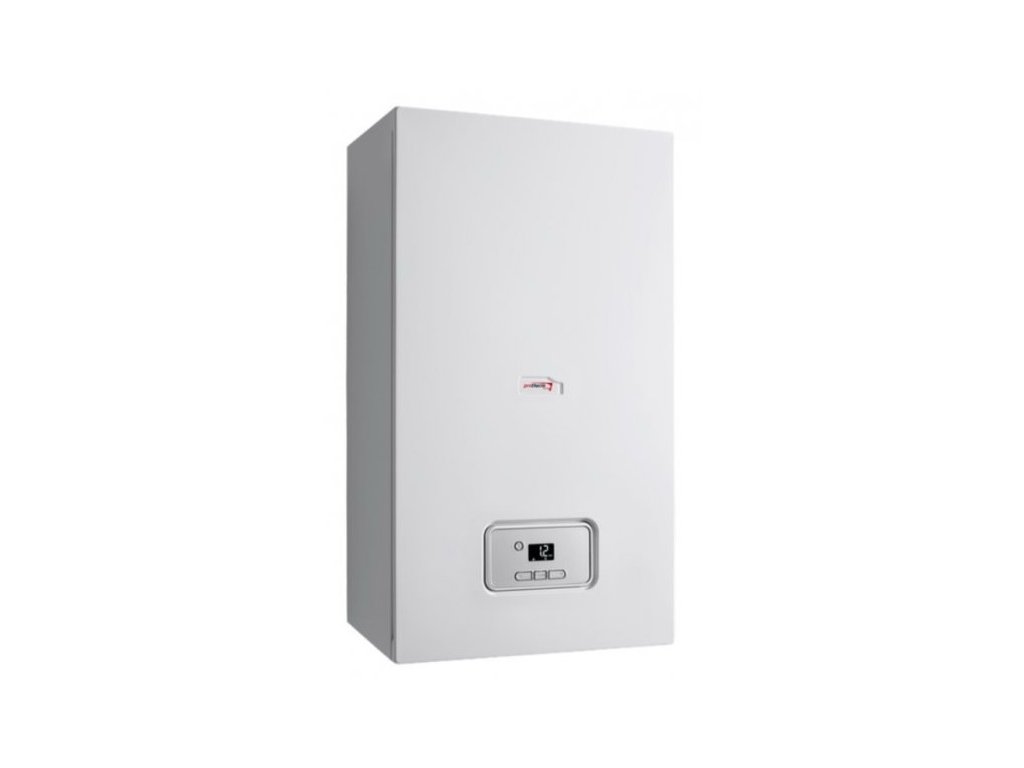
Protherm Gepard Condens 12 MKO – a more affordable condensing boiler with lower output, typically suitable for a replacement in a smaller flat or a well-insulated smaller house where lower output is sufficient. Price from €1,268. |
|
Protherm Gepard Condens 18/25 MKV – a mid-range model with a higher output range, a common choice when replacing an old boiler in a standard family house. Price from €1,322. |
Quick Decision Overview
The table below summarises the criteria above in an easy-to-read format. No single row automatically means “you must” or “you must not” – assess the situation as a whole.
| Criterion | Leans yes, worth it | Leans wait |
|---|---|---|
| Boiler age | 15 years or more, especially a classic (atmospheric) type | Less than 10 years, modern type |
| Failure rate | Repeated repairs, rising service costs | Trouble-free operation |
| Gas consumption | Significantly higher than comparable houses | Within the normal range for the house |
| Plans for the house | You're planning insulation / underfloor heating | You're planning to switch to a different type of source (e.g. a heat pump) |
| Financial situation | The investment is currently manageable | Currently an unfavourable period and the boiler is safe |
Practical Steps If You Decide to Replace
If the criteria above lean in favour of replacement in your case, we recommend following these steps:
1. Determine the Required Output
The first step isn't choosing a specific model, but finding out what output your house actually needs. An undersized boiler won't be enough at peak heating demand, while an oversized one will be needlessly more expensive and will run in a less efficient mode of frequent on/off cycling. You'll find the procedure for calculating the approximate output based on floor area, insulation, and heating type in the article What Output Do I Need for a Condensing Boiler.
2. Choose the Right Type and Brand
Condensing boilers differ in type (combi vs. heating-only with a separate storage tank), placement method, and equipment. You'll find the complete selection process, including what to watch out for, in the article How to Choose a Condensing Boiler, and an overview of the differences between manufacturers in the article Comparison of Condensing Boiler Brands.
3. Order Installation From a Verified Company
A condensing boiler requires a professional design (including any necessary adjustments to the condensate drain and chimney/flue) and installation by an authorised person – this isn't a DIY replacement. Correct commissioning of the boiler after installation (for example the weather compensation curve) has a direct impact on the actual savings achieved, so it's worth choosing an installation company with references, not just the lowest price. Common mistakes worth avoiding when choosing and installing are summarised in the article Common Mistakes When Choosing and Installing a Condensing Boiler.
The first three criteria from the decision table above.
The remaining two criteria from the decision table above.
The three steps of the recommended process from the article.
Frequently Asked Questions
- Is it worth replacing a boiler that still works and hasn't broken down yet? If the boiler is old (15 years or more) and is a classic atmospheric type, yes – in that case it's wiser to plan the replacement in advance rather than wait for a breakdown in the middle of winter, when choosing and installing a new one is under time pressure.
- How long does it take for the investment in a new boiler to pay off? It depends on the specific gas savings and the size of the investment – you'll find the calculation principle above in this article, and specific approximate ranges by type of original boiler in the article on savings.
- Do I also have to replace the chimney or flue gas exhaust when replacing the boiler? Condensing boilers have different flue gas exhaust requirements than classic atmospheric boilers (typically forced draught, plastic or stainless-steel piping). During the site visit, the installation company will assess whether the existing chimney needs adjustment or a new air/flue duct system is required.
- Is there a state subsidy for replacing a gas boiler with a condensing one? For a classic gas condensing boiler, support is generally not available, since it isn't a renewable source – subsidies usually apply to heat pumps and similar solutions. Conditions change, so always check the current status before buying.
- Is it worth waiting for even better technology? Condensing technology has long been an established, mature standard, not a transitional solution – waiting for an “even better” boiler only costs you years of savings you'd have earned in the meantime. It makes more sense to wait if you're considering a completely different type of source (for example a heat pump), not a different condensing boiler.
- How much will gas consumption drop after replacement? The exact percentage depends on the condition and efficiency of the original boiler as well as the house itself, so it can't be generalised into a single number – approximate ranges by type of old boiler can be found in the separate article on savings.
- Can a new boiler be connected to the original radiators? In most cases yes, a condensing boiler also works with classic radiators, although it shows its full potential best at lower heating water temperatures, i.e. ideally in combination with underfloor heating or oversized radiators.
Related Topics
- How Much a Condensing Boiler Saves Compared to an Old Boiler
- How to Choose a Condensing Boiler
- What Output Do I Need for a Condensing Boiler
- How Long Does a Condensing Boiler Last – Service and Maintenance
Do you have a question about choosing a boiler?
Can't decide, or are you dealing with a specific situation in your household? Write to us - we're happy to help.