
Common mistakes when choosing and installing a condensing boiler
Why small boiler mistakes cost big money
A condensing boiler is today the most common gas heating solution in Slovakia – and rightly so, because it can also make use of the heat that a classic (turbo or atmospheric) boiler simply vents out through the chimney. The problem is that the high efficiency of condensing technology only works to its full potential when the boiler is correctly selected, correctly installed and correctly set up. It only takes one of the mistakes listed below to turn a modern boiler into an expensive device that heats, but falls well short of the promised savings, or breaks down after a few months or years.
On this page we have collected the eight most common mistakes we encounter when choosing and installing condensing boilers – from a poorly estimated output, through a missing filter, to illegal DIY installation of the gas connection. For each mistake you will find an explanation of why it is a problem, how it shows up and what to do about it. The text is written for the average reader, not for a technician – if you don't understand something, that's fine, that's exactly what this article is for.
The best prevention against the mistakes described in the article below.
8 most common mistakes when choosing and installing a condensing boiler
1. Poorly estimated boiler output – oversizing and undersizing
The most common mistake of all is estimating the output "by eye" or based on the old boiler being replaced. Old atmospheric technology was commonly oversized, because installers built in a large safety margin – it was not unusual for a house with an 8 kW heat loss to have an old 24 kW boiler. If exactly the same output is "mechanically" carried over to the new condensing boiler, the result is a unit that is unnecessarily large for that house.
An oversized boiler has short, frequent on/off cycles (so-called cycling) – it heats the space quickly, switches off, and soon starts up again. With every start the boiler burns more gas than if it ran continuously at a low output, the burner, ignition electrode and circulation pump wear out faster, and above all – with short cycles the boiler never reaches the low flue gas temperatures needed for condensation, so in practice it works like a more expensive, but no more efficient, classic boiler.
The opposite extreme, undersizing, is less common but just as unpleasant – on frosty days the boiler cannot keep up heating the house to the required temperature, runs continuously at maximum output and is always "behind". The correct approach is always to calculate the house's heat loss (based on area, insulation, number and size of windows, year of construction), not to estimate based on the old boiler. If you're not sure how to do this, we cover it in detail in the article on choosing the right boiler output.
2. Missing or unsuitable filter/dirt separator in the circuit
Compared to older types, condensing boilers have significantly narrower channels in the heat exchanger, because they are designed to transfer as much heat as possible from the smallest possible area. This has one unpleasant downside – they are much more sensitive to dirt in the system. Old heating pipework accumulates magnetite sludge over time (fine black dust created by corrosion of steel radiators and pipes), remnants of sealing materials, sand and other impurities. When an old boiler is replaced with a new one, these deposits get "flushed" straight into the new heat exchanger the first time it runs.
Without a filter or dirt separator in the return pipe, impurities gradually settle in the heat exchanger, reduce flow, cause noise (crackling, bubbling), local overheating and, in worse cases, even perforation of the heat exchanger – repairing or replacing the heat exchanger often costs close to the price of a new boiler. This is exactly why most manufacturers make installing a filter a condition of warranty validity. It is a relatively cheap and simple investment compared to the risk you expose the boiler to without it.

|
NANO HOT 3/4" - 1" 500 mcr water filter for heating systems, brass – a brass mechanical filter that catches magnetite sludge and other impurities before they reach the boiler's heat exchanger. A missing filter is one of the most common causes of heat exchanger failure when replacing an old boiler with a new one. Price from €65.50. |
3. Wrong installation location and failure to keep clearances for flue gas discharge
The boiler's location is not just a matter of looks or "wherever it fits". Binding standards apply here (in Slovakia mainly STN EN 15287 and related regulations) on minimum clearances from windows, doors, ventilation openings and neighbouring property boundaries, on the height of the flue outlet above the roof, and on the minimum room volume or ventilation of the space where the boiler is located. The reason is simple – flue gases and water vapour (often visible in winter as a white cloud) come out of a condensing boiler's flue, and if placed incorrectly these can blow back into a window, dirty the facade, freeze on the pavement or bother a neighbour.
Another common mistake is placing the boiler in a space that is too small or unventilated (for example a built-in cupboard with no air supply), where the boiler lacks sufficient combustion air, or conversely mounting it right under the ceiling without the necessary service clearance – making it impossible to properly access the unit for future repairs or regular servicing. The correct location should always be assessed by a designer or experienced technician based on the specific layout of the house, not "by eye" based on where the old boiler used to be.
4. DIY connection to the gas supply
This is the mistake most worth emphasising – in Slovakia, connecting a boiler to the gas supply may only be carried out by a person with the appropriate authorisation (a gas equipment inspection technician), after which an initial inspection of the gas equipment and a pressure test must be carried out. A DIY gas connection is not just "technically not recommended" – it is directly against the law (the Energy Act and related decrees) and without a valid inspection report your insurer can refuse to pay out in the event of damage (explosion, gas leak, fire).
It is equally important that without an inspection report and installation by an authorised person, the manufacturer will often refuse to honour the boiler's warranty, even if the fault had nothing to do with the gas connection. Saving a few dozen euros on professional installation can, in the worst case, mean losing warranty cover worth thousands of euros, or in the very worst case a direct risk to health and life. This is the only area in the whole article where there is no DIY shortcut whatsoever – always call an authorised technician.
5. Forgotten condensate drain and missing neutralisation box
As the name suggests, a condensing boiler works on the principle of condensing water vapour out of the flue gases – and this condensed water (condensate) has to drain away somewhere. It is mildly acidic (typically pH around 3 to 5, similar to fruit juice, for example), so the installation must address both draining the condensate into the sewer via a siphon resistant to acidic conditions, and – at higher outputs or according to local sewer authority regulations – a neutralisation box that reduces the acidity of the condensate before it is discharged.
A common mistake in DIY or rushed installations is routing the condensate into an ordinary waste pipe without a siphon (risk of flue gases leaking into the room through the drain), or leaving out the drain altogether on the assumption that "it won't be that much water". In practice, an average boiler produces several litres of condensate a day, even more on frosty days – without a proper drain the condensate seeps onto the floor around the boiler, causes the masonry to become damp, and in outdoor pipework can freeze in cold weather and block the drain.
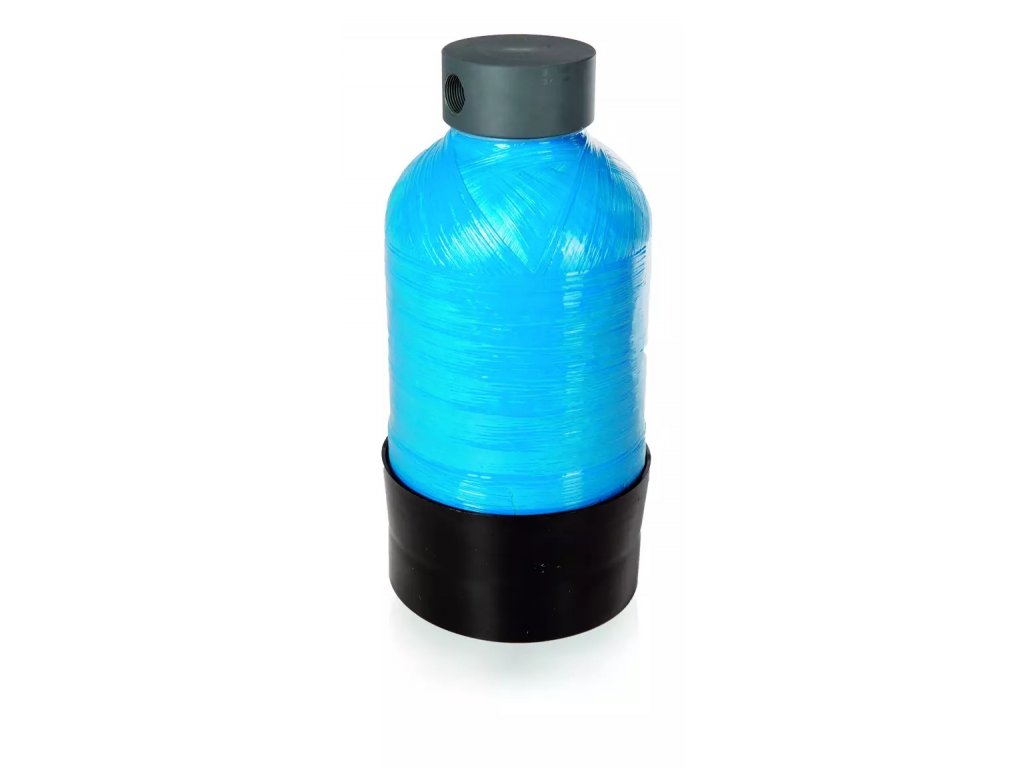
|
GEL.NEUTRALIZER F neutralisation filter – this is what a neutralisation box looks like in practice (this particular model is rated for boilers up to 378 kW, so it's aimed more at larger/cascade installations). For a typical domestic boiler it is usually not required, but for higher outputs or under sewer authority regulations the installation company may specify it. Price from €524.47. |
6. Incorrectly set weather-compensation (equithermal) curve after installation
Weather-compensated control is one of the main features that lets a condensing boiler save money compared to older technology – based on the outdoor temperature, the boiler continuously calculates for itself what flow temperature it needs to send to the radiators or underfloor heating to keep a pleasant, constant room temperature without unnecessary overheating. The problem is that after installation this curve is almost never automatically set correctly for the specific building – the factory setting is only a rough compromise.
A very common mistake is that the curve is never fine-tuned after installation at all – it either stays on an unsuitable factory setting, or the owner "fixes" it by simply raising the base target temperature instead of adjusting the slope of the curve, which erodes the real savings and makes the boiler work at unnecessarily high flow temperatures, outside the optimal condensing range. The correctly set curve also differs depending on the type of heat emitters – low-temperature underfloor heating needs a completely different curve than classic radiators. You'll find a detailed guide in the article on the thermostat and weather-compensated control.

|
Emos P5623 – WiFi thermostat – a modern smart thermostat with an app that lets you conveniently check and fine-tune the curve as well as the time schedule remotely, instead of leaving it permanently on the unadjusted factory setting. Price from €122.75. |
7. Ignoring system pressure and no check after the first few weeks
A sealed heating system operates at a pressure that typically ranges from around 1 to 2.5 bar (the exact value depends on the height and type of system – the precise range for your house is set by the design or a technician). After the first installation it is quite normal for the pressure to drop slightly over the first few days to weeks – the system is "settling in", the last air bubbles escape from the water through the bleed valves, or a minor leak shows up at a joint that didn't reveal itself during the pressure test just before installation.
The mistake happens when this initial check is skipped entirely – if pressure drops below the minimum threshold, the boiler will either report a fault and shut down (the better case), or in the worse case keep running with air in the system, which causes bubbling, uneven heating and accelerated wear of the circulation pump. The recommended approach is to check the pressure on the boiler's gauge one to two weeks after installation, and to contact the installation company if there is a significant drop – a repeated, significant pressure drop almost always signals a leak that needs to be tracked down, not just topped up with water indefinitely.

|
IVAR.ER 12 pressurised expansion vessel (12 l) – an incorrectly sized or worn expansion vessel (ruptured membrane) is one of the common hidden causes of repeated pressure drops in the system, which are easy to mistake for a leaking pipe. Price from €47.73. |
8. Incompatible or incorrectly wired accessories
A condensing boiler today almost never works alone – the system commonly includes a circulation pump (external on some boiler types, supplementing or replacing the built-in one), temperature sensors in the hot water tank, a room thermostat or a weather-compensation sensor. A common mistake, especially with DIY interventions or replacing a component with "something similar", is using a sensor with the wrong characteristic (for example a different resistance in kilohms than the boiler expects) or wiring it incorrectly into the terminal block – the result is usually a fault message, an incorrectly measured tank temperature, or a loss of hot water heating.
Similarly with the circulation pump, choosing the wrong output (flow/head) causes either insufficient water circulation in the system (cold radiators furthest from the boiler, noise at throttled valves), or conversely unnecessarily high electricity consumption and noise from an oversized pump that always runs at full output. Modern electronically controlled pumps can partly adjust their output on their own, but you still need to start from the correct type and size for the given system, not from whatever happened to be available in stock.

|
NTC sensor set for tank, 10 kΩ – a replacement temperature sensor for the hot water tank. An incorrectly wired or incompatible sensor (wrong resistance value) is one of the most common mistakes when replacing components yourself – it shows up as a fault message or incorrectly heated water. Price from €20.00. |

|
Threaded SET DAB.EVOSTA2 40-70/180 + backup power supply – an electronically controlled, threaded circulation pump ready for installation. An incorrectly sized or poorly set pump (output too high or, conversely, insufficient) is one of the common mistakes that shows up as cold radiators or unnecessary electricity consumption. Price from €334.84. |
How to check that your boiler is installed correctly
If you already have your boiler installed, there's no need to panic straight away – most of the mistakes described above can be spotted by an experienced service technician during a routine annual inspection. We especially recommend checking: whether there is a filter or dirt separator fitted in the circuit, whether you have an inspection report for the gas connection, whether the condensate is draining properly and no damp patches appear near the boiler, whether the system pressure hasn't been dropping over the long term, and whether anyone has actually set the weather-compensation curve since installation or whether it has stayed on the factory values. When buying a new boiler, the best prevention is choosing a proven installation company with references and insisting on complete documentation (inspection report, commissioning protocol, warranty card).
The first half of the eight mistakes covered in the article.
The second half of the eight mistakes covered in the article.
What we recommend checking if your boiler is already installed.
Frequently Asked Questions
- Does a condensing boiler always need a filter or dirt separator? It's not a legal requirement, but most manufacturers require it as a condition of warranty validity, especially when replacing an old boiler with a new one in an older heating system, where accumulated sludge is likely to be released. Without a filter you risk damaging the heat exchanger.
- Can I connect my condensing boiler to the gas supply myself if I'm handy? No. Connecting to the gas supply may only be carried out by an authorised person, followed by an initial inspection. A DIY connection is against the law, endangers safety, and without an inspection report you can lose both your warranty and insurance cover.
- Why does my boiler switch on and off frequently (cycle)? The most common cause is an oversized boiler relative to the house's heat loss – the boiler heats the space too quickly and switches off immediately. The solution is usually adjusting the settings (limiting the maximum output) or, as a last resort, replacing it with a correctly sized model.
- How do I know if my weather-compensation curve is set incorrectly? A typical sign is that on colder days the house is cold even though the boiler runs almost continuously, or conversely that in milder weather the house is unnecessarily warm and the boiler frequently overheats. Setting the curve correctly for your house and type of heat emitters can significantly reduce gas consumption.
- Is it normal for the system pressure to drop after installing the boiler? A slight drop in the first days to weeks is normal (the system settling in, air venting). However, if the pressure drops repeatedly and significantly even after several weeks, it is almost always a leak that a service technician needs to track down, not just something to keep topping up with water.
- Do I really need a neutralisation box for the condensate? It depends on the boiler's output and the requirements of the local sewer authority – for most typical domestic boilers it is not legally required, but the condensate must always be drained via a siphon resistant to acidic conditions. The installation company will confirm the specific requirement for your case.
Related topics
- What boiler output do I need
- Thermostat and weather-compensated boiler control
- How long does a condensing boiler last – service and maintenance
- Most common faults and how to fix them
Have a question about choosing a boiler?
Can't decide, or dealing with a specific situation in your household? Write to us – we're happy to help.