
Boiler with a Built-in or Connected Domestic Hot Water Tank
Sooner or later, anyone choosing a floor-standing boiler runs into one practical question: should domestic hot water (DHW) heating be solved with a tank built directly into the boiler body, or is it better to go for a separate external tank connected to the floor-standing boiler by its own piping? There is no universal answer – both approaches have their place and suit different types of households, boiler rooms and budgets. In this article we explain the difference in detail, show specific products from both categories, and use two real-world scenarios to explain which solution is worth choosing when.
Buying a boiler with a DHW tank is generally an investment for 15 to 20 years, so it's worth spending some time on the decision from the start – a badly chosen tank volume or an unsuitable connection type is difficult and expensive to fix afterwards. So let's look at how both solutions work, what their advantages and disadvantages are, and where they differ most from the point of view of both the everyday user and the service technician.
How a built-in tank works (a compact solution)
Compact floor-standing boilers with a built-in DHW tank offer an "all-in-one" solution. The heating part of the boiler (burner, exchanger, circulation pump, expansion vessel, control electronics) and the hot water tank are combined into a single body – the tank is built directly into the lower or side part of the boiler, or is bolted to the boiler as a single compact block already at the factory. A typical example of this category is the Vaillant ecoCOMPACT range of condensing floor-standing boilers, where the tank is integrated directly underneath the boiler body and forms one visually and installation-wise self-contained unit together with the heating part.
The biggest advantage of this solution is saving space in the boiler room. Instead of two separate units (boiler + tank), between which sufficient working space needs to be left and connecting pipework run, a single body with a footprint comparable to, or only slightly larger than, an ordinary washing machine is enough. In flat renovations, small utility rooms, or boiler rooms in older family houses where space is counted in centimetres, this saving can be the deciding argument.
The second significant advantage is simpler and faster installation. Since the tank is connected to the boiler already at the factory, there is no need to install and insulate a long section of connecting pipe between the boiler and the tank, nor to fit the additional set of valves, pumps and safety components that an external solution requires. That means a shorter installation time, fewer joints (and therefore fewer potential points of water leakage or heat loss), and generally lower costs for installation material and installer labour.

|
Vaillant VSC 206/4-5 90 ecoCOMPACT Multimatic 700 A condensing floor-standing boiler with a built-in DHW tank with a volume of 90 litres. A typical example of a compact "two-in-one" solution – the boiler and tank form a single body with minimal footprint requirements for the boiler room, controlled by the Multimatic 700 regulation. Price: €3,658.66 |
A built-in tank does, however, have its own limitations that are good to know in advance. Since its size is limited by the dimensions of the boiler body, the volume generally ranges from about 90 to 150 litres. For a household of two to three people with one bathroom this is usually sufficient, but with more users, two bathrooms used at the same time, or occasional high demand (for example several showers in quick succession), the capacity of a built-in tank can hit its limits faster than with a larger external solution.
The second aspect is servicing. With a compact solution, the boiler and tank form a single functional unit, so any intervention – from a routine annual inspection to a possible tank repair – is generally handled by one technician in one visit. From a convenience point of view this is an advantage, but it also means that in the event of a tank fault (for example corrosion after many years of operation), access has to be made directly into the boiler assembly, which can be somewhat more complicated than replacing a separate external tank.
How an external connected tank works
The second approach is the classic, long-proven solution – the floor-standing boiler works on its own as a heat source for both space heating and water heating, while the actual DHW heating takes place in a separate, physically distinct tank. The boiler is connected to the tank by its own piping circuit, which carries heated heating water into an exchanger (most often coil-shaped) located inside the tank. There it transfers heat to the domestic water, returns cooled to the boiler, and the cycle repeats – this is the so-called indirect heating method.
The main asset of an external tank is flexibility. The volume can be chosen completely independently of the boiler – commonly from 100 litres up to 500 litres and more – depending on the household's real needs, the number of bathrooms, requirements for simultaneous draw-off at several points, or plans for future solar top-up heating. You can therefore choose the boiler purely for the heating output you need, and the tank completely independently for the volume you actually need.

|
Protherm Medveď Condens 25 KKS A condensing floor-standing boiler intended for connecting a separate (external) DHW tank. The boiler handles only the heating part; you choose the volume and type of tank completely independently, according to your household's needs. Price: €2,010.25 |
|
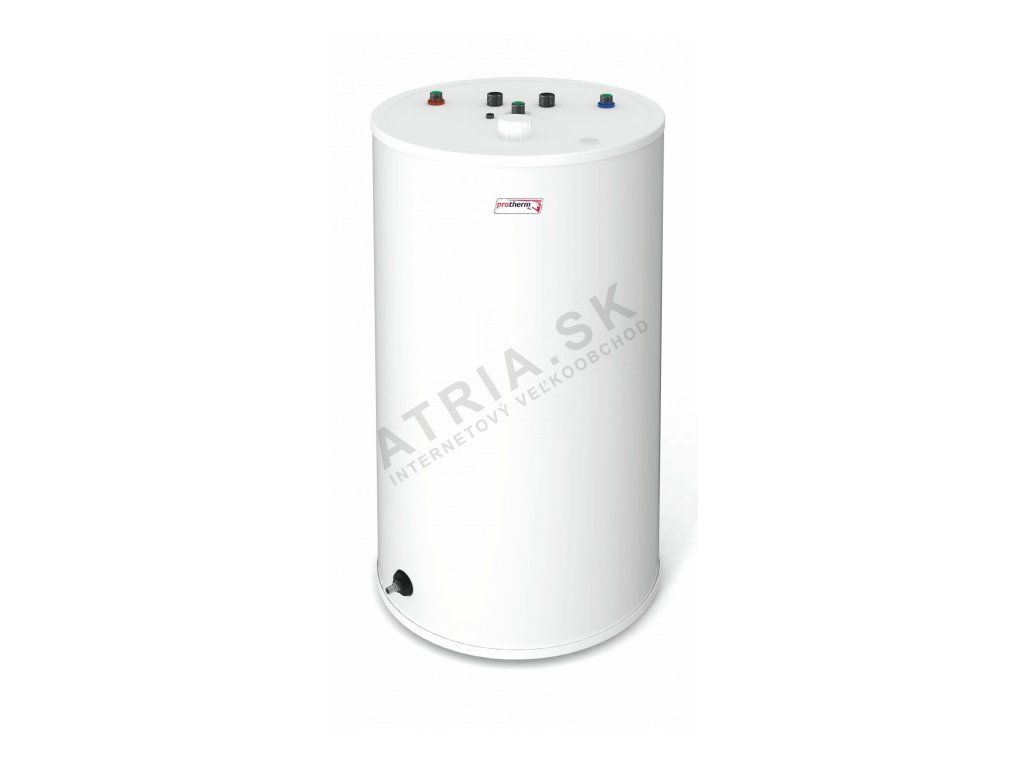
Protherm FE 200 BM floor-standing A separate indirect-heating DHW tank with a volume of 200 litres, intended for connection to a floor-standing boiler (for example the Protherm Medveď Condens above). A good example of an external solution for a household with medium-high hot water consumption. Price: €822.66 |
The second advantage is easier replacement in the event of a fault. If the tank fails after years of operation (typically tank corrosion or a leaking exchanger), only the separate tank needs replacing – the boiler and its electronics do not need to be removed or otherwise touched. The same applies the other way round: if the boiler reaches the end of its life, the tank stays in place and is simply connected to the new boiler. This independence is also useful from the point of view of gradual renewal – a tank with a longer lifespan (especially a quality stainless-steel or enamelled tank) can "outlive" one or two generations of boilers.
The third advantage is the option of adding or replacing it later. With an external solution, a tank can be added to an already existing boiler later on too (for example if the household originally used only instantaneous heating and decides to switch to tank-based heating), or replaced later with a larger one if hot water demand increases – for example due to an extension, a change in the number of household members, or the future addition of solar collectors, which require a tank with a second exchanger (a so-called bivalent tank).
|
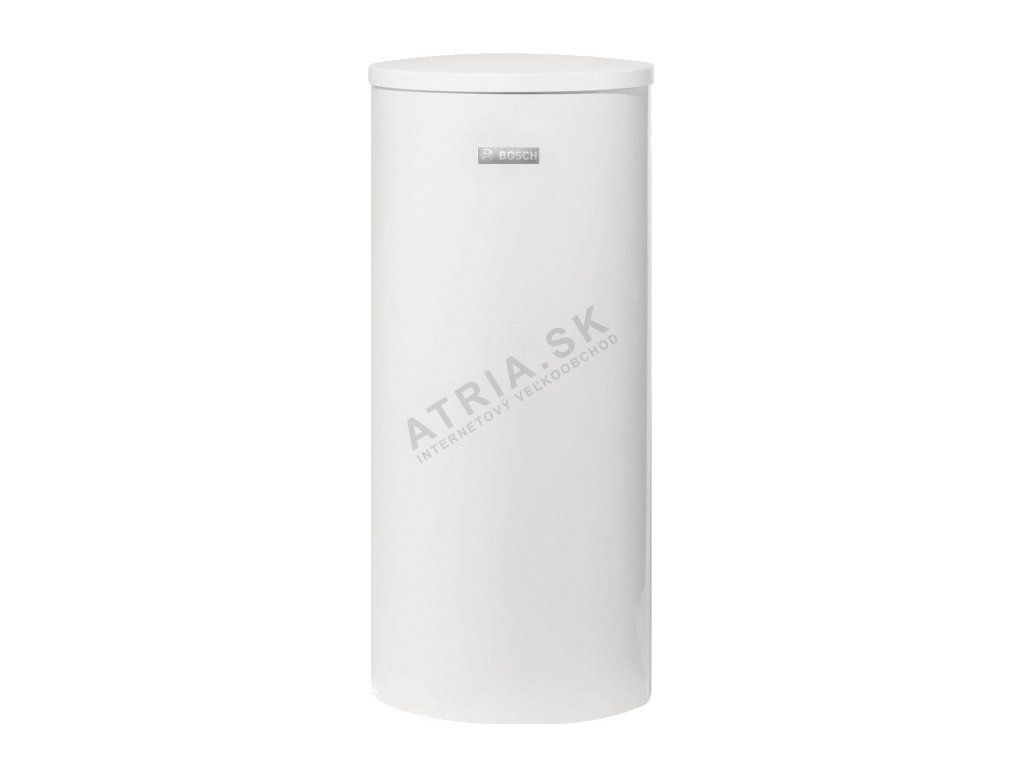
Another example of an external DHW tank with a volume of 200 litres, an alternative to the Protherm FE 200 BM model. Suitable for combining with a floor-standing boiler in households with medium to higher hot water demand. Price: €1,227.54 |
Comparing volumes and flexibility
Tank volume is probably the most common criterion customers use to decide between the two solutions, so it deserves separate attention. Built-in tanks typically range from 90 to 150 litres – which matches the consumption of a smaller to medium household under normal, non-extreme simultaneous draw-off. External tanks, by contrast, cover practically the whole spectrum, from 100 litres (small flats) through common family sizes of 150–200 litres up to 300, 400 or even 500 litres and more for large households, premises with higher peak demand (for example households with a whirlpool bath or a large tub), or buildings with several housing units.
As a rough guide, the tank volume should be based on the number of people in the household and the number of draw-off points used at the same time (bathrooms, kitchen). For a household of up to 3 people with one bathroom, a tank of up to 120–150 litres is usually enough, which a built-in solution can comfortably cover. For a household of 4–5 with one bathroom, 150–200 litres is already recommended; for households with two bathrooms used simultaneously, or with higher comfort demands (a large bath, several showers), it is worth considering 200 to 300 litres or more. It is precisely in this range that the strength of the external solution shows – you can choose exactly the volume the household needs, without a compromise dictated by the dimensions of the boiler body.
The flexibility of an external tank shows not only in volume, but also in construction type. With external tanks, there is commonly a choice between a simple indirect-heating tank with a single exchanger (connected only to the boiler) and a bivalent tank with two exchangers, which allows combining heating from the boiler with heating from solar collectors or another alternative source. Built-in tanks in compact boilers generally do not offer this option – they are designed as a closed, single-purpose unit.
Servicing and replacement – the differences
From the point of view of everyday operation and servicing, both solutions have their own specifics that are worth knowing before purchase. With a compact boiler with a built-in tank, servicing is combined into a single task – the annual inspection, cleaning, anode check and any tank repair are all handled during a single technician visit and a single intervention on a single body. For the user this is more convenient – one appointment, one technician, one task instead of two separate checks.
With an external solution, there are formally two separate units – the boiler and the tank – even though in practice a service technician checks them together in a single routine annual visit, since they are connected into one heating circuit. The difference shows mainly in the event of a fault, or when deciding on replacement after years of operation: if the boiler breaks, only the boiler is replaced, the tank stays. If the tank breaks (most often after 12–20 years, depending on water quality and tank material), only the tank is replaced, the boiler is left untouched. This can bring a noticeable saving in both cost and time compared with a situation where a tank fault requires an intervention directly in a compact boiler assembly.
Another practical aspect is the availability of spare parts and service technicians. The classic combination of a floor-standing boiler plus an external tank has been one of the most widespread solutions on the market for decades, so service technicians are commonly familiar with it and spare parts (including whole replacement tanks) are readily available. Compact solutions with a built-in tank are somewhat more specialised, which is worth considering when choosing a service partner, especially outside larger towns.
When to choose which solution
Let's now sum up, in practical terms, when it is worth going for a compact boiler with a built-in tank and when, conversely, for a combination of a boiler with an external tank.
A built-in tank is a good choice if:
- you have limited space in the boiler room or utility room and need the smallest possible footprint,
- it is a smaller to medium household (up to about 3–4 people) with one bathroom and normal, not extreme, hot water demand,
- you want a simpler and faster installation with fewer joints and less connecting pipework,
- you prefer a single compact unit and a single point of service over two separate units,
- you do not plan to add solar collectors or another alternative water-heating source in the future.
An external tank is a good choice if:
- the household has more members, two or more bathrooms, or higher requirements for simultaneous hot water draw-off,
- you want the option of choosing the exact tank volume independently of the boiler (for example 200, 300 litres or more),
- you are considering solar top-up water heating in the future and want the option of a bivalent tank with two exchangers,
- you want the option of replacing just one part of the system (boiler or tank) in the event of a fault or an upgrade, without touching the other,
- you have enough space in the boiler room for two separate units plus the connecting pipework.
The financial side of the decision should not be overlooked either. Compact boilers with a built-in tank tend to be more expensive for comparable output than a boiler alone, but save on installation material and installer labour. A combination of a boiler with an external tank, on the other hand, allows the investment to be split – the boiler can be bought first and the tank added later, or a cheaper, smaller tank chosen to start with, with the option of replacing it with a larger one later. When comparing the overall price, it is therefore important to count not just the units themselves, but also the costs of installation, piping, insulation and any building work in the boiler room.
A real-world example
Scenario 1 – a smaller flat with one bathroom. Imagine a three-room flat occupied by two adults and one child, with one bathroom and a utility room whose footprint barely fits a standard washing machine. Space in the boiler room is the main limiting factor – two separate units (boiler and tank) simply would not fit side by side without extensive building work. In this case, the logical choice is precisely a compact condensing boiler with a built-in tank, such as the Vaillant VSC 206/4-5 90 ecoCOMPACT with a built-in 90-litre tank. The family manages fine with ordinary morning and evening showers, a 90-litre tank covers the need with a margin, and installation into the tight space happens without needing to knock through or extend the utility room.
Scenario 2 – a larger family house with two bathrooms. The second example is a family house occupied by five household members (parents and three teenage siblings) with two bathrooms, one of which is also used with a larger tub. The morning peak is characterised by simultaneous showering in several rooms, or a bath being filled by several household members in quick succession. In this case, a 90–150-litre built-in tank would hit its capacity limits fairly quickly – the recovery time of hot water in a small tank would not keep up with the peak demand. A more suitable choice here is a floor-standing boiler, for example the Protherm Medveď Condens 25 KKS, combined with a separate external tank with a volume of 200 litres, such as the Protherm FE 200 BM or, as an alternative, the Bosch WST 200-5 C. The family has a boiler room large enough for both units, and will appreciate that, in the event of a future fault or a planned addition of solar collectors on the roof, the tank can be dealt with completely independently of the boiler.
Both scenarios illustrate that the decision between a built-in and an external tank should not be random – it should be preceded by a simple consideration of household size, number of bathrooms, available boiler-room space, and plans for future upgrades (for example solar collectors). If in doubt, it is always best to consult directly with an installer who knows the actual state of the boiler room and the pipework.
Recommended products
Below you will find an overview of all the products mentioned in one place – for a quick comparison of both the built-in and external solutions.
| Product | Solution type | DHW volume | Price |
|---|---|---|---|
| Vaillant VSC 206/4-5 90 ecoCOMPACT | Built-in tank | 90 l | €3,658.66 |
| Protherm Medveď Condens 25 KKS | Boiler for external tank | depends on chosen tank | €2,010.25 |
| Protherm FE 200 BM floor-standing | External tank | 200 l | €822.66 |
| Bosch WST 200-5 C | External tank | 200 l | €1,227.54 |
You will find the complete range of floor-standing boilers and DHW tanks in the category Floor-standing boilers and tanks, where we are happy to help you choose exactly according to your household's and boiler room's parameters.
Frequently Asked Questions (FAQ)
Is a built-in tank less reliable than an external one?
No, it is not less reliable in itself – it is a quality-manufactured unit from reputable manufacturers, just like separate tanks. The difference is not in reliability, but in the fact that a possible tank fault requires access directly into the compact assembly with the boiler, whereas an external tank can be replaced separately, without touching the boiler.
Can an external tank be added to a floor-standing boiler later, even if it wasn't originally installed?
Yes, if the boiler has the outlets prepared for connecting a tank (which is common for most floor-standing boilers intended for combination with an external tank), the tank can be added later too. With compact boilers with a built-in tank, this option generally does not exist, since the tank is part of the boiler body from the factory.
How big a tank do I need for a 4-person household with one bathroom?
As a rough guide, a tank with a volume of 150 to 200 litres is enough. The exact recommendation, however, also depends on the household's habits (shower length, bath use, simultaneous draw-off at several points) – if in doubt, it is worth consulting an installer or our sales team.
Is a built-in tank worthwhile for larger households too?
For households with more people or two bathrooms, an external tank with a larger volume (200 litres and more) is usually already recommended, since built-in tanks are capacity-limited to roughly 90 to 150 litres. For smaller and medium households, a built-in solution is a fully valid and proven choice.
Can a built-in tank be replaced with a larger one later?
No, since the tank is a fixed part of the boiler's construction, its volume cannot be increased afterwards. If growth in hot water demand is expected in the future (for example a planned extension or a growing household), it is better to consider a combination of a boiler with an external tank from the start.
Is an external tank also suitable in combination with solar collectors?
Yes, it is precisely with external tanks that the option of a so-called bivalent tank with two exchangers is commonly available – one for heating from the boiler and a second for connecting solar collectors. Built-in tanks in compact boilers generally do not offer this option.
Which solution is cheaper in the long run?
It depends on the specific situation. A compact boiler with a built-in tank generally has a higher purchase price for the unit itself, but lower installation and connecting-material costs. A combination of a boiler with an external tank allows the investment to be more precisely matched to actual need (for example starting with a smaller tank and adding to it later), and in the event of a fault only one part of the system needs replacing, which can bring savings over the lifetime of the equipment.
Does the external tank have to be from the same manufacturer as the boiler?
It is not a strict requirement; what matters most is compatibility of the connection dimensions and the exchanger's output parameters. In practice, however, it is recommended to discuss the specific combination of boiler and tank with the seller or installer, to ensure optimal performance and easier servicing during both the warranty and post-warranty period.
Related topics
- How to choose a floor-standing boiler
- What output floor-standing boiler do I need
- What requirements does a boiler room have for a floor-standing boiler
- Comparison of floor-standing boiler brands
- How to choose a hot water tank
Do you have a question about a floor-standing boiler or tank?
Can't decide, or dealing with a specific situation in your home? Write to us – we're happy to help.