
Pressure Tanks for Home Water Pump Systems
The pressure tank is the heart of every home water pump system - and paradoxically also the part of the set-up that people pay the least attention to when choosing. While customers ask about output, flow rate, and noise level for the pump, the tank is often treated as an "extra" that comes bundled with the pump. The reality is different - an incorrectly chosen or badly set pressure tank can cut a pump's lifespan in half, cause constant "clicking" every time a tap is opened, and ultimately even increase electricity consumption. In this article we'll explain how a pressure tank works, what volume and type to choose for a specific household, how to set the pre-charge pressure and pressure switch, and when it's worth reaching for a stainless steel design instead of galvanised steel.
What a pressure tank is actually for
Without a pressure tank, the pump would have to run every time someone in the house opens a tap - even if it were just washing hands for a few seconds. Frequent switching on and off is the worst possible operating mode for any electric motor-driven pump, because the greatest wear on bearings, seals, and the starting capacitor occurs precisely at start-up, not during running itself. The pressure tank works as a reservoir of water under pressure - part of the water from the pump is "stored" in it, and when someone turns on a tap, this reserve is used first. The pump switches on only once the pressure in the system drops below a set threshold (the so-called switch-on pressure), and runs until the tank is refilled up to the switch-off pressure. The result is substantially fewer switching cycles, a smoother water flow without jerky pressure fluctuations, and a noticeably longer lifespan for the whole set-up.
The second function that many people aren't aware of is dampening pressure surges. When water flow in the pipework suddenly stops (for example by quickly closing a ball valve or an automatic washing machine), a pressure surge occurs, colloquially known as "water hammer" - an audible bang in the pipework. The air cushion in the pressure tank partly absorbs this surge, protecting joints, valves, and the pump itself from mechanical strain.
How a pressure tank works - connection diagram
A typical home water pump system set-up with a well or borehole schematically looks like this: water is pumped by a submersible or self-priming pump, passes through the pressure tank, and from there continues through the pressure switch (which measures pressure and controls the pump's switching on/off) into the plumbing in the house. Inside, the tank is divided by a flexible diaphragm or rubber bladder into two parts - one contains compressed air (pre-charge), the other water. As water flows in, the bladder inflates and compresses the air cushion, so pressure rises. When consumption exceeds inflow, pressure drops, the bladder empties, and once it drops to the set threshold, the pump switches on.
Precisely because the whole set-up forms one functional unit, it's worth choosing the pump and the tank together, not separately. If you need a pump for a well or borehole, take a look for example at the SKM 100 submersible pump for wells and boreholes - it's a common choice for family homes with their own water source, and it combines well with the tanks described below.
What pressure tank volume to choose
The tank's volume is chosen based on two things: the number of people/draw-off points in the household and the pump's output. A small tank with a powerful pump means frequent switching; a large tank with a weak pump, on the other hand, means it takes a long time to fill and, with a larger draw (for example watering the garden with a hose), the pressure drops quickly. As a general rule of thumb:
- 24 litres - a cottage, flat, smaller home with a well, one or two draw-off points used simultaneously. Typically suits smaller self-priming or garden pumps.
- 90 litres - a typical family home for 2 to 4 people, bathroom, kitchen, washing machine, possibly also an outdoor tap. The most commonly chosen compromise between price, size, and comfort.
- 200 litres and more - a larger family home, several bathrooms used at once, an irrigation system, or a requirement for longer intervals between pump cycles (for example with a deeper borehole, where starting the pump is more energy-expensive).
For comparison of real dimensions and approximate prices from our range:
Notice that the price jump between the 90-litre stainless steel and the 200-litre galvanised tank isn't just about volume - the material also plays a role, more on that below. If you're not sure of the exact volume for your house, we recommend also reading the separate article What Pump Power and Pressure Do I Need, where the tank volume is calculated together with the pump output as a single whole.
Bladder tank vs. bladderless tank (with sight glass)
On the market you'll find two basic constructions. Tanks with a replaceable diaphragm or bladder keep the water completely separated from the metal shell and from the air cushion - the water never comes into direct contact with the steel, which extends the tank's lifespan and prevents air from gradually dissolving into the water (which would reduce the pre-charge pressure over time). This type is more common today and is also the type of most commonly sold lower-volume tanks, for example the AQUA OLA pressure tank mentioned above.
The older, bladderless design, with a so-called sight glass, doesn't separate the water from the air - both components share one space, and the sight glass (a transparent tube on the side of the tank) shows the current water level. The advantage is simplicity and resistance to any damage to a diaphragm (because there isn't one); the disadvantage is the need to occasionally top up the air, since it gradually dissolves into the water. This type is still commonly used, especially for larger volumes, where it's often also a price advantage - an example is the HVP 200L galvanised pressure tank with sight glass, 6 bar, for home water pump systems, vertical, bladderless, which is suitable especially where the emphasis is on large volume at a reasonable price and occasionally topping up the air isn't an issue.
Tank material - galvanised steel vs. stainless steel
Most pressure tanks on the market are made of galvanised steel - it's a proven, affordable solution that, when used correctly (i.e. with a functional bladder that separates water from metal), typically lasts for decades. A problem arises when the bladder or diaphragm is damaged - water comes into direct contact with the galvanised shell, and over time corrosion can occur, especially if the water is more aggressive (low pH, higher iron or manganese content, which is common with wells and boreholes).
A stainless steel design eliminates this problem - stainless steel doesn't corrode even with direct, long-term contact with water, including water with a lower pH or higher mineral content. That's why stainless steel is recommended especially where the source is your own well or borehole with less-than-ideal water quality, or simply where the owner wants certainty for decades ahead without the risk of rusting through. An example is the CH 90 L stainless steel pressure tank, vertical, for home water pump systems - a common choice for a family home, where the investment in stainless steel is seen as long-term security, not an unnecessary luxury.
A simplified comparison of both materials for the same type of use:
Air pre-charge pressure and setting the pressure switch
This is the point where the most mistakes are made in practice - including on new installations by less experienced installers. When empty (without water), the tank must have its air cushion inflated to a precisely defined pre-charge pressure, which is set through a small valve similar to the one on a car tyre, using an ordinary pump or a compressor with a pressure gauge. The pre-charge pressure is always set 0.2 to 0.3 bar lower than the switch-on pressure of the pressure switch. So if the switch has a switch-on pressure of 1.5 bar and a switch-off pressure of 3.0 bar, the tank's pre-charge pressure should be approximately 1.2 to 1.3 bar.
Why exactly this - and not, say, the same as the switch-on pressure? If the pre-charge were higher than or equal to the switch-on pressure, the bladder would practically not be used - water would not enter the tank at all, or only minimally, the tank would effectively "not work", and the pump would switch on practically at every draw, exactly as if the tank weren't there. Conversely, if the pre-charge is too low, the bladder fills up with water before the switch-off pressure is reached, which unnecessarily strains the diaphragm and shortens its lifespan.
The pressure curve during normal operation looks like a "sawtooth" - pressure gradually drops as water is drawn, until it reaches the switch-on pressure, at which point the pump switches on and pressure rises steeply up to the switch-off pressure, where the pump switches off again:
In practice this means that when buying a new tank, or after replacing one, the first step is always to check and, if necessary, top up the pre-charge pressure - manufacturers mostly supply tanks with an approximate pre-charge of around 1.5 bar, which may not exactly match your specific switch. The check is simple: disconnect the tank from the water pressure (or check with the system fully drained) and measure the pressure at the valve with an ordinary pressure gauge.
Vertical vs. horizontal (lying) design
Vertical (upright) tanks are more space-efficient in terms of footprint, and are therefore the most common choice for utility rooms, boiler rooms, or smaller spaces where height is available but the footprint is limited - typically tanks like the stainless steel CH 90 L or the galvanised HVP 200L mentioned above. A horizontal (lying) design suits situations with a low ceiling, or where the tank is placed, for example, under a workbench, in a low space under a staircase, or in a smaller utility cabinet - an example is the AQUA OLA 24l pressure tank, horizontal, for home water pump systems, which is popular precisely for cottages and smaller spaces where an upright tank simply doesn't fit anywhere.
Installation - what not to forget
Installing a pressure tank itself isn't complicated, but a few details determine whether the system will run reliably for years or start causing problems within a few months:
- Base and fixing - larger tanks (90 l and more, filled with water) weigh tens of kilograms, so they must stand on a level, solid base. Slight anchoring against tipping over is also recommended, especially for taller and narrower models.
- Access to the inflation valve - don't place the tank right up against a wall or other equipment in a way that makes the inflation valve inaccessible with an ordinary pump or compressor.
- Shut-off valve before the tank - allows the tank to be isolated from the rest of the system during servicing or diaphragm replacement without having to drain the whole supply.
- Flow direction and position of the pressure switch - the switch is usually installed as close as possible to the tank so it measures pressure as accurately as possible, without distortion from pressure loss in longer pipework.
- Frost protection - if the tank is located in an unheated space (for example a shaft or an outdoor extension), insulation or heating needs to be considered, because frozen water in the tank can damage the shell itself.
If you're dealing with a complete set-up including a shaft for a well, the PP 1300x1000 round water meter shaft, plastic, self-supporting may also be useful - it's commonly used to house the main shut-off valve, the water meter, and sometimes even a smaller pressure tank when dealing with a set-up outside the house, for example an irrigation system connected directly to a well.
Maintenance - what to check and how often
A pressure tank doesn't require demanding regular maintenance, but a few things are worth checking at least once a year, ideally before the summer season, when water consumption (watering, a pool) increases:
- Check the air pre-charge pressure with a pressure gauge - if it has dropped, top it up. A drop of more than 0.3 bar per year can indicate a microscopic leak through the diaphragm or a leaking valve.
- Visually inspect the tank shell - especially with galvanised steel, look for traces of rust, damp patches, or peeling paint at weld joints.
- Check the tightness of connections and the valve - dripping water around the tank often indicates a loose joint, not a fault in the tank itself.
- With the sight-glass (bladderless) type, air needs to be topped up occasionally since it gradually dissolves into the water - a sign of this is an increasingly shorter interval between pump cycles.
- With the diaphragm/bladder type, check whether tapping the shell produces a hollow sound that's evenly divided (air on top, water below) - an uneven or completely hollow sound can indicate a burst bladder.
You'll find a detailed guide to complete maintenance of the whole pump system, including filters, in the article Maintaining Your Pump System and Filters.
The most common signs of a pressure tank problem
In practice, three typical scenarios recur among customer inquiries:
The pump switches on very often, practically every time a tap is opened. The most common cause is low or completely lost air pre-charge pressure - the bladder fills with water almost immediately and the tank stops performing its function. The solution is to check and top up the pre-charge; if the pre-charge holds only briefly, it's likely a burst diaphragm and the tank needs replacing.
A hard bang is heard in the pipework when a tap is closed or the washing machine switches off. This is a classic sign of the tank losing its damping function - either the tank is too small for the system, or again it's a loss of pre-charge pressure. Long-term water hammer strains joints and can cause leaks even in places far from the tank itself.
The tank is visibly "heavy" and full of water even at rest, although it should be mostly air. With the bladder type this means a burst diaphragm; with the sight-glass type it means air needs to be topped up through the valve. Distinguishing between the two situations is important, because the solution is completely different - in one case, topping up is enough; in the other, the internal insert or the whole tank needs replacing.
You'll find a complete overview of faults, including those that don't relate directly to the tank but to the rest of the pump system, in the article Most Common Home Water Pump System Faults.
When it's worth replacing an old tank with a new one
In most cases the diaphragm or bladder can be replaced on its own, without having to buy a whole new tank - as long as the outer shell is in good condition and the tank isn't too old. With galvanised steel, however, once water has been in long-term contact with the metal (for example due to an unnoticed burst diaphragm that went unreplaced for months), the inside of the shell may be affected by corrosion even in places you can't see, and replacing just the insert won't solve the problem permanently. In that case it's more sensible to invest straight away in a whole new tank - and take the opportunity to consider switching to a stainless steel design, which practically eliminates this risk going forward.
Another reason for replacement (rather than repair) is a change in the household's needs - for example an extension, a new bathroom, an irrigation system, or renting out part of the house, when the original 24 or 90-litre tank can no longer keep up with current demand and the pump ends up cycling more often than is healthy.
Frequently asked questions
What's the difference between a bladder pressure tank and a sight-glass one?
A tank with a bladder (diaphragm) keeps the water completely separated from both the air and the metal shell, which extends its lifespan and keeps the pre-charge pressure more stable. A sight-glass tank (bladderless) has water and air in one space, with the level shown by a transparent tube on the side, and the air needs to be topped up occasionally since it gradually dissolves into the water. Both types have their place - the bladder type is more common for smaller volumes, while the sight-glass type is often chosen for larger volumes because of price.
How often should the air pre-charge pressure in the tank be checked?
Checking at least once a year is recommended, ideally before the summer season. If you notice the pump switching on more and more often, that's usually the first sign that the pre-charge has dropped and needs checking before the scheduled annual check comes around.
Can I use a smaller tank than recommended to save on price?
You can, but at the cost of the pump switching on more often, which shortens its lifespan and usually also shows up as somewhat higher electricity consumption. With small savings on the purchase (for example the difference between a 24 and a 90-litre tank), it's worth considering whether that saving will come back in the form of an earlier pump replacement.
Is a stainless steel tank really necessary, or is a galvanised one enough?
For a typical household connected to the public mains, a quality galvanised tank with a functional bladder is enough. Stainless steel is recommended especially with your own water source (well, borehole) where water quality isn't perfectly ideal, or simply when you want certainty against corrosion risk for decades ahead, regardless of the diaphragm's condition.
Why does my pressure tank "bang" or make noises?
Milder sounds while filling are normal (water and air moving inside). A loud bang when a tap is closed signals a loss of the damping function - most often due to low pre-charge pressure or a tank that's undersized relative to the pump's output.
Can a pressure tank be added to an existing pump system that doesn't have one?
Yes, as long as the system has a pressure switch available, or the switch is added together with the tank. This is a common solution when modernising an older well, where the pump was originally connected directly without a tank and switched on manually or with a float switch.
Related topics
How to Choose a Home Water Pump System
What Pump Power and Pressure Do I Need
Installing and Connecting a Home Water Pump System
Most Common Home Water Pump System Faults
Maintaining Your Pump System and Filters
Back to the main category: Home Water Pump Systems and Filtration
 |
AQUA OLA 24l pressure tank, horizontal, for home water pump systems - a compact horizontal design ideal for cottages, smaller flats, or spaces with a low ceiling, where an upright tank doesn't fit. Price from 64.30 EUR. |
 |
CH 90 L stainless steel pressure tank, vertical, for home water pump systems - a common choice for a family home of 2 to 4 people, where investing in stainless steel pays off as long-term security against the risk of corrosion, especially with your own well or borehole. Price from 466.80 EUR. |
 |
HVP 200L galvanised pressure tank with sight glass, 6 bar, for home water pump systems, vertical, bladderless - a large-volume solution for a larger family home, several bathrooms used at once, or an irrigation system, where the emphasis is on large volume at a reasonable price. Price from 535.10 EUR. |
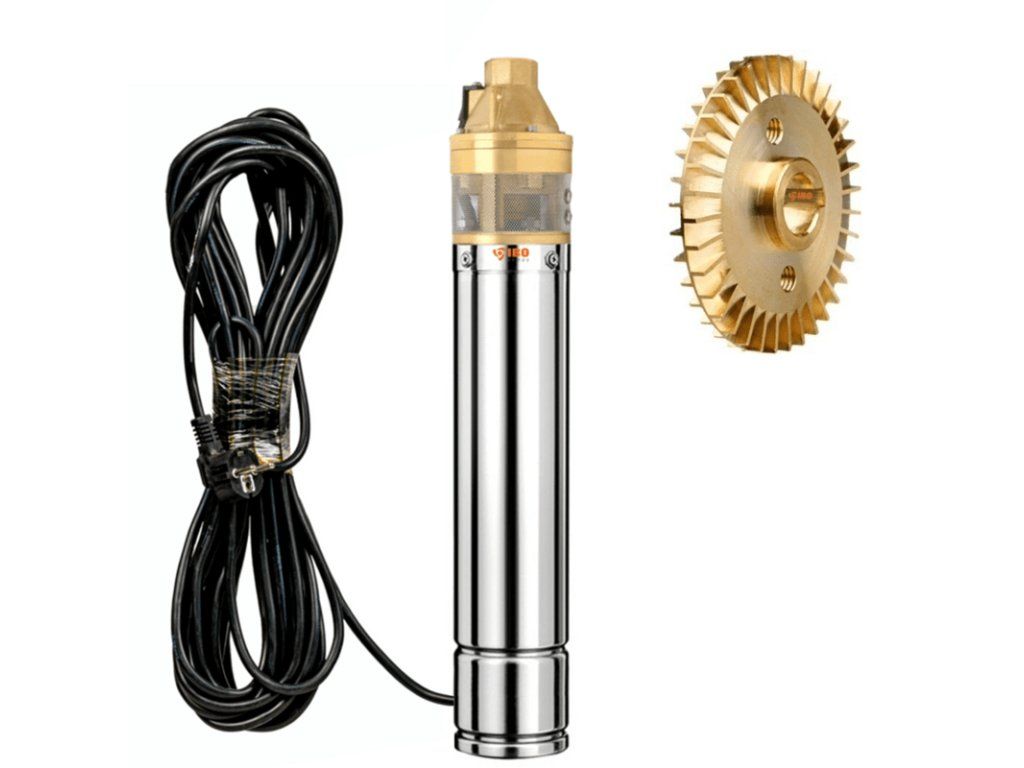 |
SKM 100 submersible pump for wells and boreholes - a common choice of pump for your own water source, which combines well with any of the pressure tanks above depending on the volume needed. Price from 190.40 EUR. |
Do you have a question on this topic?
Not sure, or dealing with a specific situation in your household? Write to us - we're happy to advise.