
Common Faucet Problems and How to Fix Them
When a Faucet in the Bathroom or Kitchen Stops Working the Way It Should
A dripping tap, weak water flow, a squeaking lever, or cold water where there should be hot - faucet problems are among the most common concerns households bring to plumbers and to our customer service. The good news is that most of these faults have a clear cause and can either be fixed yourself for a few euros, or solved by replacing a specific part without needing to replace the whole faucet. In this article we'll go step by step through the six most common problems our customers report to us, explain why they occur, how to diagnose them, and when it's worth reaching for a new part or a whole new faucet.
A faucet is a mechanical device with moving parts, seals, and usually also a ceramic cartridge, which withstands tens to hundreds of thousands of openings and closings a year. In an ordinary family household, a faucet in the kitchen or bathroom is opened and closed an estimated 8 to 15 times a day, which adds up to several thousand cycles a year. Over ten years of use that gets us to tens of thousands of cycles - which is why wear sooner or later shows up on every faucet, only the speed and manner in which it happens differ.
1. A Dripping Faucet - the Most Common Problem of All
Dripping from the outlet or from under the lever is by far the most common reason people start noticing something's wrong with a faucet. According to our long-term experience with service requests, dripping accounts for approximately 38% of all reported faucet problems. There are usually three causes:
- Worn rubber or silicone seal - most common in older lever faucets with a classic mechanism (not a cartridge), where the material gradually loses elasticity over time and the seal stops sealing perfectly.
- Worn or scratched ceramic cartridge - in modern single-lever faucets, it's exactly the cartridge that regulates flow and temperature. If sand, rust from the pipes, or a fragment of limescale gets between the ceramic discs, they get scratched and the faucet stops sealing perfectly even in the fully closed position.
- Excessively high system pressure - if the water pressure in the home system is permanently above 6 bar, both seals and cartridges are stressed more than they were designed for, and wear noticeably faster. This is one of the most commonly overlooked causes, because outwardly it shows up as "ordinary" dripping, even though the root of the problem is the pressure in the whole system, not the faucet itself.
If the faucet only drips from the outlet with the lever closed, it's almost always the cartridge or the seal directly in the outlet mechanism. If it drips from under the lever or from its pivot joint, the problem is usually the O-ring in the lever body. Both parts can be bought separately and replacement usually takes 15 to 30 minutes even without professional help - just shut off the water supply under the sink, unscrew the lever, and replace the cartridge with an identical piece of the same diameter (most often 35 or 40 mm).
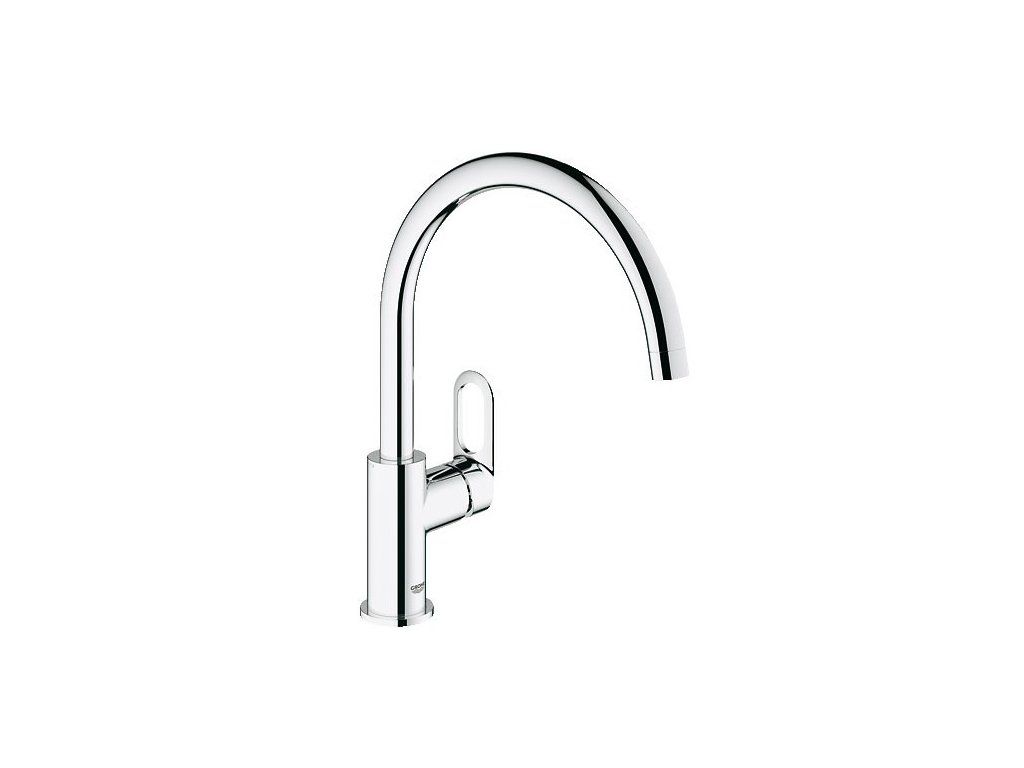 |
946487 deck-mounted sink faucet, LOOP - if your current sink faucet has been dripping for a long time and the cartridge is visibly scratched, or replacing the cartridge isn't worthwhile for structural reasons (for example on very old, end-of-life models), this deck-mounted faucet with a quality ceramic cartridge is a proven replacement for the kitchen. Price from €114.75. |
A Practical Example from the Field
A common case we encounter: a customer dealing with dripping from a lever faucet in the bathroom that's about 9 years old. After a phone consultation it turned out the pressure in their system measured 7.2 bar (normal pressure in the public water supply should be between 2 and 6 bar). Replacing the cartridge alone solved the problem for only three months, until the new cartridge wore out just as fast as the previous one. The real solution was installing a pressure reducing valve ahead of the apartment's supply, which reduced the pressure to a recommended 3.5 bar - the faucet has been problem-free ever since, for its second year now.
2. Low Pressure or a Weak Water Flow from the Faucet
The second most common problem we encounter is the opposite extreme - instead of dripping, the faucet doesn't deliver a sufficient stream of water. This problem accounts for approximately 27% of all reported cases. The most common causes:
- Clogged aerator (mesh on the outlet) - fine particles of limescale, sand or rust gradually settle in the fine mesh at the end of the outlet and restrict flow. This is by far the most common and cheapest cause of all - just unscrew the aerator (usually by hand or with small pliers wrapped in a cloth to avoid damaging the chrome plating), soak it for 30 minutes in a 1:1 solution of vinegar and water, and scrub it with an old toothbrush.
- Low pressure throughout the whole system - if the flow is weak in all the faucets in the apartment at once, the problem isn't the faucet, but the supply pipe, the pressure station, or the shared riser pipe in the building.
- Clogged or pinched supply hose - flexible connection hoses have braiding inside that can partially kink or become fouled with deposits over time, restricting flow even before it reaches the faucet.
- Partially closed shut-off valve under the sink - after a previous repair, the valve sometimes gets left not fully opened.
If the problem affects the whole apartment or house at once, we recommend checking the pressure in the system. Normal water pressure in a home system should be in the range of 2 to 6 bar, with the optimal band for comfortable yet gentle faucet use being around 3 to 4 bar.
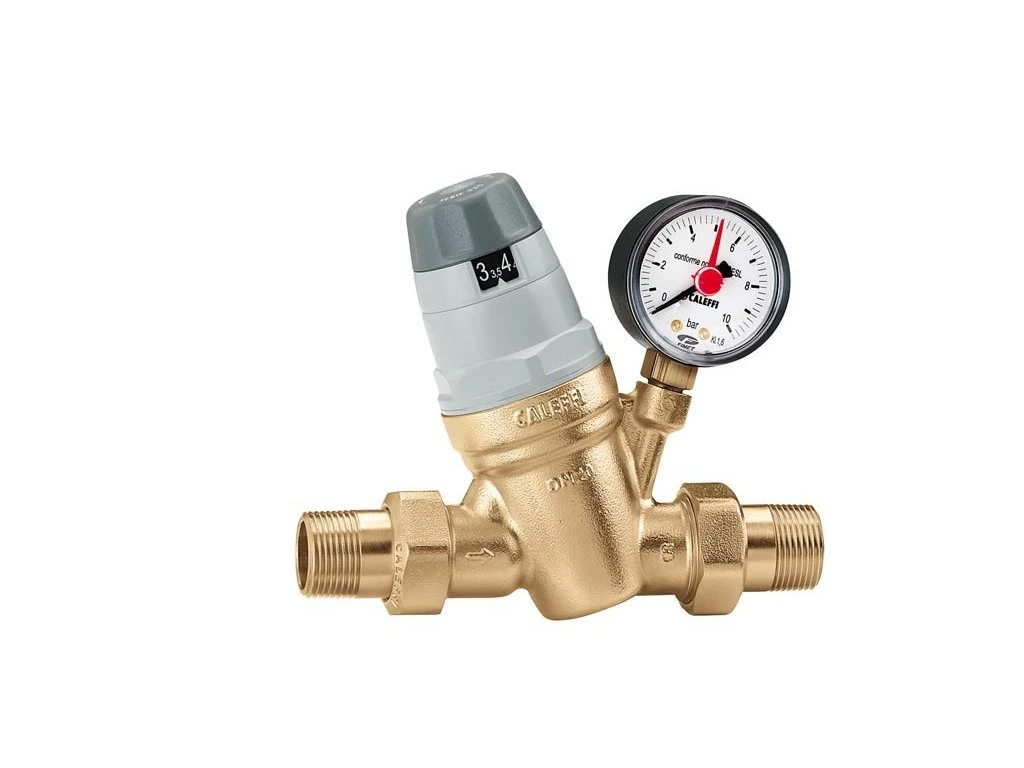 |
Pressure reducing valve 1/2", PN 25bar, working range 1-6 bar - if a measurement shows pressure above 6 bar, this valve with a built-in pressure gauge lets you set the pressure exactly to the required value, protecting faucets, the washing machine and the water heater from premature wear at the same time. Price from €90.73. |
Diagram: Pressure Bands and Where Faucets Feel Best
3. Worn or Faulty Cartridge
The ceramic cartridge is the "heart" of every modern single-lever faucet. It's made of two solid ceramic discs with openings that rotate against each other with the movement of the lever, regulating both flow and the mixing of cold and hot water. A quality ceramic cartridge is designed for approximately 5,000,000 opening and closing cycles, which under normal household use corresponds roughly to 10 to 15 years of operation. Older types of faucets with a rubber diaphragm instead of a cartridge had a considerably shorter lifespan - realistically around 500,000 cycles, i.e. approximately 5 to 7 years, before the diaphragm stopped adapting and started dripping or squeaking.
The cartridge is damaged mainly by mechanical debris (sand, rust fragments from pipes after repairs in the house), limescale, and excessive pressure. Besides dripping, symptoms of a worn cartridge also include:
- a heavy or jerky lever movement that previously moved smoothly,
- the faucet "holding" temperature differently than before - for example, in the middle lever position noticeably warmer or colder water flows than on first use,
- faint whistling or humming when opening.
Diagram: Cartridge Lifespan Comparison by Type
The difference is therefore roughly tenfold - which is why it's worth prioritizing a model with a ceramic cartridge from a proven manufacturer when choosing a new faucet, even if the initial price is a few euros higher. Including servicing this cartridge, a simple rule applies: the cartridge itself usually costs €8 to €20 depending on diameter and manufacturer, while a complete new faucet runs €90 to €200 and more - which is why replacing the cartridge almost always pays off rather than buying a new faucet outright, as long as the rest of the faucet body (outlet, lever, body) is in good condition.
4. Limescale and Deposits
Slovakia is among the countries with fairly hard water, especially in regions with sources from limestone bedrock. Limescale builds up wherever water comes into contact with air and heat - so mainly on aerators, in shower heads, and inside cartridges. Consequences of neglected maintenance:
- gradually decreasing flow (described above),
- visible white, chalky stains on chrome that, if neglected for longer, are hard to remove without damaging the surface finish,
- accelerated cartridge wear, because hard microscopic crystals act like an abrasive powder between the ceramic discs,
- problems with thermostatic shower faucets, where deposits in the thermostatic element cause imprecise maintenance of the set temperature.
The recommended prevention is simple and cheap: unscrew and descale the aerator every 2 to 3 months, wipe chrome surfaces dry after every shower (a damp surface is the main cause of stains), and check the inside of the shower head once a year. In regions with especially hard water, it's also worth considering a water softener at the apartment's inlet - it's not a necessity, but it significantly extends the lifespan of all faucets and appliances in the household.
5. Leaking Connections and Dripping Under the Sink or Basin
Not every drip is directly related to the faucet body - a very common source of problems (an estimated 15% of cases) is the flexible connection hoses between the shut-off valve and the faucet body. These hoses have a limited lifespan, typically 5 to 8 years, after which the braiding can start to crack or corrode at the fittings. Symptoms of a worn hose:
- a damp stain or drops directly under the sink cabinet, even though the faucet itself is closed,
- visible rust or greenish patina on the metal fittings,
- bulging or cracks in the braiding when bent.
Replacing a hose is one of the simplest and cheapest repairs in the whole household, and we recommend doing it preventively with every faucet replacement, even when the old hose still looks fine on the outside - the price of a new hose is negligible compared to the potential damage caused by flooding a cabinet or the neighbors below you.
 |
Stainless steel expandable hose PROFI S for drinking water - a quality hose with stainless steel fittings is a proven prevention against exactly this type of leak, and the expandable design also makes installation easier even in cramped spaces under a sink. Price from €11.07. |
A related source of problems in the bathroom is a leaking or malfunctioning bathtub trap, especially if the tub or sink "can't keep up" draining water at higher flow, or overflows through the overflow. Here too, it's a separate but closely related fixture that's worth addressing at the same time as a possible faucet replacement - especially if both parts are being installed as part of the same renovation.
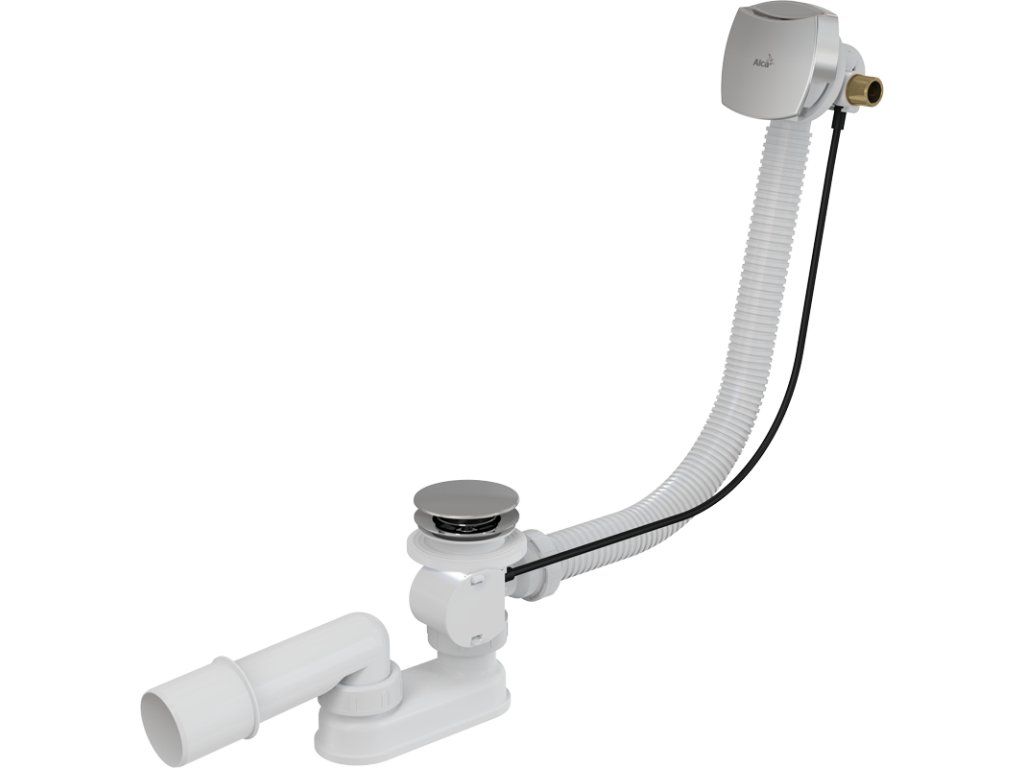 |
Automatic bathtub trap with overflow filling, chrome - if you're also dealing with a leaking or outdated bathtub trap when replacing a faucet, this automatic model with overflow is a reliable and aesthetically matching replacement. Price from €102.08. |
6. Noise, Knocking and Vibrations When Using the Faucet
Less common, but unpleasant, is whistling, knocking or "water hammer" (hydraulic shock) when opening or closing the faucet. The most common causes:
- Closing too quickly - especially with lever faucets that have a short lever travel, rapid closing can create a pressure surge in the pipe, which shows up as a loud bang in the walls.
- Loose pipe fastening in the wall - if the pipe isn't sufficiently anchored with clamps, it vibrates with changes in flow and resonates in the wall structure.
- Worn cartridge or aerator - uneven flow through a partially clogged or damaged part can cause faint vibrations and whistling.
- High system pressure - we return again to this most commonly underestimated cause; high pressure amplifies both noise and hydraulic shocks.
Diagram: Diagnostic Procedure for a Faucet Problem
When to Call a Plumber and When You Can Manage Yourself
Replacing an aerator, cartridge, seal or connection hose is among the repairs an ordinary skilled DIYer can handle with minimal tools (an adjustable wrench, possibly small pliers) and without needing to call a professional. We always recommend first shutting off the water supply right under the sink, not at the main shut-off for the apartment, so you don't needlessly restrict the whole household.
You should call a plumber in these cases:
- if the problem persists after replacing the cartridge or seal and you can't identify the cause,
- if the leak involves a fixed connection in the wall or under the floor, not just the visible part of the faucet,
- if the water pressure throughout the apartment or house exceeds 6 bar and a professional installation of a reducing valve at the main inlet is needed,
- for any modifications to thermostatic faucets with built-in temperature control, where incorrect intervention can cause scalding from hot water,
- if you notice moisture or mold around the installation, suggesting a long-term hidden water leak.
How to Extend a Faucet's Lifespan - Simple Regular Maintenance
Most of the problems described above can be prevented with a few simple habits that together take less than an hour a year:
- Every 2-3 months unscrew and descale the aerator in a solution of vinegar and water.
- Once a year check the water pressure in the system - a cheap pressure gauge that screws onto the outlet costs just a few euros, or ask to have it measured during a service visit.
- After every shower wipe chrome surfaces dry - this significantly limits limescale and stain buildup.
- At the first signs of a heavy lever movement, preventively replace the cartridge rather than waiting for complete failure - a cheaper and quicker repair in advance saves both time and money.
- During a renovation or faucet replacement, always replace the connection hoses too, even if the old ones look fine.
- If you suspect high pressure, invest in a pressure reducing valve - it protects not only faucets, but also the washing machine, dishwasher and water heater.
If you're dealing with a more comprehensive bathroom or kitchen renovation, it's worth also thinking about related fixtures - for example a quality granite sink, which combined with a new faucet can significantly change both the look and the functionality of the kitchen corner, while also being more resistant to mechanical damage and limescale than a classic stainless steel sink.
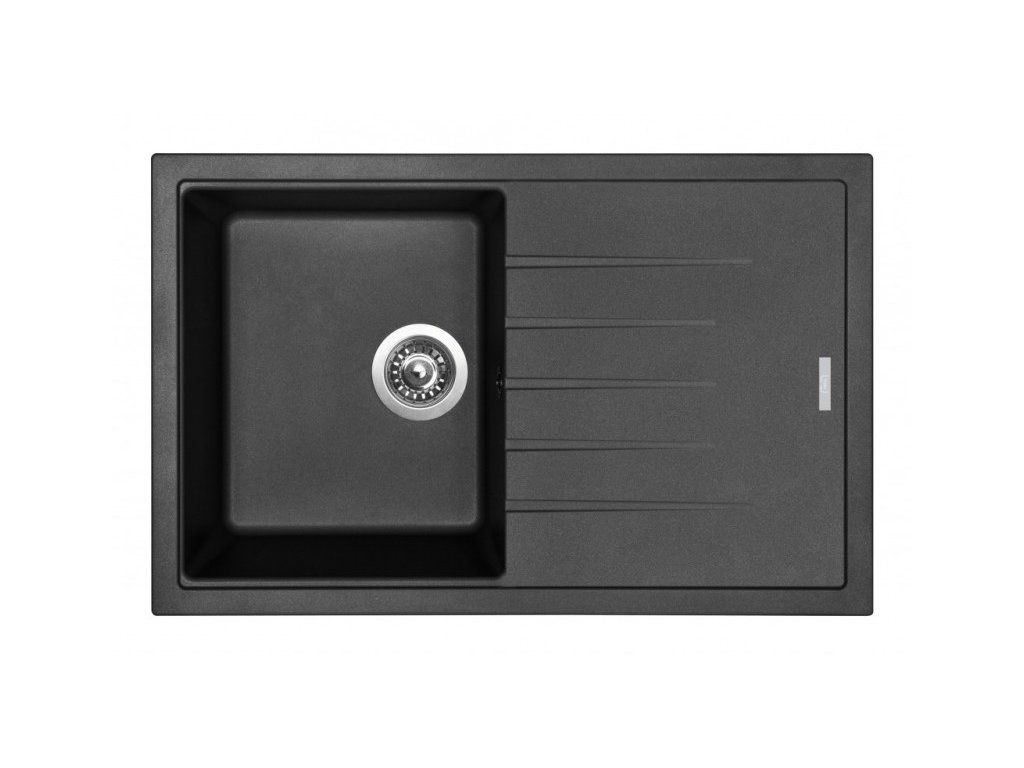 |
Sinks BEST 780 Metalblack granite sink - if while dealing with kitchen faucet problems you're also considering renovating the whole kitchen corner, a quality granite sink resists limescale and mechanical wear better than ordinary stainless steel. Price from €170.98. |
Diagram: Breakdown of the Most Common Causes of Faucet Problems
Frequently Asked Questions
Why does my faucet drip right after replacing the cartridge?
The most common reason is an incorrect diameter or type of replacement cartridge, or pressure that's too high in the system, wearing out the new cartridge just as quickly as the previous one. We recommend always buying a cartridge with exactly the same diameter and from the same or a compatible manufacturer, and also measuring the system pressure before replacement.
Can a thermostatic shower faucet be repaired yourself?
You can handle cleaning the aerator and shower head without any problem yourself. However, we recommend leaving any intervention in the thermostatic element itself, which regulates temperature, to a professional - an incorrect setting can lead to scalding from hot water, which is a safety risk.
How do I know if I have too high water pressure in my apartment?
Typical symptoms are repeated dripping from several faucets in a short time, loud banging in the pipes when closing the water (hydraulic shock), and faster wear on the washing machine or dishwasher. Only measuring with a pressure gauge directly on the outlet gives certainty - the recommended range is 2 to 6 bar, ideally around 3 to 4 bar.
Is it worth replacing just the cartridge, or the whole faucet?
If the faucet body, outlet and lever are in good visual and functional condition and the problem is clearly localized in the cartridge, replacing just the cartridge (usually €8 to €20) is clearly more advantageous than a complete faucet replacement (from roughly €90 upward). We only recommend a new faucet once the whole construction is visibly worn, the surface finish is damaged, or it's a very old model for which cartridges are no longer commonly available.
How often should I replace the connection hoses under the sink?
The commonly recommended lifespan for flexible connection hoses is 5 to 8 years, even if they look fine on the outside. We recommend replacing the hoses preventively along with the faucet with every faucet replacement.
Why does my faucet make a loud bang when closing?
This is so-called hydraulic shock, caused by the sudden stopping of flowing water. It's most often related to pressure that's too high in the system or to insufficiently anchored piping in the wall. The solution is usually either fitting a pressure reducing valve or additionally securing the pipe with clamps - in both cases we recommend consulting a plumber if you can't fix the problem yourself.
Related Topics
How to Choose a Bathroom Faucet
Comparison of Bathroom Faucet Brands
How to Install a Bathroom Faucet - Guide
Stainless Steel Hoses - How to Choose and When to Replace
Bathroom Fixture and Faucet Maintenance
Frequently Asked Questions About Bathroom Fixtures and Faucets
You'll find the complete range in the category Bathroom, Fixtures, Faucets.
Have a question on this topic?
Not sure what to decide or dealing with a specific situation at home? Write to us - we're happy to help.