
Sinks, Bathtubs and Shower Enclosures - How to Choose
Sinks, Bathtubs and Shower Enclosures – How to Choose
Bathrooms today are renovated on average once every 15 to 20 years, which is exactly why it's worth spending more time choosing fixtures than it might seem at first glance. A sink, bathtub or shower enclosure aren't just aesthetic elements – they're components that have to cope long-term with moisture, mechanical load, cleaning with harsher agents, and last but not least the demands of the whole household, from children to older members. In this article we'll go through practically what to focus on when choosing a sink, bathtub and shower enclosure, what materials are actually used, what dimensions make sense for a typical Slovak apartment or house, and what installation material to prepare so you avoid the most common installation mistakes.
Sinks – Types and What to Watch Out For
The sink is the fixture used most often of all in a bathroom – on average one household uses it 15 to 25 times a day. That's exactly why it's worth investing in a quality material and thoughtful installation, not just in looks.
Countertop Sinks (Furniture-Mounted)
These are sinks mounted on bathroom furniture or a counter – either recessed (below the counter surface) or placed on top (so-called countertop sinks). The advantage is that the space under the sink remains fully usable for storage, which is key in smaller bathrooms. The disadvantage is a somewhat more demanding installation and the need for a precisely cut opening in the counter.
Wall-Hung Sinks
Wall-hung sinks are mounted directly to the wall or to an in-wall installation system. Their main advantage is easier floor cleaning underneath and a modern, airy look. The disadvantage is the need for a solid wall or an in-wall system with sufficient load capacity – a load of 150 to 200 kg on the anchor points is typically assumed, which isn't a problem with proper installation into solid brick, concrete or a quality drywall system.
Pedestal Sinks
The classic solution known from most older apartments – a sink standing on a ceramic or cast pedestal, which also conceals the trap and supply lines. It's the cheapest and simplest installation, but lacks storage space.
Sink Material
You'll most often encounter ceramics (sanitary ceramics, or occasionally cast enamel), less often cast marble, glass or stainless steel. Ceramics remains the most universal choice – resistant to scratching from common cleaning agents, affordable, and with the widest range of shapes and sizes. For kitchen sinks, where the demand for durability is even higher (pots being dropped, thermal shocks), granite composite is increasingly used – our range includes, for example, the Sinks BEST 780 Metalblack granite sink, which combines scratch resistance with easy maintenance, priced from €170.98.
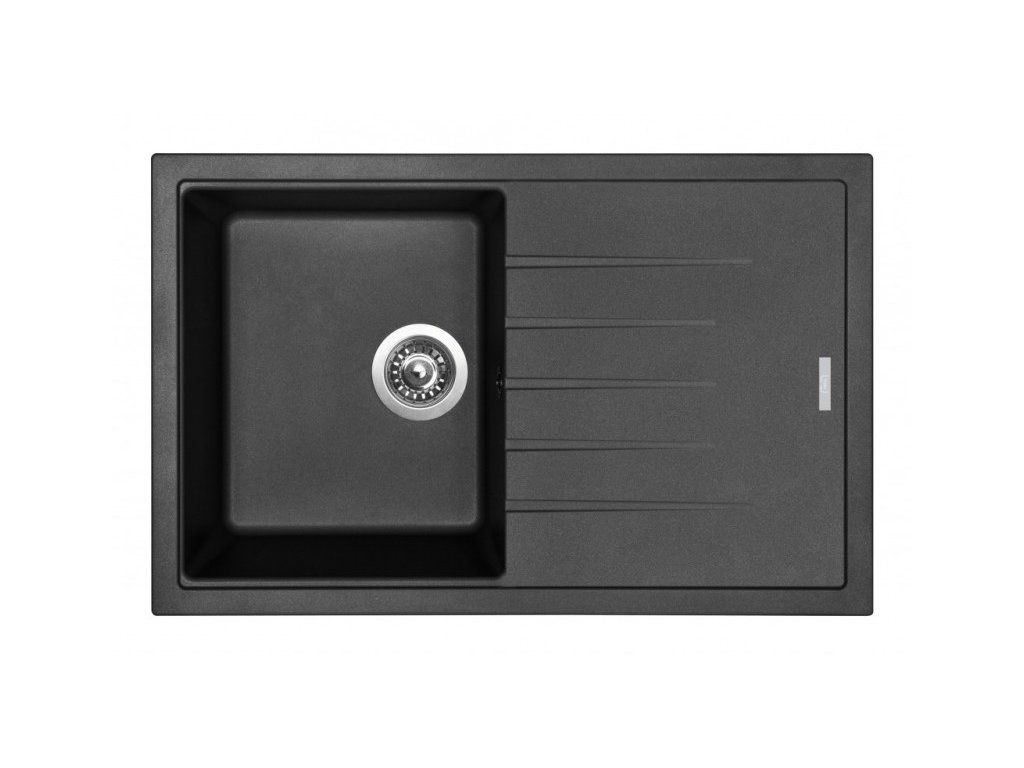 |
Sinks BEST 780 Metalblack granite sink - although this is a kitchen sink, the principle of choosing a resistant composite material applies equally to bathroom sinks - the granite surface resists scratching, hot water and common cleaning agents better than cheap ceramics. Price from €170.98. |
Sink Dimensions
Common countertop sink dimensions range from 40×30 cm (small, for a toilet or guest bathroom) through a standard 50–60×40–45 cm up to double sinks with a length of 120–140 cm. When choosing a size, always allow for at least 10 cm of free space on the sides of the sink from the wall or another fixture, so you can comfortably wash and dry your hands without bumping into surrounding equipment.
Bathtubs – Materials, Dimensions and What Most People Underestimate
When choosing a bathtub, the material is the main deciding factor, because it affects weight, heat retention, price and lifespan. On the Slovak market today you'll practically encounter three main variants.
Acrylic Bathtubs
The most widespread choice – acrylic is light (the tub itself typically weighs 15 to 20 kg, though with a steel or wooden frame the installed weight increases), holds heat well and is the most affordable. The disadvantage is lower resistance to scratching from sharp objects and sensitivity to the wrong cleaning agents containing abrasives – we always recommend only mild, non-abrasive products designed specifically for acrylic.
Steel Enameled Bathtubs
A compromise between acrylic and cast iron – weight is around 25 to 30 kg, the enameled surface is more scratch-resistant than acrylic, but loses water heat faster (steel conducts heat faster, so water in a steel tub cools noticeably quicker than in an acrylic or cast-iron one). The advantage is a lower price than cast iron while retaining good durability.
Cast-Iron Bathtubs
The heaviest (typically 110 to 120 kg for a standard size), the most durable and with the best heat retention of the three materials – water in a cast-iron tub cools the slowest. The disadvantage is the high weight, which places demands on floor load capacity (especially in older apartment buildings with wooden ceilings, the structural load must be checked), and a significantly higher price.
The following chart summarizes the real difference in weight between the individual bathtub materials at a comparable size – this is often the first thing you should consider when deciding, especially if you're installing the tub on an upper floor or on a floor with uncertain load capacity.
Bathtub Dimensions
The most common bathtub length in Slovak bathrooms is 160–170 cm with a width of 70 cm, which suits most adult bodies. In smaller bathrooms, shortened tubs of 120–140 cm are also used, or corner tubs, which save floor space while retaining a larger interior volume. Before buying, always measure not only the width and length of the space, but also the height of doors and hallways the tub must be carried through – with cast-iron tubs it sometimes happens that they simply won't fit through a standard door or elevator into the apartment.
Bathtub Trap and Filling
Don't underestimate the choice of trap – a cheap or incorrectly fitted trap is one of the most common causes of complaints with bathtubs. We recommend an automatic trap with overflow filling, which lets you control drainage directly from the head at the top of the tub without needing to bend down to the bottom.
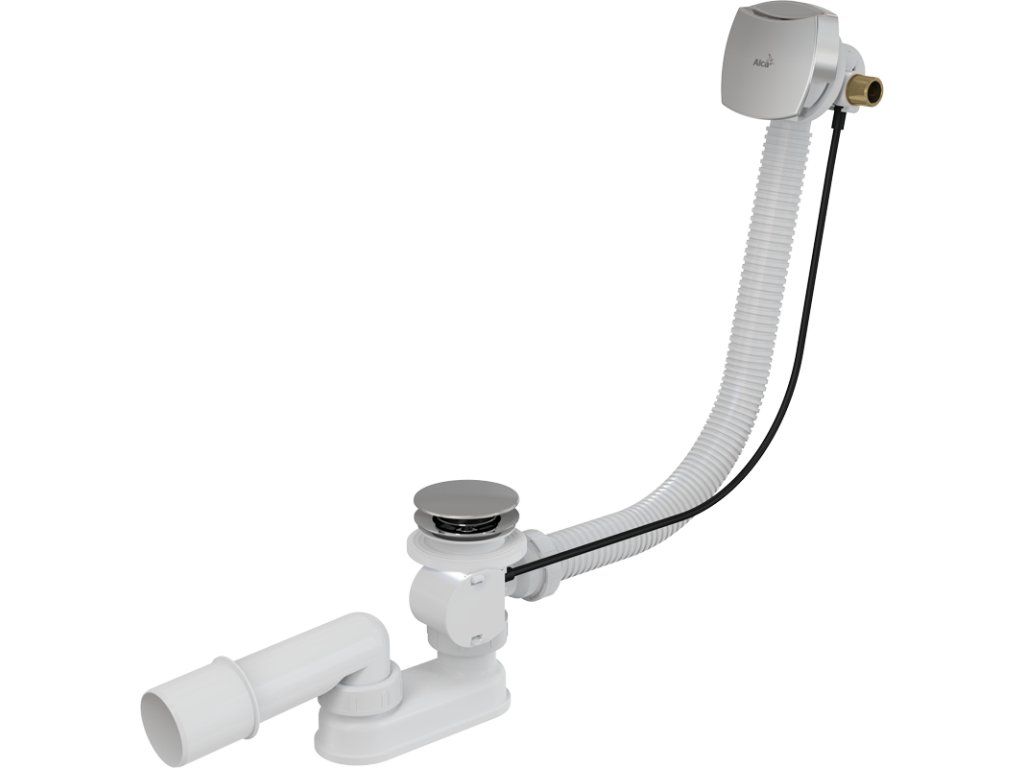 |
Automatic bathtub trap with overflow filling, chrome - a practical solution that lets you open and close the drain right from the top head without bending down, the chrome finish matches most bathtubs and faucets. Price from €102.08. |
Shower Enclosures – When They're a Better Choice Than a Bathtub
Shower enclosures have clearly been gaining popularity in recent years – especially in city apartments where space is limited, and in households where showering is preferred over bathing. A shower uses on average significantly less water than filling a tub (an ordinary 5–8 minute shower uses around 60–100 liters, filling a tub fully 150–200 liters), which shows up long-term on water and heating bills too.
Types of Shower Enclosures by Footprint
- Square – most common sizes 80×80, 90×90 or 100×100 cm, suited to a room corner.
- Rectangular – for example 80×120 or 90×140 cm, provide more room to move, suited to where a longer wall is available.
- Quarter-round – with rounded sliding doors, save space when opening (unlike hinged doors they don't intrude into the bathroom space).
- Walk-in / barrier-free – without a tray, with a linear or point drain in the floor, a modern minimalist look and barrier-free access, increasingly in demand even in ordinary family homes for future comfort (aging, reduced mobility).
The following diagram summarizes the recommended procedure for choosing a shower enclosure – from measuring the space to the installation itself, in exactly the order you should proceed to avoid additional modifications.
Tray or Floor Drain (Without a Tray)?
A classic shower tray (acrylic, cast stone or ceramic) is easier to install into an existing floor without intervening in its structure – you just need to fit it and connect it to the drain. A trayless solution with a linear channel requires intervening in the floor makeup (the slope towards the drain must be created in the screed), which is more demanding and expensive, but the result is barrier-free and visually more generous.
Faucets and Accessories – Don't Forget the Details
The sink, bathtub and shower enclosure all need a quality faucet and a correct connection to the supply lines. When choosing a deck-mounted faucet for a sink (typically for a kitchen or bathroom), it's worth reaching for a proven type with a ceramic cartridge that won't leak long-term and will keep smooth temperature and flow control.
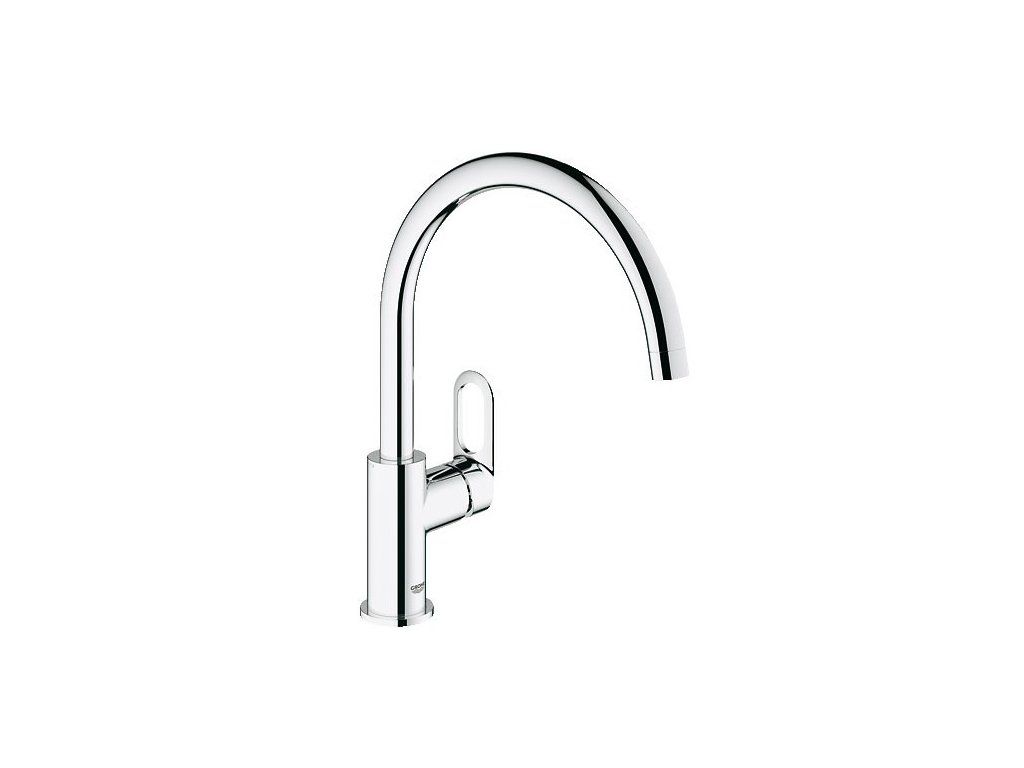 |
946487 deck-mounted sink faucet, LOOP - a quality deck-mounted faucet with smooth control, useful as inspiration when choosing a similar faucet for a sink – prioritizing a quality cartridge always pays off long-term with lower failure rates. Price from €114.75. |
When connecting a new faucet or shower to the supply lines, don't forget a quality connection hose – cheap plastic hoses with a short lifespan are one of the most common causes of a flooded bathroom. We recommend stainless steel expandable hoses with stainless steel fittings, which last significantly longer and withstand pressure fluctuations in the system better.
 |
Stainless steel expandable hose PROFI S for drinking water with stainless steel fittings - a reliable connection of the faucet to the supply, more resistant to pressure fluctuations than ordinary plastic hoses, preventing flooding. Price from €11.07. |
Water Pressure – Why Address It Before Installing Fixtures
High or fluctuating water pressure in the system is one of the most common hidden causes of premature wear on faucets, traps and connection hoses. The recommended working range for ordinary household fixtures is approximately 1 to 6 bar – if your house has higher pressure (typically when connected to the public water supply on higher floors or in locations with higher network pressure), it's worth fitting a pressure reducing valve directly on the main supply.
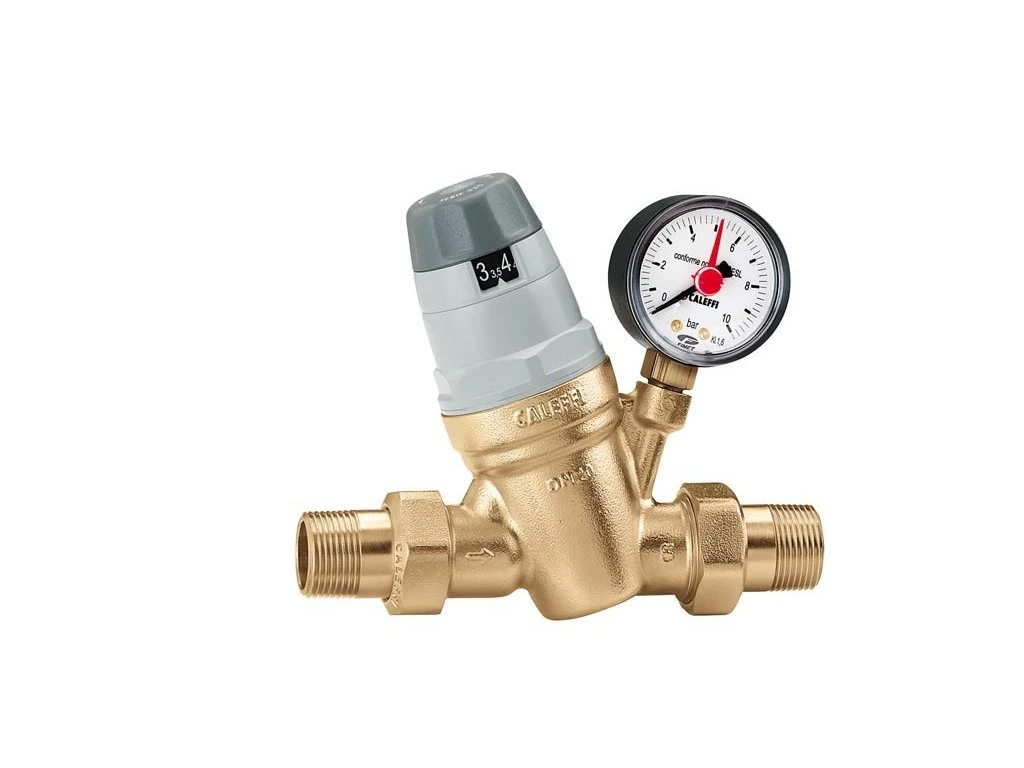 |
Pressure reducing valve 1/2", PN 25bar, working range 1-6 bar, T max.+40 °C, pressure gauge 0-10 bar - keeps the water pressure within the recommended 1-6 bar range, extending the life of faucets, traps and hoses throughout the bathroom, with a built-in pressure gauge for ongoing monitoring. Price from €90.73. |
The following chart illustrates the recommended working pressure range for standard fixtures (1 to 6 bar) compared to typical pressure in the public water supply, which without regulation can reach significantly higher values.
Comparing Fixtures by Space, Price and Installation Difficulty
When deciding between a bathtub and a shower enclosure, it helps to have a simple summary in front of you that takes into account space requirements, approximate price and installation difficulty. The following graphic compares three main fixtures from this perspective.
Practical Installation Experience – What Most Often Needs Sorting Out Afterwards
Over the years of selling fixtures and installation materials, similar situations keep coming up in communication with customers, situations that can be avoided already at the planning stage:
- Underestimating floor load capacity for a cast-iron bathtub. Especially in older apartment buildings with wooden joist ceilings, it's necessary to check before buying whether the floor can bear 115 kg of tub plus 150-200 liters of water plus a person's weight – together this can mean a load of around 350-400 kg on a relatively small area. In such a case an acrylic or steel bathtub is a safer choice.
- Incorrect slope for a trayless shower enclosure. If the screed around a linear drain isn't precisely sloped towards the channel, water stays standing at the edges, which over time causes leakage into the grout lines around the tiles.
- Underestimating water pressure. Customers often only notice a problem (a dripping faucet, a cracking hose) after repeatedly replacing the part, while the real cause is long-term high pressure in the system, which is simply solved by a reducing valve fitted on the main supply.
- Choosing too small a sink for a family with children. A small 40×30 cm sink looks nice visually, but in practice proves inconvenient during the usual morning/evening routine of a multi-member family – it's worth reaching for at least 55-60×45 cm.
- Forgetting a quality connection hose when replacing a faucet. Many people only replace the faucet and leave the original, already worn plastic hoses – it's exactly those that tend to be the weakest link in the whole connection.
Summary – How to Proceed When Choosing
First, precisely measure the available space and check the floor's load capacity (especially if considering a cast-iron bathtub). Then decide between a bathtub and shower enclosure according to how your household actually uses the bathroom – if few children bathe in the household and most members prefer a quick shower, a shower enclosure saves space and water. For the sink, think about frequency of use and choose the type (countertop, wall-hung, pedestal) based on whether you need storage space. Finally, don't forget quality accessories – trap, connection hoses and possibly a pressure reducing valve, which will extend the lifespan of the whole investment.
Frequently Asked Questions
What's the difference between an acrylic and a cast-iron bathtub in terms of lifespan?
With proper care (non-abrasive cleaning agents, no sharp objects), a quality acrylic bathtub typically lasts 15-20 years. A cast-iron bathtub is more resistant to mechanical damage and its lifespan is measured in decades, practically the entire lifespan of the bathroom, but its high weight (around 115 kg) places greater demands on floor load capacity during installation.
Can a shower enclosure be installed in place of the original bathtub without demolition work?
With a classic shower tray, yes – usually it's enough to disconnect the original tub, adjust the drain connection (the diameter and position usually differ from a bathtub trap), and install the tray and glass. With a trayless solution (walk-in with a linear drain), an intervention in the floor makeup is needed to create the slope, which is no longer a minor intervention.
How do I find out if I have too high water pressure at home?
You can roughly tell by recurring problems – sharp "banging" in the pipes when the faucet closes, frequent cracking of connection hoses, leaking or quickly worn faucet cartridges. A plumber will take a precise measurement with a pressure gauge, or after fitting a pressure reducing valve with its own gauge you can monitor pressure yourself on an ongoing basis.
Is it worth buying a more expensive ceramic cartridge for a faucet?
Yes, long-term, definitely. A ceramic cartridge resists limescale buildup and mechanical wear from everyday use better than cheaper types, significantly reducing the risk of dripping and the need for premature faucet replacement.
What sink dimensions are suitable for a small bathroom or toilet?
For a space under 4 m² or a separate toilet, small sinks with dimensions of around 40×30 or 45×35 cm are commonly used. It's important to allow at least 10 cm of free space on the sides so the sink is comfortably usable even in a tight space.
Is it necessary to replace the trap when replacing a sink or bathtub?
We recommend it, even if the original trap looks functional – seals and plastic parts age and lose flexibility even without visible damage. Replacing the trap at the same time as the sink or bathtub is also cheaper and faster than a later intervention after a possible leak.
Related Topics
- How to Choose a Bathroom Faucet
- Comparison of Bathroom Faucet Brands
- Toilet Seats and Lids - How to Choose
- How to Install a Bathroom Faucet - Guide
- Stainless Steel Hoses - How to Choose and When to Replace
- Bathroom Fixture and Faucet Maintenance
You'll find the complete range in the main category Bathroom, Fixtures, Faucets.
Have a question on this topic?
Not sure what to decide or dealing with a specific situation at home? Write to us - we're happy to help.