
Stainless Steel Hoses - How to Choose and When to Replace Them
A burst connection hose is one of the most common causes of flooding a flat or a family house - and yet it is a component that costs a fraction of the damage it can later cause to floors, furniture or your neighbour's flat below you. Stainless steel hoses for connecting taps, toilets, washing machines, dishwashers or water heaters are today's standard, which has clearly replaced the old rubber "hoses" of the last century. In this article we explain the differences between the individual types, how to correctly choose the diameter and length, when it is high time for a replacement and what to watch out for during installation so that the hose lasts for years without problems.
Why the type of connection hose matters
The connection hose is physically the most stressed point in the entire household water supply system. It is exposed to continuous water pressure 24 hours a day, temperature changes (especially when connected to hot water or a boiler), mechanical stress every time the shut-off valve is opened and closed, and last but not least, UV radiation and moisture if it is located, for example, under a sink next to a heating element. While the pipework itself is usually hidden in the wall and lasts for decades, it is precisely the short section of hose between the shut-off valve and the appliance that is the weakest link in the whole chain.
This is not just a theoretical problem. In practice, a burst hose is most often encountered in three situations: connecting a washing machine (a high number of pressure-surge cycles during filling), connecting a toilet cistern (cheap original hoses from when the house was built), and connecting a mixer tap in a bath or shower combination (bending stress with every adjustment). A quality stainless steel hose can handle this stress for years without visible signs of wear, while a cheap rubber version can fail suddenly and without warning.
Types of connection hoses - differences worth knowing
Rubber hoses
The oldest and cheapest type - a core made of EPDM rubber or a similar material, sometimes with a textile braid, sometimes without one at all. The price is around 2 to 3 euros per piece. The disadvantage is that rubber loses elasticity over time, cracks with microscopic fissures that are not visible to the eye, and degrades faster than any other material due to UV radiation and heat. In practice, the lifespan of a rubber hose is around 3 to 5 years, and even less under unfavourable conditions (heat from a boiler, direct sunlight through a window). Today we recommend using this type only as an emergency or temporary solution.
Stainless steel braided hoses
The most widespread type on the market - an inner rubber or EPDM core is wrapped in a braid of stainless steel wire (most often AISI 304 or the higher-quality AISI 316), which mechanically reinforces the hose and protects it against cutting or puncturing. The price typically ranges from 5 to 11 euros depending on length, diameter and the quality of the fittings. This is now the most common choice for connecting taps, washing machines, dishwashers and toilets. The stainless steel braid significantly extends the lifespan - realistically 5 to 8 years under normal use, because the core inside is still rubber and degrades over time, it is just better protected from external influences.
All-stainless-steel corrugated hoses
The highest quality and also the most expensive type - the entire hose is made of thin-walled corrugated stainless steel tubing, without a rubber core. The price starts at around 10 euros and can exceed 15 to 20 euros for larger diameters or lengths. The advantage is the longest lifespan of all types - manufacturers commonly state 8 to 10 years, and even more for quality branded products. This type is particularly worth using in places where replacement is complicated (under a kitchen counter in a corner, behind a built-in cabinet) or where there is a risk of higher thermal stress, for example when connecting a water heater or boiler.
How to choose the right hose - dimensions, thread and length
Three parameters are key when choosing a hose: the diameter and type of thread, the length, and the working pressure. The most common threads found in households are 3/8" (typical for taps and toilet cisterns) or 1/2" (typical for washing machines, dishwashers and some older taps). The combination can be internal/internal thread (FF - female/female), or internal/external, depending on the type of outlet you are connecting the hose to. Before buying, always unscrew the old hose and check the exact thread type on site - guessing from memory or estimation is the most common reason a customer buys the wrong piece and has to go shopping a second time.
Length is most often sold in the range of 30 to 100 cm, with lengths of 40 to 60 cm being the most commonly used in a flat. A practical recommendation is to choose a hose slightly longer than the distance measured in a straight line between the shut-off valve and the appliance - the hose bends slightly during installation, and a length cut too tight causes unnecessary tension at the fittings, which in the long run shortens the lifespan right at the thread.
Extendable hoses (often labelled "flexi" or telescopic) solve precisely the uncertainty around exact length - inside they have a sliding mechanism that allows the hose to be extended within a certain range, for example from 50 to 100 cm. They are particularly practical when you are not sure of the exact distance, or when you want to use the same type of hose in several places with different distances.
 |
Stainless steel extendable hose PROFI S for drinking water with stainless steel fittings - a practical solution exactly for the situations described above, when you are not sure of the exact distance between the shut-off valve and the appliance. Stainless steel fittings and braid guarantee a longer lifespan than a standard rubber hose. Price from 11.07 EUR. |
Where hoses are used in the household and what this requires
You will find hoses in the household at practically every place where a movable or replaceable appliance needs to be connected to a fixed water supply:
- Kitchen and bathroom tap - usually two hoses (cold/hot), length 30-50 cm, thread 3/8" or 1/2" depending on the tap type.
- Toilet cistern - one hose, most often 3/8", length depending on connection height (typically 30-40 cm).
- Washing machine and dishwasher - one supply hose 3/4" (for washing machines this is often already included with the appliance, but it is worth replacing it with a higher-quality one on older appliances), plus a drain hose (this is not pressurised, but is also mechanically stressed).
- Water heater and storage tank - given the higher water temperature, an all-stainless-steel type is explicitly recommended here, since a rubber core degrades faster when repeatedly exposed to heat above 60 °C.
- Boiler and heating system - connection hoses on boilers are usually part of an installation carried out by a professional company, but the same rule of preferring a stainless steel version applies here too.
Precisely with boilers and water heaters, it is also worth mentioning a related component - the pressure reducing valve. If the pressure in the water supply is higher than the hose is rated for, accelerated wear occurs regardless of the quality of the material. Normal pressure in the Slovak public water supply ranges roughly from 2 to 6 bar, and hoses intended for household use are generally rated for a continuous working pressure of up to 10 bar with a test (destructive) pressure somewhere between 25 and 35 bar - so with a safe margin. The problem arises with pressure surges (for example when a valve is closed abruptly, or when pressure fluctuates on higher floors of apartment buildings), which can briefly exceed the normal pressure several times over, and these are the most common cause of the sudden bursting of an otherwise visually flawless hose.
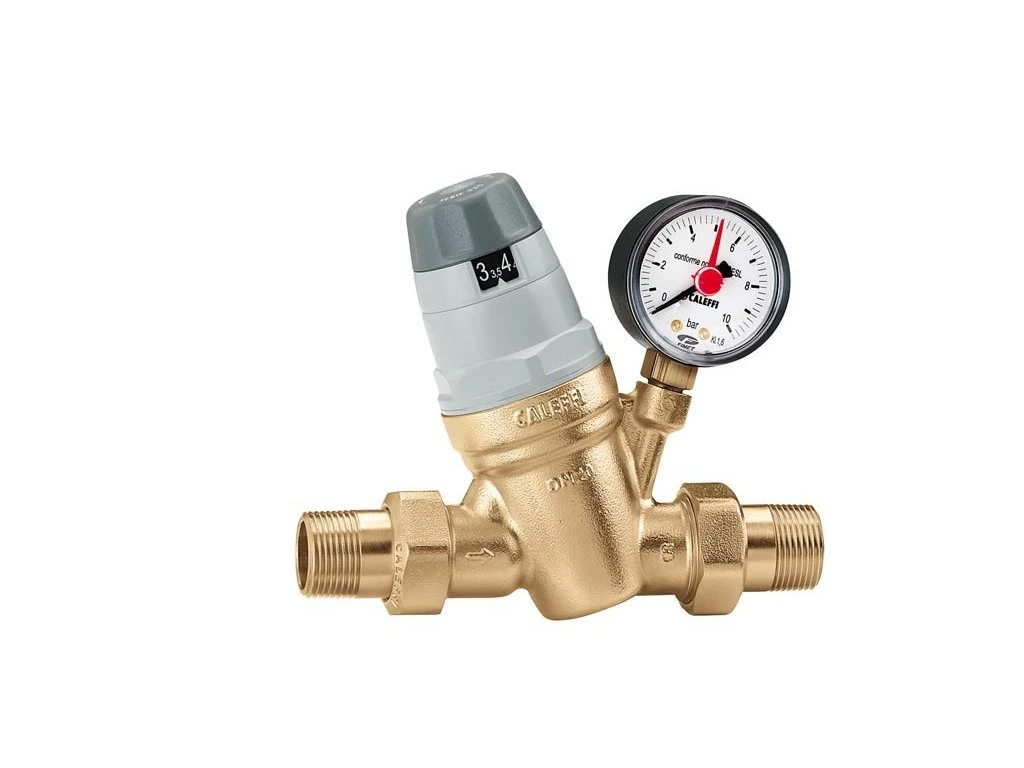 |
Pressure reducing valve 1/2", PN 25bar, working range 1-6 bar, T max. +40 °C, pressure gauge 0-10 bar - if you live on a higher floor or suspect fluctuating/higher water pressure, this valve stabilises the pressure in the supply and extends the lifespan of all hoses and taps in the household. A pressure gauge directly on the valve body allows continuous monitoring. Price from 90.73 EUR. |
When it is high time to replace a hose
Most manufacturers and professional installation companies recommend preventive replacement of connection hoses at an interval corresponding to the type of material described above - i.e. rubber every 3 to 5 years, braided stainless steel every 5 to 8 years, and all-stainless-steel corrugated every 8 to 10 years, regardless of whether the hose visually appears to be in good condition. The reason is that internal degradation of the material (especially with a rubber core) is not visible from the outside, and bursting often happens suddenly.
In addition to the preventive interval, there are also several warning signs that require immediate hose replacement, regardless of its age:
- Visible corrosion or rust on the metal fittings or braid - a sign that the material is losing strength.
- Bulging or a change in shape of the hose at any point - means the inner core is already damaged and the braid is holding the pressure only provisionally.
- Moisture, drops or white limescale deposits around the fittings - the first signal of microscopic seepage, which will grow into a larger leak over time.
- Cracks in the rubber sheath on hoses without a stainless steel braid - visible especially when the hose is bent slightly.
- A hose older than 10 years regardless of type and visual condition - at this age no ordinary type of hose guarantees reliable operation any longer.
- The hose was part of the original construction or purchase of the property and you do not know exactly when it was installed - in that case it is safer to replace it preventively rather than wait for a failure.
Practical experience from installations shows that it is most often the original hoses from when the flat or house was built that fail - hoses that no one has replaced since the final building inspection. In many cases these are the cheapest rubber type without a braid, which the construction supplier used as the cheapest possible option. If you cannot say when the hoses in your household were last replaced, that alone is a good reason for an inspection.
Step-by-step installation procedure
Replacing a connection hose is a simple task that most homeowners can manage even without a plumber's help, as long as they follow the correct procedure and do not skimp on preparation:
1. Shut off the water supply
Always close the main shut-off valve in front of the specific appliance (angle valve), and if there is none, the main shut-off valve of the flat or house. Never rely on the assumption that "there's no water flowing there" without physically closing the valve.
2. Release residual pressure
Open the relevant tap or valve on the appliance (for example the mixer tap) to release the residual pressure and water remaining in the hose. Have a cloth or a container ready - a small amount of residual water will always leak out.
3. Unscrew the old hose
Using a suitable wrench (most often 17 or 19 mm depending on the fitting type), unscrew the old hose from both sides - from the shut-off valve and from the appliance. Check the condition of the thread and the seal on both sides.
4. Check and select a replacement
Check the exact thread type (internal/external, 3/8" or 1/2") and the measured distance. If you are not sure of the exact length, rather choose an extendable type or a hose slightly longer than the distance measured in a straight line.
5. Install the new hose with the seal
Check that a rubber seal is present in the fitting (included with most new hoses), screw the hose on by hand until you feel slight resistance, and then tighten with a wrench - approximately a quarter to half a turn beyond hand-tight is enough. Over-tightening damages the thread and the seal and is one of the most common causes of leaking right after installation.
6. Test it
Slowly open the main shut-off valve and check both hose fittings while dry - it is best to wipe them with a dry cloth and wait a few minutes to see whether moisture reappears at the fittings. Only then consider the installation complete.
Common mistakes when choosing and installing
Over years of experience selling and advising in this area, we repeatedly encounter the same mistakes:
- Using PTFE tape or hemp where the hose already has a rubber seal - fittings with a seal do not need additional sealing; sealing material can also cause uneven seating and a leak.
- Over-tightening with a wrench "just to be sure it doesn't leak" - the most common cause of a cracked thread or a damaged seal right during installation.
- Buying a hose without checking the exact thread type - leads to a second trip to the shop or forcing an ill-fitting connection.
- A too-short hose stretched "to the limit" - permanent tension at the fitting shortens the lifespan even for a quality stainless steel type.
- Ignoring high pressure in the supply - if hoses keep bursting repeatedly throughout the household, the cause is often not the quality of the hoses but excessive or fluctuating water pressure, which is better solved by a pressure reducing valve than by yet another hose replacement.
- Leaving the original hoses in place "because they're not leaking yet" - as described above, visual condition is not a reliable indicator of internal material degradation.
Comparison of hose types at a glance
How to choose other accessories when replacing a hose
Replacing a hose is a good opportunity to check the other connecting elements around it too. If you are replacing the hose to a tap, it is worth checking the tap itself - older pillar taps are often a source of small drips right at the point where the hose connects, which can easily be mistaken for a problem with the hose itself.
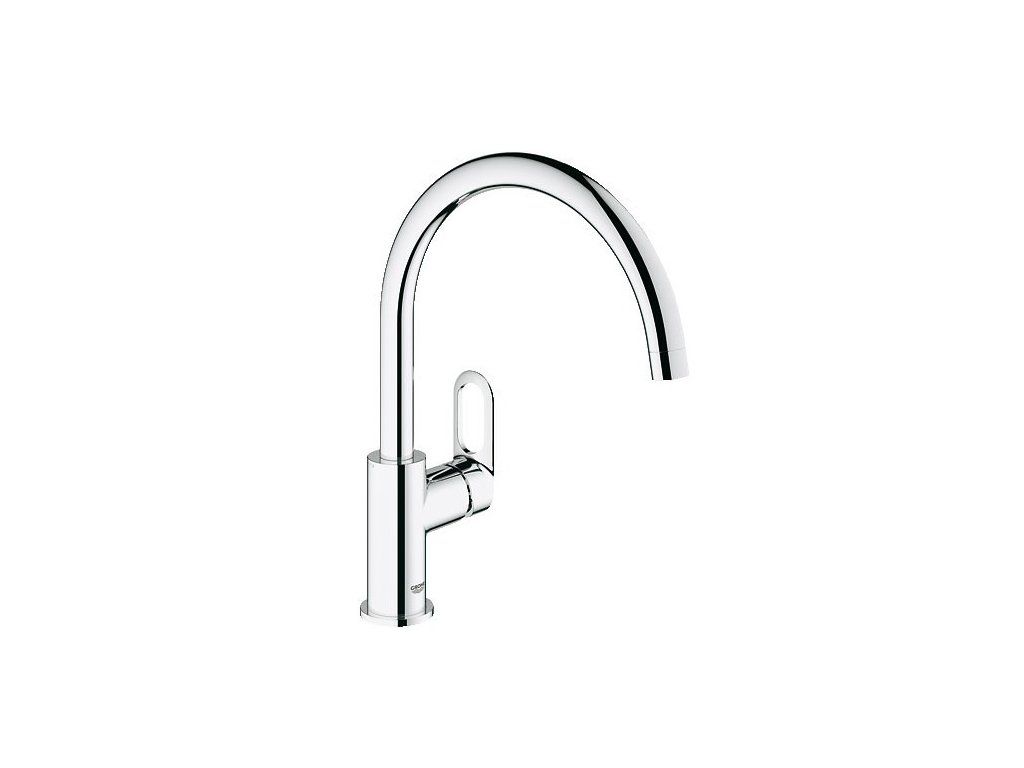 |
946487 pillar-mounted sink tap, LOOP - if while replacing the hose you find that the problem is in the tap itself (worn cartridge, leaking outlet), this pillar-mounted sink tap is a quality replacement with a modern design. Price from 114.75 EUR. |
Likewise, during a bathroom renovation or a larger plumbing replacement, it is worth checking the traps too - like hoses, traps also have rubber seals that lose elasticity over time and cause leaking right at the joint.
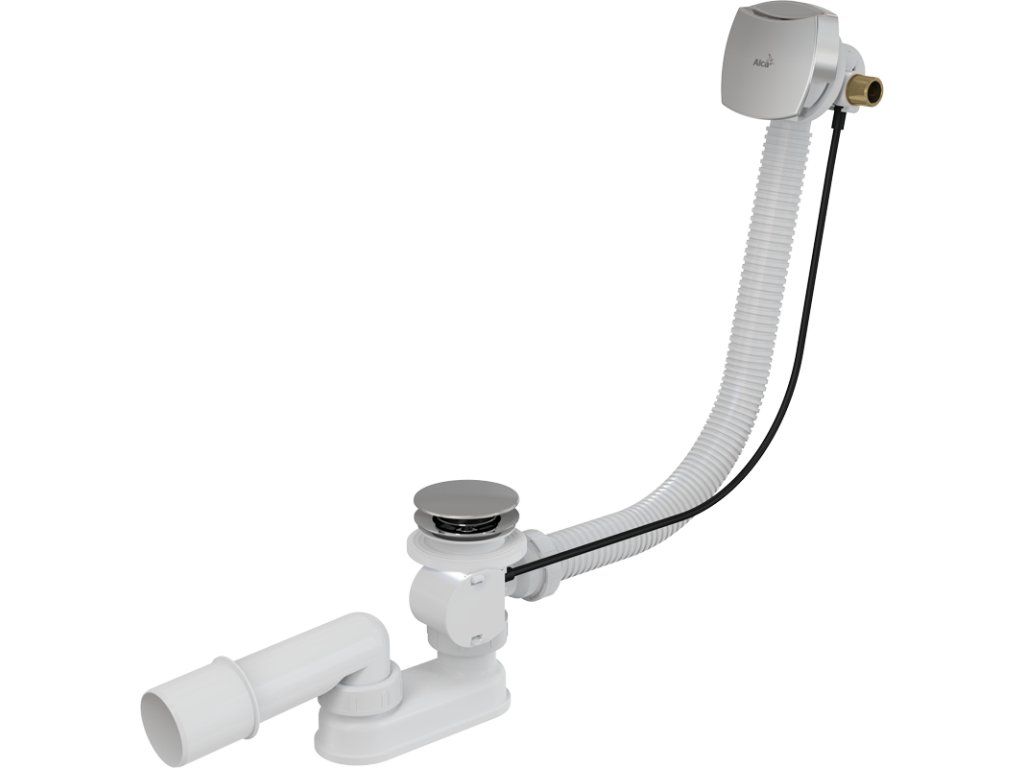 |
Bath trap, automatic, with filling overflow, chrome - a practical addition for a more comprehensive replacement of bathtub plumbing fittings, with automatic outlet control and overflow. Price from 102.08 EUR. |
Summary - what not to forget
A stainless steel connection hose is not a place where it pays to save on the cheapest option - the price difference between a rubber hose and a braided stainless steel hose is usually only a few euros, while the difference in the risk of flooding your home is fundamental. When choosing, always measure the exact distance and check the thread type directly on the old hose; when installing, do not over-tighten with a wrench, and if you suspect high or fluctuating pressure in the supply, consider installing a pressure reducing valve. And above all - follow the preventive replacement interval according to the material type, even if the hose visually looks completely fine. That is precisely when it "isn't leaking yet" that is the best time to check and possibly replace it, before the problem has a chance to show itself for real.
Frequently asked questions
How often should I replace connection hoses in the household?
The recommended interval depends on the material type: rubber hoses every 3 to 5 years, braided stainless steel every 5 to 8 years, all-stainless-steel corrugated every 8 to 10 years. Regardless of type, a hose older than 10 years should always be replaced, even if it looks fine.
Can you tell that a hose is about to burst?
Not always - and that is precisely the biggest risk. Some signs, such as corrosion on the fittings, bulging of the hose, moisture or limescale deposits around the joint, can be spotted in advance. However, internal degradation of the rubber core is often not visible from the outside, and bursting can occur suddenly, which is why it is recommended to follow the preventive replacement interval.
Is there a difference between a hose for cold and hot water?
Yes, a hose intended for hot water or for connecting to a water heater/boiler must be rated for a higher operating temperature. With repeated exposure to temperatures above approximately 60 °C, an ordinary rubber core degrades faster, which is why an all-stainless-steel type without a rubber core is explicitly recommended in these locations.
Can I replace the hose myself, or do I need a plumber?
Replacing a connection hose can usually be handled even by a layperson with no previous experience - simply shut off the water supply, unscrew the old hose with a suitable wrench, check the thread type and length, install the new hose with the seal, and after turning the water back on, check with a dry cloth to see whether moisture appears anywhere. If in doubt, or with a more complicated connection (for example on a boiler), it is advisable to call in a professional.
Why do my hoses keep bursting repeatedly, even though I buy quality stainless steel pieces?
If the problem repeats itself in several places in the household despite quality hoses, the most common cause is excessive or strongly fluctuating water pressure in the supply. In that case, do not solve the problem with yet another hose replacement, but consider installing a pressure reducing valve with a pressure gauge, which will stabilise the pressure throughout the supply at a safe value.
What size hose do I need to connect a washing machine?
The supply hose to a washing machine almost always has a 3/4" thread, while taps and toilet cisterns commonly use 3/8" or 1/2". Before buying, always unscrew the original hose (or check the type of outlet on the appliance) and compare the exact thread type and diameter directly on site.
Related topics
- How to choose bathroom taps
- Installing a bathroom tap - a guide
- Most common tap problems and how to solve them
- Bathroom fixtures and tap maintenance
Back to the main category: Bathroom, sanitary fixtures, taps
Have a question about this topic?
Not sure what to decide, or dealing with a specific situation in your home? Write to us - we're happy to help.