
Hand and Towel Dryers for the Bathroom
Hand and Towel Dryers for the Bathroom
The bathroom is the room where moisture forms fastest and lingers longest – after showering, bathing or washing hands, the air and textiles stay soaked with water for hours after we've left the room. That's exactly why towel dryers (often also called ladder radiators, bathroom ladders or electric towel dryers) have become a common part of the modern bathroom – not just as a supplementary heat source, but above all as a practical solution for drying textiles and dehumidifying the space. In this article we'll look at what types of dryers exist, how to choose the right output, what to watch out for when installing and connecting to water or electricity, and which additional components you're likely to need during installation.
Why Have a Towel Dryer in the Bathroom
An ordinary towel hook only solves where to put the towel – not how quickly and hygienically it dries. A damp towel hanging on a hook or draped over the edge of the tub dries slowly, often 8 to 12 hours, and during that time it's an ideal environment for bacteria and mold to grow. A bathroom towel dryer, on the other hand, keeps the surface warm (typically 40 to 60 °C), cutting drying time to 1 to 3 hours while continuously removing moisture from the whole room. A side effect that's often appreciated is also slightly warming the bathroom during transitional months, when the main heating isn't yet switched on but the morning bathroom tends to be unpleasantly cold.
From experience, we know that the most common reason a customer buys a dryer later (not right at the renovation) is exactly a recurring problem with moisture and odor from towels, or condensation on the walls after showering. If you're planning a bathroom renovation from scratch, we clearly recommend thinking about a towel dryer already at the piping design stage – running additional electricity or water to the wall later is always more complicated and expensive than during the initial construction.
Types of Towel Dryers
On the market you'll basically encounter three categories of dryers, which differ in the heating method, operating costs and installation requirements.
1. Electric Towel Dryers
An electric dryer is a standalone unit with its own electric coil or heating rod, connected directly to an outlet or a fixed electrical circuit. The advantage is independence from the house's heating system – it works even outside the heating season, meaning even in summer, when it's most useful (drying swimwear, towels after bathing). Most models have a built-in thermostat and timer, so it can be set for example to 1 – 2 hours in the morning and evening without running needlessly all day.
The disadvantage is a higher operating cost per kWh compared to heat from a boiler, if you're heating anyway, and the need for a safe electrical supply near the dryer that meets the standards for damp spaces (more below in the section on safety zones).
2. Water (Hydronic) Dryers Connected to the Heating System
A water towel dryer is essentially a specially shaped radiator (a ladder heat exchanger) connected into the same circuit as the other radiators in the apartment or house. The heat transfer medium (water from the boiler or heat pump) flows through the ladder and heats it. The biggest advantage is practically zero additional operating cost during the heating season – you're producing the heat anyway, the dryer just uses part of that energy. The disadvantage is that outside the heating season (summer), the dryer doesn't heat without further intervention, because there's no hot water in the circuit.
When installing a water dryer, correct connection to the supply is key – including shut-off valves and possibly a pressure reducing valve too, if the pressure in the heating circuit is higher than what the dryer unit is rated for. This is exactly where it's worth reaching for a proven component, for example:
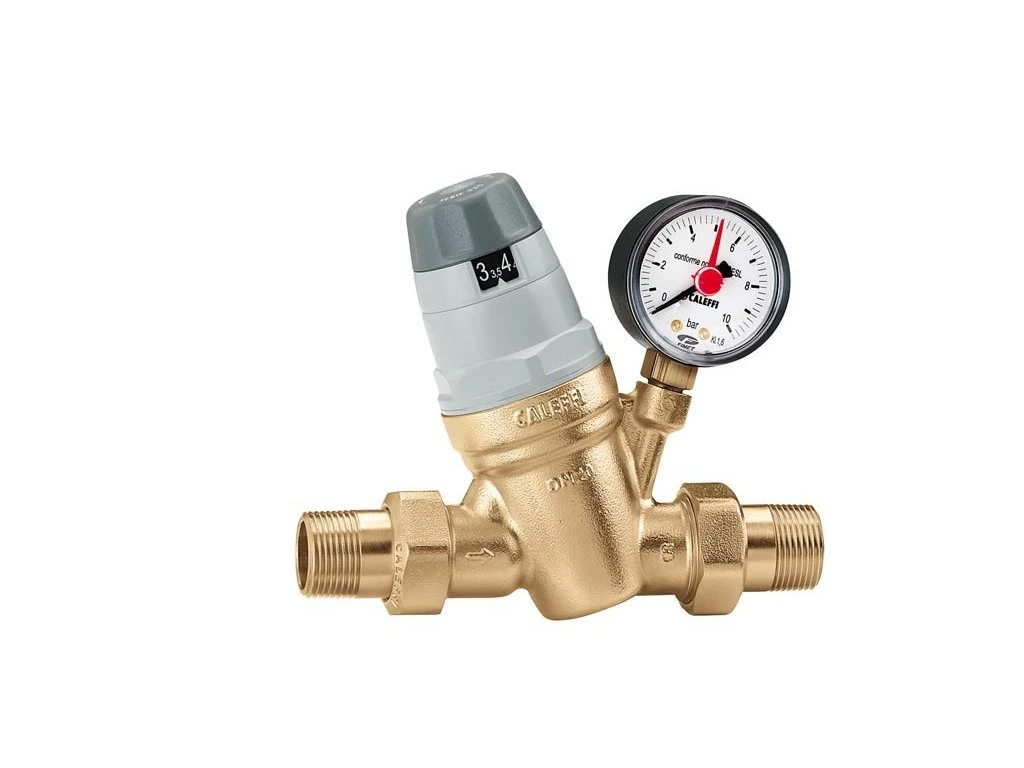 |
Pressure reducing valve 1/2", PN 25bar, working range 1-6 bar, T max.+40 °C, pressure gauge 0-10 bar - when connecting a water towel dryer to the heating circuit or domestic hot water supply, this helps keep pressure within the safe 1 – 6 bar range, extending the lifespan of the unit and its seals. The built-in 0 – 10 bar pressure gauge lets you monitor the actual pressure on an ongoing basis without any other measuring device. Price from 90.73 EUR. |
3. Combined Dryers
A combined dryer joins both previous principles – the unit is connected to the heating circuit, but also contains an inserted electric heating rod. This means it works as a water dryer during the heating season (cheap operation) and as an electric dryer outside the season (independence from heating). It's the most universal, but also the most expensive solution – the price of the electric rod and its installation is added to the price of the unit.
Below is a simplified comparison of the three types by the most commonly tracked criteria.
How to Choose the Right Output
For both electric and combined dryers, the key parameter is output in watts (W). A unit that's too weak won't dry towels properly or noticeably warm the air, while one that's too strong will overpay both on purchase price and operation. As a rough guide, you can go by the bathroom's floor area and the number of towels you want to dry at once:
- Small bathroom / toilet (up to 4 m²), 1 – 2 towels: an output of approximately 150 – 300 W is sufficient.
- Medium bathroom (4 – 8 m²), family of 2 – 3 people: recommended output 300 – 500 W.
- Larger bathroom (over 8 m²) or a household with more towels/robes: 500 – 800 W, or two smaller units.
For water dryers, instead of electrical output, the heat output in W is stated at a specific temperature drop (most often 75/65/20 °C or 55/45/20 °C – meaning the temperature at the inlet, outlet, and in the room). A lower temperature drop (typical for heat pumps and low-temperature boilers) means a lower real output for the same size unit, so when combining with a heat pump we recommend choosing a unit one size category larger than you would with a classic gas boiler.
The following diagram simply illustrates the approximate output by bathroom size, as stated above – it's a tool for an initial estimate, not a substitute for a precise thermal calculation.
Installation – Electrical Connection, Safety Zones and Moisture
The bathroom is among the spaces with a high risk of electric shock precisely because of the combination of water, moisture and conductive surfaces (metal faucets, pipes). That's why electrical installation in a bathroom is subject to stricter rules than in an ordinary living room – it's divided into so-called protection zones (often labeled zone 0, 1 and 2) based on distance from the bathtub, shower or sink, with only equipment carrying the appropriate protection rating (IP code) permitted in each zone.
For an electric towel dryer, this means in practice:
- The unit must have a protection rating of at least IP24 (protection against splashing water from all directions); placement closer to a shower or bathtub requires a higher rating, for example IP44.
- The outlet or fixed supply must be located outside the strictest zones (typically at least 60 cm from the edge of the bathtub/shower enclosure, exact distances set by the electrical installation project), and should be protected by a residual current device (RCD) with a 30 mA trip current.
- The supply cable should run in a protected route (conduit) within the wall, not exposed on the surface, for both mechanical protection and aesthetics.
These rules aren't a formality – they provide real protection against injury, so always entrust the electrical connection for a dryer near water to a qualified electrician with an inspection report, not a DIY installation. This rule applies without exception even when mounting the unit on the wall itself (fixing it with anchor screws) is simple and normally manageable as a DIY job.
Installation – Water Connection
For both water and combined dryers, the unit needs to be connected to the existing heating circuit, most often using angle valves with the option of venting and shutting off (for future servicing without needing to drain the whole system). The typical installation procedure looks like this:
When connecting to the circuit, it's worth using a quality flexible connection hose instead of a rigid copper or steel elbow – the flexible hose allows for minor adjustment of the mismatch between the outlet in the wall and the unit's connection point without needing precise cutting and bending of the pipe. A stainless steel expandable hose for drinking water with metal fittings has proven itself well here, as it also withstands the higher operating pressures and temperatures common in heating circuits:
 |
Stainless steel expandable hose PROFI S for drinking water with stainless steel fittings - a practical choice for connecting a water towel dryer to the supply, since it can be expanded and fine-tuned to the exact length right during installation, saving you from cutting and soldering a copper pipe. The metal fittings withstand the higher temperatures common in a heating circuit better than ordinary plastic versions. Price from 11.07 EUR. |
During a bathroom renovation, where you're also dealing with a bathtub or shower enclosure at the same time, it's worth sorting out the water drainage too – that is, the trap. Even though the trap isn't directly related to the towel dryer's function, in practice it's almost always part of the same order and the same installation job, so we mention it here as well:
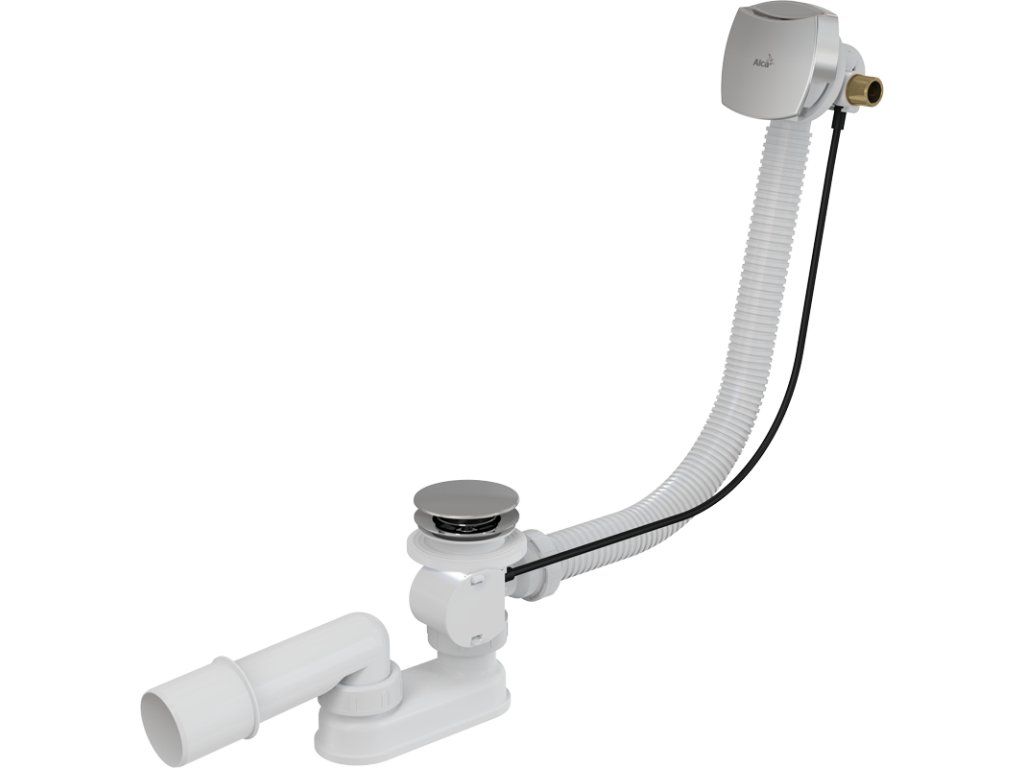 |
Automatic bathtub trap with overflow filling, chrome - if you're dealing with a bathtub during a bathroom renovation, this automatic trap with overflow is a proven choice that installation companies commonly recommend alongside a towel dryer installation in the same phase of work. The chrome finish matches most modern faucets and accessories. Price from 102.08 EUR. |
Operating Costs – What a Dryer Really Costs
For a better picture, let's show a specific calculation for a model electric dryer with an output of 300 W, running on average 4 hours a day (for example 2 hours in the morning and 2 hours in the evening, controlled by a timer):
- Daily consumption: 300 W × 4 h = 1.2 kWh
- At an electricity price of approximately €0.15/kWh: 1.2 kWh × €0.15 ≈ €0.18/day
- For 150 days of heating season (when you'll use the dryer most intensively): approximately €27 for the season
- For the remaining approx. 215 days of the year with more moderate use (e.g. 2 h daily): a further approximately €14 per year
- Estimated total annual operating cost: approximately €41
With a water dryer connected to the heating circuit, the situation is different – during the heating season the additional cost is only a tiny fraction of the total heating cost (heat that would "escape" from the boiler into the house anyway, just some of it is redirected to the ladder), realistically on the order of a few euros extra per season. Outside the season, a purely water dryer without an electric rod doesn't heat at all, while the combined variant runs in electric mode comparable to a purely electric dryer.
The following chart summarizes the estimated annual costs above for three variants – a purely electric dryer (300 W, the scenario stated), a water dryer in season (an estimate of a few euros extra on top of costs already paid for heating), and a combined dryer (the sum of water operation in season and electric operation outside the season).
The values stated are approximate model calculations based on specific input parameters (output, operating time, electricity price) – your actual consumption will vary depending on how often and how long you use the dryer, your electricity rate, and the thermostat setting. However, they serve well for comparing the relative order of costs between the individual types.
Most Common Selection and Installation Mistakes
Undersized output
The most common complaint we encounter in practice is "the dryer heats, but the towel still doesn't dry". This is almost always an undersized output relative to the room's size or the number of textiles dried at once – the solution is either a more powerful unit or adding a second, smaller dryer.
Placement too far from the source of moisture
If the dryer is placed on the opposite side of the room from the shower or bathtub, air circulation around the unit can't keep up with removing damp air from the source, so the dehumidifying effect is weaker than it could be. Ideally the unit should be placed so the natural flow of warm air heads away from the moisture source out of the room, or at least toward a vent.
Underestimated protection rating (IP) for electric models
Choosing a unit with insufficient protection for the given zone isn't just against the standard, it's a real safety risk. If in any doubt about which zone you're placing the unit in, consult an electrician before buying, not after.
Missing shut-off valves on the water connection
If a water dryer is connected to the circuit permanently without shut-off valves, any future service (replacing a seal, venting, replacing the whole unit) will require draining the entire heating system. Investing in quality angle valves with the option to shut off will always pay for itself the first time servicing is needed.
Underestimated circuit pressure
Especially in apartment buildings with their own boiler room or heat exchanger station, the pressure in the heating circuit can be higher than what a standard dryer unit is rated for. In that case a pressure reducing valve is appropriate, reducing pressure to a safe value before it enters the dryer unit.
Towel Dryer Maintenance
Maintenance is relatively undemanding for both types, but differs in the details:
- Electric dryers: regularly (at least once a year) check the condition of the supply cable and plug, or have the appliance inspected. Clean the surface with a soft cloth, never with abrasive agents, which could damage the surface finish (chrome, white lacquer).
- Water dryers: once a year, ideally at the start of the heating season, check the venting of the unit (an air bubble in the upper part of the ladder shows up as a cold spot despite the rest of the unit being warm). Also check the tightness of the joints around the valves and the connection hose.
- Both types: keep the area around the unit free of obstructions (don't hang too many layers of textiles on it at once, which block air circulation), and regularly wipe off dust, which can bake onto the warm surface.
Summary – Which Type to Choose
If you use the bathroom intensively year-round including summer and want independence from the heating season, an electric dryer is the simpler and cheaper choice to buy, with higher, but still reasonable, operating costs. If you already have or plan hot-water heating and want the cheapest operation during the season, a water dryer connected to the circuit is the more economical choice, but without function outside the season. A combined dryer is a compromise for those who want a warm ladder year-round regardless of whether they're currently heating – at the cost of a higher purchase investment and a more demanding installation with two connections.
Frequently Asked Questions
Can I install an electric towel dryer myself?
Simply mounting the unit on the wall (anchor screws, wall plugs) can be handled by a skilled DIYer. The electrical connection to a supply near water, however, should always be done by a qualified electrician, who will ensure compliance with safety zones and standards for damp spaces – this is a direct risk of electric shock in the case of faulty installation.
Can a water towel dryer be used in summer too?
A purely water dryer without an electric insert doesn't heat outside the heating season, because there's no hot water in the circuit. The solution is either to buy a combined dryer with an inserted electric rod, or to add a separate small electric dryer just for the summer months.
What output dryer do I need for an ordinary apartment bathroom?
For an ordinary bathroom with a floor area of 4 – 8 m² and a household of 2 – 3 people, an output of 300 – 500 W is roughly sufficient. A more precise calculation also takes into account the number of towels dried simultaneously and whether the dryer should also serve as a supplementary heat source.
Is a pressure reducing valve needed for every water dryer?
Not always – it depends on the actual pressure in your heating circuit and the maximum pressure the dryer unit is rated for (stated in the manufacturer's technical documentation). If the circuit pressure is at the upper limit or above the unit's range, a reducing valve is appropriate – otherwise it's not necessary.
How often does a water towel dryer need venting?
It's recommended to check at least once a year, ideally at the start of the heating season, and always after any intervention in the heating system (e.g. topping up water, replacing another radiator), since that's when air most often gets into the circuit.
Is a combined dryer worth it if I already have hot-water heating?
If a warm ladder just during the heating season is enough for you, a water dryer is the cheaper and simpler choice. A combined dryer is worth it especially when you want the same comfort (a warm, dry towel) in summer too, without needing to buy a separate electric unit.
Related Topics
- How to Choose a Bathroom Faucet
- Sinks, Bathtubs and Shower Enclosures - How to Choose
- How to Install a Bathroom Faucet - Guide
- Bathroom Fixture and Faucet Maintenance
You'll find the complete range of bathroom equipment in the main category Bathroom, Fixtures, Faucets.
Have a question on this topic?
Not sure what to decide or dealing with a specific situation at home? Write to us - we're happy to help.