
Comparison of Bathroom Faucet Brands
Comparison of Bathroom Faucet Brands
When a customer comes to choose a bathroom faucet, they usually first ask about price and color (chrome, matte black, or brushed brass). Only in the second step do they get to the question that actually determines whether they'll be happy with the faucet five years from now - namely, what material the body is made of, what cartridge is inside, and what the real thickness of the surface finish is. This article is a practical guide to navigating the range of bathroom faucets, what to ask the seller, and why it's worth investing a few dozen euros more if you're installing a faucet in a regularly used bathroom in a family house or apartment.
We won't pretend there's one universally "best" brand - the market is broad and you'll find both quality and less quality products across all price levels. Instead of a brand ranking, this text breaks down the criteria by which quality can actually be assessed, and adds specific products from our range where it's natural and useful.
Why It Matters at All Which Faucet You Choose
A bathroom faucet is one of the few fixtures in a household used literally several times a day, year after year without a break, and at the same time it's in direct contact with water containing calcium, chlorine and various minerals depending on local water hardness. The combination of mechanical stress (opening, closing, switching direction) and chemical stress (deposits, corrosion) is why component quality shows up over time far more noticeably than, say, in a kitchen sink faucet, which is used less intensively.
In practice it looks like this: a cheap faucet with a thin chrome layer and a poor-quality cartridge can work flawlessly for the first year, maybe two. Then dripping appears that can't be fixed by tightening, because the cause isn't a loose joint but a worn ceramic or rubber insert inside the lever. Next comes replacing the cartridge (if it's even available as a spare part) or replacing the whole faucet outright. A better-quality faucet with a thicker plated layer and a certified cartridge can handle 10 or even 15 years of operation without problems, with more opening cycles than you'd expect.
Price Segments on the Market - Where's the Reasonable Price/Performance Ratio
Bathroom faucets available on the Slovak market can be divided into roughly three price bands. These figures are based on typical retail prices for medium-sized deck-mounted basin faucets (excluding shower sets and design exceptions with premium finishes like brushed copper):
- Economy class, approx. €25 - 60: thinner chrome layer (often under 10 micrometers), simpler ceramic cartridge, shorter warranty (usually 2 years). Suitable for less-used spaces - a rental studio, a guest bathroom at a cottage, where the faucet is used sporadically.
- Mid class, approx. €60 - 130: thicker surface finish, better-quality ceramic cartridge with a longer warranty (typically 5 years), often also the option to order a replacement cartridge separately. This is the band we recommend for a regularly used family bathroom.
- Premium class, €130 and up: branded cartridges with a high number of tested cycles, thick scratch-resistant surface finish, 5 - 10 year warranty, often also special finishes (matte black, brushed brass, nickel) with fingerprint resistance.
Below is a graphic comparison of these three bands - with exactly the price ranges stated above.
Faucet Body Material - Brass Remains the Standard
Practically all quality bathroom faucets have a body made of brass (a copper and zinc alloy), which is subsequently plated with chrome, nickel or another surface finish. Brass is a long-proven material - it's corrosion-resistant, machines well and withstands pressure changes in the water system. The problem arises when a manufacturer, for cost reasons, uses an alloy with a low proportion of brass or even a zinc die-cast (zamak) instead of full-value brass. Such a body is more brittle, can crack over time under a larger pressure surge (for example when water is shut off abruptly in a system without a pressure reducing valve), and withstands mechanical stress during installation worse too.
As a layperson you can't tell at first glance - visually, even a chrome-plated zamak faucet looks just as glossy as a brass one. The telltale sign is weight (a brass body is noticeably heavier) and the product's technical sheet, which should explicitly state the body's composition. When buying online, it's therefore sensible to check the product description or ask directly - a reputable seller can confirm this information for you.
Why Pressure in the Water System Matters for Faucet Lifespan Too
A related point often forgotten when choosing a faucet: the quality of the faucet alone won't help if the water pressure in the system is permanently too high (common especially in high-rise buildings or when connected to the public water supply without regulation). High and fluctuating pressure accelerates cartridge wear, causes water hammer, and in an extreme case can damage even a quality faucet body. If you're not sure of the pressure in your system, it's worth investing in a pressure reducing valve, which stabilizes the pressure at a safe value and extends the lifespan of all faucets and appliances connected to the system.
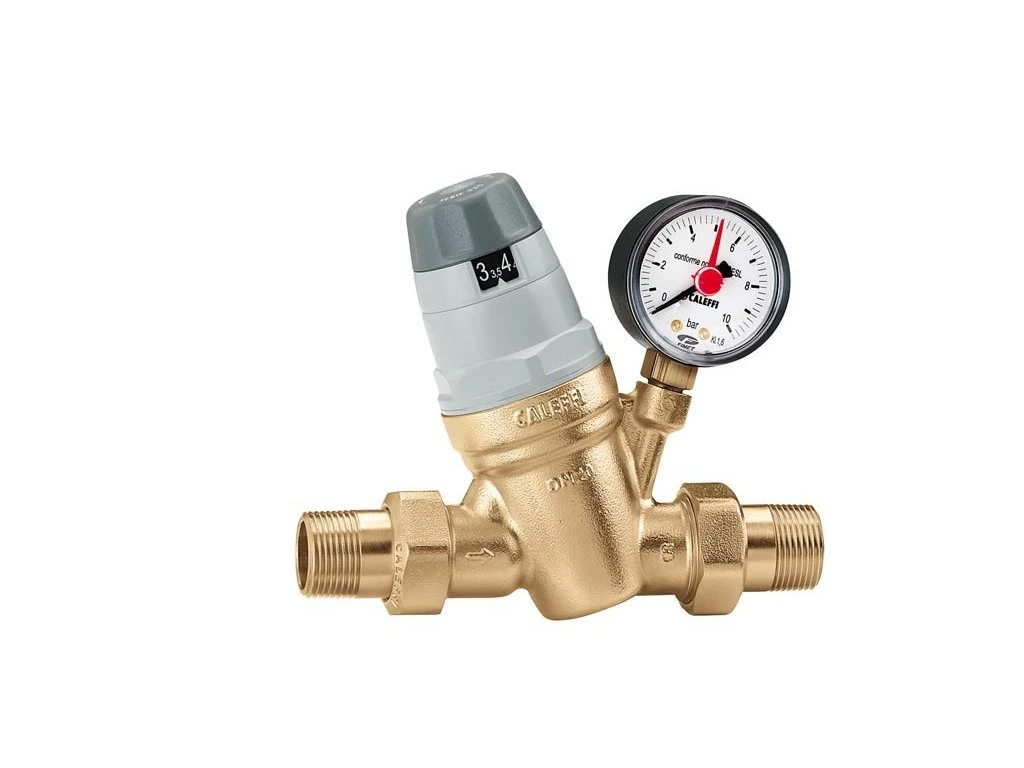 |
Pressure reducing valve 1/2", PN 25bar, working range 1-6 bar, T max.+40 °C, pressure gauge 0-10 bar - if you have pressure above 6 bar in your water system, this valve regulates it to a safe value, protecting both the cartridge and the body of every new faucet from premature wear. A pressure gauge is included, so you can check the pressure at any time. Price from 90.73 EUR. |
The Cartridge - the Heart of the Faucet That Determines Its Lifespan
Most modern lever bathroom faucets use a ceramic cartridge - two ceramic discs with precisely machined openings that move against each other by rotating or sliding, regulating both water flow and temperature. The quality of machining on these discs directly determines how long the faucet will seal without dripping and how easily the lever will operate.
Cheaper solutions with rubber or silicone seals instead of ceramics can still be found on the market - especially in very cheap products or older types of deck-mounted faucets with two separate taps. These seals are cheaper to produce, but have a significantly shorter lifespan, because rubber loses elasticity over time, hardens and cracks.
Here's an approximate lifespan comparison (number of opening cycles a cartridge withstands without failure, according to values commonly stated by cartridge manufacturers):
For an ordinary household of two to four people, 500,000 cycles represents in practice a lifespan of approximately 20 - 25 years, while 100,000 cycles with a rubber seal means a real failure after just 3 - 5 years of intensive use. Yet the price difference between these solutions for a single faucet is often only 20 - 30 euros - from the perspective of total cost of ownership (how much the faucet will cost you over its entire lifespan, including any repairs), choosing the better cartridge is therefore almost always the more advantageous choice.
Surface Finish - Chrome, Matte Black, Brushed Brass
Classic glossy chrome remains the best-selling surface finish because it's universal, easy to maintain and withstands more intensive cleaning. The thickness of the chrome layer on quality faucets is around 15 - 25 micrometers, while on cheaper products it can be less than 10 micrometers - this shows up mainly as a faster loss of shine and susceptibility to minor scratches.
Trendy finishes like matte black, brushed brass or brushed nickel have become increasingly popular in recent years, especially for bathroom renovations in a modern or industrial style. It's important to point out one practice that matters for an ordinary household here: matte and colored finishes are more sensitive to fingerprints and limescale, which stands out more on a dark background. If you have children at home or a household that's cleaned often, expect that a matte black faucet needs wiping with a soft cloth more often than classic glossy chrome.
Control Type - Single-Lever, Two-Handle or Thermostatic Faucet
When choosing a faucet for a specific space, also consider the control type, because it significantly affects both comfort and safety of use:
- Single-lever faucet - the most common type, one lever regulates both flow and temperature. Quick and intuitive control, suitable for almost any bathroom.
- Two-handle faucet (separate tap for cold and hot water) - retro look, popular for renovations in an old-bathroom style, but slower to set the desired temperature.
- Thermostatic faucet - maintains the set temperature automatically regardless of pressure fluctuations in the system (for example when someone in the apartment simultaneously starts a washing machine). Recommended especially for showers and bathtubs in households with small children or seniors, where protection against scalding is important.
Step-by-Step Procedure for Choosing a Faucet
Instead of comparing dozens of specific models, we recommend following a simple procedure that takes into account the space, budget and long-term satisfaction:
In practice this means: for a basin in a regularly used bathroom we choose a single-lever faucet with a medium-weight brass body, a ceramic cartridge with at least a 5-year warranty, in classic chrome (unless you have an aesthetic reason for a different finish) and a budget in the €60 - 130 band. For a shower with small children we'd rather consider a thermostatic faucet even at the cost of a higher investment. For a guest toilet or cottage, where use is sporadic, the economy class is fully sufficient.
Installation and Accessories - What Not to Forget
Even the highest-quality faucet can have problems if installation is neglected. The two most common mistakes we encounter in practice:
Using low-quality or too-short connection hoses. The faucet is connected to the supply via flexible connection hoses, which should be made of stainless steel, not cheaper braided plastic. A stainless steel hose withstands pressure, temperature and time better - a plastic braid cracks over time and is the most common cause of small water leaks under the sink, which an owner often doesn't notice for a long time until a stain starts forming on the cabinet.
 |
Stainless steel expandable hose PROFI S for drinking water with stainless steel fittings - a practical choice when replacing a faucet, when the exact distance to the shut-off isn't certain. The expandable construction adjusts from 50 to 100 cm, and the stainless steel fittings are more durable than an ordinary plastic braid. Price from 11.07 EUR. |
Neglecting the drain and flushing the system. With bathtub faucets that include filling, it's worth paying attention to the quality of the trap too - a cheap or badly adjusted trap can cause water to drain out of the tub on its own or, conversely, insufficient drainage, which with an automatic overflow gives the impression that the problem is with the faucet, even though the cause lies elsewhere.
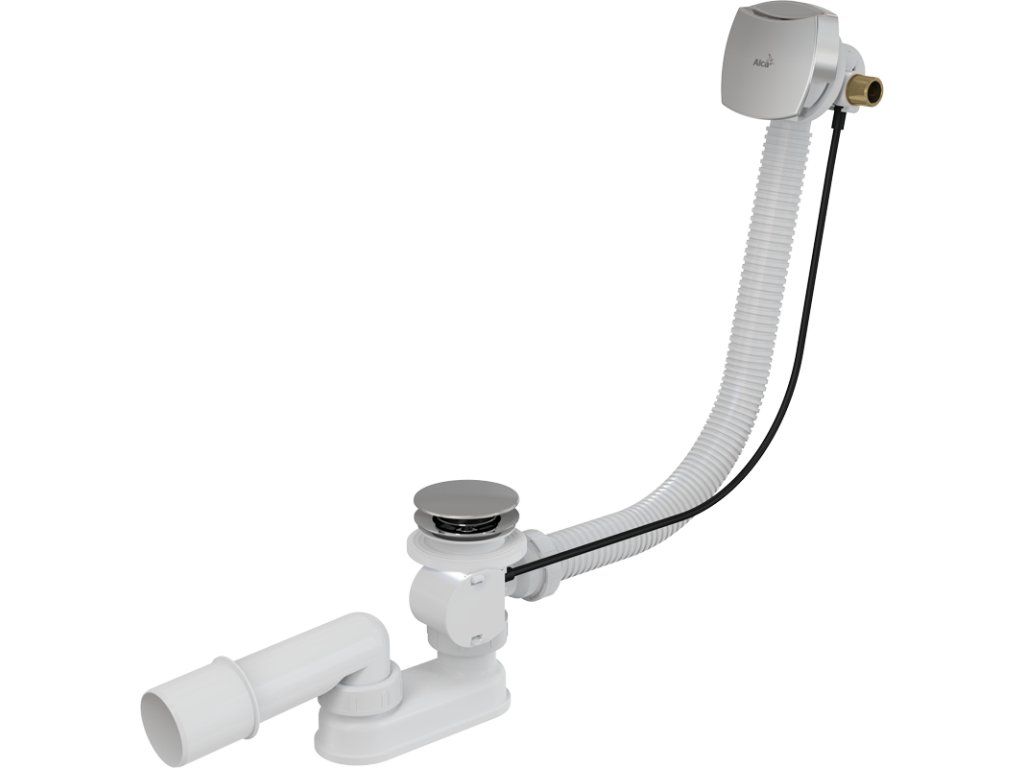 |
Automatic bathtub trap with overflow filling, chrome - a reliable automatic trap, which we recommend replacing at the same time as a bathtub faucet to avoid having to needlessly take the tiling apart again later. Price from 102.08 EUR. |
Warranty as an Indicator of the Manufacturer's Trust in Its Own Product
Warranty length isn't just a marketing number - it's also a signal of how much the manufacturer itself believes its faucet will last. A shorter warranty usually corresponds to cheaper components (see the cartridge chapter above), while a longer warranty suggests the manufacturer expects minimal failure over that period.
When making a warranty claim, it's important to have proof of purchase and, in some cases, proof of professional installation too (especially for thermostatic faucets, where the manufacturer may require installation by a plumber). We therefore recommend keeping the invoice from the e-shop together with the installation report, if you receive one from the installer.
Aesthetic Coordination - a Faucet Isn't an Isolated Bathroom Element
A faucet is bought once, but used daily alongside other bathroom elements - the sink, tub or shower enclosure, the toilet seat, and accessories like a towel dryer. It's therefore worth thinking about the choice in the context of the whole space, not in isolation. The same surface finish across the faucet, trap and other metal elements (holders, dryer) looks noticeably higher-quality in a finished bathroom than a random combination of chrome, nickel and stainless steel side by side.
Interestingly, some manufacturers offer unified design lines of faucets spanning both the kitchen and bathroom - the same lever shape and the same surface finish can be bought as both a kitchen sink faucet and a bathroom basin faucet, which you'll appreciate especially in open floor plans, where the kitchen and bathroom/toilet are in direct visual continuity.
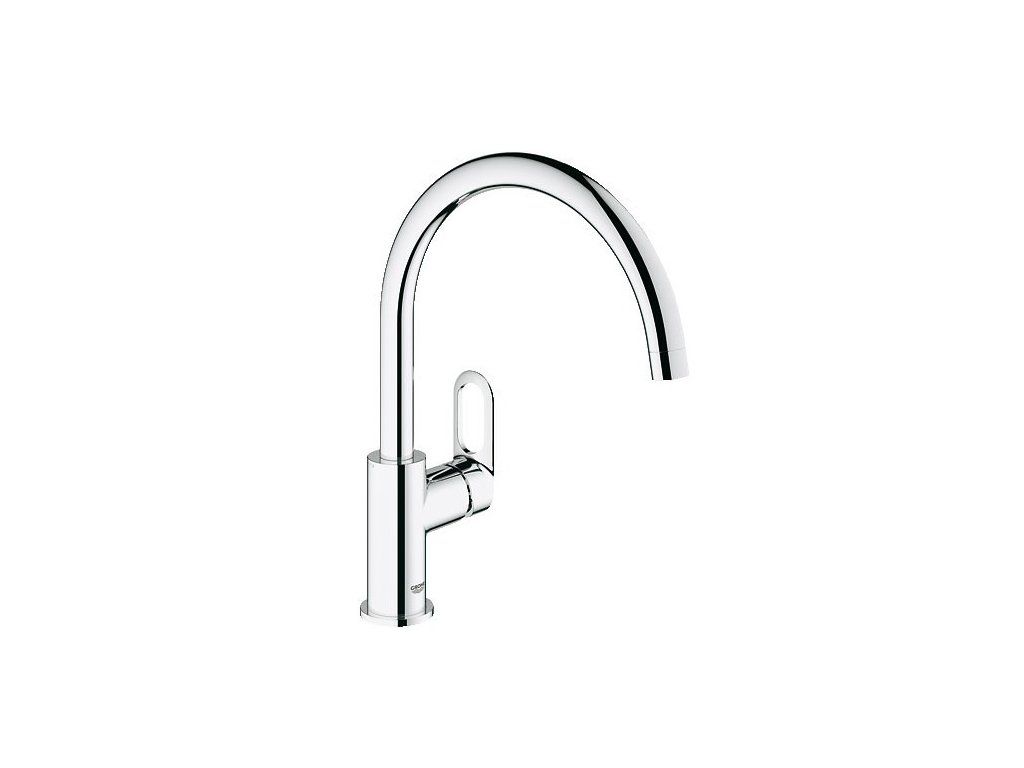 |
946487 deck-mounted sink faucet, LOOP - an example of a design line that shows the principle of a unified look across the household; a similar lever shape and surface finish can also be matched with a bathroom faucet from the same line if you're doing a complete renovation. Price from €114.75. |
Most Common Mistakes When Choosing a Bathroom Faucet
Based on experience with customer inquiries and common warranty claims in the field, it's worth highlighting a few recurring mistakes:
- Choosing based on photo alone, without verifying the body material. Visually, a cheap and a quality faucet are often indistinguishable - the difference only shows up after months of use.
- Underestimating pressure in the water system. Even an expensive faucet will have a shortened lifespan if exposed long-term to high or fluctuating pressure without regulation.
- Buying a thermostatic faucet without consulting an installer. Some types require specific connection conditions (for example a minimum pressure difference between the hot and cold branches), otherwise they won't function precisely.
- Underestimating connection hoses when replacing. A new quality faucet is often connected using old, worn plastic hoses "because they still hold" - which is the most common cause of a water leak shortly after replacement.
- Choosing a dark matte finish without considering maintenance demands. The striking look of a matte black faucet requires more frequent wiping, otherwise fingerprints and limescale are more visible on it than on chrome.
Maintenance That Extends the Lifespan of Any Faucet
Regardless of which brand or price class you choose, regular simple maintenance can extend a faucet's lifespan by years:
- Regularly (at least every 2-3 months) unscrew and rinse the aerator (the mesh on the outlet) - limescale deposits in the aerator reduce flow and increase the pressure the cartridge is exposed to.
- Use only a soft cloth and non-aggressive cleaning agents on the surface - products containing acids or abrasive sponges damage even a quality surface finish.
- During longer absences (vacation) leave the lever in the middle position, not turned exclusively to the hot or cold side - this reduces one-sided stress on the cartridge.
- At the first signs of dripping, address the problem immediately - a dripping faucet not only wastes water, but also accelerates wear on the cartridge itself, since it's under continuous pressure.
Summary - What to Really Look At
If you take away one thing from this article, let it be this order of priorities when choosing a bathroom faucet: body material (brass yes, zamak preferably not), cartridge type and quality (ceramic with a long warranty), only then surface finish and design. A price in the €60 to €130 range represents a reasonable compromise between quality and cost for an ordinary family bathroom - the lower band is only justified for sporadically used spaces, while the higher band pays off especially for the main bathroom in a family house used by several people daily.
Frequently Asked Questions
Is a more expensive faucet always better quality?
Not automatically - price can also reflect just design, brand or a special finish. Check quality based on specific parameters (body material, cartridge type, warranty length), not just the number on the price tag. In practice, however, below a certain threshold (roughly €25-30 for a deck-mounted basin faucet), quality brass and a certified cartridge simply can't be provided economically.
How do I tell if a faucet has a brass body or a cheaper zamak one?
The most reliable way is to check the technical sheet or product description, where the composition should be stated. Weight can also help - a brass body is noticeably heavier than a zamak one of the same size. If unsure, ask the seller directly before buying.
Is a thermostatic faucet worth it even for an ordinary shower without small children?
A thermostatic faucet brings an advantage especially where pressure fluctuations occur (for example several outlets used simultaneously in the household) or where precise, quick temperature regulation matters. For an ordinary shower without increased safety requirements, a quality single-lever faucet is fully sufficient - investing in a thermostat pays off mainly in terms of comfort and safety, not as a necessity.
How long does a quality ceramic cartridge last compared to a rubber seal?
A branded ceramic cartridge typically handles 500,000 or more opening cycles, standard ceramic around 300,000 cycles, while a rubber or silicone seal only around 100,000 cycles. In real time, for an ordinary household, that means a difference between 3-5 years and 20+ years of lifespan.
Do I need to replace the connection hoses too when replacing a faucet?
We recommend it, yes, especially if the old hoses are braided plastic and more than 5-7 years old. A new quality faucet connected to old, slightly cracked hoses is one of the most common causes of a small water leak shortly after replacement - a stainless steel hose is a cheap investment compared to potential damage to a cabinet or floor.
Does a pressure reducing valve protect the faucet itself, or just the supply?
It protects both. High or fluctuating pressure stresses the cartridge in the faucet just as much as other system components (for example a washing machine or a boiler). If the pressure in your system is above 6 bar, a reducing valve is one of the cheapest investments that will extend the lifespan of everything connected to the system, including a new faucet.
Related Topics
- How to Choose a Bathroom Faucet
- How to Install a Bathroom Faucet - Guide
- Common Faucet Problems and How to Fix Them
- Bathroom Fixture and Faucet Maintenance
- Stainless Steel Hoses - How to Choose and When to Replace
You'll find the complete range of bathroom fixtures and faucets in the main category Bathroom, Fixtures, Faucets.
Have a question on this topic?
Not sure what to decide or dealing with a specific situation at home? Write to us - we're happy to help.