
Comparison of Circulation Pump Brands
A circulation pump is the heart of every heating system - it drives heating water from the boiler or heat pump to every radiator or underfloor heating loop and back. Although it is a relatively small device, its brand and type significantly affect reliability, noise level, electricity consumption, and the household's overall operating costs for years to come. In this article we compare the best-selling brands of heating circulation pumps on the Slovak market - Grundfos, DAB, and Wilo - and show how to decide based on real parameters, not just the price tag.
Why the brand of a circulation pump matters at all
A circulation pump runs practically non-stop throughout the entire heating season, i.e. roughly 5 to 7 months in a row, including at night and even when the house is empty. Over a year it can rack up thousands of operating hours - considerably more than most other household appliances. With such usage, the differences between a cheap and a quality pump show up very quickly: in noise (humming transmitted into the building structure), in the reliability of the bearings and seal, in the accuracy of automatic output control based on the circuit's actual demand, and finally in electricity consumption, which for an unregulated pump can climb by hundreds of extra kilowatt-hours per year.
It therefore pays to look not only at the purchase price but also at the energy class (EEI index), spare parts availability, warranty length, and whether the given manufacturer has been selling in Slovakia long enough to have a functioning service network and spare rotors or control units in stock.
Brand market share for circulation pumps
According to our e-shop's long-term sales data for 2024 - 2026, Grundfos holds the largest share of sold heating circulation pumps at approximately 38 %, followed by the Italian manufacturer DAB at approximately 29 % and German Wilo at approximately 18 %. The remaining approximately 15 % is made up of smaller and local brands (for example Sprut, IMP Pumps, Regulus and others), which typically appear in cheaper boiler sets or as a replacement for an original engineering pump.
Grundfos - the best-selling brand in Slovakia
The Danish manufacturer Grundfos has been present on the Slovak market the longest, and its ALPHA and UPS/UPM series pumps are the standard against which other brands are compared. The main advantage is the AUTOADAPT automatic control, which sets the pump itself to the optimal output for the given heating system without any installer intervention, and remarkably quiet operation thanks to the wet-rotor impeller mounted in ceramic bearings. Grundfos also has the widest authorised service network and the longest track record of spare parts availability - some ALPHA models have been sold without any design change for more than ten years, which is a great advantage when it comes to repairs.
The downside is a higher purchase price compared to DAB and Wilo at a comparable output - Grundfos justifies this premium with a longer service life and a lower share of complaints, which in our service statistics have long stayed below 2 % of units sold.
DAB - Italian quality at a reasonable price
The Italian brand DAB is currently the second best-selling brand and has recently been growing the fastest of the three compared manufacturers, mainly thanks to the price/performance ratio of the EVOSTA2 and EVOPLUS series. A specific example is the DAB.EVOSTA2 40-70/180 threaded SET with backup power supply, which combines an electronically controlled pump with automatic switchover to battery power in the event of a power outage - a practical solution especially for households with a boiler that stops working completely without water circulation and electronics during a mains failure.
The higher-output EVOPLUS SMALL series (for example the 60/180 and 80/180 variants) is designed for larger heating circuits with several branches or longer pipe runs, where an ordinary small domestic pump is no longer enough to overcome the pipe's pressure loss. Compared with Grundfos, DAB generally has a simpler control interface (fewer regulation modes), which for the average user is actually an advantage - the setup is clearer and less can go wrong from an incorrect setting.
Wilo - German precision for more demanding systems
German brand Wilo is the third most widespread brand and establishes itself on the Slovak market mainly through the Wilo-Yonos PICO and Wilo-Stratos series, which are often installed not only in family houses but also in larger apartment buildings and smaller boiler rooms. Wilo offers the widest range of control options among the three compared brands (for example switching between constant pressure, proportional pressure and constant speed directly on the pump's display), which is especially appreciated by more experienced installers working with more complex hydraulic schemes with multiple mixing circuits.
For an average household this variability can be unnecessary - if you need a simple and reliable solution for a single heating circuit in a family house, both Grundfos and DAB offer the same comfort at a lower price. Wilo is therefore worth considering mainly for larger or combined systems (for example heating + a large pool, or several zones with different pressure requirements).
Warranty and service life by brand
An important but often overlooked criterion is the warranty length and the realistic expected service life of the pump. Both Grundfos and DAB commonly provide a 24-month warranty on heating circulation pumps, and when the product is registered with the manufacturer or purchased as part of a complete set with a boiler, the warranty can in some cases be extended. The realistic service life of a wet-rotor circulation pump with correct installation and normal heating water quality ranges between 10 and 15 years for all three brands, with the most common cause of premature failure not being the product itself but contaminated or aggressive heating water (deposits, sludge, an incorrectly mixed antifreeze blend), which damages the bearings and rotor regardless of brand.
That is precisely why repairing or replacing a pump is worth combining with checking the quality of the heating water and, if necessary, flushing the system - otherwise even the best-quality pump can wear out prematurely. The service departments of all three brands confirm that the vast majority of complaints in the first two years of operation are related to the condition of the water in the system, not a manufacturing defect.
Other brands on the market
Besides the three main manufacturers, cheaper alternatives such as Sprut, IMP Pumps or various OEM pumps supplied directly by boiler manufacturers as part of complete sets also appear on the Slovak market. These solutions tend to be cheaper upfront, but in practice they often have a shorter warranty (frequently only 12 months compared to the usual 24 - 60 months at Grundfos/DAB/Wilo), poorer spare parts availability, and less precise output control, which ultimately shows up as higher electricity consumption throughout the entire heating season.
Comparison table of the main brands
The following table summarises the most important differences between the three main brands from the perspective of an ordinary household:
| Criterion | Grundfos | DAB | Wilo |
|---|---|---|---|
| Sales share (2024-2026) | ~38 % | ~29 % | ~18 % |
| Typical price level | higher | medium | medium to higher |
| Ease of setup | very simple (AUTOADAPT) | simple | more modes, more demanding |
| Best suited for | ordinary family house | family house, larger circuits | apartment buildings, combined systems |
| Service availability in Slovakia | widest | good | good, mainly in larger towns |
| Energy class (EEI) | ≤ 0.20 | ≤ 0.20 | ≤ 0.20 |
Energy class and real operating costs
All three compared brands today offer electronically controlled circulation pumps with an energy efficiency index (EEI) of 0.20 or lower - this is a mandatory European standard that has, since 2015, essentially pushed old unregulated pumps with one or three fixed speed steps off the market. The difference between an old and a new pump in real electricity consumption is surprisingly large.
An old unregulated pump typically draws a constant approximately 90 W regardless of whether the house currently needs full output or only minimal water circulation. With year-round operation (including summer circulation for domestic hot water heating via a tank) this amounts to 788 kWh per year at 8,760 hours annually. At an average electricity price of €0.20/kWh, that is €157.60 per year just for circulating the heating water.
A modern electronically controlled pump (for example the DAB.EVOSTA2 40-70/180 threaded SET) draws, thanks to automatic output control based on the circuit's actual demand, an average of only around 7 W - that is 61 kWh per year, which at the same electricity price amounts to €12.26 per year. The saving thus reaches €145.34 per year, which at a purchase price of €334.84 means the investment pays for itself in approximately 2.3 years - and that is just from the electricity savings, without accounting for the lower risk of failure and the longer warranty.
How to choose a pump based on the circuit's output
Besides the brand, it is equally important to correctly choose the output series based on the head and flow rate your heating circuit needs. Smaller models, such as the EVOPLUS SMALL 60/180, are designed for a head of up to approximately 6 metres and a flow rate of up to approximately 3.0 m³/h, which covers an ordinary family house with one to two heating circuits. The more powerful EVOPLUS SMALL 80/180 variant has the same maximum head of approximately 6 metres, but thanks to a larger connection diameter it handles a higher flow rate of up to approximately 3.5 m³/h - suitable for houses with longer pipe runs, underfloor heating with multiple loops, or a combination of radiators and underfloor heating at the same time.
The chart below is an approximate, simplified H-Q characteristic curve (head as a function of flow rate) for both mentioned sizes - always check the exact values in the technical data sheet of the specific product.
Simply put: the higher and further to the right the point where the pump's curve intersects with your system's pressure-loss curve, the more powerful a pump you need. If the output is underestimated, the radiators or underfloor heating at the end of the circuit will not heat up fully; if it is oversized, you will pay unnecessarily for higher consumption and flow noise in the pipes.
Return on investment in a quality pump
When deciding between a cheaper and a more expensive model, it pays to calculate the total cost over the service life (typically 10 - 15 years), not just the price on the shelf. Based on the calculation above (old pump €157.60/year in operating cost versus electronic pump €12.26/year plus an upfront investment of €334.84), the investment pays for itself exactly at the moment the cumulative costs of both variants intersect - i.e. after approximately 2.3 years. The following chart shows the cumulative costs of both solutions over time.
After the break-even point, the electronic pump brings a net saving of €145.34 per year compared to the old solution - over ten years of operation this is a difference exceeding €1,400, i.e. several times the upfront investment.
Installation, compatibility and backup power
Most modern circulation pumps for family houses are installed on a standard threaded connection, so replacing an old pump with a new electronic one generally does not require any work on the piping - it is enough to replace the pump body itself, including the seals. When choosing, it is important to check the distance between the flanges (the installation length) so the new pump exactly replaces the old one without modifying the piping.
A special category is sets with a backup power supply, such as the DAB.EVOSTA2 40-70/180 threaded SET with backup power supply - in the event of a power outage, it automatically switches the pump to battery power, so the heating system (especially a gas or electric boiler dependent on water circulation) does not freeze or stop working during a short-term mains failure. This solution is especially valuable in areas with more frequent power outages or with boilers that go into a fault state after losing water circulation and require manual unlocking.
Before installation we recommend bleeding the system and checking the flow direction marked with an arrow on the pump body - an incorrectly oriented pump can significantly reduce its efficiency or cause noise.
Recommended products
 | DAB.EVOSTA2 40-70/180 threaded SET + backup power supply - special offer - an electronically controlled pump with backup power supply that keeps water circulating even during a power outage. An ideal choice for an ordinary family house with one to two circuits. Price from €334.84. |
 | EVOPLUS SMALL 60/180 M electronic circulation pump for small heating and air-conditioning systems - threaded - suitable for medium-sized heating circuits with a head of up to approx. 6 m and a flow rate of up to approx. 3.0 m3/h. Price from €625.40. |
 | EVOPLUS SMALL 80/180 M electronic circulation pump for small heating and air-conditioning systems - threaded - a more powerful variant with a higher flow rate of up to approx. 3.5 m3/h, suitable for houses with longer pipe runs and multiple underfloor heating loops. Price from €704.47. |
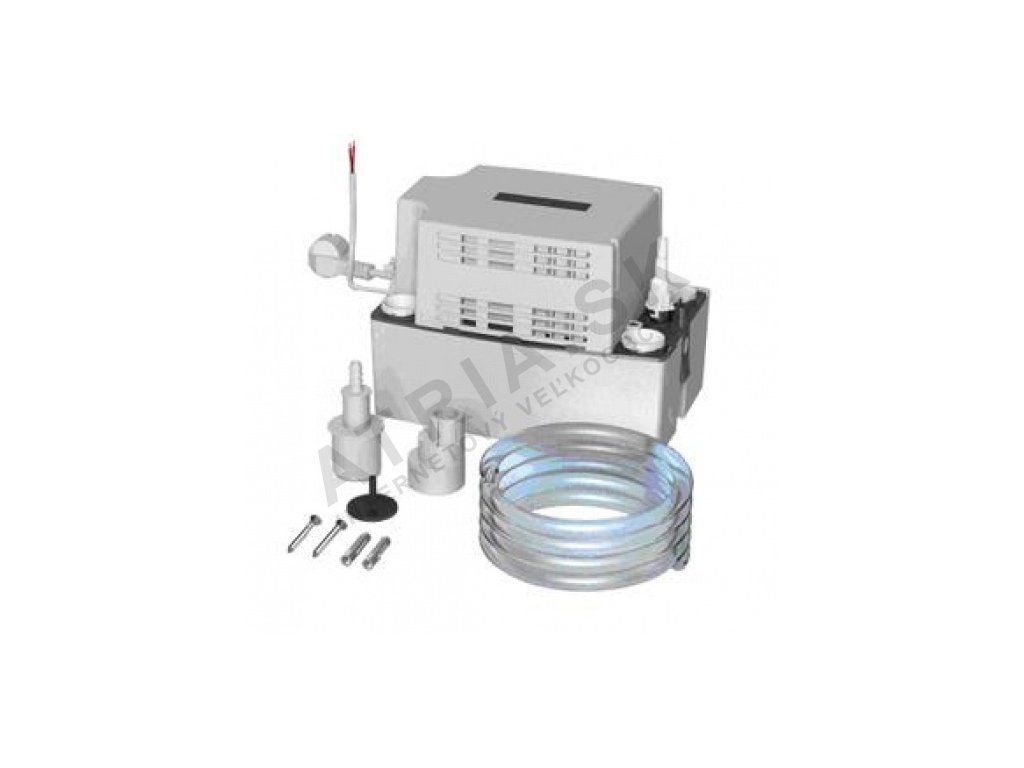 | GRUNDFOS CONLIFT 1 - a compact Grundfos lifting station for removing condensate or waste water from a boiler where gravity drainage is not possible. A practical addition when installing a condensing boiler in a basement. Price from €102.34. |
Frequently asked questions about circulation pumps
Is it worth replacing an old unregulated pump with a new electronic one, even if it still works?
Yes, generally it is. Even a functioning old fixed-speed pump draws several times more electricity than a modern electronically controlled pump. As calculated above, the saving can reach approximately €145 per year, so the investment in a new pump pays for itself in as little as about 2.3 years.
Is Grundfos really so much better that it is worth paying extra?
Grundfos has the longest track record on the market, the widest service network, and a slightly lower share of complaints in our statistics. For an ordinary household with a single circuit, however, DAB is also a fully capable and reliable alternative at a lower price - the difference shows up mainly in long-term operation under more demanding conditions.
How do I find out what pump output I need for my house?
The basic guide is the number and length of heating circuits, the type of heating elements (radiators vs. underfloor heating), and the head needed to overcome the pipe's pressure loss. You will find a detailed procedure in the separate article on choosing pump power and flow rate (link below).
Can a circulation pump be installed by yourself?
When replacing a pump with the same type and identical installation length, it is a simple task that even an experienced layperson can manage, but it is always necessary to first drain or at least reduce the pressure in the given branch of the system and bleed the system after installation. If you are unsure, or if the work involves a boiler still under warranty, we recommend entrusting the installation to a professional company.
What does the EEI energy class mean and why does it matter for a pump?
The energy efficiency index (EEI) expresses how efficiently a pump regulates its output according to the circuit's actual demand instead of constantly running at full power. An EEI value ≤ 0.20 is today's European standard for new pumps and in practice means significantly lower annual electricity consumption compared to old unregulated models.
Does it make sense to buy a pump with a backup power supply?
If your area experiences frequent power outages, or if you have a boiler that goes into a fault state without water circulation, a set with a backup power supply (for example the DAB.EVOSTA2 40-70/180 with backup power supply) can bridge a short-term outage without any impact on heating and without the risk of the system freezing in cold weather.
Related topics
- How to choose a circulation pump for heating
- What pump power and flow rate do I need
- Electronically controlled vs. classic pump
- Installation and replacement of a circulation pump
- Back to the main category - Pumps for heating and water
Do you have a question about choosing a pump?
Can't decide, or dealing with a specific situation in your household? Write to us - we're happy to help.