
FAQ about Circulation Pumps
The circulation pump is one of those heating system components we usually only think about once it stops working - the radiators go cold, the boiler shows a pressure or flow error, or a buzzing sound starts coming from the basement that wasn't there before. In dealing with orders and customer questions, a few topics keep coming up around pumps - lifespan, consumption, noise, choosing the right output, and whether it is worth replacing an old classic pump with an electronically controlled one. In this article we have gathered the most common questions in one place, with concrete figures we can back up, not a vague "it depends".
Why it is worth paying attention to the pump
The circulation pump is the only moving part in the system that runs practically continuously throughout the whole heating season - roughly 4,000 to 5,000 hours a year. The boiler switches on and off as needed, valves open and close, but the pump mostly runs the entire time the system is in operation. This has two consequences, which underlie most of the questions below: first, even a small difference in pump output shows up noticeably in annual electricity consumption, and second, a component that runs thousands of hours a year has a limited lifespan and needs replacing at some point.
In practice we encounter two types of customers. The first is dealing with an acute problem - the pump has stopped running, is humming, or the system isn't heating enough - and needs to choose a replacement quickly. The second is planning ahead, for example during a planned boiler replacement or when modernising an older house, and wants to know whether it makes sense to invest in a better pump even though the old one still technically works. Both groups will find answers below.
What is the difference between a classic and an electronically controlled pump
A classic (also called three-speed, or older generation) circulation pump has a simple asynchronous motor with fixed speed settings - usually three levels, switched manually with a switch directly on the pump body. Regardless of how much heat the system currently needs, the pump keeps running at the same output you set. If it is set too high "just in case", it wastes electricity unnecessarily and often makes noise or causes water to flow through thermostatic heads (an audible "hissing" at the radiators).
An electronically controlled pump (often labelled ECM or "high efficiency") has a synchronous motor with permanent magnets and electronics that continuously measure the pressure differential in the system and adjust the speed to the current demand on their own. As thermostatic heads on radiators gradually close off supply (for example when rooms reach the set temperature), the pump automatically reduces output instead of pushing water through closed valves. This is exactly how, for example, the EVOSTA2 and EVOPLUS ranges from manufacturer DAB, which we carry, work.
The difference between the two types is not just theoretical - it translates directly into electricity consumption, system noise, and how long the pump lasts. Below is a simplified comparison of both types as we see it on real products in our range; we go through concrete consumption and cost figures in the next two chapters.
How much electricity a circulation pump actually consumes
This is a question that almost everyone underestimates unless they set up their system just a few years ago. An old classic pump with a power draw of 80 to 100 W, running approximately 4,500 hours per season (a typical heating season length in Slovakia, October to April with interruptions, plus hot water circulation outside the season), consumes approximately 850 kWh a year. At an electricity price of around 0.20 EUR/kWh, that works out to approximately 170 EUR a year - just to power one pump smaller than two fists.
An electronically controlled pump in the same system runs at a fraction of its output most of the time, because it adapts to actual heat demand - in practice, average power draw during the season is somewhere between 5 and 15 W, rising only briefly during severe frost, towards the upper end of its range. Annual consumption therefore typically runs around 60 to 70 kWh, which at the same electricity price works out to a cost of approximately 13 EUR a year. This difference is not marketing rounding - it is a commonly quoted ratio even in the technical datasheets of manufacturers of class A energy-efficient pumps, which had to meet the European ErP directive in force since 2013 (older pumps without this certification do not meet this standard at all, which is why they are also gradually being phased out of production and sale).
The chart below shows these two values side by side - you can see that the difference in annual consumption is more than tenfold, even though on the outside it is a visually almost identical device that cannot be told apart at first glance in a boiler room.
How much can you really save, and how long until it pays for itself
The figures above show a difference in operating costs of approximately 157 EUR a year (170 EUR minus 13 EUR), representing a saving of around 90% on the consumption of this specific component. A new electronically controlled pump, for example the EVOPLUS SMALL 60/180 M or EVOPLUS SMALL 80/180 M that we carry, costs roughly 620 to 700 EUR including VAT. At first glance this might seem like a lot to pay back, but there is an important point to add: these more powerful models are intended more for larger buildings with higher demands on head and flow, where the investment is assessed in the context of the whole system, not just as a like-for-like swap.
For a typical family house, the more common situation is cheaper - small compact sets with a circulation pump priced around 300 EUR (for example our SET with fitting DAB.EVOSTA2 40-70/180 with backup power, which besides the pump also addresses power outages during the heating season, useful especially for boilers that stop circulating water completely without power). With this investment and a saving of around 150 EUR a year, the payback period works out to less than two heating seasons, after which the pump is pure extra savings - and it is quieter and gentler on the rest of the system's components too (less pressure shock on valves, less bearing wear at lower average speeds).
It is also worth realising that electricity savings are not the only benefit. An electronically controlled pump also reduces system noise (less "hissing" in thermostatic heads), reduces mechanical stress on pipework and fittings, and in most cases extends the lifespan of the whole circulation circuit, because it does not run needlessly at full output when the system does not need it.
How to choose the correct output and head
A common frustration for customers who choose a pump based only on price or on "what they had before" is that the new pump either cannot circulate water sufficiently in a larger house (radiators at the far end stay lukewarm), or, conversely, is needlessly oversized, noisy, and wastes energy. Choosing the right model is based on two values - the required flow rate (how many litres of water per hour need to be circulated, derived from the boiler output and temperature drop) and the head (how much pressure resistance the pump must overcome in the pipework, radiators, and fittings).
For a typical family house up to 150 m² with classic radiators, a pump with a head of up to 4-6 metres is usually sufficient, for example the EVOSTA2 range. For larger buildings, longer pipework, multi-zone systems, or a combination of radiators with underfloor heating, more powerful models like the EVOPLUS SMALL are used, capable of handling higher head and flow. We cover the exact procedure for calculating or at least estimating these values based on floor area and heating type in detail in a separate article on choosing a circulation pump - here we present only a simplified overview of the procedure we recommend following before every purchase.
How long a pump lasts and when to replace it
Classic pumps with standard bearings and seals typically have a lifespan of 8 to 12 years of continuous seasonal operation, while electronically controlled models with more modern bearings and lower average load commonly reach 12 to 15 years or more. However, actual lifespan varies significantly depending on the water quality in the system (hard water or the presence of deposits shortens bearing and rotor life), whether the system was properly vented during installation, and whether the pump was set to run at an unnecessarily high output.
Signs that the end of a pump's lifespan is approaching are usually gradual - first faint humming or vibration appears, then a louder grinding-like noise (typically worn bearings), and finally the pump stops circulating altogether or seizes after an extended summer shutdown (the most common reason for a service call in autumn when the heating is switched on for the first time). If your pump is approaching its tenth year of operation, or is already showing one of these signs, it makes more sense not to plan a simple like-for-like swap, but to consider switching straight to an electronically controlled model - the electricity savings mean the difference in purchase price pays for itself sooner than you might expect with the next regular replacement.
Condensing boilers are a separate topic, as they produce condensate that needs to be drained away from the boiler - if the boiler is positioned lower than the drain, or in a basement without a gravity fall, this is handled with a small condensate lifting pump, for example the GRUNDFOS CONLIFT 1, which is not a heating circuit circulation pump but a separate device for draining condensate or wastewater from below the sewer level. We get this question surprisingly often precisely when dealing with circulation pump problems, because customers sometimes confuse the two types of pump.
Installation, noise, and venting - practical observations
Most complaints about "the new pump is noisy" or "the system isn't heating like it should" are not caused by the pump itself, but by air in the system or an incorrect installation position. A circulation pump is installed with the motor shaft in a horizontal position (not with the terminal box facing downward) - if the pump is installed with the terminal box facing down, condensate can leak into the electronics, shortening its lifespan. Before first start-up, the system needs to be thoroughly vented, ideally also via the vent screw directly on the pump body, since an air bubble in the impeller is the most common cause of a loud "squeaking" or "grinding" noise right after replacement.
When replacing a pump, it is also worth checking the distance between the shut-off valves (ball valves) on the old pump - if they are mounted directly on the old pump body at a non-standard distance, the new pump may not fit between them without modifying the pipework. Our sets, for example the SET without fitting DAB.EVOSTA2 40-70/180 with UPS backup power, therefore also include the necessary accessories for fitting, which simplifies replacement especially for DIY installation - however, it is worth reminding you that any work on a heating or water circuit (especially if it involves an electrical connection) should be done by a suitably qualified person; only do a DIY installation if you know exactly what you are doing, and the system is safely drained or isolated with valves before you begin.
A backup power supply (UPS) for a circulation pump addresses a specific situation - during a power outage in freezing weather, both the boiler and the pump stop, but if the outage lasts a long time during severe frost, there is a risk of water freezing in the system or in the boiler's heat exchanger. A small backup power supply can bridge the pump (not the whole boiler) for a limited time, which in many cases is enough to get through a short outage without risk of frost damage.
Recommended products for this topic
Below are specific models from our range that cover the typical situations described above - from a simple replacement in a family house with backup power, through more powerful models for larger buildings, to a separate solution for condensate drainage.
 |
SET with fitting DAB.EVOSTA2 40-70/180 + backup power - special offer - a complete set for a typical family house, an electronically controlled pump with backup power in case of a power outage during frost. Price from 334.84 EUR. |
 |
SET without fitting DAB.EVOSTA2 40-70/180 with UPS backup power - special offer - a slightly cheaper variant without flange fittings, suitable if your old pump had a different type of connection. Price from 294.05 EUR. |
 |
EVOPLUS SMALL 60/180 M electronic circulation pump for small heating and climate systems - threaded - a more powerful model for larger houses or systems with longer pipework and higher head. Price from 625.40 EUR. |
 |
EVOPLUS SMALL 80/180 M electronic circulation pump for small heating and climate systems - threaded - the most powerful of these models, suitable for larger buildings or combined radiator plus underfloor heating systems. Price from 704.47 EUR. |
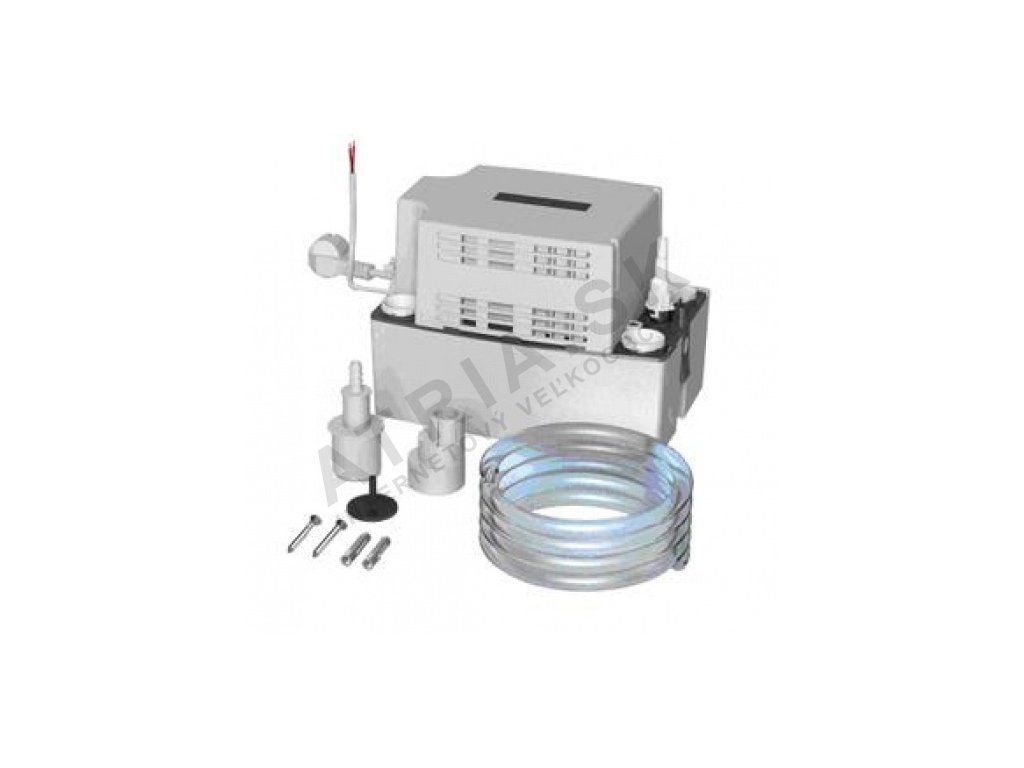 |
GRUNDFOS CONLIFT 1 - a small condensate lifting pump, a solution for condensing boilers positioned below drain level, separate from the heating circuit's circulation pump. Price from 102.34 EUR. |
Frequently Asked Questions
How do I know whether to replace the pump, or whether the problem is elsewhere in the system?
First check whether the pump shaft turns at all (on most models you can gently turn it by hand with the screw in the centre of the front cover) and whether the pump is receiving power. If the shaft does not turn even after trying to spin it, or the pump hums but does not start, it is almost certainly a seized or worn-out pump. If the shaft turns freely and the pump is running, but the radiators still don't heat evenly, the cause is more likely air in the system, a clogged filter, or incorrectly set circulation valves.
Can I simply replace a classic pump with an electronically controlled model of the same size?
In most cases, yes, as long as the flange spacing or thread size matches and the head of the new pump covers the needs of your system. Electronically controlled models are commonly made in similar mounting dimensions to their classic predecessors precisely so that replacement is simple without any work on the pipework. If in doubt, we recommend comparing the exact dimensions (flange spacing, thread diameter) from the datasheet of both the old and new pump.
Why is the new pump noisier than the old one right after replacement?
The most common cause is air trapped in the impeller after installation - the new system needs to be thoroughly vented, if necessary directly via the vent screw on the pump. If the noise persists even after venting, check that the pump is mounted in a horizontal position and is not set to an unnecessarily high output level, which with classic pumps causes flow through partially closed thermostatic heads.
Is it worth investing in a more expensive electronically controlled pump when the old one still works?
If the old pump is running reliably and is younger than 8 years, there is no need to rush - the electricity savings will show, but there is no reason to replace a working component just for that. However, if the old pump is approaching ten years, or already shows signs of wear (noise, vibration), it makes sense to go straight for an electronically controlled model - given the difference in annual cost of around 150 EUR, the price difference typically pays for itself within one to two heating seasons.
How long does a circulation pump last, and does it need regular servicing?
Typical lifespan is 8 to 12 years for classic pumps and 12 to 15 years or more for electronically controlled models, depending on water quality in the system and whether it was properly vented during installation. Circulation pumps are not normally serviced (they have no bearings or seals designed to be replaced by an ordinary user) - once worn, the solution is to replace the whole pump, not repair it.
Do I also need a condensate drain pump with a condensing boiler?
Only if the boiler is positioned so that condensate cannot drain by gravity (for example in a basement below sewer level). In that case a separate small condensate lifting pump is used, for example the GRUNDFOS CONLIFT 1 - this is not a heating circuit circulation pump, but an additional device that has nothing to do with the circulation of heating water.
Related topics
If you are dealing with a more specific part of choosing or installing a pump, we recommend the following articles from our knowledge centre:
- How to choose a circulation pump for heating
- What pump output and flow rate do I need
- Electronically controlled vs. classic pump
- Circulation pump installation and replacement
- Most common circulation pump failures
You can find the full range of circulation pumps in the main category Pumps for heating and water.
Have a question on this topic?
Can't decide, or dealing with a specific situation in your household? Write to us - we're happy to help.