
Comparison of radiator brands
Comparing radiator brands: how to actually make sense of the market
When a customer comes to our online shop asking "which radiator should I buy", it's almost never really a question about brand. It's a combination of three things: what type of construction (panel, sectional, towel rail, designer), what type designation (10, 11, 20, 21, 22, 33), and what price bracket they can afford. Brand is the last step in the decision - and often the least important one, because there are dozens of quality manufacturers of steel panel radiators on the market, and the technical parameters between them differ less than people tend to think. In this article we'll break down what can genuinely be compared, where the real differences lie, and where it's mostly just marketing.
The goal isn't to say "only buy this brand" - the goal is to give you the criteria to judge any radiator in our range, or elsewhere. We're working from the real parameters of products we actually have in stock, so the numbers in this article aren't made up, they come straight from our catalogue.
Why "comparing brands" is actually about the type designation
Most steel panel radiators in Europe are made to the EN 442 standard, which defines the so-called type designation - a combination of the number of panels and the number of convector fins behind them. This designation is standardised across manufacturers, so a type 21 radiator from one brand is almost structurally identical to a type 21 from another brand - two panels at the front, one row of fins between them. The differences between brands then come down to details: the thickness of the steel sheet, the quality of the surface finish (number of paint layers, corrosion resistance), the precision of the welds, the length of the warranty, and, of course, the price.
The common type designations you'll come across in our range, and their approximate output ratio relative to the simplest type 10 (one panel, no fin):
- Type 10 - one panel, no convector fin. The base reference output value (100%).
- Type 11 - one panel + one row of fins. Roughly 125-130% of type 10's output at the same dimensions.
- Type 20 - two panels, no fin. Roughly 170-180% of type 10's output.
- Type 21 - two panels + one row of fins. Roughly 200-210% of type 10's output. This is the best-selling type on the Slovak market, and it has the most balanced price-to-output ratio.
- Type 22 - two panels + two rows of fins. Roughly 240-250% of type 10's output. Suitable where wall space is limited but higher output is needed.
- Type 33 - three panels + three rows of fins. Roughly 295-310% of type 10's output. Used in rooms with high heat loss (corner rooms, older uninsulated houses) or where only a narrow strip of wall is available.
These ratios are approximate and vary slightly by specific manufacturer and fin spacing, but they hold roughly true across all seriously tested panel radiators sold in the EU. In practice, this means that if two different sellers offer you a "600×400 radiator" at significantly different prices, the first question shouldn't be "why is one more expensive", but "what type (10/11/20/21/22/33) is this actually" - because that alone explains most of the price difference.
Diagram: relative output by type designation
A real example from our catalogue: what a difference just 10 cm of width makes
To show that a radiator's output doesn't depend only on the type designation but also on the specific dimensions, let's look at two real products from our catalogue, both type 21K, with the same 300 mm height but a different width:
 |
Radiator 21K 300 x 400, output 298W - a compact type 21 radiator suited to lower windowsills or small rooms (bathroom, WC, storage room), where a lower heat output is enough. Price from €58.79. |
 |
Radiator 21K 300 x 500, output 373W - a variant of the same type 100 mm wider, which delivers roughly 25% more output at the same height. Suitable if you need a bit more heat but the room's height or window placement won't allow a taller radiator. Price from €65.56. |
The price difference is just €6.77, the output difference is 75 W (almost an entire small bathroom radiator's worth extra). This is exactly the kind of comparison worth making before buying - not comparing manufacturer logos, but comparing actual output in watts and price in euros per watt.
Diagram: output vs. price when changing width (same type 21K, same 300 mm height)
Construction types of radiators that are genuinely worth comparing
Besides the type designation (10/11/20/21/22/33), radiators on the market are also divided by their basic construction. This division matters more than the manufacturer's name, because it determines what the radiator is even suited for:
Steel panel radiators
The most common and most affordable type. Fast response both heating up and cooling down, easy installation on brackets, most have both side and bottom connection (more detail in the article on connections below). Suitable for almost any typical living space. This is the type both type 21K products mentioned above fall into.
Sectional (cast-iron and aluminium) radiators
Made up of individual sections that can be added or removed as needed - an advantage for irregular layouts or when renovating an older heating system. Cast-iron ones have high thermal inertia (they hold heat for a long time, but also take longer to heat up), aluminium ones are lighter and respond faster. They're generally more expensive than a comparably powerful panel radiator.
Bathroom towel-rail radiators
Combine the function of a heating body and a towel dryer. Output is generally lower than a comparably sized panel radiator, so in practice they're often combined with underfloor heating or a supplementary panel radiator in the bathroom if the room is larger.
Designer radiators
Vertical, coloured, irregularly shaped - the highest price category, where "brand" genuinely becomes a question of design too, not just technology. Here it makes sense to compare the visual side as well, not just output per watt.
What to actually ask when comparing specific offers
When you have two radiator offers from different brands at a similar price in front of you, it's worth going through this list of questions - in practice, they matter more than the logo on the panel:
- Is the type designation (10/11/20/21/22/33) actually the same? Without this, comparing price makes no sense - see the diagram above.
- What's the output testing standard? Output should be stated at a temperature drop of 75/65/20 °C (the older standard) or 55/45/20 °C (lower temperatures, typical for heat pumps and condensing boilers). The same radiator can have up to half the actual output at 55/45/20 °C compared to 75/65/20 °C - when comparing numbers, they must be at the same temperature drop.
- What's the warranty? A typical warranty on steel panel radiators is 5-10 years, and even more with some brands - a longer warranty generally means thicker sheet steel and a better anti-corrosion finish.
- What connection type do I need? Side or bottom - if you're replacing an old radiator with a new one, the connection type can limit your choice (a detailed guide is in a separate article, linked below).
- Does the package include a bleed valve and brackets? With some cheaper offers, these are charged separately, which distorts the price comparison.
- Is the radiator ready for a thermostatic valve? Most modern panel radiators already have a built-in thermostatic insert, but with older types or sectional radiators, a separate valve needs to be bought.
Diagram: step-by-step process for comparing two radiator offers
Accessories that matter more for real savings than choosing a brand
This is a point that's often completely skipped when comparing brands, yet it has a bigger impact on a household's actual consumption than the difference between two comparable radiators. Even the best-quality radiator without proper control heats inefficiently - too much flow passes through it, the room overheats, and the heat is then "let out" through an open window.
 |
Thermostatic dual-regulation valve - 1/2"xEK; angled - a dual-regulation valve lets you set the flow through the radiator precisely when hydraulically balancing the system, a step worth doing at the same time as replacing a radiator, not as an afterthought. Price from €14.27. |
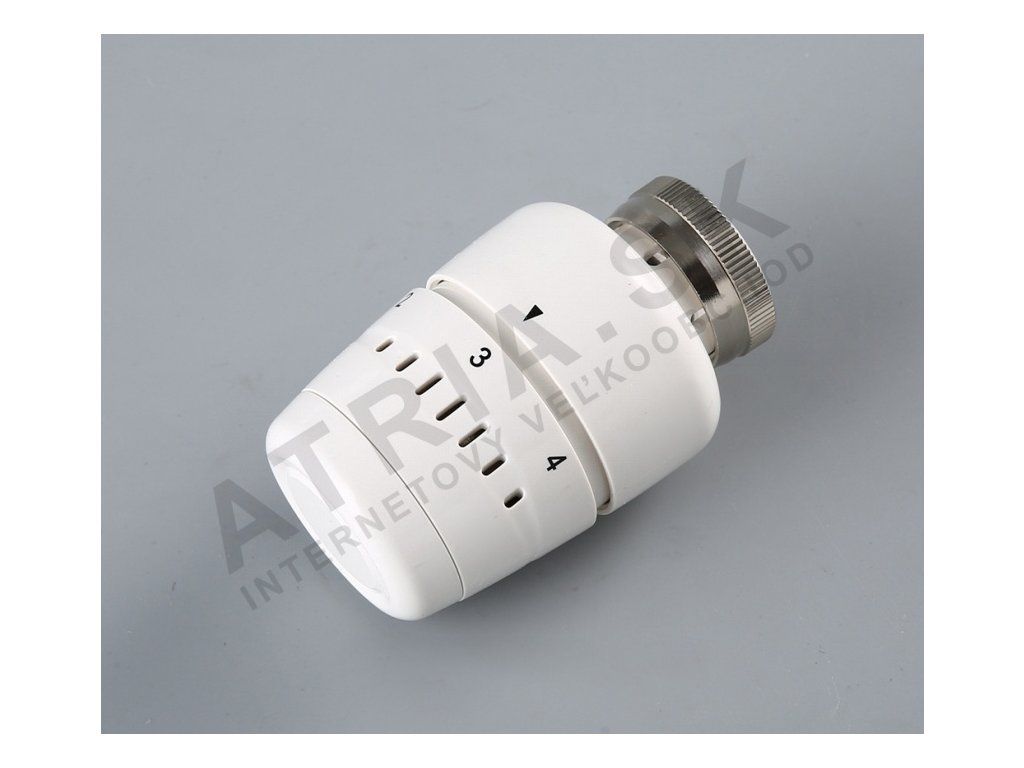 |
Large thermostatic head - lacquered - a lacquered head with a wider setting range, especially suitable for replacing an old, worn-out or leaking head when renovating the heating. Price from €8.49. |
 |
HPW Set1 control set - a complete control set (straight, polybutylene 16 x 2 mm) for connecting a radiator to the pipework, a practical choice for a complete replacement of the old pipework along with the radiator. Price from €27.94. |
Diagram: price comparison of the products mentioned in this article
As the comparison shows, complete control (valve + head) costs about €22.76 in total - less than a third of the radiator's own price. When renovating heating as a whole, it's worth thinking of this as one package rather than treating the radiator and the control separately, because it's the combination of the two that determines the real energy saving.
When it's worth reaching for a pricier brand, and when it isn't
A simple rule emerges from the installation companies we work with: if you're planning to replace a radiator once every 20-25 years (a typical lifespan with proper care), the price difference between a cheaper and a pricier panel radiator of the same type works out to a few euros a year. In that case, it's worth reaching for a proven brand with a longer warranty, thicker sheet steel and a better powder coating - especially in the bathroom and kitchen, where humidity is higher and corrosion faster.
On the other hand, for a temporary solution (for example a rented flat, a cottage used only seasonally, or a lower-demand room like storage or a workshop), there's no point paying extra for a premium brand - the technical parameters for the same type are comparable and the difference won't show up in practice over the period it's actually used.
One more practical note from experience: when ordering several radiators at once (for example a complete replacement across a whole flat), it's worth standardising at least the height and type designation across rooms, even if it means slightly over- or under-sizing the output in one or two rooms. A uniform look works better and makes any future warranty claim or reorder easier - you won't have to worry about getting exactly the same shade of white from a different production batch.
Radiators and low-temperature heat sources (heat pumps, condensing boilers)
More and more households in Slovakia are switching from a classic gas boiler to a heat pump, or at least running a condensing boiler at a lower heating-water temperature to achieve better efficiency. This has a direct effect on choosing the radiator type and size - and it's another reason why comparing "brand" alone can be misleading without knowing the operating parameters.
Older heating systems are often designed for a 75/65 °C temperature drop, while a heat pump works efficiently more around 45/35 °C or lower. The same radiator delivers significantly less heat at such a reduced drop - so when switching to a heat pump, it's almost always recommended either to size the radiators up (a higher type, e.g. from 21 to 22 or 33), or to convert some rooms to wet underfloor heating, which naturally works better with low temperatures. If you're planning to switch to a heat pump within a few years, it's worth factoring this into your choice of a new radiator now - it's cheaper to buy a larger type straight away than to replace the radiator again in a few years.
A practical installation example: replacing a radiator in a 1970s flat
A common situation we come across: a flat in a panel building, with the original cast-iron sectional radiators from when it was built, which after decades in service are starting to leak slightly at the joints and look outdated. The owner wants to switch to modern panel radiators, but worries a new, "thinner" radiator won't heat as well as a solid cast-iron one.
In practice this is solved simply by recalculating output - if the original cast-iron sectional radiator had, say, 10 sections with a total output of around 1200-1400 W (roughly 120-140 W per section at the older temperature drop), the replacement is typically either a single wider type 21 or 22 panel radiator with a comparable declared output at the same temperature drop, or a combination of two smaller radiators if the room layout doesn't allow one large unit under the window. It's important to always compare at the same temperature drop (see point 2 in the list of questions above) - otherwise it's easy for a new radiator to look weaker "on paper", even though in real operation under the same conditions it heats the same or better thanks to more efficient convection.
Such a replacement should always also include replacing the old valve and head with a new thermostatic set (see the products above) - old cast-iron radiators tend to be fitted with simple shut-off valves with no control, so replacing just the body without adding control won't deliver the expected energy saving.
Summary: what to actually look at
If there's one thing to take away from this article, let it be this: when comparing radiators, compare first the type designation, the temperature drop the output is measured at, the connection type, and the warranty - in that order. The manufacturer's name on the label has less impact on how well a radiator actually performs than most people assume. If these four parameters match, the difference between offers is usually genuinely just price, and how much trust you have in the particular seller and their warranty service.
Frequently Asked Questions
Is a pricier radiator always better?
Not automatically. Price often reflects the thickness of the sheet steel, the quality of the surface finish and the length of the warranty, not the output itself. Two radiators with the same type designation and the same dimensions will have practically the same output regardless of brand - the price difference shows up more in long-term lifespan and corrosion resistance.
How do I find out what type of radiator (21, 22, 33...) I have at home?
The type designation is usually stamped or printed on a label attached to the side or back of the radiator, along with the dimensions and year of manufacture. If the label is missing, the type can be estimated from the number of panels and rows of fins visible from the side - one panel with no fin is type 10 or 11, two panels are types 20-22, three panels are types 30-33.
Is it worth replacing the valve and head at the same time as the radiator?
Yes, especially if the original ones are older than 10-15 years or are leaking. A new thermostatic head with more precise control can reduce unnecessary overheating of the room, which shows up on your energy bill. Pairing a new radiator with an old, worn-out valve loses part of the potential saving.
Why do two radiators of the same type have a different stated output?
Most often because the output was measured at a different temperature drop (e.g. 75/65/20 °C versus 55/45/20 °C) or at a different reference room temperature. When comparing numbers, always check that the same temperature drop is stated - otherwise you're comparing apples with oranges.
Does it make sense to buy a radiator and its controls (valve, head) from the same brand?
It's not a necessary condition - thermostatic valves and heads are standardised (e.g. the M30x1.5 connection) and work across most radiator brands. What matters more is that the valve and head are compatible with each other, not that they're from the same manufacturer as the radiator.
How big a price difference is genuinely justified for a premium brand?
In our experience, for panel radiators of the same type and size, a premium of roughly 10-25% is justified for a demonstrably longer warranty and thicker sheet steel. Premiums above that level usually just reflect design or the brand itself, not a technical parameter.
Related topics
- How to choose a radiator - type and size
- What radiator output do I need
- Side vs. bottom radiator connection
- Thermostatic heads and smart control
You'll find the full range of radiators in the main Radiators category.
Have a question on this topic?
Not sure which type or output of radiator is right for your room? Write to us - we're happy to help.