
Comparison of Tank Brands
When deciding on a new hot water tank or an electric water heater, the brand should not be the first question you ask. The first decision is how to choose a hot water tank by type and volume – that is, whether you need an indirect-heated or an electric tank, and how many litres of hot water your household actually consumes. Only once you are clear on the type and volume does it make sense to compare specific manufacturers. The brand mainly determines build quality, insulation thickness, service availability, warranty length, and in many cases also how well the tank works together with a specific boiler or heat pump in your boiler room.
At atria.sk you will find tanks and boilers from five brands that cover practically the entire spectrum of requirements for a Slovak household or smaller operation: Protherm and Buderus as representatives of classic indirect-heated tanks tied to gas boilers, Bosch as a brand with a wide range including solar variants, Stiebel Eltron / Tatramat as a specialist in electric water heaters with a long history on the Slovak market, and Quadroflex as a modern alternative with WiFi control for households that want to keep water heating under control from a mobile phone. In this article we go through each brand in detail, show specific products with prices, and finally discuss how to decide when you are left choosing between two or three equally good options.
Before we get into the individual brands, one important note on terminology. An indirect-heated tank (sometimes also called a "storage water heater") does not have its own heat source – the hot water is heated by a heat exchanger connected to a heating boiler or heat pump, through which hot water from the heating circuit flows. It is therefore only suitable where you already have, or are planning to have, a boiler. An electric water heater (boiler), on the other hand, has its own heating element and works completely independently – all it needs is a socket or a fixed electrical connection. If you are working through this exact decision, we have dedicated a separate article to it: indirect-heated vs. electric tank.
Protherm – a Slovak brand with service almost around the corner
Protherm is one of the brands closest to the Slovak customer – literally as well as figuratively. It is an originally Slovak brand (manufactured in Skalica) that over the years became part of a multinational group, but in Slovakia it has retained something that is hard to replicate: the densest service network of all heating technology brands available here. That means if anything ever happens to your tank – from routine anode replacement to a warranty claim – a service technician will not have to travel across the country.
The second strength of Protherm tanks is that they are tuned directly to work together with Protherm's own gas boilers. If you already have, or are planning, a boiler of this brand, an indirect-heated tank from the same manufacturer guarantees that connection dimensions, controls and recommended settings will fit together without compromise. A service technician who knows the boiler generally knows the tank equally well too – which in practice means faster diagnostics in the event of a fault and less "passing the buck" between two different manufacturers.
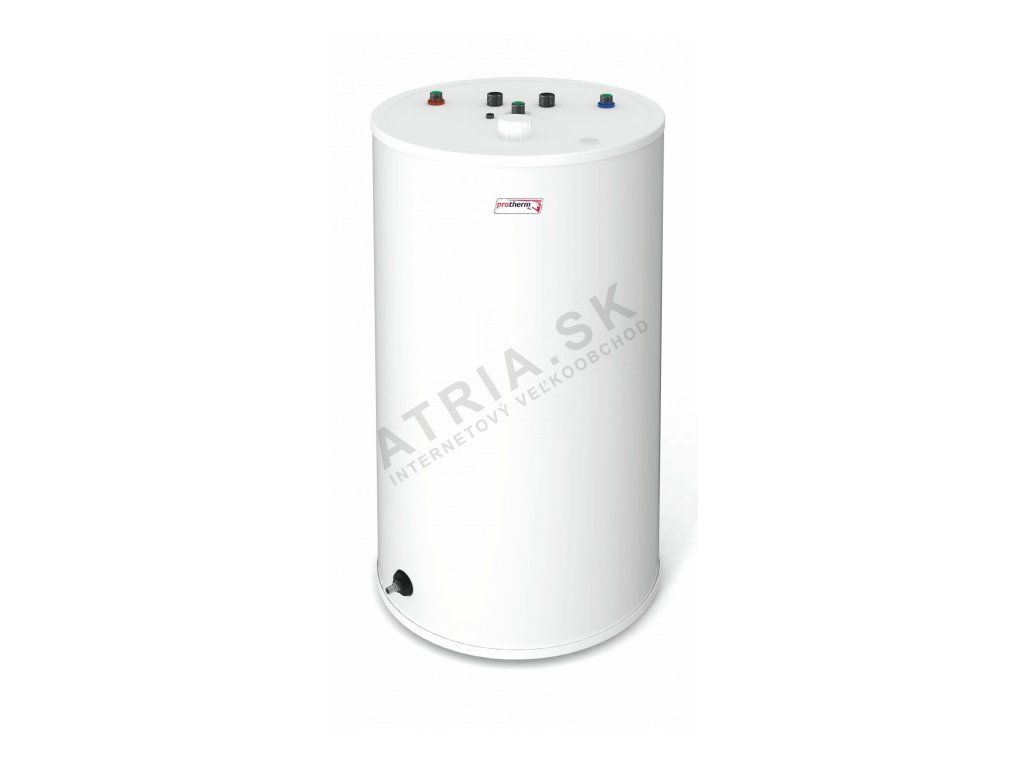
The Protherm tank range covers common volumes for both family houses and flats – from smaller stationary tanks up to larger models for households with higher hot water consumption, for example multi-generational houses or households with a bathtub and several bathrooms. A typical representative is the stationary indirect-heated tank Protherm FE 200 BM, which with its 200-litre volume covers a typical family of four with standard hot water consumption.
|
Protherm FE 200 BM – stationary Indirect-heated stationary tank with a volume of 200 litres, designed to work together with gas boilers. Suitable for a 4-5 member household with standard hot water consumption. Approximate price: €822.66 |
Who is Protherm the best choice for? Above all for households that already have, or plan to have, a Protherm boiler and want the assurance that in the event of a service intervention a technician will be available quickly and without complications. It is also a solid choice for more conservative customers who prefer a proven Slovak presence over experimenting with a less represented brand.
Bosch – a German corporation with a broad portfolio and solar variants
Bosch is one of the best-known industrial brands in the world, and in the field of heating technology it offers one of the widest ranges of tanks on the market. While Protherm focuses mainly on working together with its own boilers, Bosch builds on universality – its tanks are commonly combined with boilers of various brands and work equally well in combination with heat pumps.
A key advantage of the Bosch range is the breadth of the offering. You will find simple stationary indirect-heated tanks for common family houses, but also more sophisticated models with an additional solar heat exchanger – that is, tanks ready for future (or current) connection of solar collectors for hot water heating. This is an important point for households considering solar water heating but not installing it yet – you buy a solar-ready tank once and add the solar circuit at any point later without having to replace the whole tank.
Bosch has a reputation as a brand with consistently high build quality across its entire heating technology range – from boilers through heat pumps to tanks. Customers who combine several components from a single manufacturer (for example a Bosch heat pump and a Bosch tank) therefore often benefit from a tuned system, where the manufacturer guarantees compatibility of both controls and hydraulic connections.
|
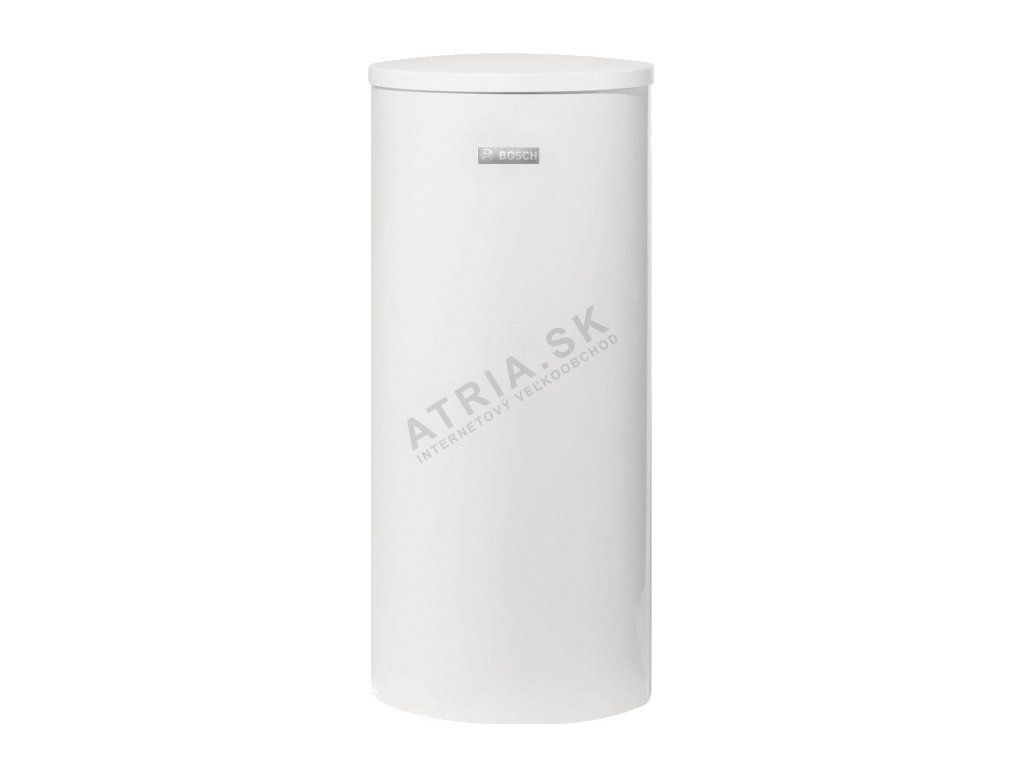
Indirect-heated tank with a volume of 200 litres from a German manufacturer, suitable as a universal solution for combination with various types of heat sources, including heat pumps. Approximate price: €1,227.54 |
Bosch is therefore a good choice for households that do not want to be tied to a single boiler brand, are considering combining it with a heat pump, or want to keep the door open for a later solar top-up system. The higher price compared to some competitors is usually offset by broader functionality and versatility of use.
Buderus – German industrial tradition and the Logalux range
Buderus is one of the oldest German heating technology brands, with a long industrial tradition reaching deep into the history of boiler manufacturing in Germany. In the field of tanks, this tradition is carried above all by the Logalux range, which offers several sizes of stationary tanks for various types of use – from smaller models for flats to larger models for family houses with higher hot water consumption.
A characteristic feature of Buderus tanks is the emphasis on robust construction and high-quality thermal insulation, which over the long term shows up as lower heat losses from the tank – that is, less "cooling down" of the prepared hot water when it is not being drawn off. For indirect-heated tanks, which tend to be in operation all year round, insulation quality translates into real operating costs, since the boiler needs to reheat the tank to the set temperature less often.
The Logalux range is designed modularly – the same construction philosophy repeats across several volumes, so if you later modernise your boiler room or change the size of your household, you can stay within the proven range and simply choose a different volume. This is particularly appreciated by technically oriented customers and installation companies, who get used to a specific range and know what to expect from it during installation and servicing.
|
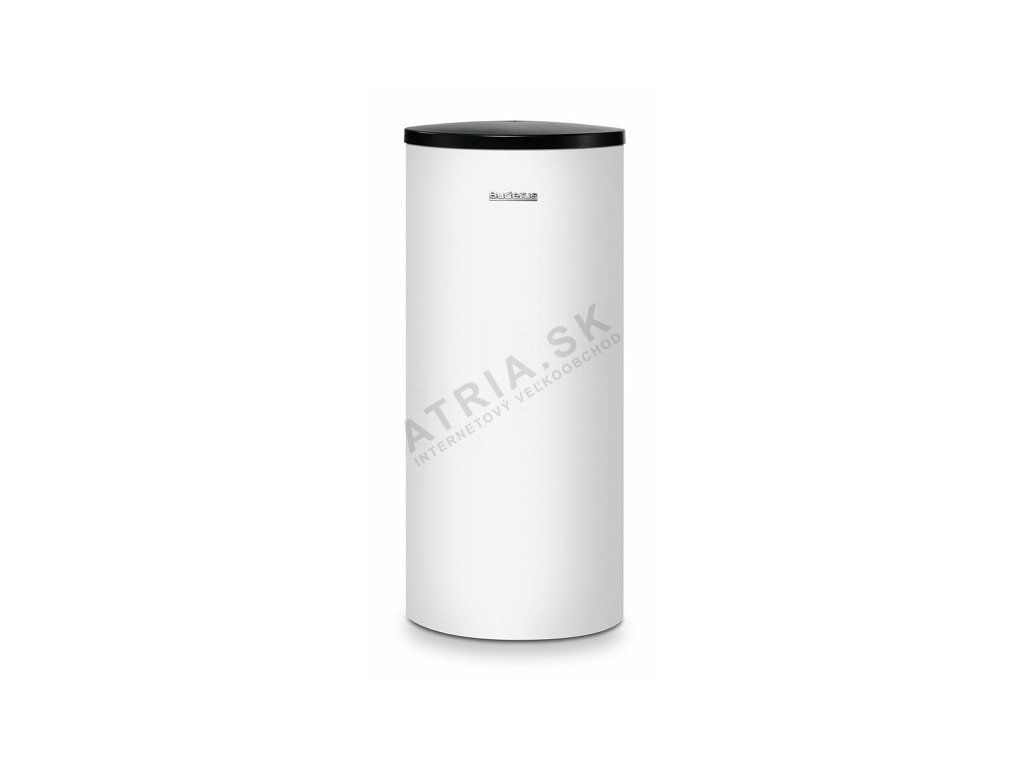
Stationary indirect-heated tank with a volume of 160 litres from the proven Logalux range, suitable for small to medium households where the emphasis is on high-quality insulation and long-term reliability. Approximate price: €1,085.08 |
We recommend Buderus for households looking for proven German quality with an emphasis on long-term operating economy (lower heat losses), and who do not mind a slightly higher upfront investment compared to cheaper brands. It is also a natural choice if you already have, or are planning, a Buderus boiler in your boiler room and want to unify the supplier of your main components.
Stiebel Eltron / Tatramat – a specialist in electric water heating
While we introduced Protherm, Bosch and Buderus mainly as manufacturers of indirect-heated tanks, Stiebel Eltron and the associated Tatramat brand represent a completely different category – electric water heaters, i.e. boilers with their own heating element that need no boiler or any other heat source. The Tatramat brand has had a long-standing presence on the Slovak market – it is an established manufacturer and distributor whose name many customers know from the days when electric water heaters were bought "for decades" without much thought about the brand.
This long history is precisely the greatest asset of Stiebel Eltron / Tatramat: it is a proven, technically undemanding technology that works reliably even in households where the water heater is "not thought about" – it is connected, the temperature is set, and for years afterwards it is barely mentioned. That is exactly what customers look for in flats, cottages, rental properties, or households without gas or another central heating system.
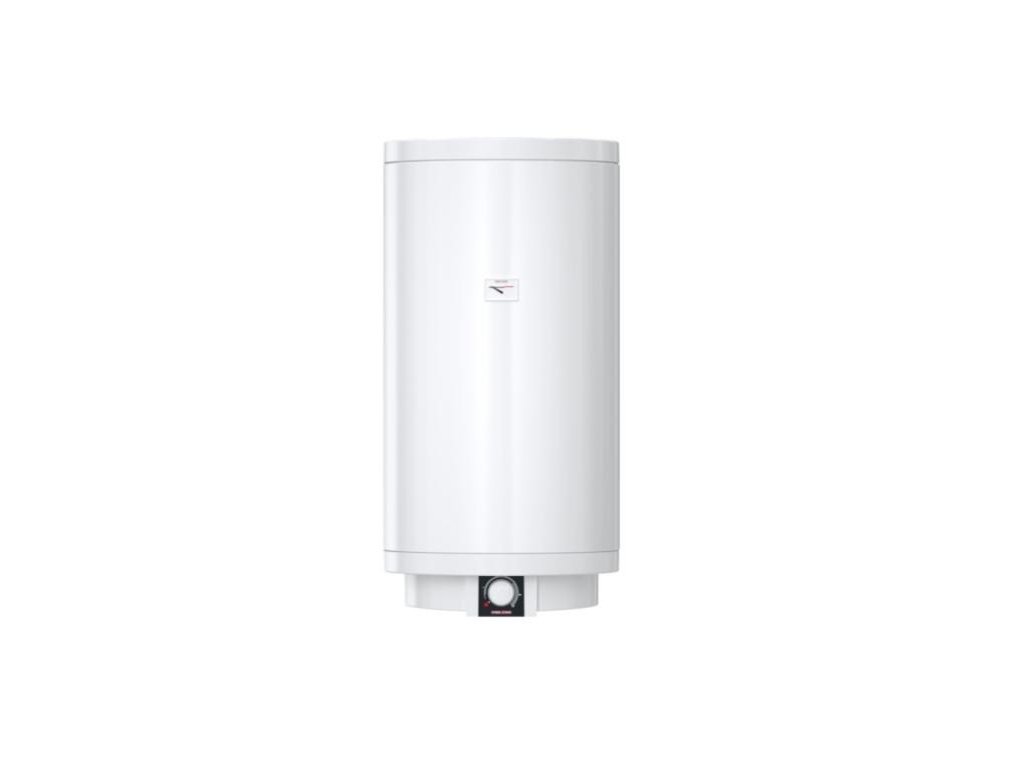
The Stiebel Eltron / Tatramat range covers a wide spectrum of volumes, from small under-sink tanks to large-volume models for the whole household. A typical representative of the mid-range category is the PSH100Trend model with a volume of 100 litres, suitable for a flat or a smaller family house as a standalone hot water source without the need for a boiler.
|
Stiebel Eltron / Tatramat PSH100Trend Electric water heater with a volume of 100 litres, a standalone hot water source without the need for a boiler. Suitable for flats, smaller houses, and anywhere lacking a central heating source. Approximate price: €442.44 |
Stiebel Eltron / Tatramat is a clear choice for households without a gas or other central boiler, for cottages and cabins with intermittent operation, for rental flats where the owner is looking for a maintenance-free and reliable solution, or simply for customers who want proven technology at a reasonable price without unnecessary extra "smart" features.
Quadroflex – modern electric heating with WiFi control
Quadroflex represents the most modern approach to electric water heating among the brands in this comparison. It is a manufacturer that positions itself mainly through the QFE FLAT WIFI range – flat electric water heaters with a built-in WiFi module that lets you control and monitor heating directly from a mobile app.
In practice this means you can switch on water heating remotely before you even arrive at your cottage, set a heating schedule based on when you actually need hot water (for example only in the morning and evening, outside peak hours), or monitor the current water temperature and energy consumption directly on your phone. For households that pay for electricity in bands with different prices (high/low tariff), smart heating scheduling can bring real savings, since you can shift heating to the cheaper band without having to physically switch anything on the water heater.
The second notable feature of the QFE FLAT range is the flat design itself – compared to classic cylindrical water heaters, it takes up less depth, which you will especially appreciate in smaller bathrooms or utility cupboards, where every centimetre matters. Combined with a lower entry price (among the products compared in this article, the Quadroflex model is the most affordable), it is an interesting choice for customers who want modern features without paying disproportionately for them.
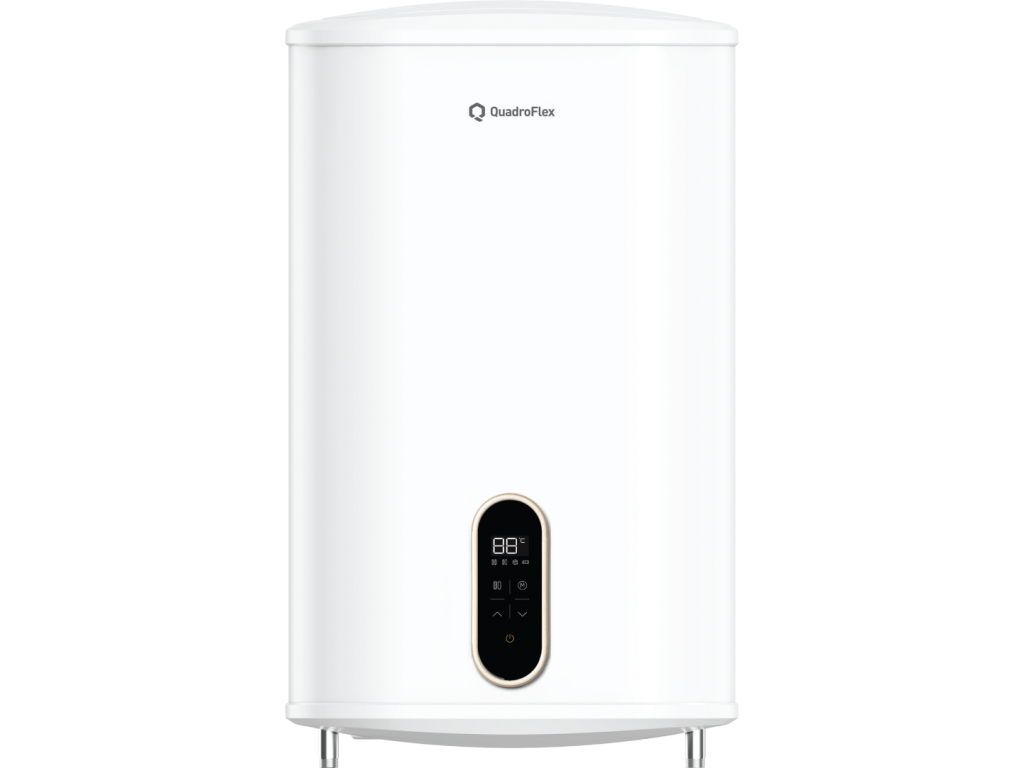
|
QFE 100 FLAT WIFI electric water heater (Quadroflex) Flat electric water heater with a volume of 100 litres and built-in WiFi control via a mobile app. Allows remote switch-on, heating scheduling and consumption monitoring. Approximate price: €400.30 |
If you are interested in this category in more detail, we have dedicated a separate article to it: quick-heat and WiFi electric water heaters, where we also cover other models and smart heating features. Quadroflex is a suitable choice for more technically minded customers, younger households used to smart home solutions, cottage owners who want to control heating remotely, and anyone looking for a compact flat water heater at an attractive price.
Brand comparison table
For a quick overview we have prepared a summary table that summarises the type, approximate price and main advantage of each of the five brands compared. The prices relate to the specific models listed above and are for guidance only – in the atria.sk range you will find other volumes and variants for each brand as well.
| Brand | Tank type | Approximate price | Main advantage |
|---|---|---|---|
| Protherm | Indirect-heated | from approx. €820 | Densest service network in Slovakia, tuned for its own Protherm boilers |
| Bosch | Indirect-heated (also solar variants) | from approx. €1,230 | Wide range, versatility, ready for solar heating |
| Buderus | Indirect-heated (Logalux range) | from approx. €1,085 | Robust construction, high-quality insulation, low heat losses |
| Stiebel Eltron / Tatramat | Electric | from approx. €440 | Proven technology, long-standing market presence, maintenance-free reliability |
| Quadroflex | Electric (WiFi) | from approx. €400 | Flat design, WiFi control and heating scheduling, attractive price |
One practical split is clear from the table: Protherm, Bosch and Buderus compete mainly against each other in the segment of indirect-heated tanks for gas boilers, while Stiebel Eltron/Tatramat and Quadroflex compete against each other in the segment of standalone electric water heaters. In practice these two groups are rarely compared directly against each other, because they target different types of households – the first those with a boiler, the second those without one.
How to decide when you have several equally good brands to choose from
Once you have already settled on the type and volume of tank and are left choosing between two or three brands in the same category, we recommend following these steps:
- Check what boiler (or heat pump) you have, or are planning to have. If it is a Protherm, the natural choice is a tank of the same brand – you simplify servicing and any warranty claims. If you have or are planning a different boiler, the more universal Bosch or Buderus will not force you into any compromises.
- Consider whether you are thinking about solar water heating in the future. If so, a solar-ready Bosch tank will save you a future replacement of the entire tank – you will only need to add the solar circuit.
- Compare the dimensions against the space in your boiler room. With limited space, the footprint and height of a specific model can be decisive, not just the brand itself.
- For electric water heaters, ask yourself whether you will value remote control. If so (for example at a cottage, where you want hot water ready before you arrive), a WiFi-enabled Quadroflex will bring real added value. If you prefer simplicity and a "set and forget" approach, a classic Stiebel Eltron/Tatramat is a proven, worry-free choice.
- Do not forget about service and spare-part availability. A tank is an investment for 10-20 years – check whether the brand has service partners represented in your region too (Protherm has a clear advantage here).
If you are still not sure whether you need an indirect-heated or an electric type, we recommend going back to basics in the article indirect-heated vs. electric tank – the decision about the type has a bigger impact on operating satisfaction than the choice of brand within that type.
Real-world examples
Scenario 1: A family house with a Protherm gas boiler
Picture a family of four in a family house that has had a Protherm boiler in operation for several years and only needs to replace the old, undersized tank. The original tank was only 120 litres, which with two teenage children and a morning peak (two showers in quick succession) was no longer enough – the water cooled down before everyone had finished showering. The solution is switching to a 200-litre indirect-heated tank of the same brand, specifically the Protherm FE 200 BM model. Since it is from the same manufacturer as the existing boiler, the installer does not need to deal with any compatibility questions, the connection and control settings proceed via the standard procedure, and the family also benefits from having a wide network of authorised Protherm technicians available for any future service work, regardless of which region of Slovakia they move to.
Scenario 2: A flat without a boiler, a cottage with intermittent use
The second typical case is a household that has no central heating boiler at all – typically a flat with electric heating, or a weekend cottage where heating and water heating are handled independently of each other. The cottage owner wants hot water ready exactly when they arrive at the cottage, but does not want to leave the water heater switched on permanently (unnecessary energy losses during weeks of absence). The ideal solution here is precisely an electric water heater with WiFi control – for example the Quadroflex QFE 100 FLAT WIFI. On the way to the cottage, the owner switches on heating remotely in the app, so hot water is already waiting on arrival, and switches heating off again or into economy mode after leaving. If they were instead looking for a simpler and cheaper solution without having to deal with apps and a WiFi connection at the cottage (where the signal may not be reliable), a classic Stiebel Eltron/Tatramat electric water heater connected to a mechanical or digital thermostat directly on the unit would be an equally good choice – without smart features, but just as reliable.
Both scenarios show the same principle: the household's specific situation (existing boiler, electricity availability, way and frequency of use) naturally decides the brand choice on its own, without the need for complex comparison of parameters that do not even overlap with each other.
Frequently asked questions about tank brands
Do I have to buy a tank of the same brand as my boiler?
No, it is not a requirement. Indirect-heated tanks are hydraulically standardised and are commonly combined with boilers from various manufacturers. The advantage of the same brand is mainly simplified servicing and the assurance that the manufacturer itself guarantees compatibility, but combining across brands also works technically.
Is it worth paying extra for a solar-ready Bosch tank even if I am not planning solar right now?
If you are at least considering solar water heating within a few years, yes – the additional heat exchanger in the tank costs you only a fraction of what a later replacement of the entire tank for a solar-ready model would cost. If you completely rule out solar, there is no reason to pay extra for this feature.
Is the WiFi-enabled Quadroflex reliable, or is it just a marketing add-on?
The heating element and vessel themselves work the same as with a classic electric water heater – the WiFi module is an add-on for control and scheduling, not a replacement for the basic function. Even if the WiFi connection drops, the tank continues to work as a standard electric water heater based on the temperature set directly on the thermostat.
Why is a Protherm tank cheaper than a Bosch or Buderus of the same volume?
The price difference is mainly related to the range breadth, design (for example the presence or absence of an additional solar heat exchanger) and the brand's market positioning. A lower Protherm price does not mean lower quality – it is more about targeting the mass segment of households with common requirements, without the need for solar readiness or other above-standard features.
Can a Stiebel Eltron/Tatramat electric water heater later be converted to indirect-heated once I install a boiler?
No, these are structurally different appliances. An electric water heater has its own heating element and does not have a heat exchanger ready for connection to a heating circuit. If you are planning a boiler in the future, either consider an indirect-heated tank right away (if that is realistic in terms of timing and budget), or count on the electric water heater needing to be replaced later, or kept as a backup/supplementary hot water source.
What is the difference in warranty between the individual brands?
The length and conditions of the warranty vary by specific model and the manufacturer's current terms, so we recommend checking the exact warranty conditions directly on the given product at atria.sk, or asking our customer service before purchase. In general, a longer warranty on the vessel (inner tank) is common for better-built tanks, while the warranty on accessories (thermostats, anodes) tends to be shorter.
How often do both indirect-heated and electric tanks need servicing and maintenance?
Regular checking and replacement of the anode protection is key to the tank's service life regardless of brand, as is de-scaling and checking for leaks. Recommended intervals vary depending on the water hardness in your location and on the specific manufacturer. You can find a detailed guide on how to properly care for a tank and extend its service life in the article service, maintenance and anode protection of a tank.
Which brand has the best price/performance ratio?
There is no universal answer, because "performance" means something different for each household – for one it is service availability, for another heat losses, for a third smart features. If you are looking only for the lowest entry price for an electric water heater, Quadroflex comes out best. For indirect-heated tanks of a similar volume, Protherm is generally the most affordable, with Bosch and Buderus offsetting the higher price with a broader range and/or higher-quality insulation respectively.
Related topics
- How to choose a hot water tank
- Indirect-heated vs. electric tank
- Quick-heat and WiFi electric water heaters
- Service, maintenance and anode protection of a tank
- Frequently asked questions about tanks and boilers
Have a question about choosing a tank?
Not sure what to decide, or dealing with a specific situation in your household? Write to us – we are happy to help.