
Quick-heat and WiFi Electric Water Heaters
Quick-heat and WiFi electric water heaters: when the water heater thinks for you
Until recently, an electric water heater was one of the simplest appliances in the household – a heating element, a mechanical thermostat, a couple of degrees of freedom, and that was it. Over the past few years, however, even this seemingly boring category has advanced considerably. Modern ranges of electric water heaters today offer features that were until recently the domain of heating boilers or heat pumps: temporary quick-heat for an immediate need for a larger amount of hot water, WiFi and app control with scheduling and consumption history, connection to ripple control (off-peak switching) and a dual-tariff electricity rate, or precise electronic temperature control instead of a coarse mechanical thermostat.
In this article we explain in detail how these features actually work, when they are worthwhile, and when it is unnecessary to pay extra for them. We also show two specific real-world scenarios – a household that schedules hot water exactly for the moment they get home, and a household with a night (cheaper) electricity tariff that saves on its bills thanks to automation, without having to think about anything. Finally, you will find recommended specific models and answers to the most common customer questions.
How quick-heat works
A classic electric water heater works in a so-called economy mode – the heating element (or one of two elements, if the heater has more than one) heats water more slowly but with a lower instantaneous power draw, which is gentler both in terms of operation and the element's service life. The problem arises the moment you need hot water quickly and in a larger one-off quantity – for example when an unplanned guest stays overnight, when the whole family is getting ready to shower together after sport, or when you simply forget to switch on heating in advance and need to catch up quickly in the evening.
This is exactly what the quick-heat function is for. Once activated (usually via a separate button on the heater's control panel, or a switch directly in the mobile app), the appliance temporarily switches to full power – if the heater has two heating elements, both switch on simultaneously instead of alternating, or a single element as in normal operation. The result is noticeably faster heating of the entire water volume to the target temperature, generally within a significantly shorter time than in standard mode.
It is important to realise that quick-heat is not a "magic" feature that bypasses the laws of physics – heating at higher power also means a higher instantaneous electricity draw for as long as it is active. It is therefore a trade-off between speed and the immediate load on the household's electrical circuit (and theoretically also slightly higher element wear with frequent use at maximum power). This is precisely why manufacturers design the feature as temporary, one the user consciously switches on only when they really need it, with the heater automatically returning to normal, more economical mode once the set temperature is reached.
In practice this means quick-heat is an ideal complement for households with irregular, hard-to-predict hot water use – whereas with a stable daily routine (for example heating always at the same time before a shower) the same effect can be achieved simply through better scheduling of heating in advance, without needing to resort to higher power.
How WiFi/app control works
The second big change compared to classic boilers is connection to the home WiFi network and control via a mobile app on your phone. Instead of having to physically press buttons directly on the heater (often mounted high on a wall in the bathroom or utility room), all control takes place remotely, from anywhere you have an internet connection.
Typical features made available by the app include:
- Remote switching heating on and off – you can have the water heated while still on your way home from work or a trip, so hot water is available immediately on arrival, without waiting.
- Scheduling heating for a specific time – for example set regular heating every day at 6:00 in the morning and 5:00 in the afternoon, exactly matching when hot water is actually consumed in your household.
- Monitoring the current water temperature – the app shows you in real time the temperature the water in the tank is currently heated to, without having to physically go to the appliance.
- Consumption history – an overview of how much energy the heater has consumed over days or weeks, which helps reveal inefficient habits (for example an unnecessarily high temperature setting) or a possible fault (unusually high consumption can signal a problem with the temperature sensor or heat loss).
- Notifications – some models can notify you when the set temperature is reached, or of an error state.
The practical benefit is mainly eliminating unnecessary "standby" heating – that is, a situation where the water heater is switched on and keeps hot water at a high temperature 24 hours a day "just in case", even though you actually only need it in the morning and evening. Thanks to app scheduling you can leave the heater idle (or in economy mode) for most of the day, investing energy into it purposefully only shortly before the time you actually use hot water – which directly shows up as a lower electricity bill.
The Quadroflex QFE FLAT WIFI range is a typical representative of this category on the Slovak market – it combines a flat design with full app control and is one of the models we look at in more detail below in this article.
Combination with an off-peak (ripple control) tariff
If your household has a dual-tariff rate agreed with your electricity supplier (commonly labelled D2 or similar, depending on the supplier), you pay a different price for electricity during the day and a different, significantly lower price during a defined night (or possibly also midday) band. This switching is controlled by ripple control (off-peak switching), a signal that the electricity distributor sends to the electricity meter, which can also physically switch connected appliances, typically electric water heaters and storage heaters.
The principle is the same as for electric boilers: if the water heater is connected via a ripple-control circuit (physically via a separate breaker circuit switched by the ripple-control signal, not just in software), it heats water preferentially at the time electricity is cheapest – usually at night. The household then consumes hot water heated "cheaply" during the day, without having to time the heating manually.
Modern WiFi water heaters can refine this logic even further. Instead of relying exclusively on physical ripple-control switching (which is set by the distributor's schedule and may not always exactly overlap with the household's real needs), you can set your own heating schedule in the app precisely for the hours you know your cheaper band runs, and supplement it with a short "top-up" heat shortly before an expected consumption peak (for example in the early evening before the whole family showers). Combining ripple-control switching with smart scheduling via the app can thus bring a noticeable saving without any compromise in comfort – the water is hot exactly when you need it, but was mostly heated at the cheapest time.
It should be added that the physical connection to the ripple-control circuit itself (the existence of a separate breaker and metering) is a matter of the electrical installation and an agreement with the electricity supplier, not a function of the heater itself – the heater simply "knows" how to schedule intelligently to fit your tariff model, whether that is ripple control or just an ordinary dual-band rate without physical switching.
Electronic temperature control and eco modes
Older and cheaper electric water heaters use a simple mechanical (capillary) thermostat – a rotary dial with an approximate scale, which maintains temperature with fairly wide tolerance (hysteresis) and without the ability to set a precise degree. More modern models instead use electronic temperature control, which brings several advantages:
- Precise temperature setting – instead of an approximate dial position, you set a specific value, for example 55 °C, and the electronics maintain it with significantly less deviation than a mechanical thermostat.
- Lower heat losses – more precise control means less unnecessary overheating of water beyond real need, which translates into lower energy consumption for maintaining temperature (so-called standby losses of the tank).
- Eco modes – some models can detect a longer absence (for example based on a set schedule with no planned heating, or a "holiday" mode activated directly and manually in the app) and automatically lower the maintained temperature to the minimum needed just to protect against freezing or bacterial growth, saving energy during your absence without the risk of having to reheat from scratch for a long time on your return.
- More precise protection against overheating and faults – electronic control can respond better to fault conditions (for example a faulty temperature sensor) than a simple mechanical switch.
Combined with WiFi control, you do not even need to activate eco mode manually – you simply set a schedule in the app, outside of which the heater automatically switches to an economical standby state, or you can schedule eco mode directly for a holiday period in advance, before leaving home.
When these features are worthwhile (and when a classic model is enough)
Not every household needs the full package of quick-heat, WiFi control and electronic regulation. When deciding whether to opt for a more modern (and generally more expensive) model or a proven classic heater with a mechanical thermostat, it helps to think about your actual usage pattern:
A modern WiFi heater with quick-heat is worthwhile if:
- your household has an irregular daily routine (varying time of arrival home, alternating shift work, frequent guests) and you want hot water ready exactly when you need it, not "round the clock" unnecessarily;
- you have a dual-tariff electricity rate or ripple control and want to concentrate heating as much as possible into the cheaper band without having to keep track of it manually;
- you appreciate a consumption overview and the option of remote control (for example at a cottage or a flat you do not live in permanently);
- you occasionally need a larger one-off amount of hot water faster than normal economy mode can deliver.
A classic model with a mechanical thermostat, on the other hand, is perfectly sufficient if:
- the household has a stable, predictable daily rhythm and you simply leave the heater permanently switched on at one set temperature;
- you do not have a dual-tariff rate, nor any interest in scheduling heating remotely;
- you prefer the simplest, proven and generally also more affordable solution, with the minimum of electronics that could break down over time.
This is precisely why, among the recommended models below, you will find both approaches side by side – a full-featured WiFi model and a classic, proven electric water heater without smart features, so you can choose exactly according to what your household will actually use.
Real-world example
Scenario 1: A family scheduling heating via the app before arriving home
Picture a family of four in a family house where both parents work and the children go to school. During the working week the house is empty roughly from 7:30 to 16:00. With a classic heater, they would either have to leave the water heater switched on all day "just in case" (paying for temperature maintenance even when nobody is using it), or risk the water being cold on arrival home and having to wait tens of minutes for it to heat up.
With a WiFi heater, they set a simple rule in the app: heating starts every working day at 15:00, an hour before the first family member is expected home, and weekends are set differently, since they are home for practically the whole day. When on a Friday evening they unexpectedly decide to come home earlier than usual, they simply switch on heating manually via their phone on the way in the car, or activate quick-heat if they really need hot water fast – for example when the children want to bathe right after getting back from a club. The result is that the heater does not run needlessly all morning and afternoon when nobody is home, but they also never wait for cold water.
Scenario 2: A household with a ripple-control tariff and automatic night heating
The second example is a household with a dual-tariff rate agreed with their electricity supplier, where the cheaper night band runs roughly from 22:00 to 6:00. The electric water heater is connected to a separate circuit switched via ripple control, so it physically heats preferentially during this window. A problem arises the moment morning hot water consumption is higher than the night band alone can cover – for example if several people shower one after another in the morning and the tank cools down faster than the next cheap band arrives.
In such a case, the owner sets an additional short "top-up" heat in the app shortly before the morning peak (for example at 6:30, just after the night band ends, when the electricity price is already at the standard rate, but the volume needed for top-up is already small thanks to the night start, so even the more expensive tariff costs only a fraction of what heating the whole volume from cold would cost). Thanks to the consumption history in the app, the owner has also gradually found that top-up heating is only needed part of the week (weekends, when they are home longer and hot water consumption is higher), and on other days leaves the heater running exclusively within the ripple-control window – which has genuinely reduced their monthly water heating bill without any drop in comfort.
Recommended models
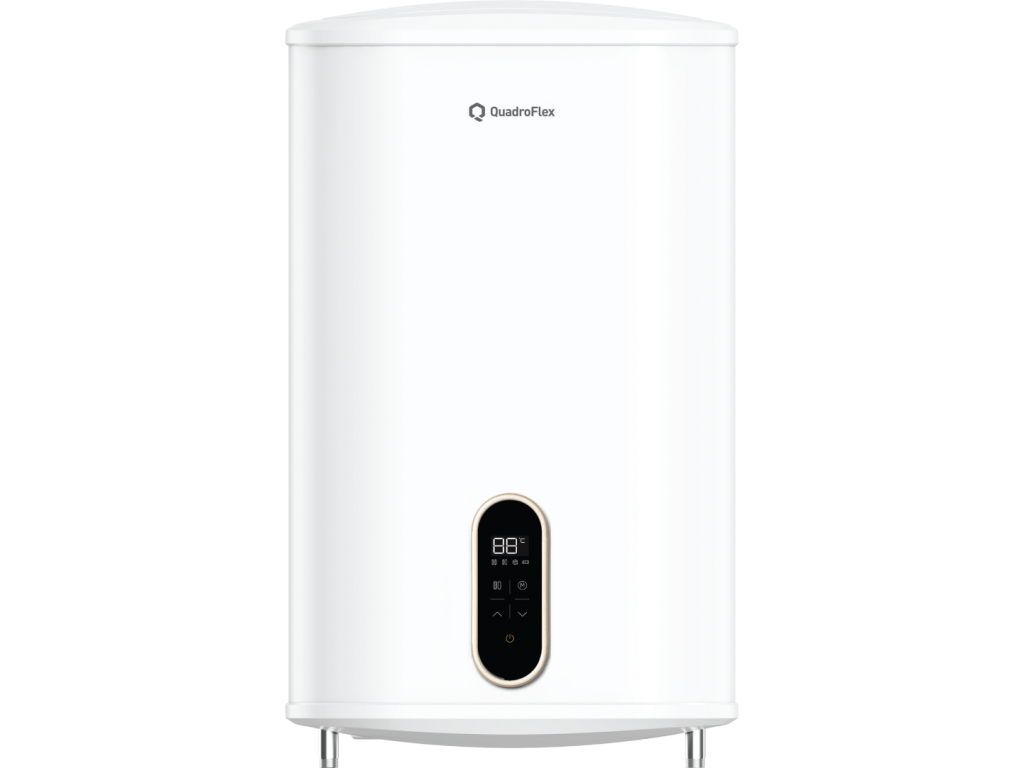 |
QFE 100 FLAT WIFI electric water heater – 100 lA representative of the modern generation of electric water heaters, with full WiFi/app control, electronic temperature control and a quick-heat function. The flat design saves space when installing in smaller bathrooms or utility rooms, and the 100-litre volume is suitable for a household of 2 to 4 members with typical consumption. An ideal choice if you want to schedule heating remotely, take advantage of a dual-tariff electricity rate, or have an overview of consumption directly on your phone. Price: €400.30 |
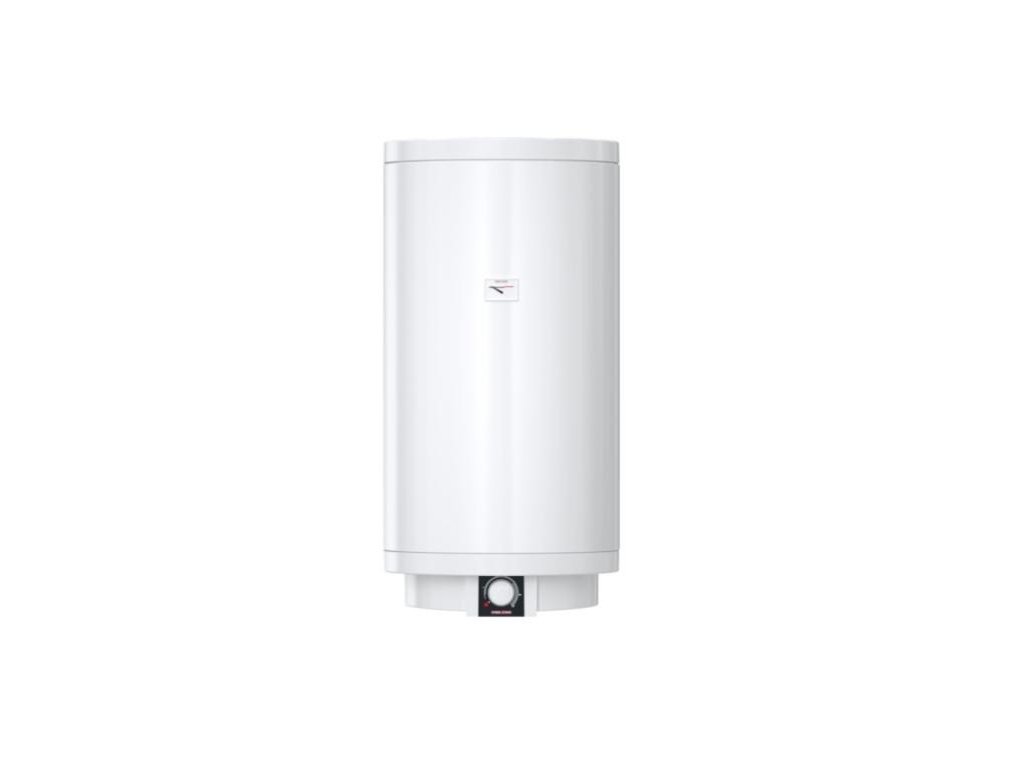 |
Tatramat PSH100Trend – classic electric water heater, 100 lA proven electric water heater with a mechanical thermostat, without WiFi features or quick-heat – a deliberately simple, reliable solution for households with a stable daily routine that appreciate straightforward controls and a lower purchase price. Suitable as a direct comparison alternative to more modern WiFi models for those who would not actually use the smart features. Price: €442.44 |
Comparing the two models, it is interesting that the price difference is not dramatic – at the time of writing this article, the WiFi model QFE 100 FLAT WIFI is even cheaper than the classic Tatramat PSH100Trend. This shows that smart features today do not necessarily mean a significant price premium, and the decision should rest more on whether you will actually use those features than on price alone. When choosing the right tank volume (100 l may not suit every household), we also recommend reading our separate article on choosing volume, listed below in the related topics section.
Frequently asked questions (FAQ)
Does quick-heat increase electricity consumption?
Quick-heat by itself does not increase the total amount of energy needed to heat a given volume of water to a given temperature – physically, roughly the same amount of heat is required regardless of heating speed. The difference is in instantaneous power (higher power draw over a shorter time instead of lower power over a longer time), so the effect on total consumption in kWh is minimal. The benefit is time, not energy savings.
Does WiFi control work outside the home network too, for example at a cottage?
Yes, the principle of app control is based on connecting the heater to the internet via a WiFi router at the installation site and communicating through the manufacturer's cloud, not on a direct local connection to your phone. You can therefore control and monitor the heater from anywhere both you and the heater have an internet connection – including a cottage, a second home, or while on holiday abroad.
Do I need a special electrical circuit for a WiFi heater?
No, WiFi control itself works over the same ordinary connection you would use for a classic water heater. A separate, dedicated circuit is only needed if you want to physically connect the heater to ripple control for a dual-tariff rate – but that is a matter of the electrical installation and an agreement with the electricity supplier, independent of whether the heater has WiFi or not.
What happens to heating if the internet or WiFi router goes down?
The heater continues to work as a fully functional electric appliance even without an internet connection – it keeps the last temperature setting and scheduled programme stored directly in the device. Without an internet connection you only temporarily lose the ability to control and monitor remotely via the app; the actual heating of water is not affected.
Is a WiFi model worthwhile even in a small household with a regular routine?
If the household really does have a stable, consistently unchanging daily rhythm and no dual-tariff electricity rate, the benefit of WiFi control is limited – you will essentially achieve the same effect with a classic mechanical thermostat set once to a suitable temperature. In that case it is worth considering a classic model instead, such as the Tatramat PSH100Trend, and investing the money saved elsewhere.
How exactly does combination with ripple control work if I do not have a separate circuit for it?
Without a separate ripple-control circuit, the heater will not be physically switched by the distributor's signal, but with a WiFi model you can still set heating manually or via the scheduler in the app so it mostly takes place at a time you know falls within your cheaper dual-tariff band. It is not as reliable as direct ripple-control switching, but with a regular cheap-rate time band it works very well in practice.
Can quick-heat also be activated remotely via the app?
On models with full WiFi integration, such as the QFE 100 FLAT WIFI, it is common for quick-heat to be activated directly in the app just as it can be from the physical control panel on the appliance. This is useful, for example, when on your way home you realise you will need a larger amount of hot water faster than normal scheduled heating would deliver.
Does eco mode reduce the risk of bacterial growth in the tank during a longer absence?
Eco mode reduces the maintained temperature to the minimum needed, mainly to save energy during your absence; it is not a substitute for regular periodic heating to a higher temperature (typically above 60 °C), which is recommended for hygiene reasons. After a longer absence (for example on returning from holiday), it is advisable to heat the water once to a higher temperature before normal use, ideally using quick-heat, which speeds up this step.
Related topics
- How to choose a hot water tank
- Indirect-heated vs. electric tank
- What volume of tank do I need
- Service, maintenance and anode protection of a tank
- Comparison of tank brands
Have a question about choosing a tank?
Not sure what to decide, or dealing with a specific situation in your household? Write to us – we are happy to help.