
Indirect-heated vs. Electric Tank
Indirect-heated vs. electric tank: which type of hot water heating is right for you
When it comes to choosing a hot water tank, most customers first think about volume – 100, 150, 200 or 300 litres. However, an equally important question is often pushed to second place: how is the water in the tank actually going to be heated? On the market there are essentially two fundamentally different approaches – indirect heating, where heat is supplied by an external source (a gas boiler, heat pump, solar collectors), and direct electric heating, where the tank generates its own heat using its own heating element. Both principles have their place, both have their advantages and limitations, and the choice between them will affect not only the running cost for years to come, but also what construction and plumbing work awaits you before commissioning.
In this article we look in practical terms at how both technologies work, when it is worth reaching for an indirect-heated tank and when an electric water heater is clearly the better choice. We also look at a combined solution that can get the best of both worlds, and using two real-world scenarios explain how this choice is actually made by a typical customer. If you are still deciding what volume of tank you actually need, we also recommend reading the separate article What volume of tank do I need – the information in both texts complements each other and together gives you a complete picture before buying.
How indirect heating works
An indirect-heated tank (also labelled in catalogues as a storage water heater or a tank with an exchanger) is essentially an insulated water vessel with a built-in heat exchanger. This exchanger most often takes the form of a coiled pipe (a so-called serpentine exchanger) or a double jacket wrapped around the inner vessel. Hot water or heat-transfer fluid from an external heat source flows through this exchanger – most often from a gas condensing boiler, a heat pump, or solar collectors on the roof.
The key principle is that the water intended for the tap never comes into direct contact with the heating circuit. Heat passes exclusively through the exchanger wall – the same way a pot is heated on a stove through its base, not by directly submerging a heating coil into the water. Thanks to this, the water in the tank is separated (hygienically independent) from the heating water, which may contain corrosion inhibitors, glycol or other additives unsuitable for drinking.
The heat source for an indirect-heated tank can be:
- A gas boiler – the most common combination in Slovak households. The boiler heats the tank both during and outside the heating season based on a signal from the tank's thermostat, and this task generally has priority over space heating.
- A heat pump – an increasingly common choice in low-energy and passive houses, where the heat for water heating is produced with a high coefficient of performance (COP), i.e. relatively cheaply relative to the electricity consumed.
- Solar collectors – combined with a bivalent tank (two exchangers), they can cover a large part of hot water needs practically for free during the summer months, with a second source taking over outside sunny hours.
A practical consequence of this principle is that both the heating speed and the maximum water temperature in the tank depend on the source's output and temperature. With a powerful condensing boiler, even a larger 200-litre tank heats up relatively quickly, while with a weaker heat pump heating can take longer – which is why matching source output to tank volume is always recommended at the design stage. A typical representative of this category is, for example, the Protherm FE 200 BM – a stationary tank with a volume of 200 litres, which is standardly connected to Protherm gas boilers, or the larger Buderus Logalux SU 160/5W with a volume of 160 litres, popular for its high-quality enamelled vessel and low heat losses.
How electric heating works
An electric, or direct-heated, water heater (commonly also called a boiler) works in a fundamentally different way. Inside the vessel is a built-in electric heating element – a heating coil or a dry (ceramic) heating cartridge – which is in direct contact with the water intended for consumption. Electric energy is converted directly into heat right at the point of use, without needing any additional heat source, boiler, or heating circuit.
The advantage of this solution is complete independence from any other heating system. An electric water heater only needs:
- a cold water connection at the inlet,
- a hot water outlet,
- and an ordinary electrical connection (most often 230 V, or 400 V for higher-power models).
Thanks to this, an electric water heater can be installed practically anywhere – in a flat without a boiler, at a cottage, in a garage, in commercial premises, or as a supplementary solution in a bathroom far from the main heat source. The thermostat in the vessel maintains the set temperature (typically 55 – 75 °C depending on the model) and, if the temperature drops (for example after a large volume of water has been drawn off), automatically switches on the heating element until the water is heated back to the required value.
Modern electric water heaters today also offer extended features – for example WiFi connectivity with control via a mobile app, setting time-based heating programmes (for example heating only during a cheaper night tariff), or quick-heat to increase output at a moment of increased demand. An example of a classic, reliable solution is the Tatramat PSH100Trend with a volume of 100 litres, while a modern example with smart features is the QFE 100 FLAT WIFI electric water heater, which besides classic heating also offers remote control and a flat design suitable for space-constrained bathrooms. If you are interested in this category in more detail, we have dedicated a separate text to it: Quick-heat and WiFi electric water heaters.
Running costs – comparing the principle
In this article we deliberately will not try to predict exact figures in euros – energy prices (gas, electricity, and heat from a heat pump) change over time and also vary by specific supplier and tariff. However, we can clearly describe the principle that determines why one type of heating is generally more advantageous than the other in a given situation.
An indirect-heated tank uses the same energy source the house is already using for heating. If you already have a functional, efficient gas boiler or heat pump at home, heating water through this same source is a logical, economically advantageous step – you are not buying a second, standalone "energy consumer", but making use of existing infrastructure. Both gas and heat from a heat pump are generally cheaper per unit of heat produced than direct electricity from the grid at a standard rate, since a heat pump additionally "multiplies" the input electrical energy by its coefficient of performance (COP), while an electric water heater converts electricity into heat at close to 100% efficiency, but without this multiplication.
An electric water heater is cost-effective mainly where another heat source would otherwise have to be installed or operated just for water heating. If a flat or cottage has neither a boiler nor a heat pump, comparing "which is cheaper" loses its meaning – the only realistic alternative to electric heating would be building an entire heating system, which for low hot water consumption is generally nowhere near worthwhile. In this context, an electric water heater is clearly the most economical solution, even though the price per kWh of electricity is higher than the gas equivalent.
The second important cost aspect is seasonality. During the heating season, the boiler or heat pump is already running for space heating anyway, so top-up heating of water via an indirect-heated tank is a "free bonus" on top of a system already running. Outside the heating season (summer months), however, many boilers are either completely switched off, or run only in a summer economy mode – in that case it is worth considering a combined solution, discussed below, or switching to standalone electric heating just for the summer.
Finally, it is worth mentioning the tank's own heat losses – the longer a tank simply "holds" hot water without draw-off, the more heat escapes through the insulation into the surroundings, regardless of what heating principle was used. Good insulation (for example rigid polyurethane foam instead of soft foam) is therefore an important parameter when choosing a specific model, independent of the heating type – we cover this topic in more detail in the article How to choose a hot water tank.
Installation – the differences
The difference between the two types also shows up significantly in the installation itself, and the costs and time involved.
An electric water heater is simpler from an installation point of view. It requires:
- connection to the cold water supply (inlet),
- connection of the hot water outlet to the house's pipework,
- a safety valve to protect against overpressure,
- an electrical connection – for lower power ratings a standard 230V socket or fixed connection, while higher-power models may need a dedicated breaker and a heavier-duty cable (400 V).
In a typical flat, the whole installation can often be completed within half a day, without any intervention in the heating system. This is precisely why an electric water heater is a popular choice for bathroom renovations, where the rest of the household installation should not be disturbed, or for a quick "here and now" solution without needing a more complex project.
An indirect-heated tank additionally requires a connection to an external heat source, which means two separate pipework circuits (flow and return) between the boiler/heat pump and the tank's exchanger, a circulation pump (if not already integrated in the boiler), a three-way or diverter valve to manage priority between space heating and water heating, and of course also the ordinary water connection as with the electric type. This installation is more demanding in terms of materials and labour time, and it is generally carried out by the same plumber who installs or services the boiler – ideally within a single visit, since connecting the tank into the boiler's control system also requires correctly setting up the control unit. You can find a detailed guide to this type of wiring in the article Installing and connecting a tank to a boiler.
In practical terms this means that if an indirect-heated tank is installed at the same time as a new boiler (for example when replacing an old boiler with a condensing one), the additional cost of the connection is relatively small, since the installer is already working on site anyway, and the pipework is handled as part of a single project. Conversely, if you wanted to additionally "connect" an indirect-heated tank to an already existing, older boiler, you should expect more extensive work on the already-completed pipework.
Combined solutions (indirect-heated + electric element)
Many manufacturers also offer so-called bivalent or combined tanks, which combine both principles. Such a tank has, besides the exchanger connected to a boiler, heat pump or solar system, an additional electric heating element (a heating coil with its own thermostat) that can be switched on independently.
The practical purpose of this solution is simple: during the heating season, when the boiler or heat pump is running regularly, the water is heated indirectly – the most economical available method, without needing the electric element. Outside the season, when the main heat source is switched off (for example most gas boilers are switched off entirely in summer, to save on their own standby consumption too), the electric element takes over, so the whole boiler does not need to be kept running just for occasional water heating.
This solution is especially worth considering with:
- households where the boiler is completely shut down in summer,
- solar systems, where the electric element serves as a backup source during longer periods without sunshine,
- cottages/cabins used seasonally, where heating is not switched on at all outside the main season, but hot water is still occasionally needed (for example over a weekend).
When choosing a combined model, check the output of the electric element (typically 2 – 3 kW is enough for maintenance heating, not for quickly heating the whole volume), and whether the tank allows both sources to run simultaneously, or only alternately. These details vary from model to model, so it is worth consulting the specific type directly with our sales team before purchase.
When to choose which type
A summary of recommendations for the most common situations:
Choose an indirect-heated tank if:
- you have a functional gas boiler or heat pump at home that runs most of the year anyway,
- you plan to have, or already have, solar collectors and want to use their potential for water heating,
- you are looking for the most economical solution in the long run and do not mind a higher initial installation investment,
- you need a larger volume (150 – 300+ litres) for a larger household with higher hot water consumption.
Choose an electric water heater if:
- you live in a flat or cottage without your own boiler or heat pump,
- you need a fast, simple and cheaper solution to install (for example during a bathroom renovation),
- you want a supplementary hot water source outside the heating season, when the main source is switched off,
- you need heating at a location far from the boiler room, where connecting to the boiler would be costly,
- you appreciate modern features such as WiFi control or scheduling heating for a cheaper tariff.
Choose a combined (bivalent) tank if:
- you want to combine the economy of indirect heating during the season with electrical independence outside it,
- you have, or plan to have, solar collectors as a supplementary source.
If you are not sure which category matches your situation, or are also hesitating between specific brands, an overview of the differences between manufacturers can be found in the article Comparison of tank brands.
Real-world example
Scenario 1 – a family house with a gas condensing boiler. A family of four lives in a family house fitted with a gas condensing boiler with output sufficient for heating even on the coldest days. The family had been considering replacing an old, undersized 100-litre tank that "couldn't keep up" in the morning when several family members showered one after another. The solution was switching to an indirect-heated tank with a volume of around 200 litres – in this case a Protherm FE 200 BM type model, connected directly to the existing condensing boiler of the same brand. Since the boiler runs practically all year round (in winter for heating, in summer at least in a limited mode), the water top-up did not mean any extra "standalone" energy source – the tank was simply connected into the existing system. On this occasion the installer also connected up the controls so that water heating has priority over space heating at the moment the family is drawing hot water intensively, which significantly shortened the wait for hot water during the morning peak.
Scenario 2 – a flat in an apartment building without its own heat source. A young couple bought a two-room flat in an older apartment building where heat and hot water are handled centrally via a district heating supplier, but they decided to install their own bathroom with a different layout and wanted more control over costs and water temperature, independent of the central supply. Since the flat has neither its own boiler nor any other heat source suitable for connecting a tank, the only realistic option was a standalone electric water heater. They chose a smaller 100-litre model with WiFi control (a QFE 100 FLAT WIFI type), which they programmed so that water heats only during the cheaper night tariff and is simply kept warm during the day thanks to the vessel's good insulation. The installation took one day without any intervention in the rest of the flat, and the couple can also freely adjust the temperature via the mobile app according to current needs, for example lowering it while on holiday.
Both scenarios show the same principle – the decision does not depend on which type is "generally better", but on what heat source is already available at that location and what the household's actual hot water consumption is.
Recommended models
Below is an overview of four proven models, two from each category, covering the most common requirements of our e-shop's customers.
| Image | Model | Type | Volume | Price |
|---|---|---|---|---|
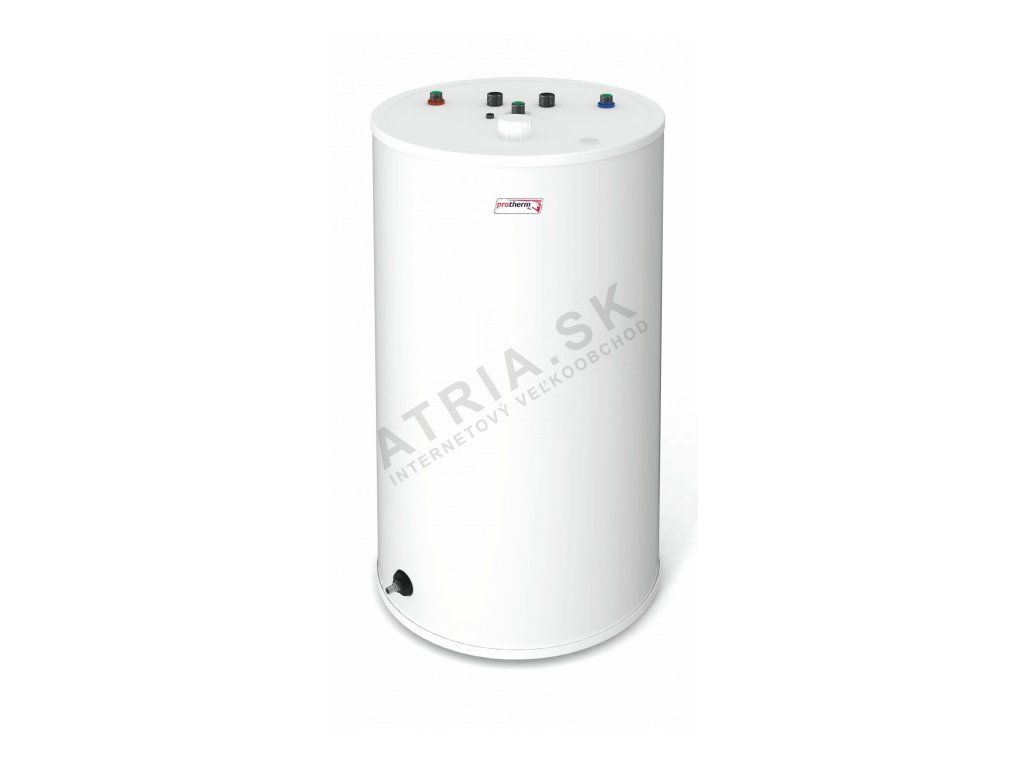 |
Protherm FE 200 BM – stationary | Indirect-heated | 200 l | €822.66 |
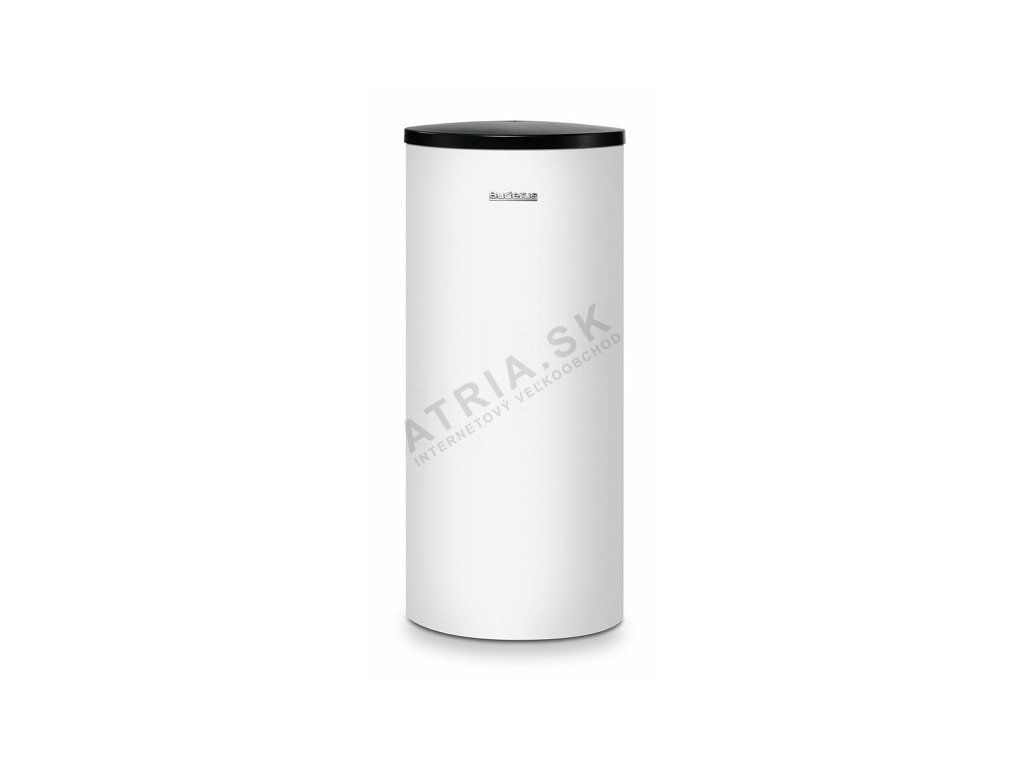 |
Buderus Logalux SU 160/5W | Indirect-heated | 160 l | €1,085.08 |
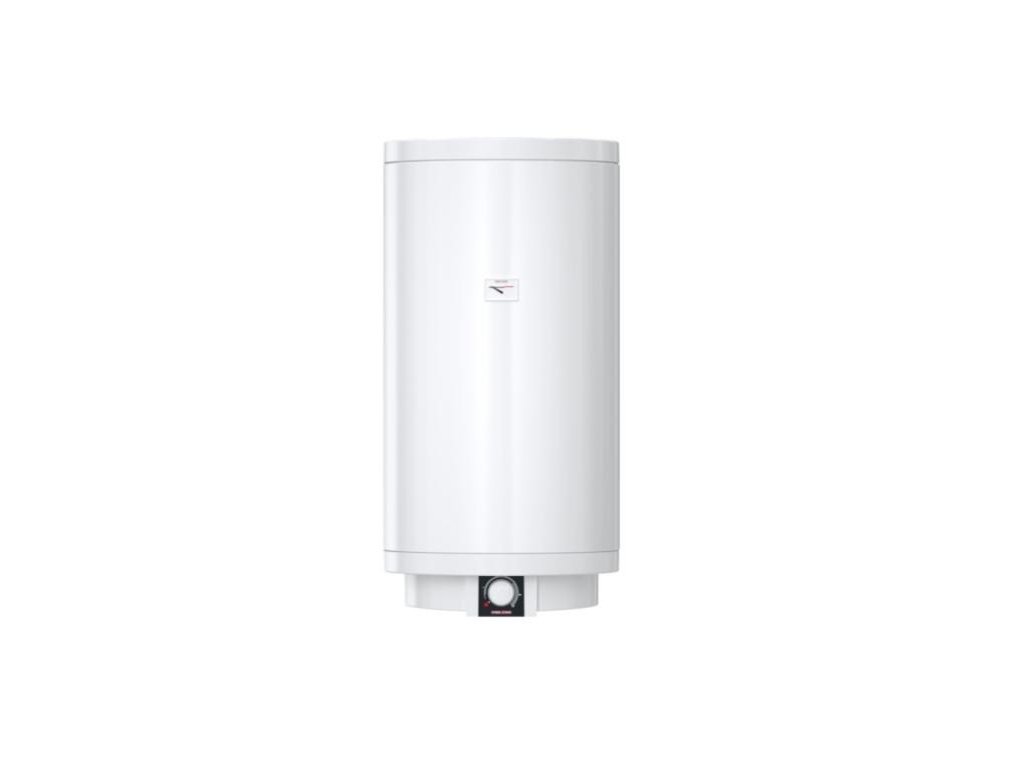 |
Tatramat PSH100Trend | Electric | 100 l | €442.44 |
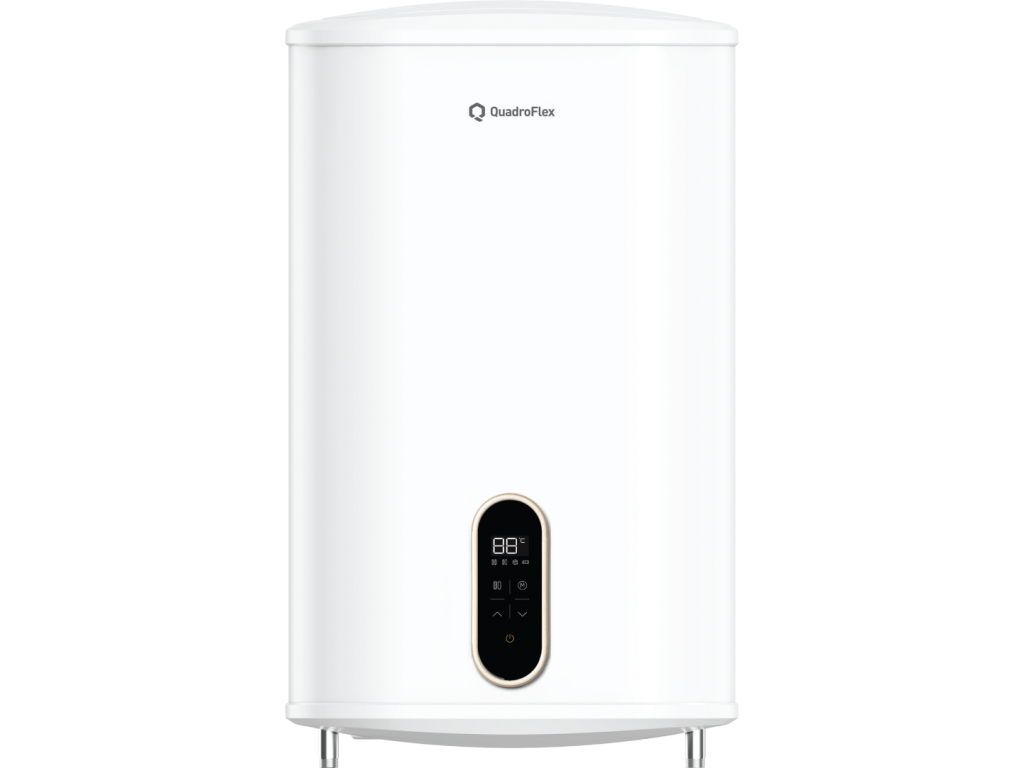 |
QFE 100 FLAT WIFI electric water heater | Electric, WiFi | 100 l | €400.30 |
Protherm FE 200 BM – stationary is a typical representative of a quality indirect-heated tank with a volume suitable for a 3 – 5 member household. Thanks to its large-surface exchanger, it heats up quickly even in combination with a weaker boiler, and its stationary (standing) design is standard for boiler rooms in family houses. See the Protherm FE 200 BM product page.
Buderus Logalux SU 160/5W is one of the premium indirect-heated tanks, with a high-quality enamelled vessel and lower heat losses thanks to stronger insulation. It is somewhat more expensive, but stands out for its long service life and branded build quality – see the Buderus Logalux SU 160/5W.
Tatramat PSH100Trend is a proven, affordable electric water heater with a 100-litre volume, suitable for flats and smaller households without their own boiler – Tatramat PSH100Trend product page.
The QFE 100 FLAT WIFI electric water heater offers the same 100-litre volume, but in a more modern design with a flat shape (saves space in the bathroom) and WiFi control via a mobile app, which allows scheduling heating for a cheaper tariff and changing the temperature remotely – see the QFE 100 FLAT WIFI.
Frequently asked questions (FAQ)
Is an indirect-heated tank always cheaper to run than an electric one?
Not automatically. It is cheaper to run only if it is connected to an already existing, functional heat source (boiler, heat pump) that runs anyway. If you would have to build or operate a standalone heat source just for the tank, the advantage disappears and an electric water heater can be a more economical and simpler choice.
Can an indirect-heated tank be additionally connected to an older boiler?
Yes, in most cases this is possible, but it requires work on the existing pipework and generally also an adjustment to the boiler's controls (prioritising water heating). We recommend consulting a plumber directly on site, since the specific options depend on the type and age of the boiler.
Can I have an indirect-heated tank in a flat without a boiler?
In theory yes, if you also installed a standalone heat source at the same time (for example a small heat pump), but in practice, for a flat without an existing heating system, this almost never makes economic sense. In such a situation an electric water heater is clearly the more practical choice.
What does a "combined" or "bivalent" tank mean?
This is an indirect-heated tank that also has a built-in electric heating element. During the heating season it is heated indirectly via the boiler or heat pump; outside the season (when the main source is switched off) the electric element takes over heating.
Is an electric element worthwhile even in an indirect-heated tank that I have connected to a heat pump all year round?
With a heat pump that runs practically all year round, the benefit of an electric element is smaller, since the main source generally does not switch off the way a gas boiler does in summer. Nevertheless, the electric element can serve as a backup source in the event of a fault or servicing of the heat pump, so the household is not left without hot water.
How big a difference is there in installation cost between the two types?
An electric water heater is generally cheaper and faster to install, since it only needs a water and an electrical connection. An indirect-heated tank additionally needs a connection to the boiler (two pipework circuits, possibly a circulation pump and a control valve), which increases both cost and installation time – exact amounts vary by specific situation, and it is advisable to have a plumber prepare a quote.
Is a safety valve necessary for an indirect-heated tank too?
Yes, a safety valve on the domestic water side is essential for both types of tank (electric and indirect-heated), since it protects the vessel from excess pressure when the water heats up. An expansion vessel on the domestic water side is also recommended, if required by the local water system.
Which type has a longer service life?
Service life depends mainly on the quality of the vessel (enamelling, thickness of the anti-corrosion protection, or anode protection) and on the water quality in the given location, not primarily on the heating type. For both types, regular checking and replacing of the anode extends the vessel's service life by many years.
Related topics
- How to choose a hot water tank – a comprehensive guide to choosing by volume, exchanger and insulation.
- What volume of tank do I need – a practical calculation by number of household members.
- Quick-heat and WiFi electric water heaters – an overview of modern electric water heater features.
- Installing and connecting a tank to a boiler – the technical procedure for wiring up an indirect-heated tank.
- Comparison of tank brands – differences between Protherm, Buderus, Viessmann and other manufacturers.
Have a question about choosing a tank?
Not sure what to decide, or dealing with a specific situation in your household? Write to us – we are happy to help.