
Service, Maintenance and Anode Protection of a Tank
Service, maintenance and anode protection of a tank: a complete guide
A hot water storage tank is one of those appliances a household notices least – as long as it works. It quietly stands in the boiler room, utility room or garage, day after day heating and storing hundreds of litres of water, and most users only remember it exists the moment cold water starts coming out of the tap or a puddle appears under the tank. Yet with a little regular care, a tank can last 15, 20 or more years – while with completely neglected servicing its service life can shrink to less than half. The difference between these two scenarios is usually decided not by the quality of the product itself, but by a single component most owners have never heard of: the anode.
In this article we will look at exactly what anode protection does, why it is literally an insurance policy against perforation of the tank on enamelled steel models, how often and in what way to check it, what the difference is between a classic magnesium anode and a modern active (impressed-current) anode, and everything else besides the anode that belongs in a tank's routine annual service. Finally, we will show two real-world scenarios – one where the anode was neglected, and one where regular servicing extended the tank's life by decades.
Why anode protection is critical – the sacrificial anode principle
To understand why the anode is so important, first consider what the inner vessel of most hot water tanks is made of. Most common tanks (for example stationary models such as the Protherm FE 200 BM or Buderus's Logalux range) have a steel vessel that is coated on the inside with a thin layer of enamel (a glass-like glaze). This enamel serves as the main protective barrier between the hot water and the metal itself – it prevents direct contact between water and steel, and hence corrosion.
The problem is that no enamel layer is one hundred percent perfect. During manufacturing, transport, installation, and even normal operation (thermal expansion of the material with every heating and cooling cycle), microscopic cracks and pores form in the enamel that are invisible to the naked eye. At such a crack, water reaches the steel surface of the vessel directly and an electrochemical corrosion process begins – essentially the same phenomenon as an unprotected metal object rusting when exposed to moisture.
This is where the anode comes in. It is a rod made of a more reactive metal (most often magnesium, in some cases aluminium, or for active systems a special alloy) that is inserted inside the vessel and electrically connected to its shell. In the electrochemical cell that forms inside the tank this way, magnesium (or another reactive anode metal) is electrochemically "less noble" than steel – in other words, it corrodes preferentially. Technically this principle is called cathodic protection by a sacrificial anode: instead of the tank vessel itself corroding (which would gradually develop a hole at the point of enamel damage), the anode is "sacrificed". It gradually dissolves and is consumed – exactly as intended.
The consequence is simple but fundamental: as long as the tank has a functional anode with sufficient material thickness, the vessel is protected and the anode corrodes preferentially. As soon as the anode is completely consumed (or is not replaced once worn), the protection ceases and the electrochemical corrosion process shifts to the tank's steel vessel itself. From that moment it is only a matter of time before a perforation forms at the point of damaged enamel – that is, a hole through which water starts to leak. At this stage repair is generally no longer possible and the only solution is to replace the entire tank.
This is precisely why the anode can be called one of the most important, and at the same time cheapest and most underestimated, parts of the whole tank. Its regular replacement, worth tens of euros, can save the cost of a completely new tank, whose price for quality models runs into the hundreds or thousands of euros.
How often to check and replace the anode
The frequency of anode inspection is one of the most commonly underestimated items in heating technology maintenance. The recommended interval is clear: the anode needs to be checked at least once a year, ideally as part of the regular service inspection of the tank or the boiler to which the tank is connected.
How the check works in practice:
- Visual and physical wear inspection – the service technician unscrews the inspection flange or the access screw to the anode directly (depending on the design of the specific model), pulls out the anode and checks the degree of wear. A new magnesium anode typically has a diameter of around 20 – 33 mm depending on the model; if the diameter is significantly reduced, or the steel core (the support wire inside the anode rod) is visible in places, it is time for a replacement.
- Measuring the protective current – on some models, especially larger tanks, it is also possible to professionally measure the magnitude of the protective current flowing between the anode and the vessel shell. This figure gives a more accurate indication of whether the anode is still providing sufficient protection than a visual thickness assessment alone.
- Checking the mounting and the electrical connection – the anode must be electrically connected to the vessel shell, otherwise the protective circuit does not work even if the anode is physically intact. The condition of the thread and the tightness of the joint are therefore also checked.
As a general rule, an ordinary magnesium anode under average operation (a family house, a 3-4 member household, ordinary water hardness) lasts approximately 2 – 4 years before it needs replacing. With harder water or more intensive use (for example in premises with higher hot water consumption, such as smaller accommodation facilities), it can be consumed significantly faster – sometimes within a single year. We therefore do not recommend relying on a fixed "replace every X years" interval without checking, but actually physically inspecting the anode every year and deciding based on the real state of wear.
Replacing the anode itself is a fairly simple and quick task for an experienced technician – it usually takes on the order of tens of minutes, including draining the required amount of water from the tank, unscrewing the old anode and screwing in a new one. The price of a new magnesium anode is on the order of tens of euros, with the technician's labour adding further cost for the service call – in total, a significantly lower sum than the risk of premature replacement of the entire tank due to a perforated vessel.
Active (impressed-current) anode – an alternative that requires no replacement
Besides the classic, mechanically consumed magnesium anode, some tank manufacturers also offer an alternative in the form of a so-called active anode, also known as an impressed-current anode.
The principle of an active anode differs from a classic sacrificial anode. Instead of the reactive metal gradually dissolving physically, a low electric current is fed into the water in the vessel via an electrode from an external control unit (a small electronic module powered from the mains, mounted on or near the tank shell). This artificially created electrical potential performs the same protective function as a classic anode – it keeps the vessel shell in a cathodic (protected) state – but the electrode itself is not mechanically worn away in the same way as a magnesium rod.
The main advantages of an active anode compared to a classic magnesium one:
- Is practically never consumed – there is no need for regular physical replacement of the anode rod every 2 – 4 years.
- Works independently of water quality – unlike a magnesium anode, whose service life is significantly shortened by hard or aggressive water, an active anode provides relatively constant protection regardless of water composition.
- Also works with an empty vessel during short outages (depending on the specific solution), which is not possible with a classic anode, since it needs to be submerged in water for the electrochemical process to take place.
Even though the anode is not mechanically worn, servicing is far from being avoided entirely. An active anode requires regular checking of the electronic control module's function – that is, verifying that the module is actually delivering protective current, that the indicator light is on (most modules have a visual LED indication of functional status), and that the mains power supply is secure. If a power outage or an electronics fault occurs without the user noticing, the vessel's protection effectively ceases just as if a classic anode had been used up – only without a visible physical sign in the form of a "consumed rod". That is why, even for models with an active anode, it is recommended to include the check in the annual service plan, even though physical replacement of the part is not needed.
When choosing between the classic and active solution, it is also worth taking the upfront investment into account – tanks with an active anode tend to be somewhat more expensive than comparable models with a classic magnesium anode, but over a long time horizon (especially in areas with hard water, where a magnesium anode would be consumed quickly and repeatedly) this investment can pay for itself through lower service costs and longer maintenance-free operation.
Other items in routine tank servicing
Anode protection is the most critical element of servicing in terms of the vessel's service life, but it is far from the only one. A complete annual service inspection of a tank should also include the following steps:
Checking the safety valve
The safety valve is a safety feature that protects the tank from excessive pressure build-up when water is heated (water expands as it heats, and if the excess pressure had nowhere to escape, there would be a risk of damage to the vessel, or in an extreme case even deformation or rupture). During a service inspection the following are checked:
- valve function – opening it manually verifies that it releases water freely and closes reliably again once released,
- tightness when closed – continuous dripping from the safety valve's discharge pipe signals wear or fouling by deposits and indicates a need for replacement,
- correct setting of the opening pressure appropriate to the given type and volume of tank.
A neglected or non-functioning safety valve is one of the most common causes of emergency situations with tanks – either in the form of water leaking through constant dripping, or conversely in the form of dangerous overpressure if the valve does not open at all.
Descaling the heating element (electric water heaters)
In electric tanks that heat water using an immersed heating element (an electric coil), limescale gradually builds up directly on the surface of the element, especially in areas with harder water. This layer acts as thermal insulation – the heating element has to work longer and consume more electricity to reach the same water temperature, and at the same time, where the deposit layer is thicker, the element overheats locally, which shortens its service life and increases the risk of failure.
Servicing of electric and combined (bivalent) tanks should therefore include regular mechanical or chemical descaling of the heating element, and possibly also the inner walls of the vessel in the bottom area, where deposits accumulate the most. The frequency should be adapted to local water hardness – a shorter interval is recommended in areas with hard water than with soft water.
Checking the tightness of connections
All tank connections – the cold water inlet, the hot water outlet, the circulation pipe, the heat exchanger connections on indirect-heated models, and the electrical connection on electric versions – are visually checked during servicing for any leaks, corrosion of the joints, or damaged insulation. Catching a small leak at a connection early can prevent greater water damage to the space where the tank is located.
Checking the temperature and thermostat setting
A service inspection should also include verifying the correct function and setting of the thermostat that regulates the water heating temperature. A temperature set too low (typically below 55 – 60 °C) increases the risk of Legionella bacteria multiplying in the vessel, while an unnecessarily high temperature setting increases energy consumption and accelerates limescale formation. Experts therefore recommend keeping the temperature within the recommended range and, at regular intervals (for example once a week, or as part of servicing), briefly heating the tank to a higher temperature as a preventive measure against bacterial growth.
Servicing together with the boiler for indirect-heated tanks
For indirect-heated tanks connected to a gas, electric or other boiler, where water heating is provided via the heating circuit through a built-in heat exchanger, it is logistically and economically most advantageous to schedule the tank's service at the same time as the boiler's regular annual service inspection. The technician has access to the whole system in a single visit, can also check the condition of the tank's heat exchanger (deposits on the heating-water side can reduce heat-transfer efficiency), and this saves both time and travel costs from repeated visits by a service technician.
The effect of water hardness on tank service life
Water hardness is one of the most significant factors that directly affects how quickly the anode wears out, how quickly limescale forms on the heating element, and ultimately how long the tank stays in good working condition.
In water with a high content of dissolved minerals (mainly calcium and magnesium), the electrochemical process between the anode and the vessel shell proceeds more intensively – hard water is a better electrical conductor than soft water, which accelerates the corrosion reaction at the anode. The result is faster mechanical wear of the magnesium anode and the need to replace it more often. At the same time, limescale forms significantly faster in hard water on the surface of the heating element and on the inner walls of the vessel, which reduces heating efficiency and increases energy consumption.
Practical recommendations for households in hard-water areas:
- Check the state of the anode more often than once a year, or consider switching to a model with an active anode, whose protection does not depend on water hardness in the same way as a classic magnesium anode.
- Consider installing a water softener or a dosing station to treat the water before it enters the tank – this measure reduces the load not only on the tank but also on the household's entire water and heating system (taps, shower heads, washing machine, and so on).
- Shorten the descaling interval for the heating element in electric and combined tanks.
Conversely, in areas with soft water the load on both the anode and the heating element is significantly lower, resulting in longer service intervals and overall lower maintenance costs over the appliance's service life. Exact information on water hardness in a given location can be obtained from the local water utility, or with a simple test strip commonly available in shops selling sanitary equipment.
A real-world example: two scenarios
Scenario 1 – a neglected anode
A family house had a quality indirect-heated tank with a volume of around 200 litres installed ten years ago, connected to a gas condensing boiler. During the first years of operation, the boiler received a regular annual service, but during these inspections the technician only checked the tank itself superficially – verifying the tightness of the connections and the function of the safety valve, without physically checking the anode, since this was not part of the agreed service scope and the owner was not even aware of this step.
After approximately seven years of operation, the magnesium anode in the tank was completely consumed. Since it was not being checked, nobody noticed. The vessel's electrochemical protection thus stopped working, and at the site of a tiny microscopic crack in the enamel layer (a common occurrence that would normally have been protected precisely by the anode), corrosion of the vessel's steel shell began to develop. The process proceeded gradually and without visible external symptoms – hot water continued to flow without problems, and the pressure functioned normally.
Approximately nine years after installation, a microscopic perforation of the vessel wall formed at the site of advanced corrosion. It first showed up only as slight dampness in the insulation around the tank, but within a few weeks it grew large enough that water began leaking from the vessel visibly. At this stage repair was no longer technically or economically feasible – a perforated steel vessel cannot be safely welded or sealed, since the damage also progresses in surrounding areas of material that still look intact from the outside. The only solution was a complete replacement of the tank with a new one, including the costs of removal, disposal of the old appliance and new installation – an expense on an order of magnitude higher than what would have covered several anode replacements over the same period.
Scenario 2 – regular servicing with anode checks
In a comparable family house, a tank of similar size and type was installed, but from the start of operation the owner agreed an extended scope of the annual inspection with the service company, explicitly including checking, and if necessary replacing, the anode. At the first check after two years of operation, the anode was worn to approximately half its original thickness – the technician left it in place, since it still provided sufficient protection, but recommended checking a year earlier than the standard interval, since the location had harder water.
At the next check a year later (i.e. in the third year of operation), the anode was already significantly worn, and the technician replaced it with a new one. The same procedure was repeated approximately every three years – the anode was checked continuously and replaced when needed, together with checking the safety valve, descaling and verifying the tightness of connections at every visit.
After more than fifteen years of operation, the tank in this house remains fully functional, with no signs whatsoever of vessel corrosion. The total cost of regularly replacing the anode over the entire period of operation represented only a fraction of what a premature replacement of the entire appliance would have cost. This example illustrates well why an investment of tens of euros once every few years is worthwhile compared to the risk of a neglected anode only showing up once it is too late for a simple repair.
Both scenarios use comparable input parameters (similar type and age of tank, similar location) and serve as an illustration of the pattern of behaviour commonly observed between neglected and regularly serviced anode protection – they are not specific, verifiable individual customer cases, but a summary of the typical course of events that service technicians repeatedly encounter in practice.
Recommended products
When choosing a new tank, whether as a replacement for a neglected and damaged unit or as part of a new installation, it is worth finding out in advance how the given model's anode protection is designed and what service intervals are recommended by the manufacturer. Below are three proven models from various brands available in our range.
| Product | Image | Price |
|---|---|---|
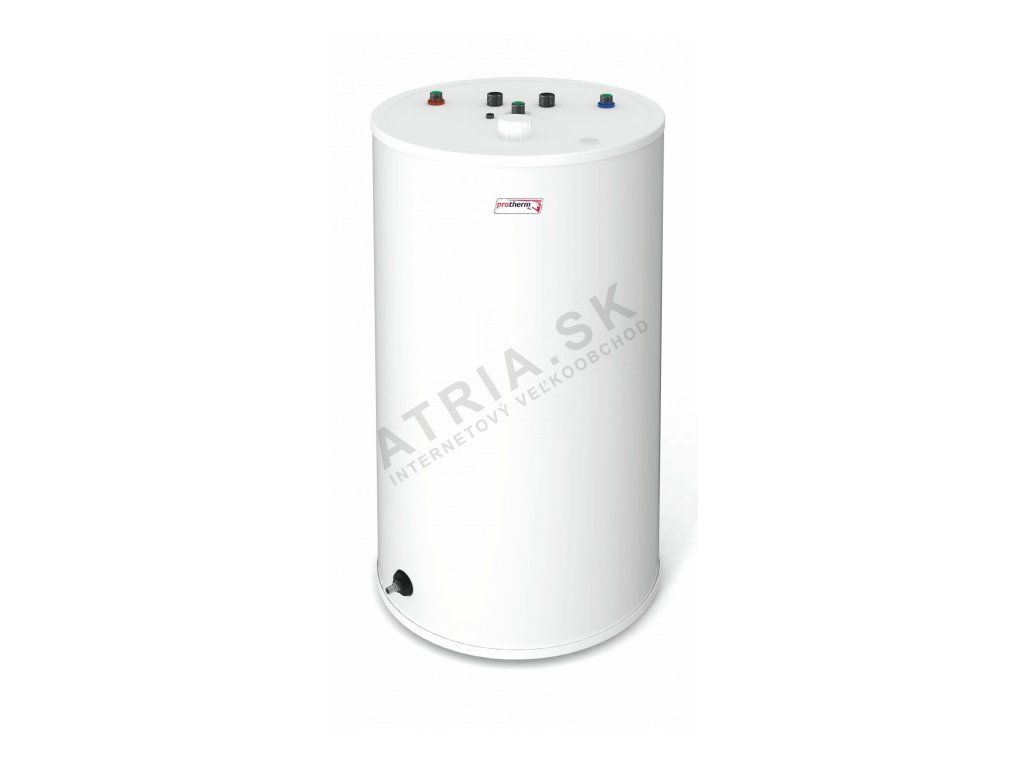
| Protherm FE 200 BM – stationary Indirect-heated stationary tank with a volume of 200 l, enamelled steel vessel with a magnesium anode. |
 |
€822.66 |
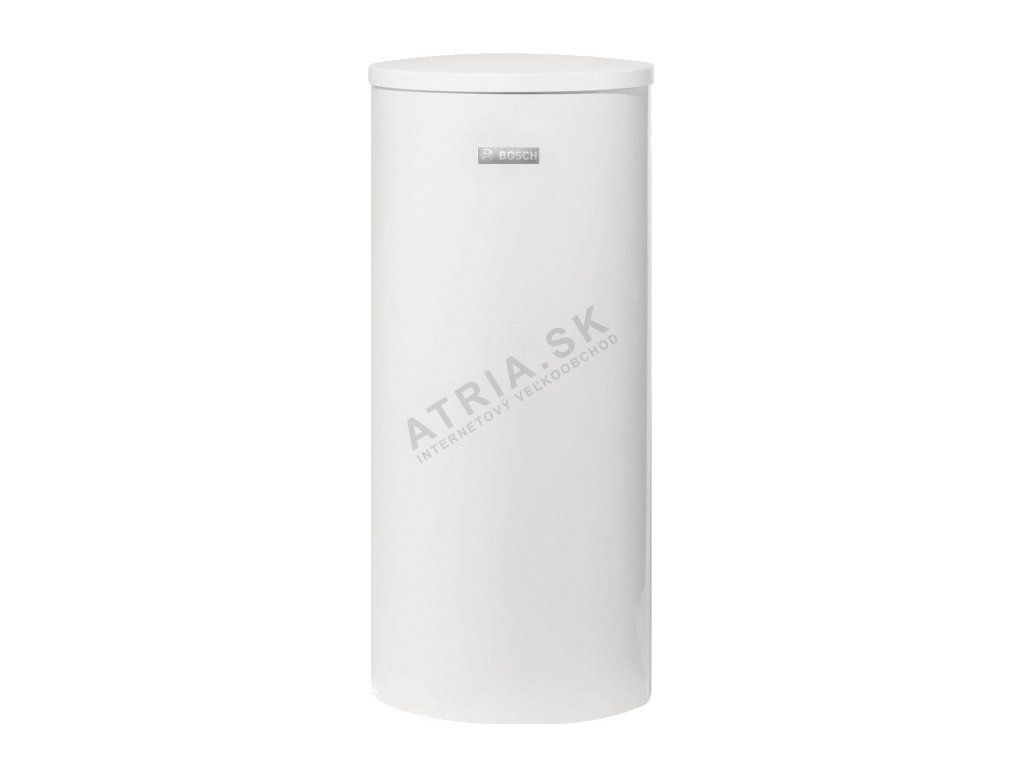
| Bosch WST 200-5 C Tank with a volume of 200 l, high-quality vessel enamelling, suitable for medium-sized households. |
 |
€1,227.54 |
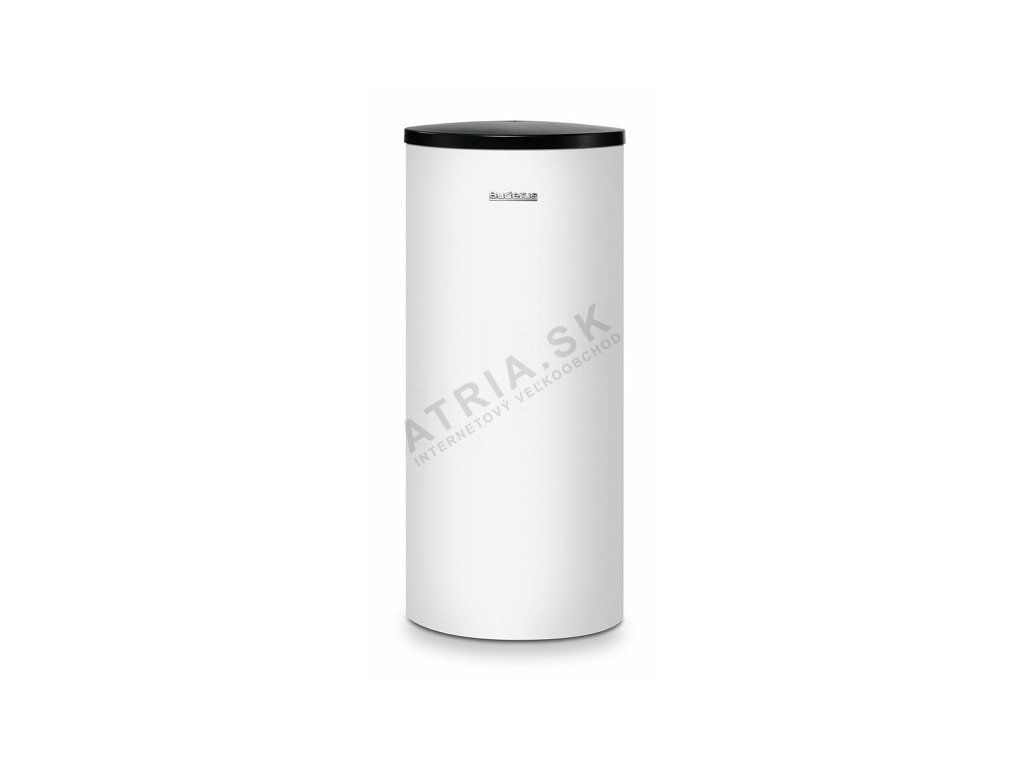
| Buderus Logalux SU 160/5W Compact indirect-heated tank with a volume of 160 l, popular in combination with Buderus condensing boilers. |
 |
€1,085.08 |
When choosing between individual models, we also recommend considering the type of anode (classic magnesium vs. active), the tank volume relative to the number of household members, and the connection type (indirect-heated when combined with a boiler, or electric for standalone operation). You can find a detailed selection procedure in the separate article How to choose a hot water tank.
Frequently asked questions (FAQ)
How often does the anode in a tank need to be checked?
It is recommended to check the anode at least once a year, ideally as part of the tank's regular service inspection or together with servicing the boiler to which the tank is connected. In locations with hard water it may be advisable to check the anode even more often.
What happens if the anode is completely consumed and not replaced?
Once the anode is completely consumed, its protective function ceases and the electrochemical corrosion process shifts to the tank's steel vessel itself. At the site of microscopic defects in the enamel layer, the vessel can gradually develop a perforation and leak water, which generally requires a complete tank replacement.
What is the difference between a magnesium and an active (impressed-current) anode?
A magnesium anode works on the sacrificial metal principle – it gradually dissolves mechanically and needs to be regularly replaced with a new one (typically every 2 – 4 years). An active anode uses an electronically controlled system with an applied current, providing protection without mechanical wear, so replacement of the part is not needed – however it requires regular checking of the control module's function and its power supply.
Can the anode be replaced by yourself, or is a professional necessary?
Although replacing the anode itself is a fairly straightforward task technically, it involves partially draining the tank, working with seals, and in some cases also handling connections to the heating system. We therefore recommend entrusting this task to a trained service technician, who can also assess the actual state of wear of the anode and other tank components.
Does water hardness affect the service life of the anode and the tank?
Yes, significantly. Hard water speeds up the electrochemical process at the anode (faster wear) and at the same time promotes limescale formation on the heating element and the inner walls of the vessel. In hard-water areas, more frequent anode checks and shorter descaling intervals are therefore recommended.
What is the typical service life of a tank with proper care?
A quality tank with regular maintenance, including monitoring and replacing the anode, can reliably serve for 15 to 20 years, in some cases even longer. With neglected anode protection, the service life can be significantly shortened, in extreme cases to less than half of that period.
Does it make sense to service the tank separately from the boiler?
For indirect-heated tanks connected to a boiler, it is most practical and economical to combine the tank's servicing with the boiler's regular annual inspection – the technician has access to the whole system at once, saving both cost and time from repeated visits. For standalone electric tanks not linked to a boiler, servicing takes place independently according to the manufacturer's recommended interval.
How do I know when the anode is too worn?
A visually worn anode shows a significantly reduced diameter compared to its original state, or in places an exposed inner support wire. A more precise assessment of whether the anode still provides sufficient protection can be made by a service technician by measuring the protective current between the anode and the vessel shell.
Related topics
- How to choose a hot water tank
- Indirect-heated vs. electric tank
- Installing and connecting a tank to a boiler
- Comparison of tank brands
Have a question about choosing a tank?
Not sure what to decide, or dealing with a specific situation in your household? Write to us – we are happy to help.