
How to Choose a Hot Water Tank
How to choose a hot water tank
A hot water tank (commonly also called a boiler) is an appliance almost nobody sees – it usually stands hidden in a boiler room, utility room, or hangs from the ceiling in a bathroom – and yet it decides whether you can comfortably wash your hair in the morning before work, whether the children can enjoy a longer bath, and whether anything warm is left for a shower after the evening washing-up. While a heating boiler or heat pump takes care of heat in the rooms, a tank has exactly one job: to prepare and keep enough domestic hot water (DHW) ready exactly when you need it, without having to wait for it.
At first glance, choosing a tank looks simple – just pick a volume and you're done. In practice, however, several factors matter at once: how many people live in the household and what their water usage pattern is, whether you have a heat source at home (boiler, heat pump, solar collectors) that the tank can be topped up by, or conversely whether you need an appliance completely independent of heating, how much space and ceiling height you have available, and finally whether you want to add solar collectors in the future. This article gives you a comprehensive overview of all the key decisions, and for each one we point you to a more detailed standalone article with a deeper explanation and specific recommendations. At the end you will also find real models you can compare directly, and answers to the most common questions customers ask us when choosing.
Two basic principles: indirect-heated or electric tank
The first and most important decision when choosing a tank is the water heating principle. On the market you will essentially encounter two solutions, and it is important to understand their difference before you start looking at volume or a specific brand.
An indirect-heated tank has no heat source of its own. Inside it has a built-in exchanger (a coiled or finned heating hose) through which hot water flows from another source – most often a gas condensing boiler, but it can equally well be a heat pump or a solar circuit. The tank thus "borrows" heat from the boiler and passes it on to the domestic water. The advantage is high comfort – a large exchanger can heat even a 200-litre tank relatively quickly, and the system is generally cheaper to run because it uses the same heat source as the heating. The disadvantage is dependency – if the boiler has a fault, or you switch it off during a summer shutdown, hot water disappears along with heating.
An electric (direct-heated) tank has its own electric heating element and is completely independent of any other heat source. You simply plug it into the electricity supply and it works on its own – an ideal solution for flats without a gas connection or boiler, cottages, offices, or as a supplementary hot water source outside the heating season. Modern electric water heaters today also commonly offer quick-heat (significantly shorter heating time than standard mode) and WiFi control, letting you schedule or start heating remotely from your phone before you even get home.
Which type is right for you depends mainly on whether you already have, or plan to have, a heat source at home suitable for top-up heating. You can find a detailed comparison of the advantages, disadvantages and running costs of both solutions in the separate article Indirect-heated vs. electric tank, where we also discuss combined solutions (for example an indirect-heated tank with a supplementary electric heating element for summer operation).
How to determine the right volume
The second key decision is the tank's volume. An undersized tank means hot water simply runs out during the day – typically showing up as the last household member showering in only lukewarm water. An oversized tank, on the other hand, unnecessarily increases heat losses (even a well-insulated tank cools slightly) and is an unnecessarily large investment and extra space taken up.
As a guideline, volume depends on the number of people in the household:
- 1 person – generally 30 to 50 litres is enough, typically a smaller electric water heater under a sink or in the bathroom of a studio flat.
- 2 people – approximately 80 to 100 litres, a common solution for a couple in a flat or smaller house.
- 3 – 4 people (a typical family) – approximately 150 to 200 litres is the most commonly sold category precisely because it matches a typical Slovak household.
- 4 – 5 or more people, or a household with a bathtub or multiple bathrooms – we recommend a volume of 200 litres or more, ideally with some reserve if you are planning, for example, an extension or renting out space in the future.
These figures are a guideline and can be refined in practice according to the household's actual routine – a family where everyone showers one after another in the morning has different needs from a household where consumption is spread evenly through the day. Equally important is the output and heating speed of the chosen source (a boiler with a larger exchanger can "catch up" a smaller tank continuously, so in practice it copes with more than the volume alone suggests on paper). A complete procedure for calculating the required volume, including model examples, can be found in the article What volume of tank do I need.
Vertical or horizontal tank
The third decision concerns shape and installation method, an often underestimated but, in practice, very practical aspect of choosing.
A vertical tank is the classic, most widespread solution. It stands on the floor and takes up a relatively small footprint, which is an advantage especially in smaller boiler rooms or utility rooms, where floor space is scarce. However, sufficient ceiling height is a prerequisite – for volumes of 150 – 200 litres and more, tank height can exceed 150 cm, which needs to be taken into account in advance when planning a boiler room or cupboard.
A horizontal tank, on the other hand, is a solution for spaces with a low ceiling, for example loft bathrooms, the space above a suspended ceiling, or a technical niche with limited height. It is mounted suspended from a wall or structure using load-bearing brackets, so it takes up no floor area at all – something you will particularly appreciate in smaller flats, where every square metre counts. With suspended installation, you need to allow for a sufficiently load-bearing wall or structure, since a filled tank with a volume of 150 – 200 litres weighs, together with the water, from several tens up to over a hundred kilograms.
The choice between the two types is therefore not a question of "which is better", but "which fits, and where". You can find a detailed guide on how to correctly measure and assess space in your boiler room or bathroom in the article Vertical vs. horizontal tank.
Solar tank – when you are also planning collectors
If you are considering solar collectors for water heating – already now, or even just as a future possibility – it is worth considering a solar tank right away. It differs from a standard indirect-heated tank in having two separate exchangers inside instead of one: the lower, larger exchanger is connected to solar collectors and serves as the primary heat source when the sun is shining, while the upper, smaller exchanger provides top-up heating from a boiler, heat pump or electric heating element at times when solar energy is not enough (cloudy days, winter, night).
Thanks to this arrangement, the system prioritises "free" solar energy, with the classic heat source only topping up the missing difference, which during the summer months can cover a large part of hot water consumption without any fuel or electricity cost at all. It is important to choose a solar tank with a sufficient volume already at the time of first purchase – replacing an ordinary tank with a solar one later, once collectors are installed, is an unnecessary and more expensive step compared to planning for the solution from the start. You can read exactly how the solar circuit works, what types of collectors are most often combined with a tank, and what to watch out for when sizing, in the article How a solar tank works.
Vessel material and tank care
Most tanks on the market have an inner enamelled shell (a steel vessel with fired-on glass coating), which is durable and affordable. With this type of vessel, however, a magnesium anode is essential – a sacrificial metal rod that gradually dissolves in the water instead of the shell itself, protecting it against corrosion. The anode is not an optional extra you can ignore – it is a consumable part that needs to be checked regularly and replaced when worn, otherwise the tank loses its protection and risks the shell developing a hole, a repair that generally is no longer worthwhile and ends with replacing the entire appliance. You can find how often to check the anode, how to tell it is time for a replacement, and what other routine maintenance a tank involves (de-scaling, checking the safety valve, possibly removing limescale with harder water) in the article Service, maintenance and anode protection of a tank.
Besides classic models, electric tanks increasingly come with more modern features too – quick-heat, which shortens the time needed to heat the whole volume, and WiFi control, letting you schedule or start heating remotely via a mobile app, for example so the water is hot exactly when you get home, and conversely is not heated unnecessarily on days when the flat or cottage is empty. You can find an overview of such models and what they actually bring to everyday operation in the article Quick-heat and WiFi electric water heaters.
Real-world example
Theory is one thing, actual decision-making in practice is another. Let's look at two common scenarios we most often encounter when choosing a tank.
Scenario 1: a family house with a gas condensing boiler
Picture a family of four in a family house that already has a gas condensing boiler installed for heating and wants to add a hot water tank. Since a heat source already exists and its output is sufficient for DHW top-up too, the logical choice is an indirect-heated stationary tank with a volume of around 200 litres – exactly matching the recommended range for a 4-member household, with a modest reserve for guests or days when everyone showers one after another. The tank is placed in the boiler room next to the boiler, connected by a short section of pipework, and the boiler continuously tops up the water in the tank alongside heating. The advantage of this solution is that the family needs no other standalone energy source for water heating – everything runs off one gas boiler, which is both operationally and economically advantageous, since gas is generally cheaper than direct electricity for larger volumes. If this family were also considering solar collectors on the roof, the same volume recommendation would point towards a solar tank with two exchangers instead of a classic single one – a solution ready for expansion without having to replace the entire tank later.
Scenario 2: a flat without a boiler, just a standalone electric water heater
The second common case is a flat that has neither its own boiler nor any other way of connecting to a central heat source suitable for water top-up – typically a smaller flat in a city, where heat is supplied via district heating, but hot water preparation is individual. In this case the only realistic option is an electric (direct-heated) tank, which works completely independently. For a couple or small family in a flat, a volume of 80 to 150 litres is generally sufficient depending on the number of people and shower habits, and the tank can also be hung in a horizontal position if the bathroom or cupboard where it is to stand is low or space-constrained. A modern electric tank with a quick-heat function significantly improves comfort here – instead of a long wait for the whole volume to heat up, water heats up considerably faster, which you will appreciate especially with unplanned need (for example when water needs topping up outside the normal schedule). WiFi control, meanwhile, allows heating to be scheduled only for times it is actually needed, saving on electricity on days when the flat is empty.
Both scenarios show the same principle: the choice does not start with a specific brand or price, but with the answer to two basic questions – "do I have, or will I have, a heat source suitable for top-up?" and "how many people, and in what way, will actually be consuming the water?". Only then does it make sense to address shape, brand and additional features.
Recommended models
Below you will find four proven models covering the most common situations described above – from a classic indirect-heated stationary tank for a family house to a standalone electric water heater for a flat.
|
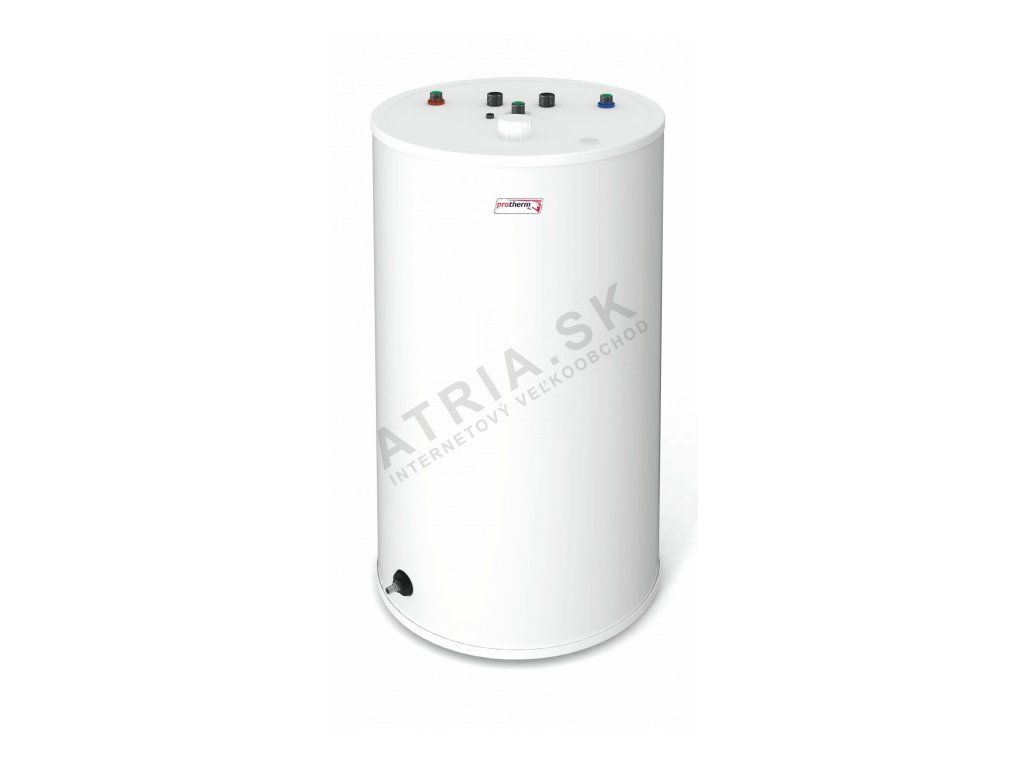
Protherm FE 200 BM stationary – an indirect-heated stationary tank with a volume of 200 litres, ideal for the family house with condensing boiler scenario described above. Thanks to its larger volume it offers a comfortable reserve for a 4 – 5 member household. Price from €822.66. |
|
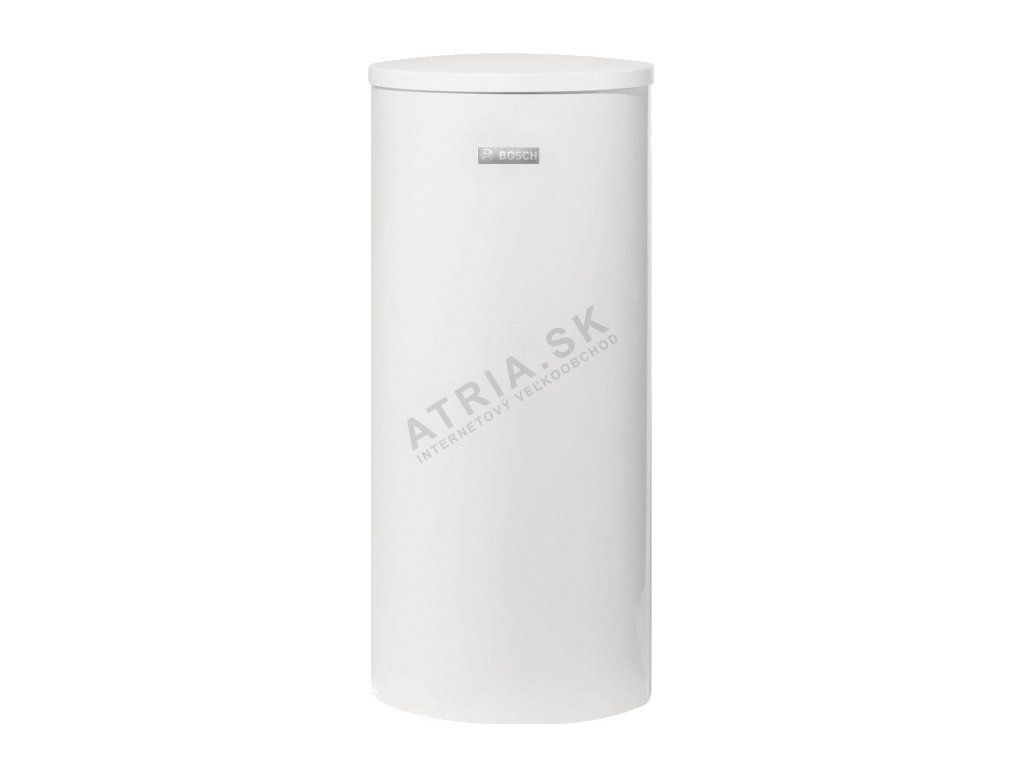
Bosch WST 200-5 C – another quality indirect-heated tank with a volume of 200 litres from a proven brand, suitable for connection to a gas boiler or heat pump. A good choice if you are looking for an alternative to the Protherm model with different dimensions or design for your boiler room. Price from €1,227.54. |
|
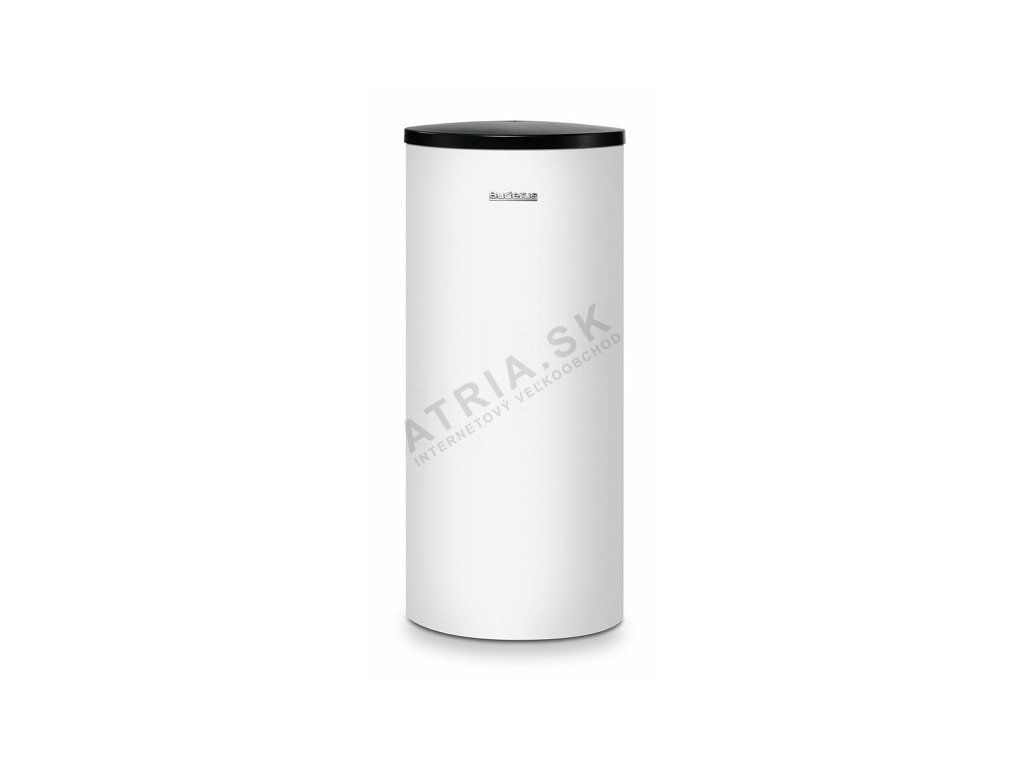
Buderus Logalux SU 160/5W – a stationary indirect-heated tank with a volume of 160 litres, right in the middle of the recommended range for a typical family of 3 – 4. Suitable if you do not need the full 200-litre reserve and want somewhat more compact dimensions. Price from €1,085.08. |
|
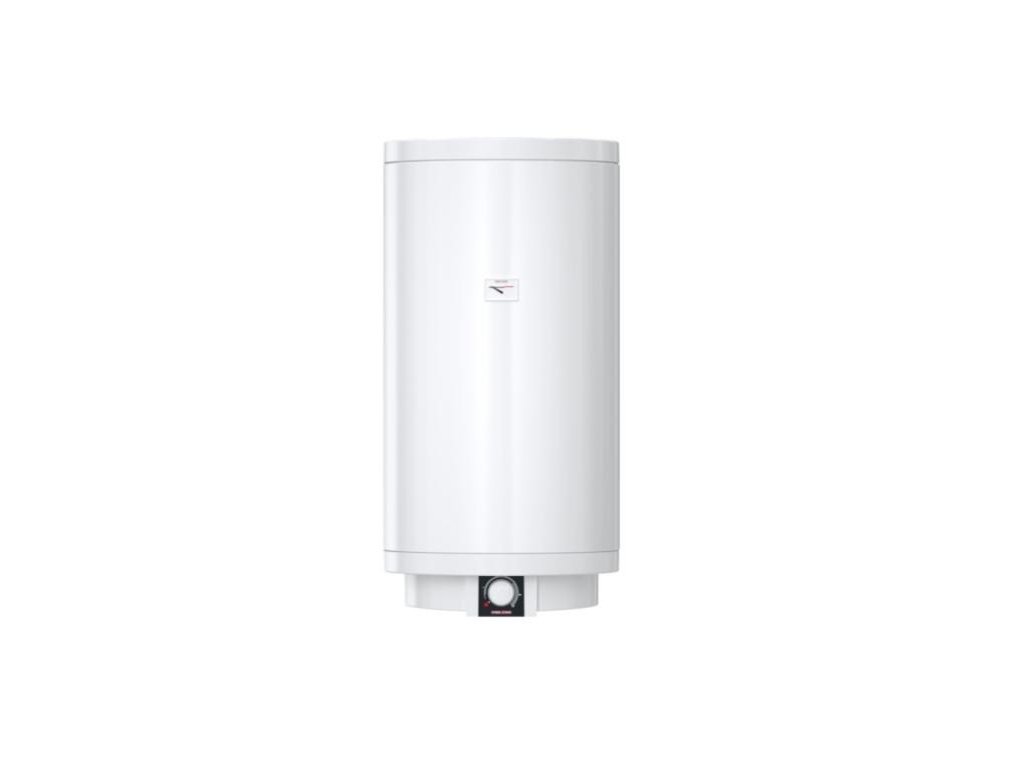
Stiebel Eltron / Tatramat PSH100Trend – an electric (direct-heated) water heater with a volume of 100 litres, matching exactly the flat-without-a-boiler scenario from the example above. Works completely independently of heating, just plug it into the electricity supply. Price from €442.44. |
When choosing between individual brands, it is also worth looking at how the various product ranges compete with each other in terms of insulation, warranty and available accessories – a clear comparison can be found in the article Comparison of tank brands.
Frequently asked questions (FAQ)
How big a tank do I need for a family of four?
For a typical family of 3 – 4, a volume of 150 to 200 litres is generally suitable as a guideline. If the household has a bathtub, more than one bathroom, or members shower one right after another, we recommend leaning towards the upper end of this range, or 200 litres and above. You can find the exact calculation procedure in the article What volume of tank do I need.
What is the difference between a tank and a boiler (water heater)?
In everyday speech both terms are used as synonyms and refer to the same appliance for storing and maintaining domestic hot water ready for immediate use. What actually differs is the heating principle – indirect-heated (connected to a boiler, heat pump, or solar via an exchanger) versus direct-heated/electric (with its own electric element, independent of any other heat source).
Is an indirect-heated or an electric tank worthwhile?
If you already have a functional heat source at home (gas boiler, heat pump), an indirect-heated tank is generally worthwhile – it uses the existing source and is cheaper to run. If you have no heat source, or the tank is out of reach of the boiler room (for example a flat without a boiler), an electric tank is the only realistic solution. A detailed comparison can be found in the article Indirect-heated vs. electric tank.
How often does the magnesium anode need to be checked?
The magnesium anode is a part of enamelled tanks that gradually dissolves, protecting the inner shell against corrosion. It is a consumable part that needs to be checked regularly and replaced according to its state of wear – specific intervals and procedure can be found in the article Service, maintenance and anode protection of a tank. A neglected anode check is the most common cause of a tank shell developing a premature hole.
Can I hang a horizontal tank on a plasterboard partition?
A filled tank with a volume of 150 – 200 litres, together with the water, weighs considerably more than the empty vessel alone, so a sufficiently load-bearing wall or a separate mounting structure is needed, not a plasterboard partition alone without reinforcement. When planning horizontal installation, it is advisable to have the load-bearing capacity of the wall or structure assessed in advance, before buying a specific model.
What is a solar tank and is it worthwhile for me?
Compared to an ordinary indirect-heated tank, a solar tank has an additional second exchanger – one is connected to solar collectors, the other provides top-up heating from a classic source (boiler, heat pump, electric element). It is especially worthwhile if you already have solar collectors, or genuinely plan to have them in the future – in that case it is more advantageous to choose a solar tank right away rather than replacing the entire appliance later. More in the article How a solar tank works.
How long does a tank keep hot water ready for use?
A tank is designed to keep water at the set temperature over a longer period thanks to the shell's insulation, not just to heat it once. The actual time water stays sufficiently warm without further heating depends on the insulation quality of the specific model, the ambient temperature, and how often the tank is drawn down and topped up with cold water during the day. In normal operation, however, the connected heat source or electric element automatically takes care of continuous top-up heating, so you should not rely solely on accumulated temperature.
Can a tank be additionally connected to an existing boiler?
Yes, it is common to add an indirect-heated tank to an already existing boiler, provided the boiler has sufficient output and a suitable connection for DHW top-up (a common function of most modern condensing boilers). For an additional installation, it is advisable to also have the boiler room's spatial options assessed, since larger stationary tanks require sufficient ceiling height.
Related topics
- What volume of tank do I need
- Indirect-heated vs. electric tank
- Vertical vs. horizontal tank
- How a solar tank works
- Quick-heat and WiFi electric water heaters
- Service, maintenance and anode protection of a tank
- Comparison of tank brands
Have a question about choosing a tank?
Not sure what to decide, or dealing with a specific situation in your household? Write to us – we are happy to help.