
Frequently Asked Questions about Tanks and Boilers
A hot water storage tank or boiler is an appliance that a household typically buys only once every fifteen to twenty years – and that is exactly why so many questions pile up when choosing one. In this article we have collected the most common questions our customers ask us when choosing a tank through the atria.sk e-shop, and grouped them into five topic areas: selection and volume, indirect-heated versus electric solutions, installation, service and maintenance, and finally a comparison of brands. If you are looking for an answer to a specific problem, jump straight to the relevant section – if you are choosing a tank completely from scratch, we recommend reading all the sections in order and, if you are interested, also the more detailed standalone articles we link to throughout.
Selection and volume
The tank volume is the first and most important decision – an incorrectly estimated volume is difficult to fix afterwards, usually only by replacing the entire appliance. You can find a detailed procedure in the separate article What volume of tank do I need; here we summarise the most common questions we receive on this topic.
How big a tank do I need based on the number of people in the household?
The basic rule is based on the number of people in the household and their consumption habits. For a single person living alone (a studio flat, a cottage for individual use), a tank with a volume of 30 to 50 litres is sufficient. For a couple, a range of 80 to 100 litres is suitable, which covers regular showering as well as an occasional bath. A family of three to four should count on a volume of 150 to 200 litres, while for larger households with five or more members we recommend a tank from 200 litres upwards, ideally with a more powerful heat exchanger so that the water can be heated quickly enough even during repeated draw-off in the morning or evening. These figures are only a guideline – actual demand is also affected by whether you have a bathtub, how many bathrooms in the house draw water at the same time, and the output of the heat source itself.
Is it better to buy a larger tank "just in case"?
The seemingly logical thought "better bigger, to be safe" also has a downside. A larger tank means a higher purchase price, greater space requirements and, above all, higher standby heat losses – meaning more energy is spent simply maintaining the temperature of water you are not currently using. For indirect-heated tanks connected to a condensing boiler or heat pump, it is also true that too large a volume takes longer to heat up at the same source output, which can be unpleasant especially in the morning after heavy draw-off the previous evening. We therefore recommend choosing a volume based on the household's actual current needs with a modest reserve of roughly 10 to 20 percent, not based on a hypothetical future situation that may never materialise.
What is the difference between the terms "tank" and "boiler" (water heater) – are they used interchangeably?
In everyday speech both terms are often used interchangeably, but technically they differ slightly. "Boiler" (water heater) is a colloquial term most often associated in practice with an electric water heater with its own heating element (coil) – i.e. an appliance that works independently, without a connection to a boiler. "Storage tank" is a broader, more technically precise term that also covers indirect-heated tanks warmed through a heat exchanger connected to a boiler or heat pump. You can find a detailed comparison of both solutions in the article Indirect-heated vs. electric tank. In this article we use both terms practically as synonyms, since that is exactly how customers themselves ask about them.
How to choose a tank if I am planning an extension or an additional bathroom in the future?
If you know that the household will expand within a few years – an extra bathroom is added, an attic is converted for living, or the household gains new members – it makes sense to choose a solution one volume tier higher than you currently need, or to opt for a tank with a more powerful heat exchanger that can reheat faster under higher draw-off. However, this should not be overdone towards extreme "just in case" volumes – as mentioned above, an unnecessarily large tank means unnecessary heat losses for years until the household actually expands. A sensible compromise is one typical tier higher (for example 200 l instead of 150 l), not a jump of two tiers at once.
What tank volume is suitable for a bathroom with a bathtub?
Filling a standard bathtub uses approximately 120 to 150 litres of hot water mixed with cold, which in practice means the tank itself should have a volume of at least 150 litres if the bathtub is to be filled with hot water within a reasonable time without having to wait for reheating. In a household where the bathtub is used regularly and there is also a second bathroom with a shower in the house, it is advisable to count on a volume of 200 litres or more. The output of the heat exchanger or heating element is also important – even a large tank with slow reheating can "fall behind" household demand when the bathtub is filled repeatedly during the day.
An example of a suitable solution for a family of three to five with a bathtub is a stationary indirect-heated tank with a volume of 200 litres:
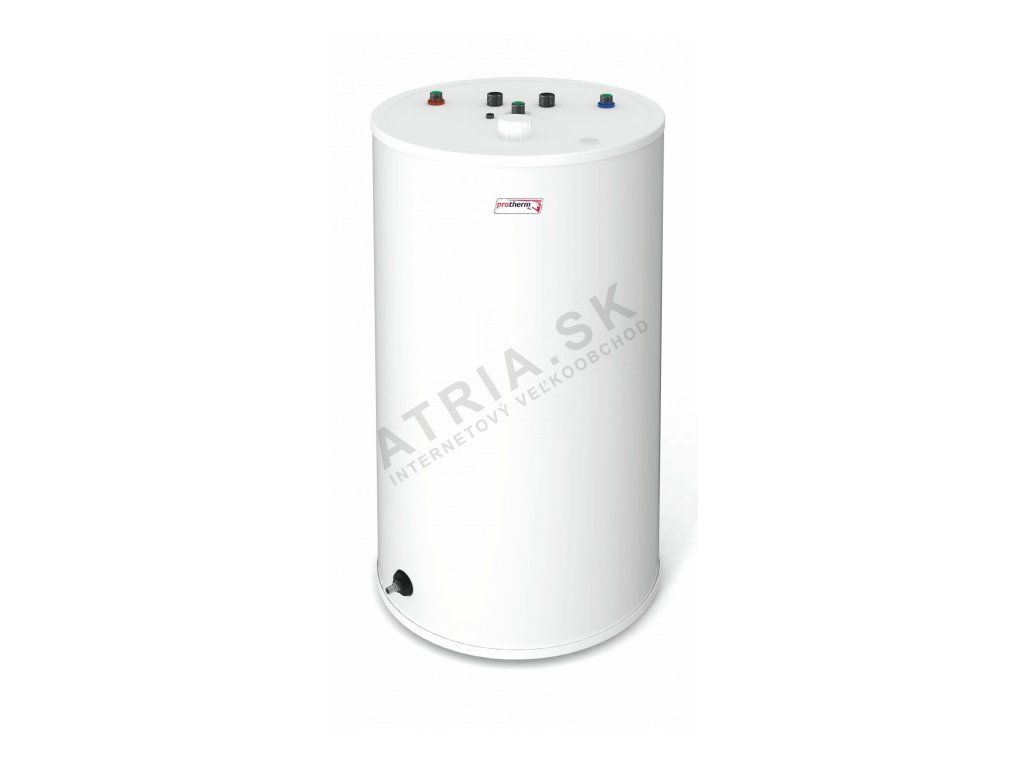 |
Protherm FE 200 BM – stationary tank, 200 l Indirect-heated stationary tank with a volume of 200 litres, suitable for a 3- to 5-member household with a bathtub and multiple draw-off points. Price: €822.66 View product → |
Indirect-heated vs. electric
The second most common decision concerns the heating principle – whether to choose a tank connected to an existing heat source or a standalone electric water heater. You can find a detailed comparison in the article Indirect-heated vs. electric tank.
What is the principle of an indirect-heated tank?
An indirect-heated tank does not contain its own heat source – the water inside it is heated through a heat exchanger (a coiled or finned tube inside the vessel) through which heating water from the boiler or heat pump flows. This is therefore "indirect" heating: heat is not transferred directly into the domestic water by electrical resistance, but indirectly through a closed heating circuit. The advantage is that you make use of an already existing, and generally more efficient, heat source – a gas condensing boiler or a heat pump – instead of paying for more expensive electricity for direct heating.
When is an electric water heater worthwhile instead of an indirect-heated tank?
An electric water heater makes sense anywhere a boiler or heat pump is not available, or where connecting to an existing heat source would be costly or impractical – typically flats without central heating, cottages and cabins used seasonally, studio flats, or even a second bathroom far from the boiler room, where a hot water pipe run would cause large heat losses. An electric water heater is also worth considering where photovoltaics is installed and there is surplus self-generated electricity during the day that would otherwise be sold back to the grid at a low price.
Is running an indirect-heated tank cheaper than an electric one?
In most cases yes, provided the heat source is an efficient condensing boiler or, especially, a heat pump – the cost of heat from these sources, converted per kilowatt-hour, generally comes out lower than direct heating with electricity from the grid. The difference is greatest with heat pumps, which can produce several kilowatt-hours of heat from a single kilowatt-hour of electricity. With an old, inefficient gas boiler, or with a very low price for your own electricity (for example from photovoltaics), the difference can narrow, so it is worth calculating specifically for your own situation rather than relying only on the general rule.
What is a solar tank and how does it work?
A solar tank is a special type of indirect-heated tank that has two separate heat exchangers inside instead of one. The lower, larger exchanger is connected to solar collectors on the roof and is used as the primary heat source when the sun is shining. The upper, smaller exchanger is used for top-up heating – it is connected to a boiler or an electric heating element and brings the water temperature up to the required level when solar gains are not sufficient (cloudy days, winter, evening hours). Thanks to this arrangement, a solar tank can significantly reduce the cost of heating domestic hot water for most of the year. More details in the article How a solar tank works.
Can electric heating be combined with solar or with a boiler?
Yes, most tanks on the market, including electric water heaters, allow bivalent operation – i.e. a combination of two heat sources. A common setup, for example, is one where solar or indirect heating is the primary source, and the electric heating element serves only as a backup or supplementary source in case the main source does not heat sufficiently. Likewise, many purely electric water heaters have an additional heat exchanger that can later be connected to a boiler if the household's conditions change.
A typical example of a solution with two heat exchangers is the following solar tank:
 |
Bosch WS 290-5 EP1 C – solar tank, 290 l Tank with two heat exchangers (solar circuit + top-up heating from the boiler), volume 290 litres, suitable in combination with solar collectors. Price: €1,175.00 View product → |
Real-world examples
Theory is a good starting point, but when choosing a tank, specific situations we repeatedly encounter in customer advice help the most. Below are two illustrative scenarios without specific names – they are a generalisation of typical cases, not a real story about a specific customer.
Scenario 1: a family house with a heat pump – 150 or 200 litres?
A family of four in a newly built house installed an air-to-water heat pump and had to choose between an indirect-heated tank with a volume of 150 or 200 litres. The house has one bathroom with a shower enclosure and one children's bathroom with a small bathtub, and morning peaks (two showers in quick succession) are common. According to the basic rule, a volume of 150 litres would be sufficient for four people, but given the bathtub and simultaneous morning draw-off, a volume of 200 litres with a more powerful heat exchanger was ultimately chosen. The reason was simple: a heat pump heats water more slowly than, for example, a gas condensing boiler, so a larger volume reserve compensates for the lower instantaneous reheating output and prevents a situation where the second person to shower gets only lukewarm water. In this case, the price difference between the 150 and 200 litre volumes was negligible compared to the comfort the family gained.
Scenario 2: a flat with an electric water heater – shortage of hot water in the morning
In a smaller flat with an 80-litre electric water heater, it repeatedly happened that the second household member showering in the morning after the first no longer had enough hot water – a classic problem in small flats without central heating, where an electric water heater is the only realistic solution. Instead of replacing it with a significantly larger tank (which would also be problematic for space in a small bathroom), a combination of two measures proved more practical: shifting the main heating cycle to the cheaper night tariff using a scheduler, and using the quick-heat function offered by several modern electric water heaters controlled via a mobile app, activated shortly before the morning draw-off. The result was that the tank had practically its full volume of hot water available in the morning without having to change the pipework or enlarge the vessel at the expense of bathroom space.
Installation
Even a correctly chosen tank needs professional installation to work safely and efficiently. More in the article Installing and connecting a tank to a boiler.
Can a tank be connected to any boiler?
Practically yes, indirect-heated tanks are standardised and connect via common hydraulic fittings that most gas and electric boilers and heat pumps on the market can handle. More important than the fitting compatibility itself is matching outputs – the tank's heat exchanger surface area should correspond to the output of the heat source, otherwise either the water heats up unnecessarily slowly (an undersized exchanger) or the boiler's full potential is not used. We therefore recommend consulting a technician who knows the parameters of your specific boiler or heat pump when choosing, or contacting our support directly through the e-shop.
What are the space requirements for a vertical versus a horizontal tank?
Vertical (upright) tanks take up a smaller floor area but need sufficient room height – in boiler rooms and utility rooms with standard ceiling height this is usually not a problem. Horizontal (lying) tanks, on the other hand, are suitable where only low space is available, for example a suspended ceiling void, space above wall cabinets, or a low utility room under a staircase, where a vertical model simply would not fit. A complete comparison of both variants, including advantages and disadvantages, can be found in the article Vertical vs. horizontal tank.
Is installing a hot water tank demanding – can a layperson do it?
Positioning and physically connecting the tank itself is not extremely complicated, but we recommend entrusting it to a qualified plumber or technician experienced with heating technology. The reason is not only the hydraulic connection, but also correct setting of the safety valve and expansion vessel, and, in the case of electric water heaters, also safe electrical wiring including earthing and a residual current device. Incorrect installation can lead to leaks, reduced efficiency, or in the worse case a safety risk, and DIY installation can also affect recognition of the manufacturer's warranty.
What else is needed besides the tank itself?
A functional tank installation generally includes a safety valve on the cold water side (protecting against excess pressure), an expansion vessel that compensates for the volumetric expansion of heated water, a circulation pump on the heating circuit side for indirect-heated tanks, and thermal insulation of the distribution pipework, which reduces heat losses on the way between the tank and the draw-off point. For most purchases on atria.sk, this accessory equipment needs to be bought separately, so we recommend checking the list of recommended accessories on the product page directly when ordering a tank.
Service and maintenance
Regular maintenance extends a tank's service life by many years and is clearly cheaper than premature replacement of the entire appliance. You can find a detailed guide in the article Service, maintenance and anode protection of a tank.
How often does the magnesium anode need to be checked and replaced?
The magnesium anode is a sacrificial metal component that gradually dissolves inside the tank instead of the vessel's own shell corroding – this is known as cathodic protection. We recommend having the anode checked at least once a year, ideally during the annual service inspection of the boiler or heat pump. If the anode is significantly worn (reduced to less than half its original diameter), it needs to be replaced – this adjustment is cheap and quick compared to a possible repair or replacement of the entire tank.
What happens if the anode is not checked for a long time?
If the anode is completely consumed and not replaced, its protective function ceases, and corrosion gradually begins to affect the steel shell of the tank itself. This can result in the vessel gradually developing holes and leaking water, which in practice means the entire tank has to be replaced instead of a cheap anode replacement for a few euros. Furthermore, several manufacturers make the validity of an extended warranty conditional on demonstrable regular anode checks, so neglecting it can also mean losing the right to a warranty repair in case of another problem.
How often does a tank need to be de-scaled or drained?
The frequency depends mainly on the water hardness in the given location – with harder water, limescale and sediment build up faster inside the tank, reducing heating efficiency and possibly clogging the outlet valve. In most Slovak households it is advisable to perform de-scaling and a check once a year, usually as part of a comprehensive service inspection. In areas with extremely hard water, a shorter interval may be more suitable, or consideration of a water softener, which addresses the whole problem systematically at the source, not just on one appliance.
What is the service life of a tank and when does it need to be replaced?
With regular maintenance (anode check, de-scaling, service inspection), the typical service life of a quality tank ranges between 15 and 20 years, and even longer for some quality stainless-steel designs. Without maintenance, the service life can be significantly shortened, in worse cases to less than 10 years, since nothing prevents corrosion damage. Signs to consider replacement include repeated need for repairs, visible corrosion on the shell, water leaks, or a significant drop in heating efficiency that cannot be resolved by routine servicing.
What to do if the tank has stopped heating water sufficiently?
The first step is to check the thermostat setting – sometimes it is simply a target temperature that has been accidentally lowered. If the setting is correct, the likely causes are a heat exchanger fouled with limescale (reducing heat transfer), a worn or faulty electric heating element in electric models, or a fault in the circulation pump on the heating circuit side for indirect-heated tanks. In such a case we recommend contacting a service technician who can diagnose the problem on site – we do not recommend DIY intervention in the electric heating element or the pressure system without appropriate qualification.
An example of an electric water heater with an easily accessible anode and simple servicing is the following model:
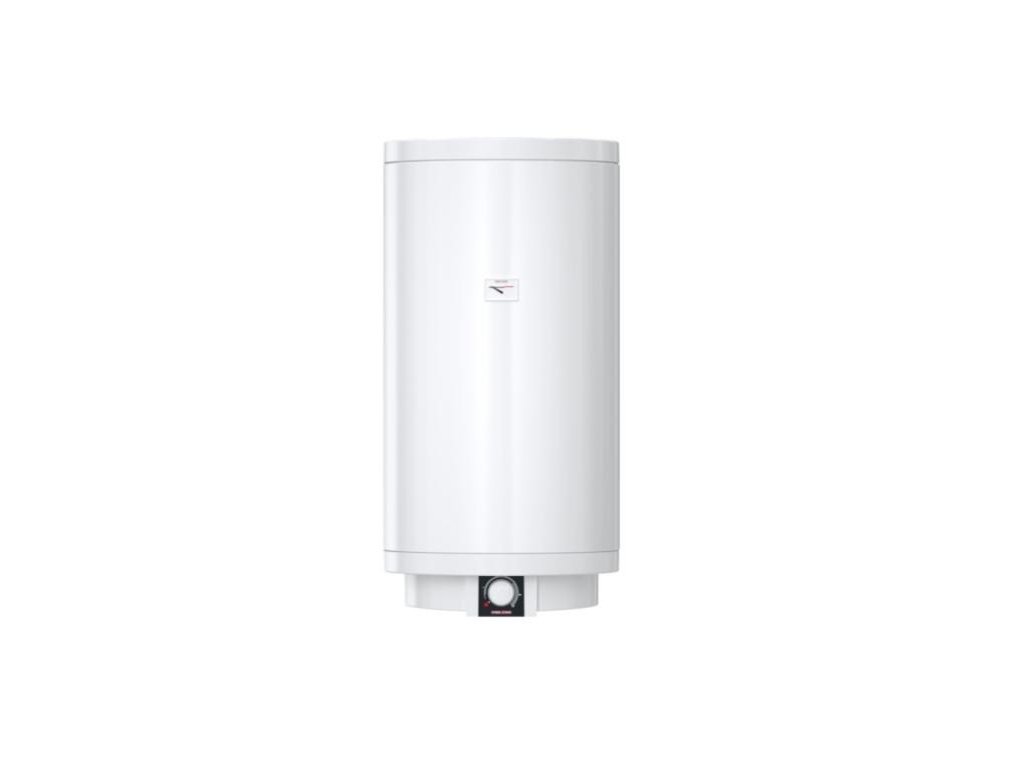 |
Stiebel Eltron / Tatramat PSH100Trend – electric water heater, 100 l Electric storage water heater with a volume of 100 litres, suitable for flats and households without central heating, easy maintenance and access to the anode. Price: €442.44 View product → |
Brands
The choice of brand affects build quality, spare-part availability and, for indirect-heated tanks, compatibility with a specific boiler. See the overview of the main differences in the article Comparison of tank brands.
What is the difference between Protherm, Bosch and Buderus for indirect-heated tanks?
All three brands are established heating technology manufacturers with a long tradition and a wide range of volumes and designs (vertical, horizontal, solar). Protherm is extremely widespread in Slovakia thanks to a large network of service technicians and the popularity of its boilers, with which its tanks combine naturally. Bosch offers a broad portfolio including solar solutions with two heat exchangers and is known for an emphasis on insulation quality, which reduces heat losses. Buderus, part of the same group as Bosch, targets more demanding installations and larger volumes, often in combination with its own condensing boilers or heat pumps. In general, none of these brands is a "bad choice" – in practice, the decision more often depends on compatibility with the existing boiler and the available budget.
Is Stiebel Eltron or Tatramat a quality brand for electric water heaters?
Yes, this is a proven combination – the German company Stiebel Eltron is one of the world's leading manufacturers of electric water heaters, and part of its range is supplied to the Slovak and Central European market under the Tatramat brand, which has a long tradition and a good name here. This combination combines German build quality with the availability of service and spare parts directly in Slovakia, which is a practical advantage for electric water heaters, which are mostly found in flats without a professional boiler room.
What does the Quadroflex brand offer in the electric boiler segment?
Quadroflex positions itself as a modern brand focused on electric water heaters with added value – typically features such as quick-heat (faster reaching of operating temperature with a larger instantaneous draw-off), control and scheduling of heating via WiFi and a mobile app, and a flat design that saves space in smaller bathrooms. These features are especially useful in scenarios similar to the second real-world example above – in flats where space is limited and where scheduling heating outside peak times brings real savings as well as comfort. More about these features in the article Quick-heat and WiFi electric water heaters.
Does the tank have to be the same brand as the boiler?
No, technically this is not a necessary condition – indirect-heated tanks connect via standardised hydraulic fittings that are compatible across most brands on the market. Nevertheless, combining a tank and boiler from the same manufacturer has certain advantages: matched performance parameters, easier communication with a service technician who knows the whole system from one manufacturer, and in some cases also more favourable extended-warranty conditions when registering a complete system. If you plan to combine brands, we recommend checking that the heat exchanger's output matches the heat source's output before purchase, ideally with the help of our customer advisory service.
An example of a modern electric water heater with quick-heat and WiFi control:
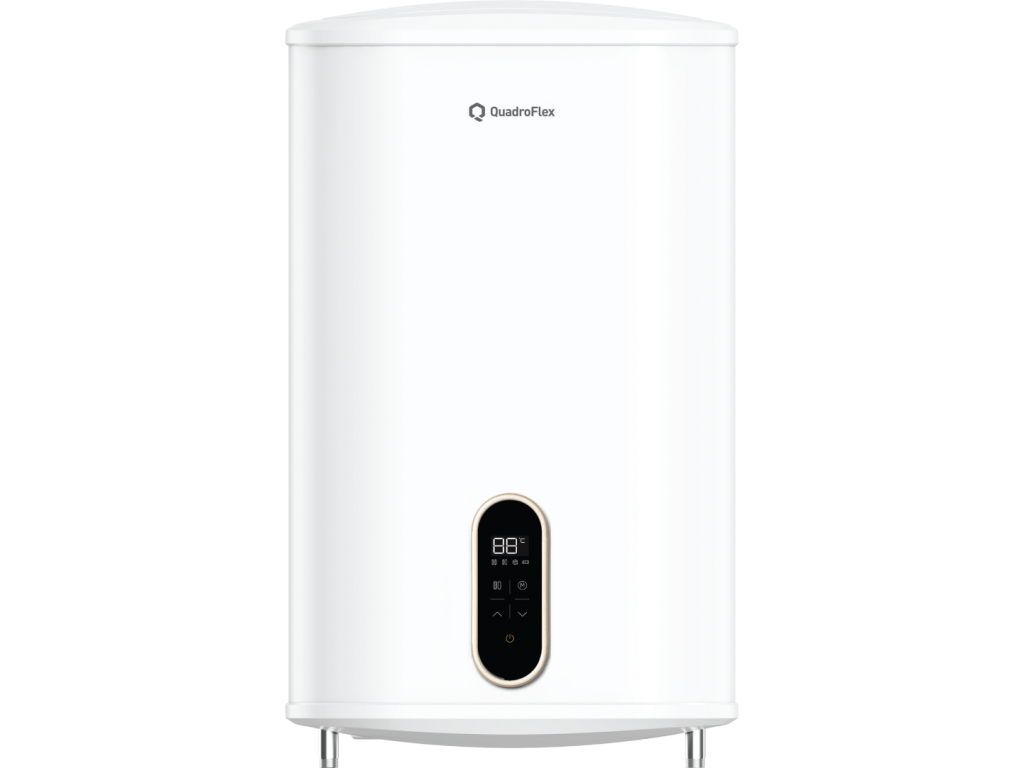 |
QFE 100 FLAT WIFI electric water heater, 100 l Flat design, quick-heat function and heating control via WiFi and a mobile app, suitable for smaller bathrooms. Price: €400.30 View product → |
Related topics
This page is a summary overview for the entire Tanks and Boilers category. You can find more detailed coverage of individual topics in the following articles of our Knowledge Center:
- How to choose a hot water tank – a complete step-by-step selection process
- What volume of tank do I need – a detailed table of volumes by household
- Indirect-heated vs. electric tank – a detailed comparison of principles and costs
- Vertical vs. horizontal tank – which design suits which space
- How a solar tank works – the principle of two heat exchangers and savings from the sun
- Quick-heat and WiFi electric water heaters – modern features of electric water heaters
- Installing and connecting a tank to a boiler – everything installation involves
- Service, maintenance and anode protection of a tank – how to extend the appliance's service life
- Comparison of tank brands – Protherm, Bosch, Buderus, Stiebel Eltron/Tatramat, Quadroflex
You can find the full range of tanks and boilers directly in the Tanks and Boilers category on atria.sk, where we can also advise you individually on choosing a specific model according to the parameters of your boiler, heat pump or electrical connection.
Have a question about choosing a tank?
Not sure what to decide, or dealing with a specific situation in your household? Write to us – we are happy to help.