
How a Solar Tank Works
How a solar tank works: the principle that connects the sun with the boiler
The sun can heat water for free – the only problem is it shines when it wants to, not when we need hot water for showering, washing dishes, or bathing children. This exact mismatch between the supply of solar energy and actual hot water demand is what a solar tank solves – a specially designed hot water tank that combines two independent heat sources within itself. One is a solar circuit connected to collectors on the roof, the other is a classic top-up source, most often a boiler or an electric heating element.
The result is a system that works reliably in all weather, all year round. When the sun shines, the solar circuit covers most or even all of the household's hot water needs for free. When the sun does not shine enough – on a cloudy day, at night, or in winter – the tank is automatically reheated by the second source, so the household is never left without hot water. This article explains exactly how a solar tank works on the inside, why it has two heat exchangers, how its behaviour changes over the year, what volume to choose, and how it can be combined with various types of top-up heating. At the end you will also find two real-world examples and answers to the most common questions.
If you are looking at choosing a tank in general, we recommend first reading the basic overview How to choose a hot water tank – this article focuses specifically on the solar version and builds on it.
Two heat exchangers, two heat sources – the heart of a solar tank
The key difference between an ordinary indirect-heated tank and a solar tank is that a solar tank generally has two separate heat exchangers inside, positioned one above the other. This is not an arbitrary design – it follows from how heat from solar collectors physically differs from heat from a boiler, and how flowing water in a tank naturally stratifies temperature from a cold bottom to a warm top.
The lower exchanger: harvesting solar energy
In the lower, coldest part of the tank is the first, lower heat exchanger, connected by hoses to the solar collectors on the roof. This position is not accidental – cold water always sinks to the bottom of the vessel, so it is precisely there that the temperature difference compared to the heat-transfer fluid from the solar circuit is greatest and heat transfer is most efficient. The solar circuit also operates at considerably lower temperatures than, for example, the outlet from a gas boiler – even a slightly overcast day or an early morning is enough for a solar collector to heat the fluid to a temperature already sufficient to transfer heat to the cold water at the bottom of the tank.
This is why the lower solar exchanger generally has a larger heat-transfer surface than an ordinary exchanger connected to a boiler – the large surface compensates for the lower temperature of the heat-transfer fluid and enables efficient solar energy harvesting even when solar radiation is not at its maximum. Thanks to this, the solar system "harvests" energy in practically any weather where the collectors receive at least some light – not just on a clear summer midday, but also partly through cloudy skies, or in spring and autumn.
The upper exchanger or electric element: reassurance when the sun is not enough
In the upper part of the tank, where the hottest water ready for immediate draw-off is kept during operation, is the second heat source – either another exchanger connected to a boiler (gas, heat pump, or another central heating source), or an electric heating element built directly into the tank shell. The role of this second source is simple but essential: to guarantee that the water in the upper, draw-off part of the tank never drops below a safe and comfortable temperature, regardless of how much (or how little) energy the sun provided that day.
This top-up heating starts automatically, controlled by the tank's thermostat or control system – if the solar circuit cannot maintain the set temperature by itself, the boiler or electric element makes up the missing difference. This regular top-up function also has an equally important role from a hygiene point of view: periodically raising the water temperature to a higher value (generally at least occasionally above 60 °C) is a commonly recommended measure against Legionella growth in the tank, and it is precisely the second, top-up source that reliably ensures this even when solar energy alone would not be enough to reach that temperature.
Thanks to this pair of heat exchangers, a solar tank is therefore never "weather-dependent" in the bad sense of the word – it works reliably even without a single ray of sunshine, with the only difference being that in that case the entire heating load shifts to the second source, and gas or electricity consumption for water heating temporarily increases. The system therefore combines the best of both worlds: when the sun shines, it saves; when it does not, it works like an ordinary, reliable tank.
How a solar tank behaves over the year
One of the things households with a solar tank appreciate the most is how visibly its behaviour, and especially its top-up consumption, changes between summer and winter. It is not a system with constant output – its main characteristic is precisely that it dynamically adapts to the current availability of solar energy.
Summer: when the sun does almost all the work
During the summer months, when there is plenty of solar radiation and the days are long, the solar circuit can cover a large part or even the household's entire daily hot water needs without the second, top-up source having to switch on at all. This is precisely the period when a solar tank brings the biggest real savings – the boiler can remain practically shut down for hot water heating for entire weeks during this time, or it may only start up sporadically, when there are several cloudy days in a row or consumption is exceptionally high (for example during a visit, several children bathing one after another, and so on).
The large volume of the tank plays an important role in this period – solar energy is collected during the day, when the collectors work best, and stored in the form of hot water in the tank for later use, for example in the evening, when the sun is no longer shining but the family is showering after a full day. The tank thus also functions as a heat "battery" – it does not produce energy continuously at the moment of consumption, but accumulates it during the day and releases it as needed.
Winter and transitional periods: top-up heating takes over
In winter there is considerably less solar radiation and its intensity is lower – shorter days, a low sun, frequent cloudy weather. The solar circuit still contributes to heating during this period (mainly by pre-heating the cold incoming water at the bottom of the tank, which reduces the amount of energy the second source must supply), but its share of total heating drops significantly. The top-up source – boiler or electric element – takes over the main load, working considerably more intensively and more often in winter than in summer.
This is completely normal and expected behaviour, not a system fault. It is important to understand that even in winter the solar circuit is not "useless" – even partial pre-heating of the cold incoming water means less energy the boiler has to supply to reach the target temperature. Real savings in the winter months are therefore lower than in summer, but they still exist. The transitional periods – spring and autumn – bring the most noticeable benefit, when there is already (or still) enough solar radiation to significantly ease the load on top-up heating, though not enough to fully replace the second source.
What volume to choose for a solar system
The volume of a solar tank is generally chosen larger than the volume of an ordinary, purely indirect-heated tank would be for the same household. The reason is logical and follows directly from how a solar system works: the tank must have enough space to accumulate solar energy collected during the sunny hours of the day, so it can be used later, when the sun is no longer shining but the family wants to draw hot water in the evening or morning.
If a solar tank were too small, the collectors would heat it to maximum temperature already in the early morning hours, and their potential would go unused for the rest of the day – solar energy would simply be "wasted", because it would have nowhere to go. A larger volume, on the other hand, allows the tank to "fill up" with heat gradually throughout the whole sunny day, while also having a sufficient reserve of hot water for the evening or morning consumption peak, when the sun is no longer shining.
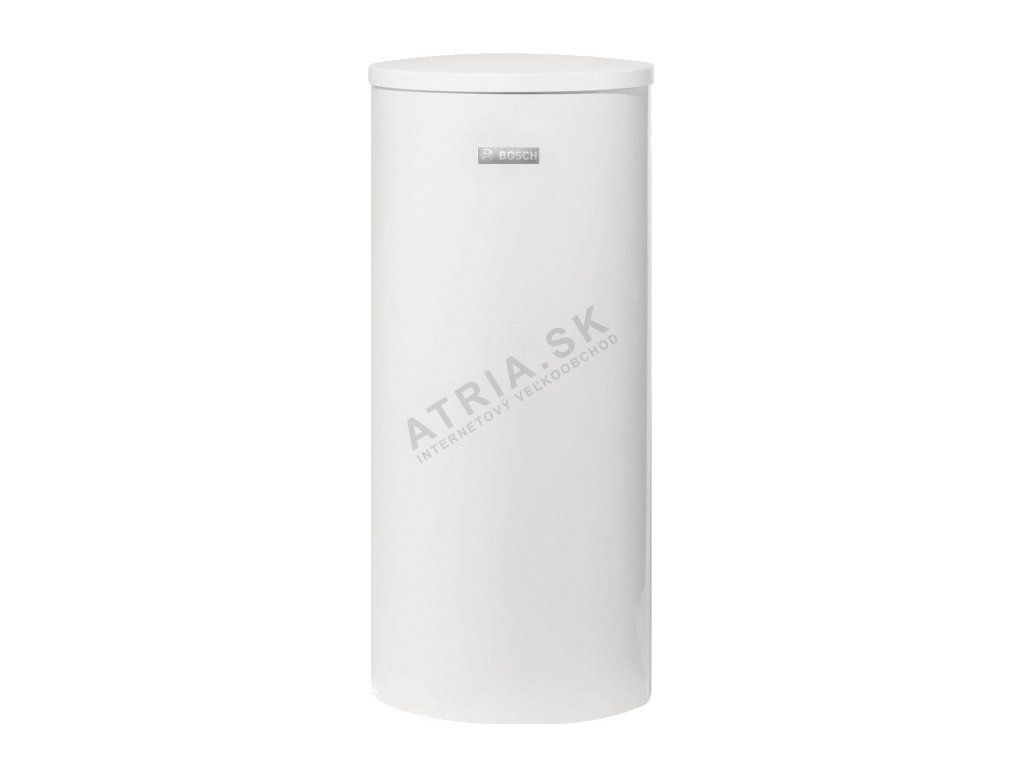
The Bosch WS 290-5 EP1 C can serve as a guiding example – a solar tank with a volume of 290 litres and two heat exchangers, i.e. considerably larger than what is generally recommended for a classic indirect-heated tank for a similar household without a solar system. The exact recommended volume always depends on the number of household members, the size and orientation of the solar collectors, and how large a share of consumption the system is meant to cover – the greater the "solar contribution" to total annual consumption is meant to be, the larger a tank volume is generally chosen. You can find a detailed procedure for calculating volume by number of people and usage pattern in the separate article What volume of tank do I need.
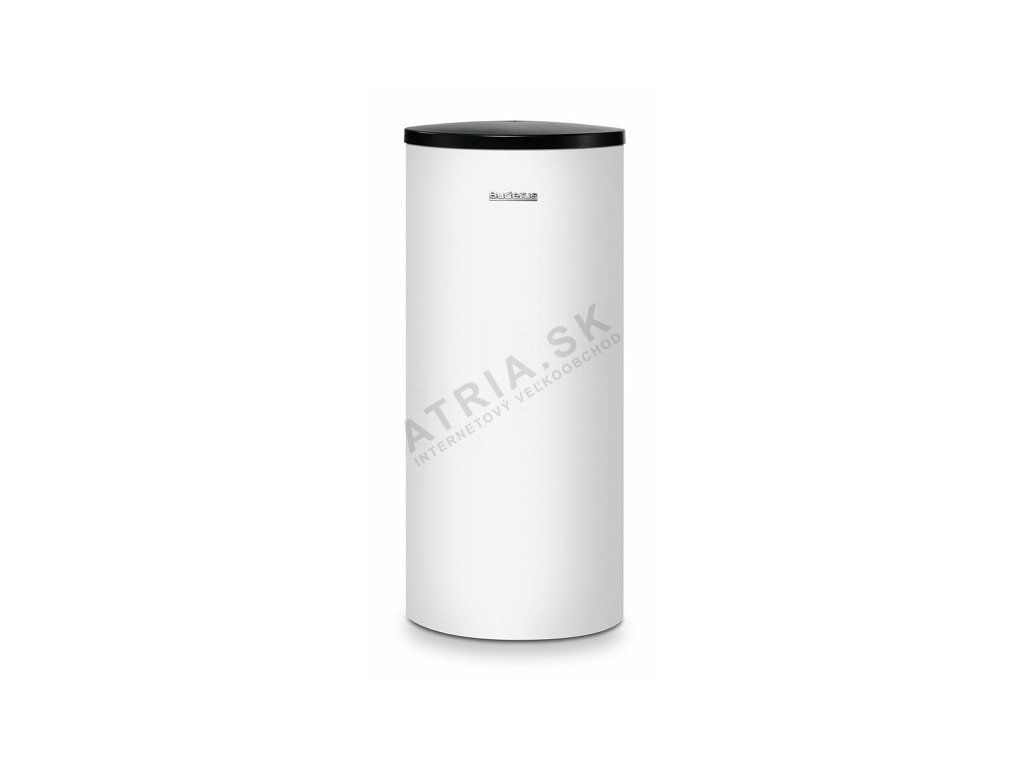
For comparison, if a household does not have solar collectors and is not planning any, an ordinary indirect-heated tank without a solar exchanger is sufficient, for example the Bosch WST 200-5 C with a volume of 200 litres – it has only a single exchanger connected to the boiler and is typically smaller, since it does not need extra space to accumulate solar energy.
Combination with various top-up sources
A solar tank is not a closed, standalone system – its second, top-up source can be adapted to what the household already has or plans to have. We most often encounter two variants.
A gas or other boiler as the second source
The most common combination in family houses is a solar tank connected via one exchanger to solar collectors, and via the second (upper) exchanger to an existing or new central heating condensing boiler. In this arrangement the boiler acts as a "backup" source – in summer it barely intervenes, in winter and transitional periods it takes on most of the top-up heating. This combination is typical especially where a house also has radiator or underfloor heating, so the boiler runs all year round anyway, meaning using it for hot water top-up in the solar tank incurs no additional investment cost for an extra heat source.
An example of a tank suitable for connection to a boiler (though without a solar exchanger, for comparison of a purely boiler-based variant) is the Buderus Logalux range, specifically for example the Buderus Logalux SU 160/5W – this type of tank is also commonly manufactured in a solar version with a second, lower solar exchanger for connection to collectors, with the two-exchanger principle described above in this article applying equally across all brands.
An electric element as the second source
Where a house has no gas boiler, or where hot water needs to be heated independently of the heating source (for example outside the heating season, when the boiler is fully switched off), an electric heating element built directly into the tank is used as the second source. The electric element has the advantage of being independent of any other system in the house – it works standalone, connects to the ordinary electricity supply, and is controlled by its own thermostat.
This combination is typical especially for cottages, recreational properties, or households where the owner does not want to keep a boiler running just for occasional hot water top-up. The downside is the higher price of electricity compared to gas for the same amount of heat delivered, which is important to bear in mind especially in the winter months, when the electric element works more intensively. You can find more about the differences between the various types of top-up heating in the article Indirect-heated vs. electric tank.
Regardless of the combination chosen, correctly connecting a solar tank to an existing heating system also requires suitable hydraulic connections, circulation pumps, controls and safety components for the solar circuit (for example a high-temperature-resistant expansion vessel for the solar circuit). You can find a detailed installation and connection procedure in the separate article Installing and connecting a tank to a boiler.
Real-world examples
Scenario 1: A family house with solar collectors on the roof
Picture a standard scenario of a family of four living in a detached family house with a south-facing pitched roof, on which two to three flat-plate solar collectors are mounted. The house has a condensing gas boiler that provides central heating as well as top-up heating for a solar tank with a volume of around 300 litres, connected to the collectors via the lower exchanger.
During the summer months, roughly from May to September, the collectors deliver enough heat that the boiler practically does not need to run for hot water heating – the family has hot water for showering, washing dishes and bathing the children mostly from the sun, with the exception of a few consecutive cloudy days, when the boiler briefly switches on to make up the missing difference. During this period the family genuinely notices lower gas bills, since the boiler runs only for space heating (practically not at all outside the heating season).
In winter the situation changes – shorter days and a low sun mean the collectors deliver only part of the required energy, mainly in the form of pre-heating the cold incoming water. The main heating load in this period is taken over by the boiler, which runs regularly, much as it would with an ordinary, non-solar tank. Over the year the family thus genuinely notices seasonal variation – summer with minimal gas consumption for hot water, winter with typical consumption comparable to a house without a solar system, and spring/autumn somewhere in between.
Scenario 2: A summer cottage with a limited heating source
The second typical example is a recreational cottage used mainly from spring to autumn, where the owner does not want to deal with running a gas boiler just for hot water. One or two smaller solar collectors are mounted on the cottage roof, connected to a solar tank with an electric top-up element instead of a boiler exchanger.
In this case, during summer weekends and holiday stays, the collectors cover the vast majority of hot water needs – the owner arrives at the cottage on Friday evening and, thanks to heat accumulated from the sun during the day, has hot water available almost immediately, without needing to switch on the electric element. The electric element serves more as a supplementary safeguard in case of several days of bad weather, or an off-season stay in spring or autumn, when there is no longer as much solar radiation. Thanks to this arrangement, the owner does not need to deal with any additional heating source – the electrical supply, which is already run to the cottage anyway, fully takes on the role of a boiler.
Recommended products
Below is an overview of the specific tanks mentioned in this article – a solar tank with two heat exchangers, its comparison with an ordinary indirect-heated tank without a solar exchanger, and another representative model suitable for combination with a boiler.
| Image | Product | Description | Price |
|---|---|---|---|
 |
Bosch WS 290-5 EP1 C | Solar tank, 290 l, 2 heat exchangers (lower solar + upper top-up) | €1,175.00 |
 |
Bosch WST 200-5 C | Indirect-heated tank without a solar exchanger, 200 l – for comparison with a classic solution without solar collectors | €1,227.54 |
 |
Buderus Logalux SU 160/5W | Logalux range tank, 160 l, suitable for combination with a central heating boiler | €1,085.08 |
When choosing a specific model, we always recommend checking whether the given tank really has a second (solar) exchanger – some models within the same range are also manufactured in a purely indirect-heated version without a solar connection, as is the case with the Bosch WST 200-5 C model in the table above, which serves more as a comparison example of a classic solution without solar collectors.
Frequently asked questions (FAQ)
Does a solar tank work without sun too, for example at night or on a cloudy day?
Yes. This is exactly why a solar tank also has a second, top-up source – a boiler or an electric element. When the solar circuit is not delivering enough heat, the system automatically reheats the water using the second source, so the household has hot water available at all times, just with higher energy consumption from the top-up source.
Why does a solar tank have two exchangers instead of one?
Because the solar circuit and the classic source (boiler) operate at different temperatures and have different roles. The lower exchanger connected to the collectors has a larger surface area and is positioned in the colder part of the tank, so it can efficiently harvest even milder solar radiation. The upper exchanger or electric element tops up the upper, draw-off part to the required comfortable and hygienically safe temperature.
Is a solar tank worthwhile even without planning to replace the boiler?
Yes, a solar tank can be connected to an existing boiler – there is no need to replace the central heating source itself as well. The boiler simply takes on the top-up role via the upper exchanger, exactly as it would top up an ordinary non-solar tank, just with a lower frequency of running thanks to the contribution from the sun.
What volume of solar tank do I need for a typical family?
The volume always depends on the number of people in the household, the size and orientation of the solar collectors, and how large a share of consumption the solar system is meant to cover. In general, a solar tank tends to be larger than an ordinary indirect-heated tank for the same household, since it needs extra space to accumulate solar energy for later use. You can find the exact calculation procedure in the article What volume of tank do I need.
Is the electric element in a solar tank more expensive to run than a boiler?
In most cases yes, since the price of electricity per unit of heat delivered tends to be higher than for gas. However, an electric element is particularly suitable where the household has no other suitable source available (for example cottages or properties without a gas boiler) – in that case it replaces the entire top-up system without the need to invest in a boiler.
How often does the tank need to be topped up to a higher temperature for hygiene reasons?
Regularly and briefly raising the water temperature in the tank to a higher value is a commonly recommended preventive measure against Legionella growth, especially in the upper, draw-off part of the tank. It is precisely the second, top-up source (boiler or electric element) that ensures this function, since the solar circuit alone may not always reach the required temperature.
Can a solar tank also be used for space heating, not just hot water?
The standard solar tanks described in this article are primarily intended for preparing domestic hot water. There are also combined tanks (so-called combined or bivalent tanks) intended to also support space heating, but these have a different design with additional exchangers and go beyond the scope of this article – if you are interested in such a solution, we recommend consulting our sales team.
How is a solar tank maintained, and what needs to be checked regularly?
A solar tank needs similar regular maintenance to a classic indirect-heated tank – checking anode protection against corrosion, occasional descaling of the exchangers, and checking the tightness of connections. The solar circuit additionally requires occasional checks of the pressure and condition of the heat-transfer fluid in the solar collectors. You can find a detailed procedure in the article Service, maintenance and anode protection of a tank.
Related topics
- How to choose a hot water tank
- What volume of tank do I need
- Indirect-heated vs. electric tank
- Installing and connecting a tank to a boiler
- Service, maintenance and anode protection of a tank
Have a question about choosing a tank?
Not sure what to decide, or dealing with a specific situation in your household? Write to us – we are happy to help.