
What Tank Volume Do I Need
What Tank Volume Do I Need?
The question "what size hot water tank should I buy" sounds simple at first glance, but in practice it is one of the most common causes of dissatisfaction with a hot water system. A tank that is too small means a cold shower at exactly the moment it hurts most - during the morning rush, when the whole family takes turns in the bathroom. A tank that is too large, on the other hand, unnecessarily burdens the household budget and the boiler, because it heats and maintains a volume of hot water that is never actually used. While for most household appliances the rule "the more power the better, nothing will go wrong" applies, this is not so clearly true for a hot water tank - it's a balance between comfort, heat losses and investment.
In this article we go through a practical procedure for calculating, or at least reliably estimating, the tank volume you need. We look at guideline tables based on the number of people in the household, at how much habits (showering versus filling a bathtub) influence consumption, at how the heating power of the reheating source (i.e. which boiler or which heat exchanger is connected to the tank) enters the equation, and finally we show a concrete calculation for two real-life scenarios. At the end you will find recommended models by volume and answers to the most frequently asked customer questions.
Guideline Volume by Number of People
The quickest and most reliable initial guide is the number of people who will regularly use the tank. This is not just about the current number of household members - it is also important to factor in how many people are typically at home during the peak period (typically morning before leaving for work and school, or evening). Below is a guideline table that we also use ourselves when recommending tanks to atria.sk customers:
| Number of people in the household | Guideline tank volume | Note |
|---|---|---|
| 1 person | approx. 30 - 50 l | Studio flat, cottage, small apartment without a bathtub |
| 2 people | approx. 80 - 100 l | A couple, 2-room apartment, no regular bathtub filling |
| 3 - 4 people | approx. 150 - 200 l | Typical family, one bathroom, occasional bathtub use |
| 4 - 5 or more people | 200 l and more | Larger family, multiple bathrooms, regular bathtub filling |
This table is deliberately split into broader ranges, because actual consumption varies significantly between individual households. Two equally sized families can have completely different volume needs - one showers, the other regularly fills the bathtub; one has its morning peak spread out over time (everyone gets up at a different time), the other needs hot water for three people at once within half an hour. That's why the table is only a first step - in the following chapters we show how to refine the estimate based on your specific habits and on how strong a heat source you have or plan to connect to the tank.
It's also important not to forget the household's future development. If you are planning to expand the family, rent out a room, have a grandparent move in, or anything else that increases the number of people using hot water, it's worth choosing one volume category higher right from the start. Replacing an undersized tank a few years later is always more expensive and more complicated (new installation, new connection, possibly also space adjustments) than a slightly higher initial investment in a larger volume. The same recommendation applies in the opposite direction - if you know that, for example, the children will soon move out and the household will shrink, there's no need to buy an extremely large tank "just in case", because unnecessary volume means unnecessary heat losses for years to come.
The Effect of Habits: Shower vs. Bathtub
The number of people is only half of the equation. The second, equally important variable is household habits - specifically whether household members mostly shower or regularly fill the bathtub. The difference in consumption is significant and in practice often determines whether you should choose a smaller or larger volume within the recommended range from the table above.
Regular showering with a modern shower head and a reasonable shower duration consumes roughly 30 - 60 litres of hot water per person. Filling a standard bathtub, on the other hand, requires 150 - 200 litres of hot (or mixed) water at once - a volume that on its own corresponds to almost the entire capacity of a typical family tank. If the bathtub is filled right after other household members have showered, the tank simply may not be able to reheat the water fast enough, even if its total volume would normally be sufficient for a "shower-only" household.
The practical recommendation is: if someone in your household fills the bathtub regularly or at least several times a week, count on a volume in the upper half of the recommended range for your number of people, or one category higher. Conversely, if the household is purely "shower-based" and members shower with a reasonable time gap between them (not all at once within fifteen minutes), you can safely stay at the lower end of the recommended range, or combine a smaller tank volume with a more powerful reheating source, which we discuss in the next chapter.
You also shouldn't forget other sources of hot water consumption that are often underestimated - a dishwasher and washing machine connected to hot water (if you have them connected this way), the kitchen sink during major cleaning or meal preparation, or an outdoor shower in the garden or on the terrace in summer. For a more precise volume estimate, it's worth adding up all these hot-water "appliances" that may run at the same time as regular showering or bathing, especially in households where several activities happen around the same time (for example in the evening, when laundry, showering and washing dishes all happen at once).
The Effect of Reheating Power
Tank volume is not the only parameter that determines how much hot water you actually have available. Equally important is the reheating power - i.e. how quickly the tank can reheat cold water to the required temperature after part of the volume has been used up. In practice this parameter is also referred to as the tank's "recovery rate" and depends on the type of heating.
For an indirect-heated tank (i.e. one heated via a heat exchanger connected to a boiler or heat pump), the reheating speed is determined by a combination of two things: the size and efficiency of the heat exchanger inside the tank, and the power of the connected heat source. A more powerful boiler can "turn over" the same tank volume, i.e. reheat it to operating temperature, significantly faster than a weaker source. In practice this means that two households with an equally large, for example 160-litre, tank can have noticeably different hot water comfort depending on how powerful a boiler is connected to it.
This effect has a practical consequence when choosing a tank: if, for space or financial reasons, you're considering a somewhat smaller tank than would correspond to the "ideal" volume from the table, this can be partly compensated for with a more powerful reheating source. Conversely, if you know that the boiler or heat pump you have or plan to install has a lower to medium output (which is typical especially for some air-to-water heat pumps operating in economy mode), it's worth choosing a somewhat larger tank volume, so the tank works more as a hot water reserve than relying on fast continuous reheating.
For electric tanks (with their own heating element/coil), the situation is a bit different - the heating speed is determined by the power of the built-in element, which for typical domestic models is usually 1.5 - 3 kW. This is noticeably less than the output a gas condensing boiler can deliver through a heat exchanger, which is why electric tanks generally take longer to fully heat "from zero" and rely more on being reheated gradually throughout the day and during a cheaper night tariff, rather than on fast reheating during a peak. A more detailed comparison of both types can be found in the article Indirect-heated vs. Electric Tank.
Summary: volume and reheating power work like connected vessels. Higher reheating power reduces, to a certain extent, the requirements for volume, and conversely, a larger volume reduces the requirement for the heat source to be extremely powerful. When choosing a specific model, therefore, always consider both parameters together, not just the litres stated in the product name.
Risks of a Tank That Is Too Small or Too Large
To make it clear why it's worth spending time on choosing the right volume, let's look at the specific risks of both extreme situations.
A tank that is too small
The most common and most frustrating problem is "running out of hot water" exactly when several household members need it one after another - typically the morning peak, when two to four people take turns in the bathroom within 30 - 45 minutes. The tank simply cannot reheat the water fast enough for the last person in line to be as satisfied as the first. This problem is made significantly worse if, in addition, someone fills the bathtub or starts a dishwasher/washing machine connected to hot water during this peak.
An undersized tank also causes the heat source (boiler or heat pump) to switch on more often (it has to reheat water more frequently and in shorter intervals), which for some types of heat sources slightly reduces their lifespan and efficiency - frequent short cycles are generally less efficient than longer, smooth operating cycles.
A tank that is too large
The opposite extreme has a different, less dramatic, but financially real cost. A tank with a volume significantly above the household's actual needs has to keep its entire volume hot, including the part that is never actually used during the day. This means higher heat losses (even a well-insulated tank loses heat to its surroundings throughout the day and night) and therefore higher operating costs for maintaining temperature with no benefit whatsoever.
An oversized tank is also a larger initial investment (higher purchase price and potentially more demanding installation due to size and weight) and takes up more space in the utility room or bathroom, which can be a real limitation in smaller apartments.
The ideal state is therefore a volume that covers even the household's peak consumption with a small margin (not with a two- to three-fold margin), combined with a reheating source that can continuously replenish the volume used. In the next chapter we show this principle using two concrete real-life examples.
A Real-Life Example with Calculation
Theory is useful, but choosing the right volume is best understood through a concrete calculation. Let's look at two illustrative scenarios that commonly come up when advising atria.sk customers.
Scenario A: a four-member family, mostly showering, a house with a gas boiler
Let's imagine a four-member household - two adults and two children - in a house with a medium-output gas condensing boiler. The family mostly showers; the children use the bathtub occasionally, roughly once or twice a week. The morning peak typically looks like this: between 6:30 and 7:15, all four household members take turns in the bathroom, each showering for about 5 - 8 minutes.
The guideline consumption per shower with a standard shower head is 40 - 50 litres of hot water. For four people in a row, this means a total consumption of 160 - 200 litres of hot water within less than an hour. Since showering happens sequentially (not simultaneously), the tank has a few minutes between individual showers for partial reheating, which, with a good heat exchanger and medium to higher boiler output, means that even a 160-litre tank can realistically cover this peak without major problems - part of the volume is continuously replenished by reheating even during the peak itself.
For this household, a good compromise between comfort and cost is therefore a tank with a volume of around 160 - 200 litres, for example a model such as the Buderus Logalux SU 160/5W, or a somewhat larger 200-litre tank if the family plans to expand in the coming years or wants a bigger reserve in case more regular bathtub use is added over time.
Scenario B: a family with two bathrooms and regular children's baths, heat pump
The second scenario is more demanding in terms of volume. It concerns a family of five (three adults including a grandparent and two young children); the house has two bathrooms, and the children take a bath (not a shower) every evening, since they are of preschool age. The heat source is a medium-output air-to-water heat pump, which generally reheats water more slowly than a comparable-class gas condensing boiler.
Evening scenario: around 18:00, the bathtub is filled for the children (consumption of 120 - 150 litres of mixed water); at roughly the same time or shortly after, two adults shower (a further 80 - 100 litres combined); and in the evening a dishwasher connected to hot water also runs (a further approximately 10 - 15 litres, depending on the model). The sum of these needs within one to two hours reaches 210 - 265 litres, significantly above the typical family tank of 150 - 160 litres.
Since a heat pump generally has a lower instantaneous reheating power than a gas boiler, continuous replenishment of the used volume during the evening peak is slower, and with a smaller tank the household would really feel that the last person in line "runs out" of hot water or gets noticeably cooler water. For this household it is therefore advisable to choose a volume at the upper end of, or above, the recommended range for five people - i.e. 250 to 290 litres, for example a Bosch WS 290-5 EP1 C model, which provides sufficient reserve to cover the entire evening peak even with the slower reheating typical of a heat pump.
These two scenarios show why there is no single universal number "for a five-member family" - it's the combination of the number of people, habits (shower vs. bathtub) and heat source output that decides. If you are not sure which category your household falls into, we recommend choosing a volume in the upper part of the recommended range - the price difference between, say, 160 and 200 litres is usually much lower than the cost of an additional replacement of an undersized tank a few years later.
Recommended Models by Volume
Based on the principles above, we have prepared an overview of four proven tank models across different volumes, from smaller households to larger families with higher demands.
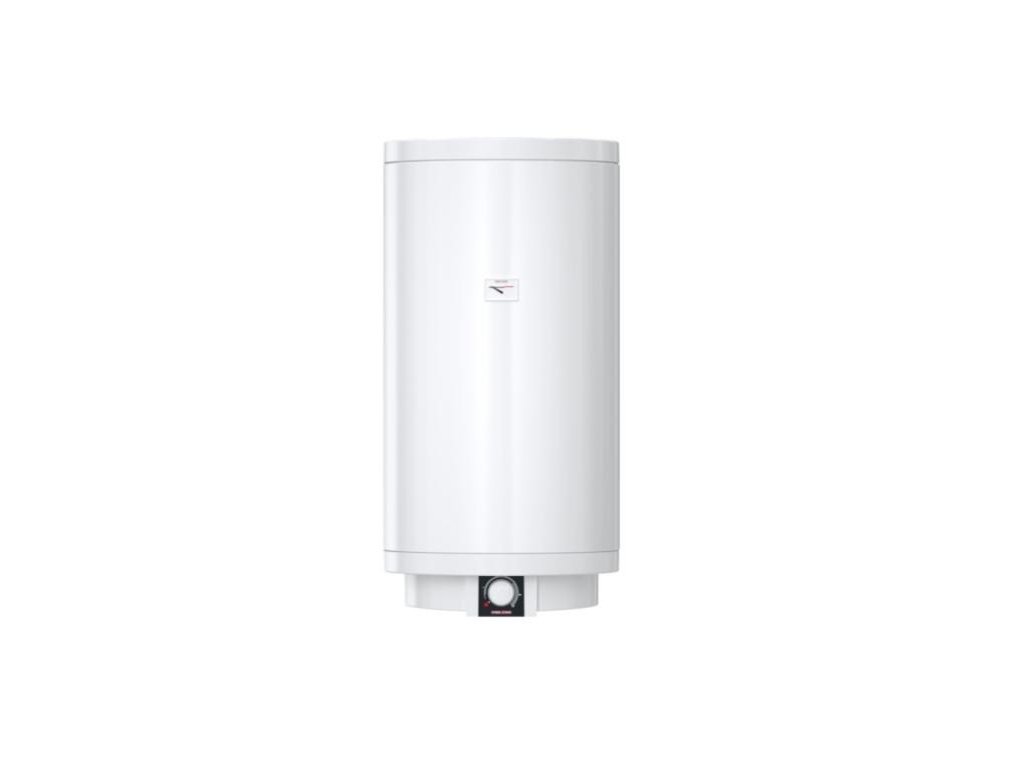
Tatramat PSH100Trend (100 l)
Volume: 100 litres - suitable for 1 - 2 people, smaller apartments, cottages and households without regular bathtub filling.
Price: €442.44
View product →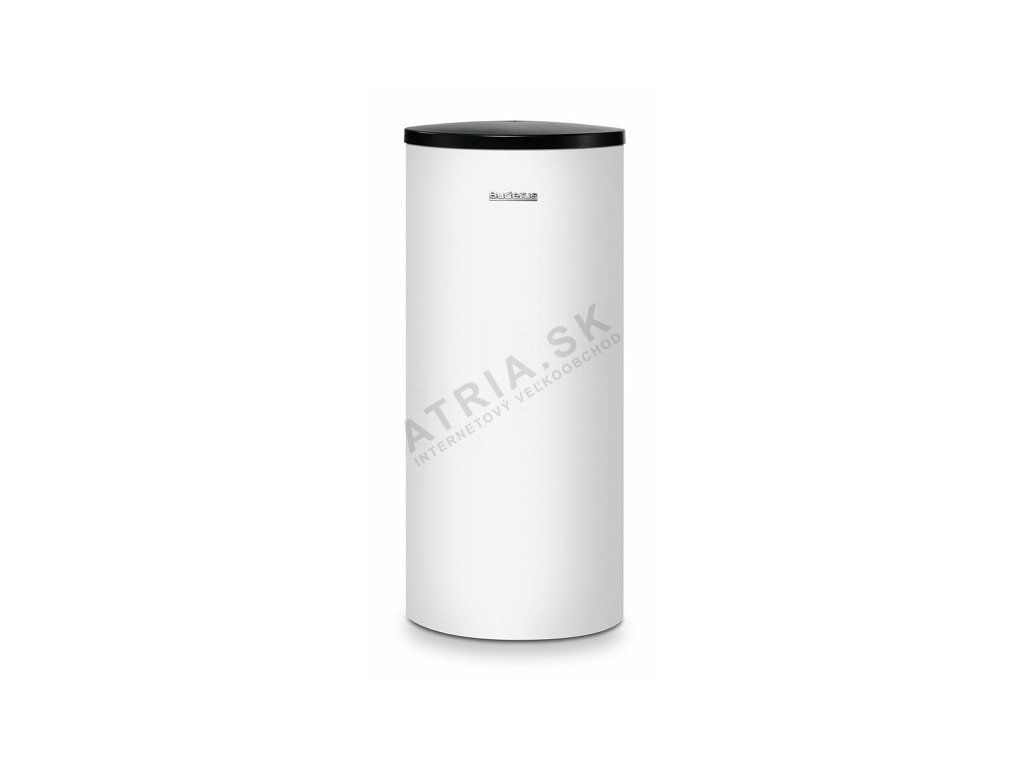
Buderus Logalux SU 160/5W (160 l)
Volume: 160 litres - optimal for a medium-sized family (3 - 4 people), mostly showering, one bathroom.
Price: €1,085.08
View product →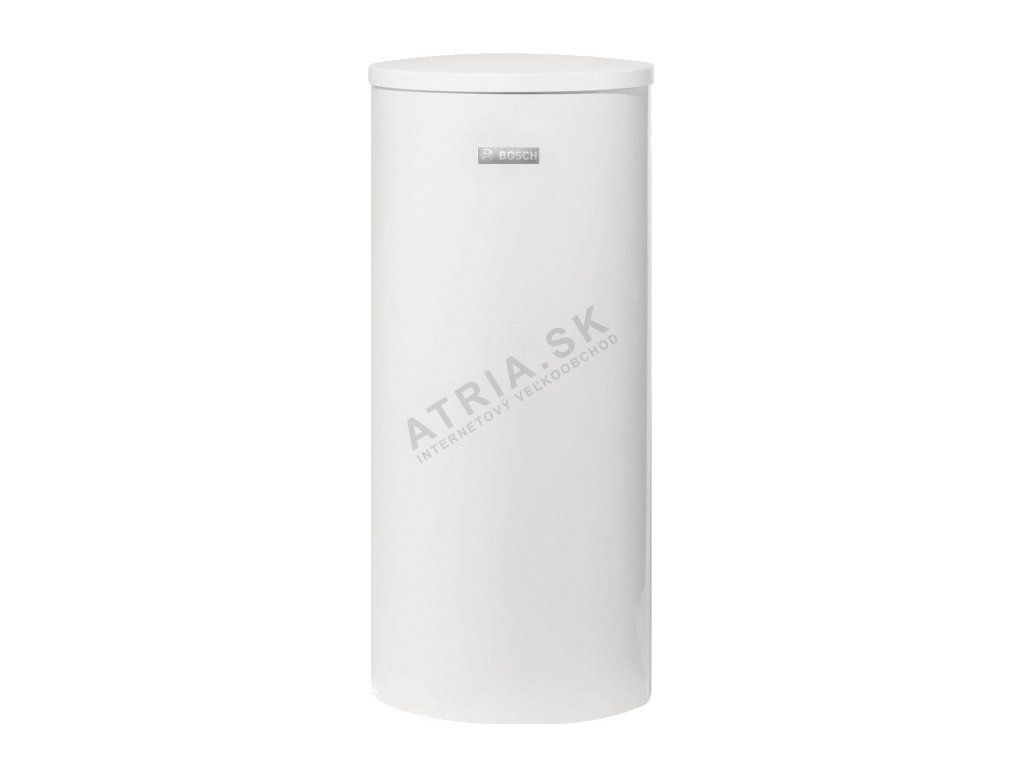
Bosch WST 200-5 C (200 l)
Volume: 200 litres - suitable for a larger family (4 - 5 people), occasional bathtub filling, a slight reserve for the future.
Price: €1,227.54
View product →
Bosch WS 290-5 EP1 C (290 l)
Volume: 290 litres - the largest volume in the range, suitable for larger households with two bathrooms, regular bathtub bathing, or a slower reheating source (e.g. a heat pump).
Price: €1,175.00
View product →When choosing a specific model, in addition to the volume itself, we recommend also considering the type of tank (indirect-heated vs. electric, or combined), the installation orientation (vertical vs. horizontal, depending on available space) and the brand relative to your existing heat source - we cover these topics in more detail in the related articles below.
Frequently Asked Questions (FAQ)
How exactly can I find out how many litres of hot water my household actually consumes?
The most accurate way is to observe the household's actual behaviour for a few weeks - how many times a day someone showers, how often the bathtub is filled, whether a dishwasher or washing machine connected to the hot supply runs. If such observation isn't possible, use the table in this article as a guide based on the number of people, and adjust it upward if your household tends towards bathtub bathing or a simultaneous peak of several people at once.
Is it better to choose a larger tank "just in case"?
A small reserve makes sense, especially if you expect a change in the number of people in the household. However, an extremely oversized tank means unnecessary heat losses and a higher initial investment with no real benefit. We recommend choosing the upper end of the recommended range for your number of people, not automatically the largest available model.
Can I compensate for a smaller tank with a more powerful boiler?
Yes, partly. A more powerful heat source can reheat the used volume faster, which reduces the risk of "running out" of hot water when several people take turns one after another. However, we recommend relying on this compensation only to a certain extent - with simultaneous (not sequential) consumption by several people at once, for example filling the bathtub while another household member is showering, even a very powerful source cannot make up for insufficient volume.
What is the difference in consumption between showering and filling a bathtub?
Regular showering consumes roughly 30 - 60 litres of hot water per person, while filling a standard bathtub requires 150 - 200 litres at once. If a bathtub is used regularly in your household, this single action alone can consume almost the entire volume of a typical family tank at once.
Is it worth choosing a larger tank with a heat pump than with a gas boiler?
Generally yes. Heat pumps usually have lower instantaneous reheating power than gas condensing boilers, so reheating the used volume takes longer. If the heat source is a heat pump, we recommend choosing a tank volume at the upper end of, or slightly above, the recommended range for the given number of people.
What if I plan to expand the household or rent out a room in the future?
In that case, we recommend choosing a volume corresponding to the future, not just the current, number of people. Replacing the tank with a larger model is always more costly (new installation, possibly adjustments to the connection and space) than a slightly higher initial investment in one volume category larger right from the start.
Does tank volume also affect how fast hot water flows from the tap?
Not directly - flow rate (how many litres per minute flow from the tap or shower) is mainly determined by the fitting, the pressure in the water system and the diameter of the pipework, not the tank volume. The tank volume determines how long you can draw hot water at the required rate before it runs out and before it can be reheated sufficiently.
Does it make sense to combine a smaller tank with instantaneous heating for peak situations?
In some cases yes, but this is more of an exceptional solution for specific situations (for example a cottage used irregularly) than a standard recommendation for a typical family household. For permanent living with regular daily consumption, it is more reliable to choose a correctly sized tank following the procedure in this article.
Related Topics
- How to Choose a Hot Water Tank - a complete guide to choosing, including type, material and connection.
- Indirect-heated vs. Electric Tank - differences in reheating speed, operating costs and suitability for different heat sources.
- Vertical vs. Horizontal Tank - how to choose based on the available space in the utility room or bathroom.
- Service, Maintenance and Anode Protection of a Tank - how to extend tank lifespan and prevent corrosion.
- Comparison of Tank Brands - Buderus, Bosch, Vaillant, Protherm, Viessmann and other brands compared.
Have a Question About Choosing a Tank?
Can't decide, or dealing with a specific situation in your household? Write to us - we're happy to help.