
Frequently Asked Questions about Resistance Cables
Resistance heating cables are among those products where a customer is usually only really sure of their choice after asking the second or third question. On paper, the principle looks simple - electric current flows through a resistance wire, which heats up, and the heat is transferred into the floor, a pipe or a roof gutter. In practice, however, the right solution differs depending on the purpose (floor tempering, roof de-icing, pipe frost protection), the output per metre or per square metre, the way it is controlled, and whether the cable will be embedded in concrete, laid loose or fitted under a roof covering. In this article we've gathered the questions our customers ask most often lately - by phone, via chat and directly in the shop - and we answer them in a practical way, with concrete numbers and without unnecessary sales talk. Where it makes sense, we also add a specific product from our range that is commonly used in that situation.
How a resistance heating cable actually works
A resistance heating cable is essentially a long electrical conductor with increased electrical resistance, designed to heat up evenly along its whole length as current passes through it. Unlike an ordinary electrical cable, where resistance is deliberately minimised (so energy isn't wasted as heat but delivered where it's needed), here the resistance is deliberately engineered in. The core of the cable is usually a resistance alloy wire, surrounded by heat-resistant insulation (most often fluoropolymer or cross-linked polyethylene, depending on the application), then shielding (a metal braid or foil with an earthing conductor) and an outer sheath resistant to moisture, UV radiation or mechanical damage - depending on whether it's a cable for concrete, for a roof or for a pipe.
There are essentially two technical types: constant-wattage resistance cables (most common for floor heating and roof de-icing) and self-regulating cables, which change their resistance - and therefore their output - according to the surrounding temperature: where it's warmer, the cable "pulls back" its output, where it's colder, it increases it. Self-regulating cables are mainly used to protect pipes against freezing, because they can be crossed and overlapped without risk of overheating, which is not possible with constant-wattage cables.
The diagram below shows, in simplified form, the path by which electrical energy is converted into heat delivered to the space you want to heat or protect from frost:
What cable output per metre or square metre do I actually need
This is by far the most common question, and the answer varies significantly depending on the purpose. Customers often don't realise that a "heating cable" isn't a single product with one recommended output, but a group of solutions where the required output per square metre (or per running metre for pipes and gutters) can differ up to threefold depending on what the cable is supposed to do.
For floor heating intended as the main heat source in a room, an output of 100 to 160 W/m² of installed area is usually assumed (not the whole floor area of the room, but the area where the cable is actually laid - usually 70 to 80% of the floor, since cable isn't laid under furniture). For floor tempering, i.e. when the cable is only meant to "take the chill off" the tiles while the main heat source is something else (radiators, a heat pump), 10 to 20 W/m² is enough. For de-icing roofs and gutters against ice build-up, the calculation is 20 to 30 W per running metre of gutter or downpipe, or 200 to 300 W/m² for area installation at the roof edge. For pipe frost protection, output is given per running metre of pipe and is usually between 10 and 16 W/m, higher for outdoor pipes in windy locations.
The chart below compares these four common applications and the typical output range used for each - the figures are taken directly from the ranges given above:
A practical example from a typical installation: a bathroom with an installed area of 4 m², where the floor cable is meant to be the sole heat source, needs a total output of roughly 600 W at 150 W/m². By contrast, for the same area where the cable only tempers the tiles alongside a working radiator, a cable with a total output of around 60 to 80 W is enough. The difference is therefore almost tenfold, and this is exactly where most complaints arise - a customer buys a cable based on area alone, regardless of purpose, and ends up either unhappy that it doesn't heat enough, or has overpaid for output they never use.
What if I also need to solve hot water in the same building
In garden cabins, workshops, garages or smaller premises where you're dealing with de-icing a water supply pipe or floor tempering, it's common for the customer to also be looking, at the same stage, for a source of hot domestic water that was previously missing on site. In such standalone buildings, where it makes no sense to run hot water from the main building, small instantaneous or pressure water heaters mounted directly at the outlet have proven their worth.
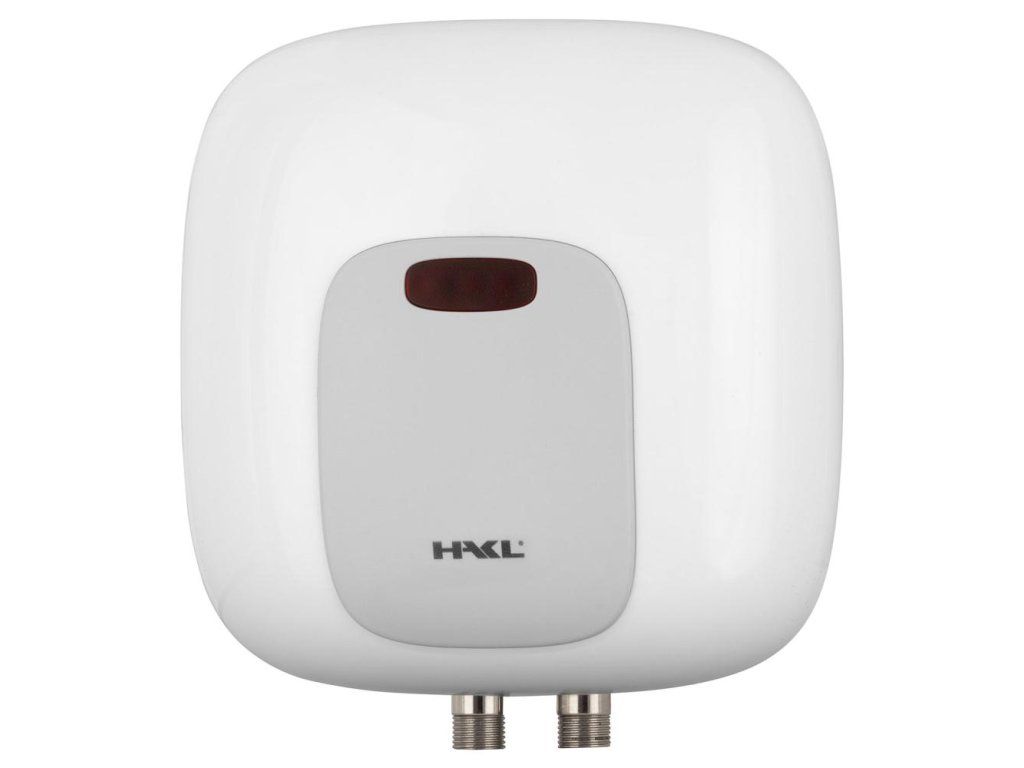 |
HAKL PL 3.5kW water heater - a small pressure water heater suitable for a single point of use (for example a sink in a workshop or garden cabin) where you're also protecting the supply pipe with a resistance de-icing cable at the same time - both installations share the goal of protecting the space against freezing and a lack of hot water away from the main heating system. Price from EUR 95.94. |
Installation - what to watch out for
Installing a resistance cable isn't complicated, but there are a few steps where mistakes are most often made. First, the cable must never be shortened or extended arbitrarily - it's sold either in fixed lengths with a factory-crimped end, or by the metre, in which case joining and terminating it must be done by an electrician using the correct connection kits (the cable manufacturer always specifies the exact type of connector; universal connectors aren't suitable for every design). Second, for floor heating the cable is laid in loops with an even spacing that follows from the total cable length and the area it needs to cover - the manufacturer always states a recommended spacing in centimetres that must not be reduced, since local overheating could occur once the concrete is poured.
Third, before pouring concrete (or before closing off any installation that can no longer easily be inspected), the cable's insulation resistance is always measured with a megohmmeter and a record is made - this is a step that in practice sometimes gets skipped, and it's the biggest mistake an installation company can make, because a damaged cable can't be repaired once it's embedded, only replaced. We recommend insisting that the installer hand over the measurement record before pouring, ideally with photo documentation of how the cable was laid beforehand.
Fourth, every circuit with a heating cable must be protected by a residual current device with 30 mA sensitivity (in bathrooms and damp areas this is additionally required by the standard), separate from the ordinary sockets in the room. Finally, the thermostat's temperature sensor is placed in a protective sleeve between the cable loops so that it measures the actual floor temperature at the same location as the cable - not, for example, near a wall or under furniture, where the reading would distort the control.
A detailed step-by-step installation guide, including recommended tools and typical mistakes, can be found in the separate article Installing a resistance cable.
How much electricity does a resistance cable actually use, and what does it cost
Consumption can be estimated fairly precisely, since the cable has a defined output and the thermostat only switches it on for part of the day. Let's take the bathroom example mentioned above, with 4 m² of installed area and an output of 600 W, serving as the main heat source. With a typical operating cycle, where the thermostat maintains the set floor temperature and the cable runs for roughly 40% of the time during the heating season (the actual ratio depends on insulation and outdoor temperature, but 30 to 50% is a common range for a well-tuned system), the average daily consumption works out at roughly 5.8 kWh (0.6 kW × 24 h × 0.4). At an electricity price of around EUR 0.20/kWh (a typical household rate in mid-2026), this means a cost of roughly EUR 1.15 per day, which over a whole heating season (around 180 days) comes to roughly EUR 207 a year for a single bathroom with floor heating as the main heat source.
For tempering the same area (output of only 70 W instead of 600 W), the cost is roughly ten times lower - around EUR 20 per season, since the cable only tops up the tile temperature and runs for less time at lower output. For de-icing a 20 m gutter with an output of 25 W/m (500 W in total), the costs are calculated differently - the cable only runs during frosty days with moisture present (triggered by a precipitation and temperature sensor), typically 300 to 500 hours per winter, which at 500 W gives a consumption of 150 to 250 kWh and a cost of EUR 30 to 50 per season.
The chart below summarises these three realistically calculated scenarios side by side, so you can see just how much annual costs differ depending on the cable's purpose:
These figures are of course indicative and depend on the actual electricity price in your contract, how well the building is insulated and how the thermostat is set, but they show something important - floor heating as the main heat source has a completely different cost profile from tempering or seasonal de-icing, which is exactly why it's worth thinking ahead, when choosing a cable, about how it will actually run throughout the year, not just about the purchase price.
Thermostat and control - why it doesn't pay to save money here
A cable without a quality thermostat is like a radiator without a valve - it technically works, but in operation it's almost always a more expensive and less comfortable solution. For floor heating we recommend a thermostat with a floor sensor and (optionally) a room sensor and a weekly programme, which can lower the temperature at times when no one is in the room (for example overnight or during the working day). For de-icing roofs and gutters, a combined temperature and humidity sensor is essential (not just temperature) - without a humidity sensor the cable would run needlessly even on dry frosty days when no ice is forming, which significantly increases running costs with no benefit at all. For pipe protection, a simpler thermostat switched purely by temperature is enough, since here it's about preventing freezing itself, not ice forming on a surface.
We go into more detail on choosing the right type of thermostat, wiring and recommended brands in the article Thermostats and control for resistance cables.
How long does a resistance cable last, and what to do if it fails
A properly installed resistance cable for floor heating typically has a manufacturer-declared service life of 20 to 25 years, since it's embedded in concrete and not exposed to mechanical stress or UV radiation. Outdoor cables on roofs and gutters have a shorter real-world lifespan, typically 10 to 15 years, since they're exposed to UV radiation, freeze-thaw temperature cycles and mechanical stress (snow, ice, gutter cleaning). This is exactly why outdoor applications always call for a cable with a UV-resistant sheath, not the cheaper version intended for indoor use only.
If a cable stops heating, the most common cause isn't a broken conductor (that's fairly rare and almost always caused by mechanical damage during building work after installation), but a faulty thermostat, a loose connection in the junction box, or a residual current device that has tripped due to moisture at a connection. The diagnostic procedure we recommend following, in this order, is shown in the diagram below:
It's important not to assume that a non-working cable automatically means breaking up the floor - in the large majority of cases we come across in practice, the cause lies outside the cable itself embedded in the concrete. A detailed overview of the most common faults and how to tell them apart can be found in the article The most common resistance cable faults, and we cover routine maintenance and extending service life in the article Maintenance and service life of resistance cables.
Resistance cable or heating mat
For floor heating of smaller areas (bathrooms, hallways), customers often ask whether a loose cable or a ready-made mat (cable already stitched onto a mesh at fixed spacing) is better. A mat is faster to install, since it's simply unrolled and stuck down, but it's less flexible for irregular floor plans or rooms with alcoves and pipes routed through the floor. A loose cable can be laid exactly according to the room's floor plan, with the loop spacing adjusted (within the limits recommended by the manufacturer), which is especially worthwhile for more complex room shapes. At the same output per m², both systems are usually similar in price, the difference being mainly in the labour required for installation. A detailed comparison of both systems, including recommendations on when to choose which, can be found in the article Resistance cable vs. heating mats.
The difference between floor heating and de-icing - why you can't use the same cable
This is one of the questions where the most misunderstandings arise. A cable intended for floor heating is designed for continuous operation in a dry, protected environment embedded in concrete - its sheath doesn't need to be resistant to UV radiation or to frost in a damp environment. A cable for de-icing roofs and gutters, on the other hand, has to withstand direct sunlight, repeated freezing and thawing of water on the surface, mechanical stress from snow and ice, and must have a higher degree of protection (IP68 and above). Mixing up these two types in practice means either premature cable failure (if an outdoor cable is replaced by an indoor one) or an unnecessarily high price (if an oversized outdoor cable is used in an embedded floor). We describe the full comparison, including when one type of cable can be used universally, in the article Resistance cable for floor heating vs. de-icing.
Practical example from a typical installation
For a better idea, here's a real (slightly simplified) practical example: a family house with a garage and access ramp, where the owner was dealing with two separate problems at once - the ramp icing over in winter and cold tiles in the bathroom. For the 12 m² ramp, an outdoor de-icing cable with an output of 300 W/m² (3,600 W in total) was chosen, switched by a combined temperature and humidity sensor, which keeps the ramp ice-free only during genuinely risky conditions - based on experience with similar installations, this averages roughly 150 to 200 hours of operation per winter, i.e. a consumption in the order of 500 to 700 kWh. For the 5 m² bathroom, a tempering cable with an output of 15 W/m² (75 W in total) was chosen, since the existing radiator remained the main heat source - here consumption is in the order of 60 to 90 kWh per season. This example illustrates well why it's important, when ordering, to clearly tell the seller the purpose of the cable, not just the area it needs to cover - two cables at a similar price can have a tenfold difference in running consumption.
When tackling similar combined projects (for example a family house with a garage, workshop or outbuilding not connected to hot water from the main system), besides choosing the right type of cable it's also worth considering a local hot water source:
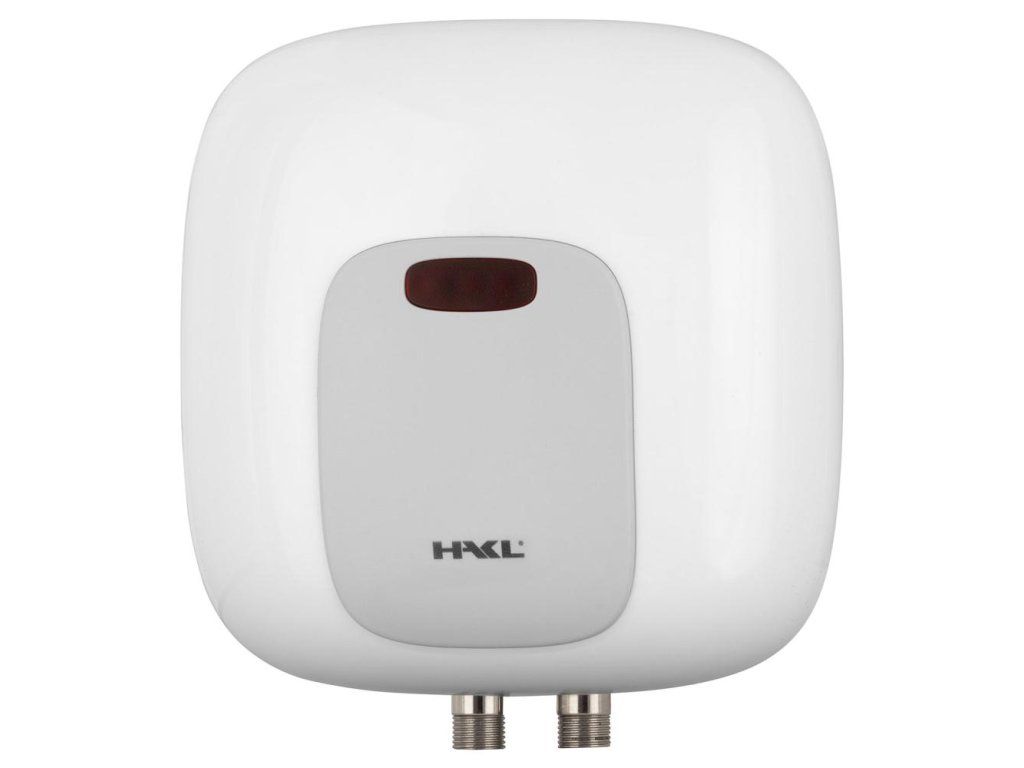 |
HAKL PL 4.5kW water heater - a somewhat more powerful pressure water heater suitable for a garage or workshop with one or two points of use, where you're also protecting the water pipework against freezing during winter with a resistance de-icing cable. Price from EUR 95.94. |
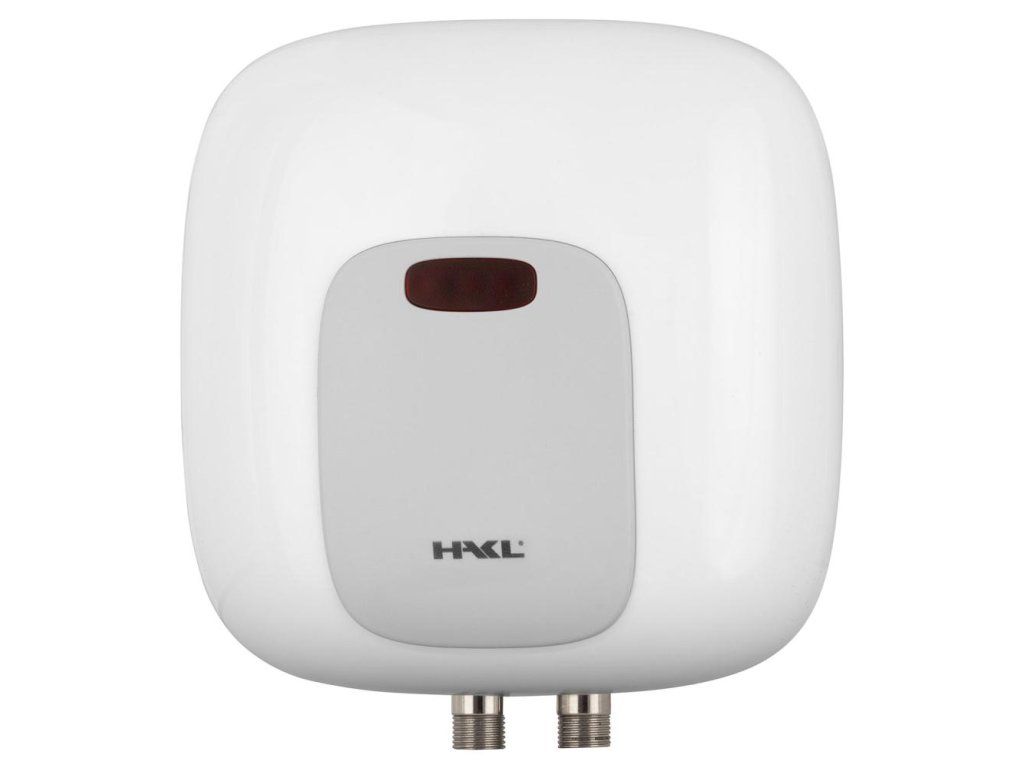 |
HAKL PL 5.5kW water heater - the most powerful in this range, suitable where simultaneous hot water use needs to be covered at several points (for example a workshop with both a shower and a sink) alongside a de-icing or tempering cable on the same property. Price from EUR 95.94. |
Summary
A resistance heating cable is a reliable, long-lasting solution as long as you take into account its actual purpose when choosing it (main heat source versus tempering versus de-icing), correctly size the output per metre or square metre, have it installed with insulation resistance measurement before pouring, and entrust the control to a quality thermostat with the right type of sensor. Following these principles, you can realistically expect 15 to 25 years of trouble-free operation for indoor applications and 10 to 15 years for outdoor ones. If you're not sure which type of cable and what output your specific case needs, it's better to write to us with the exact dimensions and purpose - we can advise you faster and more accurately than with a general estimate from a catalogue.
Frequently Asked Questions
Can I install a resistance cable myself, without an electrician?
A handy DIYer can manage laying the cable in the floor or fixing it to a gutter, but connecting it to the electrical system, fitting a residual current device and, above all, the final insulation resistance measurement before pouring should always be done, or at least checked, by a qualified electrician. These are wet and damp areas, where a wiring mistake can be a safety risk, and home insurance often refuses to pay out for damage caused by DIY electrical work.
Can a resistance cable be shortened if the length I need turns out longer?
No, a constant-wattage resistance cable must not be shortened arbitrarily - its resistance, and therefore its output, is calculated for the exact length it's sold in; shortening it would also change the total resistance and the cable could overheat locally. If the length you need doesn't match what's currently sold, ask the seller about the nearest available length or about adjusting the loop spacing. The exception is self-regulating cables for pipe protection, which are routinely cut to size according to the pipe length.
Does a de-icing cable on gutters work without a humidity sensor, just on a timer?
Technically yes, the cable will heat according to the set time, but we can't recommend it in practice - without a humidity sensor the cable also runs on dry frosty days when no ice is forming, which significantly increases electricity consumption with no benefit. The investment in a combined temperature and humidity sensor typically pays for itself within one to two seasons thanks to lower consumption.
How do I know whether a non-working cable in the floor needs replacing, or whether the fault is elsewhere?
Follow the order shown in the diagram above - first the residual current device, then the thermostat's settings and power supply, then the connections in the junction box, and only at the end have an electrician measure the resistance of the cable itself. In most cases we come across, the cause lies outside the cable embedded in the floor.
Is there a difference between a cable for a bathroom and a cable for a garage or terrace?
Yes, a fundamental one. A bathroom cable is in a damp environment, but it's permanently embedded in concrete and protected from UV radiation and mechanical stress. A cable for a terrace, a garage ramp or a gutter also has to withstand direct sunlight, repeated freezing and thawing on the surface, and mechanical loading, so it has a different type of sheath and a higher degree of protection. These two types cannot be swapped without risking premature failure or unnecessary overspending.
Is a resistance cable worth it compared with other ways of heating a floor?
For small and medium-sized areas (bathrooms, hallways, smaller rooms), a resistance cable is often the simplest and cheapest solution in terms of investment compared with water-based underfloor heating, since it needs no pipework, no circulation pump and no connection to a heat source. For larger areas, where it serves as the main heat source, it's worth comparing running costs with alternatives (especially if you have a heat pump, where water-based heating is usually cheaper) - in that case we recommend getting specific advice from us based on your house.
Related topics
How to choose a heating resistance cable
What cable output per m² do I need
Installing a resistance cable
Thermostats and control for resistance cables
The most common resistance cable faults
Have a question about this topic?
Can't decide, or dealing with a specific situation in your home? Write to us - we're happy to help.