
Resistance Cable for Floor Heating vs. De-icing
Resistance cable for floor heating vs. de-icing - what's the difference
At first glance it looks like the same product - a resistance heating cable that converts electrical energy into heat once connected to power. Yet customers regularly ask us whether they can use a cable bought for floor heating in a gutter instead, or, conversely, whether a cable meant for de-icing a roof will work as supplementary heating in a bathroom. The answer is clear - no, even though the operating principle is identical, the two types of cable differ in output per metre, construction, insulation, method of control and installation. Mixing them up leads either to an undersized system that doesn't do the job, or to needlessly high consumption and, in the worse case, damage to the floor covering from overheating.
In this article we go through why the two types of cable are designed differently, what outputs are typical for each, how the control and thermostat differ, how each cable is installed, and finally how much running each system costs, roughly speaking. The goal is for you to be able to say without doubt which product from our range you need - and why the other one simply isn't right for your purpose.
Two completely different purposes for a heating cable
Floor heating with a resistance cable is used to heat living space - a bathroom, hallway, kitchen or a whole flat. The goal is to maintain a pleasant floor temperature (usually 24 to 28 °C at the surface) while also delivering enough heat into the room to cover its heat losses. The cable is laid across a continuous area, embedded in a thin layer of screed or adhesive under the tiles, and works essentially continuously throughout the heating season, controlled by a room or floor thermostat.
A de-icing (anti-icing, often called a "gutter" or "anti-frost" cable in Slovak) cable has a completely different job - preventing ice and snow load from building up on roofs, in gutters, downpipes, on steps, ramps or other outdoor surfaces. It doesn't run continuously, only when the weather requires it - i.e. at temperatures around freezing combined with moisture (rain, wet snow, melting snow). The cable is installed locally - in a gutter, in a downpipe, at the edge of a roof - and is connected via a thermostat with both a temperature and a humidity sensor, or via a simpler thermostat that reacts only to temperature.
This difference in purpose is the reason for all the other technical differences - output, construction and control - which we go through below.
Output per metre - the most common mistake when choosing
The most common mistake we see in practice is mixing up the output parameters. Floor heating cables are typically made with an output of roughly 10 to 20 W per metre of cable, laid at regular spacing (typically 6 to 12.5 cm) so the resulting area density works out at 80 to 160 W/m² of floor area - for living spaces where the cable is the main heat source, the upper end of this range is generally used, while for supplementary tempering of a bathroom, 100 to 120 W/m² is enough.
De-icing cables, on the other hand, are designed for a significantly higher output per metre, since they need to deliver enough heat to melt ice and snow over a small, linear area (a gutter, a pipe) within a short time, not to maintain a comfortable temperature over the long term. A typical range is 20 to 30 W/m, and for self-regulating cables in more demanding applications (for example flat roofs or long downpipes) the output can climb as high as 40 W/m. If you laid a cable like that in a floor at the same spacing as an ordinary floor cable, the area output would exceed 300 to 400 W/m² - a value that, with typical floor coverings (especially laminate, vinyl, wood), risks overheating, damage to the adhesive and the covering itself, and is also needlessly high in terms of electricity consumption for ordinary heating.
Cable construction - single-core, twin-core and self-regulating types
Floor heating systems are most often sold as a single-core or twin-core resistance cable, or as a ready-made heating mat (a cable already stitched onto a mesh at a precisely defined spacing). A single-core cable is cheaper, but both its ends have to be brought back to the connection box, which slightly complicates laying it in irregularly shaped rooms. A twin-core cable has a "cold" end on only one side, which simplifies installation - in practice it's therefore more popular for living spaces. The output of both types is constant along the whole length of the cable and doesn't change - which is why it's important to design the correct length and spacing for the room's area.
De-icing cables, on the other hand, are very often sold as self-regulating cables. Their output isn't constant along their length, but changes according to the temperature at that particular point of the cable - where the cable is in contact with ice or a cold metal gutter, it radiates more heat; where it's already warm or dry, its output drops on its own. This property is very practical for de-icing, since the cable can't overheat locally even where it overlaps itself (for example at a bend in a downpipe) - a common and dangerous situation with a classic constant-output resistance cable. For the same reason, unlike a floor cable, a self-regulating cable must not be shortened or extended without precisely following the manufacturer's instructions - it's supplied by the metre, or with the option to shorten it only at designated points.
Another difference is in the insulation and resistance to outdoor influences. A de-icing cable is designed for outdoor use - it has to withstand UV radiation, frost, and mechanical stress from snow and ice, so it usually has a more robust outer sheath (often UV-stabilised PVC or a fluoropolymer surface) and a higher degree of protection. A floor cable, by contrast, is designed to be embedded in screed or adhesive, i.e. for permanent contact with damp building material during installation and subsequent mechanical loading from foot traffic and furniture from above.
A practical example from installation
A common mistake we come across during phone consultations: a customer buys a cheaper resistance cable with an output of 25 to 30 W/m (actually meant for de-icing), thinking "more output is always better" for a tiled bathroom. Once laid at a typical 10 cm spacing, the area output works out at over 250 W/m²; the thermostat, trying to maintain the set floor temperature, often switches the cable off after just a few minutes of operation, the tiles overheat locally faster than the surrounding area near the cable, and in an extreme case the grout can crack. A correctly sized floor cable with an output of 100-150 W/m², by contrast, runs in longer cycles and distributes heat evenly.
Control and thermostat - a different type of sensor, different logic
Floor heating is controlled by a room or floor thermostat, which measures either the room's air temperature, the floor temperature via a probe embedded directly in the screed, or a combination of both. The thermostat maintains the set temperature (for example 26 °C at the floor surface) essentially all day throughout the heating season, and modern thermostats can also work with a weekly programme and a night setback.
De-icing is controlled by completely different logic - a thermostat with a combined temperature and humidity (precipitation) sensor. The system should switch on only when the temperature drops below a set threshold (typically 3 to 5 °C) and the sensor also detects moisture (rain, wet snow, dew) at the same time. Without a humidity sensor, the cable would run needlessly every time it froze, even in dry weather, when there's no risk of ice forming - which significantly inflates running costs with no benefit at all. This is exactly why a simple room thermostat from a floor heating system is completely unsuitable for de-icing, and, conversely, why a more expensive humidity sensor meant for a roof is unnecessary and overpriced for an ordinary bathroom.
Installation - in screed vs. on a roof and in a gutter
A floor cable is laid in a thin layer of self-levelling compound or directly in the screed under tiles, laminate or vinyl, always following the manufacturer's instructions on the minimum covering thickness above the cable (usually 3-5 cm above the heating cable for a classic screed, less for thin-layer systems under tiles). Installation always includes measuring the cable's resistance before pouring, during pouring, and after the screed has cured - and we also recommend photographing the cable's exact position before pouring, so that for future drilling work (for example anchoring furniture) you know exactly where the cable is.
A de-icing cable is installed in a completely different way - in a gutter it's fixed with mounting clips or tape so it follows the bottom of the gutter and also extends into the downpipe far enough below ground level (so the drainage from the system itself doesn't freeze either). On a roof it's laid in a "snake" or zigzag pattern along the roof edge and in the valleys, where ice dams most often form. The cable is connected to the distribution board via a dedicated circuit breaker and residual current device, and because of outdoor use, emphasis is also placed on mechanical protection and UV resistance in spots not covered by snow.
The common denominator for both types of installation is the need to keep to the specified minimum bend radius and to avoid the conductors crossing or overlapping (with the exception of self-regulating cables, which tolerate overlap thanks to their self-regulating property).
Safety - residual current device and inspection
For both types of installation, protection with a residual current device (RCD) with a 30 mA tripping current is essential, since this is electrical equipment in direct or close contact with moisture (a bathroom floor, an outdoor gutter exposed to rain and snow). The difference is that de-icing systems are almost always installed with an additional, dedicated circuit breaker and RCD separate from the other sockets in the house, since they operate outdoors and being disconnected because of a fault elsewhere in the home could, in winter, have serious consequences (icing and overloading the roof structure with ice).
For both types, it's recommended to carry out and document an insulation resistance measurement and a functional test after installation, before it's covered (embedded in screed or covered in snow) - if there's a fault, repairing an embedded or snow-covered cable afterwards is considerably more expensive and complicated than for a cable that's still freely accessible.
Running costs - a real example
To put the difference between the two systems into figures, here's an indicative example. Floor heating in a 4 m² bathroom, designed for an output of 150 W/m², has a total installed output of 600 W. Running an average of 6 hours a day during the heating season, it consumes 3.6 kWh a day; at an electricity price of EUR 0.18/kWh, that's roughly EUR 0.65 a day, or around EUR 19.5 a month to temper a single bathroom. Since the thermostat works in cycles (switching on and off according to the temperature reached), actual consumption in practice tends to be somewhat lower than this theoretical calculation for continuous operation.
A de-icing system on 10 metres of gutter and downpipe, with an output of 30 W/m, has an installed output of 300 W. Thanks to the humidity and temperature sensor, though, it doesn't run continuously all winter, only during genuinely frosty and damp periods - under Slovak conditions, roughly 150 to 250 operating hours per whole season is typical. At 200 hours of operation, that's 60 kWh per season, which at the same electricity price comes to roughly EUR 10.8 for the whole winter. This difference illustrates well why the humidity sensor is so important for de-icing - without it, the cable would run virtually every time it froze, regardless of whether it was raining or snowing, which would multiply the cost several times over.
Which system to use when - a quick overview
| Parameter | Floor heating | De-icing |
| Cable output | 10-20 W/m | 20-40 W/m |
| Area output | 80-160 W/m² | not calculated by area, but linearly |
| Type of control | room/floor thermostat | thermostat with a humidity sensor |
| Operation | daily, long cycles | only in frost + moisture |
| Installation | embedded in screed/adhesive | fixed in a gutter/on a roof |
| Cable construction | single/twin-core, constant output | often self-regulating |
A supplementary solution for a bathroom with floor heating
If you're dealing with floor heating in a bathroom, it's worth thinking through the whole technical space comprehensively - including hot domestic water. In smaller flats, or where there's no central hot water source available right next to the bathroom, small electric instantaneous water heaters have proven their worth, installed directly under the sink or near the shower, working independently of the floor heating cable.
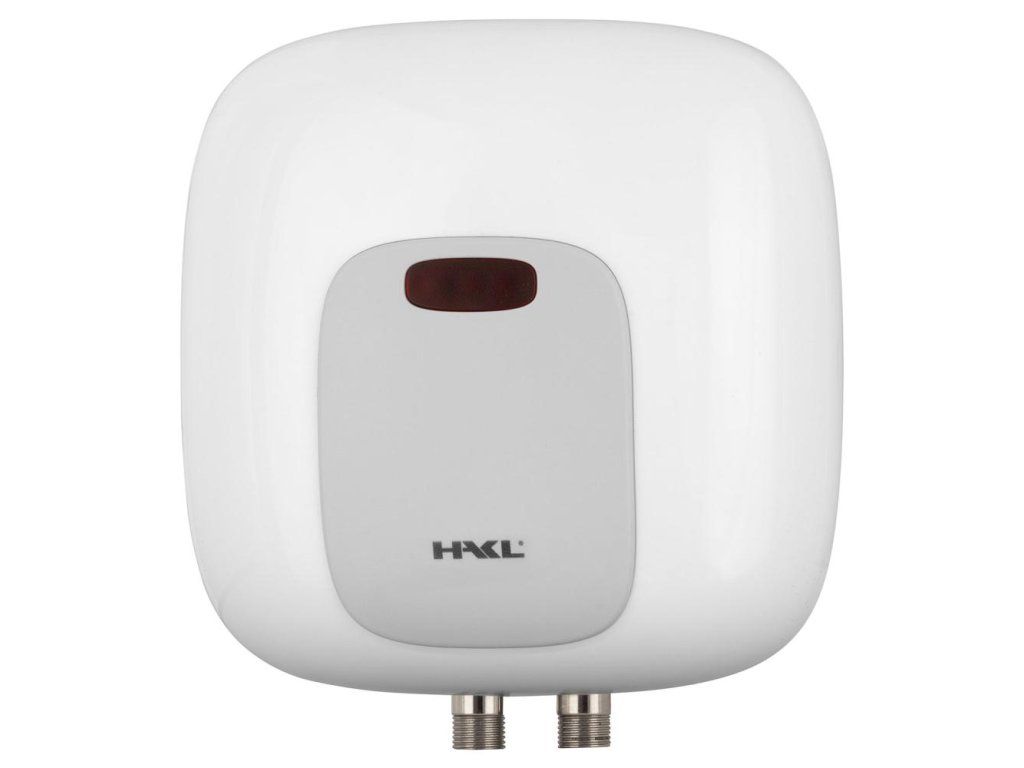 |
HAKL PL 3.5kW water heater - a compact pressure instantaneous heater suitable for a single point of use (for example a sink in a bathroom with floor heating), where you don't want to run a separate circuit from a boiler. Price from EUR 95.94. |
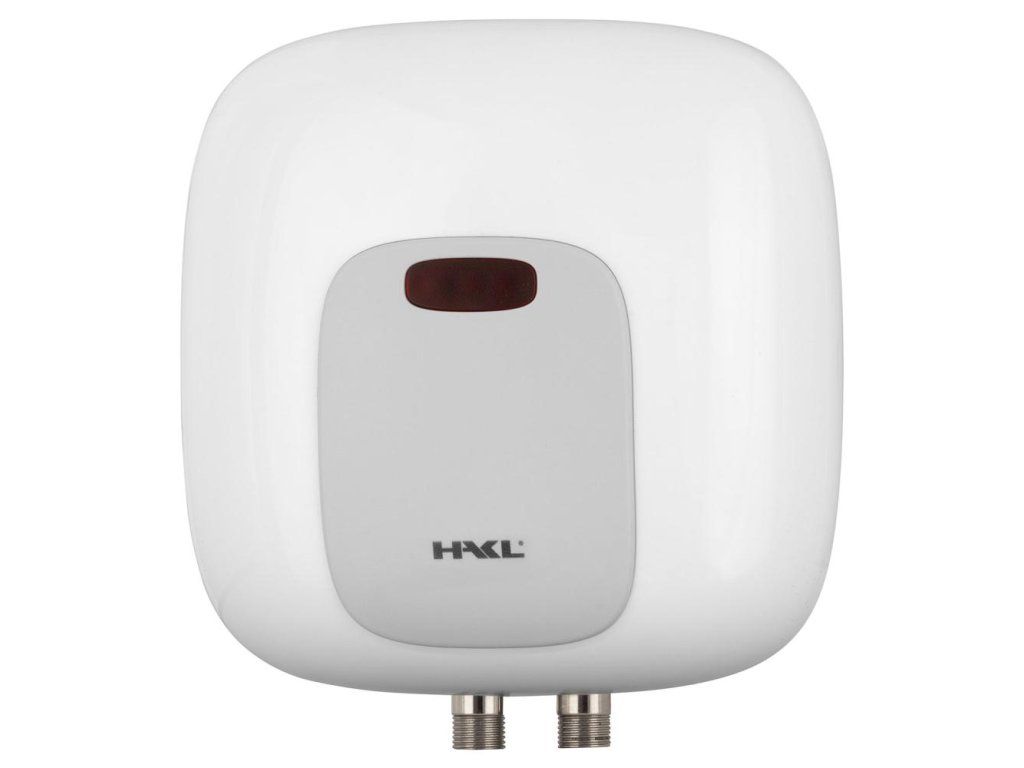 |
HAKL PL 4.5kW water heater - a somewhat more powerful version suitable where a higher hot water flow is needed, for example for a shower in a bathroom with heated flooring in a smaller flat. Price from EUR 95.94. |
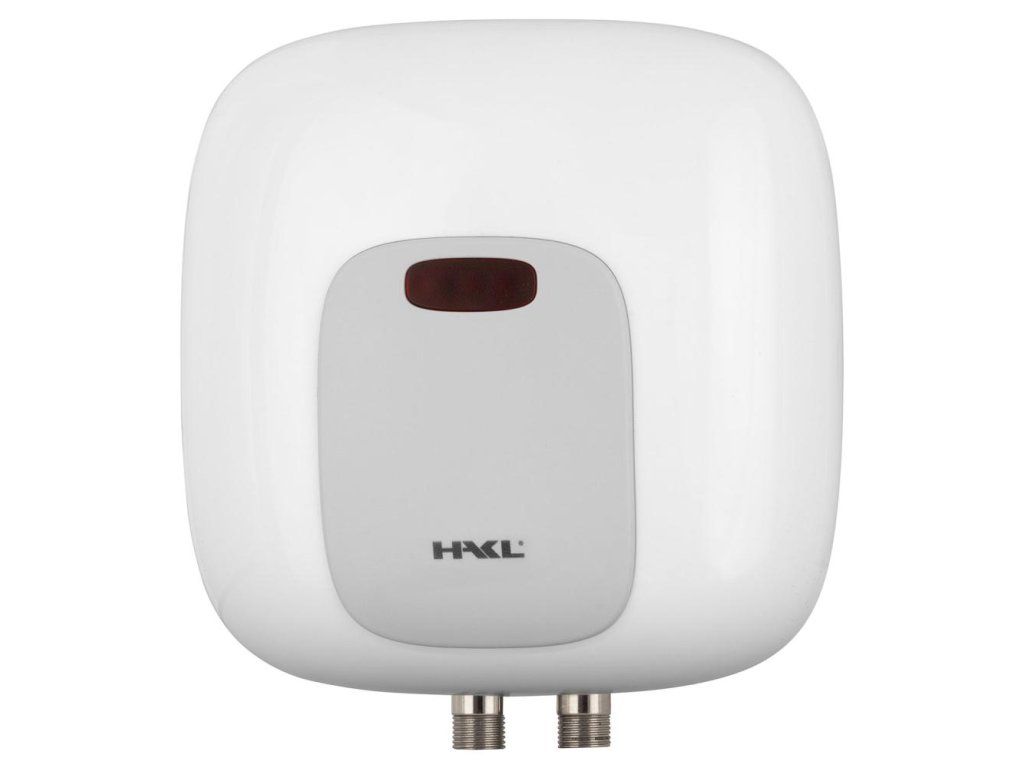 |
HAKL PL 5.5kW water heater - the most powerful in the range, suitable for higher hot water demand or a greater distance from the source, where a more stable outlet flow is needed. Price from EUR 95.94. |
Summary
Floor heating and de-icing gutters may use the same physical principle - a resistance wire that heats up as electric current passes through it - but that's where the similarity between the two products ends. The output per metre, the cable's construction, the method of control and the installation are all designed specifically for their purpose, and mixing them up leads either to a non-functional solution or to a needlessly expensive one that, in the case of a floor, can also be risky. When choosing a specific cable, therefore, always start from the area and purpose you're dealing with, and if in doubt, don't hesitate to contact our customer service - we're happy to help you choose and calculate the required output.
Frequently Asked Questions
Can I use a de-icing cable in a bathroom floor too?
We don't recommend it. A de-icing cable has a significantly higher output per metre (20-40 W/m compared with 10-20 W/m for a floor cable); at a typical laying spacing, the area output would exceed safe values for tiles and adhesive, risking overheating and damage to the floor covering. It also lacks a thermostat suited to long-term operation at a comfortable room temperature.
Can a floor cable be used to de-ice a gutter?
Technically it can be connected, but an output of 10-20 W/m usually isn't enough to melt a larger amount of ice or snow outdoors, and the cable may also lack sufficient resistance to UV radiation and weathering, since it's designed to be embedded in screed, not permanently exposed to the elements.
Why is a humidity sensor also needed for de-icing - isn't temperature enough?
Without a humidity sensor, the system would run every time the temperature dropped below the set threshold, regardless of whether it was actually raining or snowing. This significantly increases electricity consumption with no benefit at all - in dry frost, ice doesn't form on a roof or in a gutter from rain or melting snow anyway.
What loop spacing is suitable for a typical bathroom?
At a cable output of 10 W/m and a required area output of 100 W/m², the spacing works out at roughly 10 cm; at a cable output of 17-18 W/m and a target of 150-160 W/m², the spacing is around 11-12 cm. The exact spacing is always specified by the manufacturer in the installation instructions for that type of cable.
Is a residual current device also needed for a de-icing cable outdoors?
Yes, precisely because this is an installation exposed to moisture (rain, snow, melting ice), a residual current device with a 30 mA tripping current is essential, usually on a dedicated protected circuit separate from the other appliances in the home.
Is a self-regulating cable worth using for floor heating too?
In everyday practice, it isn't used for heating living spaces - it's more expensive, and its property of varying output according to the temperature at a given point isn't needed or desirable for evenly heating a floor. A classic single- or twin-core cable with constant output, designed exactly for the given area, is more suitable for a floor.
Related topics
- How to choose a heating resistance cable
- What cable output per m² do I need
- Installing a resistance cable
- Resistance cable for roofs and gutters against ice
- Resistance cable vs. heating mats
You'll find the full range of heating and de-icing cables in the main category Resistance cables.
Have a question about this topic?
Can't decide, or dealing with a specific situation in your home? Write to us - we're happy to help.