
How to Choose a Supplier and Installation Company
How to choose a supplier and installation company for a professional heating system
The choice of material supplier and installation company decides the fate of the entire heating project before the first pipe is laid. In professional projects - apartment buildings, industrial halls, larger family houses with a boiler cascade, or complex systems with manifolds and controls - an error in choosing a supplier carries through the whole lifetime of the building: into the warranty, into how fast service is, into whether the system can even pass final approval. This article gives you a concrete, repeatable procedure for assessing both the supplier and the installation company before you sign a contract.
Why choosing a supplier is more critical than choosing an individual component
With an ordinary purchase of a single radiator or thermostat, a customer can afford a mistake - the component can be replaced. In a professional project the situation is different. The installation company buys dozens to hundreds of components at once (boilers, manifolds, pump groups, fittings, pipes, insulation), installs them into a system that is meant to run for 15-25 years, and commits to a warranty it must actually be able to honour. If the material supplier goes bankrupt, has no stock availability of spare parts, or the installation company lacks professional competence, the investor bears the consequences - often at the moment they are least prepared for it (heating outage in winter, a complaint with no spare parts available, an invalid inspection at final approval).
That is why two decisions that often get merged into one need to be separated: who supplies the material and who installs it. Sometimes it is one entity (the installation company has its own wholesale purchasing), other times the investor buys the material directly (for example via atria.sk) and outsources the installation to a separate company. Both models have their advantages and risks - we break down both below.
The difference between a material supplier and an installation company
A material supplier is responsible for the components they deliver matching the declared parameters, having valid certificates (CE, and ErP labels for boilers where applicable), being in stock within the declared time, and having functional warranty and post-warranty service (spare parts, an authorized service partner). For professional projects, technical support before implementation is also key - the supplier's ability to advise on manifold sizing, pump output, or the compatibility of components from different manufacturers.
An installation company is responsible for the implementation itself - design preparation (if it does this itself or in cooperation with a designer), physical installation, connecting the controls, pressure tests, commissioning, issuing inspection reports, and handover documentation. Its responsibility is defined by the Building Act, Regulation No. 508/2009 Coll. (professional competence for installing designated technical equipment), and the works contract.
In a combined model (the investor buys the material themselves and outsources the installation to another company), it is necessary to clarify in advance who bears responsibility for the functionality of the system as a whole - an installation company will usually refuse to warranty the system if it cannot choose or at least approve the components. This is a point that in practice is most often addressed only after a problem arises, even though it belongs in the contract from the start.
Diagram: the process of choosing a supplier and installation company
The seven steps in the diagram above represent a proven sequence that applies to virtually every larger project - from a boiler cascade in an apartment building to underfloor heating with multiple manifolds in a family house. Skipping step 3 (reference check) is the most common mistake investors make under deadline pressure - and it is exactly the one that most often comes back to bite them.
Criteria for choosing a material supplier
When choosing a supplier for a professional project, we recommend assessing at least these five areas:
- Stock availability and delivery speed. For projects with a fixed deadline (for example replacing heating during a summer shutdown), it is critical that the supplier can guarantee the delivery date of key components - the boiler, manifold, pump group. Ask for written confirmation of stock availability, not just a verbal promise.
- Range of assortment and compatibility. A supplier offering a complete system (boiler, manifolds, fittings, controls, pipes) from proven brands reduces the risk of incompatibility between components from different manufacturers. For mixed systems (for example a German boiler + a Slovak manifold), always request confirmation that the flow and pressure parameters are compatible.
- Technical support before implementation. A serious supplier can advise on sizing - for example how many manifold circuits you need for a given area, what flow rate the circulation pump should have, what pipe diameter to choose for a given distance. If a supplier doesn't answer technical questions or only refers you to catalogue sheets, that is a warning sign.
- Warranty and post-warranty conditions. A standard warranty on boilers is usually 2-5 years (depending on the manufacturer and the condition of regular servicing), on fittings and manifolds 2-3 years. Check whether the supplier has a functioning service team or a network of authorized partners in Slovakia - imported goods without local service are significantly more expensive to repair once out of warranty.
- Price transparency. The quote should include an itemized breakdown (item, price, quantity), not just a lump sum. For larger orders (above roughly 50 pieces of the same item or a value of several thousand euros), it is common to negotiate a volume discount - ask directly, many suppliers don't offer it automatically.
Criteria for choosing an installation company
The installation company bears responsibility for the functionality and safety of the whole system, so choosing it is even more sensitive than choosing the material supplier. Key points to verify:
1. Professional competence and authorizations
Under Regulation No. 508/2009 Coll., the installation of designated technical equipment (gas, pressure, electrical) may only be carried out by a company or person with a valid certificate of professional competence issued by an authorized organization (for example the Technical Inspectorate). For installing gas boilers, an additional authorization for installing gas equipment under Regulation No. 25/1984 Coll. as amended is also required. Ask for copies of valid certificates - it is not impolite, it is a standard part of due diligence before signing a contract.
2. Trade licence matching the scope of the work
Check the company's line of business through the public register (Commercial Register, Trade Licence Register) - does it list installation of heating, gas, or pressure equipment? A company authorized only for "purchase of goods for resale" has no legal basis for carrying out plumbing and gas-fitting work.
3. Liability insurance
A professional installation company should have liability insurance covering damage caused in the course of its activities, ideally with coverage in the tens to hundreds of thousands of euros (for larger projects, such as apartment buildings, coverage of €100,000 or more is commonly required). Without this insurance, the investor - or the company itself, if it has no assets to cover it - bears the full risk of damage (for example a flooded flat due to a leak).
4. References and completed projects
Ask not only for a list of references, but also for contact details of at least two previous clients with a similar project scope, whom you can contact directly. Photo documentation of completed projects (ideally with the date and scope of work) is a good supplementary indicator, but does not replace direct contact with a reference client.
5. Workmanship warranty and service availability
The standard warranty on the installation work itself (not on the components, which is from the manufacturer) is usually 24-36 months. Also verify the reaction time for a service intervention both during and after the warranty period - for professional systems (boiler rooms in apartment buildings, industrial heating), an actual heating outage is critical, and the company should guarantee an intervention within 24-48 hours in an emergency.
Diagram: documentation to request before signing a contract
If a company refuses to provide any of these six documents, or promises to "supply it later after signing the contract", that is a reason for increased caution. Serious companies have these documents ready and provide them without hesitation - it is a normal part of both B2B and B2C business dealings in construction work.
How to compare price quotes correctly
The most common mistake when choosing both a supplier and an installation company is comparing purely by the lowest price. In professional heating systems this leads to two typical problems: either the company underquotes and then requests surcharges during implementation ("extra works"), or it uses cheaper substitute components without informing the investor. The recommended approach is a weighted comparison of multiple criteria, not price alone.
Diagram: recommended weighting of criteria when comparing quotes
As you can see from the weighting above, the price of the work should represent about 20% of the decision - references and professional competence together with a guaranteed warranty and service make up 45% combined, i.e. more than double the weight of price alone. For a quote that is significantly lower than the others (typically by 20% or more), always ask for a detailed breakdown of exactly what is included - items such as the pressure test, venting the system, commissioning, or the inspection report are often missing and subsequently billed extra.
Handover and acceptance of the work - what not to forget
When accepting completed work from the installation company, several steps should take place that are often skipped under deadline pressure in practice: a pressure test of the system (with a written report on the result), a check of the tightness of all joints, a functional test of the controls and pumps, handover of warranty cards for the individual components, and finally signing the acceptance protocol. It is precisely the acceptance protocol that determines when the warranty period starts running - without it, it is difficult to argue the warranty start date in a dispute.
When taking over the system, it is also worth having on hand a list of small components that should be part of the delivery, or that the investor should have available for future maintenance. Below are three examples of components that are part of almost every professional installation with a manifold and that are worth checking during handover, or buying extra as spares for future servicing:
 | N-MAX 1 wall-mounted manifold cabinet - 450mm - in a professional manifold installation in a flat or technical room, a wall-mounted cabinet is a standard that protects the manifold and controls from mechanical damage and improves the appearance of the completed work. Check during handover whether the cabinet has sufficient depth for your specific number of circuits. Price from 132.84 EUR. |
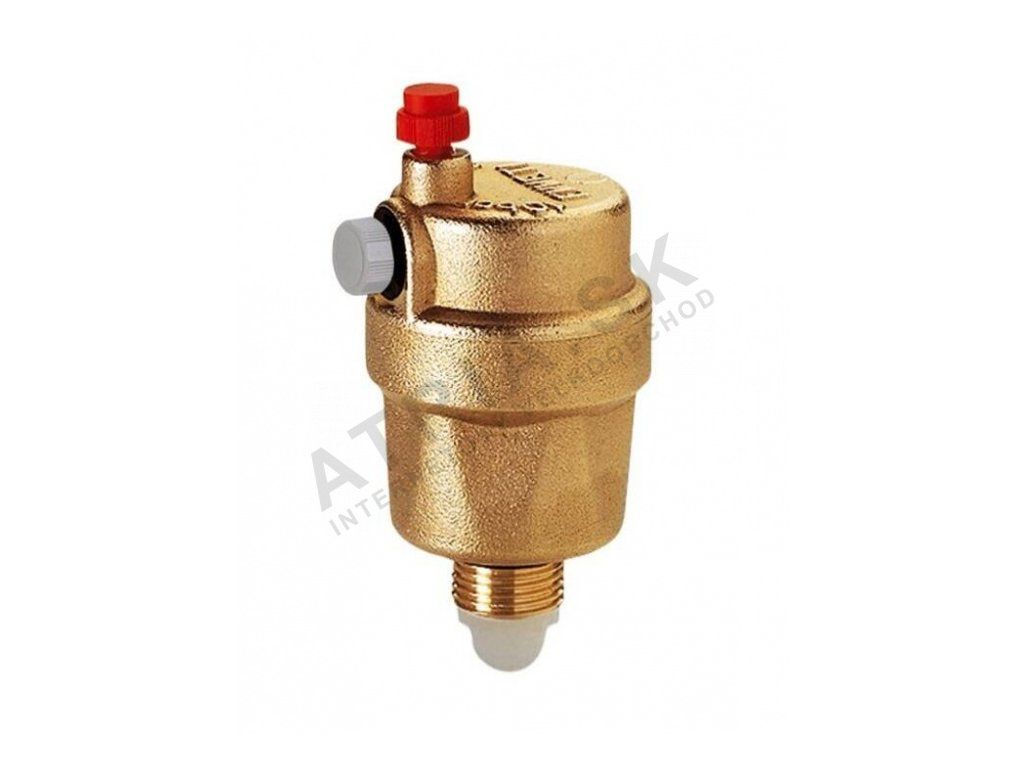 | Automatic air vent valve - 1/2" - one of the most common complaints after handover is "gurgling" or insufficient heating output caused by air in the system. During handover, ask the installation company where in the system (highest point, manifold, boiler) the air vent valves are fitted. Price from 12.01 EUR. |
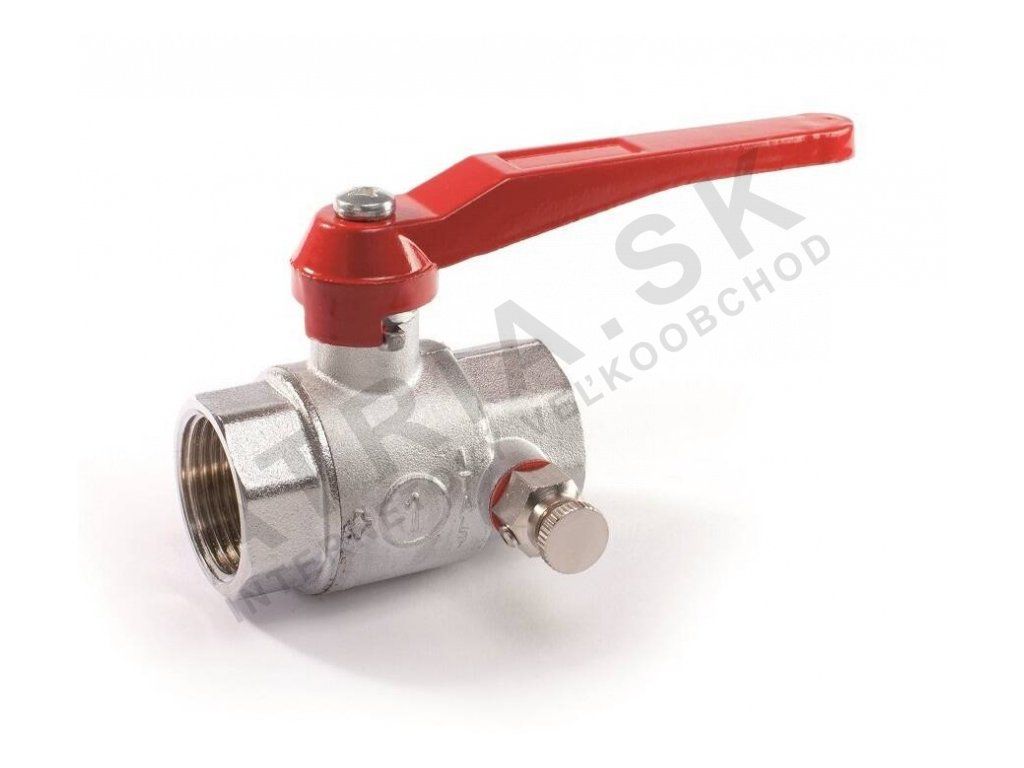 | Ball valve for water - with drain - 1/2"FF; lever - shut-off fittings with drain allow future servicing (for example replacing a pump or manifold) without having to drain the whole system. Their absence is one of the most common shortcomings that only show up at the first post-warranty service call - check for their presence right at handover, not only once you need them. Price from 14.86 EUR. |
Diagram: timeline of a typical project
The timeline in the diagram above is indicative for a medium-sized professional project (for example replacing the boiler room of an apartment building, or a complete underfloor heating installation in a new building). For simpler jobs (replacing a single boiler) it can be shortened to 2-3 weeks; for complex industrial projects, on the other hand, it can take several months including design preparation. It is key that the company states the schedule in writing in the contract, including penalties for missing it - a verbal promise of a deadline is not enforceable in a dispute.
Red flags - warning signs when choosing a supplier or installation company
- The company requests 100% payment upfront before starting work (common and fair practice is a 30-50% deposit on signing the contract, the rest after handover or in instalments as the work progresses).
- Refusal of a written contract, or insisting exclusively on a "gentlemen's agreement".
- Unwillingness to provide contact details of reference clients, or to document professional competence.
- A price quote with no itemized breakdown, just a single lump sum.
- A significantly shorter implementation time than competing companies offer for the same scope of work (this often signals that the company is underestimating the scope, or has insufficient capacity).
- Pressure to sign the contract quickly "because the price changes tomorrow" - legitimate companies give reasonable time to consider and compare quotes.
When it pays to involve an independent designer
For more complex projects (multiple heat sources, cascade boiler configurations, a combination of underfloor heating and radiators, industrial halls), it pays to invest in an independent project prepared by an authorized building services designer before approaching installation companies. The project serves as a common technical basis for all quotes - companies then quote a price for the same scope of work, and comparing quotes is far more accurate than when each company designs its own solution. The cost of the project (on the order of hundreds of euros for a smaller project) is usually recovered simply by eliminating incomparable quotes and disputes over the scope of work during implementation.
Summary - step by step procedure
For clarity, we summarize the recommended procedure into a simple sequence: (1) define the scope of the project, ideally with the help of a designer for more complex jobs, (2) approach at least 3 suppliers/installation companies with the same brief, (3) request documentation according to the six points in the checklist above, (4) compare quotes using weighted criteria from the chart (not just price), (5) verify references by direct contact with at least two clients, (6) conclude a written contract with a clear schedule, budget, and penalties, (7) when accepting the work, insist on the pressure test report and the acceptance protocol. This procedure is not extra bureaucracy - it is insurance against the most common and most expensive mistakes that arise in professional heating projects.
Frequently asked questions
Does an installation company need a special authorization in Slovakia to install gas boilers?
Yes. Installing gas appliances and pipework may only be carried out by a company or person with a valid authorization for installing designated gas technical equipment, issued under Regulation No. 508/2009 Coll. Always request a copy of the valid certificate before signing a contract.
Is it cheaper to buy the material yourself and only outsource the installation, or leave everything to one company?
It depends on the project. Buying material directly (for example via atria.sk) can bring savings on component prices, but the installation company must be willing to take on responsibility for a system made up of externally supplied components - this needs to be clarified in the contract in advance, otherwise the company may refuse the warranty in the event of a problem, on the grounds that it wasn't their own material.
How long should the warranty on the installation work be?
The standard in Slovakia for professional projects is 24-36 months on the work (the installation itself and the functionality of the system as a whole), independent of the manufacturer's warranty on individual components (which for boilers is typically 2-5 years). A warranty shorter than 24 months is below the usual market standard.
What should I do if the installation company requests surcharges during implementation that were not in the original quote?
If the cause was unforeseeable circumstances discovered only during implementation (for example hidden damage to the pipework), the correct approach is a written addendum to the contract with justification and a new price before work continues. If it concerns items that should have been in the original scope (for example the pressure test or commissioning), refuse to pay extra and refer to the original contract - which is why it's important to have the initial quote itemized in detail from the start.
Can I verify whether a company really has valid liability insurance?
Ask for a copy of the insurance policy or a current confirmation from the insurer stating the coverage amount and validity period. A serious company will provide this confirmation without any problem, since it is a normal part of business communication for construction jobs.
What should I do if I can only choose one company in my region and have nothing to compare it with?
Even in this case, insist on complete documentation (authorizations, insurance, references, a written contract with an itemized breakdown). You can also verify references independently - for example by asking in the local construction community, or checking the public register of completed contracts if the company has also worked for municipalities or larger investments.
Related topics
- How to choose professional heating components
- Installation of professional heating systems
- Standards and regulations for professional heating systems
- Trends in professional heating
- Back to the main category Professional Heating
Do you have a question about choosing a supplier or installation company?
Working on a specific project and can't decide between quotes, or need advice on choosing components for a professional installation? Write to us - we're happy to help.