
Trends in Professional Heating
Where professional heating is heading in 2026
Professional heating – meaning boiler rooms in apartment buildings, industrial halls, office buildings, but also larger family houses with multiple heating circuits – has moved considerably beyond just "a bigger boiler for a bigger area" over the past few years. Installation companies, designers and operators today deal with a completely different set of questions than ten years ago: how to shorten installation time, how to reduce the risk of error on site, how to remotely monitor the system, and how to get maximum efficiency out of a single boiler room under variable load. This article summarizes five trends that keep being confirmed in atria.sk's practice – that is, in selling manifolds, accessories and components for professional installations – and for each one we add a concrete example and recommended components.
It is important to say right at the start that none of these trends is an "overnight revolution". They are rather slow but lasting shifts in what designers and installation companies choose as the standard when they have a choice. A boiler room built ten years ago will still run for a long time – but when a new one is being designed today, or when a major reconstruction is carried out, these trends show up increasingly systematically.
Trend #1: Prefabricated manifold units instead of on-site construction
Just a few years ago, common practice was for the installer to weld or bolt together a manifold unit from individual parts directly on site – pipes, T-pieces, valves, air vents, everything was assembled at the construction site from whatever happened to be at hand. Today it is increasingly common to use a ready-made manifold cabinet with prepared space for the manifold, valves and metering equipment instead – the installer brings a prefabricated unit and on site only handles the connection to the existing pipework and the final adjustment.
The reason is simple – the installer's time is the most expensive item in the whole job, and an error made on site (a badly tightened joint, forgotten air venting, poorly sized space for later servicing) is harder and more expensive to fix than if it had been caught during manufacturing. Prefabrication also enables standardization – when a company builds dozens of similar boiler rooms a year, it pays to have a proven, repeatable "package" of components instead of every technician improvising according to their own judgement.
What a typical procedure for a prefabricated manifold unit looks like
In practice it works roughly like this: first, based on the project and the number of heating circuits, a suitable cabinet size is chosen (for example, for a smaller installation with one to two circuits a compact type is sufficient, while for a higher number of circuits a wider version is selected), then the manifold itself is fitted into the cabinet together with ball valves and air-venting elements, followed by fitting the control and metering equipment, and finally the whole unit is transported to the site, where it only needs to be connected to the existing pipework and commissioned. The following diagram illustrates this process.
When choosing the specific cabinet, in practice the decision is most often made based on two parameters – the width of the space where the cabinet is to be located, and the number of manifold branches. For smaller boiler rooms or technical rooms with limited space, the N-MAX 1 wall-mounted cabinet with a size of 450 mm has proven itself, providing enough space for one to two circuits and standard metering and control equipment. For larger installations with more branches, a wider version of the same range is more suitable, or alternatively the N-KLASIK range, which has a somewhat different internal layout and is suitable where future expansion of the number of circuits is planned.
 |
N-MAX 1 wall-mounted manifold cabinet - 450mm - a compact type suitable for smaller boiler rooms and technical rooms with one to two circuits, where space saving is especially valued. Price from 132.84 EUR. |
 |
N-MAX 5 wall-mounted manifold cabinet - 1250mm - a wider version of the same range for larger installations with more heating branches, where extra space for additional control equipment is also planned. Price from 204.67 EUR. |
 |
N-KLASIK 2 wall-mounted manifold cabinet - 530mm - an alternative range with a different internal layout, suitable especially where future expansion of the number of heating circuits is planned. Price from 114.14 EUR. |
Trend #2: Cascade boiler configurations are growing at the expense of a single large boiler
The second clear shift concerns the concept of the heat source itself. Whereas until recently the natural choice for larger buildings was a single large boiler unit sized for the maximum expected output, today a cascade configuration of two, three or even more smaller boilers, which supplement each other's output as needed, is increasingly chosen. From the projects we come across, the approximate breakdown is as follows: a single large boiler today makes up around 45% of new professional boiler rooms, cascade configurations around 35%, and hybrid solutions combining a boiler with a heat pump the remaining 20%. A few years ago this ratio would have looked significantly different – in favour of a single large boiler.
Why are cascades gaining ground? The answer relates to how a building's actual thermal load changes over the course of the year. For most of the heating season, a building does not need its full installed output – it only needs it on the coldest days. A single large boiler running at only a fraction of its output works less efficiently, because its burner has to switch on and off more often (so-called cycling), which reduces seasonal efficiency and component lifespan. A cascade, on the other hand, can switch on only as many modules as are currently needed, and each running module works closer to its optimal output range.
The difference in practice is measurable. At a load of around 60% of maximum output, a single large boiler achieves a seasonal efficiency of around 82%, while a cascade configuration at the same load can achieve an efficiency of around 94%, because only the necessary number of modules is brought into operation and they run close to their optimum, instead of one large boiler running inefficiently at partial output.
A cascade also has a second advantage, which does not show up immediately in the numbers – redundancy. If one module in a cascade fails, the remaining ones take over its role and operation continues, albeit at reduced output. With a single large boiler, any fault means a complete heating outage until it is repaired or replaced – which is a fundamental difference for apartment buildings or facilities where heating is critical (for example production halls with sensitive equipment).
Trend #3: Automation, remote monitoring and remote servicing
The third trend does not concern the heat source directly, but how operation is monitored and managed. Just a few years ago, the common approach was for a service technician to come for an inspection every so often, or only once something stopped working. Today it is increasingly common for a boiler room (even a smaller, professional one) to have temperature, pressure and flow sensors fitted, which continuously send data to a controller; the controller evaluates it and, in the event of a deviation, sends an alert – either directly to the operator's mobile app, or to the service company responsible for maintenance.
The practical impact of this trend is mainly a shorter reaction time. For example, if the pressure in a heating circuit starts to slowly drop due to a minor leak that an operator doing a manual check once a month might not even notice, a system with remote monitoring flags the deviation within hours, not weeks. For installation companies this also opens up a new business model – instead of a one-off installation, they also offer ongoing monitoring as a subscription service, which gives them more stable income and gives the customer a lower risk of a bigger failure.
However, this trend also has its limits. Automation does not replace physical inspection – a temperature and pressure sensor tells you nothing about the condition of a seal, corrosion on the pipework, or mechanical wear on a valve. The sensible approach we see most often in practice is a combination: remote monitoring for the ongoing detection of deviations, plus regular physical inspection at agreed intervals, which catches what the sensor cannot see.
Trend #4: Emphasis on air venting and heating water quality
The fourth trend is less visible, but no less important for the long-term reliability of the system. The more complex professional systems become – more circuits, more boilers in a cascade, more control elements – the more sensitively they react to air and impurities in the heating water. An air bubble in a circulation pump or heat exchanger causes noise, reduced heat transfer efficiency, and in the worse case also corrosion, which shortens the lifespan of expensive components such as boiler heat exchangers.
That is why, in professional installations, instead of a single venting point, a combination is increasingly fitted: automatic air vent valves at critical locations (the highest points of the system, boiler outlets) and manual air vent valves on individual manifold branches, where the operator can manually check whether a given branch contains air. The difference between the two types is shown in the following comparison.
A related trend is also greater emphasis on properly shutting off and draining individual sections of the system – so that when servicing or replacing a component, the whole boiler room does not have to be drained, only the specific section. That is why newer installations increasingly use ball valves with drain capability built directly into the valve body, allowing quick and clean draining of the given branch without affecting the rest of the system.
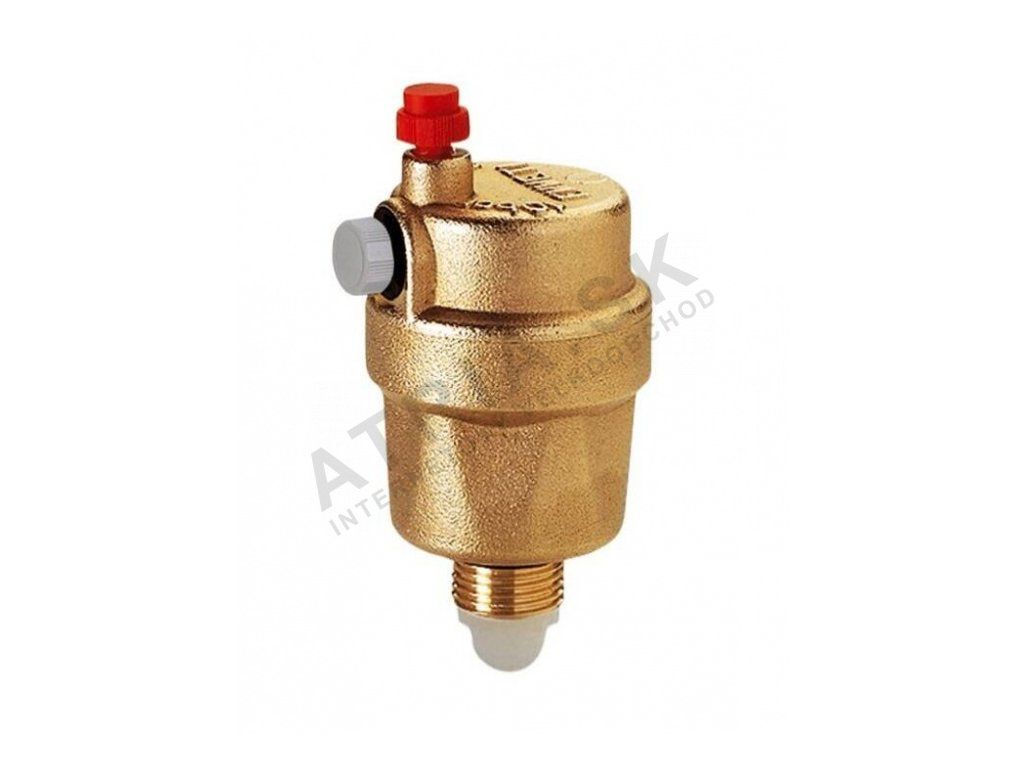 |
Automatic air vent valve - 1/2" - suitable for the highest points of the system and for boiler outlets in a cascade, where it continuously vents air without needing operator intervention. Price from 12.01 EUR. |
 |
Manual air vent valve - 1/2" - a cheaper and simple choice for individual manifold branches, where the operator manually checks for the presence of air during a regular inspection. Price from 2.10 EUR. |
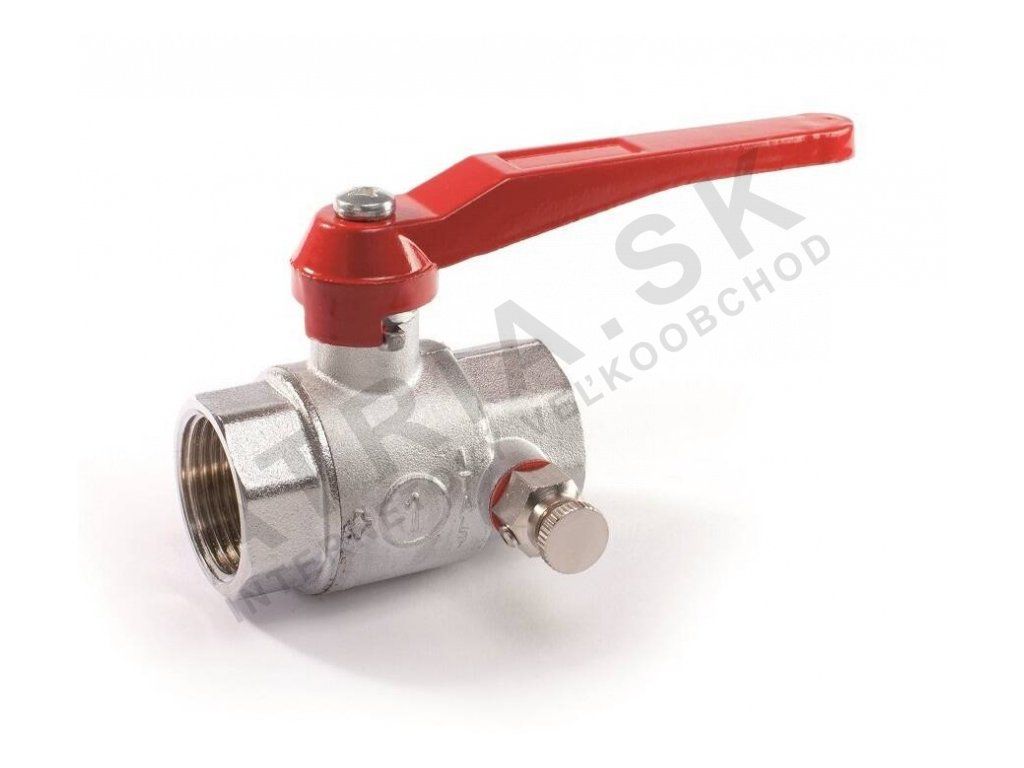 |
Ball valve for water - with drain - 1/2" FF; lever - allows a single branch of the system to be drained quickly and cleanly during servicing, without having to drain the whole boiler room. Price from 14.86 EUR. |
Trend #5: Hybrid systems and emphasis on energy efficiency
The last trend we mention is combining a gas or other boiler with a heat pump in a single system – a so-called hybrid solution. As mentioned above, this makes up around 20% of new professional installations today, and this share has recently been slowly growing. The principle is simple: the heat pump covers the base load for most of the year, when outdoor temperatures are milder and the pump works efficiently, while the boiler only comes into play on the coldest days, when the pump would have to work with a low coefficient of performance.
The advantage of this arrangement is that it combines the lower operating costs of a heat pump for most of the season with the reliability and high output of a boiler in extreme conditions – without having to size the pump for full peak output, which would be demanding both in terms of investment and space. Switching between heat sources is usually handled by the same controller mentioned under the third trend, so hybrid solutions and automation often appear together in practice.
A practical example from the field
As an illustration, let's consider a typical boiler room reconstruction in an apartment building with around 40 residential units. The original boiler room had a single boiler sized for the coldest days of the year, which for most of the heating season ran at a significantly lower output than it was designed for – which showed up as frequent cycling, noise, and higher gas consumption per unit of delivered heat. During the reconstruction, a cascade configuration of three smaller boilers was chosen instead of one large boiler, together with a prefabricated manifold unit fitted into a cabinet, automatic air vent valves on the boiler outlets, and basic remote pressure and temperature monitoring.
The result was not only higher seasonal efficiency (in line with the figures given under the second trend above), but also a shorter installation time thanks to the prefabricated unit, and simpler servicing, since the technician receives an alert about a deviation before it shows up as a visible fault. This type of reconstruction is becoming standard practice today for similar buildings where the original boiler room is more than 15 to 20 years old.
What to take away for your own facility or installation company
If you are planning a new professional boiler room or a major reconstruction of an existing one, it pays to take these trends into account already at the project stage, not add them on afterwards. A prefabricated manifold unit shortens installation time and reduces the risk of errors on site. A cascade configuration instead of a single large boiler increases seasonal efficiency especially where the load changes significantly during the year. Remote monitoring shortens reaction time to deviations, but does not replace regular physical inspection. Good air venting and the option of branch-level draining extend the lifespan of more expensive components. And a hybrid solution is worth considering where you want to combine lower operating costs with the certainty of high output on extreme days.
None of these steps has to be done all at once – most facilities proceed in stages, starting where the pain is greatest (most often frequent faults or high consumption under partial load) and gradually adding further elements during subsequent planned interventions.
Frequently asked questions
Is a boiler cascade worthwhile for a smaller facility too, or only for large buildings?
A cascade makes the most sense where the thermal load changes significantly during the year – which in practice applies to most buildings with a heating season. For smaller facilities, a cascade of two smaller units is usually chosen instead of three or more, but the principle of savings at partial load applies equally.
Can a prefabricated manifold unit be expanded later if another circuit is added?
It depends on the chosen cabinet size and internal layout. That is why, at the design stage, it is recommended to choose a somewhat larger space than the current need, especially if expansion is planned in the future – ranges with different internal layouts respond to this differently, so it is worth checking when choosing the specific type.
Is remote monitoring suitable for smaller facilities too, or only for large boiler rooms with a service contract?
A basic version of monitoring (pressure, temperature, possibly leak detection) can today be fitted even into smaller installations and does not necessarily require an expensive service contract – the important thing is simply to have someone who actually responds to the alerts, whether that is internal staff or an external service company.
What is the difference between an automatic and a manual air vent valve in terms of maintenance?
An automatic valve works without operator intervention, but its mechanism can become clogged with impurities over time, so it is also recommended to check it every so often. A manual valve requires regular manual intervention, but its construction is simpler and its failure rate lower – the two types are therefore commonly combined in practice.
Does a hybrid solution (boiler plus heat pump) make sense even where the boiler already works without problems?
If the existing boiler works reliably and is not at the end of its lifespan, adding a heat pump just to follow a trend is usually not worthwhile. A hybrid solution makes sense especially with a planned replacement or expansion of the heat source, where both the pump and the boiler can be sized together from the start.
How long does the transition from a single large boiler to a cascade configuration take?
It depends on the scope of the pipework modifications and on whether a prefabricated manifold unit is used. When prefabrication is used, the on-site installation time is usually shortened, since most of the work on the unit was carried out off-site – the exact time frame, however, always needs to be discussed with the specific installation company based on the scope of the project.
Related topics
If this topic interested you, also check out other articles from the Knowledge Center:
- How to choose professional heating components
- Differences between a domestic and a professional heating system
- Installation of professional heating systems
- Maintenance and servicing of professional heating equipment
You will find the complete range of components for professional heating in the category Professional Heating.
Do you have a question on this topic?
Not sure what to decide, or dealing with a specific situation in your home? Write to us - we're happy to help.