
Maintenance and Servicing of Professional Heating Equipment
Why maintenance of professional heating equipment cannot be postponed
For a family house, most owners deal with the boiler once a year at the service inspection and practically don't think about it in between. In a facility where the heating system supplies an apartment building, an operational hall, a hotel, or an office building, the situation is completely different. A heating outage here doesn't just mean an unpleasant cold evening, but complaints from dozens of tenants, halted production, cancelled bookings, or, in the worse case, property damage from frozen pipework. That is precisely why professional maintenance is not treated as a one-off event once a year, but as a set of regular tasks spread across the whole year that complement each other.
The difference from a domestic installation is not just the size of the boiler room. Professional systems usually have more branches (for example a separate circuit for underfloor heating, a separate one for radiators, and a separate one for domestic hot water heating), more manifolds, more shut-off fittings, and often a cascade of several boilers instead of one. Every additional element in the system is another point where a leak, deposit, air bubble, or mechanical wear can occur. The more complex the system, the greater the importance of regular, systematic inspection - not because the components are of lower quality, but because the number of potential faults grows with the number of elements.
In practice, when talking with building managers and installation companies, one pattern is confirmed again and again: the cost of regular maintenance is only a fraction of the cost of fixing an emergency that could have been foreseen. Further down in the article we illustrate this with specific indicative figures, based on the everyday practice of service companies operating in Slovakia.
Annual schedule - what, how often, and why
The foundation of functioning maintenance is a schedule that divides tasks by frequency. Not everything needs to be done once a month, and not everything is enough once every two years - a well-set plan saves both time and money, because what changes slowly is not checked unnecessarily often, and conversely, what requires more frequent attention is not neglected.
A daily or weekly check (usually carried out by the facility's own operator, not an external company) consists of a simple visual verification: the pressure in the system on the gauge, the temperature on the boiler, any error messages on the control display, and a visual inspection of the area around the boiler room (smell, moisture on the floor, unusual noise). This takes a few minutes but catches most acute problems before they have a chance to develop.
A monthly check already goes deeper - it includes checking the functionality of the air vent valves, verifying that the automatic air vent is actually releasing air and not water (a sign of a worn seal), checking the shut-off ball valves on the manifold (they should turn without difficulty, not be stuck), and checking the tightness of the joints around the manifold cabinet.
An annual (or twice-yearly for intensive operation) service inspection is the domain of a certified service technician. It includes flue gas measurement, checking the burner, cleaning the heat exchanger, checking the expansion tank, calibrating the controls, and a complete functional test of all branches of the system including the safety valves.
Once every two years (for some components even once a year, depending on the manufacturer and intensity of operation), a more thorough inspection of the mechanical elements is recommended - replacing valve seals that are losing their elasticity, checking the inside of the manifold cabinet for corrosion, and possibly replacing worn air vent valves that lose their sealing capability after several years of operation.
The most common causes of faults in professional boiler rooms
From the experience of the service partners we regularly talk to at atria.sk, we can compile a ranking of the most common causes of faults requiring unplanned intervention. This is not a precise nationwide statistic, but an indicative breakdown that keeps recurring in practice across different types of facilities:
- Air in the system (approximately 30% of cases) - the most common and at the same time the cheapest to fix. It shows up as gurgling, noise in the pipework, cold spots on radiators or underfloor heating, and reduced heat transfer efficiency.
- Leaks at fittings and joints (approximately 25% of cases) - worn seals on ball valves, leaking air vent valves, micro-cracks in older joints.
- Clogged filters and deposits (approximately 20% of cases) - especially with harder water or older pipework, where impurities accumulate in the manifold over the years and slow down the flow.
- Poorly set or faulty controls (approximately 15% of cases) - an incorrectly set heating curve, a faulty temperature sensor, a stuck valve actuator.
- Other causes (approximately 10% of cases) - mechanical damage, corrosion, external influences.
Importantly, the first two categories - together more than half of all faults - are exactly the ones that regular monthly checks of air vent valves and shut-off fittings can prevent. In other words, the largest share of unplanned outages can be eliminated without major investment, simply by consistently following the schedule.
Air venting - the cheapest task with the biggest impact
If we had to recommend a single thing that must never be forgotten in the monthly check, it is the functionality of the air vent valves. Air that gradually releases from the water in the system (especially after refilling or after intervening in the system) collects at the highest points of the pipework and in radiator heads. If not regularly released, it forms air pockets that obstruct water flow, cause noise, and locally reduce heating output.
In professional installations, two types of valves are commonly combined - an automatic air vent valve, which works continuously without operator intervention, and a manual air vent valve, used for more precise, localized venting, for example at the manifold or when bringing the system back into operation after a service intervention. The combination of both types is the most reliable in practice - the automatic valve handles continuous micro-bubbles, while the manual one allows a targeted intervention when a technician discovers during an inspection that a particular branch is underperforming.
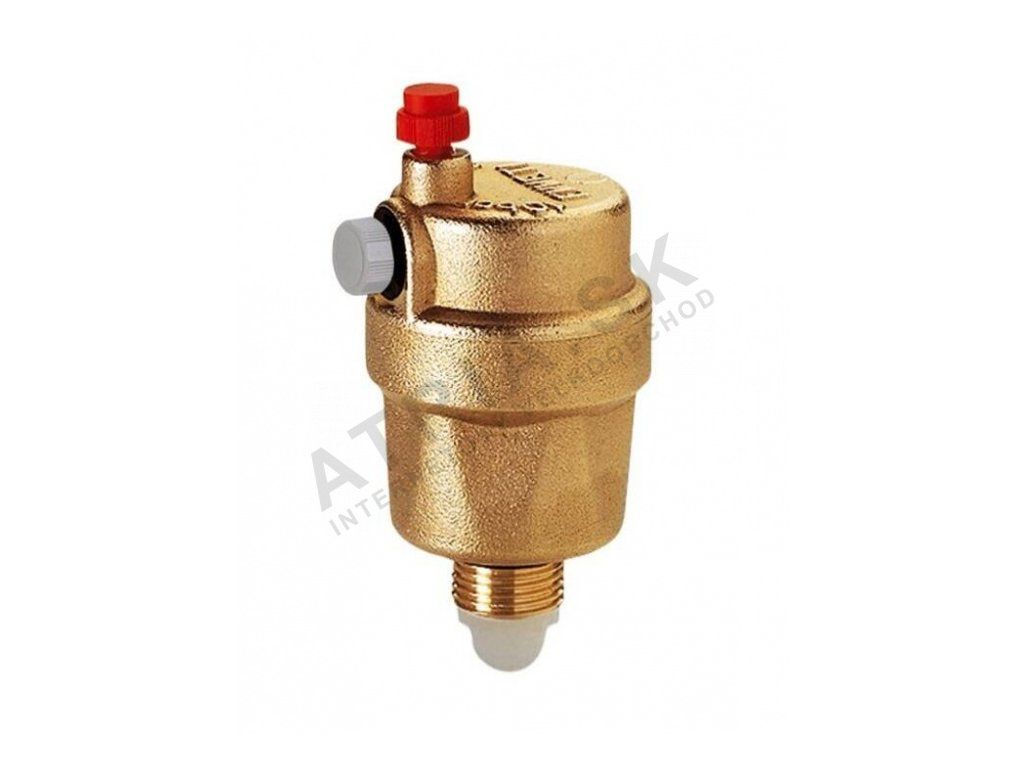 |
Automatic air vent valve - 1/2" - installed at the highest points of the system or directly on the manifold, works without operator intervention, and is the foundation for preventing air pockets, which according to our overview cause up to 30% of faults. Price from 12.01 EUR. |
 |
Manual air vent valve - 1/2" - a cheap but irreplaceable addition at every service inspection, allowing a technician to specifically vent a particular branch without dismantling the manifold. Price from 2.10 EUR. |
Practical experience from the field: if a service technician, during the annual inspection, comes across an automatic air vent valve that lets through only water instead of air (usually noticeable as a wet stain around it), this is a clear signal for replacement. A valve that has seized up or lost the sealing capability of its rubber seat no longer performs its function, and air will start accumulating in the system again, even if the valve worked flawlessly for years before.
Manifolds and their cabinets - an often underestimated maintenance element
In apartment buildings, office buildings, and industrial halls, the heating system is usually split into several circuits precisely via a manifold housed in a separate cabinet - either recessed into the wall or wall-mounted. The manifold cabinet is not just an aesthetic cover, but also protection against mechanical damage, dust, and any leakage of heat or moisture into the surrounding space. It is often forgotten during maintenance, because attention is directed mainly at the boiler, yet it is precisely in the manifold space where the shut-off valves, air vents, and metering elements of the individual branches are concentrated.
When choosing a manifold cabinet for a new installation, or when replacing a damaged one, it is important to select the correct size based on the number of branches and the space needed for future servicing - the technician must have enough room to comfortably reach the fittings, otherwise maintenance takes longer and there is a greater risk that something gets overlooked due to limited space.
 |
N-MAX 1 wall-mounted manifold cabinet - 450mm - a compact solution for smaller installations or a single branch, with enough internal space for comfortable access during both monthly and annual checks. Price from 132.84 EUR. |
 |
N-MAX 5 wall-mounted manifold cabinet - 1250mm - suitable for larger systems with multiple circuits, where several shut-off and venting elements come together in one cabinet at once, which is typical precisely for professional facilities. Price from 204.67 EUR. |
 |
N-KLASIK 2 wall-mounted manifold cabinet - 530mm - medium size, a popular choice when replacing an old corroded cabinet with a new one during a planned two-year inspection. Price from 114.14 EUR. |
During the two-year inspection, we also recommend paying attention to the inside of the cabinet itself - especially with older steel designs, surface corrosion caused by moisture condensation in the enclosed space can appear. If corrosion is caught in time, cleaning and possibly treating the surface is enough. If overlooked, over the following years it can also affect the threads of the fittings themselves, which then leads to leaks and the need to replace the whole manifold, not just the cabinet.
Shut-off fittings - a small part with a big impact if it fails
Ball shut-off valves are an element that is "not used" in normal operation - they remain open for months or years. This is paradoxically the biggest risk: a valve that isn't turned for a long time tends to seize up. Then, when a situation arises where a specific branch needs to be shut off quickly (for example to repair a radiator or in the event of a leak), the seized valve won't budge, or gets damaged if forced.
That is why a simple task is also part of the monthly check - preventively turning each shut-off valve slightly and back, to keep the mechanism moving. This is a matter of a minute per valve, and it can prevent a situation where the valve is non-functional exactly when it's really needed in an emergency.
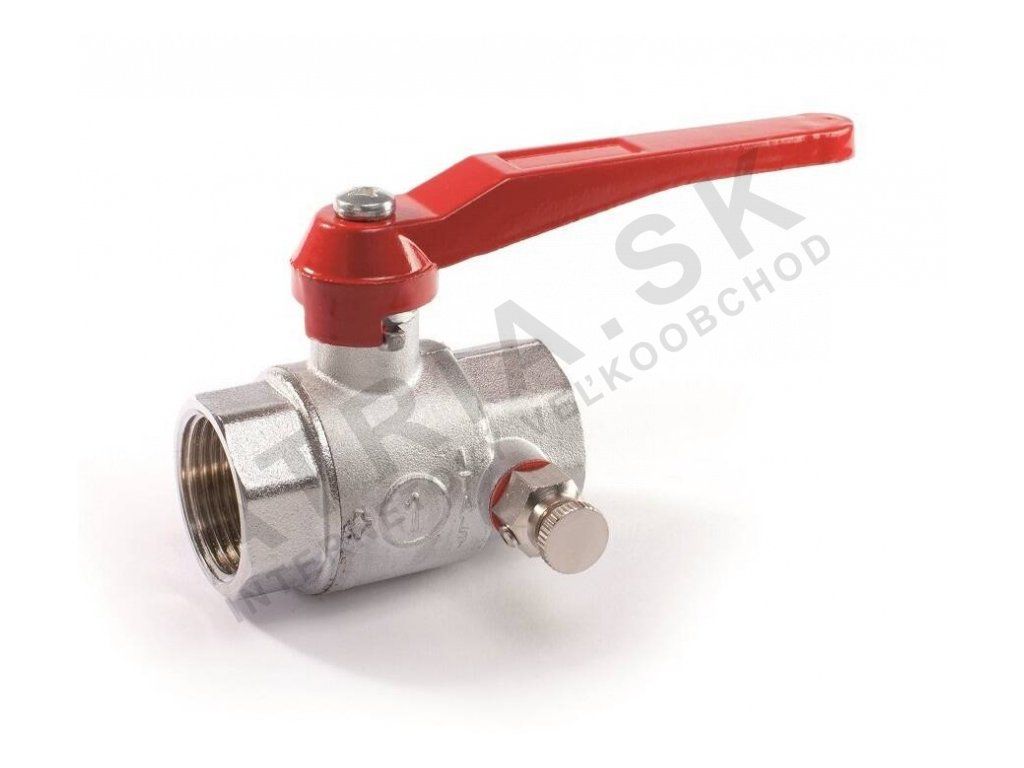 |
Ball valve for water - with drain - 1/2"FF; lever - thanks to the drain cock, it allows a specific branch to be drained during a service intervention without having to drain the whole system, significantly shortening downtime during a repair. Price from 14.86 EUR. |
During the annual inspection, the technician also usually checks the tightness of the joint between the valve and the pipe itself - slightly tightening the union nut can prevent a slow, hard-to-notice leak that would otherwise only show up months later as a damp stain on the wall or floor.
Maintenance cost versus emergency repair cost
This is the question operators ask most often - is it worth paying for regular servicing when the system "works without problems"? Experience clearly shows yes, especially when comparing average costs. A standard annual service inspection of a medium-sized professional boiler room (one to two boilers, several branches) in Slovakia costs roughly around 150 to 250 EUR including basic material (seals, small spare parts). By contrast, an unplanned emergency intervention - a service technician's call-out outside normal working hours, "blind" fault diagnosis without prior inspection history, and often the need to urgently source a spare part without being able to compare prices - usually falls in the range of 400 to 800 EUR, and that's without counting indirect costs such as heat loss during the repair, potential damage from a water leak, or tenant dissatisfaction.
The difference is therefore roughly three to five times higher, to the disadvantage of the unplanned repair - and this is exactly why regular maintenance pays off in the long run, even though at first glance it looks like an "unnecessary" expense for a system that is currently working with no visible signs of a problem.
A practical example from the field
A common scenario that recurs in service practice: the operator of a smaller production hall decided to skip one annual inspection "to save costs". Seven months later, in the middle of winter, an automatic air vent valve failed, gradually stopped sealing, and started leaking water around the manifold. Nobody noticed, because the monthly visual check that would have caught this minor leak in time was not being carried out. The water gradually corroded the inside of the manifold cabinet and eventually caused one of the branches to freeze over a weekend when the hall was unattended. The result was not only the cost of replacing the valve and part of the cabinet, but also two days of restricted operation of the hall and repair of the damaged section of flooring beneath the manifold. The total cost significantly exceeded what consistently following the original schedule for the whole year would have cost.
Procedure for a comprehensive annual inspection - step by step
For the inspection to have real informational value, it should always be carried out in the same order and with the same scope - only this way can the condition of the system be compared year over year, catching gradual deterioration before it shows up as a fault.
- Visual inspection of the whole boiler room - condition of the pipework, insulation, any traces of water leaks or corrosion.
- Pressure check and topping up the expansion tank - verifying that the system pressure matches the design value.
- Venting all branches - progressively opening the manual valves and checking the automatic air vent valves on each branch.
- Checking the functionality of the shut-off valves - turning each valve, checking the tightness of the joints, tightening the union nuts.
- Flue gas measurement and burner check - on the boiler itself, including checking combustion efficiency.
- Entry in the service log - recording the measured values and any findings for comparison at the next inspection.
Who should carry out maintenance - your own operator, or an external company
In practice, a combination of both approaches works best. Daily and monthly checks (visual inspection, venting, turning the valves) can be handled even by trained in-house building or facility staff - it doesn't require professional qualification, just knowledge of what and where to check, and the discipline to do it regularly. On the other hand, the annual inspection with flue gas measurement, burner checks, and adjustments to the controls should always be carried out by a certified service technician, ideally the same one every year - they know the system's history and can better assess whether a parameter is deteriorating compared to the previous year.
We recommend keeping a simple service log (a notebook or a spreadsheet on a computer is enough), where the dates of checks, measured values, and tasks performed are recorded. In the event of a complaint or insurance claim, this history is invaluable - it proves that the operator took care of regular maintenance, which can also be decisive from the point of view of insurance coverage.
Seasonal specifics - spring and autumn
Two moments of the year deserve special attention. In spring, after the heating season ends, it is a good idea to carry out thorough venting and a tightness check before the system "settles down" for several months - stagnant water in summer can be more aggressive towards the metal parts than water in constant circulation. In autumn, before the new heating season starts, a repeated pressure check and venting of all branches is recommended - a system that has been out of operation for months needs to be verified for any pressure drop or minor leak in the meantime, which might have shown up only minimally during summer, but at full heating startup would cause a problem at exactly the worst moment - in the first cold days, when demand for service companies is highest and waiting times are longest.
Frequently asked questions
How often does a professional heating system need to be serviced?
A basic annual inspection by a certified technician is the minimum; for more intensive operation (for example production halls running continuously) we recommend twice a year. On top of that, a daily/weekly visual check of your own and a monthly check of the air vent valves and shut-off fittings should be added, which the facility's own operator can also handle.
Can the monthly check be done in-house, or is a technician always needed?
A trained operator without professional qualification can handle the monthly visual check, venting, and turning the valves. However, interventions on the burner, flue gas measurement, and calibrating the controls should always be carried out by a certified service technician.
How do I recognize that an automatic air vent valve is on its way out?
A typical symptom is that water occasionally starts leaking from the valve instead of air, or a damp stain appears around it. In that case, replacement is appropriate, as it has lost the sealing capability of its rubber seat.
Why is it worth keeping a service log?
A service log allows measured values to be compared year over year and catches gradual deterioration of the system's condition before it shows up as a fault. It also serves as proof of regular care in the event of a complaint or insurance claim.
What should I do if a shut-off valve is seized and won't turn?
Forcing it is never recommended, as it can damage the valve body. If a valve has been seized for a long time, it is safer to replace it at the next service inspection than to risk it getting damaged at the moment it urgently needs to be shut off.
Is it worth investing in a larger manifold cabinet during a planned replacement?
Yes - enough space in the manifold cabinet significantly shortens the time needed for servicing, reduces the risk of something being overlooked due to limited space, and simplifies any future expansion of the system with an additional branch.
Related topics
If you are planning to expand or reassess a professional heating system, these topics may also interest you:
- How to choose professional heating components
- Differences between a domestic and a professional heating system
- The most common mistakes when designing a heating system
- Standards and regulations for professional heating systems
You will find the complete range of professional heating components in the main category Professional Heating.
Do you have a question on this topic?
Dealing with a specific situation regarding maintenance of your boiler room, or not sure which components you need to replace? Write to us - we're happy to help.