
Service and common faults of instant water heaters
An instant water heater is a device that heats water exactly at the moment you need it – no storage tank, no waiting, no unnecessary heat loss. Precisely because water flows through it directly and the element or heat exchanger is in constant contact with it, this is technology that requires slightly different care than a classic storage water heater or condensing boiler. Neglected maintenance shows up faster and more noticeably with an instant water heater – output drops, water temperature starts fluctuating, or the device refuses to start altogether. The good news is that the vast majority of faults have a clear cause, can be prevented, and in many cases can be recognised before a small problem turns into a bigger repair.
In this article we look at the most common causes of faults in both electric and gas instant water heaters, at what counts as basic maintenance you can handle yourself versus what clearly belongs in the hands of a professional, at how to set up regular care so the device lasts as long as possible, and we add two real-world scenarios from everyday household operation. If you're still choosing an instant water heater and working out which type suits you better, also see our article How to choose an instant water heater or the direct comparison Electric vs. gas instant water heater.
Limescale buildup – the most common problem for both types
Regardless of whether you have a small electric instant water heater above a washbasin at home, or a larger gas model supplying the whole bathroom and kitchen, there's one cause of faults common to practically every device of this type: limescale. The heating element in electric models, or the heat exchanger in gas instant water heaters, is in direct, constant contact with the flowing water. If the water in the given location is harder – meaning it contains a higher amount of dissolved calcium and magnesium salts – these gradually precipitate during heating and settle on the walls of the element or exchanger.
Limescale acts as an insulator. The layer that builds up on the heat-transfer surface hinders efficient heat transfer into the water flowing through the heater. The device therefore has to work harder to achieve the same heating, which shows up in several ways at once:
- a gradual drop in output – water that was originally pleasantly warm is now only lukewarm at the same flow rate,
- uneven temperature – the water temperature fluctuates even with a stable setting,
- noisier operation – deposits can cause bubbling or hissing as water flows through narrowed sections,
- in a worse case, local overheating of the element – if the limescale layer is thick and uneven, heat isn't carried away into the water fast enough and the element material is exposed to higher thermal stress, which shortens its service life.
The speed at which limescale settles is directly related to water hardness in the given location – this varies significantly across Slovakia depending on the region and water source (public mains versus your own well). In areas with harder water, more attention needs to be paid to descaling and it needs to be done more often, while with soft water an occasional check is enough. That's why there's no single universal maintenance interval that applies to all households – the specific schedule should be based on the actual water hardness at your location, which you can easily check with your water utility or with an indicative water hardness tester.
The good news is that regular, timely descaling can bring the device's output back to almost its original level and significantly extend the life of the element and other components that come into contact with water. Neglected, long-unaddressed buildup, on the other hand, is among the most common reasons why the entire heating element or heat exchanger – the most expensive part of the whole device – has to be replaced.
Common faults in electric models
Electric instant water heaters are structurally simpler than gas ones – they don't contain a burner, flue gases, or a chimney discharge, which in itself means fewer places where something can go wrong. Nevertheless, they have their own typical "weak points" worth knowing about.
Temperature fluctuation at low flow
Especially with older or simpler hydraulically controlled models, the device may fail to maintain a stable water temperature at very low flow – that is, when the tap is only opened slightly. The reason lies in the operating principle: a hydraulic flow switch needs a certain minimum water flow to activate heating, and if the flow hovers right around this threshold, heating may switch on and off repeatedly, which the user perceives as the temperature "jumping" between hot and cold water. More modern, electronically controlled models with more precise output regulation (for example the CLAGE ranges with electronic control, such as the CLAGE CEX 11/13.5 kW) significantly reduce this effect, since they can smoothly adjust output to the current flow instead of simple on/off switching.
Wear of the flow sensor or switch
The component that determines whether and with what intensity water is flowing through the device is mechanically stressed with every use. After years of operation it can wear out, become less sensitive, or accumulate small impurities and limescale particles that affect its accuracy. This shows up as delayed start of heating after opening the tap, or conversely heating that doesn't switch off right after the water is closed.
Fouling of the heating element
As described above, this is a problem common to both types of heaters, but in electric models it also has a direct impact on the electrical part of the device – uneven cooling of the element due to a layer of limescale increases thermal stress and can, in an extreme case, lead to premature failure of the power element, which is generally the most costly repair for electric instant water heaters.
Fuse and safety features
Quality electric instant water heaters have built-in safety cutouts against overheating and dry running (heating activating without water flowing through). If such a cutout trips repeatedly, it almost always signals a different, underlying cause – for example precisely a fouled element or a problem with the flow sensor – rather than a fault in the cutout itself. Repeated tripping of the thermal cutout therefore shouldn't be ignored or "reset endlessly", but taken as a clear signal to have the device checked.
Common faults in gas models
Gas instant water heaters are structurally more complex – they contain a burner, an ignition system, and possibly a flue gas discharge (in forced-draught models also a fan), and therefore also have a somewhat wider range of possible faults. At the same time, a clearly stricter rule applies to them: any intervention in the gas part or flue path belongs exclusively to a person with the relevant professional qualification.
Ignition problems
One of the most commonly reported faults in gas instant water heaters is that the device doesn't start after the hot tap is opened, or starts with a delay or only after several attempts. The most common causes are:
- a worn or dirty ignition electrode – after years of operation, soot or thin oxide layers can build up on it, preventing a reliable spark from forming,
- a dirty burner – deposits on the burner nozzles change the character of the flame and can cause uneven combustion or complete ignition failure,
- dead or weak batteries – in models with battery ignition (not requiring an electrical connection), a dead battery is a surprisingly common yet also the simplest cause to fix,
- low gas or water pressure – some models have a minimum water flow threshold below which ignition won't start at all (a safety feature, not a fault).
Problems with chimney draught or turbo fan
In models with flue gas discharge into a chimney (natural draught) or with forced discharge via a fan (turbo version), the flue discharge function can deteriorate – for example due to deposits in the flue path, partial blockage of the chimney, or, in turbo models, wear of the fan itself. This can show up as a safety shutdown of the device (modern gas appliances have cutouts specifically against this condition), a smell of flue gas in the room, or unstable combustion. This is an area where no compromise is possible – it directly concerns household safety, and any sign of a flue discharge problem requires immediate intervention by a service technician with gas qualification.
Clogged inlet water filter
Most gas instant water heaters, for example the Karma POV 14BK ZP model, have a mechanical filter at the water inlet that catches small impurities from the water pipe – sand, rust particles from older piping, or deposits from the water mains. If this filter becomes clogged over time, it shows up as a drop in water flow, which can cause the flow to fall below the minimum threshold needed to trigger heating – so the device appears "broken" when it's actually just not getting enough water. This is also one of the few maintenance tasks on gas models that a more capable user can handle themselves after shutting off the water supply and draining the system, although if in any doubt, it's always safer to call in a service technician.
Wear of seals and valves
As with any device working with pressurised water and gas, instant water heaters also experience natural wear of seals, membranes, and valves regulating gas flow over time. This can show up as fluctuating output, a slight smell of gas, or a pressure drop – in all these cases the same rule as above applies: this is an intervention in the gas part that belongs to a professional.
What you can handle yourself vs. what belongs to a professional
A clear division between what counts as ordinary DIY maintenance and what requires professional intervention is more important with instant water heaters than with most other heating technology – precisely because these are devices working directly with drinking water, high-power electricity, or flammable gas.
You can handle yourself (with basic manual skill)
- visual inspection of the device – water leaks, visible deposits, unusual sounds during operation,
- cleaning or replacing the external mechanical filter at the water inlet, if the manufacturer's manual explicitly permits it and it's designed as a DIY-accessible part,
- checking and, if needed, removing limescale from the outlet aerator or shower head (not from the heating element itself),
- monitoring and noting changes in output and water temperature – useful information for a service technician,
- basic descaling on models where the manufacturer explicitly describes a safe procedure for the end user (for example flushing with a descaling solution through a designated inlet) – always exactly according to the specific model's operating manual.
Belongs to an electrician / service technician
- any intervention in the electrical part of an electric instant water heater – power element, electronics, control board,
- diagnosing and repairing repeated tripping of the thermal cutout,
- replacing or fully descaling the heating element,
- checking and adjusting the electrical wiring supplying a high-power electric heater (more in our article Electrical installation for an electric instant water heater).
Belongs exclusively to a person with gas qualification
- anything related to the burner, ignition electrode, or gas valve,
- checking and maintaining the flue path, chimney, or turbo fan,
- any suspicion of a gas leak – in that case, the rule is to immediately close the main gas shut-off valve, ventilate the space, and call a professional, without any DIY repair attempts,
- regular mandatory service inspection of the gas appliance according to the manufacturer's instructions and applicable legislation – for gas appliances this is often a legal obligation, not just a recommendation.
If you're planning to install a new gas instant water heater, we also recommend our detailed guide Installation and connection of a gas instant water heater, where the topic of professional qualification is covered in detail.
How to extend service life – filter, descaling, regular inspection
The service life of a quality instant water heater with proper care is comparable to other modern heating technology – with simpler mechanical models, given good maintenance, it commonly runs into decades, while with neglected care in areas with very hard water it can shorten significantly. The difference between these two scenarios comes down almost entirely to regular, if undemanding, care.
1. Know the water hardness in your location
The first and most important step isn't a technical intervention, but information. Find out the hardness of the water flowing into your heater – from your water utility, or with a simple water hardness tester available at ordinary stores too. This information determines how often it makes sense to schedule descaling: softer water allows a longer interval, while harder water calls for descaling significantly more often, otherwise deposits build up faster than you can react.
2. Regular descaling according to the manufacturer's recommendation
The specific interval and exact descaling procedure vary from model to model – the operating manual for the specific device is always authoritative. For both electric and gas instant water heaters, the general rule applies: the harder the water, the shorter the interval between descalings. Neglecting this step is the most common reason why device output gradually declines even though "nothing visible has broken" – limescale builds up gradually and inconspicuously until it suddenly shows up all at once one day.
3. Mechanical filter at the water inlet
If your model has a filter, or if one can be added as a separate upstream component before the device, this is one of the cheapest and most effective investments in the heater's service life. The filter catches sand, rust, and other mechanical impurities before they reach sensitive internal components – the flow sensor, valves, and the heat-transfer element itself. Regular inspection and cleaning of the filter (frequency depends on water quality at the given location and the condition of the water piping) significantly reduces the risk of faults caused by mechanical wear.
4. Regular visual and functional inspection
You don't need to wait for an obvious fault to appear. We recommend noticing, from time to time – for example during a seasonal household check – the following:
- whether the device starts smoothly, without delay,
- whether the water temperature is stable at both normal and lower flow,
- whether there are any leaks at the connection point,
- for gas models, whether the flame colour is even and blue (a yellow, flickering flame is a warning sign),
- whether the device makes unusual sounds – bubbling, hissing, knocking.
5. Don't underestimate the service inspection
For gas models, regular professional service inspection isn't just a recommendation but often also a legal obligation and a condition for maintaining the warranty. For electric models, although a legal obligation for regular inspection usually doesn't apply to the same extent, it's worth having the device checked by a professional from time to time – especially if you live in an area with harder water or use the device intensively (a larger household, multiple draw-off points).
Real-world example
Scenario 1: An electric heater and "jumping" water temperature
In a family house with an older water connection and moderately hard water, a simpler hydraulically controlled electric instant water heater was installed at the kitchen sink. After roughly five years of operation, the household started noticing that with the tap opened slowly – that is, at low flow, typical for example when washing dishes with intermittent water flow – the water temperature fluctuated erratically between warm and almost cold. With the tap fully open, the problem was less pronounced but still present.
Inspection revealed a combination of two common causes: the heating element was partially fouled with limescale (the device had never previously undergone descaling), and the flow switch was slightly worn, no longer responding accurately enough at low flow. After professional maintenance was carried out – descaling the element and checking/adjusting the switch – temperature stability improved significantly. The household also decided that at the next replacement they would choose a model with electronic output regulation, which is substantially more resistant to flow fluctuations – a similar principle works, for example, in models such as the CLAGE CEX 11/13.5 kW or the more powerful CLAGE DBX21 Next 21 kW, which can smoothly adjust output even at lower flow instead of switching abruptly on and off.
Scenario 2: A gas heater that "stubbornly" refused to ignite
In a flat with an older gas instant water heater, a problem occurred that's extremely common with this type of device: after opening the hot tap, the heater only started on the second or third attempt, accompanied by an audible clicking sound without the flame igniting. After a few weeks, the problem worsened to the point that the device stopped starting altogether.
Service inspection revealed a combination of two typical causes: the ignition electrode was covered with a layer of soot preventing a reliable spark from forming, and at the same time the inlet water filter was partially clogged with deposits from the piping in the older apartment building, reducing flow to just below the threshold at which ignition still reliably activates. After cleaning the electrode and filter (both tasks performed by a service technician with gas qualification, since it involved intervention directly in the gas part of the device), ignition returned to its original reliability. This case is a typical illustration of why it's worth addressing a problem right at the first signs – delayed or intermittent ignition almost never goes away on its own and generally only gets worse over time. When choosing a new, reliable gas model for a similar household, proven devices such as the Karma POV 14BK ZP are often recommended.
Recommended products
If you're dealing with servicing, replacement, or choosing a new instant water heater, here's an overview of three proven models from our range, suitable for different types of households:
| Image | Product | Type | Price |
|---|---|---|---|
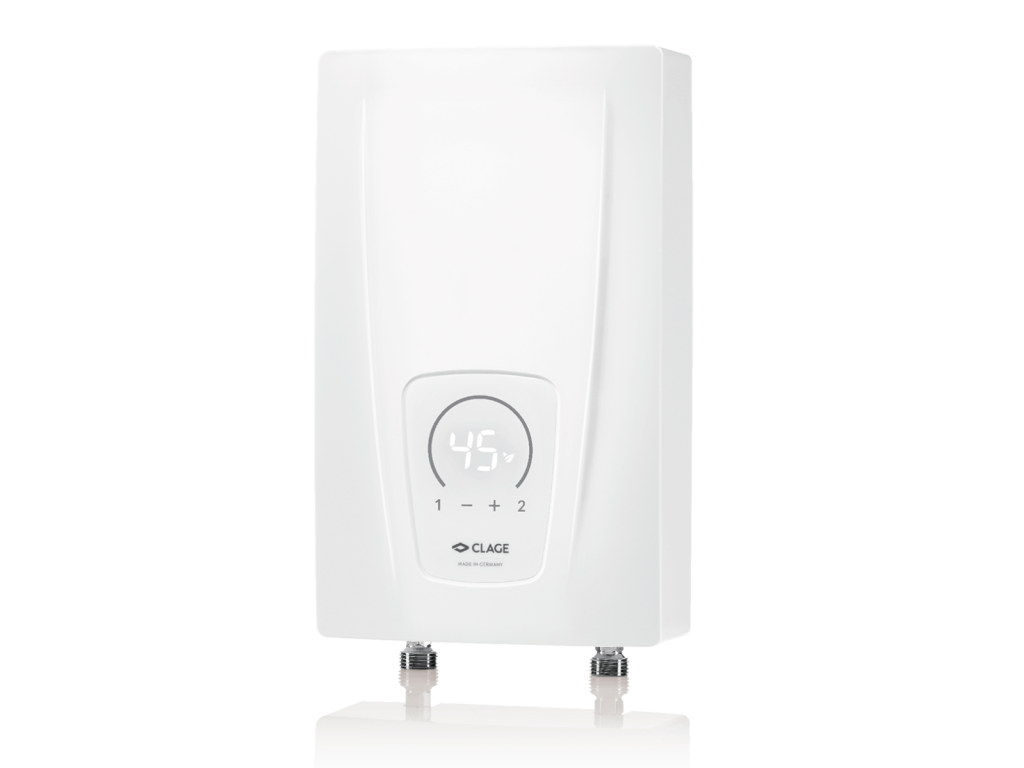 |
CLAGE CEX 11 or 13.5 kW, 400 V | Electric, electronically controlled | €397.70 |
 |
Karma POV 14BK ZP | Gas | €849.85 |
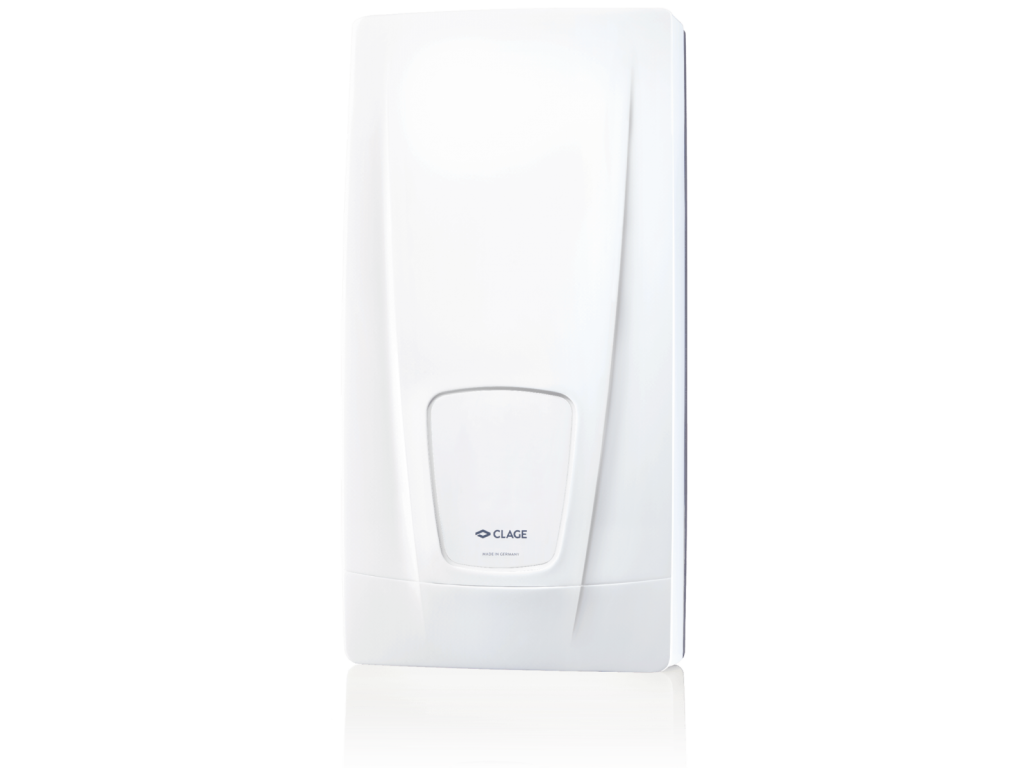 |
CLAGE DBX21 Next 21 kW, 400 V | Electric, higher output | €390.60 |
CLAGE models with electronic output control (both CEX and DBX21 Next) are a good choice precisely where previous experience was marked by temperature fluctuation at low flow – their control electronics adjust output to current conditions smoothly, not abruptly. The Karma POV 14BK ZP gas model is suitable for households that need greater comfort with higher hot water draw-off and have a gas connection with functional flue discharge available. When choosing between individual types, we also recommend our comparison Comparison of instant water heater brands.
Frequently asked questions (FAQ)
How often should an instant water heater be descaled?
The exact interval depends on water hardness at your location and on the specific model – the operating manual is always authoritative. In general, the harder the water, the more often descaling is needed. In areas with significantly hard water, shorter intervals are worth considering than in areas with soft water, where an occasional check may be enough.
Why does my heater give hot water one time and cold water the next at the same setting?
This is most often due to fluctuating water flow combined with the limitations of a hydraulically controlled model, or a worn or dirty flow sensor. In electric models, this typically shows up mainly at low water flow. The solution is checking the sensor and possibly descaling the element; when buying a new device, choosing a model with electronic output regulation helps.
Can I descale it myself?
For some models, the manufacturer describes a safe procedure for the end user, for example flushing with a descaling solution through a designated inlet – in that case DIY intervention is possible, but always exactly according to the specific device's operating manual. A full descaling of the heating element or heat exchanger itself is a more complex task, which we recommend leaving to a service technician.
Why won't my gas heater ignite on the first try?
The most common cause is a worn or dirty ignition electrode, a dirty burner, or, in models with battery ignition, simply a weak battery. Low water flow caused by a clogged inlet filter can also be the cause – in that case the device doesn't even detect enough flow to trigger ignition. We recommend inspection by a service technician with gas qualification.
Is it normal for an instant water heater to bubble or hiss slightly during operation?
An occasional slight sound when switching on can be part of normal operation, but more pronounced bubbling, hissing, or knocking usually signals limescale deposits narrowing the flow channels inside the device. If the sound is new or getting louder, we recommend not leaving it unchecked and scheduling descaling or a service inspection.
How long does an instant water heater last with good care?
With proper care – regular descaling matching water hardness, a functional inlet filter, and addressing the first signs of faults promptly – the service life of a quality instant water heater is comparable to other modern heating technology, running into decades for simpler mechanical models. Neglected maintenance, especially in areas with very hard water, can significantly shorten its life.
Do I need a mechanical filter at the heater's inlet?
If the model allows it, this is one of the cheapest and yet most effective investments in extending the device's service life. The filter catches sand, rust particles, and other mechanical impurities before they reach sensitive internal components – the flow sensor, valves, and the heat-transfer element itself.
When is repeated tripping of the thermal cutout a reason for immediate action?
Always. Repeated tripping of the safety cutout against overheating isn't a random fault in the cutout itself, but almost always a signal of a different, underlying cause – most often a fouled heating element or a problem with the flow sensor. You should have the device checked by an electrician or service technician before using it further.
Related topics
- How to choose an instant water heater
- Electric vs. gas instant water heater
- Electrical installation for an electric instant water heater
- Installation and connection of a gas instant water heater
- Comparison of instant water heater brands
Have a question about an instant water heater?
Can't decide, or dealing with a specific situation in your household? Write to us – we're happy to help.