
Electric vs. gas instant water heater
When you need hot water instantly in the bathroom or kitchen, without a tank that would first have to heat it and keep it hot, an instant water heater is the solution. It heats water right at the moment it flows through the heat exchanger, so you don't need any tank, no waiting, and no losses from heat escaping a tank between draw-offs. The question that comes right after deciding "I want instant heating", though, is: electric, or gas?
Both technologies do essentially the same thing – they heat cold water to a usable temperature exactly when you open the tap. But they differ fundamentally in what they need to operate, how demanding the installation is, what operating costs they bring, and in what types of property they make the most sense. An electric heater is, in essence, similar to an electric boiler – it needs a strong electrical circuit, often three-phase, but needs no chimney or flue discharge at all. A gas heater, by contrast, is undemanding on the electrical installation, but requires a gas connection and safe flue discharge. In this article we go through both principles in depth, compare installation requirements, look at two real-world scenarios, and recommend specific models that have proven themselves on the atria.sk shop.
If you're still unsure whether you even need instant heating, or what output it should have, we recommend first reading our separate texts How to choose an instant water heater and What output instant water heater do I need. This article focuses solely on comparing electric and gas technology, which don't exclude each other in terms of output – but differ fundamentally in what they require from your house or flat.
How electric instant heating works
An electric instant water heater is, on the inside, essentially a very powerful electric heating element around which water flows. When you open the tap, the flow sensor detects water movement, switches on the heating element (or several elements in sequence, depending on the set output and temperature), and the water is heated right as it passes through the heating chamber. As soon as you close the tap, heating switches off immediately – no inertia, no "reheating on demand". That's precisely the main advantage of this technology: heating operates for exactly as long as you actually need it, not a second longer.
Electric instant water heaters fall into two basic groups:
- Pressurised models – connect directly into the water supply in the flat/house, can supply several draw-off points at once (shower, washbasin, kitchen sink), and commonly have a power draw of 18 to 27 kW. It's precisely this high power draw that's why pressurised electric heaters generally need a three-phase 400 V connection.
- Unpressurised (instant) models – smaller units with a typical power draw of 3.5 to 5.5 kW, which generally supply just one draw-off point (for example a single washbasin in a small kitchenette, workshop, or cottage) and also work on a standard single-phase 230 V socket. The drawback is low hot water flow – enough for washing hands or dishes, but not for comfortable showering.
The difference between pressurised and unpressurised versions is also fundamental from the perspective of this comparison with gas – it's precisely the pressurised models with higher output (18–27 kW) that are genuinely comparable to gas instant water heaters for showering and multiple simultaneous outlets, and it's precisely these that also have the highest electrical installation requirements.
The advantage of electric heating is simplicity in terms of "what needs to be brought into the room" – just a cable with sufficient cross-section and a breaker, no chimney, no flue, no gas equipment inspection. The disadvantage is the opposite side of the same coin: if your flat or house doesn't have an adequately sized electrical circuit available (especially three-phase), building one can be surprisingly costly and structurally demanding.
How gas instant heating works
A gas instant water heater works on a similar principle of instant heating on flow, just with a gas burner and heat exchanger inside instead of an electric element. When the tap is opened, water flows through the exchanger, a flow sensor ignites the burner (today almost exclusively via electronic ignition, older models had a pilot flame), and the gas heats the water to the set temperature. Once the tap is closed, the burner switches off.
Gas instant water heaters also exist in both pressurised and unpressurised versions, but in practice, in Slovak households we mostly encounter pressurised models connected to the gas supply and to the cold/hot water supply, capable of supplying both the bathroom and kitchen at once.
The key difference from the electric solution lies in what a gas heater needs to operate:
- A connection to flammable gas – most often natural gas from the mains, and in locations without a gas network, propane-butane from a pressurised cylinder or tank.
- Flue gas discharge – either via a classic chimney (for models with natural draught), or via a more modern "turbo" solution with forced draught, where flue gases are discharged through a coaxial pipe directly through the facade, without needing a masonry chimney.
It's precisely the turbo versions that have significantly expanded the possible uses of gas instant water heaters in flats and houses without a functional chimney – all you need is to drill through the exterior wall and route a short pipe outside. Nevertheless, this is still work on gas equipment and the flue path, which must be designed and carried out by a person with professional qualification in gas fitting, and the device is then subject to mandatory inspection.
The advantage of gas heating is that it places no unusual demands on the electrical installation – just a standard 230 V socket is enough to power the electronics and ignition, no three-phase circuit. If the house or flat already has a functional gas connection (for example from a gas boiler that was later decommissioned, or from a gas cooker), adding an instant water heater can be surprisingly straightforward. But if gas isn't connected to the location at all, bringing it in is generally much more expensive and bureaucratically demanding than upgrading the electrical connection.
Electrical installation requirements
This is the point where an electric instant water heater most resembles an electric boiler – and also the point where "can this even be done at our place?" decisions most often come up.
A pressurised electric instant water heater with an output of 18–27 kW generally needs:
- A three-phase 400 V connection – a single-phase 230 V socket simply can't carry that much power without a disproportionately high current and thick cable.
- A heavily rated breaker – depending on the specific model's output, this can be a breaker rated on the order of 32–40 A per phase, with the exact value always determined by the project/inspection technician based on the specific model's rating plate.
- An adequately sized supply cable – the cable's cross-section must match the transmitted power and the length of the run; an undersized cable heats up dangerously under such a load.
- A separate breaker/circuit – an instant water heater is never connected "to an existing socket" alongside other appliances, but to its own separately protected circuit run directly from the distribution board.
In a flat or house where a three-phase supply is already installed (typically where there is or was an electric boiler, an electric cooker with an oven, or a workshop with three-phase tools), the connection is relatively undemanding – it's "just" a new circuit from the existing distribution board. The problem arises where only a single-phase connection is brought into the property. In that case, you either need to upgrade the connection (which is work by the distribution company, and a non-negligible step administratively and financially), or choose a different heating technology.
Smaller unpressurised models with a power draw of 3.5–5.5 kW don't have this complication – they commonly run on a standard single-phase 230 V socket, or a separate single-phase circuit. They're a good choice, then, where supplying one draw-off point is enough and you don't want to deal with a three-phase supply, but their limited flow doesn't allow for comfortable simultaneous showering and other draw-off.
Installing and inspecting an electric instant water heater, just like an electric boiler, should always be carried out by a qualified electrician with the appropriate licence, and the device should undergo an inspection of the electrical installation before being commissioned. This is reserved electrical equipment with high power draw, where amateur installation represents a real safety risk.
Gas connection and flue discharge requirements
A gas instant water heater flips the problem around – instead of high-current electricity, it needs a safe supply of flammable gas and safe flue gas discharge.
Basic conditions for installing a gas instant water heater:
- A functional gas connection – either an existing natural gas connection from the mains (the most common solution in towns and villages with gas infrastructure), or alternatively a connection to propane-butane from a pressurised cylinder or external tank where mains gas isn't available.
- Flue gas discharge – for models with natural draught, this means a classic chimney with the correct cross-section and draught; for models with forced draught (turbo), a coaxial pipe routed through the exterior wall, which simultaneously supplies combustion air and discharges flue gases.
- Sufficient ventilation of the space – even with turbo versions, the room where the heater is installed must comply with applicable regulations for gas appliances.
- Inspection of the gas equipment – after installation, a professional inspection and tightness check is required, similarly to a gas boiler.
Practically always, the first point is decisive here – gas availability. Where the house or flat already has gas infrastructure (for example it had or still has a gas boiler, or a gas cooker), adding a gas instant water heater is relatively straightforward, since the main connection to the property already exists and only piping to the point of use needs to be added. Where gas isn't connected to the location at all, the situation is the reverse of electricity – bringing a gas connection to a new location is generally a more expensive, slower, and more administratively demanding process than upgrading the electrical connection, since it requires the gas distributor's consent, a gas connection project, and inspections at several levels.
The turbo version (with forced draught through the facade) significantly expands installation possibilities even in apartment buildings or houses without a functional chimney, since it handles flue discharge independently, without needing a masonry chimney. Nevertheless, bear in mind that the facade outlet must meet the prescribed clearances from windows, vents, and property boundaries, which can be limiting for some layouts.
Installation, connection to the gas supply, wiring the flue discharge, and the subsequent inspection of a gas instant water heater may only be carried out by a person with professional qualification in gas fitting. A detailed installation procedure and everything you need to prepare before installing a gas model can be found in the separate article Installation and connection of a gas instant water heater.
When to choose which type
In practice, the decision between electric and gas instant heating almost always narrows down to one practical question: what's easier and cheaper to arrange at your specific property – a strong three-phase electrical circuit, or a functional gas connection with flue discharge?
A few typical situations where the decision clearly leans one way:
- An electric heater makes sense if: the property doesn't have gas connected and bringing it in would be costly or administratively lengthy; it's a smaller flat or cottage where even an unpressurised 230 V model for one draw-off point is enough; the house already has a three-phase connection (for example from an electric boiler or workshop) and just needs a new circuit added; you want to avoid a chimney, flue gases, and gas equipment inspection entirely.
- A gas heater makes sense if: the house or flat already has gas infrastructure and a functional connection (for example from a gas boiler or cooker); the property's electrical connection is only single-phase and upgrading it to three-phase would be expensive or structurally complicated; you need to supply multiple draw-off points at once with greater comfort and don't want to deal with a high-current electrical installation; you have a simple way to handle flue discharge (an existing chimney, or a suitable facade for a turbo outlet).
Don't forget the operating aspect either – both types have their ongoing energy costs (electricity vs. gas), which vary according to current prices and how much hot water you actually use. This topic goes beyond the scope of this article, since it depends on your energy suppliers' current rates, but from the point of view of the investment and installation decision, the comparison of infrastructure requirements above is generally the decisive factor.
If your decision is heading toward an electric solution, we also recommend reading the separate text Electrical installation for an electric instant water heater, where we go into more precise detail on cable, breaker, and distribution board requirements for specific output ranges.
Real-world example
Scenario 1: A flat without gas, solved with an electric heater
Picture a typical case we encounter fairly often in consultations: a smaller flat in a newer apartment building, where the property has no gas connected at all (the building is heated centrally, and hot water from the building's circuit is missing or insufficient/expensive), and the owner needs to add hot water heating just for the bathroom and kitchen. The flat's distribution board has a three-phase connection available – a common standard in newer apartment buildings, also for possible future installations such as an electric cooker or an EV charger.
In this situation, an electric pressurised instant water heater is the logical choice: there's no need to deal with any gas connection, which in a building without existing gas infrastructure would be practically infeasible or extremely costly (work in shared areas, homeowners' association consent, a new gas branch project). The electrician runs a new separate three-phase circuit with a matching breaker from the distribution board, the instant water heater is connected to the hot water supply in the bathroom, and after inspecting the electrical installation, the device is immediately ready for operation. No chimney, no work on the facade, no gas inspection.
Scenario 2: A family house with a gas connection, solved with a gas heater
The second typical case is the reverse: an older family house that was originally heated by a gas boiler. Over time the boiler was replaced with a different heat source (for example a heat pump), but the gas connection to the house remained in place and functional – the gas supply is still run right up to the location of the original boiler. The owner needs to add a standalone hot water source for the bathroom and kitchen, but the house's electrical connection is only single-phase, and upgrading it to three-phase would require work by the distribution company as well as a considerable investment in the wiring.
In this case, a gas instant water heater is the logical choice: the existing gas connection is put to new use, a gas fitting specialist connects the heater to the gas supply and handles flue discharge – either by using the original chimney from the old boiler (if it's still functional and of suitable dimensions), or by installing a turbo version with an outlet through the facade if the chimney is no longer available or doesn't comply. After inspecting the gas equipment, the heater is ready for operation without needing any modification to the house's electrical installation.
Both scenarios show the same principle: the decision isn't made based on which technology is "better" in general, but based on what the house or flat already actually has available – a strong electrical connection, or a functional gas supply.
Recommended models
Below are specific models from both categories currently available in the atria.sk shop, among the proven choices for households.
Gas instant water heaters
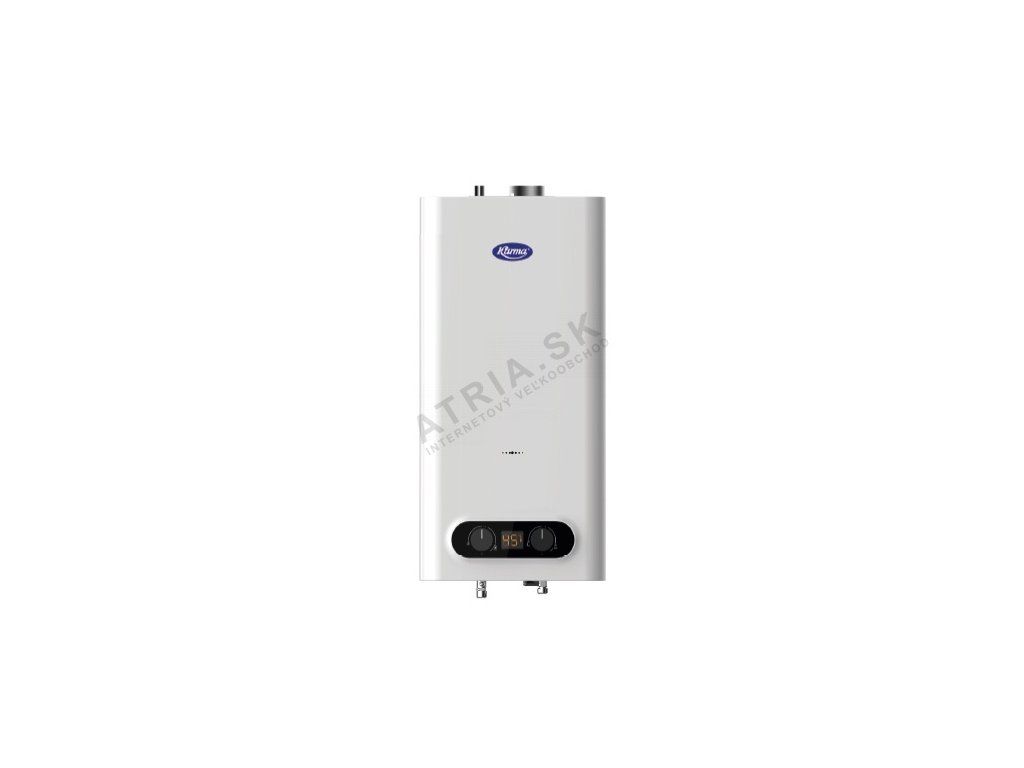 |
Karma POV 14BK ZP |
 |
Karma POV 11BW ZP |
Electric instant water heaters
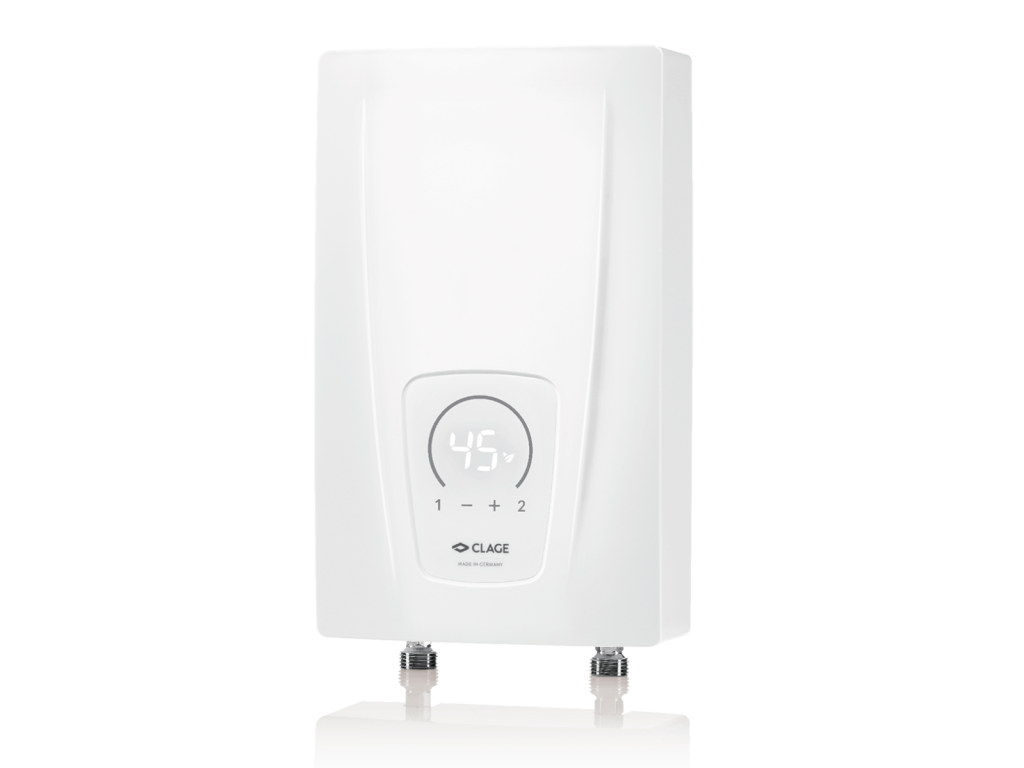 |
CLAGE CEX 11 or 13.5 kW, 400 V |
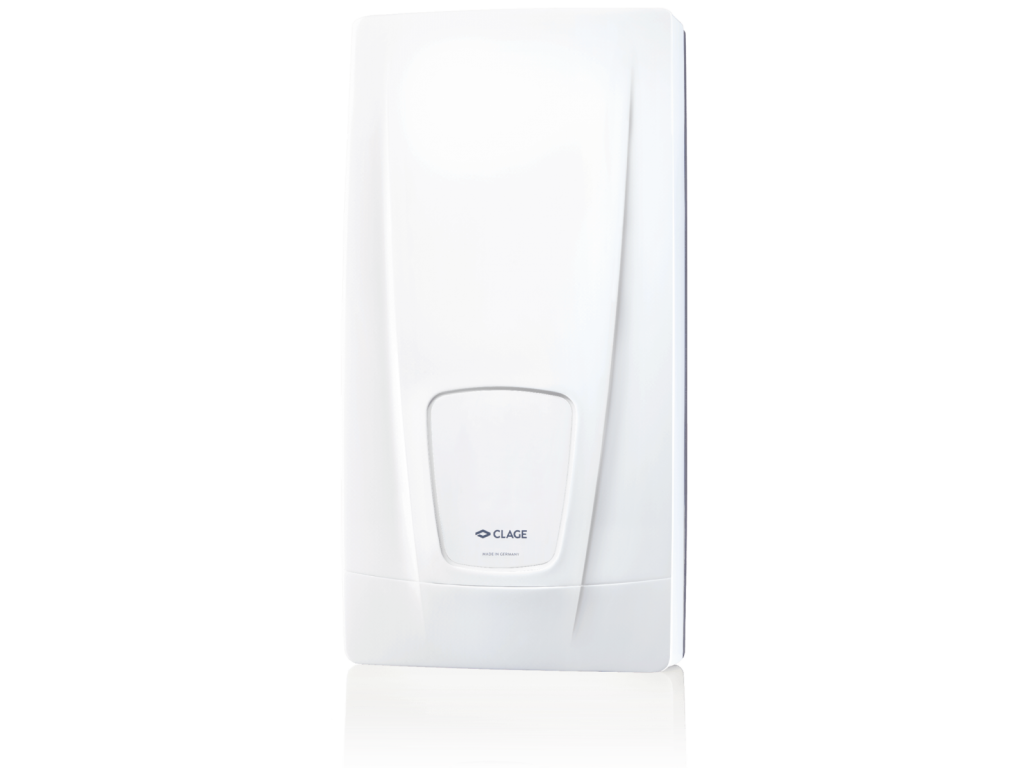 |
CLAGE DBX21 Next 21 kW, 400 V |
When choosing a specific output, we recommend basing it on the number of simultaneously used draw-off points and the incoming water temperature – a detailed guide to calculating the required output can be found in the article What output instant water heater do I need. If you're also considering brands other than the models listed here, you'll find a comparison of several manufacturers' ranges in the article Comparison of instant water heater brands.
Frequently asked questions (FAQ)
Is an electric instant water heater cheaper to buy than a gas one?
The device itself can come out cheaper or more expensive depending on output and brand – the differences between individual models are, in this respect, greater than the difference between the technologies as such. The real difference in total costs is generally determined by installation: if a new three-phase electrical connection needs to be built, or conversely a new gas connection with a chimney, it's precisely this one-off investment cost that tends to be decisive, not the price of the heater itself.
Can I connect an electric instant water heater myself, without an electrician?
No. Pressurised electric instant water heaters with an output of 18–27 kW are reserved electrical equipment, generally powered from a three-phase 400 V circuit with a heavily rated breaker. Installation and wiring must be carried out by a qualified electrician, and the device should undergo an inspection of the electrical installation before first use.
Do I always need a chimney for a gas instant water heater?
Not necessarily. Models with natural draught do need a chimney, but there are also turbo versions with forced draught, which discharge flue gases via a coaxial pipe directly through the exterior wall, with no need for a masonry chimney. The choice depends on the layout of the specific property and should be discussed with a gas equipment specialist.
Can a gas instant water heater be used with a propane-butane cylinder in a flat without gas?
Technically yes, there are models adapted to run on propane-butane from a pressurised cylinder or external tank. In practice, however, this solution is more common at cottages, in workshops, or in properties without access to mains gas than in flats, where storing a pressurised cylinder can be problematic in terms of both space and safety regulations.
Is an unpressurised electric heater on 230 V enough for a whole bathroom?
Generally no. Unpressurised models with a power draw of 3.5–5.5 kW are intended to supply one draw-off point with limited flow (typically a washbasin), not comfortable showering. For a shower, or for simultaneously supplying multiple outlets, a more powerful pressurised model is needed, which will generally already require a three-phase connection.
Which technology has lower operating costs, electricity or gas?
This answer changes over time depending on current electricity and gas prices, and therefore can't be generalised without specific current rates from your energy supplier. From the point of view of the investment decision (what's easier and cheaper to arrange – a strong electrical connection, or a gas connection with flue discharge), it's therefore more appropriate to base your decision on what your house or flat already actually has available, rather than a general comparison of energy prices.
Does an electric instant water heater need an inspection even without gas or a chimney?
Yes. Even though an electric heater doesn't need a gas equipment or chimney inspection, as reserved electrical equipment with high power draw it's subject to an inspection of the electrical installation, which verifies correct sizing of the cable, breaker, and the safety of the entire circuit.
Can I combine a gas and an electric instant water heater in one household?
Yes, it's not unusual – for example a gas model as the main supply for the bathroom and kitchen, supplemented by a smaller unpressurised electric model for a more distant washbasin (for example in a garage or guest toilet), where running hot water piping would be impractical.
Related topics
Have a question about an instant water heater?
Can't decide, or dealing with a specific situation in your household? Write to us – we're happy to help.