
What output instant water heater do I need
The question "what output instant water heater do I need" sounds simple at first glance, but the answer determines whether you'll shower in hot water even in January, or be surprised in winter that only a barely lukewarm trickle comes out of the heater. The output of an instant water heater isn't just a number on a label – it's the direct relationship between how many litres of water per minute you can heat, and by how many degrees you can heat it. A low-output heater is fine for a washbasin, but for a shower or simultaneous use of multiple outlets, its shortcomings show up immediately – most of all in winter, when the incoming water is coldest. In this article, using practical, real numbers and two model scenarios, we show how to correctly calculate and choose output, so you don't pay for output you won't use, but also don't end up in a situation where the water in your shower simply isn't enough during winter.
An instant (also called tankless, or on-demand) water heater works on a simple principle – water flows through a heat exchanger (an electric coil or a gas burner) exactly at the moment you need it, and is heated continuously, without a pre-heated reserve being stored in a tank. That's precisely why output is a key parameter – a storage water heater can afford slower reheating, since it has an already-heated reserve available, but with an instant water heater, the entire required heat output has to be delivered in real time, within the few seconds water spends in the exchanger's flow channel.
Why the output of an instant water heater is so important
When choosing an instant water heater, one fundamental mistake is made most often – the buyer looks only at price or the physical dimensions of the device and treats output as a secondary parameter. In reality, it's exactly the opposite. Output and hot water comfort are closely related, because a simple physical relationship applies: the higher a heater's output, the larger the volume of water it can heat to the required temperature in the same time, or the higher temperature it can heat the same water to. In other words, higher output means either a higher water temperature at the same flow (litres per minute), or a higher flow at the same temperature. These two quantities – flow and temperature rise – are like connected vessels: if you want more of one, you must either add output, or reduce the other.
In practice this means an undersized heater can only "crank up" to the required temperature at low flow – that is, with a weak stream of water from the tap or shower head. If you open the tap fully, the water temperature drops, because the heater simply can't transfer enough heat to the larger amount of water flowing through it. This is exactly the moment when people most often complain about "cold water in the shower" – in the vast majority of cases, it's not a device fault, but undersized output relative to the household's real needs, especially in the colder months.
Oversizing, on the other hand, isn't as big a mistake as undersizing, but it brings unnecessarily higher purchase costs and, for electric models, also the need for a stronger electrical installation (more on this below and in the separate article on electrical installation for an electric instant water heater). The goal, therefore, is to find an output that, with a certain reserve, covers the household's real peak load – not the average, but the peak, i.e. the most demanding combination of simultaneously running draw-off points that actually occurs in the household.
Indicative output by intended use
The fastest way to form an initial idea of the required output is to look at how many draw-off points of what type you want the given heater to supply. Below are indicative ranges commonly used in practice when selecting instant water heaters for flats and family households.
| Intended use | Recommended output | Note |
|---|---|---|
| One washbasin, hands, kitchen sink (alone) | 3.5 – 5.5 kW | Small unpressurised electric model, one outlet |
| Shower | 18 – 21 kW (electric) or a standard gas model | Minimum output for a comfortable temperature at adequate flow |
| Simultaneous supply to multiple outlets (e.g. bathroom + kitchen) | 21 – 27 kW (electric, pressurised) or a larger gas unit | Three-phase 400 V connection for electric models |
Notice the fairly large jump between the "washbasin" category and the "shower" category – from a few kilowatts to almost twenty. The reason is simple: for washing hands or dishes, a flow of around 2–4 litres per minute is enough, but for showering you want a smooth, comfortable stream of water on the order of 8–10 litres per minute, and at a significantly higher temperature rise, since shower water tends to be warmer than water for washing hands. It's precisely this combination of higher flow and higher temperature difference that requires several times more output.
If you plan to supply multiple outlets at once with the heater – typically in a flat, where someone might be showering in the bathroom while hot water is running in the kitchen for washing dishes – you already need an output class of 21 to 27 kW for electric pressurised models, or a correspondingly larger gas unit. It's important to add here that not every instant water heater is even technically capable of supplying multiple outlets at once – that's a matter of design (pressurised vs. unpressurised system), which we cover in detail in the article pressurised vs. unpressurised instant water heater. Higher output is therefore a necessary, but not the only, condition – the device must also be pressurised by design to handle simultaneous draw-off from multiple points.
How incoming (cold) water temperature in winter and summer changes the required output
One of the most commonly underestimated factors when choosing output is the temperature of the water flowing into the heater from the cold pipe – so-called incoming or cold water. This temperature isn't constant throughout the year. In summer, mains water in Slovakia commonly reaches 16 to 20 °C, while in winter, especially with water carried through shallower piping or a public supply exposed to frost, the temperature can easily drop to 5 to 10 °C. This difference of 10 to 15 degrees between summer and winter has a direct and noticeable impact on how much output a heater needs to achieve the same comfort.
Physically it works like this: the output needed to heat water is proportional to the product of the flow rate and the temperature difference (temperature rise) the heater must impart to the water. If you want to achieve the same final water temperature both summer and winter while showering, for example 40 °C, then in winter, when the incoming water is, say, 7 °C, the heater has to bridge a difference of 33 degrees. In summer, when the incoming water is 19 °C, it only needs to bridge 21 degrees. The difference between 33 and 21 degrees is roughly 57% more – so in winter you need roughly half again as much output to achieve, at the same flow, the same comfortable temperature you get in summer without any problem.
That's precisely why, when choosing output, it's always recommended to plan for the least favourable, i.e. winter, scenario – not the summer one. A heater that's more than enough for a pleasantly warm shower with a high flow rate in August can, in January, be undersized to the point where you either have to reduce flow (throttle the tap) or settle for a lower temperature. This is exactly the mechanism behind much of the "my heater doesn't give properly hot water in winter" type of complaint, even though the same heater worked completely fine in summer.
For an indicative calculation, a simplified formula is commonly used in practice: output (in kW) approximately equals flow rate (in litres per minute) multiplied by the temperature rise (in °C) multiplied by a coefficient of roughly 0.07. That is, P [kW] ≈ Q [l/min] × ΔT [°C] × 0.07. This formula is only indicative (it doesn't account for heat losses, for example), but it's excellent for a first estimate, and we'll use it precisely in the practical examples below.
The difference between how electric and gas models express output
When comparing electric and gas instant water heaters, you need to be aware that manufacturers state output in slightly different ways, so it's easy to compare apples with oranges if you don't know the context.
For electric instant water heaters, output is given directly in kilowatts (kW) of electrical power draw, which the device draws from the mains and converts almost entirely into heat in the water (the efficiency of electric heating is typically above 99%). Small single-phase models for one washbasin have an output of 3.5 to 5.5 kW and run on a standard 230 V socket. Once you reach the output level needed for a shower or multiple simultaneous outlets, i.e. 18 kW and above, electric models already require a three-phase 400 V connection – a standard household socket simply isn't enough for this current, a separate power cable with the appropriate breaker is required, which we cover in detail in the article on electrical installation for an electric instant water heater. This is an important point to consider already when planning the purchase – if your flat or house doesn't have a three-phase supply near the planned heater location, choosing a higher output may also require additional costs for an electrician.
For gas instant water heaters, the situation is a bit different. Output is also given in kilowatts (typically the burner's output), but in product data sheets and on labels you'll very often also encounter a figure in litres per minute (l/min) – that is, the directly stated maximum achievable hot water flow rate. However, this l/min figure is always tied to a specific, manufacturer-defined temperature rise (a reference rise of around 25 °C is most commonly used in catalogues, i.e. for example heating from 10 °C to 35 °C). This means that if in winter you set a higher temperature rise, for example due to colder incoming water or a requirement for hotter water, the actually achievable maximum flow will be somewhat lower than the catalogue value in l/min. For example, a gas heater listed as "14 l/min" achieves this figure at the reference temperature rise – at a larger rise (colder winter water, higher required temperature), the real maximum flow will be somewhat lower, even though the burner's output stays the same.
The practical consequence is that when comparing two gas models by their l/min figure, it's good to check what temperature rise this value is measured at – only then can you correctly compare two products with each other, and likewise correctly compare a gas model with an electric one, where the output in kW can be directly converted to flow at any temperature rise using the formula above.
Real-world example: two real scenarios with calculations
To verify the theory with specific numbers, let's look at two common, real scenarios we encounter most often when choosing an instant water heater – a small studio with one washbasin, and a flat where the shower and kitchen sink are used at the same time during peak hours.
Scenario 1: A studio with one bathroom washbasin and a kitchen sink
In a small studio flat with no bathtub or shower enclosure with high flow demands, just a bathroom washbasin and a kitchen sink that, moreover, are practically never used at the same time (at any given moment you're either washing your hands or washing dishes), the typical choice is a smaller electric pressurised heater with an output in the range of roughly 11 to 13.5 kW – that is, a bit higher than the absolute minimum of 3.5–5.5 kW for a single washbasin, since it provides a reserve if you wanted to connect the heater to a second outlet, or if you prefer somewhat higher flow and comfort while washing.
Let's take the specific CLAGE CEX with switchable output of 11 or 13.5 kW. Let's set the required washing water temperature at 38 °C. In winter, when the incoming water is only 7 °C, the heater has to bridge a temperature rise of 31 °C. Using the indicative formula P ≈ Q × ΔT × 0.07, we can calculate the flow at a given output as Q ≈ P / (ΔT × 0.07):
- At 11 kW output: Q ≈ 11 / (31 × 0.07) ≈ 5.1 litres per minute.
- At 13.5 kW output: Q ≈ 13.5 / (31 × 0.07) ≈ 6.2 litres per minute.
In summer, when the incoming water is around 19 °C, only a 19 °C temperature rise is needed, so the same heater can handle a significantly higher flow:
- At 11 kW output: Q ≈ 11 / (19 × 0.07) ≈ 8.3 litres per minute.
- At 13.5 kW output: Q ≈ 13.5 / (19 × 0.07) ≈ 10.1 litres per minute.
Typical flow when washing hands or dishes from a tap is around 4 to 6 litres per minute, so even in the least favourable winter scenario, this heater covers the studio's real needs with a reserve, and in summer it has a substantial comfort margin on top. This reserve is precisely why, for similar small households, it's recommended to go for an output of 11–13.5 kW rather than the absolute minimum, even though a single washbasin could theoretically be covered by a smaller, for example 5.5 kW, model – that one would only manage about 2.5 litres per minute in winter at a 31 °C rise, which many users perceive as an unpleasantly weak stream of water.
Scenario 2: A flat where the shower and kitchen sink are used at the same time
The second, more demanding scenario is an ordinary two- to three-room flat, where it can genuinely happen that one household member is showering while another is washing dishes or running water in the kitchen at the same time. This is exactly the situation output needs to be sized for based on the sum, not a single draw-off point.
The shower alone, at a comfortable temperature (let's say a final 40 °C) and a typical shower head flow of around 9 litres per minute, requires, in winter with incoming water at 8 °C (a 32 °C temperature rise), an output of: P ≈ 9 × 32 × 0.07 ≈ 20.2 kW. This figure exactly matches the lower end of the recommended range of 18–21 kW for a standalone shower given in the introductory table – so you can see this recommendation isn't a random number, but comes directly from a physical calculation for typical shower flow under winter conditions.
If the kitchen tap were also opened at the same moment, with a flow of roughly 4 litres per minute to a similar temperature, the total required flow rises to 13 litres per minute, and the required output at the same winter temperature rise of 32 °C works out to: P ≈ 13 × 32 × 0.07 ≈ 29.1 kW. We see that with two outlets running simultaneously in winter, the output requirement reaches, or slightly exceeds, the upper end of the recommended range of 21–27 kW for multiple simultaneous outlets.
In practice this means two possible solutions. The first is to choose a genuinely powerful electric pressurised model at the upper end of the range, ideally 24–27 kW, which will maintain sufficient temperature even in winter with two outlets running at once, without a major drop in flow. The second, alternative solution is to reach for a more powerful gas instant water heater, for example the Karma POV 14BK ZP type with a catalogue flow of 14 l/min – gas units with a burner output on the order of tens of kilowatts handle even higher winter demands without any trouble, since their output isn't limited by the electrical connection's capacity, only by the size of the burner and flue system. If only occasional, not regular, simultaneous use of the shower and kitchen is expected in the household, an 21 kW model may also be enough, accepting that during rare simultaneous operation there will be a slight drop in temperature or flow – a compromise each household has to weigh according to its own habits.
This second scenario also illustrates well why it's important to think not just about the type of room, but about the household's real, simultaneous behaviour – the theoretical sum of the outputs of all outlets in the flat would be much higher, but in practice you don't need to size for the situation where absolutely all outlets run at once, only for the realistic peak that can actually occur in that particular household.
Recommended models by output
Based on the calculations and indicative ranges above, here are four specific models from the atria.sk range, sorted by output class – from small units for a washbasin to powerful models capable of supplying multiple outlets at once. A detailed guide on how to choose between the individual types can also be found in the article how to choose an instant water heater.
| Preview | Model | Type and output | Price |
|---|---|---|---|
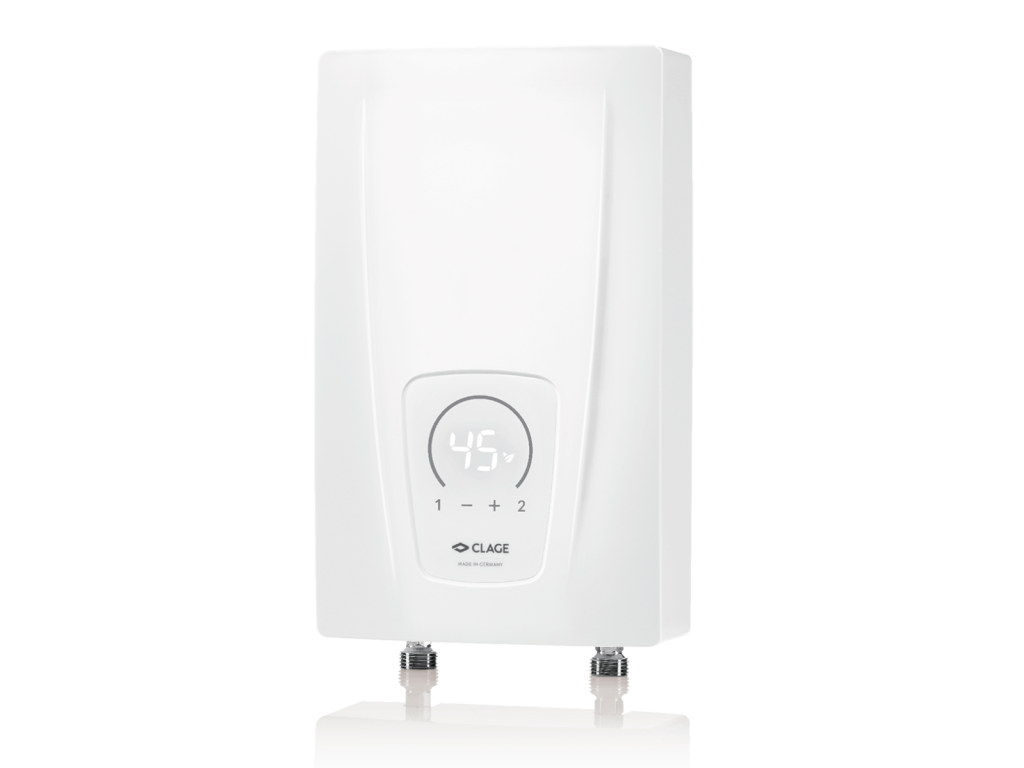 |
CLAGE CEX 11 or 13.5 kW | Electric pressurised, switchable output 11/13.5 kW, 400 V – smaller household, washbasin + sink | €397.70 |
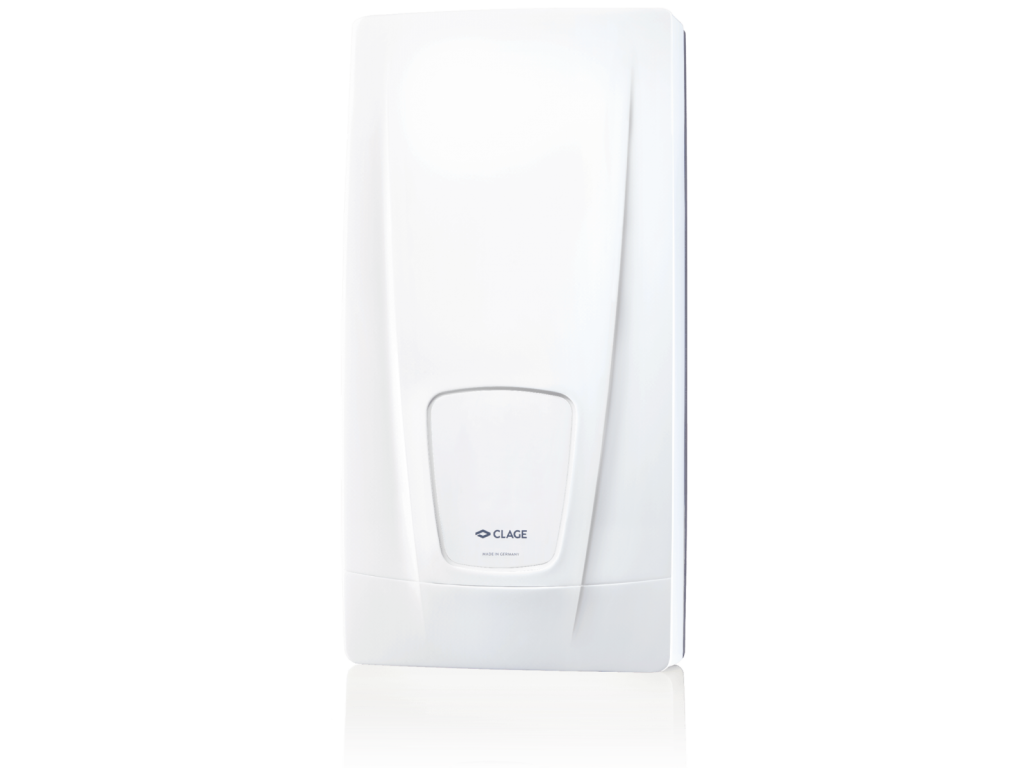 |
CLAGE DBX21 Next 21 kW | Electric pressurised, 21 kW, 400 V – shower, possibly also alongside another outlet | €390.60 |
 |
Karma POV 11BW ZP | Gas, 11 l/min – smaller household, one bathroom | €1,037.88 |
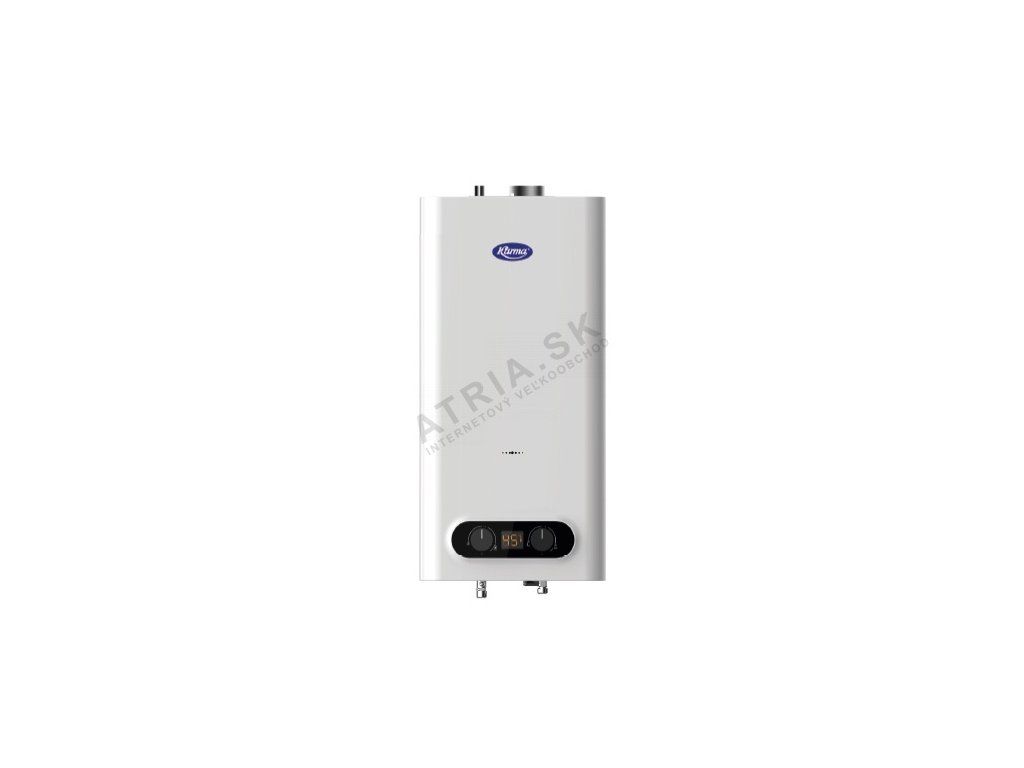 |
Karma POV 14BK ZP | Gas, 14 l/min – higher output, multiple outlets at once | €849.85 |
As you can also see from the table, the price of the heater itself doesn't necessarily track output directly – the difference between electric and gas models is mainly down to technology (a gas burner and flue system are structurally more costly than an electric coil), not the kilowatt output itself. When deciding between an electric and gas solution, we also recommend reading the detailed comparison in the article electric vs. gas instant water heater, where we cover not just output but also operating costs, installation requirements (electrical connection vs. gas supply and flue discharge), and the lifespan of both technologies.
Summary: how to approach choosing output
If you're not sure which output is right for your household, we recommend following three steps. First, count how many draw-off points (washbasin, shower, kitchen sink, possibly a bathtub) the heater will actually supply, and above all how many of them can realistically be used at once – not theoretically, but based on how an ordinary day actually plays out in your household. Second, choose the desired comfortable water temperature and realise that the decisive scenario is winter, with the coldest incoming water, not summer. Third, for electric models from roughly 18 kW upward, check in advance whether you have, or can arrange, a three-phase 400 V connection – if not, either consider a gas solution, or first get a cost estimate for upgrading the electrical installation.
There's no need to be afraid of a slight output reserve either – a heater at the upper end of the recommended range will guarantee you the same comfort in winter that you experience in summer with a less powerful model, and the price difference between neighbouring output classes is generally far smaller than the difference in comfort you'll feel every time you shower during the coldest months of the year.
Frequently asked questions (FAQ)
What output instant water heater do I need for one washbasin?
For a standalone washbasin or kitchen sink, where the water is only used for washing hands or dishes, a small electric unpressurised model with an output of roughly 3.5 to 5.5 kW is enough. You connect such a heater to a standard 230 V socket, and it requires no modification to the electrical installation.
Is an 11 kW heater enough for a shower?
In most cases, no. For comfortable showering with sufficient flow (around 8–10 litres per minute) at a temperature of 38–40 °C, at least 18 kW is recommended, ideally 21 kW, especially if you're also planning for winter operation, when incoming water is coldest. An 11 kW model would only manage a significantly lower flow for a shower, which shows up as a weak, uncomfortable stream of water.
Why does less hot water come out of my instant water heater in winter than in summer?
Because incoming (cold) water has a lower temperature in winter than in summer – the difference can be as much as 10 to 15 °C. In winter, the heater has to bridge a larger temperature difference, and therefore, at the same output, can heat a smaller volume of water per minute than in summer. This is a normal physical phenomenon, not a fault – the solution is choosing a heater with sufficient output reserve specifically for winter conditions.
What's the difference between output in kW and flow in l/min for gas heaters?
Output in kW indicates the burner's heat output, while flow in l/min is a derived value that only applies at a specific, manufacturer-defined temperature rise (commonly around 25 °C). At a higher temperature rise, for example in winter or with a higher required water temperature, the actually achievable flow will be somewhat lower than the catalogue value in l/min.
Do I need a three-phase connection for every electric instant water heater?
No. Small models with an output up to roughly 5.5 kW run on a standard single-phase 230 V socket. A three-phase 400 V connection is only needed for more powerful models from roughly 18 kW upward, that is, heaters intended for a shower or for supplying multiple outlets at once. You'll find details in the article on electrical installation for an electric instant water heater.
Can too high an output for a heater have any disadvantage?
Not directly during operation – higher output always gives you a greater reserve and comfort, never a problem. The disadvantages are rather indirect: a higher purchase price, for electric models the need for a stronger electrical installation (three-phase connection, thicker cable, larger breaker), and a somewhat higher instantaneous electricity or gas consumption at full output. However, if the household genuinely needs the given output, these costs pay off in the form of stable comfort throughout the year.
How do I calculate what flow I'll achieve at a given output and temperature?
Use the indicative formula P [kW] ≈ Q [l/min] × ΔT [°C] × 0.07, where ΔT is the difference between the required water temperature and the incoming (cold) water temperature. Rearranging the formula to Q ≈ P / (ΔT × 0.07) lets you calculate, for a known heater output, what flow you'll achieve at the given temperature – we used this approach in the practical examples above in the article.
Is it better to choose an electric or a gas model with higher output?
It depends on the available infrastructure (gas connection vs. three-phase electricity) and on operating requirements. Gas models with a higher burner output tend to be less limited by the household electrical installation's capacity, but require a gas supply and flue discharge. Electric models are simpler to install if a three-phase connection already exists. You'll find a detailed comparison of both technologies in the separate article electric vs. gas instant water heater.
Related topics
- How to choose an instant water heater
- Electric vs. gas instant water heater
- Pressurised vs. unpressurised instant water heater
- Electrical installation for an electric instant water heater
Have a question about an instant water heater?
Can't decide, or dealing with a specific situation in your household? Write to us – we're happy to help.