
Electrical installation for an electric instant water heater
Electrical installation for an electric instant water heater: what your wiring needs to handle
An electric instant water heater is one of the most demanding common household appliances in terms of electrical installation. While most appliances in a flat or family house are fine with an ordinary socket on a 16 A circuit, a powerful instant water heater can draw as much electricity the moment it starts as an entire kitchen with an oven, hob, and dishwasher combined. That's precisely why the question of electrical installation needs to be addressed before you even decide on a specific model – not only once the electrician arrives to mount the finished appliance on the wall.
In this article we go through why an instant water heater is so demanding on the electrical supply, what the difference is between single-phase and three-phase connections, why this counts as so-called reserved technical equipment, how to check in advance whether your distribution board can even handle it, and we use two real-world examples to show how this is handled for a smaller and a larger model. At the end you'll find recommended products, frequently asked questions, and links to related topics that will help with your choice and next steps.
Important note right at the start: this article is for basic orientation and understanding the context. It doesn't replace a professional assessment by an electrician or an inspection report. Always leave the specific design of protection, cable diameter, and connection method to a person with professional electrotechnical qualification – we'll explain below why this is genuinely a necessity in this case, not just a recommendation.
Why an instant water heater needs a separate, high-capacity circuit
The principle of an electric instant water heater is simple: water flows through a heating element and is heated to the required temperature within a few seconds. Unlike a storage heater, which has tens of minutes to hours to heat water and works with a relatively modest power draw (typically 2–3 kW), an instant water heater has to deliver all the required energy practically instantly, during the actual water draw-off. This requires a significantly higher instantaneous power draw.
In practice this looks like:
- Unpressurised (small) instant water heaters – generally intended for one draw-off point (for example a washbasin in a garage, at a cottage, or in a small kitchenette), have a power draw of roughly 3.5–5.5 kW. They heat a smaller water flow to a lower comfort temperature difference.
- Pressurised (large) instant water heaters – supply several outlets at once (shower, kitchen sink, multiple bathrooms), commonly have a power draw of 18–27 kW. It's precisely at these outputs that we enter a completely different category of electrical installation demands, comparable, for example, to an electric boiler.
For comparison: a standard circuit with 230 V sockets and a 16 A breaker can handle a load of up to roughly 3.6 kW. A pressurised instant water heater with a power draw of 21 kW therefore needs roughly six times more power than a standard socket in a flat can provide. This can't be solved with an "extension cord" or by sharing an existing circuit with other appliances – it requires a separate supply cable run directly from the distribution board, sized precisely for the given output, and a separate breaker with a suitable tripping characteristic.
If the electrical installation is undersized, there's a risk of the breaker tripping repeatedly every time the heater switches on, the cable overheating excessively (fire risk), or, in a worse case, damage to the appliance itself. That's precisely why manufacturers and retailers strongly recommend not handling the connection yourself, but having a plan drawn up by an electrician in advance – before buying a specific model, so you know whether your flat or house can even handle the output you're considering.
Single-phase vs. three-phase connection depending on output
The second fundamental question, closely related to power draw, is the type of connection – single-phase (230 V) or three-phase (400 V). This isn't just a technical formality; it determines whether your flat or house can even operate the given model without modifying the main supply.
Single-phase connection (230 V)
A single-phase connection is common in almost every household – it's the same type of supply as standard sockets. With instant water heaters, this is generally only sufficient at lower outputs, roughly up to about 8–9 kW. This category mainly includes smaller unpressurised models for a single outlet. Even here, though, a separate circuit with a suitably rated breaker is essential (for example 20 A or more, depending on the exact output of the model) – not a connection to an ordinary socket that's already powering other appliances.
The advantage of a single-phase connection is simplicity: it doesn't require a three-phase supply in the flat, which you'll especially appreciate in older apartment cores or where a three-phase connection isn't installed to the flat at all.
Three-phase connection (400 V)
More powerful models with a power draw from roughly 18 kW upward are almost exclusively connected to a three-phase 400 V supply. The reason is physical – distributing high power across three phases instead of one reduces the current load on each individual conductor, and consequently also the requirements for cable diameter and breaker size. Without a three-phase connection, the cable for such an output on a single phase would have to be impractically thick, and the breaker disproportionately large.
This has a direct consequence for the buyer: if you're considering a powerful pressurised model (for example to cover an entire bathroom or a flat with multiple draw-off points), you must have a three-phase connection installed in your flat or house, or budget for the cost of installing one. In panel-building flats, this can mean contacting the building manager and possibly also the electricity distributor – it's not just about the internal wiring past the meter, but sometimes also about the capacity of the connection to the flat itself.
A specific example from our range: the CLAGE DBX21 Next with 21 kW output is a typical example of a three-phase pressurised heater – without a three-phase 400 V connection, it simply can't be operated.
Reserved electrical equipment: who may install it and why an inspection is required
A higher-output electric instant water heater falls under so-called reserved electrical equipment. This term isn't just bureaucratic formality – in practice it means that:
- Installation, electrical connection, and commissioning of the device may only be carried out by a person with professional electrotechnical qualification (an electrician with the relevant licence under applicable legislation), not a layperson, even a skilled one.
- After installation, an inspection of the electrical equipment is required, carried out by an inspection technician. The inspection report confirms that the wiring meets safety requirements, and is also an important document in the event of an insurance claim (for example a fire caused by the electrical installation) – without a valid inspection, the insurer may reduce or refuse payout.
- DIY installation or connection not only violates safety regulations, but can also result in losing the warranty on the appliance itself – manufacturers and retailers commonly require proof of professional installation when handling a warranty claim.
Why is this caution warranted? The combination of high power draw, proximity to water, and constant, repeated loading of the circuit (the heater switches on and off several times a day, often at full output) represents a real safety risk if anything is undersized or incorrectly wired. It's the same principle of caution required, for example, for electric boilers with comparable power draw – there too, reserved-equipment status and mandatory inspection are standard, not the exception.
A practical recommendation: when you contact an electrician, inform them in advance of the exact model and its technical parameters (power draw, connection type, recommended breaker size, and cable cross-section – you'll find this information in the technical sheet or installation manual for the given model). This way the electrician can prepare materials in advance and plan the work, instead of determining the parameters only once on site.
How to check your home's electrical installation capacity before buying
Before deciding on a specific output for your instant water heater, it's worth forming at least an indicative idea of whether your home or flat's wiring can handle it at all. Here are a few steps you can prepare before visiting an electrician:
1. Check the size of the main breaker
The main breaker before the electricity meter (or the main switch) determines how much electricity can be supplied to the flat or house at once. If the breaker already trips today when several appliances are running at once (oven, washing machine, dryer, water heater), that's a sign the reserve is low, and adding another appliance with a power draw in the range of several to tens of kilowatts may require upgrading the connection, not just internal redistribution of circuits.
2. Account for simultaneity of draw-off (concurrent appliances)
It's not just about whether the instant water heater theoretically "fits" within capacity – what matters is whether its operation will overlap with the peak draw of other large appliances. If your household has, for example, an electric boiler, a sauna, an electric car on a charger, or a heat pump, the sum of their maximum power draws when running at the same time can exceed the connection's capacity, even if each appliance individually doesn't pose a problem. When designing the circuit, the electrician takes into account so-called simultaneity (a simultaneity factor) – that is, the real probability of everything running at once at full output – but with an instant water heater, which is often switched on precisely during the morning or evening peak (together with the shower, kitchen, washing machine), extra caution is warranted.
3. Find out whether a three-phase connection is installed in your flat/house
As mentioned above, more powerful models (18 kW and above) require a three-phase supply. If your flat or house doesn't have a three-phase supply, you'll need to either choose a lower output suitable for a single-phase connection, or budget for the additional cost and administration of installing a three-phase connection (in apartment buildings this generally requires the manager's consent and coordination with the electricity distributor).
4. Have a professional design drawn up
Even if you form your own indicative picture, the final decision on the type of breaker, cable cross-section, and connection method must be made by an electrician based on real measurement and calculation, not just an estimate. This also relates to the length of the cable run from the distribution board to the appliance (a longer cable may require a larger cross-section due to voltage drop) and to the existing state of the distribution board (free space for a new breaker, condition of the supply cable to the flat, and so on).
If you're not sure what output you actually need, see our article What output instant water heater do I need – output is, after all, the first parameter that everything else depends on, including the electrical installation requirements.
Residual current device and other safety measures
Besides the breaker itself, which protects the circuit against overcurrent and short circuits, a separate residual current device (RCD) on the given circuit is strongly recommended for instant water heaters. An RCD monitors the difference between the current entering and leaving the circuit – if part of the current "leaks" outside the normal path (for example through damaged insulation into water or through a person's body), the RCD disconnects the circuit immediately, within fractions of a second.
Why is this especially important for an instant water heater?
- Proximity to water: the device is practically always installed right next to water piping, a shower, or a washbasin – that is, in an environment with elevated risk from any current leakage.
- High output means high currents: in the event of a fault, the potential risk is higher than with ordinary low-power appliances.
- Long-term operation: the heater is permanently connected and switches on many times a day, which increases the likelihood that any insulation fault will show up precisely while it's being used.
When designing the circuit, the electrician will generally propose a combination of a protective breaker and an RCD with suitable sensitivity, or a combined device (RCD and breaker in one module) that combines both purposes. Correct grounding of the appliance and observing the prescribed distances from water sources (for example, when placed in a bathroom, so-called zones around the bathtub or shower are distinguished, into which electrical equipment may only be placed under certain conditions) are also part of a safe installation – this too is part of the professional assessment handled by the electrician, not the end customer.
Real-world examples
Scenario 1: A smaller unpressurised model at a cottage – is a standard socket enough?
Picture a holiday cottage where hot water needs to be added just for one washbasin in a kitchenette – with no need for showering or greater comfort. In this case, a small unpressurised instant water heater with a power draw of around 3.5–5.5 kW is typically chosen.
At this output, the situation is substantially simpler than with large pressurised models: the appliance itself connects to a single-phase 230 V supply, and some models in this output class are even designed so they can be plugged into a standard socket with an earth pin (assuming the given circuit has sufficient reserve and is fitted with an RCD). Nevertheless, the basic rule still applies here: an electrician should assess and carry out the connection, verifying that the specific socket and circuit the heater is to be connected to match the required power draw and aren't shared with other larger appliances (for example a kettle or microwave, which together with the heater could overload the circuit).
The advantage of this scenario is a low investment in the electrical installation too – in many cases, just checking the condition of the existing circuit is enough, with no need to run a new power cable from the distribution board. That's precisely why unpressurised models are a popular choice where a strong electrical connection isn't available, or where it's a supplementary, occasional use.
Scenario 2: A powerful pressurised model for a whole flat – need to upgrade the connection
The second, substantially more demanding scenario occurs when a household decides to replace, for example, an old storage heater or an electric boiler with a powerful pressurised instant water heater intended to cover a shower, kitchen sink, and possibly a second bathroom at once. For this scope of use, a model with an output typically of 18–21 kW is chosen, which clearly requires a three-phase 400 V connection.
In practice this means several steps that follow one after another:
- Checking the existing connection: the electrician first determines whether a three-phase supply is already installed in the flat or house, or whether it's only a single-phase connection (common especially in older flats).
- Assessing main breaker capacity: if a three-phase connection exists, it needs to be checked whether the main breaker can handle the additional 21 kW draw alongside existing appliances (kitchen, heating, other socket circuits).
- Possible connection upgrade: if capacity isn't sufficient, the next step is contacting the building manager (for an apartment building) or directly the electricity distributor about increasing the main breaker rating or another capacity solution.
- Installing a separate circuit: a separate power cable of appropriate cross-section is run from the distribution board directly to the heater's installation location, with its own breaker and RCD sized precisely for the given output.
- Inspection: once installation is complete, an inspection of the electrical equipment follows, confirming safety and compliance of the wiring with regulations.
This scenario clearly shows why it's worth addressing the electrical installation before buying a specific model, not only after it's delivered. If it turns out that a three-phase connection is missing and installing one is too costly or time-consuming, it may be more sensible to choose a lower output (up to 8–9 kW for a single-phase connection), or to rethink the whole water-heating concept – for example combining smaller units for individual draw-off points instead of one central powerful heater.
Recommended products
Below you'll find specific models from our range that illustrate the difference between standard pressurised output and higher output, as well as supplementary accessories. For each model, we recommend checking the exact technical parameters (power draw, connection type, recommended protection) in the product detail before ordering and consulting them with an electrician.
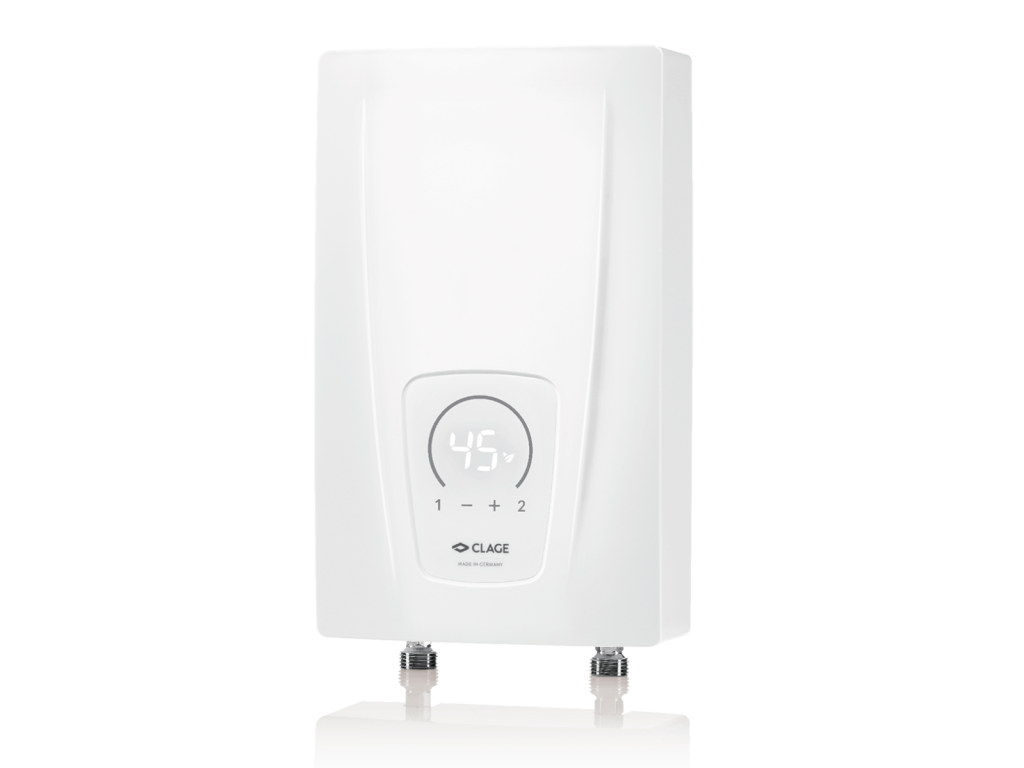 |
CLAGE CEX 11 or 13.5 kW, 400 V
A pressurised instant water heater with a three-phase 400 V connection, suitable for covering one to two draw-off points (e.g. a shower and a washbasin). An output of 11 or 13.5 kW, depending on setting, requires a separate circuit with an appropriately rated breaker – exact values are given in the product's technical sheet. Price: €397.70 |
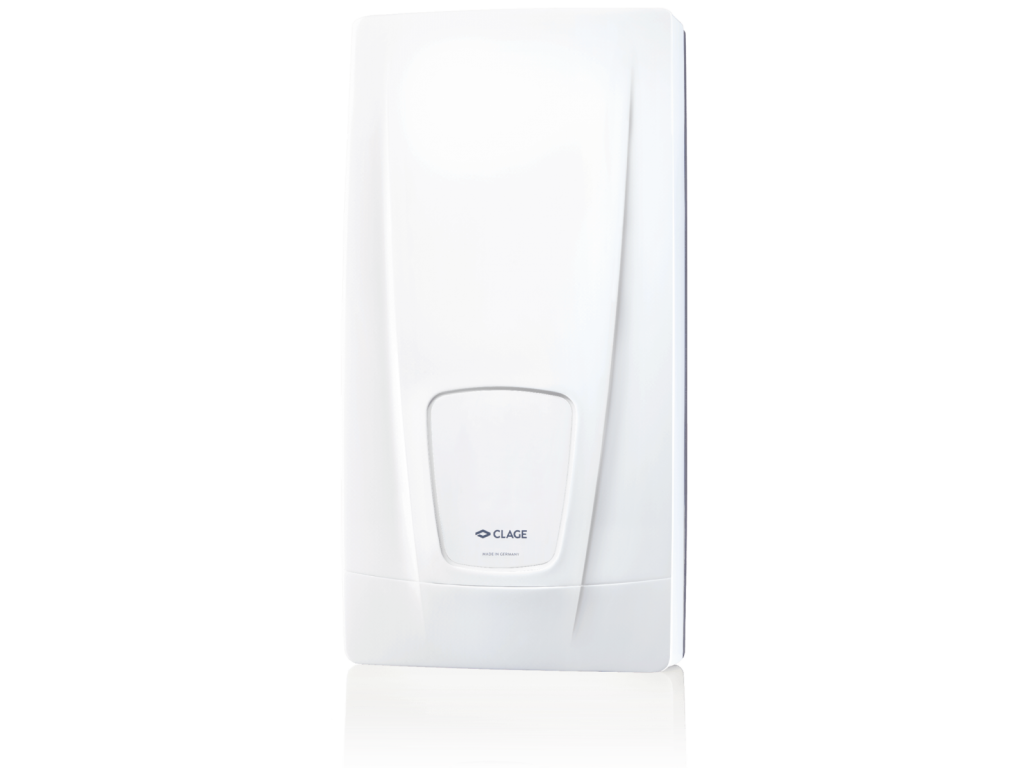 |
CLAGE DBX21 Next 21 kW, 400 V
A powerful pressurised model intended for covering higher draw-off – typically for a flat or house with multiple outlets. At 21 kW output, a three-phase 400 V connection is essential, as is a separate circuit designed by an electrician precisely for this power draw (see Scenario 2 above). Price: €390.60 |
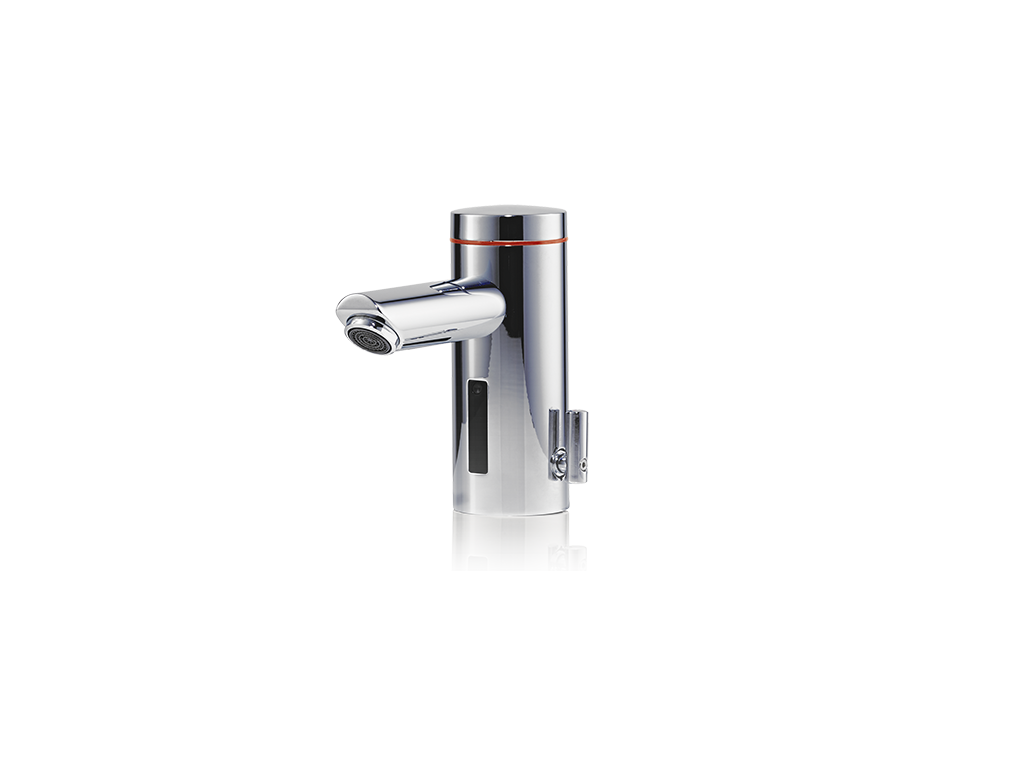 |
CLAGE AEB-C Touchless tap
An electronic touchless tap as an accessory to a pressurised instant water heater – it's another electrical component near water, so its connection and placement (for example in relation to the protective zones around a washbasin or shower) also need to be addressed together with an electrician as part of the overall installation plan. Price: €717.80 |
Frequently asked questions (FAQ)
Do I always need a three-phase connection for an instant water heater?
No, not always. Smaller unpressurised models with an output up to roughly 8–9 kW are generally fine with a single-phase 230 V connection on a separate circuit. A three-phase 400 V connection is only necessary for more powerful pressurised models, typically from 18 kW upward.
Can I connect an instant water heater myself if I'm handy?
No. This is reserved electrical equipment – installation, connection, and commissioning may only be carried out by a person with professional electrotechnical qualification. A DIY connection is a safety risk and generally also grounds for losing the warranty.
Is an inspection required after installing an instant water heater?
Yes. After connecting reserved electrical equipment, an inspection of the electrical equipment carried out by an inspection technician is required. The inspection report is also an important document, for example in the event of an insurance claim.
How do I find out whether my main breaker can handle the additional draw of an instant water heater?
As a rough indicator, notice whether the main breaker already trips today when several large appliances are used at the same time – that's a sign of low reserve. However, an exact assessment of capacity and any increase in the main breaker rating is always a job for an electrician, who will also take into account the simultaneity of draw-off from other appliances in the household.
Do I need a separate RCD on the circuit with an instant water heater?
Yes, a separate RCD on the given circuit is strongly recommended, especially due to the proximity to water and the device's high power draw. The exact type and sensitivity of the RCD will be proposed by the electrician as part of the overall circuit design.
What's the difference in electrical installation requirements between an unpressurised and a pressurised model?
An unpressurised model with lower output (3.5–5.5 kW) is undemanding and in some cases can even be connected to a standard socket with sufficient circuit reserve. A pressurised model with higher output (18–27 kW) almost always requires a separate power circuit, its own breaker, and generally also a three-phase 400 V connection.
What if I don't have a three-phase connection in my flat and want a powerful model?
In that case, you'll need to either arrange for a three-phase connection to be installed (which requires cooperation with the apartment building manager and the electricity distributor), or choose a lower output suitable for a single-phase connection. An electrician can help you assess which option is more realistic in your specific case.
Does the length of the cable from the distribution board to the heater affect its sizing?
Yes. Longer runs may require a larger cable cross-section due to voltage drop, even if the heater's output itself would theoretically be fine with a thinner conductor over a shorter run. The exact calculation is again part of the electrician's professional design.
Related topics
- How to choose an instant water heater – a complete guide to choosing the type and size of heater according to your household's needs.
- Electric vs. gas instant water heater – a comparison of both types, including installation requirements.
- What output instant water heater do I need – how to correctly estimate the required output based on the number of draw-off points.
- Service and common faults of instant water heaters – what to do when the heater isn't working correctly, and how to avoid the most common problems.
Have a question about an instant water heater?
Can't decide, or dealing with a specific situation in your household? Write to us – we're happy to help.