
How to choose an instant water heater
How to choose an instant water heater – a complete guide
If you're working out how to choose an instant water heater, you're probably facing one of two typical situations. Either you're renovating a bathroom or kitchen and want to get rid of a bulky tank that unnecessarily takes up space under the washbasin or in a storage room, or you're building a new house, cottage, or flat and thinking about how to provide hot water as economically as possible, with minimal space and maintenance demands. In both cases, an instant water heater is a solution that has gained great popularity in recent years – and deservedly so, since unlike a classic storage water heater, it offers a practically unlimited amount of hot water without having to wait for the entire volume of water in the tank to heat up, and without energy loss from maintaining the temperature of water you're not currently using.
This article serves as a hub for the entire topic of instant water heaters in our Knowledge Centre. We'll guide you through all the key decisions you need to make when choosing – energy source type, connection type to the water system, required output, and comparison with storage heating – and for every topic that deserves a deeper look, we'll point you to a separate, detailed article with a complete comparison including advantages, disadvantages, and practical recommendations. At the end you'll find two real-world examples, specific recommended models from our range, and answers to the questions our customers ask most often when choosing an instant water heater.
How an instant water heater works
The principle of an instant water heater is fundamentally different from a storage water heater. While a classic storage heater maintains a constant volume of pre-heated water in an insulated tank (for example 80, 100, or 150 litres) and continuously reheats it so it's available at any time, an instant water heater has no tank at all. When you open the tap or shower, cold water flows directly through a powerful heating element – for electric models this is generally a large-output copper or stainless steel heating coil, for gas models a gas burner with a heat exchanger – and is heated practically instantly, within the few seconds it takes to flow through the element.
This principle gives rise to two fundamental features that make instant water heaters an attractive choice. The first is space saving – while a storage heater with a capacity of 100 litres or more needs its own dedicated space, an instant water heater (especially a compact unpressurised model) fits directly under a washbasin or in a cabinet next to the shower. The second feature is a theoretically unlimited amount of hot water – for as long as draw-off continues and the energy source (electricity or gas) has sufficient output, the heater will keep delivering hot water without a break, unlike a tank, which can "run out" during longer or more intense draw-off and then needs time to reheat.
This advantage has a flip side, though, which needs to be considered already when choosing: an instant water heater must have sufficiently high instantaneous output to heat the required amount of water to a sufficient temperature in real time. While a tank "spreads" its output over time (heating more slowly, but well in advance), an instant water heater has to handle the entire peak output at once. That's precisely why choosing the right type and output is key – an undersized instant water heater will disappoint you exactly when you need it most, that is, while showering in cold weather or during simultaneous draw-off at multiple points.
First decision: electric or gas instant water heater
The first fundamental choice you make when selecting an instant water heater is the type of energy source. An electric instant water heater needs a high power draw, commonly in the range of 18 to 27 kW for models intended for showering or supplying multiple outlets, and generally requires a three-phase 400 V connection with a heavily rated breaker. This is a fundamental difference from ordinary household appliances, and in many older households or flats it means needing to modify the electrical installation, or an assessment by the distribution company as to whether the given connection has enough reserve. Smaller electric models for one washbasin (3.5 to 5.5 kW), on the other hand, are fine with a standard single-phase 230 V socket, and their installation is substantially simpler.
A gas instant water heater needs a connection to the natural gas supply, or a propane-butane cylinder, along with safe flue gas discharge – either via a chimney (draught models), or through the wall to the outside (turbo models with a concentric flue). This condition significantly affects where a gas model is even feasible at all – in a flat without a chimney and without the possibility of drilling a hole in the exterior wall, a gas solution is more complicated or completely impossible, while in a cottage or family house with an existing chimney flue, it's generally straightforward.
Both technologies have their place, and the choice often depends on what you already have available at the given property – a strong three-phase electrical connection, or conversely a gas connection and chimney. A complete comparison of the advantages, disadvantages, operating costs, and typical situations where each type pays off can be found in the separate article Electric vs. gas instant water heater.
Second decision: pressurised or unpressurised instant water heater
The second important choice concerns how it connects to the water system. A pressurised model is connected directly into the water supply in the property, just as a classic storage heater would be, and can supply hot water to multiple outlets at once via the piping – kitchen sink, washbasin, and shower. It works with standard mixer taps, so from the user's perspective it's no different from an ordinary household water supply.
An unpressurised model, by contrast, supplies hot water to only one specific outlet, right next to itself – it's typically mounted above a washbasin or sink and requires a special unpressurised tap (an ordinary mixer tap can't be used, unlike with a pressurised connection). The advantage is simpler, cheaper installation without modifying existing piping, which makes it a popular choice especially for cottages, cabins, workshops, or as a supplementary solution for a kitchenette or washroom, where hot water is only needed at one spot.
The choice between a pressurised and unpressurised model is therefore closely tied to how many outlets you want to supply, and whether it's the main hot water source for the whole household, or just a supplementary solution for one spot. A detailed breakdown with specific recommendations can be found in the article Pressurised vs. unpressurised instant water heater.
What output instant water heater do you need
Output is the parameter where most mistakes are made – an undersized heater simply won't be able to deliver sufficiently hot water at higher flow, especially in winter months, when incoming mains water is colder and needs to be heated by more degrees. As a rule of thumb, a smaller electric model with an output of 3.5 to 5.5 kW is enough for one washbasin or for washing hands. For showering, a substantially more powerful source is already needed – at least 18 to 21 kW for an electric version, or a standard gas model, which by design generally has higher output. If you want to cover simultaneous supply to multiple outlets at once (for example a shower and kitchen sink together), plan for an electric model in the 21 to 27 kW range or a larger gas unit.
When choosing output, you also need to take into account how many people in the household actually draw hot water at once, what the incoming cold water temperature is (it's always lower in winter than in summer, which effectively "eats up" output), and whether you're planning to connect another outlet in the future. That's precisely why, in borderline cases, we recommend choosing a more powerful model rather than later struggling with insufficiently hot water while showering on a freezing January morning. The complete methodology for calculating the required output, including practical examples, can be found in the article What output instant water heater do I need.
Instant water heater or storage tank – which pays off
An instant water heater isn't automatically the better choice in every circumstance – it's simply a different principle of hot water heating, suited to different situations than a storage water heater. The main advantage of an instant solution is space saving and a theoretically unlimited amount of hot water, provided you have a sufficiently powerful energy source. A storage water heater, on the other hand, can better cover peak or very high simultaneous consumption (for example multiple bathrooms at once in a large household), since it spreads its output over time in advance and doesn't need as high an instantaneous power draw.
Deciding between the two principles should be based primarily on your household's real consumption, available electrical or gas capacity, and space constraints. A detailed comparison of operating costs, comfort, and typical recommendations for different household sizes can be found in the article Instant water heater or storage tank – which pays off.
Electrical installation and connection – what to think about in advance
For an electric instant water heater with an output of 18 kW or more, the electrical installation is a topic not to be underestimated. Such an appliance requires a separate power circuit with an adequately sized cable and breaker, generally a three-phase 400 V connection. In older flats and houses, where the electrical installation was designed at a time when such high-power appliances weren't anticipated, this often means needing a partial rewiring, or an assessment by the distribution company as to whether the given connection point has enough reserve in the main breaker.
We therefore recommend contacting a qualified electrician before buying an instant water heater, who can realistically assess the state of the electrical installation at the specific property and confirm whether installing the chosen output is possible without modifications. For gas models, you similarly need to assess the existing gas connection, pipe diameter, and flue discharge options – that is, whether a functional chimney is available, or whether a turbo variant with discharge through the wall needs to be arranged. In both cases, these seemingly "technical" details can determine which type of heater is even realistically available for the given property at all, regardless of which one you'd otherwise choose. A more detailed guide to assessing the electrical installation can be found in the article Electrical installation for an electric instant water heater.
Installation location and other practical details
Besides the type of energy source, connection method, and output, the installation location itself also plays a role. For unpressurised models, a simple rule applies – the closer the heater is to the outlet, the faster you'll get hot water and the smaller the heat losses in the piping. That's why unpressurised heaters are practically always mounted directly above or below the given outlet, never "somewhere in the basement" with a long run to the washbasin. For pressurised models, which supply multiple outlets, it's advisable to choose a location with the shortest, most direct route to the most-used outlets (usually the shower), to minimise the wait for hot water there too.
For gas models, you also need to allow for the space needed for safe flue discharge and for observing the prescribed clearances from flammable materials. For electric models, placement near the distribution board is important, or the option of running a separate power cable to it without unnecessarily long runs. In both cases, we recommend having the exact location confirmed with a plumber or electrician before buying, so the dimensions of the chosen model also fit.
Don't forget subsequent maintenance either – instant water heaters, especially in areas with harder water, require occasional descaling of the heating element to maintain full output and a long service life. Practical maintenance information, as well as an overview of the most common faults and how to solve them, can be found in the article Service and common faults of instant water heaters.
Choosing a brand and quality
On the market you'll find instant water heaters across a wide range of prices and build quality – from simple compact models for one washbasin, through medium-output models for an ordinary household, to premium gas and electric solutions with electronic temperature control to the precise degree. When choosing a brand, it's worth considering especially the availability of spare parts and servicing in Slovakia, the length of the warranty, and other customers' experience with the specific product range. Our range includes, among others, models from the Karma and CLAGE brands, which are proven, long-popular choices among Slovak customers. A detailed comparison of individual instant water heater brands, their typical strengths, and target customer groups can be found in the article Comparison of instant water heater brands.
Real-world examples
Example 1: A flat with a shower and an electric instant water heater
Picture a typical situation – a complete bathroom renovation in an older two-room flat. The original electric storage heater with a 100-litre capacity took up an entire wall of the bathroom, and the owners wanted to use that space differently; they also planned to replace the bathtub with a more spacious shower enclosure. The flat has no natural gas connection, so the choice automatically pointed toward an electric solution. Since they needed to cover both showering and an ordinary washbasin in the bathroom, and weren't planning to add another outlet in the future, the decision fell on a pressurised electric instant water heater with an output of around 21 kW, that is, at the upper end of the range recommended for showering.
Since the original electrical installation in the flat was designed only for a single-phase storage heater with a much lower power draw, it was necessary to bring in an electrician, who checked whether the flat's distribution board had a three-phase connection available with enough reserve for a new power circuit and matching breaker. Once technical feasibility was confirmed, a new wiring branch was added directly into the bathroom. The result is a compact, wall-mounted solution that freed up the space left by the original tank, while also delivering sufficiently hot water even during longer showers, with no drop in temperature at all, since heating happens continuously throughout the draw-off.
Example 2: A cottage with an unpressurised gas heater above the washbasin
The second typical scenario concerns a weekend cottage with no existing storage heating, where the owner needed a simple hot water solution for the kitchen sink and bathroom washbasin – showering at the cottage uses a separate solution, so the requirement was only to cover ordinary hand and dish washing. The cottage has a functional natural gas connection and a chimney flue from the original heating system, so a gas solution presented itself as the logical choice instead of building a new strong electrical connection just for one smaller appliance.
Since it was about supplying a single outlet right next to itself, with no need to run piping throughout the cottage, an unpressurised gas model was chosen – specifically the Karma POV 14BK ZP with a flow of 14 litres per minute, connected to the existing chimney. Thanks to the unpressurised principle, installation was simple and didn't touch the existing water piping – all that was needed was adding the special unpressurised tap above the washbasin. The owner thus got a reliable hot water source with minimal installation costs, exactly matching how the cottage is actually used.
Recommended instant water heater models
Below you'll find four proven models from our range that cover the most common situations described above – from a compact electric solution for one washbasin, through a more powerful electric model for showering, to gas pressurised and unpressurised variants.
|
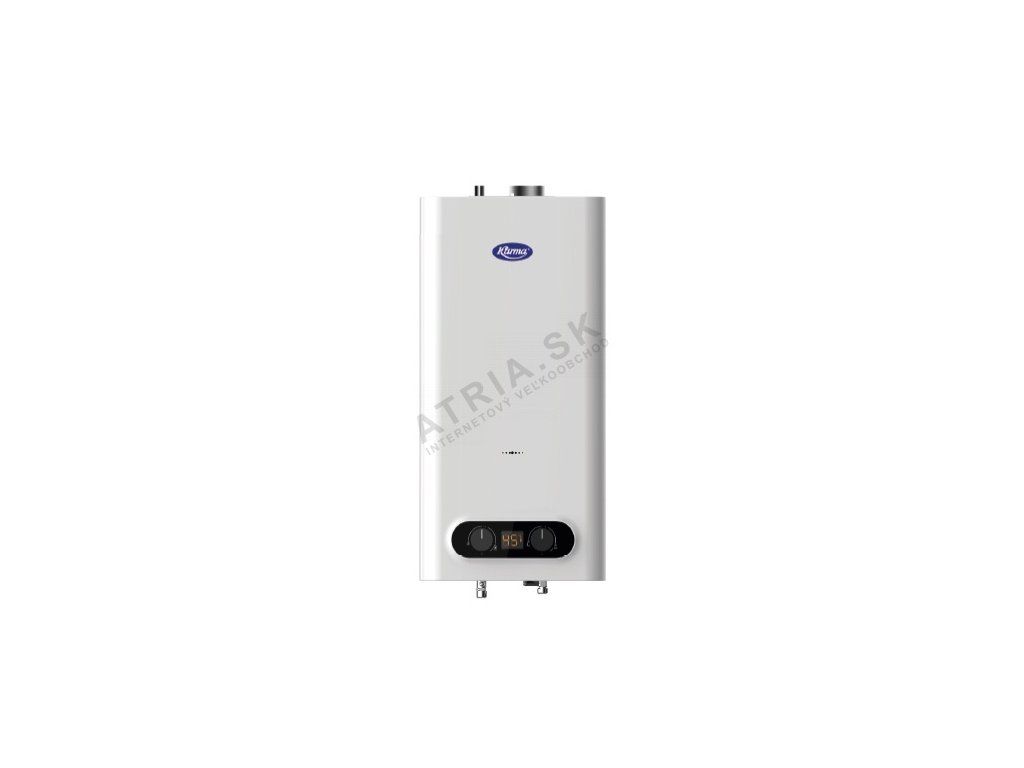
Karma POV 14BK ZP – an unpressurised natural gas instant water heater with a flow of 14 l/min, ideal for supplying one outlet (washbasin, sink) at a cottage, in a workshop, or as a supplementary solution in a kitchenette. Simple installation without touching the piping, exactly as in the second real-world example above. Price from €849.85. |

|
Karma POV 11BW ZP – a pressurised natural gas instant water heater with a flow of 11 l/min, connected directly into the water supply, suitable for supplying multiple outlets at once in a household with an existing gas connection and chimney. Price from €1,037.88. |
|
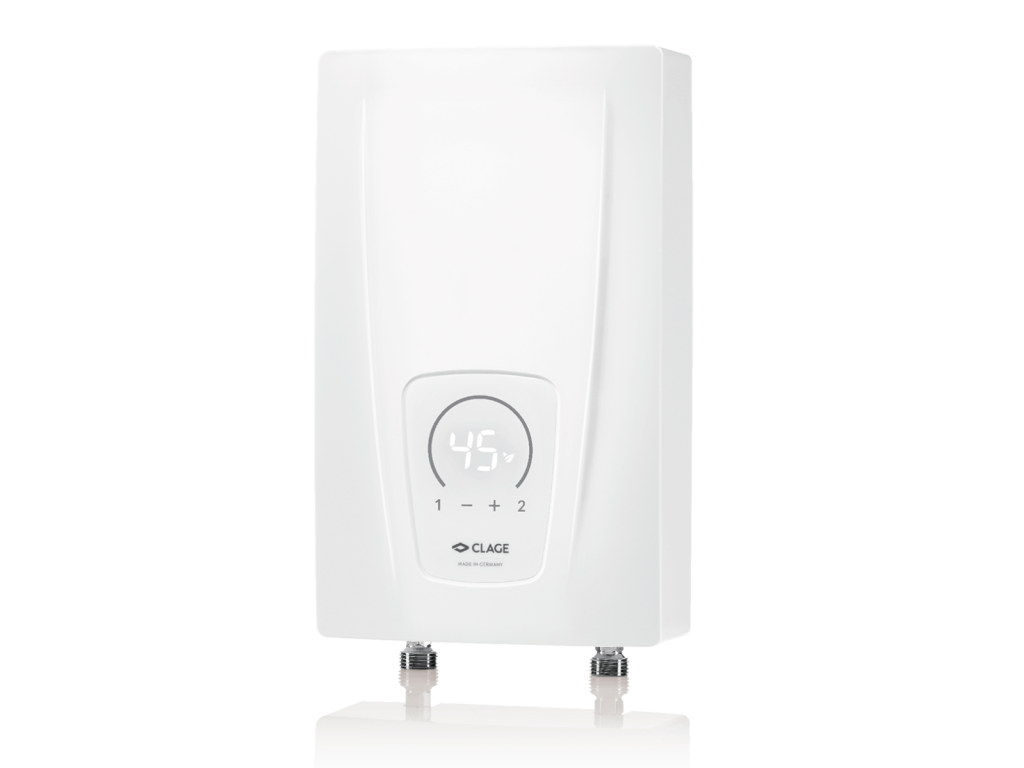
CLAGE CEX 11 or 13.5 kW, 400 V – a compact electric pressurised instant water heater, suitable for a washbasin and smaller draw-offs where full showering output isn't needed. Three-phase 400 V connection, simple installation right at the outlet. Price from €397.70. |
|
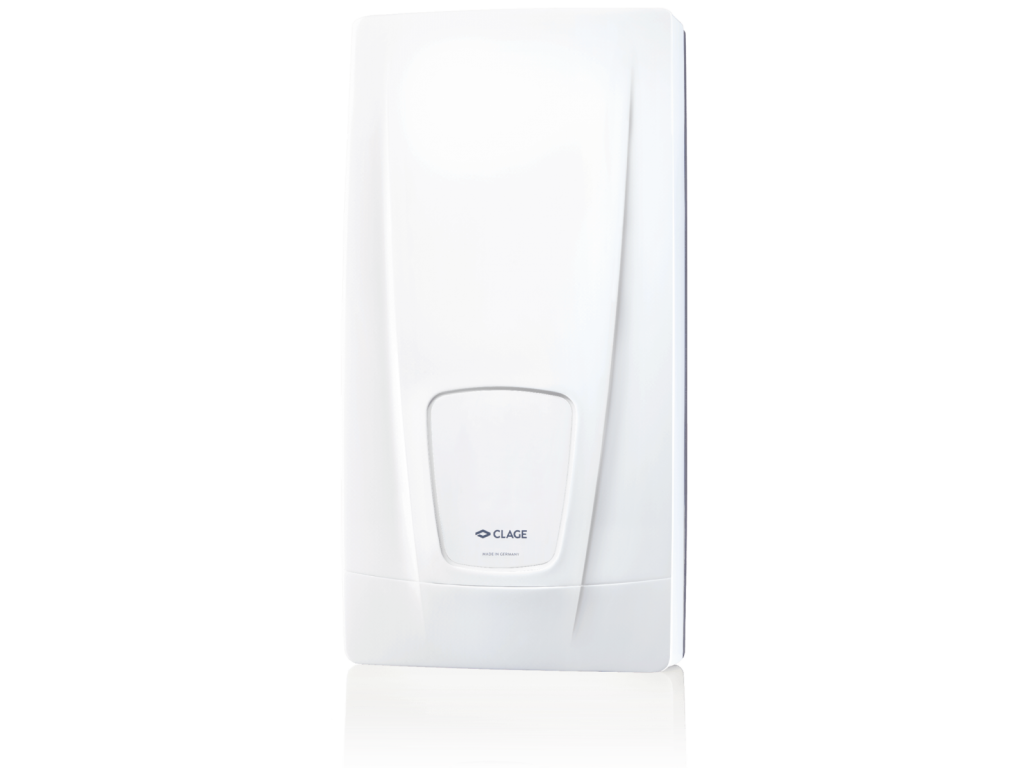
CLAGE DBX21 Next 21 kW, 400 V – a comfort electric pressurised instant water heater with an output of 21 kW, exactly within the recommended range for showering. Suitable as the main hot water source for a bathroom, similar to the first real-world example above. Price from €390.60. |
Most common mistakes when choosing an instant water heater
In customer consultations, we repeatedly come across a few typical mistakes that can easily be avoided with a bit of preparation in advance:
- Underestimating the required output. The most common mistake is choosing a model with insufficient output for showering – the customer picks a cheaper model intended more for a washbasin, and is then disappointed that the water isn't hot enough while showering, especially in winter.
- Not accounting for incoming water temperature in winter months. Output that's sufficient in summer may not be enough in winter, since the heater has to raise the water temperature by a bigger difference. In borderline cases, it's always safer to choose a more powerful model.
- Underestimating electrical installation requirements. More powerful electric models need a three-phase connection and a heavily rated breaker – this needs to be checked with an electrician before buying, not after.
- Choosing an unpressurised model where multiple outlets are needed. An unpressurised heater supplies only one outlet – if you need to cover a shower and washbasin at the same time, a pressurised model is required.
- Ignoring flue discharge for gas models. Without a functional chimney or the possibility of a turbo variant with discharge through the wall, a gas solution isn't feasible without further structural work.
- Forgetting about the type of tap for unpressurised models. An unpressurised heater requires a special unpressurised tap; an ordinary mixer tap isn't suitable for it.
Frequently asked questions about choosing an instant water heater
What's the difference between an instant water heater and a storage water heater?
An instant water heater has no water tank at all – cold water flows directly through a powerful heating element and is heated instantly at the moment of draw-off. A storage water heater, on the other hand, keeps a pre-heated volume of water in an insulated tank, which is continuously reheated. An instant solution saves space and delivers a theoretically unlimited amount of hot water, while a tank is more advantageous with very high simultaneous or peak consumption.
Is an electric instant water heater enough for showering, or does it have to be gas?
An electric instant water heater is enough for showering, but it needs sufficient output – at least 18 to 21 kW – and a matching three-phase 400 V connection. If such a connection isn't available at the property and it's not economical to build one, an alternative is a standard gas model, which by design generally has higher output.
What's the difference between a pressurised and unpressurised instant water heater?
A pressurised model is connected into the water supply and can supply hot water to several outlets at once, working with standard mixer taps. An unpressurised model supplies only one outlet right next to itself, for example above a washbasin, and requires a special unpressurised tap.
Do I need a three-phase connection for an electric instant water heater?
For most more powerful models intended for showering or simultaneously supplying multiple outlets (18 to 27 kW), yes, a three-phase 400 V connection with a heavily rated breaker is needed. Smaller models for one washbasin with an output of 3.5 to 5.5 kW are fine with a standard single-phase 230 V socket.
Can a gas instant water heater be installed in a flat without a chimney?
It's more complicated – a gas instant water heater needs safe flue discharge, either via an existing chimney, or through a turbo variant with concentric discharge through the exterior wall. Without one of these options, a gas solution isn't feasible, and an electric model should be considered instead.
Can an instant water heater supply hot water to an entire flat or house?
Yes, provided you choose a pressurised model with sufficient output (generally 21 to 27 kW for an electric version, or a corresponding gas model) and the water system is ready for such a connection. For larger properties with very high simultaneous consumption at multiple points at once, it's also worth comparing with a storage solution.
How often does an instant water heater need servicing?
Instant water heaters require occasional descaling of the heating element, especially in areas with harder water, to maintain full output and a long service life. You'll find the exact frequency and an overview of the most common faults in the separate article on servicing.
Related topics
- Electric vs. gas instant water heater
- Pressurised vs. unpressurised instant water heater
- What output instant water heater do I need
- Instant water heater or storage tank – which pays off
- Electrical installation for an electric instant water heater
- Service and common faults of instant water heaters
- Comparison of instant water heater brands
Have a question about an instant water heater?
Can't decide, or dealing with a specific situation in your household? Write to us – we're happy to help.