
Pressurised vs. unpressurised instant water heater
If you're considering buying an instant water heater, sooner or later you'll come across a fundamental question that determines how the device will work in your household: should it be pressurised, or unpressurised? This isn't just a technical detail on a spec sheet – this choice determines how many outlets the heater can supply at once, what kind of installation it requires, how much the installation and the device itself will cost, and whether it can even be used exactly where you need hot water. While a pressurised instant water heater works like a small central hot water source for the whole household, an unpressurised model is a single-purpose solution for one specific draw-off point. Confusing these two types is one of the most common mistakes when choosing an instant water heater – and it's often only discovered once the device is mounted on the wall and doesn't work the way the customer expected.
In this article we explain the difference between pressurised and unpressurised instant water heaters thoroughly – how they work, how their installation differs, when it pays to choose one type or the other, and we use two real-world examples to show what this choice looks like in an ordinary household and in a workshop. At the end you'll find recommended specific models and answers to the most common questions we receive on this topic.
How a pressurised instant water heater works
A pressurised instant water heater is connected directly into the house or flat's water supply – it's therefore part of the piping system between the cold water supply and the hot water piping to all the outlets it's meant to supply. The water inside it is permanently under the pressure of the water mains, exactly as is common with a storage water heater or a combi boiler that heats domestic water on demand. This means several outlets can be connected to one pressurised heater at once – the kitchen sink, the bathroom washbasin, the shower, possibly even the bathtub – and all of them can draw hot water independently of each other, although with simultaneous draw-off at multiple points the achievable temperature or flow logically drops, since the heater's output is split between all active draw-offs.
The heating principle for pressurised models is the same as for unpressurised ones – a flow sensor detects water flow through the device and triggers heating via a heating coil (in electric models) or a burner (in gas models), with water heated continuously as it passes through the heat exchanger. The difference lies in the design and how the device is hydraulically connected within the house. Pressurised heaters generally have two cold water inlets (or one inlet and one outlet, depending on the specific model) and have to be rated for the pressure typical of a household water supply, which places higher demands on the quality of the seals, heat exchanger, and the entire fitting compared to an unpressurised solution, where the pressure in the system is much lower and localised.
An example of a pressurised electric instant water heater is the Karma POV 11BW ZP model, which connects directly into the water supply and is designed to supply several outlets in the household. Compact instant water heaters from CLAGE's CEX and DBX ranges work similarly – although electrically smaller and simpler, the principle of connection into a pressurised supply is the same as with larger central solutions.
In practice, pressurised instant water heaters are most often used where a household or business has multiple hot water draw-off points and doesn't want or can't heat water with a central boiler and tank – for example in smaller flats, cottages, businesses, or as a temporary or supplementary solution alongside an existing heating system. The advantage is that a single heater can replace the function of a storage water heater without needing to store a larger volume of heated water, which saves space and reduces the heat losses that occur with storage solutions from maintaining water temperature even when it's not being drawn off.
How an unpressurised instant water heater works
An unpressurised instant water heater, by contrast, is designed as a single-purpose device for exactly one draw-off point. It doesn't connect into the house's water supply as a whole, but is part of a closed, local circuit together with its own specific tap – this is either included with delivery or specified directly by the manufacturer, and cannot simply be replaced with an ordinary bathroom or kitchen tap from the open market. The reason is simple: the unpressurised heater's tap is designed to handle the low, local water pressure in the heater's circuit, and at the same time it physically regulates the flow of water through the heater's body when the tap is opened.
The water in an unpressurised heater's system isn't under the pressure of the whole house supply – the heater is connected to only one cold water inlet, and its outlet leads directly into the connected tap, generally located right next to it, for example above a washbasin or in a shower enclosure. When the tap is opened, water flows through the heater, is heated, and flows out immediately – it isn't routed anywhere else to another outlet. This design is simpler, has fewer hydraulic components, and generally lower material requirements too, since it doesn't need to withstand the full pressure of the water mains.
A typical example of this category is the Karma POV 14BK ZP model – an unpressurised electric instant water heater intended to supply one specific outlet, for example a washbasin in a bathroom, at a cottage, in a workshop, or in a garage. The device is installed directly above or below the given draw-off point together with its matching tap, and from that point on it serves exclusively this one point – if you wanted hot water at another spot in the same room, you'd need a second, separate heater.
This limitation to a single point is precisely both the main advantage and the main limit of the unpressurised solution. The advantage is simplicity – less piping, a shorter run between the heater and the outlet (meaning smaller heat losses and a faster start of hot water), and generally a lower purchase and installation price too. The limit is that such a solution can never replace a central hot water source for the whole household – if you need hot water at multiple points at once, a single unpressurised heater isn't enough, and the solution would have to be either several separate unpressurised units, or switching to a pressurised model.
Differences in installation
The difference between pressurised and unpressurised connection translates directly into the complexity and scope of installation. For an unpressurised heater, it's generally a local job – connecting to one cold water inlet, an electrical connection of the appropriate output, and connecting its own tap. For smaller electric models with lower power draw, this installation is fairly undemanding, and it's common for users with basic skills to handle it themselves – professional installation is still recommended even in these cases, though, especially for the electrical connection, where a mistake can pose a safety risk.
A pressurised heater, on the other hand, requires work directly on the water supply in the flat or house – it must be connected so it can supply all the designated outlets, which in practice means working with the existing piping system, or modifying it. For electric pressurised models with higher power draw (commonly 18 to 27 kW), you also need to account for electrical connection requirements – a separate breaker of the appropriate rating, adequate conductor cross-section, and in many cases also an assessment of whether the existing electrical supply in the given property can even handle it without modifications. For gas pressurised models, there's also the connection to the gas supply and mandatory inspection. For these reasons, professional plumbing (and, for gas models, gas fitting) installation is always essential for pressurised heaters, not just recommended.
| Criterion | Pressurised heater | Unpressurised heater |
|---|---|---|
| Connection | Directly into the flat/house water supply | Only to one cold water inlet, own tap |
| Number of outlets supplied | Several outlets at once (whole flat/house) | One specific outlet |
| Installation complexity | Higher, work on the supply, professional installation required | Lower, local connection |
| DIY installation | Not recommended | Realistically possible at lower power draw, professional installation still recommended |
| Typical outlet location | Anywhere within the connected household | Right at the heater (washbasin, shower) |
| Suitable for | Flat, house, business with multiple draw-offs | One point – workshop, garage, cottage, supplementary washbasin |
When to choose which type
The choice between a pressurised and unpressurised instant water heater should primarily be based on the answer to one question: how many hot water draw-off points do you need to supply, and are they distant from each other, or concentrated in one place?
- Choose an unpressurised heater if you need hot water at just one specific spot – for example at a washbasin in a garage, workshop, cottage, or in a production hall at one washbasin for staff, or as a supplementary solution alongside an existing central heat source (for example when a flat's main hot water source is far from the kitchen and waiting for hot water is inconvenient). You'll appreciate the lower purchase price, simpler installation, and smaller intervention needed in existing piping.
- Choose a pressurised heater if you need to supply hot water to several outlets at once – a whole flat, family house, or business with a kitchenette and washroom. In this case, a pressurised model behaves as a full replacement for storage heating, just without needing to store a large volume of water and without the tank's constant heat losses.
Also important in the decision is what output the device needs and whether you have an electrical or gas connection matching that output available – we cover this topic in detail in the separate article What output instant water heater do I need. If you're still weighing whether instant water heating is even worth it compared to a classic tank, read the comparison Instant water heater or storage tank – which pays off. And if you're not sure whether to go for an electric or gas version, the article Electric vs. gas instant water heater will help. A complete overview of how to proceed with the selection from the start can be found in the article How to choose an instant water heater.
It's also important not to forget that these two decisions (pressurised/unpressurised and electric/gas) are independent of each other – there are both pressurised and unpressurised electric models, just as there are pressurised gas models (unpressurised gas versions are almost nonexistent in common practice, since burning gas requires flue discharge and a more complex installation, which is worthwhile rather for a central solution). That's why, when choosing a specific model, we recommend first determining how many draw-off points you need to supply (pressurised vs. unpressurised), and only afterward addressing the energy source and output.
Real-world example
Scenario 1: A washbasin in a workshop or garage
Picture a standalone workshop or garage next to a family house, where only cold water is installed and a single washbasin is used for washing hands after working with tools or a car. Investing in extending the hot water piping from the house would mean digging a trench, insulating the pipe over a long run, and dealing with heat losses for such small, irregular draw-off – the cost would far exceed the benefit. In this situation, the ideal solution is precisely an unpressurised electric instant water heater, for example the Karma POV 14BK ZP model, installed directly above the washbasin together with its tap. The device connects to the existing cold water supply and to an electrical socket or connection of the matching output, and from that point on provides hot water exactly where it's needed, without having to run piping throughout the building. Hot water arrives quickly, since the run between the heater and the outlet is minimal, and the investment remains proportional to the actual scope of use – one washbasin, occasional use.
Scenario 2: A flat with a bathroom and a kitchen
A different situation arises in a flat where hot water needs to be supplied to the bathroom (washbasin and shower or bathtub) and the kitchen sink, possibly also the washing machine. Here, a separate unpressurised heater at each outlet would mean a multiplied investment and a multiplied number of electrical connections, which generally isn't worthwhile either financially or practically. The solution is a central pressurised instant water heater, connected directly into the flat's internal water supply so it can supply all the designated outlets at once. Models such as the Karma POV 11BW ZP or more powerful compact CLAGE units, capable of covering draw-off from both the bathroom and kitchen, are used for this kind of deployment. During installation, a professional plumber will take into account how many outlets can be active at once while maintaining the required temperature and flow, and will recommend a specific device output accordingly – this is exactly where it pays to calculate real consumption in advance using the guide in the article about instant water heater output. The result is one central hot water source for the whole flat, which replaces the function of a storage water heater, but without needing a large, heavy water tank in the flat.
These two scenarios illustrate well why there's no universally "better" solution – both types of heater address a different problem and are designed for a different scope of use. Trying to replace a pressurised heater with an unpressurised one (or vice versa) almost always leads either to unnecessarily high costs, or to the device simply not delivering what the household expects from it.
Recommended models
Below you'll find specific models from both categories, which are among the proven and popular solutions among our customers.
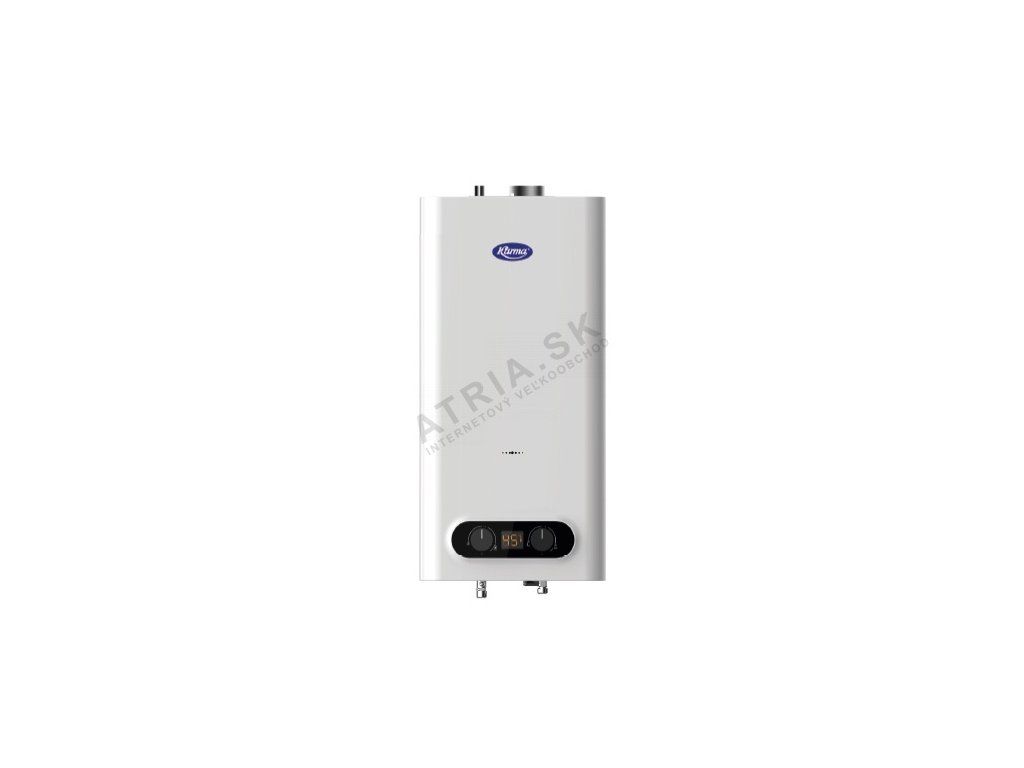
Karma POV 14BK ZP – unpressurised electric heater
An unpressurised model for one draw-off point (e.g. washbasin, shower). Simpler installation, lower price, own tap included in the solution.
Price: €849.85
View the Karma POV 14BK ZP product →
Karma POV 11BW ZP – pressurised electric heater
A pressurised model connected directly into the water supply, suitable for supplying multiple outlets in a flat or house.
Price: €1,037.88
View the Karma POV 11BW ZP product →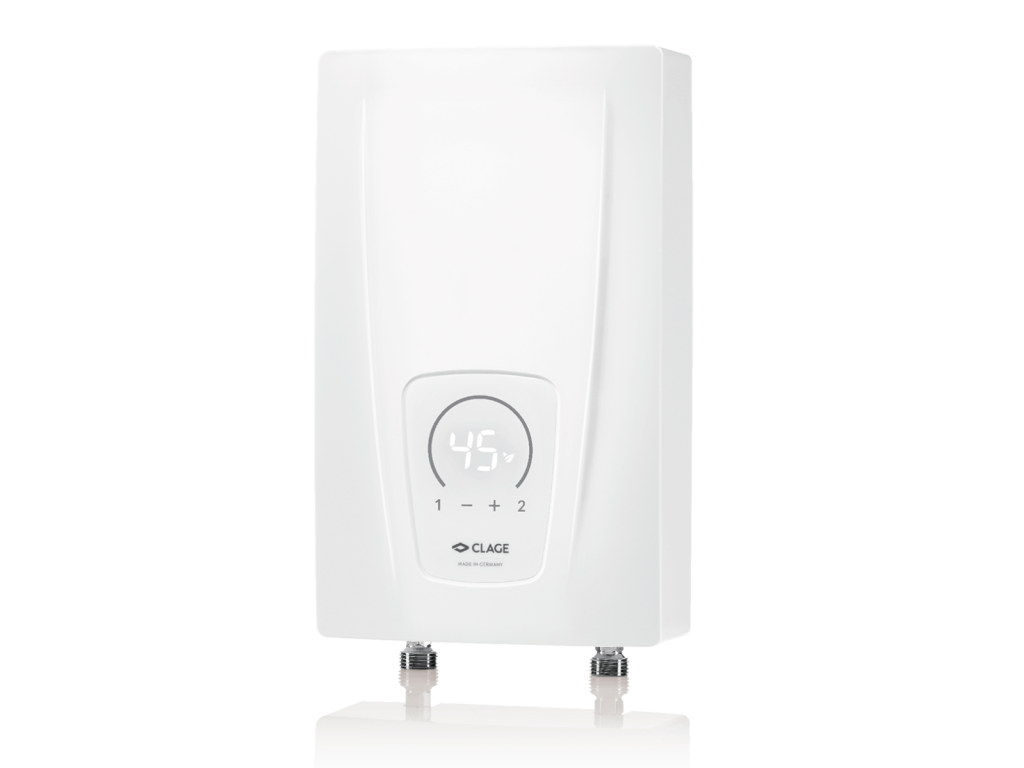
CLAGE CEX 11 or 13.5 kW, 400 V – pressurised electric heater
A compact pressurised heater from the German brand CLAGE, suitable as a supplementary or main hot water source for smaller households or businesses with multiple outlets.
Price: €397.70
View the CLAGE CEX 11/13.5 kW product →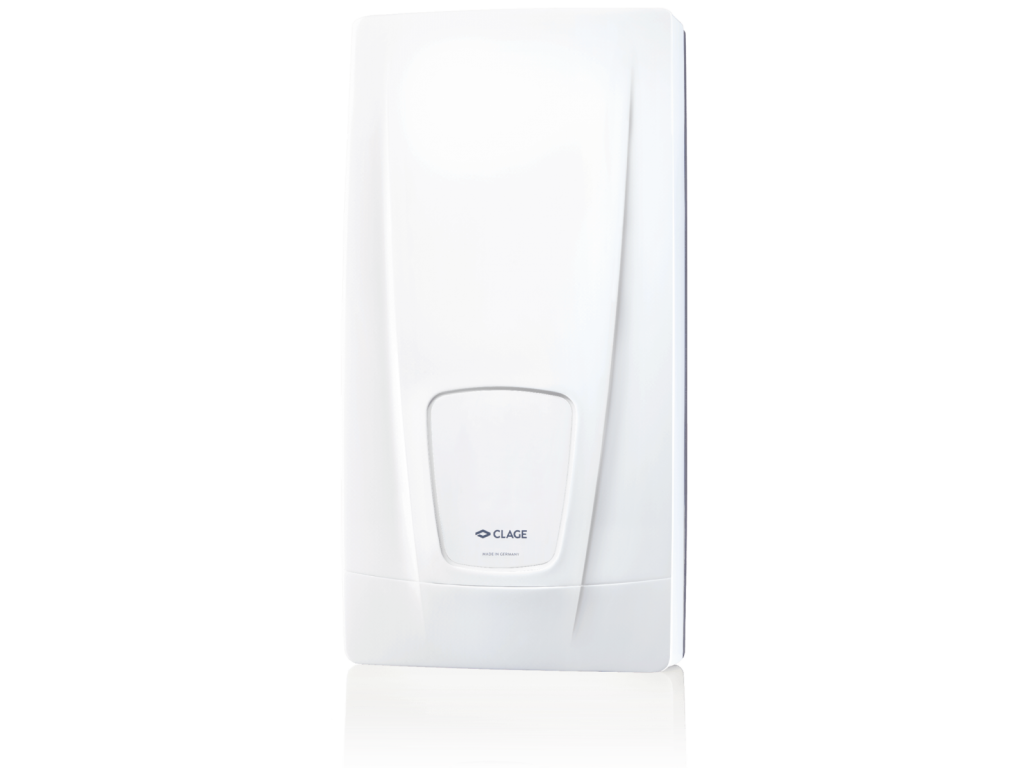
CLAGE DBX21 Next 21 kW, 400 V – pressurised electric heater
A more powerful pressurised model suitable for simultaneously supplying multiple outlets in a flat or family house, electronically controlled heating with precise temperature regulation.
Price: €390.60
View the CLAGE DBX21 Next 21 kW product →Frequently asked questions (FAQ)
Can I connect an unpressurised heater to a standard tap?
No. An unpressurised instant water heater works as a closed system with its own specific tap, which is either included with delivery or precisely specified by the manufacturer. This tap also physically triggers and regulates the flow of water through the heater, so it can't simply be replaced with an ordinary bathroom or kitchen tap from the open market. If the tap wears out, a replacement tap compatible with the given heater model needs to be ordered.
Can a shower, a washbasin, and the kitchen all be connected to one pressurised heater at once?
Yes, that's precisely the main advantage of a pressurised connection – the heater is connected directly into the water supply and can supply several outlets at once. However, bear in mind that with simultaneous draw-off from multiple points, the available output is split between all active draw-offs, which can mean a slightly lower temperature or flow if, for example, the shower and kitchen sink are running at the same time. When choosing output, it's therefore important to account for the real number of simultaneously used outlets.
Is an unpressurised heater always cheaper than a pressurised one?
Generally yes, if we're comparing a solution for one draw-off point – unpressurised models have simpler design and installation, which translates into a lower purchase and installation price. However, it's important to realise this is a comparison of solutions for different purposes: if you wanted to cover multiple draw-off points in one household with unpressurised heaters, you'd have to buy and install several units, which added together can match or even exceed the price of one pressurised heater.
Can I install an unpressurised heater myself?
For smaller electric models with lower power draw, DIY installation is realistically possible for a user with basic plumbing and electrical skills. We nevertheless always recommend professional installation, since incorrect wiring of the electrical part represents a safety risk and could also mean losing the warranty on the device.
Why does a pressurised heater always require professional installation, while an unpressurised one doesn't always?
A pressurised heater is connected directly into the water supply of the whole flat or house, so installation involves work on the existing piping system and generally also higher requirements for the electrical connection (for electric models with higher power draw) or connection to the gas supply and mandatory inspection (for gas models). An unpressurised heater, by contrast, connects only locally, to one water inlet and one outlet, which is a hydraulically and technically simpler job.
Does an unpressurised heater have lower output than a pressurised one?
Not necessarily – output (kW) is a separate parameter independent of the connection type, and there are both unpressurised and pressurised models with a similar output range. The difference isn't in the output itself, but in how many outlets that output is spread across. You'll find the specific recommended output based on the number and type of outlets in the article on choosing instant water heater output.
Can I later add another outlet to an unpressurised heater?
Not by design – an unpressurised heater is designed to supply one specific outlet, for which it's connected together with its tap. If you wanted to add hot water at another spot, you'd need either a second, separate unpressurised heater for the new location, or you'd have to consider switching to a pressurised solution that could cover all draw-off points at once.
Is a pressurised heater worth it even for a smaller flat with one bathroom?
Yes, as long as you need to supply hot water to multiple outlets in the flat at once, for example both the bathroom and kitchen – even in a smaller flat, it's common for the shower and kitchen sink, or the washbasin and washing machine, to be used at the same time. A pressurised heater in this case works as a central hot water source for the whole flat, similarly to how a storage water heater would work, just without needing to store a larger volume of water.
Related topics
Have a question about an instant water heater?
Can't decide, or dealing with a specific situation in your household? Write to us – we're happy to help.