
When a customer opens the range of instant water heaters on atria.sk, they very quickly come across two names that appear most often – Karma and CLAGE. At first glance these look like a similar product (a device that heats water right at the moment it's drawn off, without a storage tank), but in reality they represent two completely different worlds of technology, installation, and running costs. Karma is built on burning natural gas or propane-butane, while CLAGE is a German specialist exclusively in electric instant water heating. In this article we take a detailed look at both brands, compare them in a clear table, and use two real-world scenarios to show when it makes sense to reach for one technology or the other.
Before we get into the details of the individual brands, it's important to understand that the choice between Karma and CLAGE isn't just a matter of taste or price – it's above all a question of what energy source you have available and what type of connection is actually possible in the given property. If your flat or house has a natural gas supply and an existing chimney or a possible flue discharge route, a Karma gas heater can be more economical and practical, especially with higher hot water consumption. If you don't have gas, or you're looking for a compact solution for, say, a single washbasin, kitchen sink, or small bathroom, a CLAGE electric instant water heater is generally the simpler and faster route. You'll also find a detailed breakdown of the differences between the two technologies in the separate article Electric vs. gas instant water heater.
Karma – a Slovak/Central European specialist in gas instant water heaters
The Karma brand is one of the traditional manufacturers of gas appliances in Central Europe, long specialising in gas equipment for households – from instant water heaters to gas cookers. Thanks to years of experience working with gas as a fuel, Karma models have a well-refined combustion system and safety features, which is crucial for gas appliances. On atria.sk, Karma's range mainly includes pressurised and unpressurised gas instant water heaters, which can run on natural gas (NG) or propane-butane (LPG) – the suitable variant is chosen according to what gas source is available at the given location or property.
The key difference from electric instant water heaters is the heating principle – a gas burner burns gas and transfers heat to the flowing water via a heat exchanger. The advantage is generally higher achievable output at a comparable device price, and in locations with access to cheaper natural gas, also lower operating costs per unit of heated water compared to electricity. The drawback is the need to deal with flue gas discharge (a chimney or a turbo version with routing through the facade) and a gas supply, which somewhat complicates and increases the cost of installation compared to a simple electrical connection.
When choosing a specific Karma model, the first thing to distinguish is between a pressurised and an unpressurised version. Pressurised heaters are connected to the public or well water supply under pressure and can supply several draw-off points at once (for example, the kitchen and the bathroom). Unpressurised heaters, on the other hand, are intended for one specific draw-off point and work with a special unpressurised fitting – this variant was historically used mainly where sufficient water pressure wasn't available, or where heating for a single outlet is enough.
Karma POV 14BK ZP
The Karma POV 14BK ZP model is a pressurised natural gas instant water heater that's a popular solution for households with higher demands for simultaneous hot water draw-off in multiple rooms. Thanks to its natural gas design, it's suitable for flats and family houses where a gas connection is commonly available – that is, in most Slovak towns and larger villages.
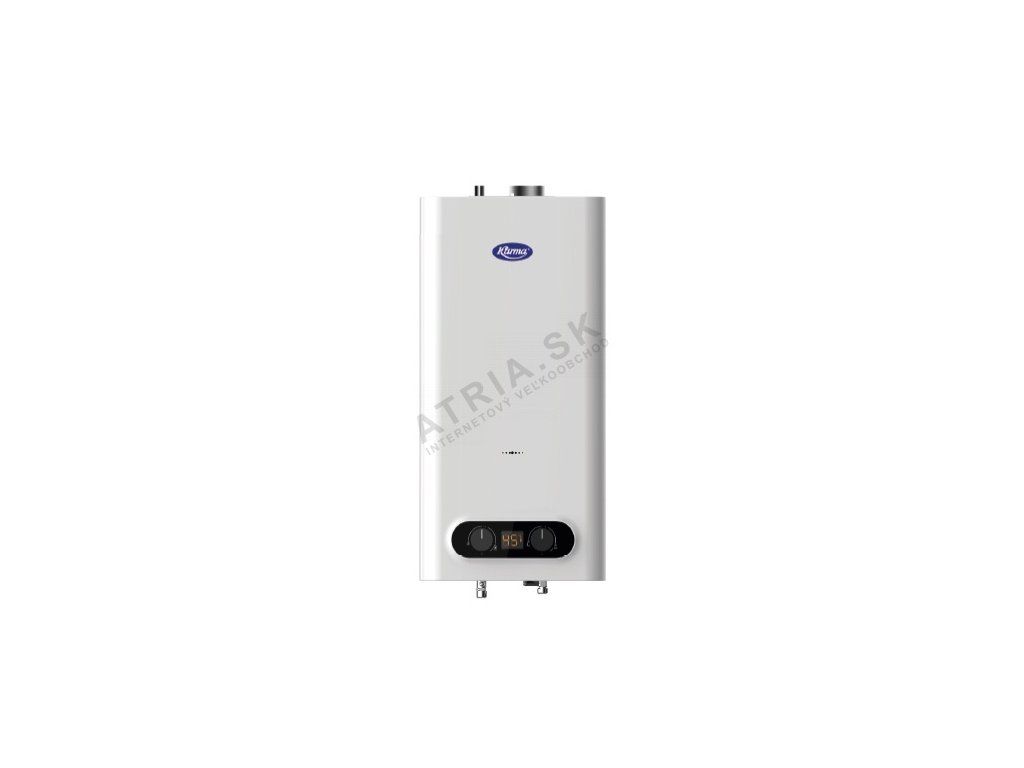
Karma POV 14BK ZP – indicative price €849.85. A pressurised natural gas instant water heater, suitable for simultaneous hot water supply to multiple draw-off points.
Karma POV 11BW ZP
The second model, Karma POV 11BW ZP, also runs on natural gas, but represents a different output and design category within the Karma range. The "BW" designation in the model name indicates a different type of fitting and use compared to the 14BK model – when choosing a specific type it's therefore always good to check whether it's a pressurised or unpressurised version, and what flow/output the device actually delivers, so it matches the number of draw-off points used simultaneously in the household.

Karma POV 11BW ZP – indicative price €1,037.88. A natural gas instant water heater from the Karma range, an alternative to the POV 14BK ZP model for a different type of household use.
Both Karma models share one important feature – they're natural gas (NG) powered appliances, for which professional installation by a licensed gas fitter and inspection under applicable regulations is essential. This is therefore an investment where it's worth budgeting not only for the price of the device itself, but also for installation costs, possible chimney or flue modifications, and regular servicing. You'll find more on service intervals and the most common faults in the article Service and common faults of instant water heaters.
CLAGE – a German specialist in electric instant water heating
CLAGE is a German manufacturer that has for decades focused exclusively on electric instant water heaters and related taps with integrated heating. This narrow specialisation is reflected in sophisticated electronics, precise outlet temperature control, and a wide range of output classes – from small compact units for a single washbasin to powerful comfort models capable of supplying hot water to an entire household.
Unlike Karma's gas heaters, where the main heat source is gas combustion, CLAGE heats water using electric heating elements right as it flows through the device. The main advantage is simpler installation – all you need is a cold water supply and an adequately rated electrical circuit (generally three-phase for more powerful models, while smaller ones are fine with a single-phase connection), with no need for a chimney, flue discharge, or gas equipment inspection. This makes CLAGE electric instant water heaters a popular choice especially where there's no gas connection, or where hot water heating needs to be added at one specific location (for example a cottage, studio flat, kitchenette, or summer kitchen).
Within the CLAGE range, it's essential to distinguish between the compact range and the comfort (higher-flow) range. Compact models are generally intended for a single draw-off point with lower hot water flow demands – typically a washbasin or kitchen sink – and their electrical power draw is on the lower side (up to roughly 13.5 kW). Comfort, more powerful models, on the other hand, are sized to handle heating a larger amount of water at higher flow, for example for showering or simultaneous use of multiple outlets, and their power draw is significantly higher (typically 18–27 kW), which already requires a stronger electrical circuit and often a three-phase connection.
CLAGE CEX 11 or 13.5 kW (400 V)
The CLAGE CEX 11 or 13.5 kW model is a typical example of the more compact range with electronic temperature control and a choice between two output levels (11 or 13.5 kW) depending on the actual electrical conditions in the given property. This flexibility is particularly practical during renovations, where sufficient reserve on the electrical protection isn't always available.
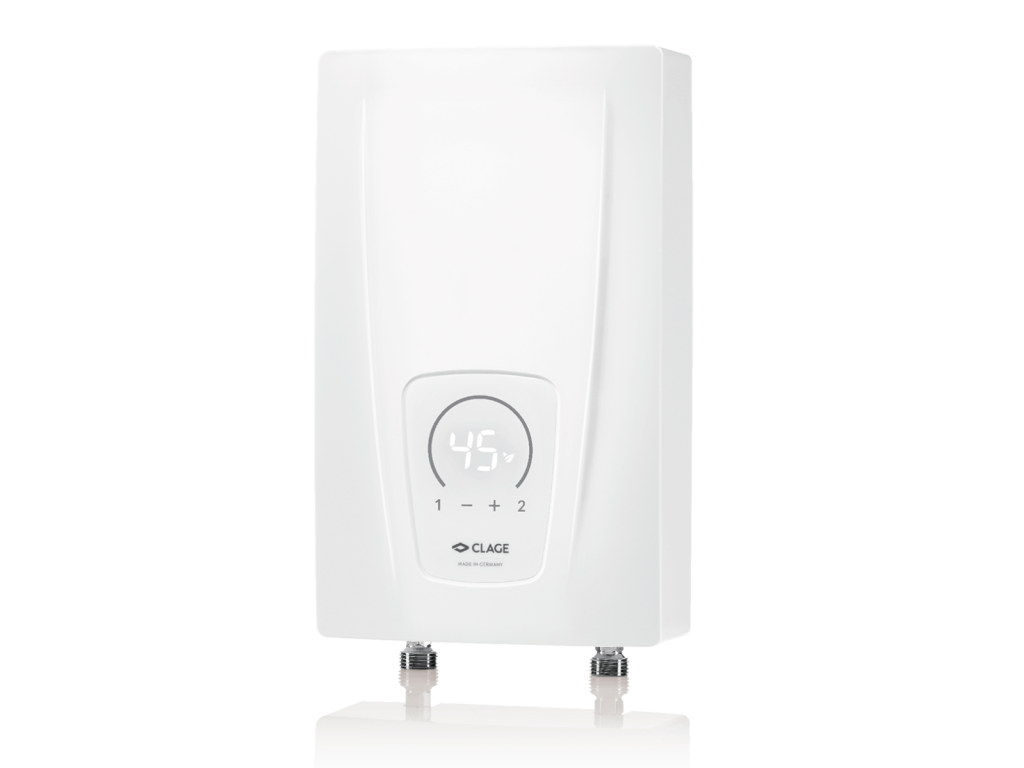
CLAGE CEX 11 or 13.5 kW (400 V) – indicative price €397.70. An electronically controlled electric instant water heater with selectable output, suitable for smaller to medium hot water demands.
CLAGE DBX21 Next 21 kW (400 V)
The CLAGE DBX21 Next 21 kW model belongs to the more powerful, comfort category of CLAGE instant water heaters. A power draw of 21 kW with a three-phase 400 V connection makes it possible to cover a higher hot water flow, which you'll appreciate especially when showering or when you need to supply hot water to several places in the household at the same time. The "Next" range also generally brings more modern electronics and more precise outlet temperature control compared to older generations of devices.
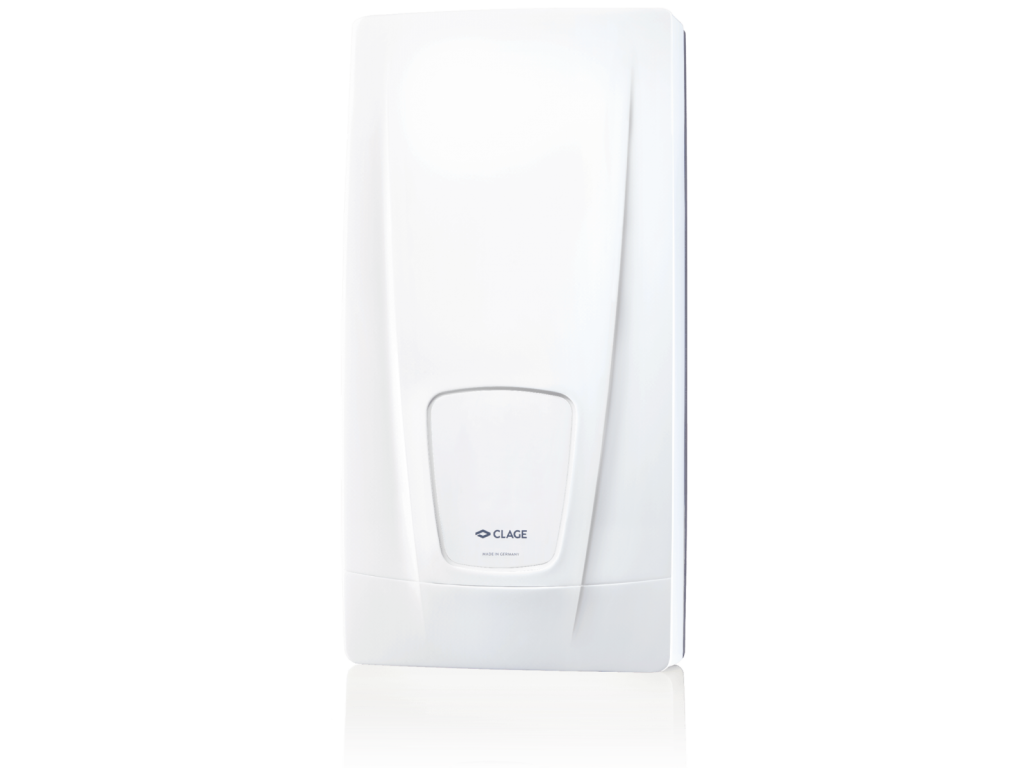
CLAGE DBX21 Next 21 kW (400 V) – indicative price €390.60. A more powerful electric instant water heater from CLAGE's comfort range, suitable for higher flow and simultaneous supply of multiple draw-off points.
An interesting detail is that in the current offer, the price of the more powerful DBX21 Next model (€390.60) is at a similar level to the more compact CEX 11/13.5 kW (€397.70) – so with electric instant water heaters, price doesn't automatically increase linearly with output, and it's always worth comparing the current offer of specific models rather than going by kilowatts alone. What matters most is the actual capacity of the electrical supply in the given property and whether it can safely provide the higher power draw – we cover this in more detail in the article What output instant water heater do I need.
Comparison table – Karma vs. CLAGE
The following table summarises the main differences between both brands and the models mentioned, so you can quickly get a sense of which technology suits your case better.
| Brand / model | Technology type | Indicative price | Main advantage |
|---|---|---|---|
| Karma POV 14BK ZP | Gas, pressurised, natural gas | €849.85 | Higher output for simultaneous hot water supply to multiple points |
| Karma POV 11BW ZP | Gas, natural gas | €1,037.88 | Alternative design for a different type of household use |
| CLAGE CEX 11 or 13.5 kW | Electric, compact range | €397.70 | Simple installation without gas or a chimney, selectable output |
| CLAGE DBX21 Next 21 kW | Electric, comfort range | €390.60 | Higher flow, electronic control, modern "Next" generation |
The table shows that Karma's gas models sit in a higher price bracket for the device itself, but with higher hot water consumption and access to cheaper gas, this upfront investment can pay for itself over the years through lower operating costs. CLAGE electric models, on the other hand, offer a lower purchase price and simpler, faster installation, which is an advantage especially where you don't want or can't deal with a gas connection and flue discharge.
How to decide between Karma and CLAGE
When deciding between a Karma gas heater and a CLAGE electric heater, we recommend going through several key criteria:
- Availability of the energy source. If your property has a natural gas supply and an existing or easily built flue discharge, a Karma gas heater is a realistic and often economical choice. If you don't have gas, or connecting it is complicated or costly, a CLAGE electric heater is the more logical route.
- Electrical circuit capacity. More powerful CLAGE models (18 kW and above) require a three-phase connection and adequately rated protection. Before buying, you need to check whether the electrical system in the given property allows for this – in older apartment cores this isn't always a given.
- Number of draw-off points used simultaneously. If you need to supply hot water to the bathroom and kitchen at the same time, you'll need a more powerful device – either a higher-output Karma pressurised gas heater, or a CLAGE comfort electric model with a higher power draw.
- Space and structural constraints. Gas appliances need space for flue discharge (a chimney or a turbo version through the facade) and must meet safety standards for placement in a room. CLAGE electric heaters are more compact and undemanding in terms of placement, which you'll appreciate especially in small flats or cottages.
- Installation budget, not just the device price. With gas appliances, you need to budget for the cost of professional installation by a gas fitter, inspection, and possible structural modifications. With electric heaters, installation is simpler, but more powerful models may require modifying the electrical wiring, including protection.
- Long-term operating costs. Energy prices (gas vs. electricity) change over time and also vary regionally. With higher, regular hot water consumption, it's worth doing an indicative calculation of the cost per kilowatt-hour of heat for both technologies.
If you're still not sure which direction to take, we also recommend reading the general guide How to choose an instant water heater, which discusses selection by property type, number of occupants, and hot water usage patterns, independent of a specific brand.
Real-world examples
Scenario 1: A family house with a gas connection and higher water consumption
Picture a family of four living in an older family house, where natural gas has been connected for years, along with a functional chimney left from the original gas boiler, which is now being replaced with a more modern heat source. The bathroom and kitchen are only a few metres apart, but during the morning rush it often happens that one family member is showering in the bathroom while dishes are being washed or the washing machine is being filled with hot water in the kitchen at the same time. In this case it's advisable to reach for a pressurised gas heater, such as the Karma POV 14BK ZP, which, with sufficient output, can cover simultaneous draw-off from multiple outlets without a significant drop in water temperature. Since the house already has flue discharge and a gas connection in place, the additional installation costs are relatively low, and thanks to gas being cheaper than electricity, this investment pays off in the long run given the regular higher consumption.
Scenario 2: A smaller flat or cottage without gas, one draw-off point
The second typical case is the owner of a smaller flat, studio, or holiday cottage, where a gas connection isn't installed at all and isn't planned either. The need is simple – to provide hot water for a single washbasin or kitchen sink, or possibly a small shower, without complex structural work. In this situation, the logical choice is a compact electric instant water heater, for example the CLAGE CEX 11 or 13.5 kW, which can be connected directly to the existing electrical wiring without needing to deal with flue discharge or a gas equipment inspection. If the owner wanted to also cover a shower enclosure with higher flow in the future, they could consider a more powerful model from the comfort range, for example the CLAGE DBX21 Next 21 kW, for which, however, the capacity of the electrical connection needs to be checked in advance and the protection possibly upgraded.
Both scenarios show that there's no universally "better" solution – it always depends on the specific conditions of the property, energy availability, and how hot water is used in the household.
Frequently asked questions (FAQ)
Is a Karma gas instant water heater cheaper to run than an electric CLAGE?
In general, the price of natural gas per kilowatt-hour has long tended to be lower than the price of electricity, so with higher, regular hot water consumption, a Karma gas heater can be cheaper to run. However, the exact ratio changes depending on current energy prices and your specific supplier, so it's worth doing an individual calculation based on your actual consumption.
Do I need an inspection for a Karma gas heater?
Yes, gas appliances including Karma instant water heaters must be installed by a licensed gas fitter and are subject to regular inspections under applicable legislation. CLAGE electric heaters don't have this gas inspection obligation, since they don't involve gas combustion.
Can I plug a CLAGE electric heater into a standard 230 V socket?
Smaller compact models with lower power draw can be connected to a single-phase circuit, but more powerful models from the comfort range (typically from around 18 kW upward) generally require a three-phase 400 V connection and corresponding protection. Specific requirements vary from model to model, so it's advisable to check the technical parameters before buying and have the connection assessed by an electrician.
What is the difference between the pressurised and unpressurised versions of Karma heaters?
A pressurised heater is connected to the pressurised water supply and can supply several draw-off points in the household at once. An unpressurised heater is intended for one specific draw-off point and works with a special unpressurised fitting. The choice depends on how many hot water outlets you want to supply with the device.
Can a CLAGE heater also run on natural gas or propane?
No, CLAGE is a manufacturer focused exclusively on electric instant water heating. If you need a gas solution for natural gas or propane-butane, you should choose the Karma brand, which specialises in gas appliances.
Which model is more suitable for a whole household with both a shower and a kitchen used at the same time?
For simultaneous hot water supply to multiple draw-off points, a more powerful pressurised model is more suitable, for example the gas Karma POV 14BK ZP, or, for an electric solution, a comfort range model such as the CLAGE DBX21 Next. Compact models with lower output, on the other hand, are intended more for a single draw-off point.
How long does installing a gas heater take compared to an electric one?
Installing a CLAGE electric heater is generally faster and simpler, since it only needs a water and electrical circuit connection. Installing a Karma gas heater usually takes longer, since it also involves connecting to the gas supply, arranging flue discharge, and mandatory professional installation by a licensed gas fitter, including an inspection.
Is it worth replacing an older gas heater with a new Karma model?
If the current heater is older, prone to faults, or has lower energy efficiency, replacing it with a newer model with more modern combustion control can bring savings on gas consumption as well as greater comfort in the form of a more stable water temperature. However, a specific recommendation always depends on the condition of the original device and how hot water is used in the household.