
Stainless Steel vs. Brass Manifold
Stainless Steel vs. Brass Manifold - Which Is Worth It for Underfloor Heating
If you're building a house right now, renovating a bathroom with underfloor heating, or your old manifold in the hallway is nearing the end of its life after years of service, sooner or later you'll run into the same question: is it worth paying extra for a stainless steel manifold, or is a classic brass one perfectly fine? There's no simple yes-or-no answer - it depends on water quality in your region, whether it's a new build or a renovation, how long you expect the system to run, and ultimately on budget too. In this article we go through both materials honestly, without unnecessary sales talk, including the real numbers you'll come across when choosing a manifold.
What a manifold is and why the material matters
A manifold (sometimes also called a manifold-collector, or simply a "distribution unit") is the central component of underfloor heating or a larger radiator system with multiple circuits. Its job is to split heating water from the boiler or heat pump into individual circuits (loops) routed through the floor or to individual radiators, and then to collect the water returning from the circuits and send it back to the heat source. Physically, it consists of two parallel pipes - flow and return - with a row of outlets to which individual circuits are connected via screw joints, flow meters, and electrothermic or manual actuators.
Because the manifold stays permanently filled with water (in a glycol system, sometimes a mixture of water and antifreeze) for the whole life of the building, and is built into a cabinet in the wall or hallway, any repair or replacement is far more unpleasant than, say, replacing a valve on a radiator. To reach it, you have to expose the plaster or at least open the cabinet, drain the system, disconnect the circuits, and rebalance everything afterwards. That's exactly why it's worth investing time in choosing the right material from the start - a replacement ten years later will cost you many times more than the price difference between brass and stainless steel today.
Brass manifold - a proven classic
Brass is an alloy of copper and zinc, and it's a material that's been used in plumbing for decades. Most manifolds you'll find in older, and many newer, houses are brass - either raw (polished), nickel-plated, or lacquered. Brass's main advantage is price. A brass manifold of comparable size is usually cheaper than a stainless steel equivalent, and with a larger number of circuits (and therefore a larger, more expensive body) this can add up to a difference of several dozen euros.
Brass is also relatively easy to machine, so manufacturers can make manifolds with smooth transitions and precise threads, which makes installation easier. The temperature and pressure resistance of brass manifolds is fully adequate for ordinary home heating systems (up to 6 bar, up to roughly 90-95 °C).
Where brass has a weakness is resistance to so-called dezincification - a form of corrosion where water with a higher chloride content, a higher proportion of dissolved salts, or unsuitable pH gradually leaches zinc out of the alloy. What's left is a porous copper structure that loses strength and can eventually start leaking or even develop holes. This process usually takes years, not months, but with harder or more aggressive water (typical especially with wells, though it affects part of the public water supply too, to a lesser extent) it can show up after as little as 8-12 years of operation. That's why manufacturers also offer so-called "DZR" brass (dezincification-resistant), which is somewhat more expensive but significantly limits the problem - when buying a brass manifold, it's sensible to specifically ask about this property.
Another practical drawback of brass is its weight - with larger manifolds (6 circuits and more) this becomes a noticeable difference, especially when installing into lightweight plasterboard cabinets, where you need to ensure sufficiently strong anchoring.
Stainless steel manifold - higher resistance for a higher price
Stainless steel (most often a chromium- and nickel-containing variant, resistant to ordinary corrosion) addresses exactly this weakness of brass - dezincification practically doesn't occur in a stainless alloy, since there's no zinc in it to leach out. A stainless steel manifold therefore copes better with more aggressive water, higher chloride content (for example wells near agricultural land, where nitrates and chlorides get into the groundwater), and any mixing of different metals within the system.
The second advantage is lower weight for the same strength - stainless steel manifolds are usually lighter than brass ones, which you'll appreciate especially when fitting into smaller installation cabinets. The surface of a stainless steel pipe is also smoother, which slightly reduces pressure loss and therefore the demands on the circulation pump - for a typical house this difference is negligible, but for larger systems with long pipe runs it can show up in the pump's electricity consumption.
An aesthetic advantage is that stainless steel keeps its shiny appearance over the long term without needing lacquering or nickel-plating - if the manifold cabinet stays partly visible (for example with a glazed door), this is a nice detail.
The drawback of stainless steel is a higher purchase price - for a comparable size, you'll typically pay 20 to 40% more for a stainless steel manifold than for standard (non-DZR) brass. With good-quality DZR brass, the price difference narrows, so brass's price advantage shows up most with cheaper, standard brass variants.
Comparing both materials in numbers
Below is a simplified overview summarising the main differences as they actually play out in practice for a typical home installation:
The lifespan figures are approximate and based on the experience of installation companies - actual lifespan depends mainly on water quality, system pressure and the quality of the joint itself during installation, not just the body material alone.
Price comparison of stainless steel manifolds by number of circuits
To give you an idea of how the price of a stainless steel manifold changes with the number of circuits, here's a comparison of three common sizes from our range:
As you can see, the price rises by roughly €15-16 with each additional circuit - something worth factoring into your budget for a whole house (where you often need a manifold for 8, 10 or even 12 circuits). It's precisely with larger manifolds that the absolute price difference between brass and stainless steel is greatest, so it's worth thinking in advance about how many circuits you actually need - we cover this topic in detail in the article How many manifold circuits do I need.
How to decide - a simple procedure
When choosing a material, we recommend following the logic below, which takes into account your water source, the type of building, and your planned length of use:
This diagram obviously doesn't replace a professional assessment - if you're not sure about water quality in your area (especially with your own well), it's worth having a water sample analysed by a local water laboratory. An analysis costs only tens of euros, but gives you certainty for decades ahead.
Installation, compatibility and accessories
The good news is that stainless steel and brass manifolds don't differ fundamentally in terms of installation - both are mounted on the same brackets, have the same thread spacing (most often 1" on the main pipework and 3/4" Eurocone on the outlets to the circuits), and can be combined with the same accessories - ball shut-off valves, bleed and drain valves, flow meters, and electrothermic or manual actuators. So there's no need to worry that choosing stainless steel would "lock you out" of choices for the other components.
A practical detail worth keeping in mind: if you're planning to control individual circuits with a room thermostat (for example with several zones needing different temperatures), you'll need a separate electrothermic actuator for each circuit. Actuators for 230 V, connected directly to the mains via the control unit, or 24 V actuators, used with safe low voltage, are commonly used - the latter especially suitable where you want to reduce the risk of contact in a damp environment (bathrooms, laundry rooms). You'll find both types below among the recommended products.
To make it clear exactly where the manifold sits in the system and what it works with, take a look at the simplified diagram of a typical underfloor heating assembly:
 |
2-way stainless steel manifold for underfloor heating - suitable for a small room or bathroom with one or two independent circuits, an ideal point to try the benefits of stainless steel even on a smaller budget. Price from €53.68. |
 |
3-way stainless steel manifold for underfloor heating - a good choice for a smaller flat or a layout with three independent rooms/zones, where it's worth having certainty of a long lifespan without having to go back into the wall later. Price from €69.39. |
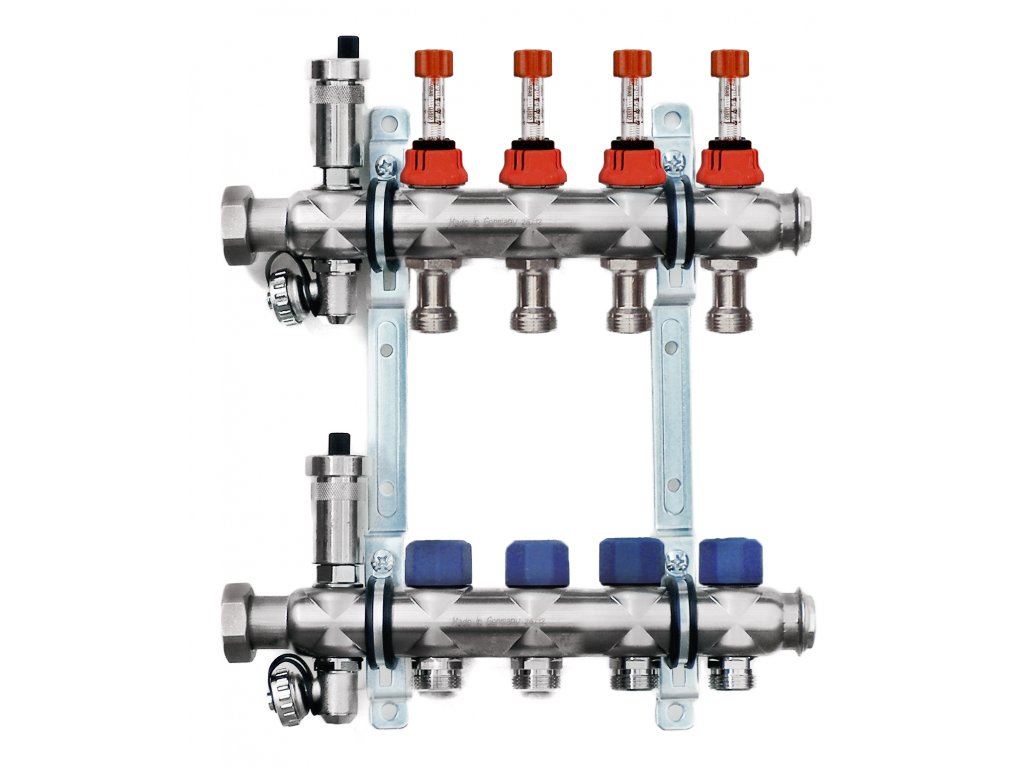 |
4-way stainless steel manifold for underfloor heating - suitable for a larger house with several zones, where investing in stainless steel pays off the most given the higher number of circuits and therefore the higher overall value of the system. Price from €85.32. |
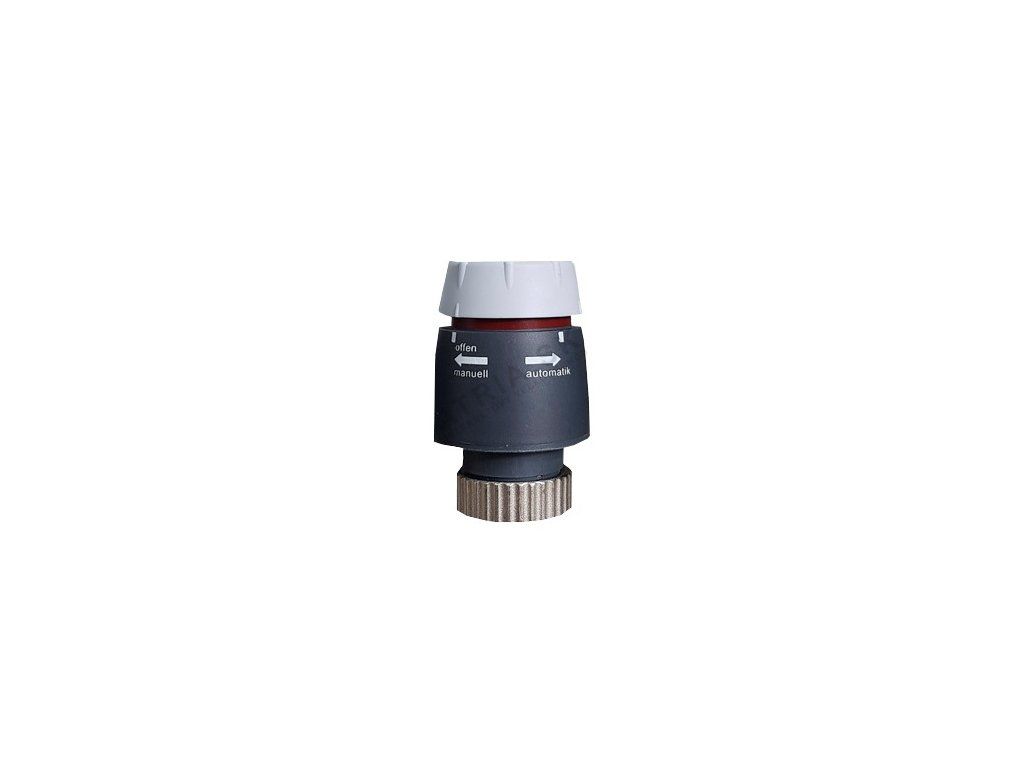 |
Electrothermic actuator 230 V - a standard solution for automatically controlling individual manifold circuits directly from a room thermostat, simple wiring into the standard electrical mains. Price from €16.36. |
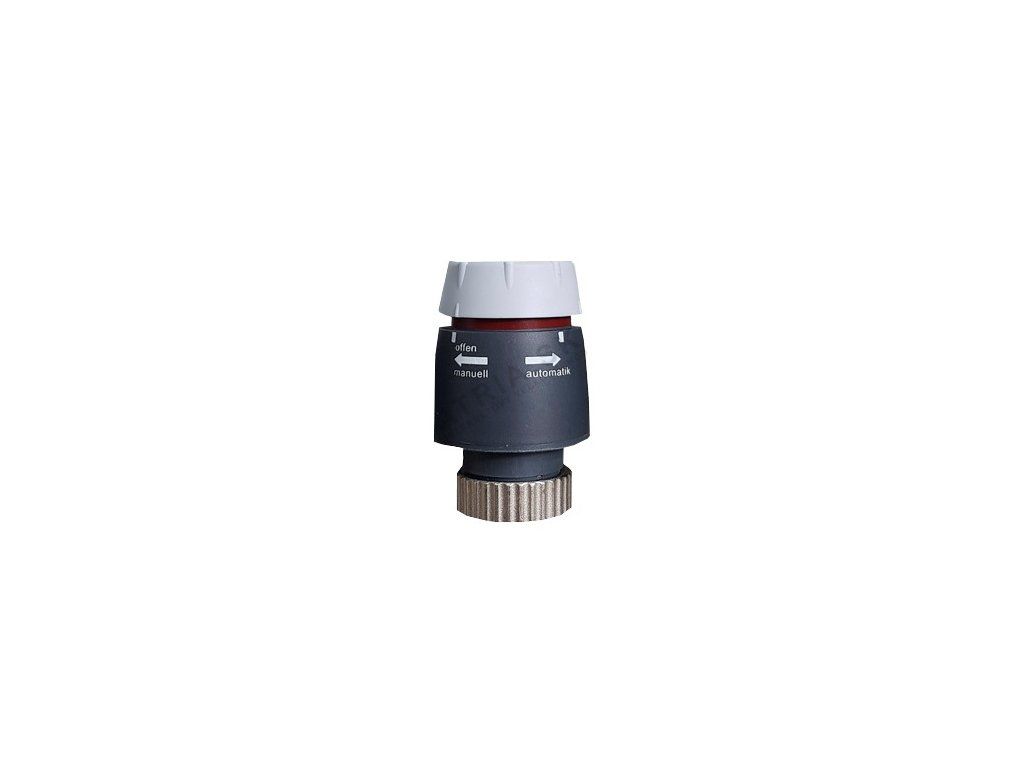 |
Electrothermic actuator 24 V - a suitable alternative where low voltage is required, for example in damper spaces or larger installations with a central control unit. Price from €16.36. |
The effect of water chemistry on choosing the material
Since we mentioned water quality as a key criterion, it's worth going into more detail. Dezincification in brass is mainly driven by higher chloride content, low pH (more acidic water), and higher water temperature - exactly the conditions that commonly occur in underfloor heating, since the system runs practically continuously throughout the whole heating season. With mains water, quality is usually stable and treated to be gentle on common metal materials, though regional differences still exist. With your own well, the situation varies case by case - so we genuinely recommend having the water analysed in advance, not just for the manifold, but for the whole heating and water system in the house.
It's also worth remembering that in a closed heating circuit (unlike a drinking water supply) the water in the system is rarely replaced - it's only topped up when pressure drops. This has both an advantage (less "fresh", potentially more aggressive water passes through the manifold) and a disadvantage (if the system's initial fill used unsuitable water, or if air - and with it oxygen - gets into the system, this doesn't help the corrosion process). That's exactly why closed heating circuits are increasingly recommended to have their fill water treated by demineralisation, or with a corrosion inhibitor added - though this applies equally to both materials, not just brass.
A practical example from installation work
A common scenario installation companies encounter: a house built 12-15 years ago, with a well as its only water source, had a cheap brass manifold fitted without DZR treatment. After about ten years, slight weeping appeared around the thread on two outlets, initially fixed by retightening and a new seal. Two years later, a faint white patch and a slight leak appeared elsewhere on the body - once taken apart, it turned out to be classic dezincification, i.e. a porous material structure that could no longer be fixed with a seal, since the problem wasn't at the joint but in the body material itself. The result was a necessary replacement of the whole manifold, including partial work on the plaster around the cabinet - work that, given the installation company's hourly rate and the need to drain and refill the whole system, cost several times more than a stainless steel or good-quality DZR brass manifold would originally have cost. This example isn't unusual - it's exactly the kind of cost worth avoiding by choosing correctly from the start.
Maintenance and real-world lifespan
Regardless of which material you choose, regular maintenance extends a manifold's lifespan. It's recommended to check the tightness of all joints once a year (typically before the heating season starts), verify the bleed valves work, and check that the flow meters on each circuit show the expected values. If the system also includes a filter or dirt separator ahead of the manifold, it needs regular cleaning per the manufacturer's instructions - debris in the system accelerates wear on both materials. You'll find a detailed procedure in the article Maintenance of a stainless steel manifold, and specifically for bleeding in the article Bleeding and setting up a manifold.
It's also worth remembering that even the best-quality manifold is just one part of the whole system - just as important is a correctly sized circulation pump, functioning drain and shut-off valves, good-quality seals on the Eurocones, and, last but not least, a suitably chosen cabinet with enough room for servicing. You'll find a recommended selection of accessories in the article Manifold accessories, and the right cabinet size in the article Manifold cabinets - what size.
Summary - when it's worth paying extra for stainless steel
To sum up the whole article in one sentence: a stainless steel manifold is a sensible, longer-term safer investment especially where the water is more aggressive (wells, some locations with harder or more acidic water), where you're planning to use the house long-term without touching the pipework, or where you simply want certainty without having to investigate the exact water composition. A good-quality brass manifold with DZR treatment remains a perfectly valid choice with standard mains water and a reasonable budget - it's definitely not a "worse" material, just one with a different weakness you need to be aware of. The clearly worst choice is a cheap brass manifold without DZR treatment combined with more aggressive water - it's exactly this combination that most often ends in premature replacement.
Frequently asked questions
Can a brass manifold simply be replaced with a stainless steel one without touching the whole system?
Yes, as long as it's the same size (number of circuits) and the same thread spacing, the replacement usually doesn't require touching the pipework in the floor itself - you're only replacing the manifold body and its accessories. Plan for draining, refilling and bleeding the system.
Is stainless steel worth it even for a small flat with a single bathroom circuit?
For a very small system (for example a 2-way manifold), the absolute price difference between brass and stainless steel is low, so it's worth going straight for the stainless steel variant - the extra investment is minimal and you gain greater certainty for the whole lifespan of the flat.
How do I know if a brass manifold is DZR (dezincification-resistant)?
This information is usually stated directly in the technical data sheet or product description, or in the standard designation of the alloy used. If you're not sure, ask the seller or manufacturer directly - it's one of the most important properties to check when choosing a brass body.
Does the manifold material affect the warranty on a heat pump or boiler?
Usually not directly - most heat source manufacturers don't tie their warranty to the manifold material, as long as the system is correctly designed and filled with suitable water per their instructions. We do recommend checking this in the warranty terms of the specific manufacturer, though, especially for heat pumps that are more sensitive to the quality of the heat-transfer fluid.
Is a stainless steel manifold harder to install than a brass one?
No, the installation procedure and tools used are the same. The only difference might be a slightly different tightening torque for some types of joints, something installation companies are well aware of from practice, and it's not a complication.
What should I do if I suspect dezincification on an existing brass manifold?
Typical symptoms are white or greenish patches on the surface, slight weeping around joints that recurs even after retightening, or a change in the colour of the water in the system. In that case we recommend contacting an installation company for an inspection - an early replacement is always cheaper than waiting for a bigger failure. We also cover common failure symptoms in the article Most common manifold faults.
Related topics
- How to choose a stainless steel manifold
- How many manifold circuits do I need
- Installation and connection of a manifold
- Frequently Asked Questions About Manifolds
You'll find the complete range in the main category Stainless steel manifolds.
Do you have a question on this topic?
Can't decide between stainless steel and brass, or dealing with a specific water situation in your home? Write to us - we're happy to help.