
How Long Does a Backup Power Source Last During a Power Outage
How long does a backup source last during a power outage
The question "how long will it last me" sounds simple, but the answer depends on several things at once - the battery's capacity, how much energy your boiler or circulation pump actually draws, the battery's age, the temperature in the boiler room, and finally also whether the source powers only the control electronics during an outage or other appliances in the house too. In this article we'll go through the real calculation method, show concrete worked examples with numbers, look at what shortens the runtime most in practice, and recommend a few specific backup sources and batteries that atria.sk keeps in stock.
The goal of this article isn't to sell you the biggest, most expensive unit that exists. The goal is for you to be able to work out for yourself whether a 300 W source with a 7 Ah battery is enough for you, or whether your setup (a condensing boiler with a circulation pump, an expansion tank and control automation) really needs a more powerful model.
Why runtime can't be written as a single number on the box
Most backup sources on the market state just one indicative figure on the packaging, for example "up to 4 hours runtime". This figure is almost always calculated at a specific test load chosen by the manufacturer - typically somewhere between 30 and 60 W. But a boiler isn't a single constant draw. During normal operation the control board and circulation pump draw relatively little, but when the burner ignites, when the circulation pump restarts after stopping, or when the fan and the three-way valve's actuators run at the same time, the draw briefly spikes several times higher. Real runtime is therefore not a constant but a curve - the source lasts longer when the boiler is just "quietly" maintaining temperature, and shorter when it's in an active heating cycle.
The second thing you won't learn from the box is the battery's condition. A new AGM battery has different usable capacity than the same battery after two years of operation in a boiler room with temperatures above 25 °C. We'll come back to this in a separate section below, because it's one of the most common reasons people complain that "a new backup source only lasted half of what the manufacturer promised" - in reality it wasn't a new source at all, but a battery that was already nearing the end of its life.
How runtime is calculated - a simple formula you can check yourself
The basic relationship is fairly simple:
Runtime (in hours) = usable battery capacity (in watt-hours) ÷ actual load draw (in watts)
Battery capacity is usually stated in ampere-hours (Ah) at 12 V. To get watt-hours, you multiply the capacity in Ah by the voltage. A battery with a rated capacity of 17 Ah at 12 V therefore represents 204 Wh theoretically. But this figure is only a theoretical ceiling - in practice you'll actually use less of it, because:
- The inverter inside the backup source itself typically has an efficiency of 80-90%, with the rest converted into heat.
- For safety reasons, most UPS systems don't discharge the battery all the way to zero, but disconnect the load once the voltage drops to a protective threshold (typically around 10.5 V for a 12V AGM battery), so the battery isn't destroyed by deep discharge.
- A battery older than 2-3 years typically has 15-30% less real capacity than when it was made, even if it still appears to function fine on the surface.
This gives us a practical rule of thumb: when calculating planned runtime, count on actually using roughly 55-65% of the battery's rated (theoretical) capacity. We'll use this figure in the worked examples below too.
Where the battery's capacity really goes
The chart shows why, out of a rated 204 Wh (a 17 Ah battery at 12 V), the worked example below only counts on around 130 Wh - the difference is "eaten" by inverter conversion loss and the safety margin that disconnects the load before the battery discharges all the way to zero.
Diagram: what happens during a power outage
What matters is that switching between the mains and the battery takes on the order of tens of milliseconds. The boiler's control electronics don't register this interruption as an outage at all - the boiler doesn't switch off, doesn't restart, and doesn't need to go through the ignition sequence again. This is exactly why a backup source pays off even where outages last only a few seconds (for example when switching between phases of the distribution network) - without a source, the boiler would go through a full restart, including venting and the flame safety check, every time such a micro-outage happens.
A worked example - three load levels
Let's take a backup source with a battery of rated capacity 17 Ah at 12 V (theoretically 204 Wh) as an example. After subtracting inverter efficiency losses and the safety margin during discharge, let's count on a really usable capacity of roughly 130 Wh. This is the model we'll use to illustrate the principle - with this much usable capacity, the following three scenarios come out:
- Just the control electronics and circulation pump in idle mode (~45 W): 130 Wh ÷ 45 W ≈ 2.9 hours
- Normal operation with average circulation pump startups (~70 W): 130 Wh ÷ 70 W ≈ 1.9 hours
- Active heating cycle with ignition and actuators (~110 W): 130 Wh ÷ 110 W ≈ 1.2 hours
The chart below shows these three values visually, so it's immediately clear just how much the draw affects runtime for the same battery.
The chart shows an important point: doubling the draw (from 45 W to 110 W) doesn't cut the runtime in half, but to less than half - because at a higher current draw, the inverter's own conversion efficiency also drops, and extra energy is wasted as heat. So in practice it's worth going not by the maximum theoretical runtime from the catalogue, but by the runtime at your specific boiler's real average load.
How to find your boiler's actual draw
The most reliable way is to check the boiler's technical data sheet, where the electrical draw is usually stated (typically 60-150 W for an ordinary domestic gas condensing boiler with a circulation pump). If you don't have the data sheet handy, the second option is a simple measurement - a cheap wattmeter connected between the socket and the boiler will show you the average and peak draw over a few days. This is a one-off investment of a few euros that gives you a much more accurate basis for choosing a backup source than any guess.
Recommended backup sources and batteries
When choosing a specific unit, what matters most is whether you need just a replacement battery for an existing UPS system, or a complete backup source including the inverter. Below are three products that cover different situations.
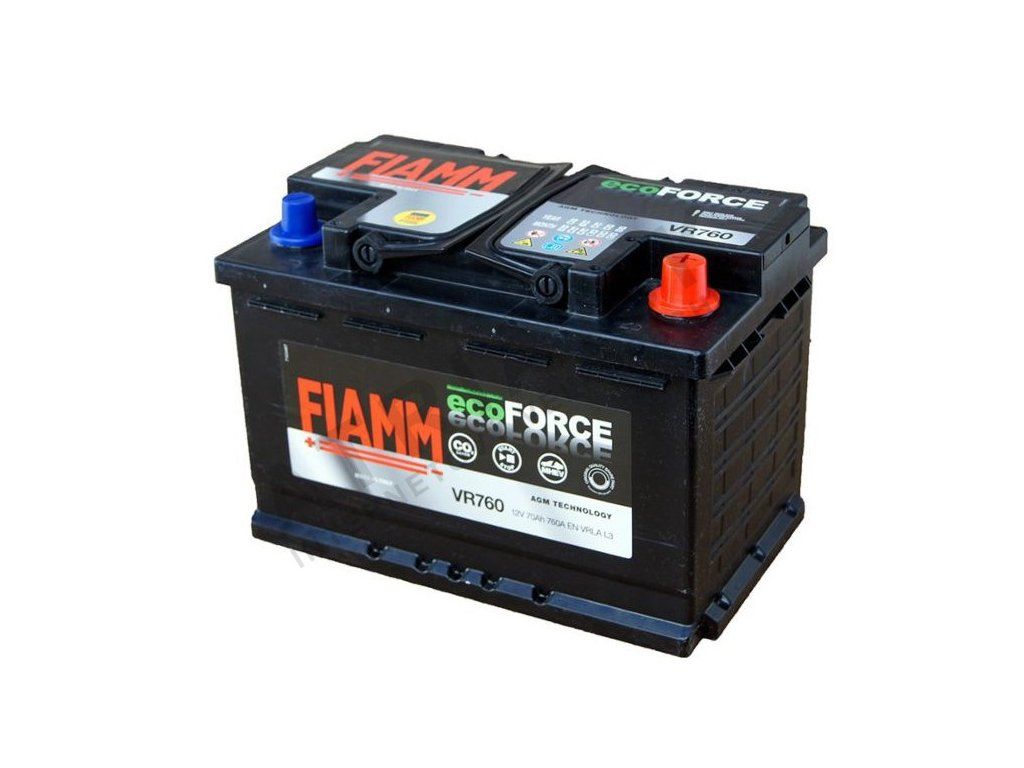 |
FIAMM ECOFORCE AGM VR 760 - an AGM battery suitable as a replacement for an existing backup source, when the original battery loses capacity after a few years and the runtime has noticeably shortened compared to the first months of operation. AGM technology tolerates deeper discharge better than classic lead-acid batteries. Price from 178.56 EUR. |
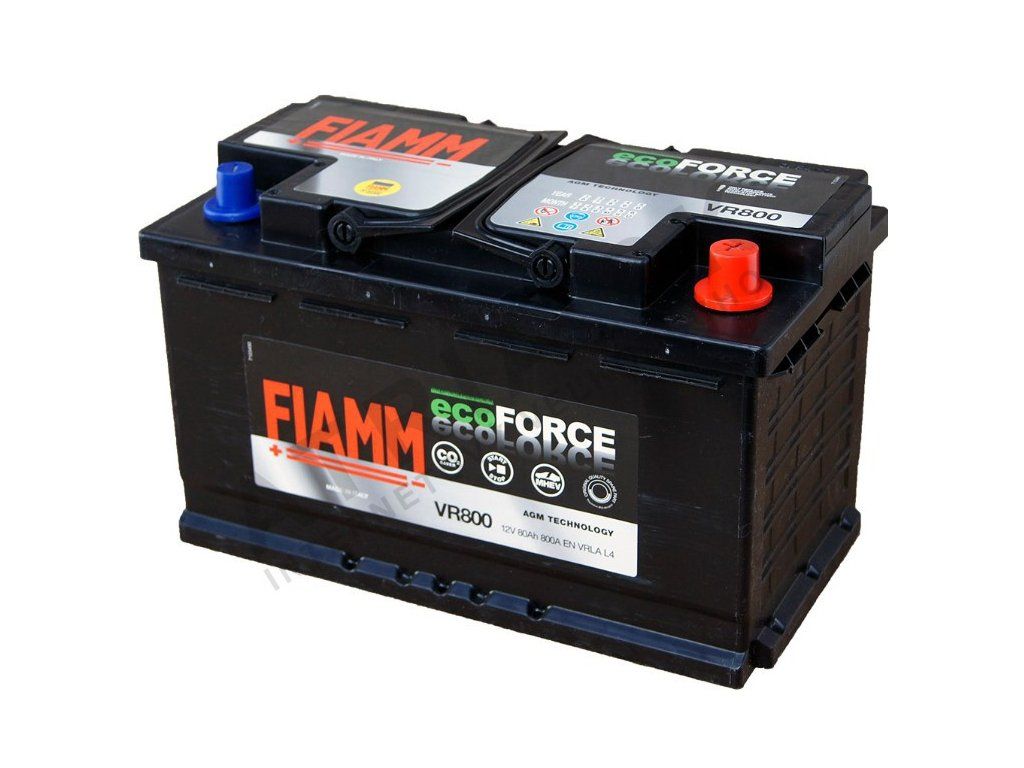 |
FIAMM ECOFORCE AGM VR 800 - one capacity class up from the VR 760, suitable if you want to extend the runtime without replacing the whole backup source - just its battery for a bigger one. The price difference is negligible compared to the cost of a whole new UPS system, while the runtime benefit can be on the order of tens of minutes up to an hour extra at the boiler's normal load. Price from 195.88 EUR. |
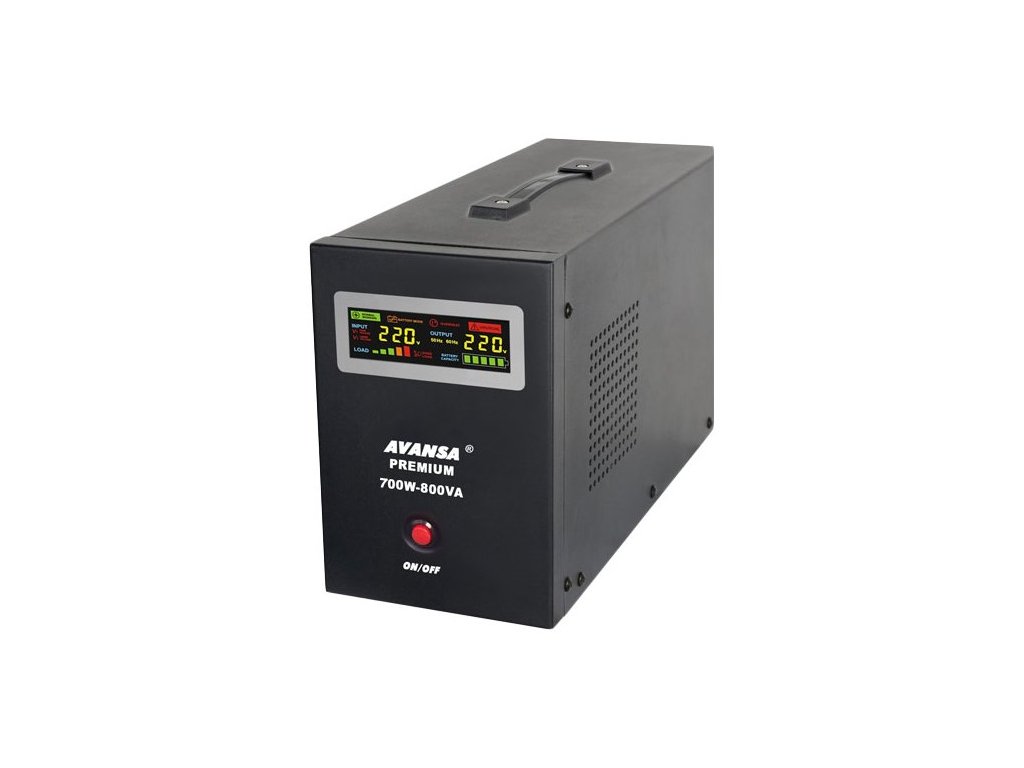 |
Avansa 1050 W - the most powerful of this trio, suitable if you plan to back up another household appliance besides the boiler itself (for example a router for the internet, or lighting in the boiler room), or if your boiler has a higher peak draw when the circulation pump and actuators start up at the same time. A higher power reserve tier means the source won't be at the edge of its limits even when several components start up simultaneously. Price from 385.33 EUR. |
AGM vs. LiFePO4 - a difference that affects runtime after years, not immediately
When buying a backup source you'll come across two main battery types - classic AGM (maintenance-free lead-acid batteries) and more modern lithium iron phosphate (LiFePO4). The difference in immediate runtime for the same stated capacity isn't dramatic, but the key difference is how long the battery holds onto its capacity over years of use.
In practical terms this means: an AGM battery bought today may, after two to three years of normal operation (including regular small discharges during occasional outages), only deliver 70-80% of its original runtime. A LiFePO4 battery holds onto a similar level of capacity for considerably longer, even at the cost of a higher upfront investment. If you plan to use the backup source long-term and outages aren't entirely rare where you live (for example in locations with more frequent mains fluctuations or a storm season), the higher initial price of a LiFePO4 solution can pay for itself precisely in not having to replace the battery prematurely in three years.
What shortens real runtime the most in practice
Besides the load itself, there are several factors that can reduce runtime much more than expected compared to the catalogue value.
Boiler room temperature
Both lead-acid and AGM batteries have optimal operating capacity around 20-25 °C. If the boiler room is cold in winter (for example an unheated cellar at around 5-10 °C), the battery's usable capacity drops - near freezing, an AGM battery's real capacity can be 20-30% lower than the value measured at room temperature. Paradoxically, it's exactly in winter, when a power outage hurts the most (frost, risk of freezing pipework), that a battery in a cold boiler room has worse runtime than in summer.
Battery age and condition
A battery wears out even when it's never fully discharged - the sheer number of trickle charge cycles (charging to 100%, small discharge, recharge) over the years gradually reduces the electrodes' capacity. Most manufacturers state a lifespan of 3-5 years for AGM batteries in backup sources under normal operation. After this period it's sensible to expect capacity reduced by tens of percent, even though the source still outwardly functions and the battery "holds voltage" with the load disconnected.
An incorrectly sized source
A common mistake is buying a backup source based on the boiler's average draw without a reserve for peaks. If a boiler has an average draw of 60 W, but briefly spikes to 250 W when the circulation pump starts up and an actuator opens at the same time, a cheaper, undersized source can overload at this peak and trip its protection completely - meaning the boiler is left without power right at the very first startup, before the battery's low runtime even has a chance to show up.
Irregular maintenance and testing
A backup source that's never actually been tested by disconnecting it from the mains for years may have a battery that's already partially or fully discharged without you knowing - until a real outage happens. It's recommended to actually test the source at least once every six months (for example by switching off the breaker briefly) and check whether the switchover happened smoothly and whether the battery status indicator shows the expected value.
How to extend real runtime without buying a bigger source
- Limit the simultaneous load. If the source backs up other devices besides the boiler (a router, lighting), consider whether you really need everything connected at once during an outage, or whether some devices can be disconnected, leaving the whole battery capacity for the boiler.
- Place the source in a tempered space. If possible, the boiler room shouldn't drop significantly below 15 °C in winter - this helps not just the backup source's battery but the boiler and pipework themselves too.
- Replace the battery preventively, not only after a failure. If a battery has been in service for 3-4 years, replacing it with a new one (for example a higher capacity class, like the difference between the VR 760 and VR 800) is worth doing while the old one still works, not after an outage catches you out with a nearly dead battery.
- Cut unnecessary idle-mode consumption. Some older control units have an unnecessarily high idle draw due to a permanently lit display or backlight - if it's adjustable, dimming or switching off these functions during an outage can extend the runtime by tens of minutes.
Backup source or generator?
A backup source with a battery is designed to bridge short and medium-length outages (on the order of minutes to a few hours) without any intervention from the user - the switchover is automatic and the boiler is practically unaware of it. A generator, on the other hand, can supply energy for an unlimited time (as long as it has fuel), but requires manual starting, operation, and usually also a brief power interruption while switching over, which the boiler may register as a mains outage. In practice these two solutions complement each other well - the backup source bridges the first minutes and hours automatically, and the generator takes over for longer outages, when there's time for manual intervention.
Frequently asked questions
Will a backup source last through a multi-day outage?
An ordinary backup source with one battery isn't designed to bridge multiple days - its job is to bridge short and medium-length outages (minutes to a few hours). For repeated or longer outages, the solution needs to be combined with a generator, or you need to count on several batteries wired in parallel.
Can I connect a second battery to a backup source to extend the runtime?
Most UPS systems for boilers allow a second identical battery to be connected in parallel, doubling the usable capacity and therefore the runtime. It's important to use batteries of the same type, capacity and, if possible, similar age - combining an old and a new battery reduces the lifespan of both.
How do I tell the battery in the source is nearing the end of its life?
The most reliable sign is a noticeably shorter runtime compared to what the source provided in its first year of operation - if a test outage that the source previously bridged without problems now causes a quick shutdown, that's a clear sign to replace the battery. Some sources also have their own diagnostics and signal the battery's condition with an indicator light or beeping.
Does it make sense to buy a backup source with more power than I need?
Yes, a reasonable reserve (for example 30-50% above the boiler's average draw) is a sensible investment, because it covers the short-term peaks when the pump and actuators start up, and the source won't constantly be working at the edge of its limits, which also extends its own lifespan.
Does the boiler type (gas, electric) affect the backup source's runtime?
Yes, significantly. A gas boiler only needs electricity for the control electronics, fan, ignition and circulation pump (on the order of tens to low hundreds of watts), while an electric boiler or an electric flow heater has its own heating element with a draw of several to tens of kilowatts - an ordinary backup source designed for a gas boiler isn't sized at all for backing up an electric heating element.
Does the backup source need to be switched off when there haven't been outages for a while?
No, the source is designed for continuous standby operation, during which it keeps the battery continuously charged. Disconnecting it from the mains for a long time is, on the contrary, harmful, since an uncharged battery gradually self-discharges and might not have sufficient capacity during a real outage.
Related topics
How to choose a backup source for a boiler
How much backup power do I need
Maintenance and replacement of a backup source battery
Backup power source vs. home generator
Backup power sources for boilers, pumps
Do you have a question on this topic?
Can't decide, or dealing with a specific situation in your household? Write to us - we're happy to help.