
Frequently Asked Questions About Backup Power Sources
A power outage in the middle of winter isn't just an inconvenience for lighting - it directly hits the operation of your heating. Most modern boilers, whether gas condensing or electric, need electricity for the control electronics, flue gas fan and circulation pump that distributes hot water to the radiators or underfloor loops. Without power the boiler simply stops, even if it has a full tank of gas or other fuel. That's exactly why more and more households and installation companies are asking about backup power sources - devices that can keep a boiler and pump running from a battery for a certain time after a mains outage. In this article we answer the most common questions we get on this topic - from the operating principle through choosing the right power to real runtime and maintenance.
How does a backup power source for a boiler actually work
The principle is actually simple and resembles how a computer UPS works, just sized for a different type of load. The backup unit is connected between the wall socket and the boiler (or directly between the socket and the circulation pump, if only that is being backed up). During normal operation, when mains voltage is fine, the device just continuously charges its internal battery and passes the mains voltage straight through unchanged. The moment the mains supply fails, the electronics inside the backup unit detect it within milliseconds and instantly switch the boiler's power supply to the internal battery via an inverter (the battery's 12 V DC has to be converted to the 230 V AC the boiler needs). The boiler typically doesn't notice this transition at all - it doesn't switch off, doesn't reset, and continues running exactly as if the power had never gone out.
It's important to understand that a backup power source doesn't solve the heat itself - that still comes from gas, electricity or another fuel depending on the boiler type. Only the electronics and the circulation pump are backed up, i.e. the part of the system that stops working immediately without power. On a gas condensing boiler this is usually the control unit, display, flue gas fan, ignition electrode and the circulation pump itself. With an electric boiler the situation is different, because it draws on the order of kilowatts just for heating the water, and an ordinary small backup source isn't enough there - more on that below.
How much backup power do I actually need
This is probably the most common question we deal with, and the answer depends on exactly what you want to back up. A typical wet-rotor circulation pump (Grundfos, Wilo or similar, fitted in almost every boiler) draws roughly 40 to 90 W during operation, in practice usually around 60 to 80 W. The electronics of a gas condensing boiler alone (control board, display, flue gas fan, ignition) draw on the order of 50 to 100 W while the burner is running, and a bit more at the fan's peak startup. So if we add the boiler electronics and the circulation pump together, the typical real draw of the whole assembly during heating is roughly 130 to 160 W. For simplicity, in this article we use an indicative value of 150 W as a typical total for an ordinary family house with one boiler and one main circulation pump.
Backup sources on the market are rated in VA or W (for an ordinary resistive and slightly inductive load such as a circulation pump, you can roughly count 1 VA as approximately 1 W). When choosing one we therefore recommend not buying a source sized exactly "to the limit" of the measured draw, but leaving a reserve of at least 30-50%, because electric motors (even a small circulation pump) briefly draw a higher inrush current at startup than their rated power. So if your assembly draws 150 W, it's sensible to choose a source with a rated output of at least 250-300 W, ideally more if you plan to back up something extra as well (for example an underfloor heating circulation pump upstairs).
That's exactly why higher-power ranges such as the Avansa 300 W, Avansa 500 W or Avansa 1050 W have proven themselves in practice - the number in the name directly states the power reserve the device can deliver, so it's easy to compare it with the actual draw of your boiler and pump.
What type of backup - UPS box, standalone battery, or both
On the market you'll basically find two approaches. The first is a ready-made compact solution like Avansa, where the battery and inverter sit together in one enclosure - just plug it between the socket and the boiler and you're done. The second approach is a standalone backup battery (for example from the FIAMM ECOFORCE range), which an expert connects directly to your boiler's existing inverter or control unit, or to a separately purchased inverter. This second method is used mainly where the boiler already has a built-in or additionally purchased inverter and only the battery needs replacing or reinforcing, or where it's a professional installation with higher capacity requirements.
For an ordinary household that simply wants to bridge an outage without modifying the boiler wiring, a ready-made solution like Avansa is usually the most practical, since it can be connected even by a layperson (into a socket) and there's no need to worry about matching an inverter to a specific battery. Standalone batteries such as FIAMM ECOFORCE AGM VR 760, FIAMM ECOFORCE AGM VR 800 or FIAMM ECOFORCE AFB TR 720 are, on the other hand, suitable when you need to replace a worn battery in an already-existing system, or when an installation company is designing a custom setup with a precisely defined inverter.
 |
Avansa 500 W - a compact ready-made solution with battery and inverter in one, suitable for a typical boiler + circulation pump assembly drawing around 150 W, with a decent power reserve. Price from 199.51 EUR. |
 |
Avansa 300 W - a smaller power tier in the same range, suitable especially if you're backing up only the boiler electronics without a larger pump, or as a cheaper entry point into backup power. Price from 177.64 EUR. |
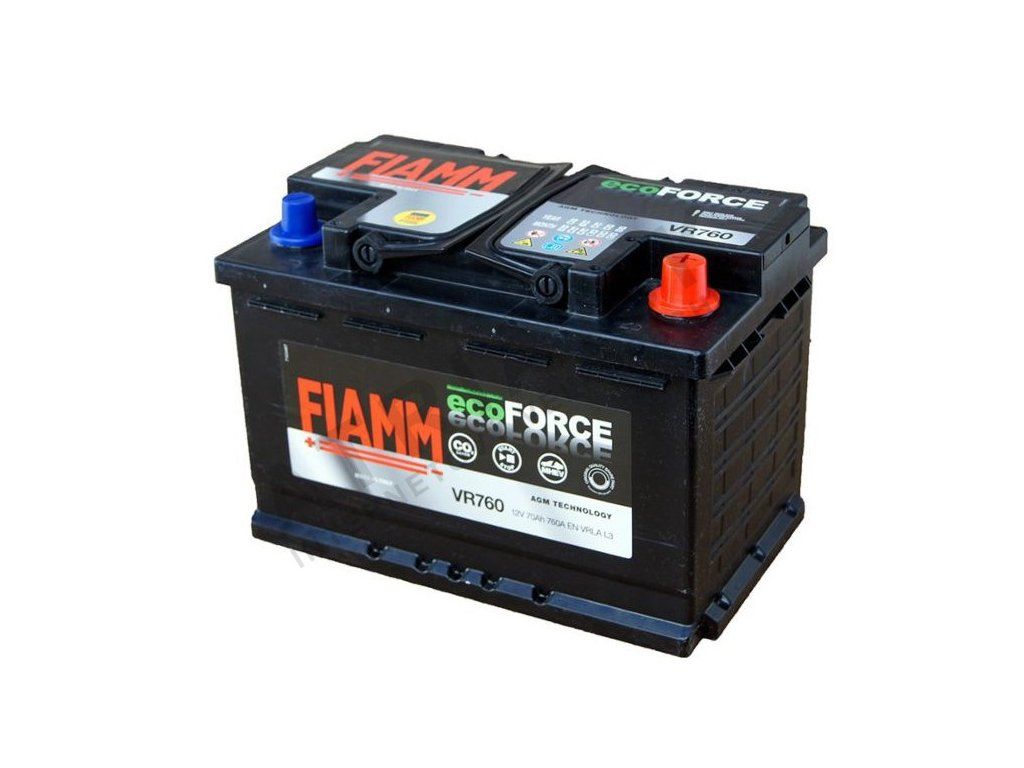 |
FIAMM ECOFORCE AGM VR 760 - a standalone AGM battery (maintenance-free, sealed construction) for an existing inverter, typically used when replacing a worn battery in a system that already has backup power. Price from 178.56 EUR. |
How long does a backup source last during a real outage
The runtime of a backup source depends on two things - the capacity of the battery inside the device and the actual draw of the connected appliances. The higher the draw, the faster the battery discharges, and vice versa. For a better idea, here's an illustrative calculation: if we had a battery with a capacity of roughly 80 Ah at 12 V (i.e. approximately 960 Wh of energy, of which, after subtracting inverter losses, roughly 700-800 Wh is actually usable), and a boiler assembly with a circulation pump drew our model figure of 150 W, such an assembly would last in theoretical continuous operation for roughly 5 to 6 hours.
In practice the actual runtime is usually somewhat longer, because the circulation pump and boiler electronics don't run at full power continuously - the boiler cycles the burner on and off, the pump may run at lower speed outside peak heating demand, so the average draw over the whole outage tends to be lower than the rated peak draw. The most reliable figure for your specific boiler comes from measuring the draw with a multimeter on site, or from consulting the installation company that fits the backup unit.
If you need to bridge a longer outage, for example a whole night or more, the solution is either a source with a higher internal battery capacity (such as a higher-power Avansa tier), or the option to add a second battery in parallel to the existing system - however, that's always a matter of the specific wiring, and we recommend consulting the installation company directly rather than attempting it yourself.
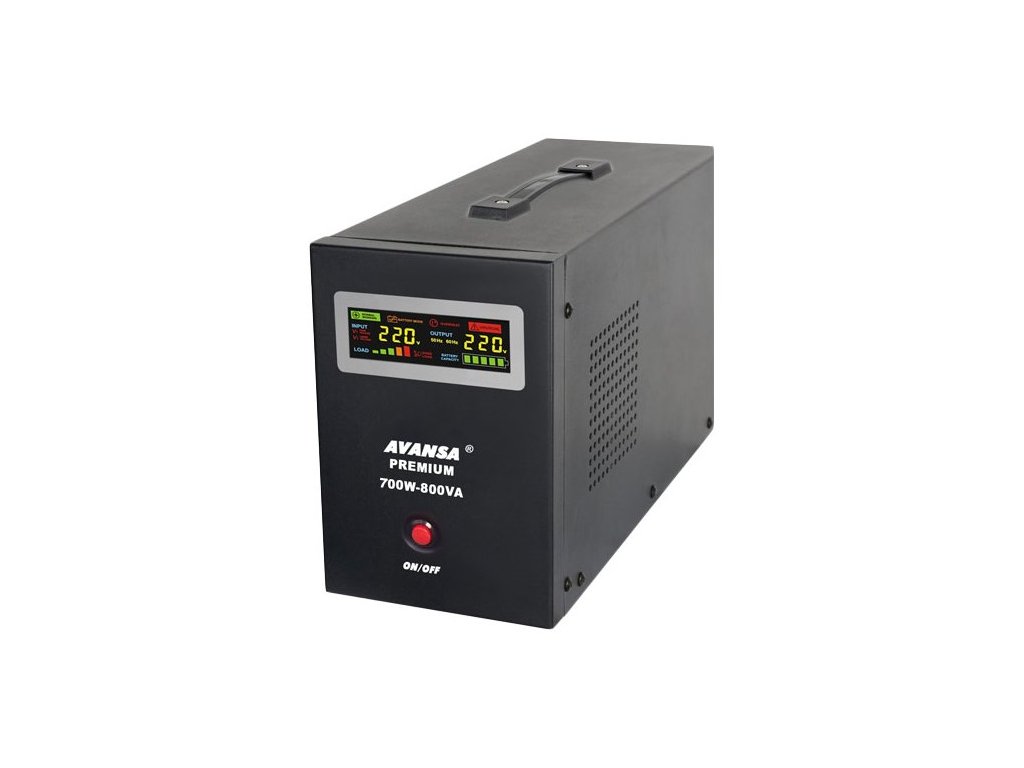 |
Avansa 1050 W - the highest power tier in the range, suitable if you're backing up several appliances at once (for example a boiler plus an underfloor pump on two circuits), or if you want a bigger reserve for a longer outage. Price from 385.33 EUR. |
AGM or another battery type - what matters
Batteries in backup sources for boilers are mostly lead-acid, sealed and maintenance-free - most often AGM (Absorbent Glass Mat) or gel technology. Compared to ordinary car batteries, they have the advantage of being designed for so-called cyclic, deep discharge (not for a short-term starting current like a car battery) and can be operated in any position without risk of electrolyte leakage, which matters especially if the source is placed in a utility room or boiler room close to other equipment. That's exactly why you commonly see the AGM designation right in the product name, as with the FIAMM ECOFORCE range.
The difference between individual models within the range (for example between the AGM VR 760 and AGM VR 800) is mainly in capacity and physical dimensions - the higher model usually offers somewhat greater capacity, i.e. a longer runtime at the same draw, but is also physically larger and heavier, which needs to be taken into account when choosing where to install it. The AFB type (for example AFB TR 720) has a somewhat different internal plate construction, which in practice is used mainly where more frequent and deeper battery discharge is expected, i.e. in locations with repeated longer outages.
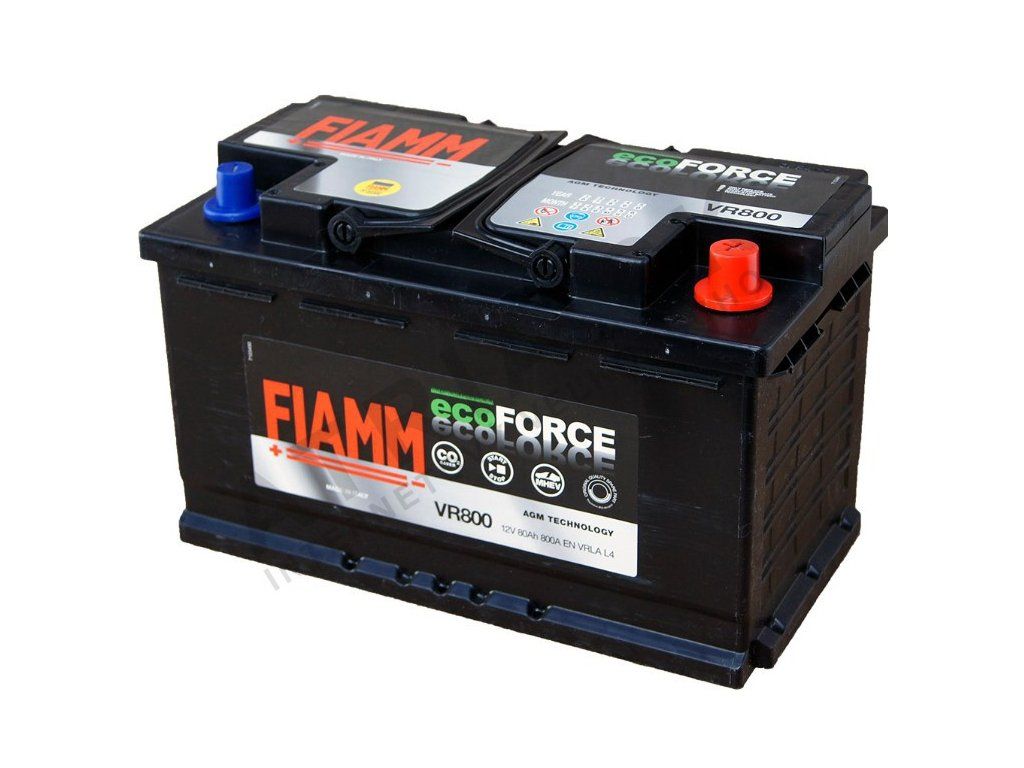 |
FIAMM ECOFORCE AGM VR 800 - a somewhat larger model in the AGM VR range, suitable if you need a longer runtime than the 760 model and have enough space in your utility room. Price from 195.88 EUR. |
 |
FIAMM ECOFORCE AFB TR 720 - a construction suitable especially for repeated deeper discharging, i.e. for locations with more frequent longer power outages. Price from 146.58 EUR. |
Installation - can it be connected yourself?
Ready-made compact sources like Avansa are usually connected simply - the source is plugged into an ordinary 230 V socket and the boiler (or the circulation pump's cable) is plugged into the output socket on the unit itself. Even a layperson without electrical training can manage this, since it isn't a modification to the wiring, just a rearrangement of how the appliance is plugged into the socket. Even so, we recommend checking the boiler's manual before the first connection to see whether the manufacturer requires a special power supply method (some boilers have a fixed supply cable without a plug, wired directly to a terminal block) - in that case a qualified electrician or the boiler's service technician needs to get involved.
If a standalone battery is being connected directly to an existing inverter or the boiler's control unit (typically with FIAMM models), that's already a modification to the electrical circuit, and we always recommend leaving it to a professional installation company or the boiler brand's service technician. Incorrect polarity, insufficient cable cross-section or missing fuse protection can damage the battery, the inverter, or in extreme cases even cause a fire.
Battery maintenance and lifespan
Even maintenance-free lead-acid batteries have a limited lifespan - with ordinary household use it's usually a matter of several years, and the exact number depends mainly on the temperature at the storage location (higher temperature shortens the lifespan), the number and depth of discharge cycles, and the quality of the source's charging regime. We recommend checking at least once a year (ideally in autumn, before the heating season) that the source really does switch the boiler to battery power and keep it running once disconnected from the mains - many devices have a dedicated button or test function for this. A battery that doesn't last even a fraction of its original runtime during the test needs to be replaced, since gradual capacity degradation is normal and expected for lead-acid batteries, not a fault.
When positioning the source, make sure there's adequate ventilation (batteries heat up slightly while charging), and that the device isn't exposed to direct sunlight or to frost below freezing - ordinary room temperature in a utility room or boiler room is ideal. Dust and moisture shorten the lifespan of the inverter's electronics, so it's worth placing the source away from splashing water and excess humidity.
If the battery stops fulfilling its function completely (for example the source switches the boiler off after an outage instead of keeping it running), it's usually enough to replace just the battery itself - the inverter and electronics remain functional. That's also one of the reasons why many customers buy a new battery separately for their existing source rather than replacing the whole unit.
What if I need to bridge an even longer outage - combining with a generator
A backup source with a battery is best suited to bridging short and medium-length outages, i.e. on the order of minutes to a few hours, or with a larger capacity even a whole night, as shown above. However, if outages in a given location repeatedly last longer than half a day (typically in more remote areas with overhead lines during storms or icing), a battery alone usually can't cover such an outage - it would simply need a disproportionately large and expensive capacity. In that case, combining two devices has proven itself in practice: the battery backup bridges the very first moments of the outage completely without any user intervention (the boiler doesn't even notice), while a home generator starts up in the meantime and takes over the supply for a longer period, running on fuel (petrol or diesel depending on the type).
This combined approach also has a practical advantage - the battery backup bridges the short moment until someone in the household manages to get to the generator and start it (at night, away from home, and so on), so the boiler doesn't stop working even for a few minutes in the meantime. When designing such a combination, we recommend consulting an electrician, also with regard to making sure the source and the generator don't interfere with each other when switching the load.
Frequently asked questions
Does a backup source also back up the gas heating itself, or just the electronics?
Only the electronics and the circulation pump. The heat itself still comes from gas or another fuel - the backup unit only ensures the boiler has power for its controls, fan and the pump that distributes heat through the heating system.
Does a backup source also work for an electric boiler?
For an electric boiler, which draws on the order of kilowatts just to heat the water, an ordinary small backup source such as the Avansa 300-1050 W isn't enough to cover the full heating output. In practice, backup power for electric boilers is therefore usually handled differently (for example by backing up only the control electronics, not the heating elements), and it's worth discussing this with the boiler supplier in advance.
How do I know the backup source has switched to the battery?
Most devices have an LED indicator or an audible signal (beeping) on the front panel when switching from mains to battery. We recommend checking this signal right after installation so you'll be able to recognise it during a real outage too.
Can I connect other appliances to the same backup source, for example a router or lighting?
Yes, as long as you don't exceed the device's rated output. Keep in mind, though, that every additional connected appliance shortens the real runtime for the boiler, since they all share the same battery capacity.
How often does the backup battery need to be tested or replaced?
We recommend a functional test (disconnecting from the mains and checking that the boiler keeps running) at least once a year, ideally before the heating season. The battery itself is replaced when the real runtime drops significantly compared to its original state - typically after several years of operation, depending on storage conditions.
Is a backup source noisy or does it take up a lot of space?
Ordinary ready-made solutions like Avansa are practically silent in operation (no fan during normal running) and are small enough to fit on a shelf in a utility room or next to the boiler. Standalone FIAMM batteries are compact sealed blocks that can be fitted into a smaller space alongside the inverter.
Related topics
How to choose a backup source for a boiler
How much backup power do I need
Backup power for a circulation pump
Maintenance and replacement of a backup source battery
You can find the complete range in the main category Backup power sources for boilers, pumps.
Do you have a question on this topic?
Can't decide, or dealing with a specific situation in your household? Write to us - we're happy to help.