
How to Choose a Backup Power Source for a Boiler
How to choose a backup source for a boiler
A power outage in winter can turn a warm house into a cold one within seconds. Most people think a gas boiler works even without electricity - after all, it's gas that burns, not electricity. The reality is different: a modern wall-mounted or floor-standing condensing boiler is essentially a small computer with a fan and a circulation pump. Without electrical power, the burner won't fire, flue gas removal won't be ensured, the circulation pump won't start, and the whole heating system stops - no matter how much gas is in the pipe. That's exactly why more and more family house owners and installation companies are asking how to choose a backup source for a boiler that works reliably, for long enough, and without unnecessary compromises.
This article is a practical buying guide - not a technical catalogue. The goal is that after reading it you'll be able to say what type of source, what capacity, and what type of battery you need specifically for your boiler, without having to study electrical engineering standards or call five different retailers.
Why a boiler needs backup power at all
In practice we see two types of boilers that rely on electricity differently:
A gas condensing boiler needs electricity for the control electronics (board, display, sensors), for the fan that extracts flue gases and supplies air to the combustion chamber, and for the circulation pump that pushes heated water to the radiators or underfloor heating. The gas itself only burns when the electronics allow ignition and the fan is running at the right speed. Without power, the boiler simply goes dark and stays idle, even if you have full gas pressure.
An electric boiler is completely dependent on electricity - there, no backup in the sense of "keeping the heat going" is possible; a backup source here makes sense more for briefly bridging the control electronics and circulation pump, not the water heating itself, which is too energy-intensive for an ordinary home UPS battery to cover.
The real consumption of an ordinary wall-mounted condensing boiler with a circulation pump, while the burner is running, is roughly in the range of 80 to 150 W. In quiet mode (no burner running, just electronics and standby functions) the consumption is considerably lower, on the order of tens of watts. We'll use these figures later in the article for capacity calculations too, so remember them - they're key to choosing correctly.
How a backup source for a boiler works - the principle
A backup source (often also called a UPS - Uninterruptible Power Supply, or simply a "backup unit" in catalogues) is connected between the electrical socket and the boiler. During normal operation it just passes the mains voltage through to the boiler while simultaneously charging an internal or external battery. The moment the power fails, the source switches to the battery within milliseconds and the boiler keeps running as if nothing happened - no restarting, no error message, no cooling down of the system.
The diagram below shows this logic in simplified form:
It's important to understand that a backup source doesn't solve a multi-day power outage - that's the domain of generators. It solves bridging ordinary short-term outages, lasting minutes to a few hours, which is the most common scenario in Slovak conditions (storms, line faults, planned shutdowns).
Types of backup sources by switching method
On the market you'll find three basic concepts, differing in switching speed and quality:
Offline (standby) source - the cheapest type, during normal operation the boiler is powered directly from the mains and the battery is "in reserve". During an outage it switches with a slight delay (on the order of tens of milliseconds). For most boilers this is sufficient, since the control electronics have their own capacitors that bridge this brief gap.
Line-interactive source - besides switching to battery, it can also continuously stabilise fluctuating mains voltage (for example undervoltage in rural areas). Recommended especially where the mains has a long-term unstable voltage, which also indirectly extends the boiler's lifespan.
Online (double conversion) source - the boiler is continuously powered from the battery, which is continuously recharged from the mains, so there's no interruption at all during an outage, not even a millisecond's worth. This is the most reliable but also the most expensive and less energy-efficient solution. For an ordinary household it's usually an unnecessary luxury, more justified for more sensitive industrial or medical applications.
For 95% of households with an ordinary gas condensing boiler, a good-quality offline or line-interactive source with a sine wave output is entirely sufficient - we'll get to that next.
Key parameters to look at
1. Output power (W / VA)
This is the first figure that has to fit. The source has to cover the boiler's peak consumption, including the inrush current of the circulation pump and fan, which is usually higher at startup than the steady-state consumption. If the boiler's normal operating consumption is 80-150 W, it's recommended to choose a source with a reserve - in catalogues you'll actually find product ranges labelled directly by output, for example 300 W, 500 W or 1050 W. For the boiler alone without other appliances, even a lower power tier is enough; a reserve is worth it especially if you plan to connect an underfloor heating circulation pump or a home router to the same source too, so you have visibility of the network even during an outage.
2. Output voltage waveform - pure sine vs. modified sine
This is the point where mistakes are most often made in practice. Cheap sources generate a so-called modified (stepped) sine wave instead of the pure sine wave the mains supplies. The control electronics of modern boilers (especially those with a frequency-controlled circulation pump) react unpredictably to such a waveform - from the pump humming disproportionately, through error messages, to a complete refusal to start up. For a boiler you should always choose a source with a pure sine wave output, even if it's somewhat more expensive. This is one of the most common causes of complaints, when someone buys "any old UPS" from an ordinary electronics shop instead of a source designed specifically for heating equipment.
3. Battery type and capacity
Battery capacity is stated in ampere-hours (Ah) at a given voltage (most often 12 V) or in watt-hours (Wh). It determines how long the source can power the boiler at a given consumption. When choosing capacity, it's key to have a real idea of your boiler's consumption (see above - 80 to 150 W while the burner runs) and how long you want to bridge a typical outage - for most households a sensible target is 3 to 6 hours.
4. Battery type - AGM vs. lithium (LiFePO4)
The traditional solution uses AGM (Absorbent Glass Mat) lead-acid batteries - maintenance-free, sealed, resistant to tipping over, affordable. A newer alternative is lithium LiFePO4 batteries - significantly lighter, with a longer lifespan in terms of charge cycles and better tolerance of partial discharge, but at a higher purchase price. A comparison of the main features of both types is in the diagram below.
For most households dealing with backup power for a boiler for the first time and wanting a proven, affordable solution, an AGM battery is still the most common and sensible choice. A lithium battery makes sense where space is limited, where frequent cycling is expected (for example repeated short outages several times a month), or where the buyer has a longer payback horizon in mind.
How to calculate the capacity you need - a practical example
The calculation isn't complicated if you know two figures: the boiler's consumption in watts and the desired backup time in hours. The formula is simple:
Required capacity (Wh) = boiler consumption (W) × desired backup time (h) ÷ source efficiency
The real system's efficiency (loss from converting the battery's DC voltage to AC for the boiler, plus charging losses) is usually around 80%, so use a coefficient of 0.8.
Worked example: a boiler with a consumption of 100 W (in the middle of our stated 80-150 W range), for which you want to bridge a 4-hour outage:
100 W × 4 h ÷ 0.8 = 500 Wh of required battery capacity.
If you compare this theoretical calculation with the real product ranges available on the market, you'll see why manufacturers label their setups directly by power and capacity tier - a range around 500 W is aimed exactly at the scenario "ordinary boiler, a typical outage lasting a few hours", while a range around 1050 W makes sense if you want to back up other devices too (for example zone pumps, a router, a circulation pump on another circuit) or extend the backup time at the same consumption.
Note: the runtime figures in the chart are an indicative calculation for a model boiler consumption of 100 W and a system efficiency of 80% - they're meant to compare the ranges against each other, not as an exact technical specification of a specific product. The real runtime always depends on your specific boiler's actual consumption, which you'll find in its technical data sheet (usually as the "electrical draw" or "electricity consumption" value).
Specific recommendations by household type
For an ordinary family house with one wall-mounted condensing boiler, aiming to bridge short-term power outages (storms, line faults), a compact source with an output of 300-500 W is a sensible starting point:
 |
Avansa 300 W - a compact backup source suitable for an ordinary boiler with lower consumption, where bridging an outage lasting a few hours is enough. A good choice for smaller flats or boiler rooms without space for a bigger setup. Price from 177.64 EUR. |
 |
Avansa 500 W - according to our worked example above (100 W boiler consumption, target 4 hours of backup), this corresponds exactly to the range that covers a typical household power outage without you having to worry about recharging overnight between outages. A versatile choice for most ordinary condensing boilers. Price from 199.51 EUR. |
If you plan to back up other appliances too (for example an underfloor heating zone pump, or your home network with a router, so you have visibility even during an outage), or want a longer backup time at the same boiler consumption, it's worth reaching for a more powerful range:
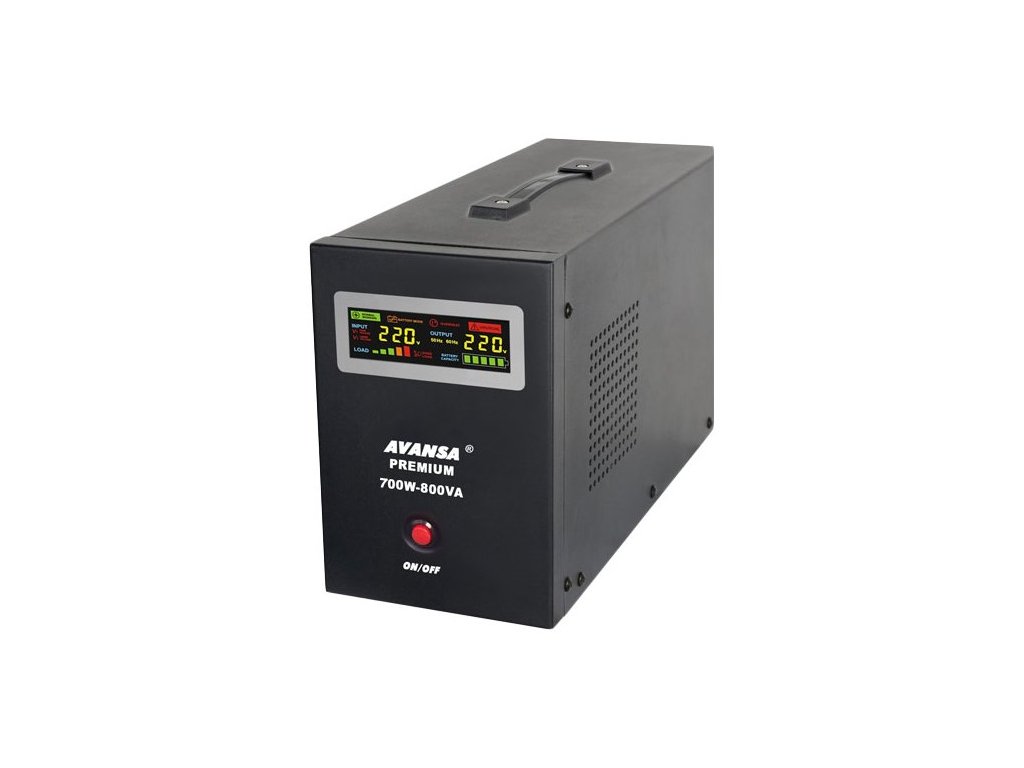 |
Avansa 1050 W - a more powerful setup for households with several backed-up devices, or a requirement for a longer runtime at the same boiler consumption. According to the indicative calculation above, at 100 W consumption it can bridge an outage of roughly around 8 hours, covering a longer evening or overnight outage too. Price from 385.33 EUR. |
Extending capacity with an external battery
If you have a source that supports connecting an external battery (common especially with the more powerful ranges), you can extend the backup capacity without replacing the whole source. For this purpose, good-quality AGM batteries from the automotive/leisure segment are commonly used in practice, since they're sufficiently rated for deep discharge:
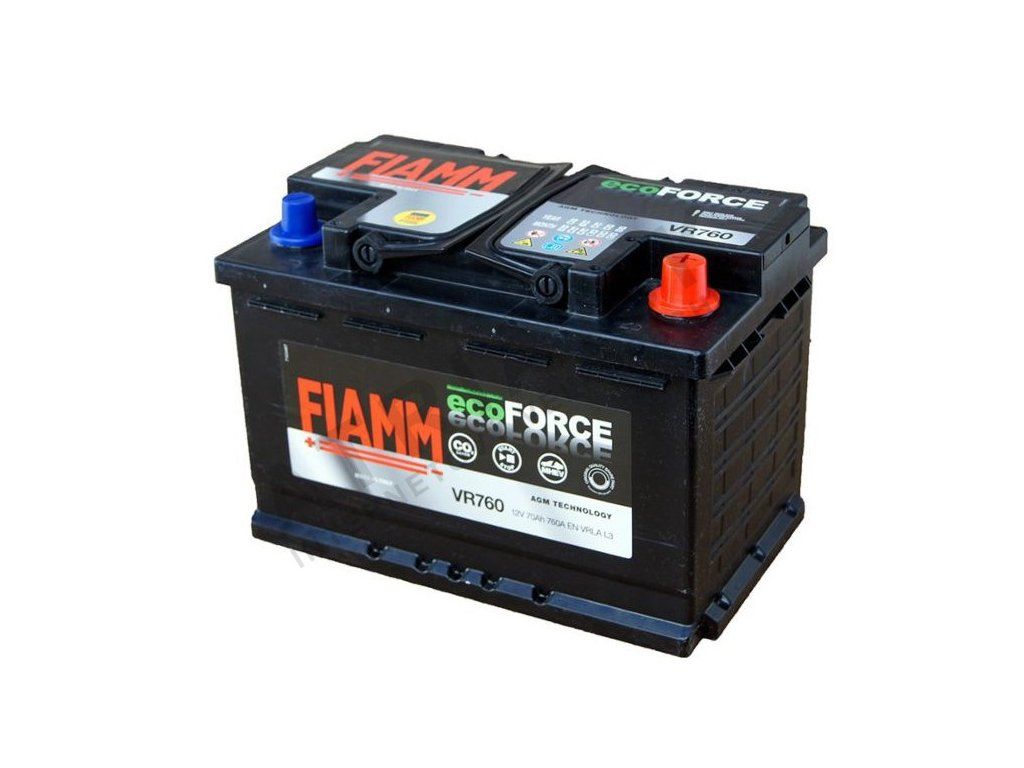 |
FIAMM ECOFORCE AGM VR 760 - a proven AGM battery suitable as an external power source for boiler backup systems that allow an external battery to be connected to extend runtime. AGM technology means maintenance-free operation and safe placement even in an enclosed boiler room. Price from 178.56 EUR. |
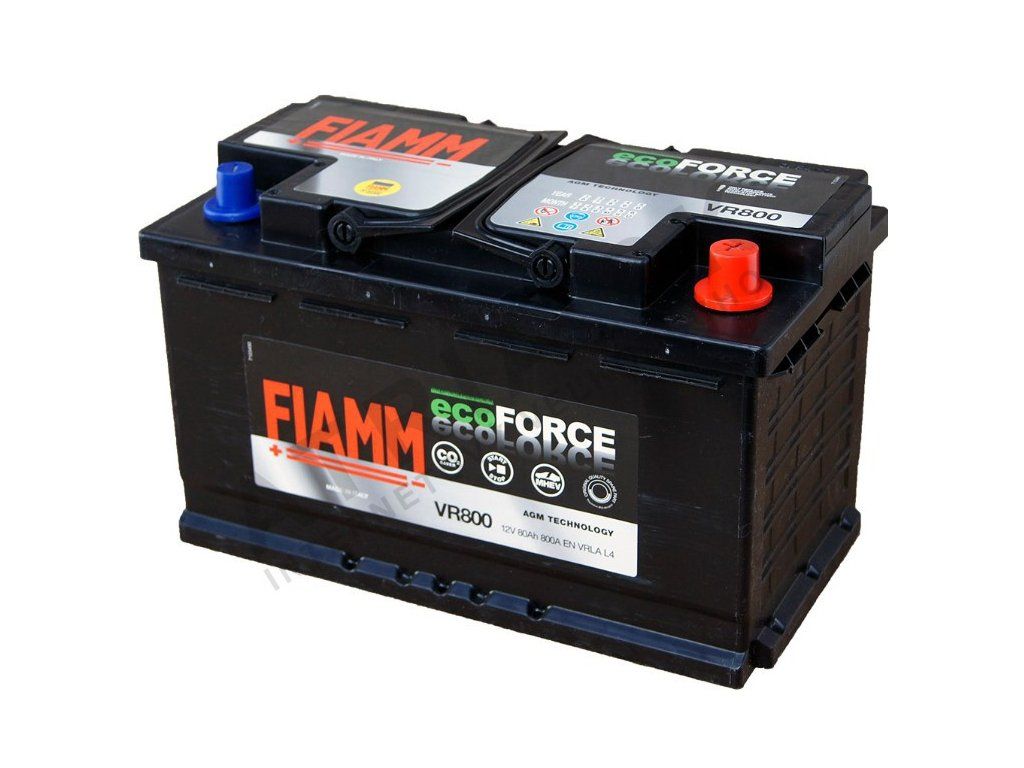 |
FIAMM ECOFORCE AGM VR 800 - a somewhat more powerful variant in the same AGM range, suitable if you need a slightly larger capacity reserve than the VR 760 model, for example for a boiler at the upper end of the stated consumption range (closer to 150 W). Price from 195.88 EUR. |
 |
FIAMM ECOFORCE AFB TR 720 - a more affordable alternative if you're looking for a compromise between price and capacity for less demanding backup needs, for example a boiler with lower consumption or a shorter desired backup time. Price from 146.58 EUR. |
For an overview of the price levels of the individual products mentioned above, see the following chart:
Common mistakes when choosing a backup source for a boiler
From installation companies' experience and customer questions, a handful of typical mistakes keep repeating:
Buying a cheap "universal" UPS without a sine wave output. As mentioned above, a modified sine wave can cause unstable operation of the circulation pump and error messages on the boiler. Always check that the product is explicitly designed for, or recommended for, boilers and heating equipment.
Underestimating the inrush current. A source whose rated output is measured exactly at the edge of the boiler's average consumption can struggle when the circulation pump starts up, when the inrush current is briefly higher. A power reserve pays off.
Forgetting to check the battery regularly. Even a maintenance-free AGM battery loses capacity over time. It's recommended to check the state of charge and functionality of the backup once a year (typically before the heating season), ideally with a short test - unplugging it from the socket for a few minutes and verifying the boiler keeps running without interruption.
Placement in an unsuitable environment. Both the batteries and the electronics of backup sources have their operating temperature range - a boiler room or utility room at a reasonable temperature is more suitable than, for example, an unheated garage with significant temperature swings that shorten the battery's lifespan.
Connecting several devices without doing the sums. If you plan to connect the boiler along with other appliances (a router, a circulation pump on another circuit) to one backup source, their combined consumption has to stay within a safe margin below the source's maximum output - otherwise you risk the source not being able to start the boiler at all during an outage.
Installation and connection - briefly
Connecting a backup source itself is, in most cases, straightforward - the source is connected between the socket and the boiler's power cable, or permanently connected to the boiler room's wiring. For boilers with a fixed supply (without a plug), or for more complex setups with an external battery, we recommend leaving the connection to an electrician or service technician, especially for correctly sizing the fuse and earthing. A detailed step-by-step procedure, including typical connection mistakes, can be found in the separate article on installing and connecting a backup source (link below in the Related topics section).
Summary - what to focus on when choosing
If there are only a few points to remember from this whole article, let them be these: find out your boiler's real consumption (typically 80-150 W while the burner runs), choose a source with a pure sine wave output, allow for a sensible reserve in both output and capacity, choose an AGM battery as a proven, affordable option (or a lithium one if you have a higher budget and need lower weight or a longer lifespan), and actually test the backup once a year. A correctly chosen backup source doesn't cost much, but at the moment of a power outage in freezing weather it can save not just your nerves but also potential damage caused by frozen pipework.
Frequently asked questions
Is a backup source enough for an electric boiler too, not just a gas one?
With an electric boiler the situation is different - heating the water itself is so energy-intensive that an ordinary home battery couldn't cover it for a meaningful time. A backup source for an electric boiler makes sense more for briefly bridging the control electronics and circulation pump, not for proper heating during an outage.
How long will the boiler run on battery during an ordinary outage?
It depends on the boiler's consumption and the capacity of the chosen source. In the worked example with a boiler consuming 100 W and a 500 W range, the runtime comes out at roughly 4 hours; with the more powerful 1050 W range it's indicatively around 8 hours. You can calculate the exact figure for your boiler using the formula given above in the article.
Does the backup source need a sine wave output, or is a cheaper type enough?
For a boiler, yes, a sine wave output matters. A modified sine wave can cause unstable operation of the circulation pump and error messages from the electronics. Investing in a source with a pure sine wave pays off and prevents unnecessary complaints.
Is AGM or lithium the better battery?
Both technologies are maintenance-free and suitable for boiler backup sources. AGM is a more affordable, proven choice for most households, a lithium (LiFePO4) battery is lighter, tolerates more charge cycles and partial discharge better, but at a higher price. The choice depends on your budget and the specific installation conditions.
Can the backup source's capacity be extended later?
For some ranges of backup sources, yes - if the model supports connecting an external battery, you can increase the backup capacity by connecting another AGM or lithium battery without needing to replace the whole source. Check this option directly for the specific model before buying.
How often does a backup source need checking or testing?
It's recommended to check the battery's state of charge at least once a year, ideally before the start of the heating season, and to actually test the backup's functioning with a short disconnection from the mains. Batteries naturally lose capacity over time, even when maintenance-free.
Related topics
How much backup power do I need
Installing and connecting a backup source
How long does a backup source last during a power outage
Maintenance and replacement of a backup source battery
Backup power sources for boilers, pumps
Do you have a question on this topic?
Can't decide, or dealing with a specific situation in your household? Write to us - we're happy to help.