
Why a Backup Power Source Matters for a Boiler
Why a backup power source matters for a boiler
When the power goes out, most households first think of the lights, the fridge or the internet. The boiler, though, thinks of itself at that moment - and in a way that usually only becomes apparent a few hours later, when the flat or house is noticeably colder and only cold water comes out of the tap. Both gas and electric boilers simply don't work without electricity, no matter how much gas is in the pipe or how much fuel is in the tank. This trait of modern boilers surprises a lot of households at exactly the worst moment - during a freezing winter night, when the power goes out for several hours because of a storm, a network fault or a planned outage.
In this article we explain why a boiler depends on electricity more than most people would think, exactly what draws power inside it, what risks a longer outage brings, and how a backup power source (a UPS or backup battery) can solve this problem. This is a practical look from the perspective of someone deciding whether they need a backup source or not - not a sales pitch.
Why does a boiler need electricity at all
Many people associate a boiler purely with gas, wood or electricity as the heat source, but forget that even a purely gas-fired boiler needs electricity just to be able to produce heat and distribute it around the house at all. Electricity in a boiler isn't used to heat the water - that's done by the burner or an electric element - but to control and drive the whole system. Without it, the system simply stops, even if you have a full tank of gas or pellets right up to the ceiling.
In most common household boilers (gas condensing boilers, electric boilers, and many solid-fuel boilers with forced draught), electricity powers three key groups of components:
- Control electronics and display - the brain of the boiler, which evaluates temperatures, runs the weather-compensation control, communicates with the room thermostat and decides when the burner or heating element should work. Typical consumption of this part is around 20 to 35 W.
- Circulation pump - ensures the heated water actually flows to the radiators or underfloor heating. Without the pump the heat would stay inside the boiler and go nowhere. A typical modern circulation pump draws roughly 40 to 90 W depending on output and the set speed stage.
- Fan (on condensing boilers) - provides forced removal of flue gases and air supply to the combustion chamber. Without it the burner won't start at all, for safety reasons. The fan can briefly draw up to 70 to 100 W at startup.
Adding these numbers together, an ordinary condensing boiler in operation can draw roughly 150 to 200 W in total at peak (for example when the burner starts, with the pump and fan both running at once), while in a quieter mode (just circulation and electronics) it's usually around 60 to 120 W. These are relatively small values compared to, say, an electric kettle, which is exactly why backing up a boiler is realistically achievable even with a smaller, affordably priced source - unlike trying to back up, say, an entire household including an electric cooker.
The following diagram summarises roughly how much each part of the boiler draws and what the typical peak consumption of the whole system is at startup:
What happens when the power goes out
A boiler's reaction to a power outage is instant and uncompromising - the moment the electricity supply is interrupted, everything switches off: the burner, the pump and the fan, regardless of the outdoor temperature or how much heat is still left in the system. After a power cut the boiler doesn't even remember exactly what state it was in - once power returns it goes through its own safety start-up sequence (pressure check, air venting, burner ignition sequence), which can take a few minutes.
The practical impact of an outage differs depending on its length and the time of year:
- Short outage (a few seconds to minutes) - typically when switching between branches of the distribution network. The boiler restarts on its own, the impact is only a minor temperature fluctuation, practically unnoticeable.
- Outage lasting tens of minutes to hours - typical during a storm, a fallen tree on the line, or a transformer fault. The interior gradually starts to cool, in winter at a rate of roughly 1 to 3 °C per hour depending on the house's insulation. Domestic hot water also stops being heated.
- Longer outage (several hours, overnight) - in freezing weather there's a real risk of the indoor temperature dropping to the point where pipes may freeze, especially in unheated spaces (boiler room, hallway, outer walls). This is exactly the scenario where a backup source stops being a "convenience" and becomes protection for your property.
It's important to realise the problem isn't just about comfort. A frozen and subsequently burst pipe can cause damage running into thousands of euros once it thaws - significantly more than any backup source in this article costs. It's also worth remembering that many safety devices and alarm systems in the house (for example water-leak sensors, if part of the boiler room system) may also depend on electricity, so a power outage can "switch off" the very protection that would otherwise warn you about a problem.
The following diagram simplifies the chain of events from a power outage to the possible consequences, and shows exactly where a backup source enters that chain:
What type of backup source makes sense for a boiler
On the market you'll commonly find two categories of solution, and it's important to know what to realistically expect from each:
- Small UPS (a sine-wave power source, plugged into a socket) - suitable mainly for the boiler's electronics and a smaller circulation pump. The advantage is a low price and simple connection (just connect the boiler through the UPS instead of directly into the socket), the disadvantage is limited runtime, usually on the order of tens of minutes to a few hours depending on battery capacity.
- Larger backup source / portable power station with a more powerful battery - can easily handle even a condensing boiler's fan and provide a runtime of several hours, which is exactly the scenario needed for real multi-hour outages in winter.
The key feature to look out for when choosing a backup source for a boiler is a pure sine-wave output voltage. Cheaper sources with a modified sine wave can power simple electronics, but with more sensitive boiler control boards (especially modern condensing boilers with a frequency-controlled fan) they can cause error messages, sensors malfunctioning, or in a worse case even damage to the electronics over a longer period. It's therefore better to reach for a source designed specifically for sensitive electronics, not the cheapest solution off the shelf.
When choosing a specific type of battery for a backup system (for example if a customer is building their own solution with a separate inverter and battery), AGM-type batteries are commonly used in practice - they're maintenance-free, don't require topping up, and tolerate partial discharge without rapid degradation, which is exactly the type of operation that occurs during an occasional mains outage.
Recommended products
Below are three specific solutions from our range that are commonly used for this purpose - from a standalone backup battery designed for charging within a backup system, to a compact portable power station that can be connected directly to the boiler.
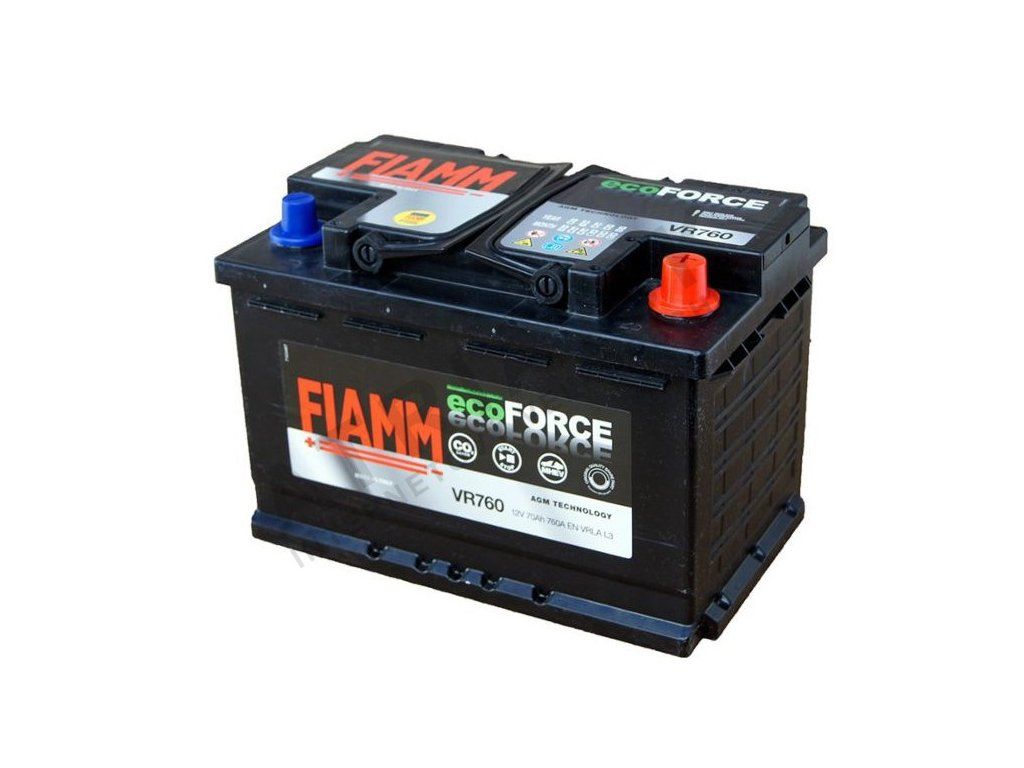 |
FIAMM ECOFORCE AGM VR 760 - a maintenance-free AGM battery suitable as a backup energy source for a boiler's backup system, tolerating repeated partial discharge during mains outages without rapid capacity loss. Price from 178.56 EUR. |
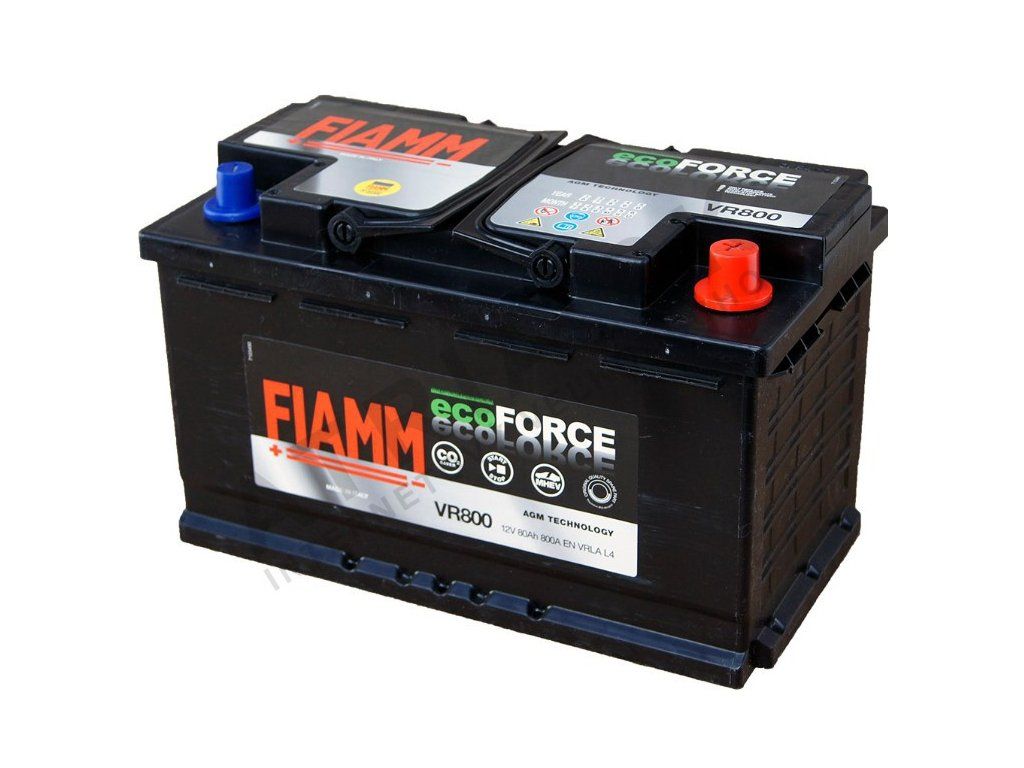 |
FIAMM ECOFORCE AGM VR 800 - somewhat higher capacity than the VR 760 model, suitable especially where you want a reserve for longer outages or simultaneous power for both the pump and the boiler electronics. Price from 195.88 EUR. |
 |
Avansa 500 W - a compact portable power station with a sine-wave output that can be connected directly to the boiler without needing to build a separate backup system with an inverter. Suitable as a simple "out of the box" solution for both the electronics and the circulation pump. Price from 199.51 EUR. |
For households that also want to back up the more powerful fan of a condensing boiler, or need a longer runtime (for example with repeated outages in a more remote location), a larger station such as the Avansa 1050 W (price from 385.33 EUR) is more suitable, providing a significantly higher reserve of both power and capacity.
How to calculate the runtime you need
The practical calculation is simpler than it looks. If you know your boiler's approximate consumption (typically 60 to 120 W in quiet mode, briefly up to 150-200 W when the burner starts) and you know the backup source's capacity in watt-hours (Wh), you can estimate the indicative runtime with a simple division: capacity in Wh divided by average draw in W = number of hours of operation.
In practice this means a smaller backup station or UPS can bridge a short to medium-length outage (typically up to one or two hours at full load, longer if the boiler mostly just maintains temperature without starting the fan), while a more powerful station or a pair of backup batteries in the system can bridge even an outage lasting a whole night.
An indicative comparison of backup source categories by typical runtime at an average boiler draw of around 80 W is shown in the following chart:
These figures are indicative, and the real runtime always depends on the specific battery capacity, the inverter's efficiency, and how often the boiler starts the burner during the outage (starting the burner briefly increases the draw because of the fan and pump startup). For a more precise calculation for your specific boiler model, we recommend checking the consumption label on the boiler itself or its technical documentation.
Comparison: UPS vs. a home generator
Some customers consider a home generator instead of a backup source. Both approaches have their place, but they address somewhat different situations:
A more detailed comparison of both solutions, including when it's worth combining the two approaches, can be found in the separate article Backup power source vs. home generator.
Practical experience from ordinary households
In practice we most often see two types of situations where a household gets a backup source. The first is a family house in the countryside, where the electrical network is more prone to outages during storms or strong wind - in such locations outages lasting hours aren't unusual, especially in winter months during ice on the lines. The second is a situation where a household has experience with a planned outage from the distribution company, which they know about in advance, but doesn't want to deal with a cold house and cold water for the whole day of maintenance work. In both cases the common denominator is that the intervention itself is fairly simple - the backup source is connected between the socket and the boiler's power cable, or directly into the boiler room wiring, and at the moment of an outage it takes over the power supply automatically (with better-quality UPS units the switching time is on the order of milliseconds, so the boiler doesn't even register a restart). With larger portable stations, manual connection is sometimes preferred, since they're often also used for other purposes in the household, not just for the boiler.
An important note that's occasionally underestimated in practice: a backup source solves a power outage, not a gas outage or a fault in the boiler itself. So if there's a gas outage (for example due to a fault in the public supply), a backup source will keep the boiler "powered", but without fuel the burner still won't start. Similarly, a backup source doesn't replace regular servicing - if the boiler has some other fault, electricity won't help it.
What to watch out for when connecting it
When installing a backup source, it's worth following a few principles that prevent unnecessary complications:
- Check the maximum power the source needs to handle - you need to account for the peak draw when the burner starts (up to 150-200 W), not just the average draw in quiet mode.
- Prefer a source with a pure sine-wave output, especially for condensing boilers with a frequency-controlled fan.
- Place the source in a dry, ventilated spot away from direct exposure to moisture, which tends to be higher in boiler rooms.
- Check the battery's condition regularly - even backup sources have a limited lifespan, and the battery gradually loses capacity, which shows up as a shorter runtime during an outage, exactly when you need it most.
- If you're unsure about the correct connection, especially for a fixed connection to the boiler room system, leave the installation to a professional installation company.
A detailed step-by-step connection procedure, including recommendations for different boiler types, can be found in the article Installing and connecting a backup source.
Frequently asked questions
Do I need a backup source for a solid-fuel boiler too?
Yes, if the boiler has forced draught (a fan) or electronic combustion control. Even wood or pellet boilers with automatic feeding need electricity to run the feed auger, the fan and the control unit - without power the combustion process stops automatically, just as with a gas boiler.
Is a small computer UPS enough, or do I need a specialised source?
An ordinary computer UPS may work for the electronics alone, but with a higher draw (circulation pump, fan at startup) it can quickly overload or shut down via overload protection. For reliable backup of the whole boiler, it's better to choose a source or backup station with sufficient power reserve and a pure sine wave, like the solutions described above in this article.
How long does a backup source last during a power outage?
It depends on the source's capacity and the boiler's average consumption. As a rough guide: smaller solutions bridge around 1 hour, medium-sized stations 3 to 4 hours, more powerful stations even 8 to 10 hours at a draw of around 80 W. A more precise estimate and calculation method can be found in the article How long does a backup source last during a power outage.
Can I connect a backup source myself, or does an electrician have to do it?
Simple solutions like a portable backup station, which just plugs into an ordinary socket between the source and the appliance, can be connected by most users themselves. However, if it's a fixed connection to the boiler room wiring or a connection involving multiple batteries and an inverter, we recommend leaving it to a professional company, which can also verify that the connection complies with safety regulations.
Will a backup source affect the boiler's warranty?
Simply connecting the boiler through an external backup source into a socket doesn't normally affect the warranty, since it doesn't involve any modification to the boiler itself. If in doubt, it's worth consulting the boiler manufacturer or service partner directly, especially if it involves modifying the internal wiring.
Is a backup source worth it even in a city, where power outages aren't common?
Yes, even in an urban environment unplanned outages (a transformer fault, network maintenance work) as well as planned shutdowns occasionally occur. Since the purchase price of a smaller backup solution is relatively low compared to the risk of a cold flat or a damaged pipe, many households consider it a reasonable insurance policy even in locations with a low frequency of outages.
Related topics
How to choose a backup source for a boiler
How much backup power do I need
Backup power for a circulation pump
Maintenance and replacement of a backup source battery
You can find the complete range of backup sources, batteries and accessories in the main category Backup power sources for boilers, pumps.
Do you have a question on this topic?
Can't decide, or dealing with a specific situation in your household? Write to us - we're happy to help.