
Backup Power Source for a Circulation Pump
A power outage lasting a few seconds causes no problem for most households. The fridge survives it unharmed, the wifi router restarts on its own, and the lights come back on as soon as power returns. With a heating system, though, it's different. The boiler stops working instantly, and along with it the circulation pump that distributes hot water to the radiators or underfloor heating also stops. If the outage lasts only a few minutes, nothing happens. But if it lasts hours and it's freezing outside, it can mean a much more serious problem - frozen pipes, a damaged boiler heat exchanger, or a cold house to come home to after work. That's exactly why more and more owners of family houses, cottages and smaller premises are addressing a separate power backup specifically for the circulation pump, independent of whether the boiler itself has its own backup source.
In this article we explain why a circulation pump is, from the point of view of a power outage, often more vulnerable than most people think, how to calculate the backup power and capacity you need, and using specific products we show which solution suits an ordinary family house and which suits a more demanding installation with several circuits.
Why a circulation pump needs its own backup
Many customers mistakenly think that if they have a boiler with a backup source, or if the boiler has its own battery for the control electronics, powering the circulation pump is automatically taken care of too. In practice this often isn't the case. Some boilers have an internal backup source really only for the control board and display - the boiler's "brain", not the pump itself, which has its own power circuit and usually its own fuse in the distribution board too. With installations where the circulation pump is powered separately (for example underfloor heating with its own manifold and circulation pump outside the boiler, or a combination of a boiler plus a solar system with a second circulation pump), the boiler's backup doesn't cover the pump that physically distributes water around the house at all.
The second reason is physical. Even if the boiler stays "on standby" during an outage thanks to its own backup battery, without the circulation pump the hot water from the heat exchanger has nowhere to go. Water in the exchanger overheats, pressure rises, the pressure relief valve may start releasing water, and with repeated outages this unnecessarily stresses the boiler's seals and components. Put simply - a boiler without a pump during a power outage is like a heart without the vessels that circulate blood. That's why it's most reliable to treat backing up the pump as a separate, clearly defined problem, even if the boiler already has its own backup.
Risk of the system freezing
This risk mainly concerns the transitional season and winter. If a power outage occurs during hard frost and lasts several hours, water in pipework running through unheated spaces (for example a garage, an attic, a poorly insulated utility room, or outdoor pipework to a separate building) can start to freeze. Frozen water in a pipe expands in volume, and in a worse case a joint or the pipe itself bursts. Repairing such damage then costs hundreds of euros, and it always comes at the worst possible moment - in the middle of winter, when the system needs to be back up and running as fast as possible.
Risk of boiler damage and discomfort at home
Besides freezing, there's also a risk of the boiler itself wearing out faster from repeated outages without backup for the pump - frequent thermal shocks in the heat exchanger shorten its lifespan. And finally there's the simple comfort issue: a house without heating on a freezing day cools down surprisingly fast, especially in more modern, well-insulated but less massive buildings, which lack the thermal inertia of old masonry houses. Coming home to a cold house after an outage that may have lasted only three or four hours during a working day isn't a pleasant experience - and reheating the rooms back to their original temperature can take a whole night.
How a backup source for a circulation pump works
The principle is simple and the same one we know from ordinary computer UPS units, just adapted for a higher and longer-lasting draw. A backup source (often also called a UPS - Uninterruptible Power Supply) is connected between the mains and the circulation pump (or possibly also the boiler's control electronics). During normal operation, electricity just "passes through" it while simultaneously charging an internal battery. As soon as the mains fails, the source registers it within milliseconds and switches the pump's power supply to the battery without interruption, via a built-in inverter that converts the battery's DC voltage into the 230 V AC the pump needs.
Below is a simplified wiring diagram of how this is done in practice for a typical family house installation.
An important feature of good backup sources is precisely this "no interruption" - the switchover happens so fast (typically within a few to a few tens of milliseconds) that the pump's or boiler's electronics don't register it as an outage and there's no restart or error message. Cheaper solutions (for example an ordinary car battery with an inverter wired up manually) may not handle this switchover as smoothly, which is why in practice a comprehensive UPS-type solution with automatic switching and charging is recommended over an improvised setup.
How much backup power you actually need
The basic mistake we see most often when advising customers is buying backup power "by eye" - either needlessly oversized, or the opposite, undersized to the point where the pump's startup (the inrush current can briefly be two to three times the rated draw) simply trips the source's protection and shuts it down. The calculation itself is fairly simple and can be done in a few minutes with the pump's rating plate in hand.
The first step is to find the circulation pump's actual draw. You'll find it directly on the pump's rating plate, usually as "P1" or just a value in watts. In practice we see two typical categories:
- Older asynchronous (classic) circulation pumps - typically 45 to 90 W, in many older family houses in Slovakia the most common value we see is around 60 W.
- Modern electronically controlled pumps (EC/ECM technology) - thanks to automatic speed control according to the system's need, their consumption is usually only 5 to 45 W, with a typical operating value around 20 to 25 W.
The second step is to add the draw of the boiler's control electronics, if the backup is meant to cover it too - the board, fan and display usually take another 5 to 15 W, in reality most often around 10 W. So if we count on a typical older pump (60 W) and the boiler electronics (10 W), the total continuous draw comes out at roughly 70 W. With a modern EC pump (25 W) and the same electronics (10 W), it's only around 35 W.
The third step is to add a safety reserve of at least 30% for the inrush current mentioned above and for the battery ageing over the years (both capacity and output decline slightly with age). At a continuous load of 70 W, the recommended minimum backup output comes out at around 91 W - in practice this means even the entry-level 300 W model provides a comfortable reserve for an ordinary simple setup with one pump. A higher output (500 W and above) is worth it when you plan to back up several appliances at once - for example the circulation pump, the boiler electronics, the underfloor heating manifold's motorised valves, and possibly also emergency lighting in the boiler room.
The whole procedure is summarised clearly in the following step diagram.
How long the backup lasts - calculating battery capacity
The backup's output (watts) tells you what it can power at once. The battery's capacity (ampere-hours, Ah) tells you how long that lasts. These are two different quantities and need to be addressed separately when choosing. We convert the battery capacity in ampere-hours into energy in watt-hours with a simple formula: capacity (Ah) times voltage (12 V) = energy (Wh). We then divide this energy by the appliance's continuous draw and multiply by the inverter's efficiency (in practice usually around 85%, since some energy is converted into heat), giving us an indicative backup time in hours.
To illustrate, we'll use three specific AGM batteries from our range that are commonly used exactly for this kind of backup - the FIAMM ECOFORCE AGM VR 760 (76 Ah), the FIAMM ECOFORCE AGM VR 800 (80 Ah) and the FIAMM ECOFORCE AFB TR 720 (72 Ah), all at 12 V. At a load of 60 W (a typical older pump without boiler electronics), the theoretical maximum backup times come out as follows:
- FIAMM ECOFORCE AGM VR 760 (76 Ah, 912 Wh): 912 × 0.85 / 60 ≈ 12.9 hours
- FIAMM ECOFORCE AGM VR 800 (80 Ah, 960 Wh): 960 × 0.85 / 60 ≈ 13.6 hours
- FIAMM ECOFORCE AFB TR 720 (72 Ah, 864 Wh): 864 × 0.85 / 60 ≈ 12.2 hours
These figures represent the theoretical maximum, i.e. discharging the battery practically to its absolute limit. For real practical operation, and especially for a longer battery lifespan, lead-acid AGM types are recommended not to be discharged deeper than roughly half their capacity (the so-called depth of discharge, DoD, around 50%). In practice this means the real recommended backup time at the same 60 W load is roughly half, i.e. indicatively 6 to 7 hours - which is entirely comfortable for most ordinary outages (these usually last from a few minutes to a few hours), while the battery stays in service significantly longer, since it isn't discharged to the extreme every time there's an outage.
With a modern EC pump with lower consumption (for example 25 W plus 10 W for boiler electronics, 35 W total), the same FIAMM VR 760 battery reaches a theoretical time of up to 912 × 0.85 / 35 ≈ 22.2 hours, which in practice means that even after the recommended limit of half the capacity, the backup lasts safely through the night and most of a working day too.
The following chart compares the theoretical maximum backup time of the three batteries mentioned above at a 60 W load.
Recommended backup sources and batteries
When choosing a specific device, it's worth distinguishing whether you need a complete ready-made solution (a backup source with its own built-in or connectable battery), or just a standalone high-capacity AGM battery as a replacement or capacity extension for an existing backup. Below is an overview of three Avansa power categories and three FIAMM batteries that we commonly see in practice used precisely for backing up circulation pumps and boilers.
 |
Avansa 300 W - an entry-level but fully capable category for backing up one ordinary circulation pump (even an older type drawing around 60 W). According to the calculation above it provides a generous reserve above the recommended minimum of roughly 91 W and easily handles the pump's brief inrush current. A good choice if you're addressing just the pump alone without other appliances. Price from 177.64 €. |
 |
Avansa 500 W - the recommended mid-tier category if you want to back up the circulation pump together with the boiler's control electronics, or with the underfloor heating manifold's motorised valves too. Thanks to the higher output it also has a larger reserve for several appliances starting up at once. Price from 199.51 €. |
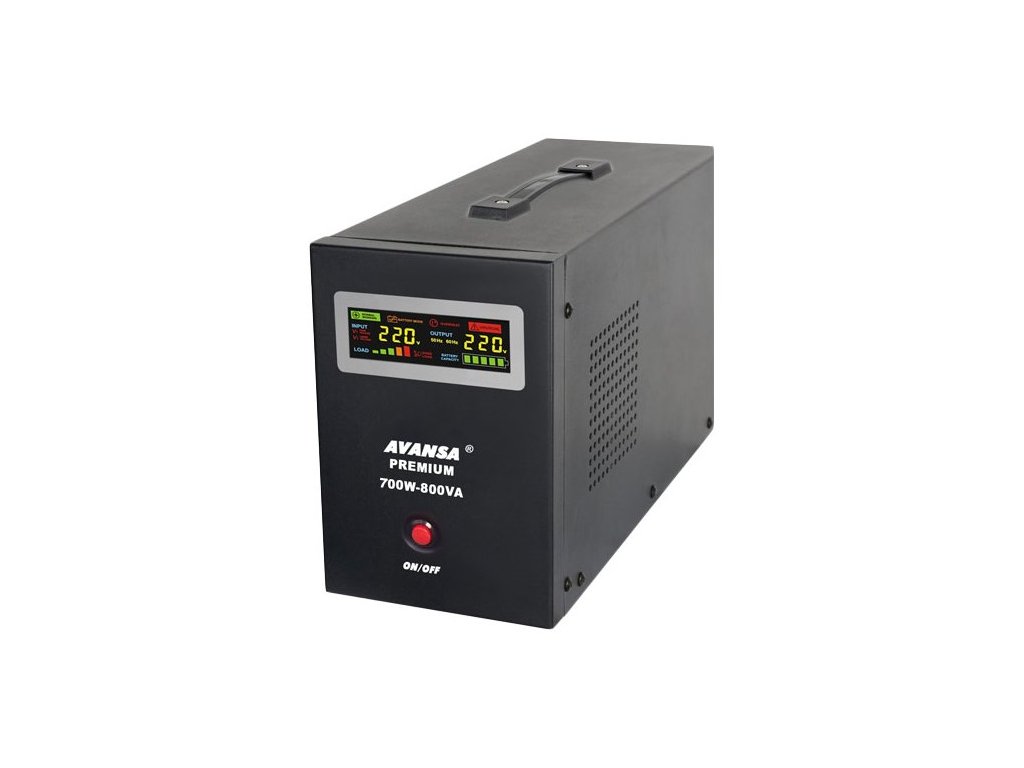 |
Avansa 1050 W - the most powerful category for more extensive installations with several circuits, for example a combination of a boiler, two circulation pumps (for example separately for radiators and underfloor heating) and emergency lighting for the boiler room. Provides the most room for future system expansion. Price from 385.33 €. |
For batteries it's worth reaching for the AGM (Absorbent Glass Mat) type in practice, which is maintenance-free, doesn't require topping up, and is safe even when placed in an indoor boiler room, since it doesn't produce gases during normal operation the way classic flooded lead-acid batteries do.
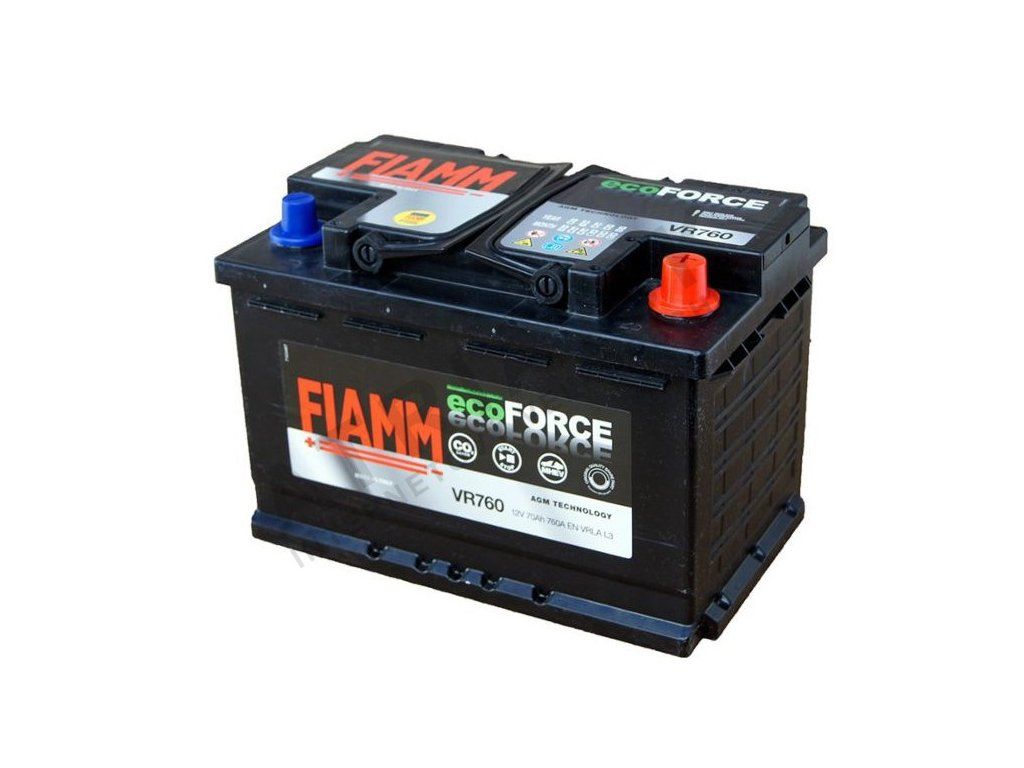 |
FIAMM ECOFORCE AGM VR 760 - an AGM battery with a 76 Ah capacity, according to the calculation above providing a theoretical backup time of approx. 12.9 hours at a 60 W load (a real recommended 6-7 hours with careful discharging). A good choice for replacing a worn battery in an older backup system or as a spare part. Price from 178.56 €. |
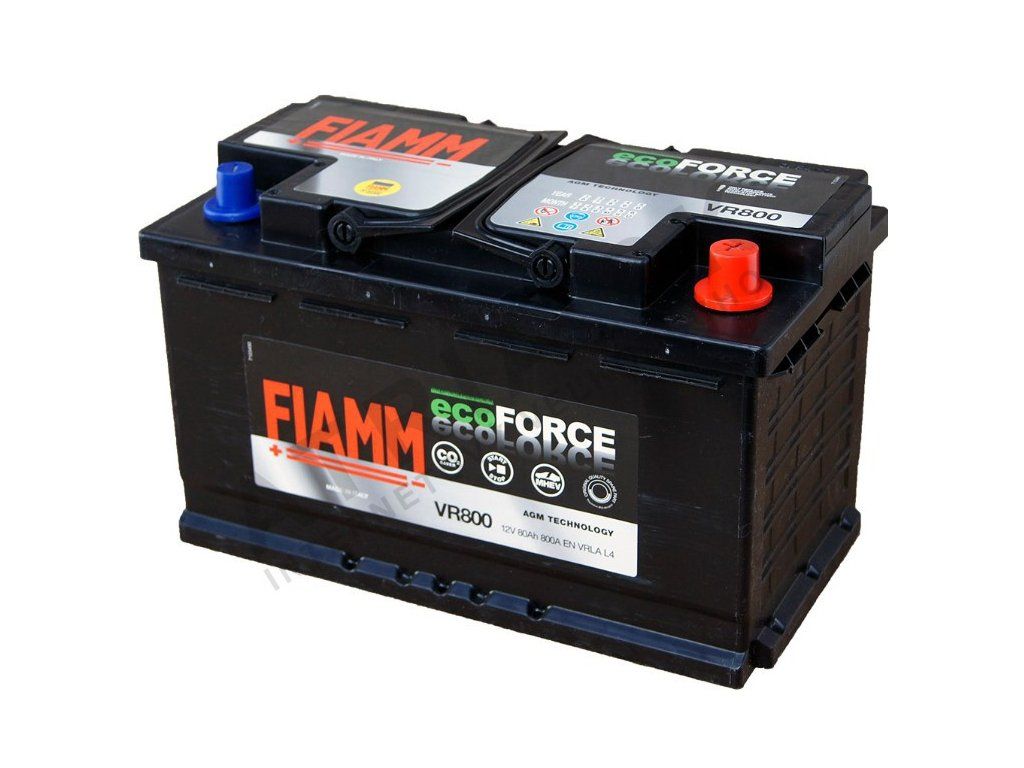 |
FIAMM ECOFORCE AGM VR 800 - a somewhat higher capacity of 80 Ah, theoretically approx. 13.6 hours at 60 W. Suitable if you want a larger reserve in case of longer outages, or for backing up both the pump and the boiler electronics together. Price from 195.88 €. |
 |
FIAMM ECOFORCE AFB TR 720 - a 72 Ah capacity, theoretically approx. 12.2 hours at 60 W. The most affordable of the trio, a good choice if a standard reserve without extra headroom is enough for you. Price from 146.58 €. |
For a quick overview of which Avansa category to reach for, the following graphic will help.
Installation and practical experience
Connecting a backup to a circulation pump is, from an electrical point of view, straightforward - in most cases it's a matter of wiring the backup source between a socket (or a directly protected circuit in the distribution board) and the power cable of the pump or boiler. Even so, we recommend the following principles, based on real installation experience:
- Placement of the source and battery. The backup source, and especially the battery, should be in a dry, ventilated space, ideally at a temperature between 10 and 25 °C. Batteries placed in a freezing, unheated garage lose capacity exactly when you need them most - AGM battery capacity below freezing can drop by as much as 20 to 30% compared to room temperature.
- A separate protected circuit. If possible, it's worth having a separate breaker in the distribution board for the boiler room and circulation pump, independent of sockets that other household appliances normally use - this reduces the risk of the backup being accidentally disconnected by someone who "just needs to charge a drill".
- A test at commissioning. After wiring everything up, we recommend actually switching off the supply breaker and verifying that both the pump and boiler keep running without interruption, and also noting whether the source signals the switch to battery (with an audible or light signal - most models have this).
- Only connect what's necessary. There's no need (and it's often not advisable) to connect anything to the backup source other than the pump, and possibly the boiler electronics and emergency lighting. Unnecessarily connecting other appliances (for example the domestic hot water circulation pump, if not essential) shortens the real backup time exactly when you need it most.
- Consult an electrician for a more complex setup. If the backup is to be part of the distribution board (not just a "plug into a socket" job), we recommend leaving the wiring to a qualified electrician, especially if it involves modifying the house's distribution board.
A common experience from practice: in many older family houses the circulation pump is hidden away in the boiler room or a utility room, and few people realise that this small device (physically no bigger than a smaller pot) is what decides, during a power outage, whether the house stays warm or cools down. An investment on the order of a few hundred euros in backup power is therefore worth it, compared to the risk of a damaged boiler or frozen pipes, especially in locations with more frequent power outages (rural areas, hilly terrain, older overhead high-voltage lines) or at cottages and cabins where no one is present to react immediately.
Maintaining the backup source and battery
Even though an AGM battery is maintenance-free in the sense of not needing electrolyte topped up, a few basic tasks will significantly extend its lifespan and reliability:
- Once every six months we recommend visually checking whether the source is reporting a battery fault (most models have their own self-test and LED signalling).
- The battery doesn't need any special "exercising", but if the source is disconnected from the mains for a long time (for example at a cottage out of season), the battery self-discharges and should be recharged at least once every two to three months, otherwise it risks permanent damage from deep discharge.
- The lifespan of an AGM battery in this type of application (occasional short cycles, not daily deep discharging) is usually between 5 and 8 years, after which replacement is recommended even preventively, before capacity is completely lost.
- When replacing the battery, it's a good idea to choose the same or a comparable type (12 V, similar or higher capacity in Ah), so the source works with a correctly calibrated charging curve.
Frequently asked questions
Does the circulation pump need its own backup if the boiler already has a backup source?
Not automatically. A boiler's internal backup source often powers only the control electronics and display, not the circulation pump itself, which may have its own power circuit. If you're not sure exactly what your boiler backs up during an outage, the simplest way to check is directly in the boiler's manual, or with a quick test - switch off the breaker and see whether the pump keeps running.
How much backup power do I need for an ordinary pump in a family house?
For one ordinary circulation pump (an older one drawing approx. 60 W, or a more modern EC one drawing approx. 20-25 W), a category around 300 W is enough, providing a sufficient reserve for the inrush current too. A higher output (500 W and above) is only worth it if you want to back up other appliances at the same time - the boiler electronics, the manifold's motorised valves, or a second pump.
How long does the backup battery last during an ordinary outage?
With a battery capacity of around 72 to 80 Ah and a 60 W load, the theoretical maximum backup time comes out at roughly 12 to 14 hours. For a longer battery lifespan, though, it's recommended not to discharge it deeper than half its capacity, so the real practical time is indicatively 6 to 7 hours, which covers the vast majority of ordinary power outages.
Can a backup source for a pump be installed by myself?
A simple socket connection (source between the socket and the pump's power cable) can be handled by a fairly handy user themselves. If the connection is to be part of the distribution board, or if you're not sure what type of circuit powers the pump, we recommend calling in an electrician - especially to ensure correct fusing and to verify that nothing is connected that could overload the source.
Is it better to invest in a bigger battery, or a higher-output source?
It depends on what you're addressing. A larger battery capacity (higher Ah) extends how long the backup lasts. A higher source output (more watts) extends how many appliances it can power at once. If you're addressing just one pump and want a longer backup time for longer outages, reach for a battery with higher capacity (for example the FIAMM VR 800 with 80 Ah instead of 72 Ah). If you plan to add more appliances, choose a source with a higher output.
How should I take care of the backup battery over summer, when it's not being used?
Even outside the heating season, we recommend leaving the backup source connected to the mains so it keeps the battery charged automatically. If you disconnect the source completely (for example at a cottage out of season), it's a good idea to connect the battery to the mains and let it charge at least once every two to three months, otherwise it risks permanent damage from self-discharge.
Related topics
- How to choose a backup source for a boiler
- How much backup power do I need
- Installing and connecting a backup source
- How long does a backup source last during a power outage
You can find the complete range in the main category Backup power sources for boilers, pumps.
Do you have a question on this topic?
Can't decide which backup source or battery to choose for your circulation pump? Write to us - we're happy to help.