
Installing and Connecting a Backup Power Source
Why a boiler "sits down" without electricity within seconds
Most homeowners picture a power outage as an inconvenience where the lights go out and the wifi stops working for a while. With a gas condensing boiler or a system with a circulation pump, reality is somewhat more dramatic. The boiler's control electronics, the circulation pump, the expansion valve and the safety components (pressure switch, temperature sensors, flue gas fan) all need a 230 V power supply to work. Without it the boiler shuts down instantly - it can't safely start the burner, can't circulate water through the system, and in freezing weather there's a risk that water in the pipes and in the heat exchanger will start to freeze within a few hours, if it's genuinely cold outside and the house isn't sufficiently insulated.
In practice this problem is most often faced by owners of family houses in the countryside, where power outages after storms, strong wind or line faults can last several hours, sometimes even overnight. Backup power sources exist precisely for these situations (commonly also called UPS units for boilers), which can bridge a power outage and keep the boiler and circulation pump running until electricity returns or until the owner has time to react another way.
This article deals exclusively with installing and connecting a backup source - in other words, what comes after you've already decided which type and output of source you want to use. If you're still choosing a specific model, we recommend first reading the article How to choose a backup source for a boiler, which goes through a comparison of types and parameters. Here we focus on the practical side - how to physically connect the source, what to watch out for, and the mistakes installation companies and DIYers most commonly make.
How a backup source for a boiler and circulation pump works
A backup source (in technical terminology also a UPS - Uninterruptible Power Supply) is a device connected between the mains and an appliance - in our case between a 230 V socket and the boiler or circulation pump. During normal operation, the source just "passes through" the mains voltage to the appliance while simultaneously charging an internal or external battery. The moment power fails, the source instantly (typically within a few milliseconds) switches the appliance's power supply to the battery, so the boiler doesn't even register the transition - there's no restart or error message on the display.
Good-quality backup sources for boilers have a so-called pure sine wave output voltage. This matters especially with more modern condensing boilers, which have sensitive electronics and frequency-controlled circulation pumps - with cheaper sources using a modified (stepped) sine wave, the boiler may run but report a fault, hum, or have the lifespan of its electronics shortened. The Avansa range models we also offer in our shop are built specifically with powering boilers and circulation pumps in mind and have a pure sine wave output.
The second important component is the battery. In most cases this is a lead-acid battery of the AGM (Absorbent Glass Mat) type - maintenance-free, sealed, suitable for indoor installation without risk of electrolyte leakage, even when placed vertically or in a tighter space such as a utility room next to the boiler room. AGM batteries have a longer lifespan than ordinary car starter batteries and tolerate repeated deep discharge, which is common with backup use, better.
What you'll need before installation
Before connecting anything, prepare the following:
- The backup source itself with a suitable output (more on choosing the output below).
- An external battery (if the source doesn't have its own built-in battery, or if you want to extend the backup time).
- A connecting cable between the source and the battery - for external batteries this is usually supplied by the source manufacturer or included in the package, or bought separately depending on the installation distance.
- A free, earthed 230 V socket near the boiler (ideally within 1.5-2 metres, so you don't need to extend the source's cable with an extension lead).
- A screwdriver, or ideally a torque wrench to tighten the battery terminals (the recommended tightening torque is in the battery's manual, usually around 4-5 Nm for M6 terminals).
- A voltage meter (multimeter) to check things work before and after connecting - not strictly necessary, but it significantly helps diagnose anything that doesn't work as expected.
- About 30-60 minutes of uninterrupted time without rushing - the installation isn't complicated, but a rushed battery connection is the most common cause of problems.
Step by step: installing a backup source
The following procedure applies to the common case - an external backup source (e.g. from the Avansa range) with a connected external AGM battery, powering a gas boiler or circulation pump via a mains socket. The exact order of steps may differ slightly in detail depending on the manufacturer, so it's always worth also reading through the enclosed manual, but the principle is identical for the vast majority of sources on the market.
Step 1: safely disconnecting from the mains
Before any work on electrical wiring, always switch off the relevant breaker in the distribution board, not just the appliance itself. You can switch the boiler off with its own button or by unplugging it, but with a fixed (non-plug) connection to the mains, you need to switch off the breaker so you're not working live during further steps. This principle applies equally to DIYers and professional installers - it's the most commonly underestimated step precisely because it seems "obvious".
Step 2: placing the source and battery
Both the backup source and the battery need a dry environment at room or slightly reduced temperature (AGM battery manufacturers usually state an optimal range of 10 to 25 °C). It's not recommended to place the device directly on the boiler or right next to hot pipework - heat shortens the battery's lifespan, and for AGM technology the approximate rule is that every 8-10 °C above the recommended temperature roughly halves the battery's lifespan. An ideal spot is a shelf or bracket in the same room, but at a sufficient distance from the heat source, with free airflow around the device (at least 5-10 cm on all sides for cooling the source's electronics).
Step 3: connecting the battery
This is the step where most mistakes happen. The battery terminals are colour-coded - red (+) and black (-). Always connect the cable from the source to the battery in the order positive terminal first, then negative terminal. When disconnecting, the order is reversed - negative first, then positive. The reason is to reduce the risk of a short circuit if a tool or cable accidentally touches the chassis or another conductive object during the work. Tighten the terminal screws to the torque recommended by the manufacturer (usually in the battery's manual), bearing in mind that too loose a terminal causes sparking and unnecessary resistance in the circuit, while overtightening can damage the thread or the terminal itself.
Step 4: the first battery charge
After plugging the source into the mains socket, let the battery fully charge before connecting the boiler or pump to the source's output. A new battery may not be delivered fully charged from the warehouse, and connecting the boiler to a partially charged battery from the start would, during an immediate mains outage, provide only a fraction of the declared runtime. For ordinary AGM batteries the first charge time is on the order of a few hours; the exact time is in the specific model's data sheet.
Step 5: connecting the boiler or pump
The source's output is connected to the boiler or circulation pump either via a standard mains socket (if the source has an output socket and the boiler is plugged in), or by fixed wiring into a terminal block, if it's a permanently connected appliance. For a fixed connection we recommend leaving this part of the work to an electrician or service technician, unless you have the appropriate electrical qualification - this involves working on the house's fixed wiring, not an ordinary "plug into a socket" job.
Step 6: a functional test
Once everything is connected, switch off the breaker feeding the source's input (i.e. simulate a mains outage) and check whether the boiler or pump keeps running without interruption. The boiler's display shouldn't go dark or restart, and the circulation pump should keep running smoothly. We recommend repeating this test not just right after installation, but also periodically, for example every few weeks of real operation, since it verifies not just the wiring itself but also the battery's current state of charge.
Connecting an external battery to a backup source
For higher outputs, or when a longer backup time is needed (typically more than 1-2 hours), it's worth using an external AGM battery with a larger capacity instead of a small built-in one. The advantage is that the battery can later be replaced separately without having to replace the whole source, and also that when the battery's capacity drops (typically after 3-5 years of operation, depending on the number of discharge cycles and ambient temperature), only it needs replacing.
We offer several AGM batteries suitable exactly for this purpose - they differ mainly in construction (VR = valve regulated, TR = a technology with a longer lifespan) and price. The choice between them depends on the required backup duration and your budget:
 |
FIAMM ECOFORCE AFB TR 720 - the most affordable of the AGM batteries on offer, suitable as an entry-level choice for ordinary households where a shorter backup time for a circulation pump or smaller boiler is enough. Price from 146.58 EUR. |
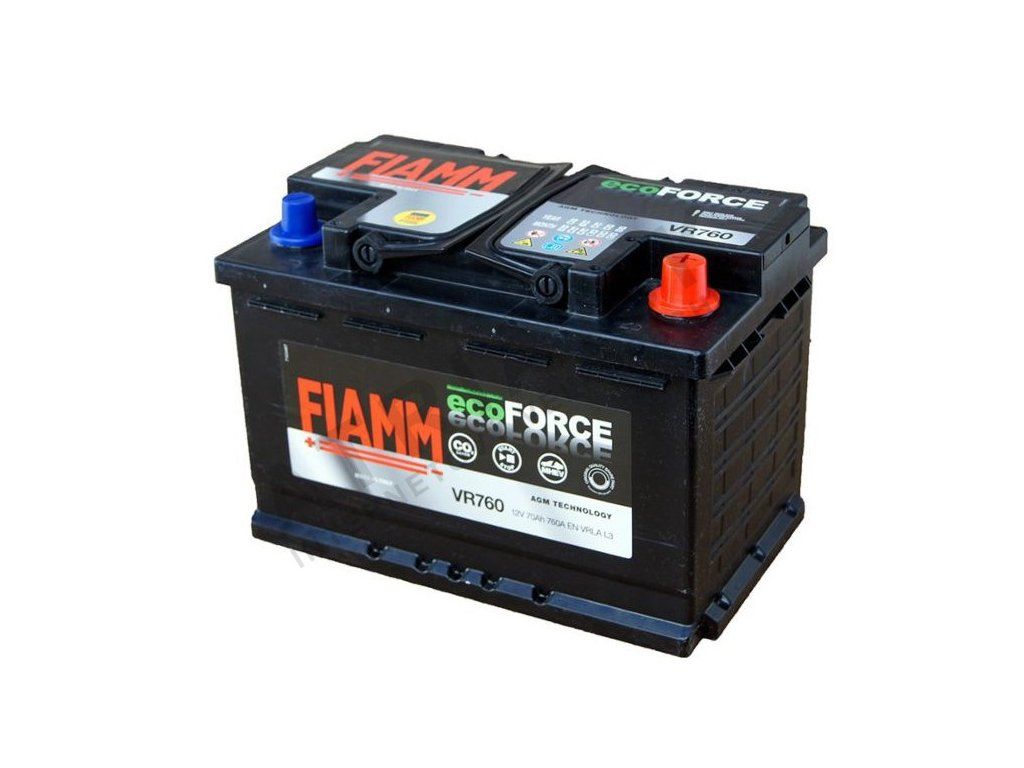 |
FIAMM ECOFORCE AGM VR 760 - a mid-range choice, a good balance of capacity and price for an ordinary condensing boiler with a circulation pump. Price from 178.56 EUR. |
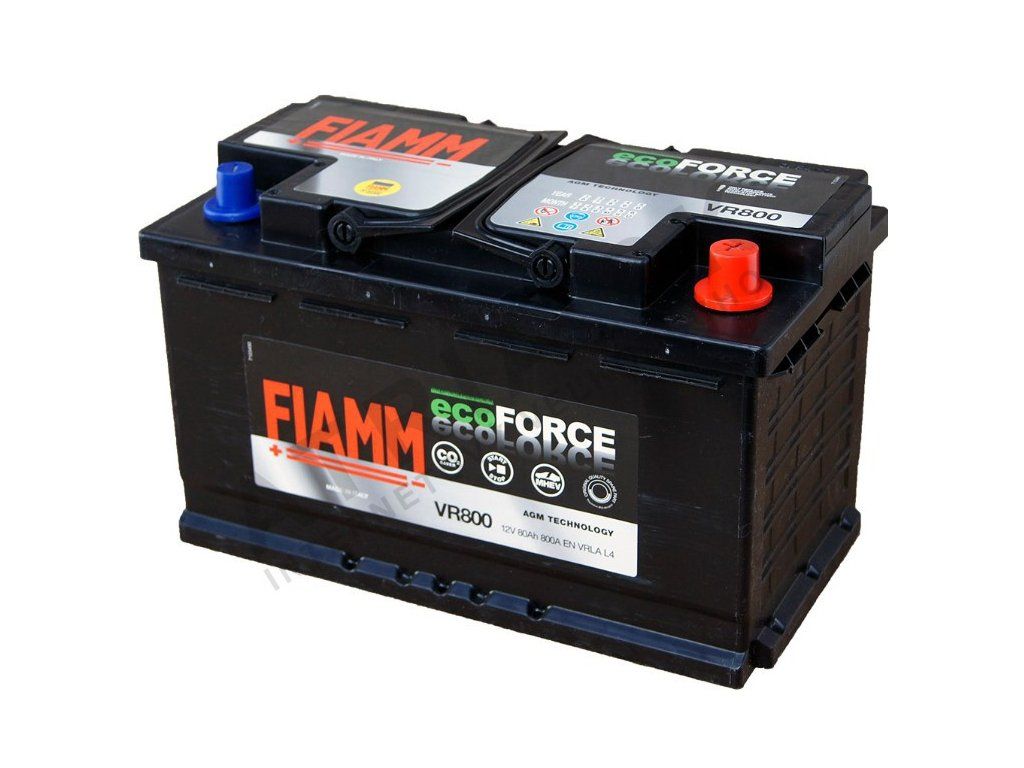 |
FIAMM ECOFORCE AGM VR 800 - the highest capacity of this trio, suitable if you want a longer runtime or are powering several devices at once (for example a boiler plus a separate underfloor heating circulation pump). Price from 195.88 EUR. |
What output to choose for the backup source
The battery alone is only half the solution - the second, equally important part is the source's own output, i.e. how many watts it can deliver at the output simultaneously. A boiler with a circulation pump has a briefly higher draw at startup (pump starting up, possibly the flue gas fan) than during steady operation, so the source's output isn't chosen "right at the limit", but with a reserve. We offer three models from the Avansa range with different outputs, covering both ordinary and more demanding installations:
 |
Avansa 300 W - an entry-level output, enough for a circulation pump alone or a smaller boiler without other appliances powered at the same time. Price from 177.64 EUR. |
 |
Avansa 500 W - the most commonly chosen level for an ordinary condensing boiler with a circulation pump and a modest reserve for startup current peaks. Price from 199.51 EUR. |
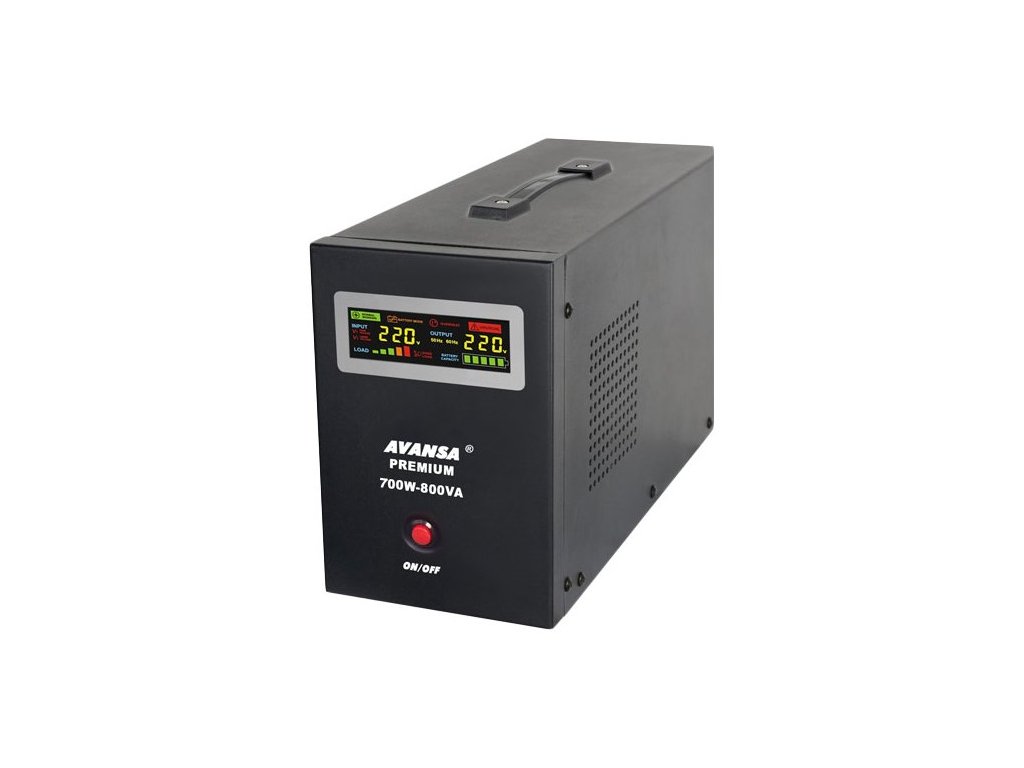 |
Avansa 1050 W - the highest output on offer, suitable if you're backing up the boiler along with other devices at once (for example an underfloor heating circulation pump or a thermostat control unit). Price from 385.33 EUR. |
A practical rule we recommend: add up the draw of all the devices you want to connect to the source (you'll find it on the boiler's and pump's rating plate, usually tens up to low hundreds of watts for circulation pumps and somewhat more for the boiler itself with a flue gas fan), and add a reserve of at least 30-40% to the total for startup current peaks. A precise procedure with worked examples can be found in the separate article How much backup power do I need.
Placement, ventilation and safety
AGM batteries are sealed and maintenance-free, but even so a minimal amount of gas can be released during charging and discharging, so it's not recommended to place the source and battery in a completely sealed cabinet with no airflow at all. An ordinary room with air exchange (for example the utility room where the boiler itself is) is enough, there's no need to build special ventilation like for large industrial UPS setups.
Other principles worth following:
- Don't place the source or battery on the floor in a room at risk of flooding (for example a laundry room with a risk of overflow, or a room with a drain in case the heating system fails) - choose a shelf at least 20-30 cm above the floor instead.
- Avoid direct sunlight on the battery if the source is placed near a window - increased temperature shortens its lifespan just as much as proximity to the boiler.
- Route the cable between the source and battery so it isn't under tension or resting on sharp edges - especially if the battery is on a different shelf or in a different cabinet than the source itself.
- Never connect two different batteries (an older one with a newer one, or from a different manufacturer) into the same circuit without checking compatibility with the source manufacturer first - different internal impedance can cause uneven charging and shorten the lifespan of both units.
- If you have small children or pets at home, place the setup out of their normal reach - live battery terminals aren't life-threatening from ordinary touch, but a short circuit caused by a metal object placed across the terminals can cause sparking.
Most common installation mistakes
Over years of selling backup sources and talking with customers, we repeatedly come across a handful of mistake types that are easy to avoid if you know about them in advance:
Reversed polarity when connecting the battery
Swapping the positive and negative terminal when connecting the battery is probably the most common mistake. Most modern sources have an internal fuse or reverse-polarity protection circuit that prevents damage, but the source simply won't work after such a connection and will trigger an error message or a flashing indicator. Always double-check the colour coding and the +/- markings directly on the battery terminals and the cable connector before connecting.
Undersizing the source's output
The second most common mistake is choosing a source based only on the boiler's steady-state draw, without a reserve for startup peaks. A boiler that draws, say, only around 100 W in steady state may briefly draw significantly more when the circulation pump or flue gas fan starts up - if the source is undersized, it will switch to battery during a mains outage, but will overload and trip its protection at the pump's first startup, so the boiler drops out of operation despite the backup, exactly when it's needed most.
Skipping the first test after installation
Many installers and DIYers connect everything correctly but skip the final test with a real breaker shutoff. Without this test, a wiring fault (for example an undertightened terminal that holds contact during normal operation but not under load during an outage) only comes to light during a real power outage - exactly when you need the backup source most and there's no longer time for a fix.
A battery without its first full charge
As mentioned above, connecting the boiler to a partially charged new battery without a full charge beforehand means the source will only "survive" the first real power outage for a fraction of its declared runtime, which can look like a fault in the source, even though it's really just an incorrect first-time setup procedure.
Placement too close to a heat source
A battery placed directly on the boiler's casing or right next to hot water pipes is exposed to elevated temperature, which significantly shortens its lifespan. As mentioned above, for AGM technology the approximate rule is that the lifespan roughly halves with every 8-10 °C increase above the recommended range - so it's worth giving the choice of location the same attention as the wiring itself.
Functional testing after installation and regular checks
We described the recommended verification procedure in step 6 above - switching off the breaker feeding the source's input and checking whether the appliance keeps running without interruption. It makes sense to repeat this test not just right after installation, but also regularly, for example once every 2-3 months, since it checks both the current state of charge and the battery's capacity. If you notice that the time the source can keep the boiler running gets shorter over the years, that's a normal sign of an AGM battery ageing, and it's time to think about replacing it - a detailed procedure can be found in the article Maintenance and replacement of a backup source battery.
On this occasion we'd also like to mention the broader context - a backup source with a battery isn't the only way to deal with power outages at home. If you're also considering the alternative of a larger home generator, we go through the differences between the two approaches (price, startup time, noise, suitability for sensitive boiler electronics) in the article Backup power source vs. home generator.
Frequently asked questions
Does installing a backup source have to be done by an electrician?
If you're connecting both the source and the boiler via ordinary mains sockets (i.e. plug into the source's socket, boiler's plug into the source's output socket), a competent DIYer can usually manage the installation by following the procedure described above. If the boiler or pump is connected by fixed wiring directly into a terminal block (without a socket), we recommend leaving this part of the work to an electrician or a suitably qualified service technician.
How long will the boiler run on battery during a power outage?
The exact time depends on the chosen battery's capacity and the total draw of the connected devices - for a typical combination of a condensing boiler and circulation pump with one external AGM battery, the backup time is usually a few hours. A detailed calculation with worked examples can be found in the article How long does a backup source last during a power outage.
Can I connect several devices to one backup source at once?
Yes, as long as their combined draw doesn't exceed the source's maximum output (including the reserve for startup peaks described above). Commonly a boiler is backed up together with a circulation pump and possibly also a thermostat control unit, which usually has a very low draw of its own.
Does the battery need any special maintenance after installation?
AGM batteries are maintenance-free in the sense that they don't require topping up electrolyte or any other physical care. However, we recommend a regular functional test (described above) and roughly tracking the runtime over the years of operation, since battery capacity naturally declines over time.
What happens if I connect the battery with reversed polarity?
Most good-quality backup sources have reverse-polarity protection that prevents damage to the device - the source simply won't start working and will signal an error (indicator light, audible signal or a display message, depending on the model). Even so, we recommend always checking the polarity carefully before connecting to avoid unnecessary troubleshooting.
Is a backup source worth it in a city too, where power outages aren't common?
Even in a city, short outages occasionally occur (planned shutdowns, faults at a substation) that can cause the boiler to restart and lose its settings, or switch off the circulation pump for long enough that the water in the system has time to cool. Combined with smart heating control, or for more sensitive households (for example with small children or elderly residents), investing in a backup source is worth it even in an urban environment, even though the payback time will naturally be longer than in the countryside with more frequent, longer outages.
Related topics
How to choose a backup source for a boiler
How much backup power do I need
Maintenance and replacement of a backup source battery
Most common failures of backup sources
Backup power sources for boilers, pumps
Do you have a question on this topic?
Can't decide, or dealing with a specific situation in your household? Write to us - we're happy to help.